We All Work For Lumon Now: all data is identity data in the age of the database self.
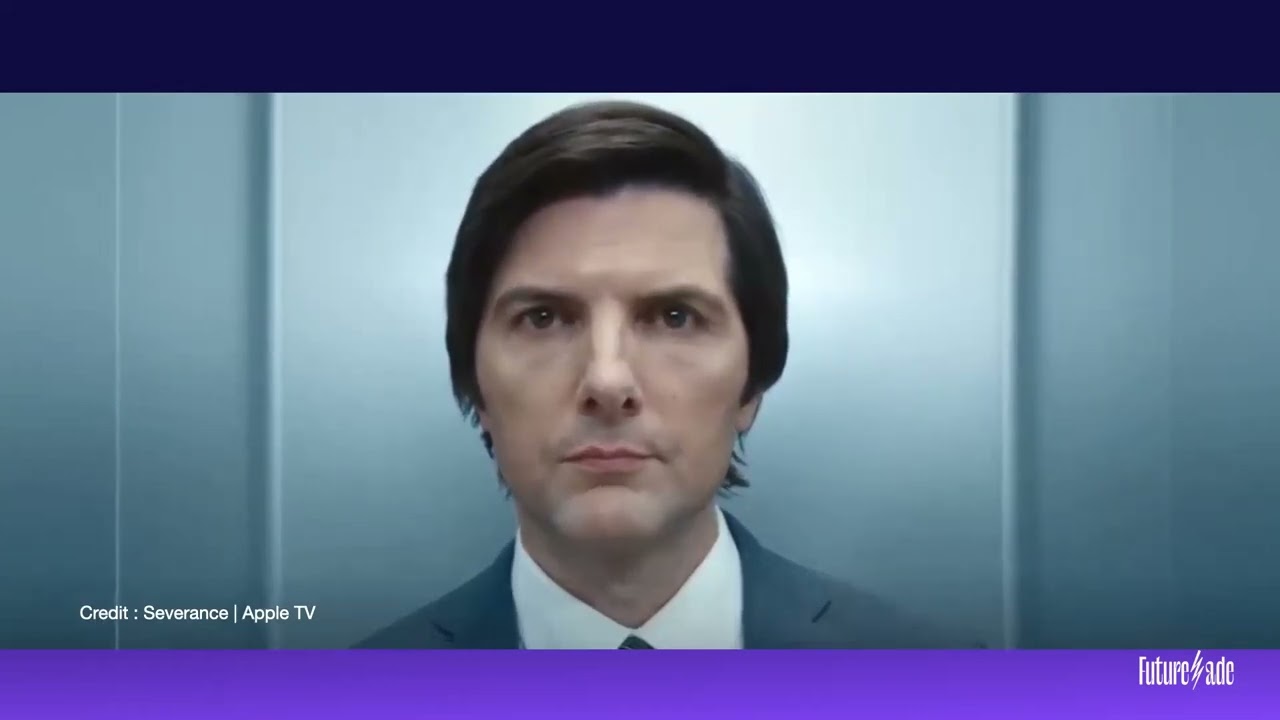
Tracey Follows argues we've shifted from a consciously designed self to a database self, where our data becomes our identity. She uses Severance and otaku fan culture to show how AI and data profiling reshape who we are, and what happens when companies own our personas.
Chapters
We all work for Lumen now. I'm Tracey Follows, I'm futurist and the author of The Future of You, and today I'm going to take a little dive into the evolution of the self and talk about the shift, um, that we're undergoing from a consciously designed authentic identity to one I've been calling for many years now the database self. Last year, when Future Made pulled our, um, bite-sized trends for busy people, otherwise known as Future Snacks, together, um, one of those trends was database selves. And that was because I thought database selves' time had come and we were ready. After many years of scanning the horizon and coming up with this concept and looking at the signals of change around identity, um, that database selves really was moving into the mainstream now. This idea that we're treating individuals as a more atomized set of attributes or data traits that can be mixed and remixed and rearranged to suit different contexts has really come of age. Now, I've been looking at this for quite some time. In my book, The Future of You, I explored how our identities are no longer confined to our physical bodies or even to our face-to-face interactions. Instead, they are increasingly defined by data, the digital residues of our lives. And you can explore this more in the podcast, The Future of You, if you, if you'd like to. But now I want to take a step further forward and consider what it means if every single piece of data that we generate is actually a part of who we are. What if all data is identity data? Imagine for a moment that your identity isn't solely the result of your innermost thoughts, your memories, or even your choices. Instead, your identity is now continuously mediated by technology, managed, augmented, or sometimes even constrained by code. In today's virtual world, every like, every share, and every swipe isn't just a fleeting action. It's a data point in an ever-expanding mosaic of who you are. Now, we used to think of identity as something fixed, a genuine, unchanging self that we could observe up close. But in the digital era, that notion of authenticity is melting away. Think back to Walter Benjamin, who mourned the end of awe in art with the arrival of the mechanical technology otherwise known as photography. Well, today we grieve the end of awe in identity as our lives are translated into data with digital technology. In this hyper-connected environment, the self is not only mediated, it's constantly arranged and rearranged, remixed and represented— represented to the world digitally. Now, our traditional design self was something we thought would never change. We consciously shaped a very polished image for our friends, our colleagues, maybe even for our potential dates. But now ourselves are plural as they've gone digital. They're no longer guided solely by our personal intentions. They're also written into the language of algorithms. I tried to make this a bit clearer by using a causal layered analysis, which might be a model that's familiar to you, just to really draw out the shift from the design self to the database self. As you can see, we see in the media a litany around authorship, copyright. It's really around ownership, ownership of the self, the self as property. But as we can see, as we move into the future, it's more about co-piloting, the group, the collective, the code shifting, This idea that we're more of a sort of networked, peer-to-peer kind of socially constructed self, which has a plurality, an ambiguity, a playfulness, and a creativity, if you like. And of course, in time will be AI-assisted. Whereas in the past, the social structure of the design self has been very linear, binary, very certain, had a real consistency, and never changing, always grounded definition. And so that worldview was very institutional and individual, but we're moving into a worldview, worldview now where identity is much more plural and programmable, very, very different. And so we can use the metaphor of from prison to prism, where we used to think of identity as, as very definitive, constrained, closed off, and unchanging, very constant over time. We now think of identity is very plural and flexible and fluid. And in fact, identity is much more reflected and refracted through the lens of data. And that's why I call it the database self. Now, to illustrate how ourselves are being atomized and digitized, consider the otaku in Japan, the anime and manga fans obsessed with their beloved characters. And who can blame them? Look how cute she is. In their world, there's no authentic character alongside a bunch of copies. Every single version is a valid reworking of very distinct characteristics. Fans lovingly track these distinctive characteristics, or "charimo," or traits. Can be like tails or cat ears or striped floppy socks, and they remix them into endless variations. It's as if an invisible cultural database logs all of these elements, all of these attributes and relationships between them, creating infinite reimaginings. There's no single original. Instead, the otaku constantly expand and redefine each character's identity over time. We're doing something very similar with ourselves online, mixing, remixing, arranging, and rearranging our traits to suit each new context that we find ourselves in from one moment to the next. And in doing so, we're both profiling ourselves and being profiled by others. Authenticity stops being the priority and profilicity takes over. As Hans-Georg Müller suggests, we interact not with each other's true selves, but with our profiles. The profiles of ourselves, because online the authentic human is never fully present in the digital loop. So this is how we should think about our database selves. Now, and there's a spoiler alert here, if you haven't seen the finale episode of Severance in season 2, you might want to cover your ears and your eyes. But for everyone else, this show provides the perfect cultural case study for understanding the database self. No, no. In Severance, employees' work and personal lives are surgically split. Creating two separate personas. Emotions, personality, and even memories are captured as data to build entirely new selves. The corporation isn't just managing productivity, it's literally recoding identity. Now, this dystopian glimpse reveals what happens when external forces seize the delicate task of identity creation. The characters' work selves aren't just altered They're engineered. Their emotions, quirks, hopes, and crucially, their tempers are logged as data, then repackaged for a new existence. It's a stark metaphor for how personal data in our world is already shaping the stories we live by. And it's no longer sci-fi. Algorithms curate our news feeds, recommend our next binge watch, monitor our spending, and even track our driving habits. Every emotional microexpression can be a data point that reconstructs us as a database self. Just like the Severance characters, we risk being reduced to marketable profiles stripped of the messy, unpredictable essence that makes us human. In the Season 2 episode Cold Harbor, we learn that Gemma's identity has been used to create multiple innies, multiple digital personas that look like her but exhibit slightly different personalities for different contexts. This echoes what a Chinese youth researcher told me while I was, uh, writing and researching The Future of You. He said to me, I have so many different selves, and they're all me, but they're all different for all different usages, different contexts, different social circles. Now, I've often argued for embracing our multiple selves so So I won't rehash that here. Instead, let's focus on what it means for a future where we mingle with digital intelligences, where our database selves work side by side, cheek by jowl, with AI coworkers. As Salesforce's CEO Marc Benioff recently put it, we are the last CEOs who will manage only humans. From this point forward, will manage both human workers and digital workers. Now, many of us aren't prepared for this very gray area where human selves and machine selves overlap, but I've been thinking about it for quite some time because if we don't take ownership of our database selves, someone else will. Right now, companies are busy harnessing our faces for security applications, using our behaviors to train AI for customer service, and capturing our micro expressions for hyper-targeted advertising. Heck, even the data from our tyre pressures as our cars trundle along is being collected because it says something about not only where we've been but who we are. We freely contribute to building these profiles, yet it rarely occurs to us to own them. Those who do get it, like certain celebrities, are already monetising their data profiles or are offering fractional ownership of their avatars. Think Kendall Jenner as a Billie chatbot, or some of the work Grimes has been doing. Imagine in the not-so-distant future that your database self might be treated as a fully fledged identity engaging in economic activity independently. I mean, you could find yourself taxed not just on your physical income, but on the revenue generated by your top-performing virtual identity in the metaverse. This is entirely plausible if we view identity through the lens of the database self. In Severance, Lumen Industries seats its severed employees at desks in a white-walled building full of connecting lifts. But that's just a metaphor, a metaphor for the metaverse. It's a tangible way to show how multiple versions of ourselves can be created from data alone. A multiplicity of complex selves coded from our personal attributes. I carry mo. Meanwhile, the outie sits outside in the so-called real world, clinging to the notion of one authentic identity. In reality, we're all working for Lumen Industries now, or at least that's not far off. The physical design self may persist in the real world, but our database selves are already thriving in virtual worlds. The next question, I suppose, is: will these two worlds truly integrate, or will we eventually become database selves in both? If you've seen Severance's Cold Harbor, you might suspect you know the answer. Perhaps all I can say is that Mark S took ownership of his inni. And my closing thought is this, I guess, to remember, to remember that in the age of AI, all data is identity data, and that it's up to each of us alone to shape the narrative of our future selves.
More from Tracey


Your Face May Be Training AI You’ll Never Use #TrainingData #ArtificialIntelligence #HollyHerndon



Why In-Betweeners See What Others Miss #Futurists #DiaryOfAFuturist #inbetweeners



Pick a System card. Pick a Self card. See your future in the connection #TraceyFollows #System&Self

Your Past, Your Present, Your Future #futurist #futuresthinking #TraceyFollows

