4 Things Keeping You From Becoming A 7-Figure Fractional CFO
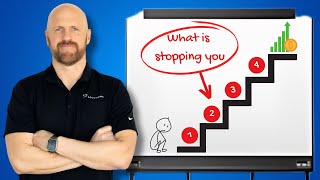
Fractional CFO GPT identifies four psychological fears blocking your growth to seven figures: failure, success, rejection, and imposter syndrome. Each comes with behavioral signs like procrastination and people-pleasing, rooted in parents or environment. Coping strategies include cash-flow forecasting, contingency planning, journaling, and building a supportive network.
Chapters
I don't really deserve the success. If I hit the goal, everyone will find out that I'm full of crap. So what do we do though, when we realize we're in this fear of failure? We've got the ideas of catastrophe, we're freaking out. Another way you can identify the fear of success is you will start to realize that you're telling yourself stories about why you don't really want to do that. I just want to stay Boutique.
If you start studying fears in human psychology, you'll find that there are typically four types of fears that stand between.
Knowing you need to do something, the moment that Isaiah talked about earlier, and that next level of impact, the journey towards mastery that will help you achieve that bold ambition. And so today, before we get into all the nitty gritty on how to sell, on how to prospect, when we get the seven figure firm owners up here later talking about how they've done it and how you can do it too, I think it's important that we keep in mind what those four basic human fears are so that as we are on the plane today, or, gosh, I hope you don't leave today, on the plane tomorrow or Saturday, as you're in the car driving to work, Monday, maybe you work from home and you're moving into the home office and you're getting ready to work. I want you to be aware of those four types of fears that are probably going to start filling the fields and result in you saying, well, not today.
Tuesday feels like a really good day to start prospecting though. Not this Tuesday, next Tuesday, because this Tuesday is kind of busy. I want you to be aware of what these four fears are so that as you start to feel them, you can recognize that it's actually a fear and it's that roadblock that's standing between you and the moment. The first kind of fear I want you to be aware of is the fear.
Of failure. The fear of failure is probably the most common type of fear. This is the one I think Leah was talking about yesterday. I'm going to pick on you a couple times, just so you know. You know, you guys know what the fear of failure is? It's the one where we're like, there is no chance this is going to work out. I will not be able to meet expectations. There's little to no chance that if I embark on this thing, it will work for me. Oh my gosh, if I go to the networking event and I try to meet somebody, it's going to be horrible. They will all Hate me. My business will end suddenly and catastrophically because of the Chamber of Commerce. Today, we giggle, but we tell ourselves the story. No one's going to talk to me. Nobody's going to reciprocate. It's going to be super awkward. I'm going to look like an idiot. If I hire the person, it's not going to work out. If I raise my prices, no one will buy. If I tell them I won't do their taxes anymore, they will fire me. As their fractional cfo, bookkeeper, and tax strategist, all my clients will leave. So here's how you can kind of identify that you're in that fear of failure zone. It looks and feels like indecision, and you know what I'm talking about. All right, looking at the calendar here, I could either go prospecting at the Chamber of Commerce or the.
Real Estate Investors Group on Thursday. Shit, I don't know which one I should go to. Oh, gosh. I'll wait and think about it a little bit longer. Should I hire Clarissa the VA or Matt the ea? I don't know. I'll just think about it a little bit longer. I'm just not sure. I'm going to talk it over with my coach a little bit. I'll do a poll on LinkedIn. Indecision. That's my medication of choice. When it comes to fear of failure, I just don't decide. Number two is it feels a lot like anxiety. I don't know if this speaks to any of you, but when I have the fear of failure and anxiety creeps in, I can't freaking sleep because the wheels just keep turning in my head. The what ifs, the what ifs, the what ifs, the what ifs. I can't think of anything else. It's all consuming to me. Another one that'll typically come in is self sabotage. You know what I'm talking about. With self sabotage, you blow that shit up. So the decision is made for you. I don't know which EA I want to hire, so I'm not going to respond to either of them. I won't call either of them back. I just won't respond. And so we sabotage the whole situation, so that way the decision is made for us. I'm terrified of the sales call that's coming because the sales call is with the biggest client I will have ever worked with. I know that I need to charge them four, five, six thousand dollars a month. I am terrified that they will say no. And so I'm just going to Cancel the sales call because I'm sick. We self sabotage. And then I know I'm going to get some head nods on this one, even though I can't see them. The last one is we strive for perfection before we do anything with it. How many perfectionists do we have? Say aye Before I get on the call, I'm going to get the sales dashboard dialed in a little bit better. The fuchsia should be blue. Should it be Ariel or Times New Roman? We're going to keep tweaking on this. Before I make the decision to hire the ea, I'm going to get five or nine more processes dialed in. First, I've got to get everything buttoned up just right. It's got to be great. But we all know deep inside that perfection never comes, does it? And so we end up consumed by this whole thing of fear and we don't take action on it. And we never hit that moment where everything changes. On the surface though, you will look at how you're responding to this fear and at first you're not going to notice the indecision, the anxiety, the self sabotage or the perfection. My bet is the first thing you're going to notice is that you think that you're just being lazy. That's me. Big decision is right in front of me. I'm going to go watch Netflix for a minute. We have a 65 inch TV in the office with an Apple TV. I'll go over, I will shit you not. I will go watch Netflix. And as soon as I sit down I'm like, wait, what am I not doing here? There's something that I'm putting off because I, I'm not a guy that watches Netflix in the middle of the workday. And nine times out of 10 it's because there's a big decision in front of me and I'm scared of it. I'm scared to tackle it. The other one out of 10 times is because there's something cool on Netflix. I can't watch it because the 10 year old. All right, you guys remember that? Okay, so where does this fear of failure come from? Why do we have it? Why does it even exist? Number one place the fear of failure comes from is from your parents. This is a big environmental. We talked yesterday about environment. Fear of failure is heavily dependent and a result of the environment that you have been in or that you are currently in. And the number one thing comes from our parents. How many of our parents, how many of your parents pushed you towards perfection in school?
Aye. Thank you how many of your parents kind of poo pooed on you with the 3.8 GPA because if you had worked just a little harder, you could have had all A's? Aye. Aye. How many of you had parents that push you to do the math? What are they? Math? It's not a math bee. Like the math contest, the spelling bees, math leagues. Yeah. And always riding your ass to do better. How many of you played sports and your parents rode your ass to be better at the sport all the time and you felt like you were never good enough?
All of these things plant seeds in you over the decades and they make you scared to fail. It breeds this fear of failure in you. So watch how you treat your kids in these pursuits of perfection. Now remember, we can't just poo poo on our parents for this. That same behavior that breeds that fear of failure in you breeds excellence in you too. And that's a gift because not everybody strives for excellence. And so there's a careful balance that we got to walk here between perfectionism and doing our best. But don't let that pursuit of perfection be the thing that stops you. Where else does fear of failure come from? It comes from like an unsupportive spouse or partner. Sometimes it comes from our friends. Let me tell you a story. I started my firm a little over eight years ago. And I remember I was at a bar, I drank back then with a friend of mine named Jim. Jim was five or six years older than me. He still is.
MBA from an Ivy League school, big wig corporate job at Northrop Grumman Shipbuilding, Massive government contractor. He was very much up in the executive ranks. Guy I really looked up to. And I just got to have the privilege of having beers with him a couple times a week. So we're sitting at this bar one night and I said, hey, Jim.
I think I'm going to start my own company. And he says, no shit. Because I had a really good job at the time, multiple six figure kind of gig, Healthcare, the whole nine. And he says, no shit, what are you going to do? And I told him a little bit about the. We didn't call it fractional CFO back then, but I kind of told him about the helping business owners understand their numbers kind of thing. And he takes a sip of his beer and he looks at me with all of the best intentions in the world. Jim's a great guy, but he looks at me and he says, what qualifies you to do that? What happens if it goes bust? You're not going to be able to get this job back. What he's trying to do is help me think through the decision. But what he was doing was, I think he was inadvertently planting these seeds of doubt and fear in my mind. Well, shit, what if. What does qualify me? What happens if I don't get clients? What happens if the job doesn't take me back? And that moment stayed just outside of my decision for another six months. Another time this crept up was about a year and a half ago when I decided I wanted to do this conference for our industry. And I was like, you start looking at the prices. These things, for those of you who don't know, are like multiple six figures to put on. And it turns out the people that you have to pay don't give a shit if anybody comes or not. They're going to get their money. And so this fear of, like, well, what if we don't sell any tickets? Starts to creep in. Is our industry too small? Do I know how to get into in front of enough people to fill the room up? Gosh, I think the bill last year, like, our fixed costs were like, let's call it 100,000 last year. And said, if nobody comes, I'm not sitting on a stack of honeys right now that I can just pay out $100,000. No big deal. My wife, love her to death. Super supportive. But if I was like, well.
Didn'T work.
But like I talked about yesterday, where does our mind go? It doesn't go to, well, maybe you won't sell 200 tickets. It goes to, I will probably sell no tickets. Right. We go to this catastrophic far end of the spectrum and we get these ideas of catastrophe in our heads. But just like I was talking about with Leah yesterday, like, what's the actual worst case scenario? Were we likely to sell zero tickets? No, but we go to these ideas of catastrophic failure and we completely psych ourselves out. So what do we do, though, when we realize we're in this fear of failure? We've got the ideas of catastrophe. We're freaking out. I think that we, as fractional CFOs, are a little bit. Have a bit of a competitive advantage to work through it, because typically it becomes a numbers game. And this is kind of the way we approached it with the conference. We said, all right, let's look at the true worst case scenario. It was a little better than three tickets, and said, okay, let's just do a cash flow forecast and projections and let's take a really good look at it. And what I realized is worst case scenario, we break even. Like the true no shit worst case scenario, we break even, we have a lot of fun, we start building community a little bit more and we impact 50 people instead of 150 people. It's a freaking win win. So when you find yourselves in these hiring, is it too early to hire? Forecast it out. Is now the right time to go get an office? Forecast it out, do the projections, look at the numbers. And it's hard because we're trying to use logic to overcome emotion. But again, we're especially suited for that in this room because when we take a look at the numbers and we see it's not that bad, it makes the decision a little bit easier. Another thing we can do, have a plan B. What happens if we do this thing? We hire this person, we get the fractional CFO on, the clients aren't loving them, what do we do? I will leave bandwidth for myself for three months that I can step back into the role if catastrophe happens and I will take the client back over. Plan B might be to let the client know that you've got a new hire and that you're going to babysit him or her for the next several months to make sure everything's great. And if they don't love them, then you will stay with them. That might be your plan B. But there's things that we can do to work around the worst case scenarios to make them not so worst case anymore. There's always at least two or three options, ladies and gentlemen. A lot of times we box ourselves into a black or white kind of thing. There's normally shades of gray in between. And so if you look at see yourself looking at a decision and you're like, it's A or B. Step back, ask other people, get some input, some perspective and say, what are choices? C, D and E as well. The next kind of success tends to be a little more counterintuitive. It is the fear of success.
What is the fear of success? That's where we sit back and we look at the bold ambition, we look at the big decision and we say, what if it works? What if I prospect and I go and I get 10, 15, 20 new clients in the next year, I hire a bunch of people and it all works. Am I going to be able to do the job of a CEO that's running a multiple seven figure firm? Do I have the chops for that? Or am I going to crumble under the weight of my own success? Because really this is all just a Freaking house of cards and it's waiting to tumble. All it needs is a little bit more success and the whole thing falls apart. Sometimes we say, what if I get the 20 clients I hire, the three CFOs, the EA. What will my life look like? The hours, the stress, the pressure, the anxiety. What's my life going to be like if I actually achieve that bold ambition? And we get stressed out over what our lives are going to look like in that moment, so we don't do anything. The moment stays here because we can't see that future version of ourselves thriving in our success. We're going to talk a little bit more about this tomorrow. But a lot of that fear of success where we start putting ourselves into these situations that feel unmanageable or untenable with the time requirements and the stress requirements and the leadership requirements, those come. Those responses come from the types of leaders we've seen before and that we've worked for before that can't manage their shit. And so we assume that that's just what that side of success looks like. And, and we don't want that. How many of you have worked for somebody before and you're like, I don't want their job? Say I.
This fear of success tends to be a lot more in the subconscious than the fear of failure. So it's a little bit harder to identify. Here's what it looks like though. Avoidance is the big sign. Avoidance is common across all four of these, but I think avoidance hits a little bit harder here. We tend to push harder with the avoidance when the fear of success is what's holding us back than the other three typically. Procrastination is another big sign that we're worried about success. The big one that hits me is just a lack of motivation. I don't have that energy, the joy, the let's go kick ass dance through the room. I lack that when I'm worried about what life looks like on the other side of that moment. On the other side of success. It looks a lot like telling ourselves those stories. Like I alluded to a minute ago. I don't know if I can manage a team of 5, 10, 20, 30 people if I land the bigger clients that we're going to charge 20, $25,000 a month for. I don't know if I have what it takes to serve them at the level that they're going to feel like they got the value. When we had Flakie McFlakerson last week that didn't show up for the sales call Prior to the sales call, we talked about that. Can we serve the client at that level and provide the value that they need to justify the cost? It's real. Another way you can identify the fear of success is you will start to realize that you're telling yourself stories about why you don't really want to do that. Well, I don't want to work with a client that's doing $30 million a year and is going to pay us $20,000 a month.
It's big money. All they care about is making profit. I don't want to hire a 10 to 10 people. I like a small, tight team. As though you can't have a tight team with 10 people. I just want to stay boutique.
A lot of times we start thinking back to stories that we've heard about other people that have reached similar levels of success and ended up not seeing their kids. Mental health suffered, physical health suffered, relationships suffered. We don't want that for us. That's why environment's so important. I'm here to tell you I know many millionaires, a couple billionaires. Some of them are miserable. Some of them are living their best lives. It's a lot like being broke. There are some people that do fine with being broke and are still happy. They still keep food on the table. There's other people that are rolling in it that are miserable. You get to decide how you manage that life, how you manage that success. I'm a 9 to 5, 90% of the time guy. It's possible. You heard from David yesterday. David's firm is many times larger than mine. Lives a great. He's off on a freaking cruise right now. Don't convince yourself that on the other side of this decision, the success will bring failure to your life. It's possible. Where does the fear of success come from? Number one, I'm going to ask a funny question. How many of you are introverts? Say ii. Okay. Introverts don't want the attention that the success will bring. Does that speak to anybody? No. A lot of times introverts feel like if they are successful, it's going to bring mountains of attention to them. But the reality is no one gives a shit. No one is sitting there staring at you, waiting for you to be successful so that they can blow you up on Instagram or LinkedIn and all of a sudden all the attention is going to be on you. Sadly, a lot of times the fear of success is comes from gender stereotypes. As I researched human psychology to learn more about these four kinds of fears, one of the things that kept coming up. And in fact, I bounced this off my wife because I'm like, is this true? In a lot of cultures, including our own, a lot of times women are prone to receiving unfavorable responses to success when compared to men peers. And it's because these stories end up going around why they succeeded, why the women succeeded. And so often it has nothing to do with their hard work, the hours they put in, the tenacity, the grit, the bust in their ass that it took to get there. And it's something to do with. Well, it's because she's a woman. I asked my wife, I was like, is that true? And she's like, it's true every freaking day in my company. Another reason people tend to have that fear of success is because of imposter syndrome. I don't really deserve the success. And if I have the success, it's gonna feel empty to me because I didn't do what it took to get here. I don't deserve it. I don't belong here. It was luck. If I hit the goal, everyone will find out that I'm full of crap. Sometimes it's because we have feelings of guilt around success. This is another one that comes from the families. When we have guilt around success. It looks a lot like, I don't deserve those seven figure firm, the multiple seven figure firm, the multiple six figure firm. Because I know that other people around me haven't had that level of success, and I'll feel guilty if I do. A lot of times this comes from families, Especially if you come from a family where you tend to be a high performer and a high achiever, and you have a sibling or cousins or other relatives that have stayed stuck in a different place in life. And so it makes the family holidays feel a little bit weird. And you feel like you don't deserve that because your brother had different circumstances, he's not where you are. How many of you have families that make it really awkward for you to feel successful or to do big things? Anybody say hi? Aye. As I've been working hard with the team to build both of our companies, the fear of success has crept in more than once. What happens if we get the companies to hear and we make these hiring decisions? We book the conferences. Because you book these things like a year plus in advance. Ridiculous. Will I be able to maintain it? Do I have what it takes to hold it together? All these people are now counting on me to pay their mortgages and their rent and to keep their kids fed If I have this success that I'm hoping for and I'm planning for and I'm working for, will I be able to sustain it? Or am I going to end up having to lay off a bunch of people? That's fucking scary. That's real. How many of you have employees in here? You know what it's like when you get scared over payroll. And when you start thinking of bigger payrolls, it's even scarier because there are literal people counting on their kids. They're counting on you to make sure that their kids stay fed. That's real. Those are people. And that fear that you will get into your heart when you start thinking about that will keep you from the moment of decision. So how do you overcome it? As I mentioned earlier, it's harder to identify because people really don't talk about what happens if I succeed. I don't know that I've ever had too many like out loud conversations where I'm like, Gretchen, but what happens if I succeed? We talk about what happens if it doesn't work. We play those scenarios out, but we don't verbalize the what happens if I succeed stories nearly as often. For me, journaling is a great way to work that out because it just feels weird to talk about what would happen if I succeeded. That's what I write about. What would happen if I succeeded? What would life really be like? Map it out, plan for it again. We've got this gift of numbers and forecast and projections so we can have contingency plans. Maybe we bump up our retained earnings a little bit, we bump up the savings account so that if we don't hit the goals over here, we don't have to worry about laying anybody off. What's another thing we can do if it doesn't work out? For me, journaling on the fear of success is one of the most powerful things that I can do because I actually have this a lot. This is one that creeps into me a lot. And be really careful too about those people that you surround yourself with. Environment plays very heavily into it. Speaking of environment, the next fear is the fear of rejection.
I'm going to go clap on stage. Are they going to reject it?
We worry that if we do the thing, we take the step, we make the decision that the rest of the world or our peers or our co workers or our employees or our clients are going to reject us, shun us, belittle us, leave us for taking whatever action it is that we're thinking about taking. This is where the social Media anxiety really creeps in. This is where thinking about raising prices really creeps in. And it's hard to get away from this fear of rejection because as human beings we all have this innate need for love and in acceptance, in trust, in belonging, in community.
We all need that. It's part of our DNA. It's a human need that we have. And so it's hard to get away from the fear of rejection. It's even harder when we don't have a supportive spouse. What if I do this thing and my spouse doesn't accept it or doesn't want me to do it, or doesn't believe in me and now it's going to cause tension at home? I'm not going to ask you to say aye on this one because it's a really personal thing, but I want you to be aware of it. One of the biggest reasons I'm previously divorced and the reason for it was because the rejection that came from me starting my own business. My ex wife didn't believe in it. She rejected. I literally went to work on my last day of W2 work. We had agreed I was putting in my notice and this was how many days are in March I have to do the knuckle. January, February, March, March 31st, April 1st was going to be my full day as a CEO. I'm driving to work on March 31st. She calls me from the car and she's in tears. She's like, you can't do this. It's not going to work. Devastating. And it ended up blowing up. There were other issues, but that was probably the day that everything was done. Now I'm remarried, but a lot of those scars from that rejection that I had eight, nine years ago were still there when I met my current wife. Probably the most badass, awesome wife I could hope for and the most supportive human being ever. Those fears, those memories, those again, they're like scars. They come back sometimes. Even now as I'm thinking about telling her this new thing that we're going to do or that we're going to Orlando next year for the conference, I'm like, what if she rejects that? Because I remember how bad it hurt when I got it before and I remember the outcomes that came from it before. Years of pain came from that rejection. Last time, on a much more practical, day to day level, the fear of rejection, super prevalent when it comes to prospecting and sales. Been doing this a little over eight years now. It still sucks 100% of the time for me when I send a proposal Do a sales call and they're like eh, I think we're going to do the website thing first or we're going to go with the the other vendor or whatever the case might be. It still sucks. Nobody likes it, it's uncomfortable. It's still weird when you're at the entree leadership summit and you're doing prospecting and you have a great conversation with somebody and you're like, hey, I'd love to get your number so we can continue this conversation next week when we get back. And they're like, I'm good but it was great talking to you. Thanks for the coffee. It sucks. There's very real fears that come up when we decide that we need to negotiate prices with our vendors that they like. Eh, screw off. If you're not going to pay us this or use these payment terms, then you can just go buy somewhere else. Here's how you can tell when that fear of rejection is creeping in to keeping you away from the moment. Number one is if you're a big people pleaser or especially if you're the type of person that will please others at the expense to your own well being. The fear of rejection is probably a pretty big deal for you. And I know that's a lot of people in this room because of the heart of service that this industry has. We love helping people, we love serving people. We do not love telling them no. Can I get an eye on that one? We're terrified that they're going to reject us if we say no, if we've enforced the boundary and so we can't say no. That's why I answered the call on Friday night at 9 o' clock when the client CPA called. That's why I helped them with their invoices on Saturday morning. That's why I was on the phone with the merchant processor Monday morning. I want to help them and I'm terrified that they will leave if I say no. If we find ourselves asking questions like, well, what will my partner say if I make this decision? Or what will the client say? Or what will they say on social media if I do this, if I post the video, the quote, the real, if I start the YouTube channel, if I do the podcast, if I get on stage to do the keynote to the industry association, what will they say? It's a good sign that you're worried about rejection. Another one that creeps in, and this is one I just kind of became aware of through self reflection not too long ago, is we'll notice that we Feel like we lack authenticity. We're living an inauthentic way. We live behind this mask of what we think other people expect from us rather than being or doing the things that make you you. I'm going to be somebody I'm not because if I don't act that way, they won't accept me. They won't say yes to me. And so we become pretentious. Maybe we start telling little fibs. It's a dangerous place to be Again, that fear of rejection comes from our parents, comes from our spouses. It comes from our relationships. It comes from having again that environment of people that don't love you and support you, that you don't trust, you can't count on to have your back, that you can't depend on to kick you in the ass when you're doing something stupid. Call it out. Because when you have those kind of people in your lives, you're not worried about them rejecting you because you know they see you for who you are and love you for who you are and they're going to support you even if it's by telling you you're doing the wrong thing. I cannot emphasize enough the importance of having really healthy relationships and having that. That tribe around you. Like tribe is the word that comes to mind when I think about that. That's what I love about david and aaron and will and jay and cameron, the elite people because it's a tribe of people. They're so supportive and we don't worry about sharing ideas freely in that group because we know everybody else has got our back. I know that erica is going to tell me if something's not right. She's also going to tell me if it's great. Pam does the same thing. Find your tribe. Be protective of it. There's an amazing book called the motivation manifesto. Another brendon fan. Say hi. Love brendon burchard. There's a book called the motivation manifesto by brendon burchard. B u r c h a r d and it will get you fired up about leaning in and taking action despite fears. Awesome book. Sometimes when you're journaling, take a take a morning with your coffee and just journal about some of the wins that you've had for your clients. Remind yourself of your worth. Remind yourself of why you're worthy. Lean hard on your friends, your peers, your mentors, your coaches, your family that does support you and also be that peer, that mentor, that coach, that supportive family member for others. Be that person. Look for those opportunities to lean in and support other people. I think it's so important to remember that just because you're at the conference and you ask somebody for their number to continue the conversation, or just because you get on the sales call and they tell you no, or just because you extend the job offer to the VA or the CFO and they tell you no, that rejection is not a reflection of your self worth. That is not a reflection of who you are as a person. It is not a reflection of your identity. It's just a decision that they made. Don't let your identity and your sense of self worth get tied up in other people's decisions of whether or not to work with you. Can I get an amen on a Thursday morning to that? Amen. The fourth fear.
Is the fear of uncertainty. The fear of uncertainty is the most powerful fear for a lot of human beings. We want to know what's going to come next. We want to know what we should expect. We want to know what's around the corner. And it's a basic human survival instinct. We need to know what's outside of the cave. So if we leave the cave, we don't want to think there's a bear there that's going to kill us and drag us back to the bear cave and eat us. This caveman shit. We need predictability. We need certainty. It's essential for survival. It used to be. How do we know when we're paralyzed by the fear of uncertainty? We start talking about things like predictability. We start talking about I need more control or I want more control or I don't have control over the situation. Who's that say I. Oh, you're lying. Who's that say I. Okay. When we have that fear of uncertainty, the anxiety starts to come in. Extreme anxiety. As I studied these fears, I learned depression. Extreme depression will start to come in where you find that you can't get out of bed. Panic sets in. All the what if stories start creeping in for others of us. We find that we make rushed, emotion driven decisions instead of calculated, thought out decisions. Well, I want you to really look for this, especially with your clients. If you have clients that aren't taking action, I want you to be really, really, really mindful of this fear of uncertainty. Particularly when they're in the middle of economic hardship. I hear the yes. How many of you have clients that rush into big decisions in the middle of economic hardship where cash is tight? They lost a couple big clients. The economy's tanking, lines of credit are drying up, and they do dumb Shit, without even talking to you, does that speak to anybody? You've gotta be aware of this fear of uncertainty, and you've gotta be proactively looking for it before you have to respond to it, saying things like, hey, I know that you're freaking out right now. Before you make a decision, let's do xyz. You've gotta put the brakes on, call it out, proactively lead the situation and let them know that if they rush to decision, it probably won't end well. If they rush to make a decision based on uncertainty, it's not going to end well. Let me, as your fractional cfo, insert a little bit of certainty in here with some of the cool tools that we have in our CFO report. Great opportunity to lead rather than react to a client that does something stupid. We've all been there. It's hard to recover because it's hard to undo stupid financial decisions. Look for your clients. When you see that they're not taking action, ask yourself, is this fear of uncertainty that's holding them back? Where does the fear of uncertainty come from? Again, it's an innate human thing. We need predictability. We need control. Or at least we need to have that sense, that perceived idea that we are in control and that things are predictable. We want to have autonomy when we feel that it's missing. And when we don't have that sense of autonomy, it creates fear. So we start making decisions and taking actions to create this illusion that we are in control. We recognize that we really have no control. We have no idea if there's a bear around the corner. So we start making decisions on things that we can control to create the illusion for ourselves that we are in control. I do this with vacuuming. I shit you not. When I start worrying that I don't have control of a situation, I clean the house. I don't know why it is, but that's what makes me feel like I'm in control. I clean the house. Other times we'll go shopping or we'll spend money on things, but we look for ways to feel like, oh, I'm in control of this. We'll fire somebody. We'll yell and scream at an employee. We'll treat somebody like shit. It's normally because we feel like we don't have control. And in that moment, we're just grasping for something to give us that illusion that we are actually in control. But make no mistake, it is an illusion. Overcoming that fear of uncertainty, again from forecasts and projections are our friends. Use them for yourself, Use them for your clients. Again, mapping out the worst case scenario. Usually a whole lot less scary than what's in our heads. And then my favorite one. Again, I fully recognize this sounds cheesy, but it works really well. Ask yourself, what's that first baby step I can take into that decision? In fact, it's not just a baby step, because a lot of times we'll convince ourselves these little baby steps that are safe, they don't actually move as close to her. So I like to call it a bold baby step. What's that baby step that scares you just a little bit, that'll get you closer over that line that Isaiah talked about earlier. We all know the metaphor. The deer in the headlights. You're driving down the road 60 miles an hour. There's a deer sitting there. It stares at you. It doesn't do shit. Doesn't end well. Normally, if the deer had just made a decision one way or the other, probably a better day. The same thing is true with us. Indecision in the face of fear is deadly in business. If there's a fear there, it's probably because a decision must be made. And if you do nothing for too long, it will kill your business. You have to start prospecting. You have to do sales. You have to have the difficult conversation with the employee. You've got to push back on the boundaries with the client. You've got to raise your prices. You've got to hire somebody. In all of those cases, if you let fear paralyze you, your business will die. You have to push forward despite the fear. Again, courage isn't the absence of fear. Courage is the willingness to take action in the presence of fear. All of us have it. I deal with it every day. I dealt with it this morning. It's a basic human emotion. And no human emotions are bad. They just exist. They just are. The only thing bad that comes from human emotions is how we respond to them. We have the choice every day on how to respond to those fears that we have. Are we going to blow up, be the asshole, treat somebody like shit to create that illusion that we're in control? Are we going to take a deep breath, journal, ask ourselves, what kind of leader do I need to show up as right now so that I can lead well in this situation? Am I going to go and do some prospecting because my firm is counting on it? Am I going to raise my prices because I know my margins can't support it? Or am I going to go vacuum and watch Netflix?










