How to Get Better on Camera: 6 Confidence Hacks Revealed
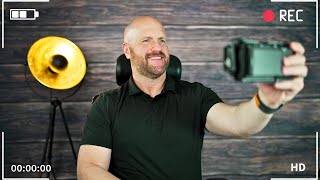
Fractional CFOs spend most of their time on camera, so confidence matters. Six hacks: imagine talking to one friend, use bullet points instead of scripts, do a physical warmup before recording, fix your lighting and background, smile with good posture, and embrace mistakes to stay relatable.
Chapters
One of the most important skills that you can learn to level up as a fractional CFO is camera confidence. Cringe doesn't even begin to describe the dumpster fire that I was four years ago. When I first started recording videos and doing a lot of webinars, I was never quite sure what to say. And the thought of showing up on video and letting unknown people see me when I wasn't perfect was absolutely paralyzing. But I found that camera confidence is just like any other skill. It's something that I've studied, it's something, it's something that I've practiced, it's a skill that I've developed. And I can tell you without a doubt that learning camera confidence has had one of the highest ROIs of any other business skill that I've ever developed. Today I'm going to share with you why it's so important that you gain camera confidence as a fractional cfo. And I'm going to share with you my six hacks for getting more confidence on camera. Let's dive in.
As fractional CFOs. The vast majority of the work that we do is done online. And because of that, that means that the vast majority of communications that we with other people is done via camera. I found that there's three particular instances where it's so important that we have another level of confidence on camera or it could be catastrophically devastating to our business. The first one of those times is when we get on a sales call. We spend so much time and effort getting new leads into the business and we hop on a zoom with them and we want them to give us thousands and thousands of dollars in exchange for our perspectives and our expertise and our leadership as fractional CFOs. But the reality is, if we get on camera with those lead and it shows that we don't have confidence in what we're saying, if we don't have confidence in how we're showing up on camera, that lead is going to equate our lack of confidence on camera with the value of the CFO services that we provide. And the reason for that is they're looking for someone that is a leader. And you've got to show and kind of exude that level of confidence on camera so that they associate you with a leader, someone that can step into their business, somebody that can come and speak to them as a peer in the C suite. And so they expect you to have, have a certain level of confidence. So it's so important that you're practicing and Getting better on camera, leveling up your confidence so that you can close as many sales calls for as much money as absolutely possible. The second time that it's so important to have confidence on camera is when it comes to like webinars or doing other activities where you're trying to generate leads. And the philosophy is the same as it is for the sales calls. When you're getting in front of a brand new audience of people, they want to see that you're confident, they want to get that feel that you've been there, you've done that, you know exactly what you're talking about and you're the right person, person to help them. If you get on a webinar and you're talking to a group of ideal clients and you are not sure what to say, if you're nervous, if you're not smiling and doing those other things that show that you're confident, they're not going to want to work with you, whether that's right or wrong doesn't matter. The reality is when people see you on camera and it feels like you don't know what's going on or that you're insecure, they're not going to want to work with you. The third time that I found it's so important to have another level of confidence is on CFO calls. CFO calls can absolutely be kind of a scary thing, especially if you're just getting started in the fractional CFO space. So when you show up on those calls and a client has paid you, they've agreed to pay you those thousands of dollars. When you show up on those calls and you're timid and you're not making eye contact with the camera at a frequent basis. If you're getting on those calls and it doesn't seem like you're certain about the direction that you're leading the call, the client can't help but assume that maybe you don't know what you're talking about. And that's the last thing that we want as fractional CFOs is to have the client thinking that we're not on our A game, that we don't know exactly what' going on in what we're doing. So it's so important that you show up again on those CF go calls with a higher level of confidence. The fourth time that I think it's really important to get good on camera is actually if you're going to be getting on stage or going to networking events or doing other things in person. And the reason I found that getting confident on camera translates in person so well is because if you can get on camera and be confident, which requires you to understand roughly what you're going to say, it requires you to understand the direction that the conversation's going, the objectives that you're trying to have for your audience. Those things translate really, really well to when you get in person. And so if you're that kind of person that's really timid about going to networking events or going to conferences and meeting other people, getting good on camera can be a great first step in figuring out how to be better in person and have better communications, more confident communications when you're in person. Now, let's talk about some of the ways that I've learned to significantly increase my confidence on camera. The first confidence hack that I've learned and maybe the most important and impactful confidence hack that I've learned, I call me and a buddy. And what I mean by that is, years ago, when I first got started, I couldn't help but think about the tens or hundreds or thousands of faceless people that were out in the interwebs that would be seeing me on camera. That was completely intimidating to me, and it caused me to freeze up a lot. It caused me to get really frustrated when I would try to talk. It was actually very debilitating to me to think about that. But one of my mentors said, no, no. Instead of thinking about all of those people, what I would rather you do before even turn the camera on, close your eyes and picture the face of one of your friends. Maybe it's a client, maybe it's a peer, but it's somebody that you know that you're talking to. So instead of the camera, think about talking to that one person and also think about talking to them and sharing them with them. The message that you're going to share and why it's so important that you share that message with just one person. That's been such a game changer for me because when I get on camera now, I'm just thinking about talking to a buddy of mine, and randomly, it's a friend of mine named Chris. I've known Chris for a long time, but anytime I'm going to get on camera and I start to get those feels of intimidation because of, oh, my gosh, what are all these people gonna think? Rather, I'm just thinking about having a conversation with my buddy Chris, and it really takes that level of anxiety down to about a one from like an eight. And it really helps me just feel A lot more confident on camera, a lot more comfortable. And I think that's actually an important distinction for me. There's a direct correlation between comfortability and confidence. So thinking about just having a conversation with my friend Chris makes me feel very comfortable, and that comfortableness translates into confidence. The other reason that I like the me and a buddy approach is because it allows me to let go of this need to be perfect. As I mentioned earlier, one of the biggest hangups for me was thinking that I had to be perfect with everything I said. And we're going to talk a little bit more in this video on that need for perfection and how to let that go. But just the idea of talking to my buddy Chris made me realize, like, oh, wait, I don't have to be perfect. I just need to show up and deliver this really important message that my friend desperately needs to hear. The second confidence hack that I've learned over the years is preparation. Now, I can tell you, like, nothing makes me more anxious or gives me more anxiety or nerves than getting in front of a group of people. Whether it's on camera or live in person, whether it's two people or 200 people, nothing gives me more anxiety than feeling unprepared. You know, when you're, like, getting ready to go out there and you're going to talk to these people and you're like, oh, my gosh, I literally have no idea what I'm going to say. It's going to be the most embarrassing thing ever. In fact, we just had our CFO accelerator live. And I'll be completely honest with you, the biggest fear that I had, and I had a lot of, like, nightmares around this, was these stories that I was telling myself of me getting on stage, and I would have, you know, 150 people in the audience, and I didn't know what to say because I wasn't prepared. And what I found is having a little bit of preparation. And I'll talk about what that preparation looks like in just a second. But having just a little bit of preparation really helps me feel confident that when I get in front of the camera, that I'm going to be able to not completely embarrass myself. But what I did for a long time is I would just try to wing it. And that was such a horrible approach because I'm not good enough to wing it. And what I've learned is I've worked with other experts on camera confidence over the years. None of the experts ever wing it. And so I'm like, why was I Trying to just wing it for so long in the past. But when it comes to preparation, there's three levels that I like to think about. One of them, obviously, is just the winging it, which we can already agree that's not the power to go down. On the other end of that spectrum is scripting. And a lot of people think that they need to script out their videos, like, word for word, line by line, and then read that through a teleprompter or notes or something like that. That's on a board. And I found that winging it and scripting it are equally detrimental for me. Neither of those work very well for me because when I try to script it, I'm always chasing that impossible perfection. You know, when it's all scripted out, I want to hit every word exactly right. I want to say the script exactly as I've written it out. And it's just, like, completely unattainable for me to be able to do that. Plus, when it's scripted out, it's so obvious anyway, for me, anyway, that I'm reading it instead of looking at the camera and just having a conversation. Like, you can literally see my eyes moving back and forth as I try to read the script. And so it comes off as very inauthentic. Like, people can just tell that you're reading it. And I don't think that that gives, like, the kind of vibes and the kind of feel that I want to, whether I'm on video doing something like this or if I'm doing a webinar. So what I found is there's actually a really happy medium for me that lies in between winging it and scripting it. And that's where I just use bullet points. And that's exactly how I've written out my notes for this video. So what I did is I said, okay, we've got to have an introduction. Here's a couple bullet points about that. I'm going to talk about the reasons why fractional CFOs need to understand the importance of confidence on video. And then I'm going to give my six hacks. And so literally, there were like, two bullet points for the intro. There were the six hacks. Each of those hacks has one or two bullet points. And then I have my conclusion. And that's exactly the same methodology that I use when I'm on stage at the CFO Accelerator Live. That's the same methodology that I use when I'm speaking on somebody else's stage and talking about our cfo. Services. But just having those bullet points allows me to have enough guidance to and direction for my talk that I'm not worried that I'm going to completely flub it. But it also allows me to have that natural kind of dialogue and conversation and authenticity that I want to have with my audience. So I don't know which of those is right for you. I know that winging it is probably not the right answer, but between the bullet points and the script, I don't know which one is right for you. But I can say that with all of the coaches that I've worked with and a lot of the other YouTube influencers that I've talked to and those kind of things, the people that tend to do the best use a bullet point format rather than trying to come up with a word for word script. The third confidence hack is create your energy. One of the things that people ask me all the time is they're like, mike, how do you have so much energy? And I'm like, no, no, that's the wrong question. You don't just have energy, you generate energy. You create energy. There's things that you have to do to level up your energy. And I can tell you when you get on a call or a webinar or you're delivering your CFO report and your energy isn't where it's at, it comes across that you're lacking confidence. You want to have a decently high level of energy. Maybe you don't want to have my level of energy, but you do want to show up like you're actually excited to be there. You want to show up like you're rested and ready to go. And I can tell you the most impactful and effective way that I have found to generate a lot of energy is right before I get on video, whatever video it is, whether it's a sales call, whether it's doing this video that we're on right now, if it's a CFO call, even if it's on a before a call with my team, I go through a three to four minute Kijong exercise. Now, I'm not going to go through exactly what Kijong is. I'll include some links in the description below so you can maybe watch some videos to get an idea of how to do Kijong. But it's a three to four minute exercise where you're really activating your body, you're loosening up your hips, you're getting the blood flowing, you're activating your nervous system. In that three to four minute exercise, in like, complete disclosure, it looks ridiculous. For those of you that were at the CFO accelerator live, Kachong is that exercise that we did before every single keynote that I was doing. So, you know, it looks a little bit silly, but you also know that it absolutely works. It's definitely something that you can do in private. It's nothing crazy. Again, it's just an activation exercise so that when you get on camera, you've got that level of energy. And with energy absolutely comes confidence. The person on the other end of the camera is going to feel it. You're going to feel it again. Three to four minutes. Why would you not go through the Kijong exercise or something like that to get your blood flowing so that you can show up with a little more confidence. Some other people that I know, they do some variations of it. I know people that literally jump on a small trampoline in their office before they get on camera. A good buddy of mine, he goes and skips back and forth down the hallway like you might do when you were in like kindergarten or something like that. Find that thing that works for you, though, to get the blood to flowing and the energy going. Now, that said, I do want to give you a couple of lookouts. There's some things that I've tried in the past, there's some things that I've seen other people try in the past to get their energy up, but they're actually counterproductive. And one of those things is drinking caffeine. You know, caffeine is the obvious thing, especially if you're like, not quite feeling it, you're a little bit groggy, you're like, oh, I'll have a cup of coffee or maybe I'll have an energy drink or a soda. And that's such a bad idea because what ends up happening is after you consume that caffeine is that caffeine half life starts to kick in. Almost every type of caffeine is going to leave you feeling a little bit jittery. And for me, anyway, I found that I have a hard time focusing and concentrating and really being present with whatever audience I'm speaking to when the caffeine starts to wear off. So I would highly encourage you kind of avoid the caffeine. The other thing is carbonated drinks. You think of like a monster or one of those kind of, I don't know what all the kids are drinking today. Red Bulls and those kind of things. Again, it sounds like a great idea, but what happens with the carbonated drinks? We burp you Know, especially if you're sitting down and you're getting ready to talk to a group of people, that carbonation settles and it inevitably comes back up. And so you find yourself, you know, doing this on camera or the, you know, mild hiccups as you're trying to hold it in. Avoid carbonated drinks. And in fact, before I get on stage even, I won't have any caffeine or carbonated drinks for 48 to 72 hours before I get on stage because I want to have all the caffeine out of my system. I want to have all of those kind of gas producing beverages out of my stomach so that there's no chance that I have any of those types of side effects while I'm on stage. And the other one that's really important to remember is really avoid sugary foods. Sugary foods will do the same thing as the carbonated sodas. It'll cause you to get those burps. A lot of times. Sugary foods like, you like the boost of energy from the sugar, but it will result in you having some stomach gas and those kind of things. And really nothing is worse than having stomach gas issues when you're trying to speak to an audience. So again, avoid the caffeine, the carbonated drinks and the sugary foods, but do those physical things to really get the heart pumping, to get your hips and your legs and your muscles loosened up and really get the brain activated. It will do so many wonders for your confidence on camera. The fourth confidence hack that I've learned is to create the ideal environment before you get on camera. I'll tell you, like, when you are comfortable in your setting before you get on camera, that really does translate to a higher level of confidence. But the inverse is also true. If you're not comfortable in your surroundings and kind of in your workspace when you get on camera, that also translates. So what kind of things should you think about when it comes to creating your ideal environment? I can tell you, like the first, first one, and this is like the low hanging fruit that a lot of people miss, is just think about your lighting. Lighting can go from like super simple to super expensive really quick. And the reality is you don't need to get super complicated or expensive with your lighting. You can get a $20 or a $30 ring light on Amazon and that will make all the difference in the world. You don't have to go crazy like this setup that I have for my YouTube videos. If you don't want to, it's absolutely not necessary. But when you have that good lighting, it really does make you look a lot more professional on camera. And when you look more professional, you feel more professional. When you feel more professional, you feel more confident. And again, we've talked about why that confidence is so important. So don't skimp on lighting. If you've got bad lighting, you get on camera and it's all grainy and your face looks all dark. Invest in that ring light if you want to. If you want to go crazy and invest in, you know, the key light in the fill lights and all the other things you can do that. I'll include some links below on some resources where you can just go crazy with lighting and have it look amazing. But you don't actually need to do that. Just get the ring light if you don't have anything else. The second thing that I found is so important when it comes to creating that ideal environment is get a room that's quiet. And so for a lot of us, you know, maybe you work from home, that means put the dog out in the backyard. Maybe that means locking the kids up in the bedroom and put them in front of, you know, their iPad so they can watch Minecraft video, whatever it is that kids are watching today. But what I've learned is like, when you're worried about the dog barking, or maybe the dog does bark or the kids are knocking on the door or yelling at you, it really does knock your confidence down because you're not really sure about what to expect and it just looks unprofessional, you know, when the dog starts barking or when the kids barge into the room. So really think through, like, what are those things in my environment that I need to kind of put aside or put into like a safety zone so that they don't come in and like ruin whatever it is I'm trying to do. Another one to think about if you have an office like I do is putting a do not disturb sign on the door. This is like been something that's interrupted me a bunch of times is I'll be sitting down recording a video just like this and the Amazon delivery person barges through the door, whoever it may be. So just think about the fact like, okay, if I'm getting ready to record, let me put something on the door that says do not disturb. And this could actually apply at home as well if you've got like a ring doorbell or a nest doorbell or one of those. And when it comes to disturbances, another thing to think about is actually use the do not disturb function on your phone. Or on your laptop. Because there's nothing worse than being on a sales call or a CFO call with a client. And all of a sudden imessages is beeping you or slack comes on or somebody calls in. Your cute ringtone is now like, you know, everybody's hearing it and it completely interrupts the flow of what you're doing. So again, like, look for those opportunities to put up the actual do not disturb signs or the proverbial do not disturb signs, like in the case of electronic equipment and those kind of things. Now, one pro tip that I'll share with you when it comes to creating the ideal environment that I found to be really important for me is one of the things that's like, really important as far as an ideal environment goes is simplicity. I got to this point where I had like really complex photography, like camera equipment and the lights and all of the things. And particularly before I had this office where I could have a permanent setup, it was like, you know, 30 to 45 minutes to get everything set up before I could hit record. And what I found is the more time it took and the more complexity there was to getting started with shooting on camera, the less likely that I was to actually start shooting on camera. And so I really encourage you, like, try not to over complicate your setup. You know, again, like the ring light, you turn on the ring light, you turn on the camera, and you're off to do your webinar, you're off to record, record your YouTube video, you're off to do the sales call. Just keep it as absolutely simple as possible and that will set you up for success. When you're not sure about how much time and effort it's going to take, that really does knock into your confidence because you're worried about, like, oh, is the camera not going to work this time? If I forgot to push this button, maybe the mic's not set up. Really try to focus on keeping things as absolutely simple as possible. The fifth confidence hack that I want to share with you is smile. That's right, smile. I can tell you there are two big benefits to smiling as it relates to confidence. The first one is when you smile, it signals to the other person that you actually, like, want to be there, that you're excited about being there. I can't tell you how many people in our industry I see on camera and they're not smiling. I don't know what it is about fractional CFOs and smiling on camera. That's so hard. But I can tell you like, when you don't smile, people don't want to be around that. Like, that doesn't give off the kind of energy that people want to surround themselves with. The other benefit to it is because so few people smile and actually, like, show up like they want to be there. It starts to become a competitive advantage for you because, like, nobody else is doing it. So the first big reason to smile is one, is it signals to other people you want to be there. But number two is, you know, I'm not a scientist, but when I smile, there's like, chemical things that happen inside of me or in my brain. I don't know where it's happening, but when I smile, it releases, like in endorphins or something inside of me. And it helps me show up with more confidence. It helps me show up from a place of increased joy and gratitude and energy and fulfillment. So smiling is, like, beneficial? Yes, to the people that are watching you on camera, but it's also beneficial to you. Along with that, there's other best practices that I can't emphasize enough. Things like posture. Don't slouch down on your desk while you're talking on camera. Don't have your hands in your pocket. Think about standing upright, shoulders down, lean forward a little bit. All of those little things help you feel more confident. But more importantly, they also portray again, that that increased sense of value, that increased, like, brand that you're trying to convey on camera. So, you know, really think about, am I smiling when I'm on camera? I know it can be hard sometimes, but again, it's one of those things. If you'll just practice it a little bit, it'll come naturally and you won't even have to think about it for very long. The 6 confidence hack that I've learned is to embrace imperfection. For some reason, a lot of us in our industry, myself included, we want everything we do to be, like, perfect, like 100%. We want to be the A student on every single thing that we touch. But the reality is you're never going to film a perfect video. You're never going to have the perfect webinar. You're never going to not stutter or say something wrong or forget exactly what it was you were going to say. In fact, you're never going to do anything truly perfect in life.
We're chasing this idea of perfect, and what ends up happening is is it slows us down or it stops us completely because we get paralyzed by the fact that we're not perfect. The other thing that I've learned that, again, I lose sight of this as much as anybody is. The closer we get to perfect, the more polished that we become, the less relatable we are, the less authentic we seem to our audience. And as we become less and less authentic, people start to feel like they can't relate to us, us, or that we're hiding something or there's something, like, fishy going on. And so this idea like that vulnerability leads to trust is so important. And the best way that you can be vulnerable is to just let people see your imperfections. And so quit trying to chase that idea of perfection and instead leverage the power that you being on video, can have. I don't know if you're anything like me, but impact for me is everything. And I've learned that video is so important to me, leveling up my impact. The more webinars that I do, the more. The more sales calls that I get on, the more audiences that I can speak to increases the level of impact that I have in the more impact that I have, the more fulfillment I get, the more joy and energy and just happiness that I'm able to have as a fractional cfo. And the key to that, like, the biggest unlock for me was doing more video. And so, really, as you're, like, journeying into the world of video, really think about some of these hacks and how you can apply them to your business. The first one, it's just you and a buddy. Act like you're talking to a buddy on camera. Don't worry about all the other people. Just have that kind of natural, comfortable conversation with a buddy. Number two is prepare. Don't show up and wing it. Don't script it, but have those bullet points kind of ready to go. Feel prepared before you hit start on the camera. Number three is you don't have energy. You create energy. Find some kind of a warmup routine, something you can do so that you have energy and vibrance and aliveness when you get on camera. Number four is create your ideal environment. The big one for that is just like, some very basic lighting things. Number five, smile, right? Act like you want to be here. Have some great posture and body language. It goes so far in communicating your confidence. And number six is embrace those imperfections. The thing that I want you to remember is you're recording your maybe third video or you're doing your third webinar. Try not to compare your third effort so somebody else's 300th or 3,000th, and, you know, get down on yourself. Because your third one isn't as good as their 300. So just remember, like, you're just trying to get a little bit more confident, a little bit better. Every single video that you do, every webinar, every sales call, every CFO report, over the course of a year, you're going to make massive improvements, and it's going to increase your impact. Listen, if you're just getting started on your journey as a fractional cfo, and maybe you don't know exactly what services you need to offer, I want you to check out this video where I cover the free four essential services that every CFO has to offer in their firm. In the meantime, I can't wait to see you right back here next week, my friends. See you then.










