I Quit Drinking Alcohol. It Changed My Life.
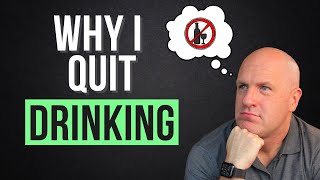
Michael King quit drinking three years ago after a keynote at a business conference in Charleston. He gained better sleep, more energy, clearer thinking, and stronger creativity, but developed worse sugar cravings. He encourages others considering the same change.
Questions this video answers
Three years.
Charleston, South Carolina.
He was celebrating his 41st birthday that weekend.
Chapters
Hey, there. My name is Michael King. Welcome back to the Connected Accountant. Normally, I talk about all things fractional cfo, but today I'm celebrating a pretty amazing milestone in my personal life. And I think that there's probably people watching this or listening to this that need to hear the story. And that milestone is the fact that today marks three years since I completely gave up alcohol. The reality is there's, like, I don't know, 20 or 22 years of my life where I really struggled with very regular consumption of alcohol. And it had a lot of negative consequences in my personal life, with my health and my business, my career. And so today, what I want to do is just share a little bit about my journey. Why did I decide to stop drinking? What was the trigger event that led to that? How did I do it? What were the positive side effects? And I also want to share, candidly, a negative side effect that came from my decision to quit drinking. Now, before I get into my story, I do want to say that this isn't intended to be like a public service announcement where I'm going to talk about all the evils of alcohol and how everybody out there should quit drinking. I just want to share a little bit about some of the motivators that led me to the decision and a little bit about my journey. Because, like I said, I do think that there's probably somebody out there listening to this that needs this encouragement or this inspiration to maybe cut back or quit drinking in their own lives. So let's go ahead and dive in.
So 3 years ago this week, I'm at a business conference in Charleston, South Carolina, and the keynote speaker takes the stage. This guy is probably in his mid-40s, and he's an executive at a Fortune 50 company. And he leads into his keynote talking about his journey with alcohol. And he said he. He made the tough decision eight months prior to quit drinking altogether. And he said, you know, you might think, like, why. Why would a guy like you need to quit drinking? But what he said is, as he got into his mid-30s, his upper-30s, and into his 40s, he started to realize that even if he had just one or two glasses of wine in a particular evening, he could feel it the next day. He said even after a couple of glasses of wine, when he woke up the next morning, instead of being at 100%, he felt like he was closer to 70 or 80%. And then he would be, you know, pumping caffeines and all these elixirs throughout the day to try to get from that 70 or 80%, closer to 100%. And he said, you know, I'm a high energy person and people expect me to be high energy. And the role that I have, I've got to show up with a lot of energy so I can serve people well. But then he went on and said, the truth is, rarely did I have just one or two glasses of wine at a happy hour after work. He said, normally it was three or four or six glasses of wine or two glasses of wine and then a mixed cocktail. The truth was, most nights, two, three nights during the week and then on the weekends, he was drastically over consuming alcohol. And he said as he got into his late 30s and 40s, that hangovers didn't just last the next morning anymore. He said hangovers started to last two full days. So he said, you know, if I go out on Friday night after work for happy hour, I'd get drunk and the entire weekend was shot. He said, I'm useless to my wife, my kids, you know, I'm like, go away. I got a headache, you know, get out of here. That was his reality is that was most nights. And he said, you know, when I go out and I do that, I eat like crap while I'm out. You know, I'm at the bar, I'm eating bar food, I wake up, I'm hungover. What do you want to do when you're hungover? You want to have a bunch of greasy food, you know. And he said, so because of all of that, my sleep was horrible. You know, I'm out late when I get home, I got all the alcohol, I don't sleep well, plus I've got all this horrible food. The next day I'm hungover, I want a bunch of greasy food. And he said, I put on 20 or 30 pounds over the course of a couple years, and most of it was just due to bad eating decisions related to drinking. When he thinks about the relationship issues that he had and the professional problems that he had, most of those things came when he was hungover. And he said, you know, eight months ago, as I'm reflecting on all the problems that I'm having, I'm tired all the time, my wife's pissed off at me, I don't do much with my kids, I'm slow and sluggish at work, I feel like I've lost my edge. He said, I was reflecting on that as I journaled one morning. And he said, you know, I just decided I'm going to be done. I decided that I was tired of feeling that way. And as I sat there at the conference and I'm listening to him talk through his story and the things that he was struggling with, I'm immediately remembering to the fact that the night before at the conference that I'm at, I had three glasses of wine and I kind of felt like I was about 50%. I was out until, I don't know, 11 o', clock, you know, because that's what you do at conferences. You go out and you have some drinks at the bar, you meet people, you're networking. And as I started thinking through a lot of the struggles that I had had in my life, whether it's relationally or professionally or with health, most of my issues came as a result, directly or indirectly, of overconsumption of alcohol as well. And as I listened to him deliver his keynote and, and talk about the positive impact that stopping drinking had on his life, I just made the decision right then and there that I was never going to drink again. So, interestingly, I was in Charleston, South Carolina. That was my 41st birthday that weekend. And so the plan was, is my wife was going to fly in and we were going to celebrate my 41st birthday together in Charleston. And it was coincidental because I had actually spent my 21st birthday in Charleston. The plan was to hit some of the bars that I had gone to 20 years prior when I first started drinking legally and celebrate my birthday. But I threw a bit of an audible when she landed in Charleston. I was all excited and I said, hey, we're going to go out tonight. I'm going to get completely wasted, and then I'm never going to drink again. And she's like, what are you talking about? Now, luckily, my wife isn't a big drinker, so it's not like this was going to pose problems for us or anything. She said, what are you talking about? And so I walked her through the story and I said, you know, I'm just. I'm tired of feeling 50%. I'm tired of, you know, eating like crap the next day. I'm tired of sleeping until one o' clock on Saturday, because Friday night we were at the bar down the street. I said, I'm just ready for a change. I'm tired of being tired all the time. And so she's like, all right, I'm here. Here for it. That night, we went to downtown Charleston and hit some of the same bars that I had gone to 20 years prior, amazed that some of them are still open, because they're kind of holes in the Wall. I drank a ton, kind of made an ass out of myself and went back and passed out. Woke up the next day hungover. But I had this commitment that was the last time that I was ever going to drink. And that was three years ago today. It's been now three years ago since I made that commitment to not drink again. Now sometimes I feel like I have a little bit of an imposter syndrome telling the story because I didn't have like this massive life changing event that led to the decision to quit drinking. I didn't go through this big program to stop drinking. I just made a decision one day that it was time for me to make a change. It's been a game changer for me. And really there's five key ways that I think my life has leveled up as a result of that decision that I made three years ago. I'd say the very first benefit that I noticed almost right out of the gate once I stopped drinking was how much my sleep changed. When you're going to happy hours every night you come home a little bit later. Or in my case, I'd come home a lot later, but you still have to go to work the next morning and so you're just not sleeping nearly enough. I've learned since then that I really do need about seven and a half to eight hours. And when I was drinking consistently, I was probably only getting four, maybe five hours of sleep. Most nights I just had the availability to get a lot more rest. But when I drank, I was normally drinking Captain Morgan and Diet Coke. Now don't judge me for drinking Captain Morgan. It's good, right? But Captain Morgan is loaded with sugar and Diet Coke is loaded with caffeine. So in addition to the fact that I'm out late, I'm just pumping my body full of sugar and caffeine all night. So when I do get home and lay down, my heart rate, my blood pressure, all that's sky high. And that really just leads to bad sleep. So it really didn't take but a few days after I decided to stop drinking before I recognized that, wow, I'm sleeping so much better now. The second benefit that I noticed right after the sleep benefits was the fact that I had a ton more energy. Now I'm sure that's because of the fact that I was sleeping longer, but it was so amazing to be able to wake up and feel refreshed in the morning and to be able to hit the day with the kind of stride and energy that I wanted to have. I think it's just a fundamental result of the fact that I was finally sleeping longer, but I was also getting more quality sleep. Yeah, I still drink a lot of Diet Coke. It is what it is. I know it's not the best, but I still do it. I still drink coffee. I love my caffeine, but I don't need it. Right? I don't need it. And I also find like before, my energy, when I did have it, it plateaued. Actually it probably tanked by about 1pm Now I can go until 7, 8 o' clock at night and maintain that consistent level of energy that people love about me. The third benefit that I noticed was because of the fact that I was getting more sleep and I had more energy, I became exponentially more productive. I get up at 4440 every morning, seven days a week now I'm at the gym three or four days a week. I'm working out. I get home from the gym by 7 or 7:30 and I'm off to the races. You know, my wife and I are doing chores or going to work if we have to. You know, like on a weekend by like 10 o'. Clock. My wife and I joke about this. We say we get more done by 10 o' clock than we used to get done in an entire weekend. I just feel so much more fulfilled and accomplished because of the fact that I'm able to get up and I've got that energy and that joy and the vibrancy to be productive. It feels amazing. The fourth benefit is mental clarity. Now I'm going to be honest, I didn't start to see the changes in mental clarity maybe for six, seven, eight months. In complete disclosure, I'm not a very self aware person. So the clarity may have come a little bit earlier and I just wasn't aware of it. I started to realize that I had a much clearer vision of where I am, where I want to go and what I need to do to get there. And when I think back on what it was like before, before, it's like I kind of knew where I was and where I wanted to go. But it was this fog. I always had this mental fog. It felt a little bit like as I would try to flesh out ideas, it felt like a traffic jam in some ways. Like I knew kind of what I wanted to do, but I'm blocked. There's all these other things in the way and I just couldn't figure out how to get around it. Right. I couldn't bring those, those ideas to light. Eight months into it, I started to recognize that I had this. This level of clarity that I don't think I had ever had in my life before. And that started enabling me to be able to make better decisions and to be able to move faster towards some of the goals that I had. The other benefit that took again, six, eight months, maybe even a year, was creativity. My creativity exploded once I stopped drinking again. I know that some of that is a byproduct of better sleep. Some of it was a byproduct of productivity and having more energy. But I felt like I had unlocked a part of my brain that I had never had access to to before. It unlocked new ways to problem solve. It unlocked fresh ideas for me. And I don't think it's any coincidence that once I quit drinking, my business exploded. We started serving clients at a better level. We started serving people in better ways and more ways. We were able to increase our impact. And I'm 100% certain that it's because I had unlocked this creative part of my brain that I just never had access to before. And I 100% believe alcohol was, was holding my brain back in a lot of ways. All of these positive things, they impacted every area of my life. My relationships with everybody from my wife to my friends, to colleagues to customers to strangers on the street changed as a result of those benefits that I mentioned before. The energy and the productivity, the joy, the fulfillment, me being able to be more present now, all of that. Said, there was an adverse side effect that came from drinking. I think it's because of the fact that my primary alcohol of choice was heavily sugar based. I love Captain Morgan and I love white wines and I love champagnes. Right. Loaded with sugar. About a month after I stopped drinking, I started to realize that I was having these massive sugar cravings. Like, I couldn't go to, like, bed without having some kind of sweets. I've never been a sweet eater. I've never been the guy that wants the candy bars and the cake and that kind of stuff. About a month or so into sobriety, I really, really wanted cakes and cookies and tiramisu. Gosh, I love tiramisu now. And so that's been a struggle for me because I've got to. I'm still working on this. It's part of the journey is building up the discipline to say no to those sugar cravings. The sugar does impact sleep, and I got to work out a little bit harder to work those things off, but I wouldn't give any of it up. Even despite the fact that I'm still, you know, craving the sugar. I wouldn't give any of this up. I do believe that I'm a different person today than I was three years ago when I made this decision to quit drinking. And I know that my relationships are deeper and they're more meaningful. I know that my business is more impactful. I can say, hands down, that the level of presence and energy and joy that I have in my heart is a direct result of my decision to quit drinking. So, like I said at the beginning of this episode, I don't want this to be a public service announcement of all the dangers of alcohol and that everybody out there should completely give it up. But if you're watching this and this message speaks to you, I would really encourage you to just. Just do some soul searching. Are you tired of being tired? Are you tired of having that mental fog, that mental traffic jam that's maybe holding you back in life? Are you ready for another level of presence and joy and energy? If so, maybe it's time for you to quit drinking. All right. Thank you for being here. I look forward to seeing you right here next week, my friends. See you then.
Sam.










