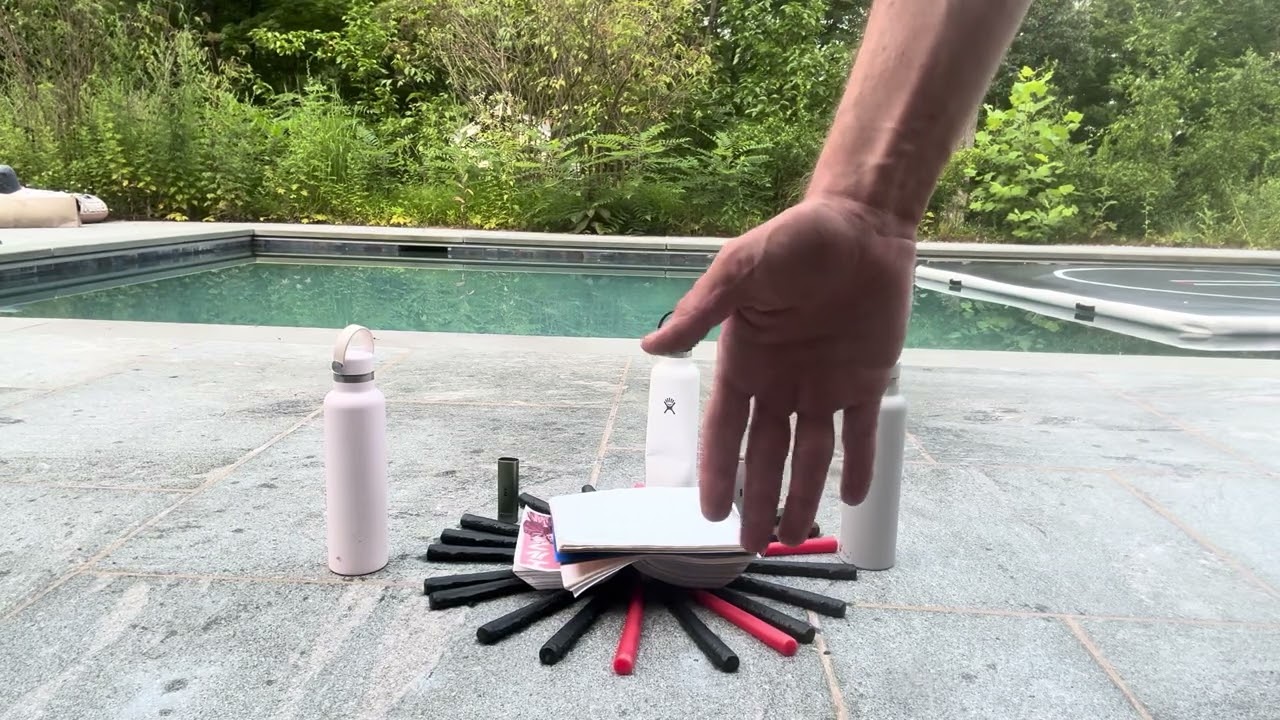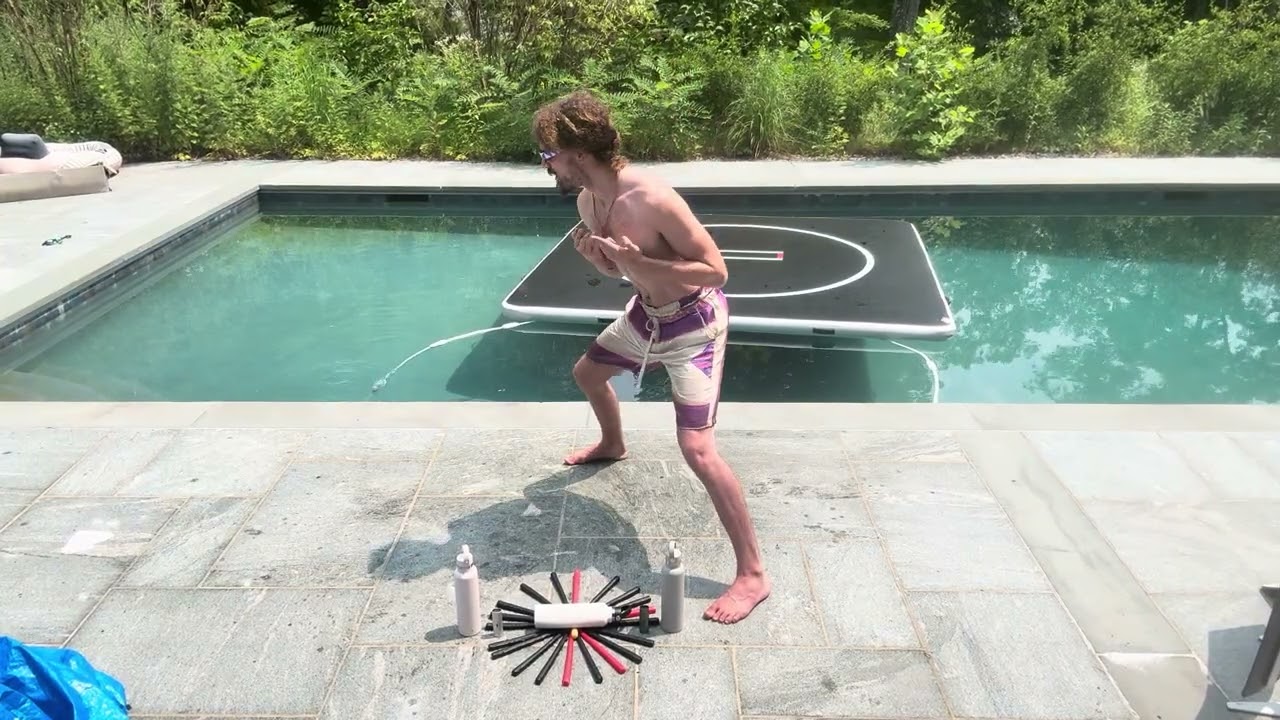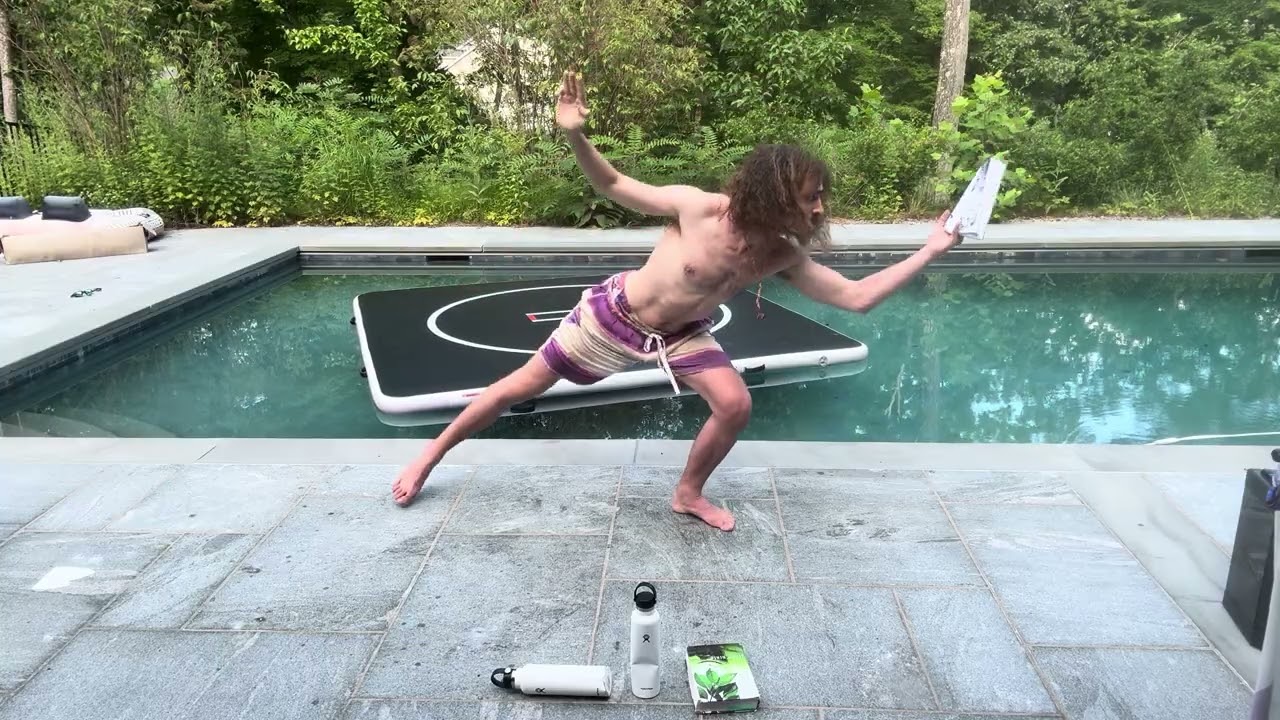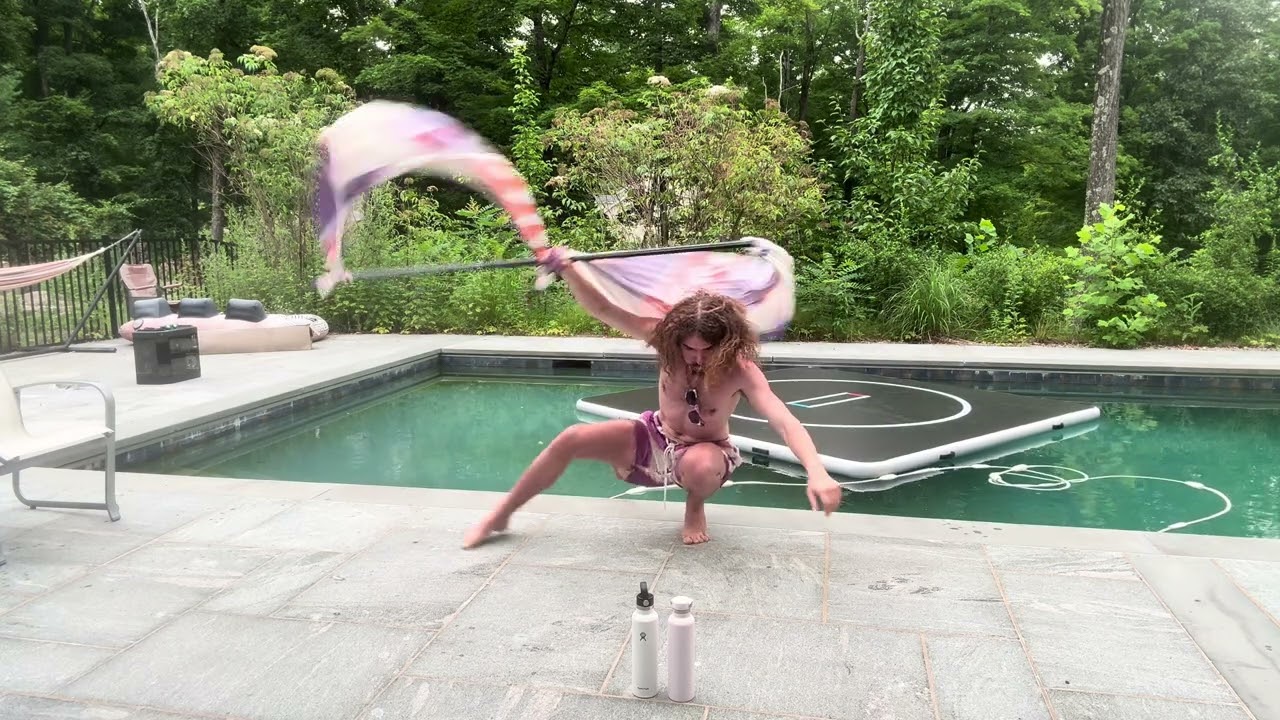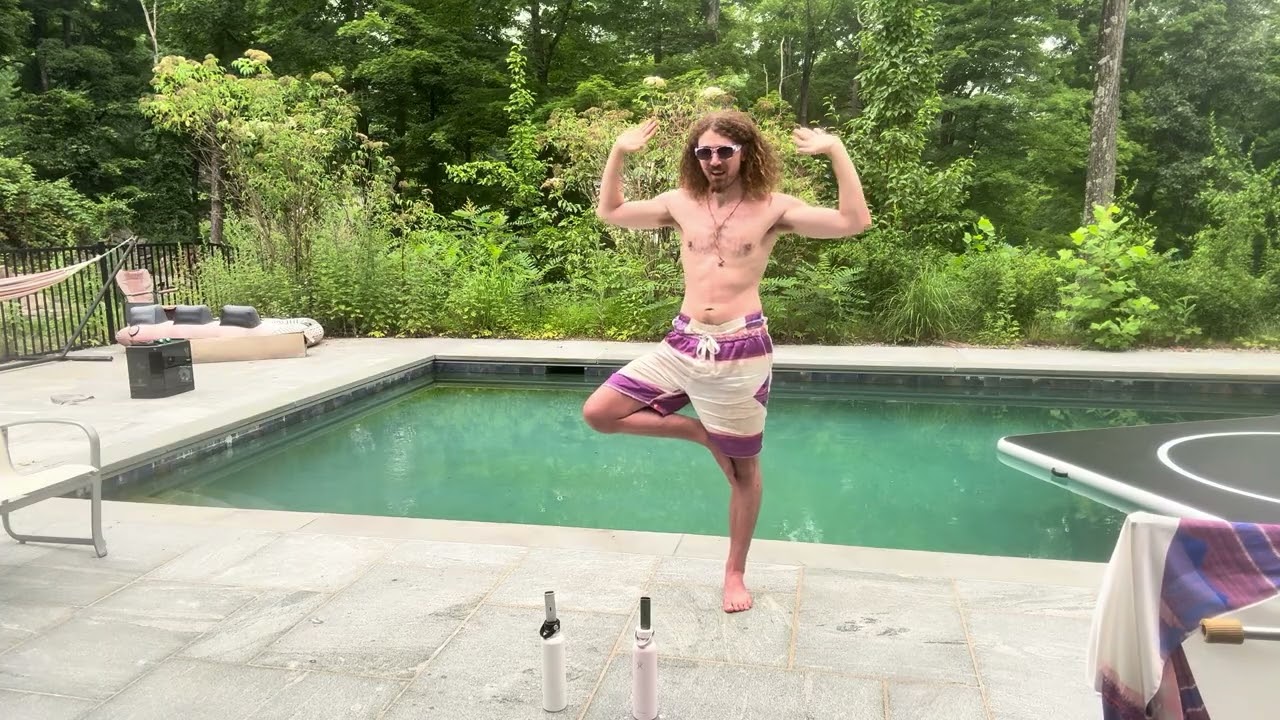
Edward MacLean demonstrates Sign Dance, a motion-capture system using hand, arm, and leg gestures to encode letters and words. The DigiBet hand alphabet uses 32 combinations of closed and open fists, while arm and leg positions add simultaneous letters, allowing full sentences like prayers to be signed across the body at once.
Chapters
Hello, I'm Edward MacLean, and welcome to Sign Dancing. In this video, I will give a brief explanation as to what Sign Dancing is, and perform some of the basic forms. So SignDancing is the culmination of the work I've been doing regarding building a sign language for motion capture gloves. These gloves have sensors on each finger, so 1, 2, 3, 4, 5, a sensor on the back of the palm, a sensor on the forearm, and a sensor on the upper arm. So that's 8 total sensors. And the hope is to use those 8 sensors to create the rules of a sign language. And so it started with the DigiBet. So what I did is I took the simplest hand gestures to to make, the closed fist and the open palm, and alternated them from, uh, the most common letters in the Bible. So space, E, A, R, N-S-L-C-U-D-P-M-H-G-B-F. Y, W, K, V, X, Z, J, Q. So at Q is where the letters of the alphabet ended, and then from there, since there are 32 possible hand combinations— since there are 32 possible hand combinations, there's a space and 26 letters. So that means there's 27 taken up, up by Q, by the time you get to Q. So then after that 27th, which is Q, you had 5 open spaces. And so I populated those with double letters, or bigrams as I call them. So the prefix bi meaning 2 and gram as in n-gram, which is kind of like any letter, you know, is an n-gram. So 2 letters is a bigram. Or bigram. So the first bigram is th, I call it th, and then it's an, a-n, and then it's in, i-n, and then it's ou, o-u, and then it's er, e-r. T-R. So those are all the letters that you can sign on one hand, and then using those letters on that hand, you can sign using the arms for a second letter, you know. So if I have H on my hand, the, uh, most common letters to be next to H in the Bible are H by itself, that's always first, then H-E, right? So I have H-E, and then for L, it's L by itself, and then L-L, right? And then I can do an O by itself. So H-E-L-L-O. So now I can sign two letters at once using one letter on my hand and one letter on my arm. And using both arms, I can sign 4 letters at once, 2 on one arm and 2 on the other. So H-E-L-L-O, H-O-W-A-R-E-Y-O-U. Hello, how are you? So then from there I realized that there are 32 hand combinations and 32 arm combinations. So the 32 arm combinations are as follows. So you first, you want to start with a fist. You want your palms to be supinated. So supinated is when you hold them up, you see your palm. Pronated is when you hold them up, you see the back of your hand. The supinated palms facing straight up and a nice straight wrist. There are two ways to bend the wrist in this practice. There's towards yourself supinated and towards yourself pronated. Okay, so nice straight wrists. So then the first position, this is set 1. 0, 1, 2, 3. 0, 1, 2, 3. 0, 1, 2, 3. The second position, you pronate your hands. 0, 1, 2, 3. 0, 1, 2, 3. 0, 1, 2, 3. Then the third position, you supinate your hands, but you bend your wrists towards you. 0, 1, 1, 2, 3. 0, 1, 2, 3. 0, 1, 2, 3. In the fourth position, you pronate your arms and bend your hands back towards you. 0, 1, 2, 3. 0, 1, 2, 3. 0, 1, 2, 3. So the idea behind this is a zero position. From 0 to 1, you are bending your forearm up. You are decreasing the size of the angle between your forearm and your upper arm. So 0 to 1, and then 2 is your upper arm is rotating itself in relation to your body. So your body stays, stays straight up and down, but your upper arm changes. So— it goes from having zero angle on it to a 90-degree angle, right? But from 1 to 3, you want your forearm to be in the same position so that the forearm can hinge as if it's levitating in air, almost. You can almost move into it so that it is stuck in time-space and you're moving around it. So 1 to 3, and also that way so that there's a synchronicity in the movement from 0 to 1. Now from 3 to 4 is the same bending and decreasing that angle between the forearm and the upper arm. So those are the arm movements. And then the hand can have 4 positions: it can be supinated, pronated, supinated bent, pronated bent. So then using this, that increased my unit sign. So unit sign would be, if I'm doing one sign, the amount of information that can be expressed in a single sign. So my unit sign used to be 1, right, because I could do 1 letter on my hand. Then it became 2 because I could do one on my hand, one on my arm. And now since it's been able to be 2, it can be 4 because I can transfer the knowledge from one arm to the other. So now my unit sign is 4 using all those positions that I just explained to you. Okay, so then after this point, I wanted to incorporate my legs, and this took me a lot of thought, and I originally wanted to go with these similar, you know, apply a pattern to body parts moving, and maybe that's somewhere in the patterns that I've come to, but right now it's really just a, here are 16 movements that feel good. Oh, and I did forget to mention that those were the 16, all of those arm movements, there's 16 of them total. There's 4 sets of 4. But then there are 16 more when you take your hands that were in front of you doing these movements and bring them out to your sides. So now there's 16 more here. You can do this with an open palm. 0, 1, 2, 3. 0, 1, 2, 3. 0, 1, 2, 3. 0, 1, 2, 3. And so those I have had to be careful with because when I first started, there's something about the way I held my shoulder that it would just miss the proper range of motion and it caused me some pain. Okay, so now from there I developed the legs. So the movements and letters, the pairing of those, I call it the DigiBet because the alphabet is our letter shape and, you know, sound pairing. So the DigiBet, you know, it is a digits for your fingers alphabet. So the DigiBet, and then I have the ArmBet, is the alphabet for your arm. Okay, and then I also wanted to develop the leg bed, so I'm going to grab some water. So the leg bed, taking inspiration from various yoga and Tai Chi, uh, movements that I've been studying for the past couple years started with both of your feet together. You know, you can almost think of a soldier at attention, and your arms start out primarily hanging by your side. Now, there is parallel between the arm positions and the leg positions, and so you will see me do an arm position that is the value equivalent of the leg position. So that will make sense as I go on. So this is 0. 1 is stepping out to the side, so your, your legs are still straight, there's no bend in your knees, but your feet are parted. So it'll be 1. 2 is when you kick out your right foot to your right side, that would be 2. 3 is when you flip the side that you were kicked out to, still with straight legs, that would be 3. So you have 0, 1, 2, 3. So from there, 4 is going back to your dominant side, but now standing with a straight leg on the left with your foot facing forward and a bent leg on the right with your foot facing to the right. And that starts our pronated set. So 1, 4. So this is 4. So then 5 is when you switch the orientation. So 5. And 6 is when you enter into a light squat. 6. And now you want to make sure we're preserving the deep squat for a later sign. So you want to make sure that this squat is light. You— the deep squat is at 90 degrees, so you want to be halfway between 90 and your standard standing position. Okay, this is 6, and then 7 is when you take your feet that are rotated out and rotate them in, and you stand nice and straight and go on your toes. So this is 7. So then 8, which starts our supinated curl set, is out to your dominant side. Your right foot is facing right. And now your left foot comes up behind you and faces right as well, but you're only standing on the ball of your foot. So this may be cut off, but you want your right foot facing to the right. So if my left hand is pointing straight, my right hand is pointing right. So I want your right foot pointed that way, your left foot also pointing that way, but only on the ball of your foot. It's very important that you lift your heel up. For this movement. Um, so that is 8. The 9, as we've seen in the past, is the turning during that movement. That's 9. And 10, similar to the second set, is the squat. So this time you must reach a 90-degree angle between your thighs and your calves. Okay, so this is 9. And then 10 is returning to your center and then coming in with a narrow squat as deep as you can go. This is 10. And then 11, you start with your dominant leg lifted up And if you'll see, you want your thigh to stay as if it's hanging. Your calf comes up so you're facing your calf to the sky, and you bend your foot down. This is a different sign. This is Sign 12. You want to feel tension on your dorsiflexor. Okay, so this is 12. 13 is taking that entire leg, it stays static, but you just rotate your hip. That's 13. And then same movements, different leg. 14, 15. So using those 16 movements Movement 0 to movement 15. Um, I can now apply a third letter. Well, now my legs can access a letter. Okay, so that means I can have H-E-L-L and O on my legs. So O is in the second set. It is the 0 value in the second set. 4, uh, is first in the second set for L, which is the last letter in my total, right? So it's H-E on this hand, L-L. So L needs an O. So then you go and you find that in the arm bet rankings, because since the legs and the arms share their same value you can access the next letter of your arm value with your legs. Okay, so then O for L. L1 is Leo, so it's L-L-E-O, right? So it's the fourth one, okay, in the first set, okay. So H-E-L-L, so fourth one in first set. So that's the first, second, because it's an L, if your pinky is up, your dominant foot is your left, and that's the one you turn first. If your pinky is down, your dominant foot is the right, and that's the one you turn first. So because our pinky is up in L, you turn your left foot because that's your dominant first. So it's 0, 1, 2, 3. So 3, 3 and 4. You gotta kind of got to get used to it. I index by 0 and I index by 1. I apologize if that confuses you. So this should be position 4 if you're starting from 1. So H-E-L-L and then O on my legs, right? So you have L's. So you have L by itself, L-L-L-E-L-L. So this, I now have H-E on my right arm. LL on my left arm and O on my legs. So using that, you can sign 5-letter words with ease. You can find some 6-letter words. There are certain words that start getting into 3 or more, uh, you start getting into trigram territory because you run out of bigrams in your database, right? Because like, because some letters can only be followed by certain other letters, right? So like if you're a vowel, you can be followed by almost every other letter, but if you're a consonant like q, you can only be followed by u, ui, ue, and uo, you know. Which means that you can start getting into things like using like 3 letters, right? So like, yeah. And also you have the bigrams at the end of the digibet, right? So you have in, you have an, you have ow, you have er, and you have eth, you know. So you can do like the, right? Because they have their own arbet, you know. So you can do like T-H-E-I, right? So E-I, E-1 is resin, E-R-S-N. E-2 is dolm, D-A-L-M. E-3 is ytev, Y-T-E-V. E-4 is cipef, C-I-P-E-F. So I-C-I You know, so now I can do t-h-e-i and then e1-resin r there. So then using that, and since I— water break. And so since all these, uh, The letter frequency, n-grams, bigrams, and trigrams are all derived from the Bible. I calculated every letter in the Bible, every bigram that appeared in the Bible, and every trigram that appeared in the Bible and used those as a scaffolding to apply my body movements with, you know. Um, I attributed this to God, you know. These are his movements that I have merely been discovering. Um, and so that's why some of the first things that I have practiced saying are words that appear frequently in the Bible, which by definition of more common words and letters appearing in easier, uh, body positions would mean that all the words said most in the Bible have the simplest expression through your body, you know. Um, And, you know, it's been very satisfying. I have developed workout routines that I really feel hone my body, let me listen to myself more. And by exercising and repeating, uh, prayers to the Lord, um, and God bless you, you know, um, I feel like it is allowed to become a ring on a tree that is my, like, being growing and expanding. Um, and it feels really good. Um, and so I just wanted today in this video to share the work I've been doing and, uh, show you some of the signs that I have, uh, completed. Okay, so this is the Uh, you know, the sign prayer, as you would call it. What it is essentially is, um, using various, uh, languages used in the Bible by the prophets who try to contact the Lord. Um, you string together, uh, a series of sign positions that rotate through many different forms so that your body is used to holding and getting into different, uh, dynamic positions. And so this allows you to create a workout by, uh, you know, by repeating a prayer to yourself. All right, so the first one is God. So that is G in its first position, so O. And I hold on both hands because if you hold a letter in both hands, it capitalizes, uh, the first letter. So God, so it's G-O, capital G-O, and then D on my legs. You know, uh, because, uh, the last letter is O, you know, and, uh, OD is the 8th letter, you know. So it is the 8th letter, which represents this and the like better. So God bless. So bless. Yep, there you go. You gotta get on your toes facing forward. So bless is B-L on your right hand because B has O-A-L as its second set, and then E-S because E-R-S. So E-S, B-L-E-S, and then you need a second S on your feet. Right, um, which would be, uh, you know, oh, h— yeah, so second set, so it would be, uh, oh, h, i, S, you know, so bless. And then you is just Y-O-N-U, and you silence the feet. You can silence the feet by putting them together. That's essentially what that means. And it also works out because this is a silent arm position. If you sign a letter in this position, it is only itself. There is no bigram. So you have monogram mode like this. Bigram mode is any change from monogram mode. And then you have, uh, pentagram mode with your legs. So once you move your legs, you've entered the space of the 5th, uh, 6th, and 7th level, uh, letter. So God bless, bless you, right? And then it just goes on. So now I will continue and complete my prayer for you after some water, and I will grab some tea. All right, tea break. Now, the signs. May God bless you, Jesus Christ, our Lord, and save Your soul. Whom. So this is W-H on the right hand, O-M on the left, and E on the legs. Whom. I-L-O-V-E again on the legs. I love. In the. I-N-T-H-A. In the. I-N on the right hand, T-H on the left, and A on the legs. In the. Name. N-A on the right hand, M on the left, E on the legs. Name. Of the. Similar to "in the," but now you have an "of" on your right hand, so it's "of the." O-F on the right hand, T-H on the left hand, and A on the legs. "Of the." Mm. And then you have "father," so you have F-A-T on the right hand, you have H-E on the left hand, and you have R on the feet. So that's "in the name of the father." 'And the.' This is 'and' on my right hand. 'Th' on my left. 'A' on my legs. 'And the.' 'Son.' 'S' on my right. 'O' on my left. 'N' on my legs. 'And the.' Then you have W-H, then O-L, and then Y. W-H-O-L-Y, holy. And then ghost. And then a little amen. Trinity I do is a-m-e-n, a-men, a-men. So thank you for watching this video. I hope you enjoyed it, and I hope to see you next time, uh, with your own Sign Vance. God bless.