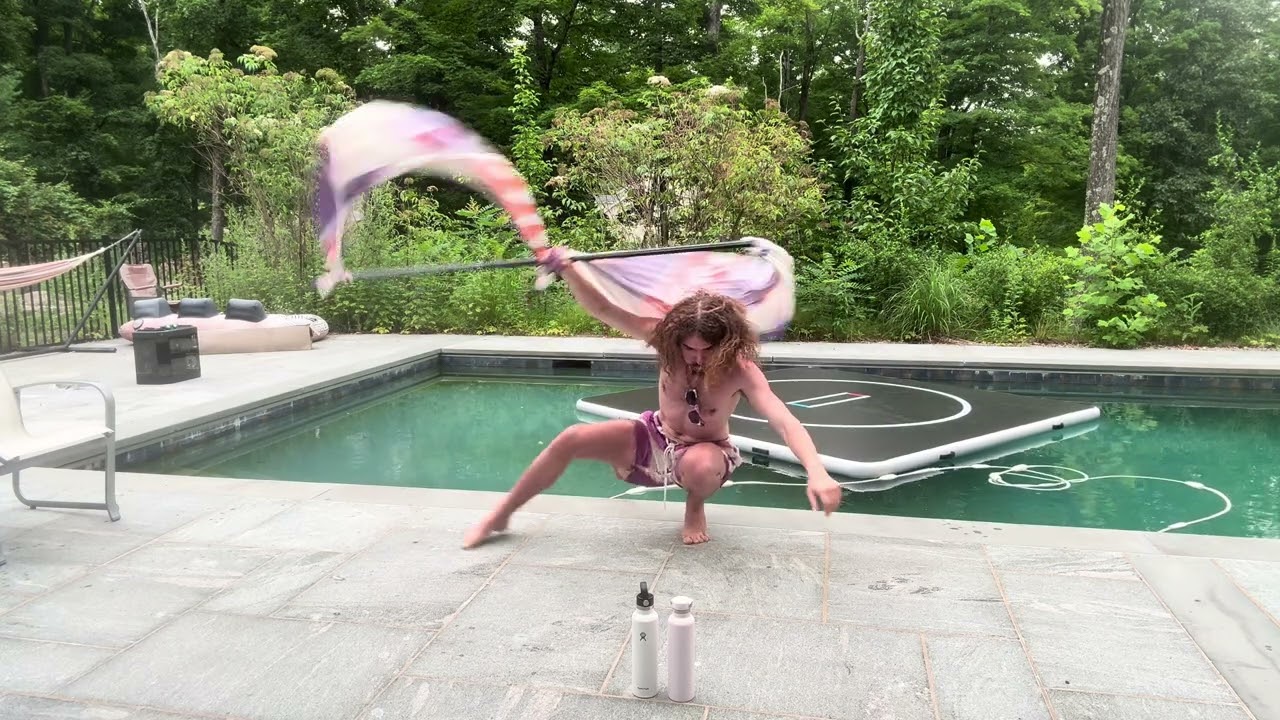
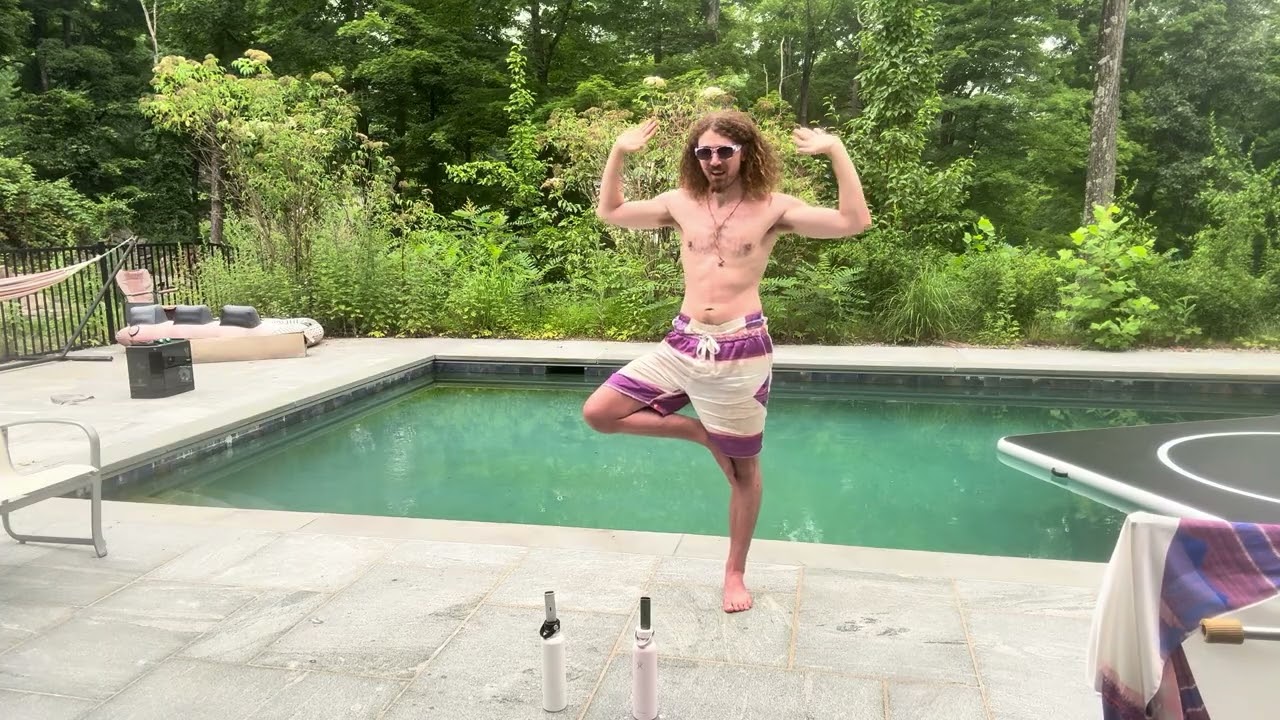
In this instructional video Edward MacLean continues his SignSchool/Armbed training series. After reviewing the previously taught flow sets (E, A, R, I, O, T) he introduces the N series (N1‑N4). Each N pattern is paired with a mnemonic syllable—N1 ‘DGEN’, N2 ‘Tosa’, N3 ‘ik‑ik’, N4 ‘in‑luff/in love’—and demonstrated with breathing cues and repeated flows. MacLean explains his practice methodology, urging learners to experiment with playback speed (half, quarter, or fastest maintainable) to balance speed and articulation. He then delves into hand anatomy, highlighting the thumb and pointer finger as the strongest muscles, describing how the T series engages them while the N series de‑activates them, isolating smaller muscles on the back of the hand and forearm. He connects these subtle biomechanical differences to broader philosophical reflections on how tiny variations can have profound effects. The lesson concludes with a combined run‑through of all N patterns, a recap of the entire flow set hierarchy, and an invitation to continue signing.
Chapters
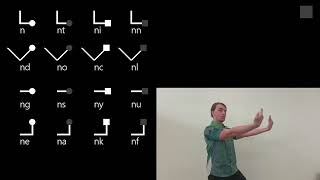
Hello, I'm Edward MacLean, and welcome to SignSchool. In this lesson, we'll be continuing our arm vet training. Until this point, we have done E, R, A, I, O, and T, and this will be N. So, uh, to begin, we will go through, uh, all of our letters up until this point, just a single flow. Um, then we will get into our ends. So starting with E. E, R, S, N-D-A-L-M-Y-T-E-V-C-I-P-F. A-A-N-T-R-S-L-I-M. Y-D-B-C-H-B-K-U-I— nope, sorry, R. R-E-O-I-D-A-S-T-N. Y-U-R-B-K-U-I-D-A-S-T-N. M-K-C-I-I-N-S-T-L-M-D-R-E-V-G-O-C-F-A-K. O's. O-U-R-N. F-M-T-W-D-S-O-L-P-V-K-I-T-T-H-O-E-I-A-S-R-Y-T-U W-L-C-N-B. Okay, so that one was a little quick, but I do want you to, uh, understand how I, uh, went straight from, uh, the fourth of one letter into the one of the next. Sorry, fourth of one the one of the next, and just give you a sense of the speed at which I flow through things. I encourage you to play at half or quarter speed. Play it the fastest you're able to keep up, but the slowest you're able to properly articulate your movements. But so, you know, speed I go should be your goal, and then hopefully a checkpoint for future training. So now we're going to get into our Ns. Okay, so N1 is N and D and G and E. My little word for this is DGEN. It can be made by putting an N at the end of DGE. So N1 DGEN You know, it just feels right. So, N1, here we go. We'll do our breaths. N1, D-gen. N1, D-gen. And one D-Gen. That will flow. N and D and G and E and one D-Gen. N, D, G, E M1DGEN. N, D, G, E. Okay? So now N2 is N, T, N, O, N, S, N, A. This nicely enough is not a word per se. But does have a consonant-vowel-consonant-vowel pattern, which makes it easy to pronounce. So I call this one Tosa. Entu Tosa. So let's get into it. Start with our breaths. Entu Tosa. Entu Tosa. Into Tosa. Now we'll flow into Tosa. T-O-S-A. Into Tosa. T-O-S-A. A. And tutosa, T-O-S-A. All right, and now for N3. I'm gonna grab some water real quick. Okay, check it out. N3. So that is ni, nc, ny, nk. I call this one ik-yik, um, you know, icky and yucky, yicky, you know, they kind of make you feel like it's something you want to stay away from. Um, if that has to do with N3 You know, I'm sure at some point I will discover, but for right now, N3 is ik'ik'. You can almost think of it as like a toddler touching, I don't know, mud, you know, or something like that. So N3, ik'ik', start with our breaths. And 3 ikiek. And 3 ikiek. And 3 ikiek. Now the flow. And 3 ikiek. I-C-Y-K. N3 ikjek, I-C-Y-K. N3 ikjek, I-C-Y-K. And then N4, this is one of my favorite ones, is NN. So this is Another one of our double letters, but this time it is in N4, so it is divorced from our third set group of E, O, and T. So N4 is NN, then NL, NU, NF. So I call this one inlath. Makes me think of in love. And I think that's just kind of beautiful. So N4 is in love, in love, which is in love to me. So do our N4, start with our breaths. N4, in love.. And for, and love. And for, and love. Now for the flow. And for, and love. N-L-U-F. And for, and love. En, el, you, eh. Enfor, enlof, en, el, you, eh. All right. So en as a series, it's pretty easy. As I described in the T series, I found that— I find that my pointer and my thumb are generally my stronger fingers, certainly the most muscular, you know. As you can kind of see, the thumb's muscles are all along here, and the pointer finger's muscles are this guy right in here. Alright, so this is the largest clump of muscles on your hand. This guy right here, your palm, you know, kind of base of your thumb, and then this guy right here. So those are the biggest muscles on your hand. You have this one over here, but you know, that's— it comes in third. So since the two largest muscles on your hand are by your thumb and your pointer, that generates the greatest amount of tension when you're pulling your wrist back. So that's why I find T to be the strongest, you know, and since these fingers are down, they're deactivated for the most part. And so then since T is the strongest, I find with N that you deactivate these two muscles and it really isolates this guy over here and whatever the smaller muscles are on the back of your hand. There really aren't that many muscles on the back of your hand, Most of the musculature that controls your fingers is actually in your forearm. I don't know if you can see them wiggle when I do that. You can kind of— there you go, see? And so the ends, N3 and N4, I find deactivate the hand tension and really focus on these guys right here. Okay. So now we'll get into the Enflow 1 through 4, wrap everything up. Forgot to grab water before, or get distracted. All right, I don't know the name of it, but that the thing I just did Bring your arms out, over, and down. It is a martial arts technique, um, to kind of center yourself, steady your breath. I use it every now and then. You're welcome to join me or find your own. So start with N1 D-Gen. N, D, G, E. N2 Tosa. T-O-S-A. And 3 Igjek: I-C-Y-K. And 4 in Luff: N-L-U-F. And 1 D'Gen: N d, g, e, tosa, t, o, s, a, ikiek, i, c, y, k, nluf, n, l, u, f. All right, last one. N-D-G-E-T-O-S-A-I-C-Y-K-N-L-U-S. All right, good work today. So in today's lesson, we went through all of our, uh, flow sets up to this point. So we did E, A, R, I, O, and T. And then we— if you've noticed, I'm doing inverses, so First one is technically a closed fist, then the inverse is E, and then A inverse R, I inverse O, T, and then we learned T's inverse today, which is N. So we went through our E, A, R, I, O, T's. We learned our N's. I talked a little more in depth about about my training. I described the muscles that I pay attention to and feel really working with N versus T, which, you know, I think one of my favorite parts about signing the Armbed in particular is how such a small difference as which finger is up and down can have such profound kind of second-order effects on the movement chain, which I feel is, you know, could be something of a life philosophy. What does it mean? Who the fuck knows? So yeah. Thank you for watching, and happy signing.