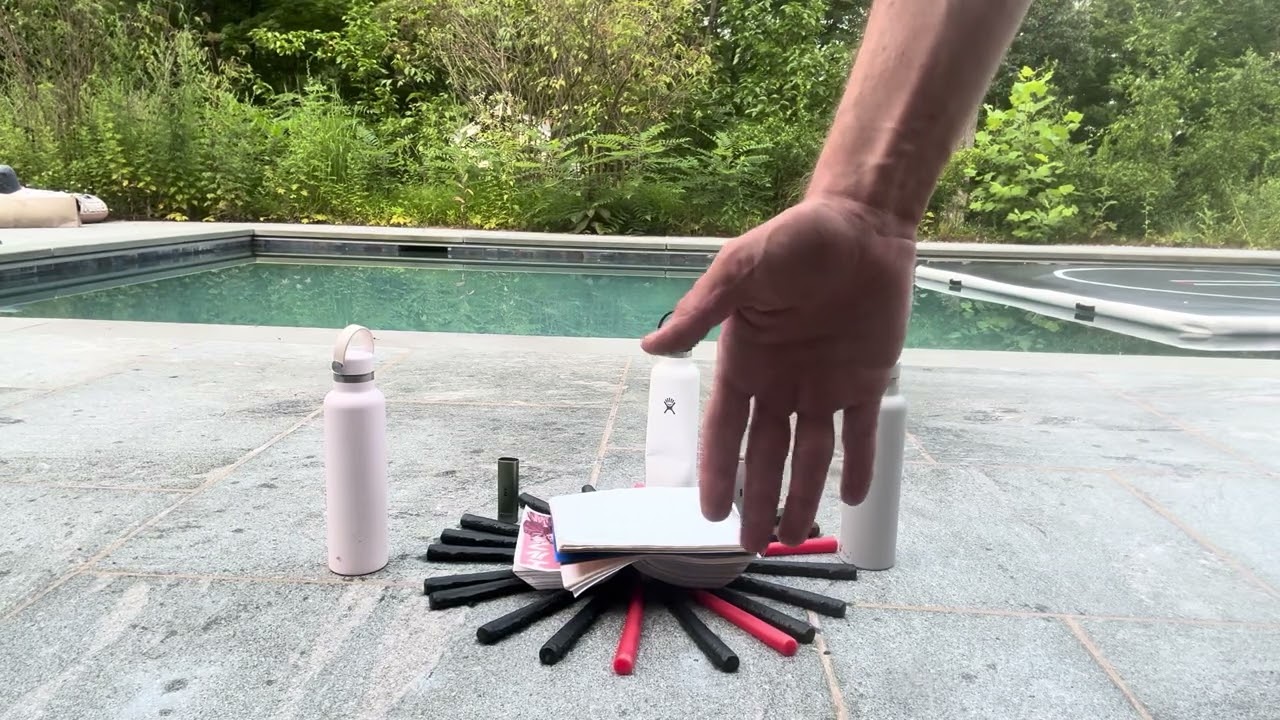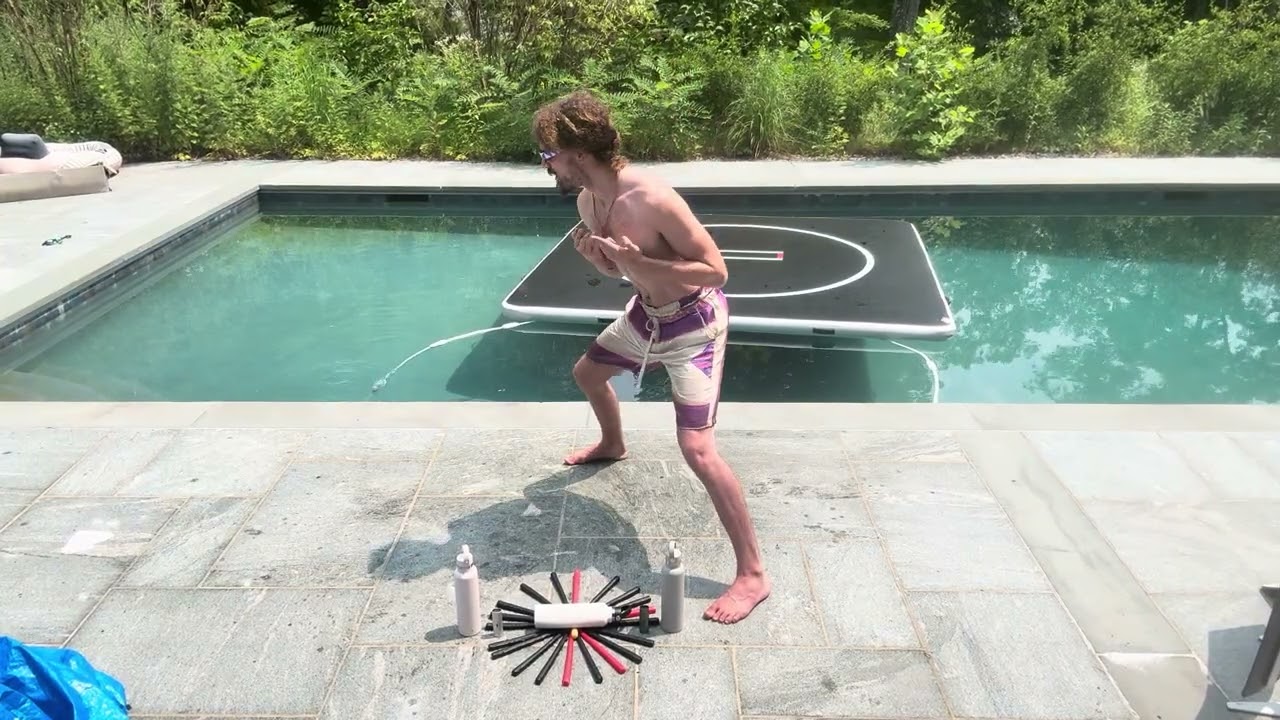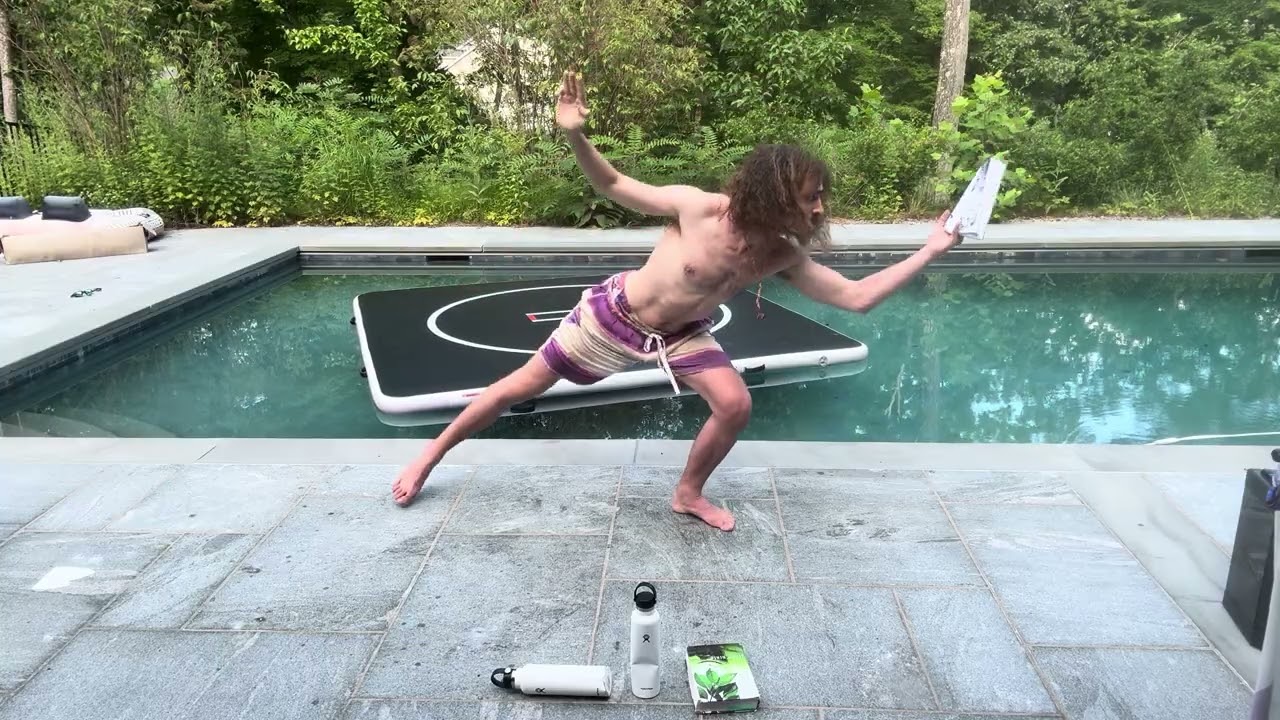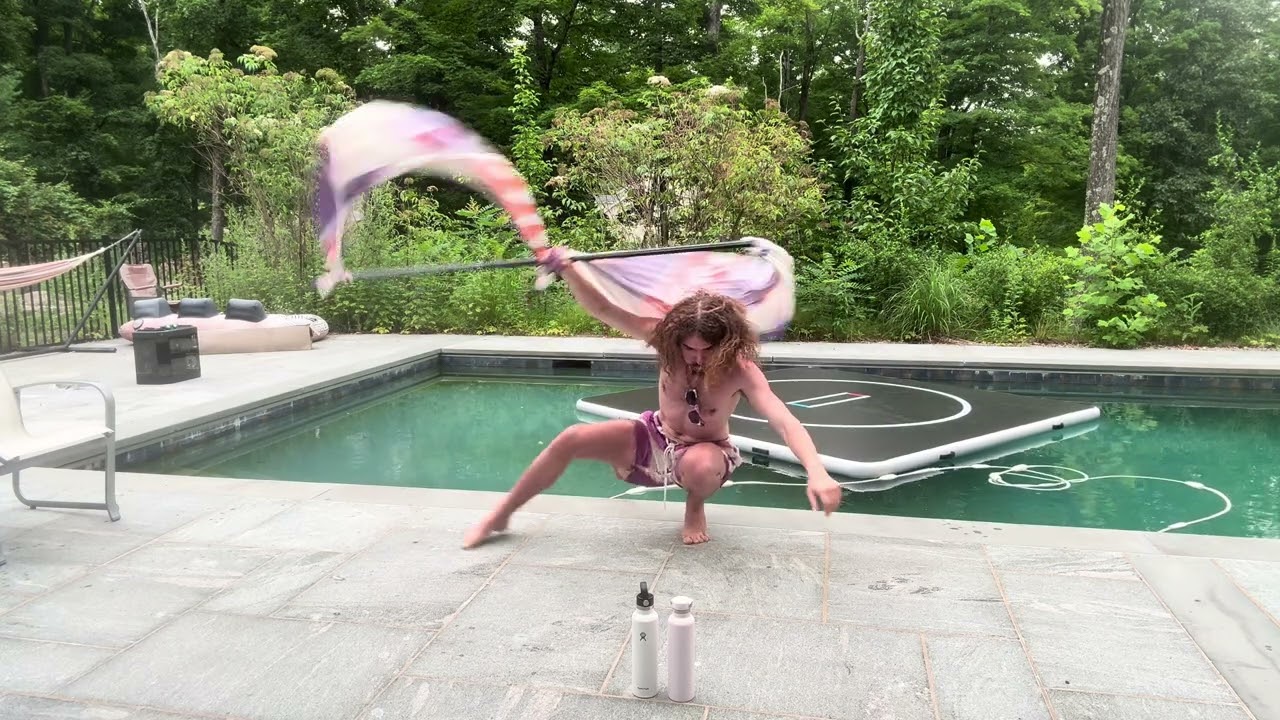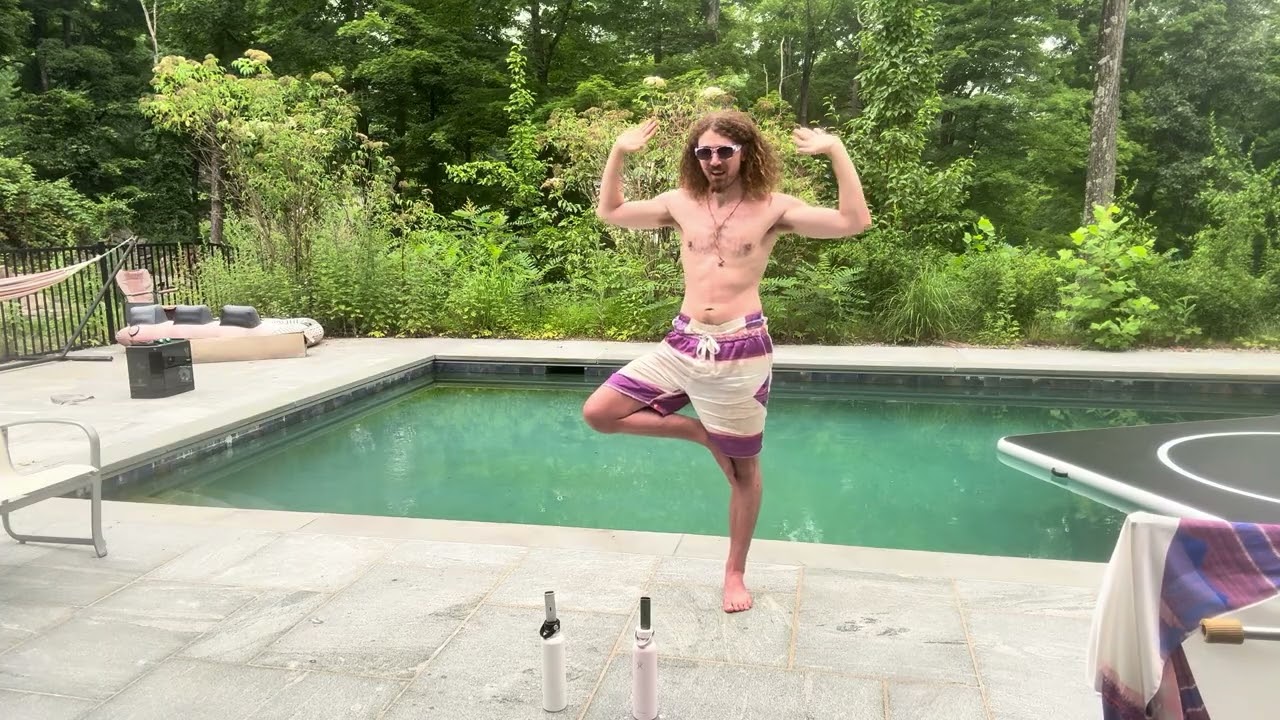
Edward Maclean teaches sign-language choreography for Nirvana's "Smells Like Teen Spirit." He maps each lyric to hand signs and leg positions, offering simpler and complex versions of moves like warrior lunges and squats, with practice loops to build the full verse.
Chapters
Hello, I am Edward and welcome to Smells Like Teen Spirit. Spirit. Uh, in this video I will be going over the arm and leg positions for the first verse: Load up on guns, bring your friends, it's fun to lose and to pretend. I guess it's the first half of the first verse. So we'll start with the arms. We have load, it's an L on our hands, and then our arms are in the fifth position. Which is pronated down at our sides in front of us like this. This is L-O. And then A-D is an A on our hands, arms to your chest, wrist bent towards you. That is A in the 10th position. So low, A-D, L-O-A-D, load, load, load, load, load, load. And then with the legs, leg position for low is our left warrior, our left left lunge. That is your right leg straight, your right foot pointed forward. Your left leg is bent any degree, you know, go lower if you want more of a workout, and your left foot is pointed to the left. This is our low position, LO. And then AD We bring our arms and hands into the AD position, and then we pick up our right heel so that now both feet are pointed to the left. Our left leg— both legs can be bent. You're on the toes and ball of your right foot, and your left foot is flat. This is AD. So from low AD, load, low. AD, load, load. Then we have up. Up is a U on our hands in the 8th position. So low, AD, up. Load up. Load up. Low, AD, up. And then up on the feet, you just have to be on your toes. It's best if your legs are straight, but You know, we do what we can. So, 3 positions: low, AD, up. Load up. Low, AD, up. Low, AD, up. Load up. Then on is an O on our hands in the fourth position. So up, on, up, on, up, on. So, and then on for the feet is your left leg pointed forward, your right leg pointed to the right, and and both your legs straight. So up on your toes, on. We have a right turn. Up, on, up, on, up, on. So from low, mode, up, on, low, add, up, on, low, add, Up.
On.
Let's load up on. Then guns, that is a G on our hands. G in the 9th position. So on, GU. And then GU, legs is a right sprint. So in AD, I call this leg position a sprint when you have both feet pointed in the direction and the non-dominant heel is lifted. This is a left sprint, and this is a right sprint. This is with low. I call this a left lunge or a left warrior. This would be a right lunge or a right warrior. Um, so load up on GU. This ji on her hands, arm in the 9th position, with a right sprint on her legs, ji yu. So, an, ji yu, an, ji yu, an, ji yu. And from GU, we have NS. It's an N on our hands in the 7th position. GU, NS. GU, NS. GU, NS. The legs, it's a light squat. You just want both of your knees bent. Your feet can be pointed wherever. Just make sure that in your mind you have a light squat and a deep squat. So, GU, NS, GU, NS. N-S, G-U, N-S. From load, low, add, up, on, g-ns. Low, Add up on guns. Low. Add up on guns. Take a little water break. Okay, so next session—
session.
The next section is Bring Your Friends. So BR, be on our hands in the fourth position. On our legs, that is a right turn. BR, then ING. Is I in the, uh, 28th position? Well, realistically there's two ways to do "ing." I'm going to show you the single hand sign version first, which is an "i" on your hands and then "ng" on your arms. There's also an "in" on your hands and a "g" on your arms. So there are two valid forms of bring. There's bring and bring. I prefer the bring just because I, yeah, I do this for the workout. So then the leg position for the "I" in its 28th position, "ing," is a right kneel. So then, "bring." Bring, bring. The other bring, bring, bring, bring. And then U is Y in its 22nd position. So bring, bring U Wow.
Yeah.
So I do your in a special way. So what I do is I have a Y on my hands at the first knuckle, then I put my arms into OU, and then at the second knuckle I'll bend my hands again to make an R. That is my your. So my bring your is B-R-I-N-G-Y-O-U-R. Bring your. You can also do bring and then Y-O-U-R. So that's why you'll see my bring your will look like B-R-I-N-G-Y-O-U-R, bring your. Or as another valid form of bring your is B-R-I-N-G-Y-O-U-R. So I can do both of the bring yours. I'll do the, uh, I still got to figure out how to differentiate them, but you know, start with mine. You are an energy. You are. Bring your. Bring your. And then Bring your, bring your, bring your. So that is a, you can call it the advanced track and the, well, yeah, the It's really just a difference of like how many levels of signs can you recognize. Yeah, and I guess I, I tend to prefer to, uh, find a way to work the most, or there's like a— like I try to find the most compressed system through all the signs, you know. So it's like in this, bring your— well, yeah, I just, I like—
yeah, I don't know.
Trying to figure out— well, I'm resting, and while I'm doing that, I'm trying to figure out how to describe why, like, I would, or I do prefer to do the bring your over the bring your, right? Because this is like quicker and easier and would certainly, if I chose to do that, would help me achieve my goal of signing a song up to the recorded version faster. But I can also tell that I only want to achieve that if I can do it like this. You know, so yeah. And then we can get into friends. Friends has another— well, yeah, friends can get a little tricky as well, just from how long the word is and you know, how many, how many signed positions you want to spend in it. Right now I have two working versions of Friends, but I'm only dancing to one of them. So it starts with FR, which is an F on our hands, arms in the third position. And then we have a right turn on our legs. This is FR. And what I've been going into is an IEN. So I have an I on my hands on the first knuckle, and then on the second knuckle I I make an E, and then I put that E into the fourth arm position. That's IEN, which keeps the same leg position. So it's FR IEN, FR IEN, FR IEN, and then DS There's a D on her hands. D in the 7th position. And her legs are in a wide squat. This is the phrase that I've been using. F-R-I-E-N-D-S. F-R-I-E-N-D-S.
R-I-E-N-D-S.
The other version of friends that I have, uh, yeah, I guess the other version of friends I've found that can be done in 3 signs, or in 3 positions, right? So like 1, 2, 3 is, uh, F-R-I-E. So it's, it's F-R on our hands, and then we have an I-E, which is which is I in the 9th position, and then NDS, which is N in the 36th position. Now the 36th leg position would be, uh, 33, 34, 35, 36. So friends could also be F-R-I-E-N-D-S.
DS.
FR, IE, NDS. FR, IE, NDS. I kind of like that one. I feel like it— like a lot of this— at least this first verse so far is right leg dominant, so that NDS gives a nice left quad burn to balance it out. Okay, so from Bring Your Friends We have a couple different ways to do it. I think I would say— so between the two bring yours, I'd say there's a very definite, like, you know, easier and harder one. I feel like the harder one is the one that I've been demonstrating thus far, "b-r-ing your," and the easier one would be "bring your." And then with the friends, I feel like they are holistically the same difficulty, but just with different emphasis. With the first friends, the hurdle or the difficult part is understanding the first and second knuckle lettering on your hands. I guess that's also present in the more difficult "bring your," but the leg positions in the "friends" with the more difficult hand positions are simpler, if that makes sense. So this "friends," we'll call it version 1, F-R-I-E-N-D-S. We'll call it hand version. Okay, so the hand version of "friends" The difficulty is in the I-E-N because you have to hold an I and an E in your hands and an N on your arms. Whereas in the leg version of FRIENDS, F-R-I-E-N-D-S, your hands only ever have to hold one letter. But that does mean that your legs have to enter kind of higher positions to fill in the rest of it. And truthfully, I'd only been— well, Yeah, I've been using this version of friends, uh, honestly mostly because the definitions past 32 I still need to learn. So we'll do Bring Your Friends. I think I want to try the difficult Bring Your with the leg friends. I'm going to swap that in. So we'll see. Bring Your friends bring your friends Bring your friends. So you can— well, so yeah, that's the one that feels the best to me. Feels the most effortful and rewarding. Although I guess it's, you know, my zone of proximal development because I am pushing myself physically as my goal. Then the other one would be Bring your friends. Bring— sorry, bring your friends.
Bring, bring.
Bring your friends. Alright, and then I'll do one mix-match. So we'll do a— bring your friends and Bring your friends. And I think that's one of my favorite parts about this is that as long as you can hit the letters you can, you know, kind of work the underneath however suits you best. Or at least that was the intention. Because as you saw there, right, it's like I now have 4 different ways I can say bring your friends. And you can even, you know, you can do something as much as like, "Bring your" and "bring"— or sorry, "bring your"— and there's like, I haven't even got into, but There's an, uh, yeah, I mean, so you can go a whole lot, whole lot further. Um, all right, so I think from load up, uh, and I'll do Yeah, I think I'm just gonna do 3 rounds of Load Up, or 3 rounds from Load Up to Bring Your Friends. Then I think— trying to figure out how much I should continue to like express every version. Yeah, all right, so I'll figure something out. I'm gonna do 3 rounds of, uh, from load to friends, um, using the, uh, we'll call it, uh, this, uh, or the, it's like the tentative route, you know? Um, it's like when in, in, in bloom I recognized all the alternatives, but I really did just have the, like, start to finish that I liked to, like, build as the main road. So yeah, I'll do 3 of those right now. So: lo, ad, up, on, ga, Mm, brr, ing, your, fur, ants, blow up on guns, bring Bring your friends. Lo up on guns. Bring your friends. Okay, then I'll do one with the Scenic route?
I don't know.
Doing with the— well, lower speed limit?
No. Uh, yeah. I mean, technically it's the faster route, so there we go.
Oh, just two, huh?
Yeah.
Load up on guns, bring your friends. Load up on guns, bring your friends. Load up on Guns. Bring your friends.
Okay.
See now, it's fun to lose and to pretend. So for it's, the single sign is I In the 47th position, there's an I on your hands, your arms straight out, wrists pronated, wrists bent down, out to your side. This is ITS. I on your hands, TS on your arms.
Hips.
Then on the legs, it is a one-legged squat with your— squatting on your right leg, then your left shin resting on the ground, kind of wrapping around your foot. You'll see I am squatting on my right leg. I have my left leg laying on the ground, wrapping around my foot. I can almost hug my right foot with my left shin if I want. This is "it's" in a single sign. We may also do I-T-S, "its." "Its." This is I in its fourth position and then S in the first position. "Its." "Its." "Its." And it's, it's, it's "Fun." I have another single sign version which is— well, almost only makes sense to to me, but it is an F on your hands. If you extend your middle finger and place it on top of your ring finger and then bend it down, that counts as a U for reasons that I can, I can almost explain. So when we have this F on our first knuckles, if we want to make a U on our second knuckles, it would be the pinky, ring, and pointer finger on both of our hands down. You can think of a U with the pinky, ring, and pointer finger activated. So if we activate those fingers on an F, it looks like this. And then what that does is it places our, uh, thumbs in a neutral position relative to everything. Our ring fingers are, uh, extended on the first knuckle but bent on the second. Our pointer and our pinky are bent on both knuckles, and our middle finger is bent on the first but extended on the second. And so the way I've been able to shorthand this position so I can get to it quicker is by placing my middle finger on top of my ring, uh, and you You know, it's just a kind of shorthand I've made for the FU hand position. And then once I have FU on my hands, I can put my hands in the N position on my arms, or my arms in the UN position.
Fun.
So that's the version of fun I've been using, at least here. For in bloom, I was using the F on my hands, U on my legs, and then N on my hands. So fun, fun. Fun.
Fun. Fun.
Fun. Fun.
Fun.
Here's some of the ItsFunds. Um, yeah, so, its— Fun.
It's fun. It's fun.
Say that's the most difficult version. It's, I-T-S, F-U-N, is fun. I-T-S-F-U-N. It's fun. I-T-S-F-U-N. It's fun. So that's the easiest version. And then you can mix and match. So we can do in— it's fun and it's fun. So I use the harder version, but you know, I'd rather you use the easier version than not dance at all, truly. So then, "to lose," pretty simple, only one version.
2.
It's T in our third position. It's a right turn on the legs. 2. Now we already know we're low. 2, low. 2, low. 2, low. And then SE is S in the second position, which is just standing up straight on your legs, both feet pointed forward. So 2, low, C. 2, low, C. 2, low, C. Low C. To lose, we have and, which is a left kneel and. We also have a second version of and, which is and in the first, in the second position, and on your hands. In the second position. So we have to lose and, to lose and. I prefer the A in its 28th position. So to lose and to. So we have to lose and to pretend. So then P in its 24th position is Pree, Pree. And on our legs, we have a right squat, deep right, a deep squat on our right leg. Our left leg is straight, and then our toe and heel are touching the ground. This is pri. And then ti is leg straight, left turn, ti in the fourth position. Then ND is N in the second position, like neutral. So to lose and to pretend. I guess, quick note about all the positions in which you see me hit this low. I know in common athletics they refer to it as a Cossack squat usually, which has the heel planted, you're more than welcome to use that version in all of these. I just prefer the toe. So that being said, and you can define your own, you know, satisfying level of lowness. I only count— well, I always try to get to this position, but You know, I'm more than willing to count a valid sign anywhere between here and like here. And you can, you know, loosen your guidelines as much as you need to. So it's fun to lose and to pretend. Start with a full one, 3 rounds of the full one, or the tentative route. And then I'll go and do the alternatives. So, it's, it's fun to lose and to free Tehnd. Prettynd. Prettyndy. It's fun to lose and to pretend it's fun to lose and 2, 3, 10.
Okay. Oh, Jesus. Okay.
So now we'll do the "It's fun to lose, to pretend" in the simplified style, or in the— what do you want to call it? I don't know. Yeah, faster. I guess I call it faster or stronger, you know. Faster, higher, as in like the— this ing is stronger than this ing, but this ing is faster than this ing. Yeah, something like that. So now we have the strong and the fast roots, or options to either take a stronger or fast root. Um, you can fasten your strong roots and strengthen your fast ones if you'd like. So it's Fun to lose. And 2, 3, 10. It's fun to lose. And 2, 3, 10. It's fun to lose and 2, 3, 10. Okay, so now I think I'm gonna do 3 rounds of the strong, 3 rounds of the simplified, and call it a video. So the strong, you have load up on guns. Bring your friends. It's fun to lose. And 2, 3, 10. Load up on guns. Bring your friends. It's fun to lose and to pre—
10.
Load up on guns. Bring your friends. It's fun to lose and to pretend. Okay, the end of the simplify. We're good. Okay, so low load up on guns. Bring your friends. It's fun to lose and to pre— Tend. Load up on guns. Bring your friends. It's fun to lose. And 2, 3, 10. Up on guns, bring your friends, it's fun to lose.
And 2, 3, 10.
Thank you for being with me. I love Ew!
Mm.