In this vlog, the speaker, who identifies as “He Who Is,” shares a snapshot of his current life. He outlines his sleep schedule (asleep 9‑10 pm, up 5‑6 am) and his evolving fitness routine as he finishes a triathlon training cycle, noting weekly workouts, 1,200 m swim sessions, and skating mileage. He expresses a desire to integrate weight‑lifting as seasons change. The vlog then shifts to a creative endeavor: constructing a four‑piece Origami Star of Bethlehem for a state‑fair competition, describing the process, fatigue, and reflections on tolerance versus single‑day completion, linking it to a prior daily origami cube project inspired by a video‑game sculptor. Next, he reads and reflects on Nehemiah 1:1, offering a prayerful meditation on covenant, sin, and divine guidance, followed by philosophical questions about why God sets difficult laws. He proceeds to cite 1 Kings 9:23, detailing Solomon’s massive temple sacrifices, and muses on the economic scale of those offerings. The speaker then connects this to a brief discussion of U.S. WWII monetary history, comparing wartime savings to the temple’s sacrificial economy, and wonders whether temple dedication functioned as a war effort. Finally, he contrasts love and war as metaphors for physical training and spiritual growth, arguing love is versatile and moving while war is static and painful, and concludes with a poetic sign‑off.
Chapters
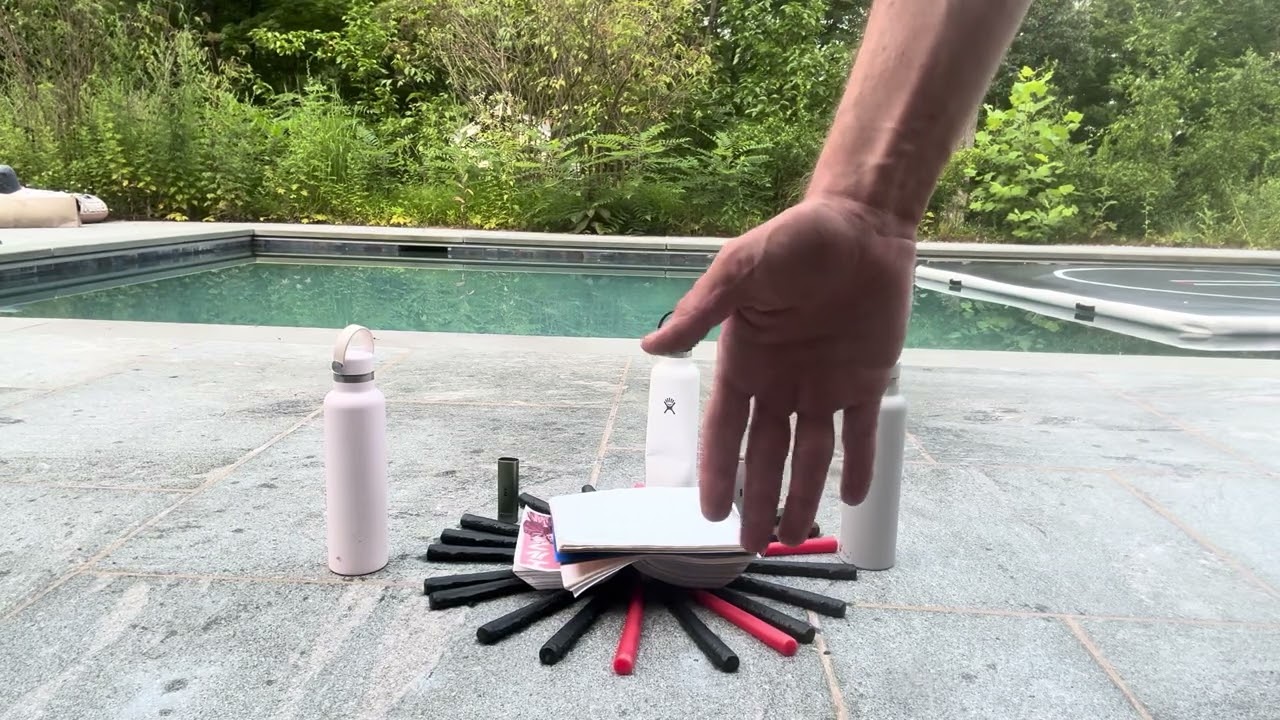
Good morning, I am He Who Is, and welcome to vlog number 2. I'm good. I am slowly putting together a new routine. Summer was a whirlwind. But it's nice to be back. My sleep is decent, back to a nice routine. Generally asleep by 9 or 10, up somewhere between 5 and 6. Appetite is maintaining. I, I'm at the end of my triathlon cycle, trying to keep myself fueled for cardio. With enough protein to maintain a good amount of muscle. Activity level is sporadic but intense. Workout 4-ish times a week, still lacking a proper routine. But as we enter into fall and winter, I expect to dance most days and would probably like some weightlifting to be integrated into that if possible. I have been swimming 1,200 meters. So we swam a lap around the COVID on Saturday, which is about 1,200 meters, and then we skated for an hour probably somewhere between 3 and 7 miles. Um, it's been feeling really good. I am continually curious about how The body's desire to reach equilibrium can be manipulated. There's a hummingbird buzzing around. This morning I made an origami star of Bethlehem in preparation for the Bethlehem State Fair origami competition. This is my second star. The star is four separate pieces linked together. Yesterday was my first one. I watched a video for them, for all 4 pieces. Today I made all 4 pieces by memory. The first 2 went really well. I was excited and happy about it. By the third, I could start to feel myself getting a little tired, and the fourth one I just wanted to be done with. I am curious if I will build up a tolerance for the duration, or if it's best to try to not make the entire thing in an entire— in a single day. Still experimenting with that. Certainly akin to my cube project I did a while back, where every day I made a single origami cube. I was inspired by the sculptor in Sekiro, the video game by FromSoftware, who was carving these idols, and was bothered by how every idol he made had an angry face because of the anger he held inside. I think with the cubes, I was trying to explore how much patience I could manifest. I think with the stars, I'm trying to See what comes up. I definitely like the folds. It's a fairly I say it's an interesting project, more so than most, because it's all dependent on how well that first fold is. And it's a pretty freeform fold. There's very few guides you have. All you can really do is make sure one point is on the horizontal, horizontal line. You fold one corner to the horizontal, and you have to make sure that the bottom tip is nice and pointy. But other than that, there are no pre-folds that you can guide along it. But once that first fold is done, the rest have to obey the stage that's been set. All in all, pretty interesting. It's certainly very satisfying. I think what I'm most surprised about is I imagine the most difficult part of it would be connecting the 4 pieces together, but in reality it seems to be slightly easier than expected. I will now open the Bible, find a passage to sign. Nehemiah 1:1. Nehemiah's prayer. The words of Nehemiah, son of Hakaliah. In the month of Kislev in the 20th year, while I was in the citadel of Susa, Haniah, one of my brothers, came from Judah with some other men, and I questioned them about the Jewish remnant that survived the exile and also about Jerusalem. They said to me, those who survived the exile are back in the province, and, and are back in the province are in great trouble and disgrace. The wall of Jerusalem is broken down and its gates have been burned with fire. When I heard these things, I sat down and wept. For some days I mourned and fasted and prayed before the God of heaven. Then I said, O Lord God, of Heaven, the great and awesome God who keeps his covenant of love with those who love him and obey his commands. Let your ear be attentive and your eyes open to hear the prayer your servant is praying before you day and night. For your servants, the people of Israel, I confess the sins we Israelites including myself and my father's house, have committed against you. We have acted very Wickedly toward you, we have not obeyed the commands, decrees, and laws you gave your servant Moses. Remember the instructions you gave your servant Moses, saying, if you are unfaithful, I will scatter you among the nations. But if you return to me and obey my commands, then even if Your exiled people are at the farthest horizon. I will gather them from there and bring them to the place I have chosen as a dwelling for my name. They are your servants and your people, whom you redeemed by your great strength and your mighty hand. Oh, oh Lord, let your ear be attentive to the prayer of this your servant and to the prayer of your servants who delight in Revering your name, give your servant success today by granting him favor in the presence of this Man, I was cupbearer to the king. Sometimes I wonder if God made his decrees and laws so difficult to follow because he enjoys watching people break them so he can help them? So he can help them? Because what if what he really enjoys is just being able to be there and help But if his people were perfect, they'd have no need of him. So by making an imperfect people, he makes a people that will always need his help, and he can always have a source of enjoyment in guiding them back. The question is, how, how much guidance can one individual withstand? How much help does God truly enjoy giving? 1 Kings 9:23. The dedication of the temple. Then the king and all Israel with him offered sacrifices before the Lord. Solomon offered a sacrifice of fellowship offerings to the Lord. 22,000 cattle and a hundred and twenty thousand sheep and goats. So the king and all the Israelites dedicated the temple of the Lord on that Same day, the King consecrated the middle part of the courtyard in, in front of the Temple of the Lord, and there he offered burnt offerings, grain offerings, and the fat of the Fellowship offerings, because the bronze altar before the Lord was too small to hold the burnt offerings, the grain offerings, and the fat of the fellowship offerings. So Solomon observed the festival at that time, and all Israel with him, a vast assembly, people from the bow, hamath, to the wadi of Egypt. They celebrated it before the Lord our God for 7 days and 7 days more, 14 days in all. On the following day, he sent the people away. They blessed the king and then went home joyful and glad in heart for all the good things the Lord had done for his servant David and his people Israel. It also makes me wonder— When Solomon makes the Lord's cup overfloweth, how strained were his people in that moment? How many of them scrimping and saving, or was there abundance all around? I was reading a monetary history of the United States this morning. It was talking about inflation during World War II and how at the beginning of the war there was an average— I'm gonna fuddle this a bit— but of 9 months saving in cash and 12 months in liquid assets at the beginning of the war. At the end of the war, there was 12 months saving in cash and 21 months in liquid assets. And then shortly after the war ended, it was reduced to— sorry, let me say, I think it was 6— in, at the beginning of the war, it was 6 months liquid or 6 months cash, 9 months liquid. Then at the end of the war, it was 9 months cash, 21 months liquid. So liquid assets is like gold or stocks or anything that you can sell to make money. And then after the war, it had been reduced to— it had been slightly reduced, not as high as at the end of the war, but not as low as at the beginning of the war. But all this time, most of people's values were in bank accounts or in liquid assets. I think materially there was lots of rationing and trying to be— trying to live as efficient as possible because they understood that they needed to dedicate everything to the war effort. And it makes me wonder if the building of this temple was, for all intents and purposes, a war effort for the people of Israel. Because if you're sacrificing 22,000 cattle and 120,000 sheep, I think that's enough to feed at least 100,000 people for a year. So how many people went out— went without eating cattle or sheep? And I think it's the difference between— well, I guess there's positive and negative voluntary suffering. If you're voluntarily suffering in dedication to the Lord, people probably see that as positive. If you're voluntarily suffering dedicated— in dedication to a war effort, I think most people would rather it be for the Lord than for a war. But how much, how much of a difference does God see when in both instances it gets his people into a more responsible shape? I suppose the difference he sees is in the recidivism rates among those people. What causes one to be responsible for longer after the event has concluded? Love and dedication to a temple, or war and trying to survive? I know myself personally. I guess back to reaching equilibrium I was talking about earlier. You need the hot to define the cold and the cold to define the hot. And while I always make sure that love wins, war seems to be nipping at its heels. Sometimes it can be the best feeling in the world. When you've spent enough time bodybuilding and weightlifting, you learn to love being sore because it's the surest sign that you are building new muscle. And if building new muscle is the goal, it is a pure piece of evidence that you have reached your goal. They always seem to be far more sore after signing war than after signing love. The thing about love and war is war tends to want to stay still and be held, while love wants to move and explore all ranges of motion. And love is far more versatile. I can love while I run, I can love while I bike, I can love while I swim. War, I really must be almost completely immobile. Unless I'm using a power sign, but I do kind of fear that a little bit, so I've tried to avoid too much of it. But it being in one of my names I have to question how much is necessary. And in the name Edward, it is about half of it, but in my full name, it's like, I don't know, less than 10%, maybe even less than 5. So it's just how much perspective am I trying to gleam, I suppose. Anywho, waxing a little too poetically, I think that means we're done. Thank you for watching. God bless and amen.