Inside a Tax Advisory Engagement with Rob Deins
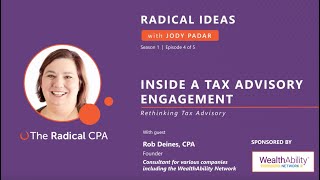
This is a transcript of a YouTube interview (Oct 14, 2023) on moving from tax compliance to tax advisory. Host Jody Padar interviews Rob Deins (CPA, ~30 years' experience, former firm with Tom Wheelwright, now a consultant) about how CPAs can shift into advisory work. Key points: CPAs already have inside-the-business knowledge; advisory requires being proactive (call the client, set expectations) rather than reactive; create a repeatable roadmap/process for different client types by starting with long-term goals and projections; package advisory into recurring services and express value to clients; upskill by seeking education, learning from client engagements, and using tools/resources. WealthAbility (wealthability.com) is cited as a resource that provides tools, training, and a standardized process; Rob can be contacted via LinkedIn.
Chapters
You. Hey, hey, it's Jody Paid our here the radical cpa. And welcome to Radical Ideas, where we dive deep into a topic that will help you better manage and grow your firm. In this season of Radical Ideas, we're rethinking tax advisory. And yesterday we talked about pricing and capacity. And now that you have the advice on how to get time to be advisory, let's look at what an advisory engagement actually looks like. I'm talking to Rob Dynas, a consultant with with various companies including the Wealth Ability Network. Welcome to the show, Rob.
Thank you. Thanks for having me.
Awesome. I also want to thank the sponsor of our of today's show, the Wealthability Network, a network of CPAs and financial professionals focused on building profitable businesses and helping clients build rock solid financial legacy. So happy to have you here today, Rob. Can you go ahead and introduce yourself to our audience and tell them who you are and what you do?
Sure. So I've been a CPA for, gosh, about 30 years. Started my career with some of the big firms out there, some of the big four, 2004, I started my own firm with Tom Wheelwright. We had our firm together for about 12 years. Since then, I've just kind of been a consultant. So I have the opportunity to work with a lot of different CPAs, help them develop their practice, grow their practice, as well as work with them on tax and wealth strategy engagement. So it's been terrific. I get the chance to work with a lot of great entrepreneurs and a lot of great CPAs at the same time.
Awesome. So we have a lot of people today listening who are really good at tax prep. Right. They've built firms on compliance and they're trying to, like, figure out this advisory piece because everyone tells them, you know, compliance is going away, you got to be an advisor, blah, blah, blah. So how do they take that and make that leave leap and shift to advisory? Like, where do they start?
Sure. So in my opinion, CPAs have a skill set that they don't necessarily recognize they have. I think CPAs as a profession, we undervalue ourselves in a lot of cases. So as CPAs, we've seen businesses from the inside out more often than any other profession on earth. Right. We've seen the good, we've seen the bad, we've seen the ugly. Right. That experience is a skill. Right. And tax advisor and advisory services are just recognizing that we've got that skill and taking it to our clients. Right. They could really benefit from our knowledge and what we've seen. And a lot of it is, let's help our clients maximize the good and minimize the bad and the ugly. And that's a lot of it.
Right?
So I agree. CPAs that I work with, this is their goal, right. They probably, like you said, Jody, started their firm with tax prep. Right. It's their go to. It's their comfort zone. And they realize this is not what I want to do or exclusively what I want to do. Over time, I want to get into advisory, and they probably have the skillset to do it if they recognize that in themselves.
Right. It's, like hidden inside. Right. I think a lot of it is just confidence. It's like you have these conversations all the time. Time. You just probably never called them advisory, and then you never actually kind of separated from compliance. So now you have, like, I'll say a confused CPA or a confused tax professional who it's buried within. They just need, like, it to come alive. So, so, so when we think about a tax advisory engagement, right. What do accounts actually have to do differently or think about doing differently when scoping this engagement than just saying, oh, yeah, I'll do your 1120, right.
So I. I think it's just what you said, right. Most tax preparers have done tax advisory on, you know, here and there, you know, so to be. And I think they do it on a reactive basis. Right. The client calls, they react. Right. They say, oh, yeah, client, I can help you with that. Here it goes. Right. I think the difference between becoming a tax advisor as part of your practice is to be proactive. Right. Need to be proactive with that advice. So if we're proactive with that advice, right. That becomes a part of who we are. It's what our clients expect. And I work with enough CPAs and enough entrepreneurs. I hear over and over and over, my prior CPA never brought ideas to me. Right. It was all about taxes. And they'd answer the phone if I called and they'd help me, but they didn't bring anything to me. That's what your clients are looking for and hoping for is that proactive tax planning, tax service. You calling them and you asking those questions. And I think going from reactive to proactive helps make that shift.
Yeah. And I think, you know, as CPAs and accountants, when we were forced with the pandemic and having to do like, all that, it was reactive, proactive, if that makes sense. Right. Because the laws were changing quickly and we had to respond to where to, you know, the government incentives and all these things. That was the time when I really believe most CPAs were able to kind of become that kind of proactive tax advisory person because we were forced into it. But what happened, right, like it's like Covid went away and it's gone back to normal. Right. We just gotta harness that experience that they had during COVID and help them realize how to turn it into actually an engagement or what it looks like if you're doing this consistently and not waiting for Congress to change the laws, you know, in the middle of tax season to, to, to get you on your game.
Right. And, and I think it's clients and CPAs are really good at meeting deadlines. Right. That's what we are and who we are. We're also very interested. I believe every CPA really wants to meet their clients expectations. Right. We're just a little confused sometimes, I think about what their expectations are and if their expectations that we'll do their tax return for them and we're meeting those expectations, we're selling ourselves and the client short. Right. We should set the expectation with the client that we're going to be a proactive advisor and we want to meet expectations. So if we set that expectation for the client, then we are driven to meet that expectation. So if our services is, you know, the 1120 that you mentioned and regular phone calls and regular interaction and tax projections and all of these different things and that's part of the engagement. Right. Then the client expects that to get from us. And we're pretty good at meeting expectations. We just have to set them for ourselves.
Right? Right. And so when we think about like the purchaser, the buyer of these services, how does tax advisory differ based on who you're working with? Right. High net worth people have different needs and real estate investors have different needs or, or just small business owners. And do these engagements look different or do you do the same thing for everyone or is that like kind of the problem that everyone is trying to put everybody in the same bucket?
Right. I think if we don't have some sort of a roadmap for here's what we're trying to provide our clients, then we're back to that one off and we're answering the phone and you know, everything is different. Right. So do real estate investors and business owners and entrepreneurs have different needs? Yes. Are they all in it for the same thing also? Yes. So if we understand, right. What is their long term goal? Right. What are they trying to achieve? What is their path to get where they want to go? Right. I think that's the ticket to Truly helping them and whatever they need to get there is kind of under that umbrella. So I really, I work with enough CPAs and what they share with me is they really have a passion for serving and helping their clients. Right. And really want to make a difference. If we're doing tax returns, are we making a difference? Yes. Are we serving a need? Yes. But if we can really accelerate our clients path to their financial freedoms and their wealth goals, that's where a CPA can make a difference. Right. That is life changing for the client.
Right. You have that big impact on them.
Big impact. And honestly, it's very rewarding. It's rewarding to the cpa. It's fulfilling much more than tax compliance will ever be.
And I think you're right. I think most CPAs want to do that. Right. They want to be impactful, they want to be, you know, the, they want to serve their clients well. It's just they kind of get caught in this rat race and of deadlines and getting stuff done. And like, I think the other thing is, is how do we turn these random acts of tax advisory or these random acts of advice right into, you know, a repeatable service? So it's not just a one time, you know, here's a project or how do you turn it into reoccurring revenue or even just a reoccurring thing. So that, and, and I guess too, not only doing it, reoccurring it, but expressing the value and making sure that your customer understands that value and is willing to pay for it. And what does that look like?
Sure. So I think that entrepreneurs are very motivated and they're very hardworking, but they're very D day oriented. What they often don't do is think about why am I working so hard? Why did I start this business? Why did I do this? If we can get them to stop. Right. Take a breath and focus on the long term. Right. First thing we need to do is have them set long term goals. Right. If we understand their long term goals and help them understand their long term goals, we have just created a path from where they are now to that long term goal where they need us every step of the way. Because we're the only ones that's asking those questions. We're the only one that's saying gold actual. Right. How is this, is this, is this short term decision consistent with your long term goal? Right. Let's build this projection. Right. How is this getting us, you know, what rate of return are you doing? All these different things, Right. But if the first thing we do, if we're the first one to help our entrepreneurial, you know, investor clients set their long term goals, then we're the one that should be there for the ride until they achieve them.
Yeah, I, I, I think that makes sense. And I think it's, it's just kind of a flip of the switch in your mind, as opposed to thinking, even for accountants, right? As opposed to thinking about today and saying, okay, what do we really need to think about for them in the future? Whereas I think a lot of times too, just you're thinking about, okay, what did they do last year? Right? Because when you think in compliance, it's like, okay, what happened last year? Versus saying, okay, well, where do you want to be in five years? And how do we build that wealth? How do we, how do we get there? And I think financial planners as a whole typically begin those conversations, but unless you're a tax person with a financial planning background and maybe you're selling investments, maybe you're not. Typically, accountants were never taught those skills. They were never given those kind of conversations to even have because they're always so focused on, you know, last year and what they were doing. So I guess too, like, is there a way to do this? And there's a process to do it so that if I'm just a regular cpa, I can kind of follow this process and get there. Because if I've, you know, if I've spent the last 15 years doing compliance, it's a little bit intimidating to say, okay, now I got to be this tax advisor. Is there a process or a set of tools or something that makes it easier to get there, training, something?
So I work with a lot of CPAs that are part of the wealthability network, right. And Wealth Ability has developed this type of a service. And part of my role as a contractor with Wealth Ability is to take a entrepreneurial client and a new member of Wealthability and take them through that process. Right? So this is what I do on a regular basis. Right. And Wealthability has done a great job developing tools and education and software and things to make this process. Right. As standardized as possible. So you're right when you said real estate investors need different things as business and owners and things, but it all fits into the overall process, right? Here's where you start. Here's the questions you ask, here's what you are intending to get across to your clients. Right? And we've been doing this, you know, Tom and I started developing this when we had our firm starting 20, almost 20 years ago. We've been doing this for. For a long time. It's difficult, like, as you said, Jody, for someone that has been reactive and looking at past information and spending all of their time looking at the past, you know, financial statements, bookkeeping, and tax returns. Right. It is literally a 180 to start looking in the other direction and being proactive. It's difficult to do on your own. Right. So there are resources such as wealth ability out there that will help you find the clients that want these services, are craving these services. Right. And also give you a path and a roadmap in the education to be able to serve these clients effectively.
Yeah. Because I think like we said at the beginning, like, we're inherently. We know it, we have the knowledge. It's just, how do we express that knowledge in the right way, in the right process to help clients and help serve them? And if you've always been in a firm that's been reactive and like, when you think about how even accountants learn, Right. They learn from the partner who's always done something a certain way. Right. And if the person who taught you never taught you how to do it this way, there's no expectation that you would know how to do this. So I think it's great that you guys are offering the services, because I think there are lots of CPAs who are more than capable and willing to do it. They just want to learn how, and they just need a little bit of help along the way so that, you know, they're not. I think one of the things about CPAs is they, because we're so trained to be technical and professional, you know, you don't want to make a mistake. And so probably that's what holds a lot of CPAs back. So, you know, to know that there's someone who's walking beside you as you go through this process, I think would be very comforting as you kind of shift this in your practice.
You bet. I agree. And I'm going to take it one step further, Jodi, in terms of where we learn, we learn from our clients. If we're serving our clients and we're learning about their business and we're learning about their transactions, and we're learning about their investments and learning about their deals. Every time we provide this type of service to our clients, we are better equipped to serve it to the next client and the next client. Right. So part of the reason I think CPH held back is because they haven't taken the opportunity to learn from their clients. Like they could have if they were doing this proactive work and asking and setting these goals and thinking about these things, right. It almost seems unfair. The opportunity we get to learn from our clients and we build them.
No, I. I think you're right, and I think that's an amazing perspective, because when we talk today about upskilling and an accountant wants to make the shift from compliance to advisory, what skills do they need to build to improve? So they need to have this positive forecasting, kind of even goals, perspective, outlook, right? And then they need to gather skills from, I'll say, on the job training, right. Talking with these clients. What other skills will they need in the future?
Got it. I think to be a good advisor, right. It's really just depth and breadth of knowledge, right? The one thing, you know, could you mention it can be a little scary, right, to get outside of that compliance box and do these things. And I think part of the reason that's scary because if we're doing advisory services, right, we're never really sure what the client's going to ask us next, right? And we feel like we need to have all the answers, right? The answer, no, we don't need to have all the answers, right? But every time somebody surprises us with a new idea or the new business or something like that is the last time we'll be surprised by that, right? So I think just that depth of breath that we get from our clients. But also, you know, when it comes to your CPE, right, don't just cram 20, 40 hours of CPE, really take things that make you think differently and learn new things as you kind of expand that depth and breadth of. Of experience. Because the more things we've had access to and the more things we've had, we've done and that we've seen, the more valuable we are to our. Our clients. So I think just entrepreneurs, in my experience, they crave knowledge, right? They're not spending their time sitting on the couch streaming Netflix. They're, you know, they're watching podcasts and they're watching education, and they're watching all of these different, you know, areas, right? But they are learning, right? And what they learn, they're going to come to you and ask those questions, right? So if you're consuming some of these same things, you're better prepared to serve that client, right? And to help them with those kinds of. Kinds of questions and thoughts.
I like that last thing that you talked about, because you think, as I think about the next generation, right? And what the next generation expects, like they're not going to have the opportunity to, to get 20 years of experience before they start advisory. They're going to have to start advisory very early in their careers, maybe year one, year two, year three, whatever. Whereas in an old school firm, a lot of times that that staff accountant didn't even talk to a client or wasn't even allowed to engage with that client. Right. And so I think when you're talking about this, it makes a lot of sense too for those younger professionals who are looking to build these skills that they don't have to necessarily wait to for the partner to teach them that there's opportunities for them to learn around and outside. Because I think in reality that's what has to happen. You can't wait the old way of doing it because automation and technology is going to do a lot of that work that those young professionals 20 years ago did. So automation is going to take that away. So all CPAs are going to have to up their advisory skills much faster. So I love the way that you highlighted that there's lots of ways to guild the, to to build this skill set. So this has been an amazing conversation, Rob, like seriously amazing. How do we, how do the listeners, how do they connect to if they want to learn more about advisory, if they want to connect to you, how do, how do they find you or where do they find you?
Sure. So go to wealthability.com. right. That's the company that's that, you know, Tom Wheelwright runs. It's where I contract and do most of my training. And of course I am on LinkedIn. So if you want to find me directly, you're welcome to go to LinkedIn and find me that way.
Awesome. So thank you, thank you, Rob, for joining us. I have to give a big shout out to Wealthability, the Wealthability Network for sponsoring our show today. Be sure to tune in again tomorrow at noon Eastern for another episode of Radical Ideas as we continue our tax advisory conversation by talking with the owner of a successful tax advisory practice. See you then. I'm Jody Paid our the radical CPA.
More from Jody
Tax Reporting Challenges for the 2023 Tax Season | with Padgett Business Services