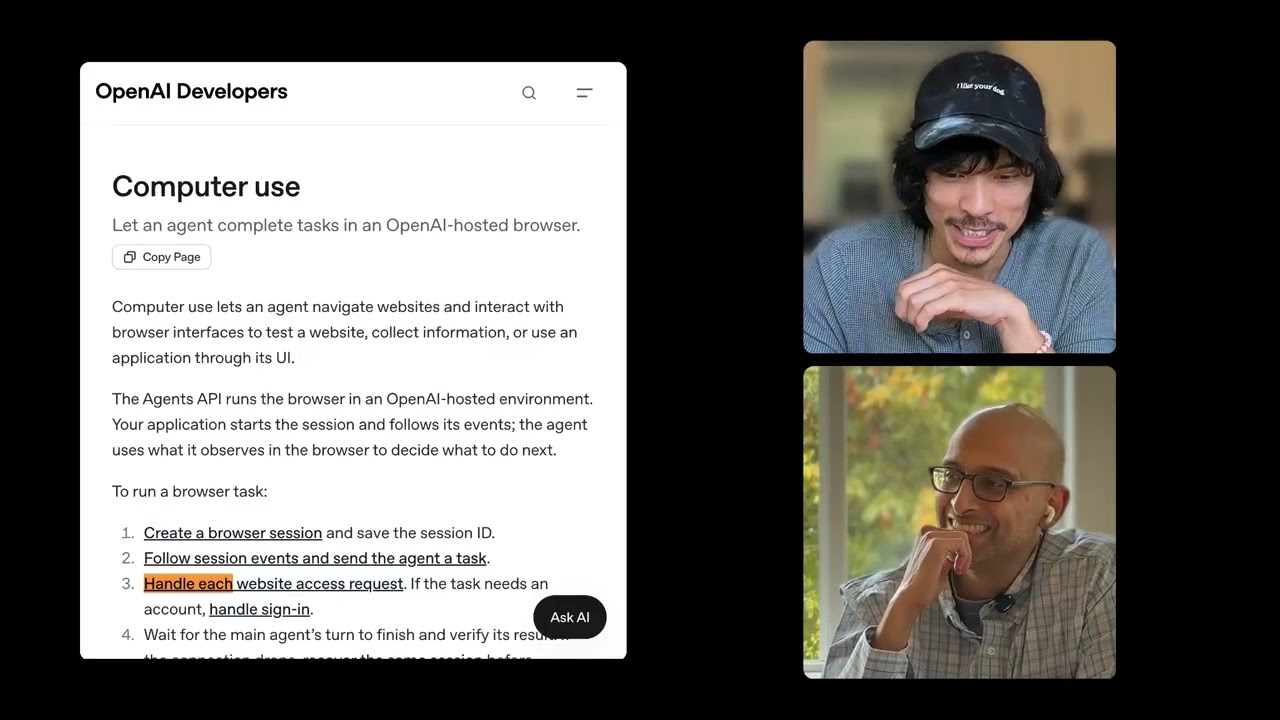
In this conversational video, Robert Ta and Hamel discuss the practical importance of speed when using coding agents, especially for developers who parallelize many agents across multiple customers. They compare OpenAI's Codex fast and ultrafast modes—charged at 1.5× token spend and included in the subscription—with Anthropic's Claude Code fast mode, which is an extra‑cost, credit‑based feature. Hamel highlights the simplicity of Codex’s unified quota system versus Claude’s fragmented carve‑outs (e.g., separate limits for Fable and fast mode) that make billing opaque for AI builders. Both agree that faster response times improve developer flow, reduce multitasking friction, and can serve as a competitive advantage, but the differing pricing models create confusion when evaluating $200/month plans from OpenAI versus Anthropic. The discussion underscores speed as a core pillar of the developer experience and calls out the need for clearer, developer‑centric billing.
Chapters
In my real-world usage of coding agents is just speed is such a thing, especially when you're parallelizing a lot of coding agents to do a lot of different work. At least in my line of work, I'm serving a lot of different customers.
And I'm really excited about the Codex Ultrafast. So the Codex has fast mode, which bills you at 1.5x your token spend quota. Then they have now ultrafast. Like with coding agents, even if you're just developing a web application, I don't know about you, but when I'm using my coding agent, if it's taking a while, I'll just go browse Twitter.
Yeah.
And then, you know, humans are really bad at multitasking. So I think actually it's good for everybody.
That this stuff goes faster?
Yeah. Just speed is actually super helpful, even if you don't need like a real-time thing. The thing, I guess like one situation where I don't care is like batch processing of data or something like that, where like truly just
It's like jobs.
It's like happening in the background and I don't care if I'm like in the zone trying to make something then. Yeah.
Yeah. Okay. So for the coding agent use case where it's this back and forth, you're saying speed is part of the developer experience that is a really valuable pillar. Yeah. I think, do you think we're going to start to see this as a competitive edge from like the Frontier Labs and—
It already is a competitive edge. So like, this is one of the reasons I like Codex because their fast mode is included within your subscription. So like Claude Code fast mode, they have fast mode as well. That's not included in your Claude Code subscription. You have to pay extra for it.
Wait, for real? So wait, so it's, so it is super confusing as an AI builder to be like, what am I getting out of the $200 OpenAI versus $200 Claude Code license? So you're saying the speed is not packaged with Claude Code, but it is packaged with Codex? Yeah.
If you open up like your settings in Claude and I can look at it too, just to confirm what it says. So if I, yeah, if I open up Claude and I go to settings, and if you go to, let's say billing or no usage, go to usage.
Like on Claude AI?
So you'll have like, you'll have a different quota for Fable than you do. Like, so their Frontier Intelligence will have a completely separate—
I've run out of my tokens for the day, but yeah, so this week there's session usage, there's Fable usage. Go ahead.
What do you mean? So Fable, it's like, so there's so many different carves out— carve-outs in the Claude Code subscription. There's a, there's a separate carve-out for Fable, which is like, hey, they have this completely separate quota. So like once you hit the Fable limit, then all of a sudden you can hit a Fable limit without hitting the other limits. And it's super confusing. And then also I believe the same thing for real, for the fast mode, they have fast mode and that you can only pay for with credits. You can't pay for out of your subscription, whereas Codex is a lot simpler to understand. It's just everything comes out of your quota. So like whether you want to use frontier models, you want to use Astra at the highest level of thinking, or you want to use fast mode, it just all comes out of this subscription. It'll just burn your subscription faster.
I see.
And that is so much nicer because then you can decide what you want to do instead of like paying Anthropic like some money because you want, you clicked on something.
It's more opaque for sure. Like I'm looking at this speed up responses with fast mode, get faster Opus responses in Claude code by toggling Fast mode. Fast mode is a high-speed config for Claude Opus, making the model up to 2.5% or 2.5x faster at a higher cost per token. So yeah, that's what they're saying. It will cost more with fast mode, and that is outside of the plans for Claude Code. That's what Hamel's saying. So from an AI builder perspective, it's— I've always found this is true as well, being an AI builder myself, building on the front lines, is Claude Cost and usage and billing is more opaque. That is definitely true. And I am seeing moves from OpenAI being a lot more developer-centric here, especially as we're seeing speed in using AI as a thinking partner. As when you're in the zone, as Hamill says, you're really in the zone and you want to go ship. And so not having to think about, oh, I'm paying $200 a month, my weekly session limits are this, my monthly session limits are this. And then I have to throw in another vector to assess like speed as part of my developer experience. It does get a little confusing. So definitely got to give the nod there to Codex, ChatGPT, and the OpenAI team for this.