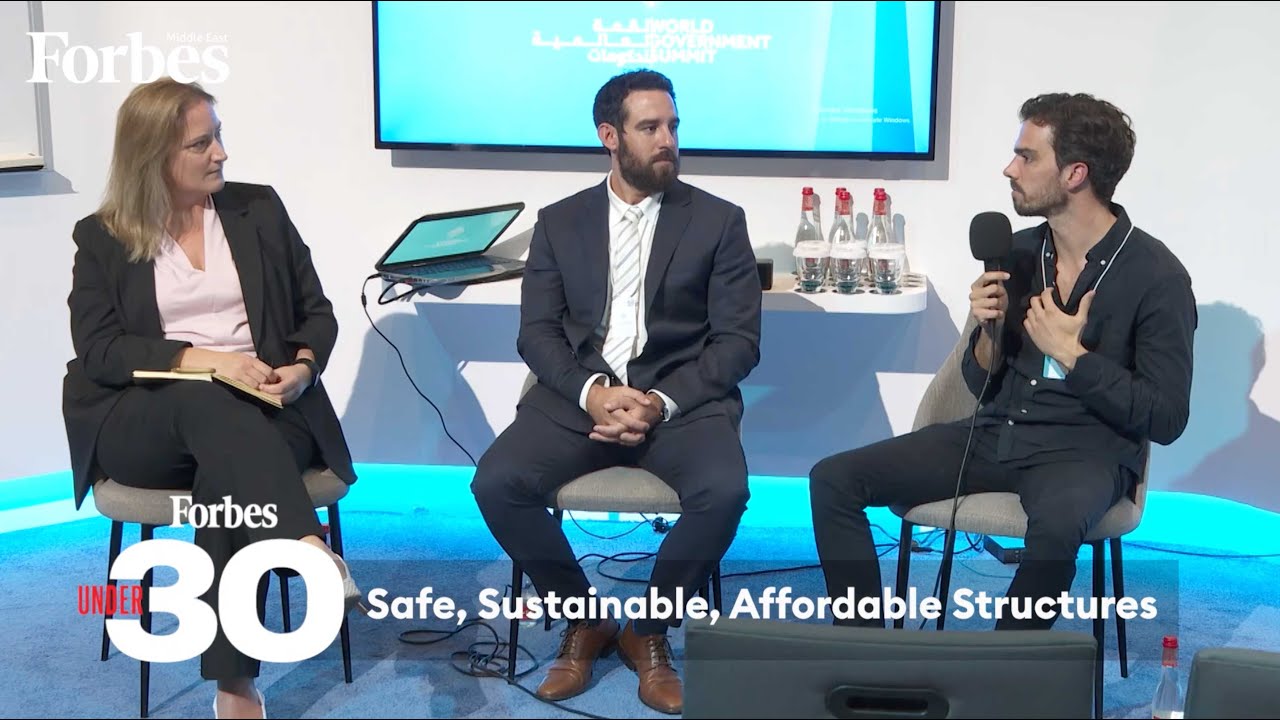
In this interview, host Speaker A talks with young German entrepreneur Thilo Konzok, who founded his first startup at 21. Konzok explains what distinguishes a startup from a traditional company, citing Paul Graham’s definition of rapid, exponential growth focused on a single problem. He highlights the harsh reality that about 90% of startups fail, emphasizing the importance of enjoying the journey and focusing on the limited factors you can control. When asked about the keys to success, he identifies three critical criteria: assembling the right team, choosing a mission that keeps you up at night, and concentrating on the 10% of variables you can influence. Konzok discusses Berlin’s startup environment, noting that opportunity is tied to location and that the city’s ongoing construction signals growth potential, even if Silicon Valley remains the benchmark. Finally, he advises aspiring founders to act while they are young—ideally before age 30‑35—taking advantage of the intense focus period of youth, and to simply “do it” despite the challenges. The conversation ends with encouragement to enjoy the ride and pursue entrepreneurial ambitions.
Chapters
And joining us in the studio today is a man who has made the new paradigm his own. Thilo Konzok set up his own startup at the tender age of 21. Welcome to the show and thank you very much for joining us, Thilo. Perhaps just as a general question to begin with, we hear a lot about these new startups everywhere, but perhaps for some of our viewers it's not a familiar concept. So what do you think is the difference between a startup and just founding a new company?
Yeah, I think I'm just gonna go like steal an explanation by Paul Graham, and he said that the main difference is that you're just trying to do something, like one thing very, very well, and then try to grow as quickly as possible and try to get the exponential growth graph. And I think that's the main difference.
And you've gone through this. We know that it's not always easy. We have this stereotype of you and your buddies sitting with a laptop in a basic office having fun and still earning money. Is it really that easy? Is it really that?
I mean, it's partly that, but it's mostly not that. I mean, the nice thing is like talking to you right now, and on the outside it seems like it's very easy and it's all fun. But it mainly goes bad, right? If you look at it statistically, 90% of startups fail. And then I think the most important thing for yourself is just like enjoy the journey, right? Because most likely outcome is going to be failure. And then you're just trying to to, to like get into your job, do your job right, and do the best thing you can do. And then there's a lot of things you can't control and try to distance yourself from that. And I think that's, that's the right way to look at it.
And it's important to have the keys to success. We've been talking on today's show about what it takes to succeed in today's modern business world. What do you think are the 3 most important criteria that you have to have, the characteristics that you need to succeed in the business world today?
I think, yeah, as I said, There's a lot of stuff you can't control, but there's like 10% you can control. You need to control those 10% as much as you can possibly do. And that's probably choosing the right people. I mean, it's the same thing in startup as it is in life, right? You're going to probably spend 7 to 10 years of your life with them. So getting the team right is very important. And then getting the mission right. And that's very easy to say in hindsight. But if you're in the moment, it's just so important that You work on something that keeps you up at night, right? Because it's most likely going to fail. So you better choose something that you have fun doing. And, and yeah, and it's probably— it's definitely very hard to find that one thing. And I haven't found it yet. But I'm like, you feel like you're getting closer and the amplitude of where you're looking is getting smaller.
We hope that you find it soon. Let's talk about support because you're not alone. It also depends on your environment. Do you think that Germany and Berlin, as we always hear, are providing the right environment for startups?
Yeah, I think if you look at startups environment, the most important thing to consider is opportunity, right? And opportunity is defined by where you are and where you can possibly go, right? And the nice thing is, if you look at Silicon Valley, they're pretty much on the top already. But there's so much way to grow for us here in Berlin. I think that's very important. And I studied architecture and I always like go around Berlin and look at cranes, right? And seeing cranes means building being built. And that means a lot, I think. And that Shows a lot of opportunity happening in Berlin right now.
And if you could talk to a viewer that's perhaps not sure if he should go forward with an idea for a startup, what would you tell him?
I mean, do it, right? The thing is that you probably— I'm 23 now, and I probably have like 10 years where I can be like super intensive about one topic, and I better do it now, right? But then there's also like times where you can only be like 19 once, right? So you should better enjoy that time. It's like the only time where you can go travel, do stuff like that. And don't feel like you need to run after someone. And it's definitely very easy to say that. It's very hard to do in reality. And I'm the biggest victim of that. But I think just go ahead, do it. Try to do it before you're 30 or 35, before other things get more important. Yeah.
Very well. So it's just go forward and enjoy the ride. Thank you very much for joining us. We wish you best of success. And I hope to see you in a further show then.