The Incredible Foundation Making Sport Accessible to Every Athlete | Bob Babbitt on Tilly Talks Tech
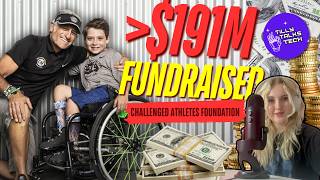
In this episode of Tilly Talks Tech, host Tilly Lockey interviews Bob Babbitt, co‑founder of the Challenged Athletes Foundation (CAF). Bob shares his personal journey from triathlon enthusiast to Ironman competitor, the moment he discovered the lack of adaptive sports equipment, and how that spurred the creation of CAF. He explains how the foundation addresses systemic barriers such as insurance exclusion, high costs of adaptive prosthetics, and limited visibility for disabled athletes. The conversation covers CAF’s innovative prosthetic designs (including converting a leg socket into an arm), collaborations with major brands like Apple and Nike, and the importance of community events and celebrity advocacy (Robin Williams, LeBron James, Oprah). Bob details CAF’s fundraising strategy: building an endowment, hosting high‑profile galas, leveraging athlete networks, and securing corporate partnerships, which have raised over $191 million, funded 52,000 grants, and supported 35,000 athletes worldwide. He discusses the need for greater gender equity in Paralympic sports and longer race distances for amputees. Finally, Bob offers advice for new founders: start small, focus on network, keep goals realistic, and let the mission drive growth. The episode ends with resources for listeners to engage with CAF and a personal invitation to try adaptive surfing.
Chapters
Access to sports should be a human right, no matter your ability. That is the belief of Bob Babbitt. Today is about human-centered technology and design, making tools, systems, products, prosthetics that give people their life and freedom back. Hello everybody, welcome back to Tilly Talks Tech. My name is Tilly, and on today's episode we have a legend joining us, an Ironman, a triathlete, a fundraising wizard, quite frankly. My guest is Bob Babbitt, co-founder of the Challenged Athletes Foundation, an organization that has raised hundreds of millions of dollars and helped tens of thousands of people access adaptive sports technology, from prosthetics to hand cycles to custom-built equipment. This foundation is nothing short of amazing. I don't think I've ever seen a number that big fundraised. We're going to welcome him onto the podcast and find out exactly how he did it. Welcome, Bob, to the podcast. Welcome to Tilly Lockey Bob, I'm so happy to have you here today. How are you feeling?
Everything is great, Tilly, here in beautiful San Diego, and nothing could be better.
Yay, that's such good news. Bob, as of right now, correct me if I'm wrong, you've raised over $191 million for athletes, which is an obscene number, right? 52,000 grants that have been awarded, and you've supported 35,000 athletes worldwide. And that's not even to mention the hundreds of thousands more that I guarantee that you've touched in some sort of way, right? You're an Ironman as well, so I was wondering if we could go back to the start and you could just tell us about you and where your love for sports sort of began.
Wow. Well, really a lot of it came when I moved to San Diego from Chicago in 1978 and found this really new sport. The sport triathlon started in San Diego in 1974, and I I fell in love with it. I went and did the Ironman triathlon in 1980. The Ironman is a 2.4-mile swim, 112-mile bike ride, and followed by a marathon. So back then, it was sort of an adventure. I had panniers, sleeping bag, and tent put in the back of the bike because I thought you swam 2.4, rode 56, camped out, and rode back the next day. It was a little bit of a surprise, and they're like, no, no, no, you just keep going. You do the whole thing in one day. I'm like, wait, what? I remember running up Diamond Head, 21 miles into the marathon. I'm thinking to myself, I'm going to finish this whole thing in one day. And I hear this voice in the darkness, hey, you. Yeah, you in the race? Yeah, you're done. It was like one guy doing one-arm push-ups in the park and nobody else. There was nobody there, but I just knew I had changed. I was a different person than I was that morning because I had done something I never thought I could do. And that led to not just falling in love with the sport, but starting a magazine in the sport called, uh, Competitor Magazine. And when I had, um, Competitor Magazine, I met a wheelchair athlete by the name of Jim Knopp who had won Boston Marathon 5 times as a wheelchair athlete. And I remember interviewing him, and something you will totally relate to is I'm at his house and he's sitting in his wheelchair and there's a nickel on the floor. And of course, my thought is, oh, the poor guy, he dropped the nickel and he can't pick it up because he's in a wheelchair. So I go to pick the thing up and it's glued to the floor. And I look up and he's drinking a beer and he's like, so, Babbitt, you didn't think the poor guy in a wheelchair could pick up a nickel off the floor? Lesson number 1, don't ever underestimate anybody. And that became the mantra. And we covered a lot of wheelchair athletes through the magazine.
Yeah, that's so cool. It is, it is incredible. And like I said, the sheer amount of people who are impacted by this. The insurance doesn't cover prosthetics or devices for sports because it's considered recreational and a hobby. But also, one of our bare necessities of life is to be able to move your body and exercise. And as somebody who, like yourself, your whole life has revolved around sport, how was that for you when you first realized damn, insurance don't cover this. Like, they're not seeing sports for like the true necessity that it is. Like, it's not a luxury.
People underestimate the power of sport. And it's— you talk about you can give somebody opioids, you can give people all sorts of different medications, but there is nothing better than sport for making you feel good about yourself. And the thing that people forget about is Imagine your dad is paralyzed and the family wants to go for a bike ride, and dad doesn't have a hand cycle, so mom and the kids go for a bike ride, dad watches TV. Or dad has a hand cycle and dad is on the hand cycle while the rest of the family is on bicycles and they go for a ride together. It changes everything, right? And that, that's what I think is so important. The other thing that people underestimate is community. Now we'll have people of 150, 160 challenged athletes from all over the world come to San Diego in October, they might be from a little town in England where they have not seen another amputee or been exposed to somebody else in a wheelchair. They come to San Diego for that weekend, there's legs laying all over the place, right? So the kids are learning from each other, the parents are learning from each other, the prosthetists are learning from each other. And it used to be back in the day, if you had an amputation, you hid it. You wore long pants. Well, now people are— this is who I am. This makes me different in a positive way. I stand out in the crowd. The spotlight is on you, and you have not just learned to adapt but to embrace. And to me, that's— that is a huge deal, is understanding who you are, why you are, and how do I impact that next person so that they can feel good about themselves as well.
Yeah, I couldn't agree more. Like, that whole narrative I've experienced from like day dot, do you know what I mean? Like, yeah, before the Challenged Athletes Foundation existed.
Yeah.
What, what would you think was like broken in that system for athletes with physical challenges?
I, I think that perceptions right away, people— and this is Rudy who's here, perfect example. So he had a disease called pterygium syndrome. After 15 operations, uh, before the age of 5, he asked his parents to cut his legs off because they were never going to function. So, his legs amputated, and at that point, it was, okay, you're a double above the amputee. You'll be in a wheelchair. Maybe you'll use a walker, but you're never going to run or do anything like that. Well, so his mom, she said, Mr. Davidson, when will Rudy run? And, you know, she's like, lady, your kid is on stilts. He'll never run. Maybe he'll walk with a walker, but he'll be in a wheelchair rest of his life. Michael said he walked in the waiting room and Rudy was doing a handstand on the walker. And at that point he realized, if this kid wants to run, I better figure it out. And it wasn't about him running, it was about him being a kid. I want him to be able to play and be with other kids. So the two of them, we're talking a 6, 7, 8-year-old and Michael Davidson, became collaborators. On, okay, how do we make these things better? And Rudy was skateboarding and he was playing paintball and he was breaking leg after leg and socket after socket. Michael says, I'm holding up the socket and all these Tootsie Rolls, these little candies come rolling out of the socket. And I'm realizing my collaborator's 8 years old and he's stashing his stash in his socket. Right. But what the two of them built over time was what you see today. The sprinting you see at the Paralympics and with single and above knee and below knee is it's because of the work they did that you're seeing guys run 45 seconds for a quarter mile, right? You're seeing athletes being able to be athletes because the prosthetics aren't a hindrance. The prosthetics are helping them achieve their greatness, which is wonderful. So what's really funny is we're still, it's still in its infancy. Because Rudy's leg became actually for one of our guys, one-armed Willie Stewart, he lost his arm and he got into mountain biking. What happened is that same prosthetist, Michael Davidson, took Rudy's leg and made it into an arm and plugged it into the handlebar so that Willie— Yes, it became Rudy, part of Rudy's leg became Willie's arm that allowed him to do the Alcatraz Triathlon 25 times. Kayak the Grand Canyon.
That's crazy. Like, you turned the leg into an arm.
Yes. Yes.
How did they even do that?
Just like, well, he took the socket that was Rudy's socket and then figured out how to plug the end of the arm into the handlebar so that he could control it. Right. And it's, it's, it's crazy. And then all this stuff with prosthetics is, as you know, from what's behind you, It's still novel. It's every single day there's new things happening that are allowing athletes to, to not just accessorize, but to find something that's going to be more functional than it was the day before.
It's really interesting speaking about design and like co-designing when it comes to fitness because it's a very different design process, I feel. Like, I've obviously got crazy multi-grip bionics that are Bluetooth and wireless and very like dexterous like this.
Yes.
But something like for sports, the priorities are different, right? You don't need all these fine motors. It's more about it being like breathable and really well ventilated and lightweight. And I was wondering how it's been like working with athletes in particular to figure out what they need and whether there's whether there's been many hurdles in that or whether it's pretty smooth sailing.
You know, it's been really cool is having companies reach out like Apple reached out a number of years ago because they wanted to include in their, you know, their sports apps. They want to make sure that they took into account wheelchair athletes. And so what they did is they actually set up at CAF and we had numerous wheelchair athletes come in from different sports. So they could include those sports on their sports watch. So in seeing companies like that, Nike as well, over the years Nike's been a global partner of CAF and they have been so open to, you know, coming up with shoes that people can put on without having to lace them up, that you can put them on without needing your hands. It's been wonderful just seeing how companies want to adapt.
The biggest issue is that adaptive tech is so expensive. Like, we can preach and say how necessary it is, but how do you get that money and how do you make sure it's accessible? That's the biggest problem. I mean, my first prosthetics I had to fundraise for. I think my most expensive pair of prosthetics I had were about like £36,000 and they couldn't open wide enough to hold a cup, you know, and they were still £36,000, which is absolutely crazy. And we always have to fundraise for them. Fundraising being something that you're very good at, thankfully, because Like a racing chair, like you said, can cost thousands. Some prosthetics, particularly the sports ones like we've mentioned, aren't covered by insurance, which is insane. Like, makes me so mad. Some adaptive bikes can be more expensive than cars. You haven't just helped like a couple, you've helped tens of thousands. So I wanted to know like what the Challenge Athletes Foundation sort of funding story is. How did you manage to do all this and where does all that funding come from?
When we first started, it was great because it's myself and my good friends Jeffrey Escom, Rick Kozlowski. And really, when we started the foundation, I had the magazine so I could promote what we were doing. Also have some, you know, halfway decent at marketing. Jeffrey was the CFO of a clothing company called the Tilly Company, and Rick was an event producer. So Rick put on the event and Jeffrey was, let's figure out how do we fundraise. And our goal was we want to have an endowment. We wanted to make sure we were around for the long haul. So Our goal was to get to $1 million in the endowment, and now it's over $30 million in the endowment. Just the interest off the endowment allows us to give out a lot of our grants. Plus, the building that we're in in San Diego is paid for, spits off about $300,000 a year in, in dollars that we use for grants. So we're incredibly fiscally responsible. We use every penny to take care of our athletes. So now We just did a gala, our first ever gala in LA.
Yeah, let's take a look at that.
Good evening everyone and welcome to the 19th Annual Heroes Heart and Hope Gala. For more than 3 decades, the Challenged Athletes Foundation has provided adaptive sports equipment, training, and mentorship to people with physical disabilities, turning possibility into reality through the power of sport. Ladies and gentlemen, please welcome Famita Ayenbeku. I know without a shadow of a doubt, if I did not get that running blade, I would not have accomplished everything that I have been able to accomplish. I want to tell you guys to please keep supporting, keep coming out, keep showing your love, because it really changes lives. The CAF school program shows students students that difference doesn't mean division. It means possibility, and it means inclusion. We want to reach out to kids with our lives and let that be their motivation. Please welcome Stella, Sophie, and Ryan Cannon to the stage. Challenged Athletes Foundation has given Stella, Ryan, me, and our sons a community that understands and accepts us. Your support has helped to turn those questions and that fear that we had when Stella was born into acceptance and joy. Together, we make the impossible possible and raise the funds that allow this life-changing work to continue. Every paddle that you have tonight in front of you is going to fuel movement, independence, and hope. Look at this community for challenge athletes. Unbelievable. Yeah, we raised— that was $2.5 million.
Congrats.
I know. And our gala in San Francisco was $1.1 million. That's coming up in— I think that's coming up end of April. Done a bike ride down from San Francisco to San Diego. It's called the Million Dollar Challenge. And then we have our San Diego Triathlon Challenge weekend. But the cool thing, one of the things we, we knew early on is your, your net worth is your network, right? So your network is people who now believe in this cause because you are so passionate about it that they become fundraisers and they bring their families on to become fundraisers, right? So the next generation is stepping in and saying, we believe in this foundation, we believe in the mission here, and we're going to help make that happen. And again, the relationship with Ironman, we would get a spot in the Ironman World Championship that we could auction off. And our deal was whoever bought the spot had to come to our San Diego Triathlon Challenge because we didn't want somebody just buying the spot. We wanted someone to become part of our family. So when Scott came to the event, he was there when Robin Williams, who was a huge supporter of CAF, presented a little boy named Jake Frank with his, his prosthetics. He was a double above knee amputee like Rudy.
You mentioned Robin Williams as well. You're talking about getting access for sports, which you're doing actively, very proactively. You also, you know, you're alongside probably some people's like famous heroes and they're representing it as well. What's that aspect like?
So Robin loved coming out to the event and what Robin was so great at is he took Rudy on Oprah. What happens is that brings visibility to Rudy into CAF. 11 years he was with us. And what Robin loved more than anything was a live microphone, right? We couldn't promote that Robin was coming because we never knew for sure he was, but 11 years in a row, they sort of got the idea. So that morning, all the news stations would be at La Jolla Cove at our event to hopefully get a soundbite from Robin Williams. I remember this one weather anchor, she's like, hey, can we get a soundbite from Robin? And I'm like, is it live? Yes, it is. Okay. So Robin comes over and she says, so Mr. Williams, how, how are you gonna feel at the end of the 56-mile bike ride? He says, is this live? Yes, it is. I'm gonna feel like there's a river of sweat, like Niagara Falls running down the crack of my ass.
That's Robert Williams. That's the reality.
That's Robert Williams, right? He loves putting a live microphone in front of him is like putting raw meat in front of a lion, right? That's what he lives for, is that live microphone. But because of that, look at the attention Robin brought to CAF. When Robin passed, Fox News called and asked Rudy and I to go on to talk about Robin. And Rudy was maybe 16 at the time, a young kid. The question was, Rudy, did you know what Robin was going through? And Rudy goes, very perceptive for a young kid, he goes, You know what's great about me missing my legs? You can see what I'm dealing with. We didn't know what Robin was dealing with, right? I thought that was just so perceptive that we see what you're dealing with. We see what that guy's dealing with when it's something in here or in here. You don't necessarily know what Robin Williams was dealing with.
Robin was like such an amazing support. I read so much about that, and I'm so glad, you know, you got behind such an incredible cause and you got so much support. So many people have got in touch and wanted to get behind this whole initiative and I just want to, knowing that, take us back to the start of when you first got this hand cycle for McLaren. Was there a moment where you were like, damn, this is the start of something big and what did that equipment unlock for him, but also you guys and just like the way you wanted to progress this and make sure access prevailed even more so into the future?
Yeah, I would like to say there was a big plan, maybe, but our plan was really just to get the van for Jimmy and that was it. And then it was really 3 amputee women who had put that relay team together to support Jimmy and came to us. And when they told us that your health insurance would not cover anything to do with sport, That just didn't compute. It didn't make sense because obviously we are all doing Ironman. The sport was, was, was 98% of our life, which is why we started it. But we didn't know what direction we were gonna go. The, the plan was never, we're gonna be all over the country. Uh, we're gonna have, um, you know, a movie on a quadruple amputee baseball player. We're gonna have a film narrated by Oprah. When Jim and Emmanuel received the Arthur Ashe Courage Award, we're at the Kodak Theater in LA. Matthew Perry from Friends is hosting, introduces Oprah, who comes out on stage and introduces a 13-minute feature on Jim and Emanuel and CAF, narrated by Kiefer Sutherland. LeBron James and Serena Williams and everybody, standing ovation, everybody sobbing, and Oprah and Jim and Emanuel hugging. And, you know, the President of the United States watching this. And the following weekend, we're in the Oval Office with the president of the United States.
You just crazy.
You can't script this stuff. Stuff happens. I believe stuff happens when you do the right thing.
I agree. I think that's a lovely motto and thing to live by as well. You know, I've always been a sort of like glass half full kind of person, and I feel like you got to find something like that. It's like the never-ending source of happiness is just being able to help people.
What are your sports?
Oh my God, I suck at sports, ironically. Well, I used to— I tell you what, before I went in for my operation on my leg, I didn't know if I was going to be able to run again. So like, that was the one time that really sticks out in my mind where I think about, oh my gosh, the freedom I felt then, where I was literally just at my Nana's house. I just got my, my sisters out with me and I was like, we were just like running laps up and down the street and like Even today, my mobility is a lot more limited because of my leg operation. Yeah, I'm so glad I took that moment. Since my operation, honestly, I haven't tried too many sports. I mean, I've been playing ping pong recently. We've got a ping pong table, which has been fun, but that's sort of the extent of it at the minute. I'd love to come to one of your establishments and try everything.
You know what, you should come out. We should get you out for our San Diego Triathlon Challenge weekend because we do adaptive surfing. We do wheelchair basketball. We do surfball.
I'd love to try surfing.
Oh, you know what? And here's a perfect— look on social, Liv Stone, her L-I-V and last name Stone, S-T-O-N-E. Liv was born with short arms on both sides. And I'm sure you had this as well. It's like parents are like, well, we should get her into running and soccer, things that she doesn't have to use her arms. Right. Right. And of course, And she comes out for an adaptive surf clinic in San Diego and falls in love with surfing. And she's like 15 years old and tells mom and dad, I, I need to move to San Diego and become a professional surfer. And they're like, yeah, we don't know if that's gonna happen. Well, then she ends up on Team USA. She starts surfing pretty much year round, wins 3 world titles as a surfer, right? And what they did, she came up, um, uh, with hand paddles that go on her stumps so that she can paddle into the surf. And all of a sudden she became world champion. That next kid who's dealing with something similar to what you're dealing with sees you being successful and goes, well, wait a second, why can't I? That, that's the, that's the, that's the passing it on. That's that next generation that's important.
Yeah, exactly. And that's like why I do social media, really. Like, if I would have had myself to look up to when I was little, I think that would have changed a lot.
And Absolutely.
Like a lot of these people you've worked with, my family were like, they were handed a list of she'll never do this, she'll never do that, she'll never do this. And on that list was she'll never play piano because it's a hand thing. And my parents were like, don't tell us what our child can't do. And lo and behold, I turned about 7 and I started tinkering away at the piano. I was like playing Beauty and the Beast, Taylor's All This Time.
Yeah, yeah, yeah.
And I'm the only person in my family who touches that. And now I have like a separate prosthetic to play piano, documented that all over social media. I started with like instruments and things like that. I feel like sports might be the next, next thing to document. Just see what I'm good at.
You would love surfing. You would love surfing.
We're going to the end now. I just have a couple of final questions I'd love to get from you. So first of all, I would love to know, what would you like to see more of in sport?
I would love to see more equality. One of the things that bothers me We got the Paralympics coming up and you've got men's sled hockey, but there's no women's sled hockey. That's like, wait, what? Because they say there's not enough countries yet, but it's like, okay, let's— you got to start somewhere. If there's 6 or 7 countries that play sled hockey for women, let's do it. And it's a selfish thing because I've got a woman named Lira Doderlein. Could she— would be probably our number 1 hockey player for women in the Paralympics, except they don't have Paralympic sled hockey for women. So I would like to see more equality. I would like to see in Paralympics longer distances for amputees. At this point, it's nothing— there's nothing more than 400 meters, right? And how about a 5K? How about a 10K? How about something a little longer? Because we've got a lot of amputees who certainly can run further. So, you know, small wishes, but we'll get there.
I agree 100%. We'll definitely get there. And this one, I imagine that we could talk for a whole of our talking about it, but why is the Challenged Athletes Foundation so important to you?
When we were in— I was in Rio at the Paralympics 2016, and a woman named Deborah Jackson came up to me and she goes, Bob, you know, what you guys don't realize is the importance of what you do. 2 years ago, you gave my son Desmond a running leg, and tonight he's running in the finals of the 200 meters here in Rio. And when we were in Paris for the Paralympics 2 years ago, 225 members of Team USA, 127 of them had received grants from CAF. And just having parent after parent after parent coming up and thanking us for what we do. And a lot of times it's our team works so hard to find, you know, and find athletes and this to let them know that we're here. And that's to me one of the things that's so important and why it means so much to me is seeing an athlete that you can see the light bulb go on, like in you. You are a bright light, right? You are a bright light who loves and embraces everything life is bringing to the table. That is what brings me joy, is seeing people who— there's life after trauma. There is sometimes a life you never would have imagined. And if we at CF can somehow help somebody, our goal is you tell us what you want to do. You want to play baseball, you want to play basketball. Well, our job is to try to help you make that happen. That's— we're a conduit. And when you see somebody reach their goal and become that better version of themselves, there's just nothing better.
Yeah, I imagine like that's the most amazing feeling in the world, and that really resonates with me. Like, Just wanting to help people, you know, because I've been there and like fundraising for myself as well back in the day. Like, accessibility should be number one, but this stuff is so expensive. And that was actually one of the missions when I started this podcast. I don't know if you know this, but we started this podcast with the initiative that, you know, we wanted to get monetized and all ad revenue was going to go towards our own foundation, which is the Open Bionics Foundation. So that goes towards people who can't afford like prosthetic hands I want to ask you, what advice would you have for somebody who is starting their own foundation maybe and wants to make the same positive difference that you guys have?
Well, again, your network is your net worth, and, and having people around you who also share your vision. You know, we have people who are going to events and raising dollars for us from doing their own triathlon or their own ultra marathon, uh, and then having race directors like Ironman And like Chris Kostman at Badwater has always made— is raised nearly $1 million for us just by having his event be a fundraiser for us. Things can start small and then become really, really big. It's, uh, don't have too grandiose a plan. Just come into it and say, I want to help one person. I want to help two people. I want to help three people. And then someone's going to go, I got an idea. And just being open.
Yeah, that's so cool. I definitely need to get down and check this all out. I swear, I'm so excited. Thank you so much, Bob. This has been amazing. I really, really do appreciate your time. And for anybody who wants to follow along with you or, you know, your foundation, where can we find you across socials and how can people get involved?
It's just the Challenge Athletes Foundation, challengeathletes.org. And I'm just, uh, Babit Ville is my B-A-B-B-I-T-V-I-L-L-E is all my social and, uh, Instagram and Facebook and the web, the YouTube channel for Breakfast with Bob. And we interview obviously top triathletes but also a lot of our top para athletes as well.
Awesome, thank you so much. And I watched a couple of them, I've been all on your website, so I definitely recommend that everybody watching goes and checks it out. And I'm going to be staying right up to date until I get to you in the flesh and try surfing.
And you know what's cool about this day, Tilly? This is actually the 48th anniversary of the first ever Ironman, February 18th, 1978.
Oh my goodness, I had no idea. That's awesome.
Perfect day for us to chat. Really a treat to get to meet you. And again, you, you are a bright light. You're doing some great work. Keep doing what you're doing.
Thank you, Puff. You're so sweet. I'll see you soon.
I will see you soon, Tilly. Thank you. Bye.
Oh my goodness, that was so cool. Like, £191 million is an obscene amount of money, and the amount of people they've helped is truly phenomenal. The CAF has actually funded 5 people to receive HeroFlexes, which is obviously our activity arm, and they've got them now getting themselves back in the gym, picking up their hobbies that they thought they wouldn't be able to do. But you know, with a little adaptation, you can. If you yourself are looking to get back into sports, or you just need that extra bit of push, you need that accessibility or a grant, definitely do head to the website and check out what they offer because they offer so much. Their grants are for athletes with a permanent physical disability, open to all ages and skill levels, and they're also open to eligible athletes worldwide. And there are so many options. You've got sport expense and participation grants, adaptive sports equipment grants, lower limb sports prosthesis grants, EOS fitness membership grants, You've got US military and first responder grants and you've got some area-specific grants as well so definitely do check that out. Bob just told me that they take the applications in September and most people can get their grant by like March which is crazy. He said the prosthetic ones take a little bit longer, the military ones can take around a year but still, incredible work. So if you do want support there, check it out or be the person to donate! What an amazing cause. Thank you so much for listening to this episode of Tilly Talks Tech. I really hope you enjoyed it. It feels perfect for the Paralympics coming up, you know, we're getting the anticipation going. And yeah, I think my takeaway is that I need to get to San Diego and learn to surf. Thank you so much for watching. Make sure to like, comment, and subscribe. Tell me who else you want me to get on the podcast, and I will see you next time. Bye!
More from Tilly
We had to hit the Alysa Liu dance!! 💃🕺 #dance #alysaliu #dadanddaughter #bestfriends
spiritual connection🥹💗🐐 I love this little baby #goat #wholesome #limbdifferent #girlhood
THAT WAS SO GOOD OMG IM never recovering🥹👽. #projecthailmary #scifi #ootd #cinema @Sony
trying to convince myself not to get bangs🙈 #hair #newhair #oliviadean #girls #relatable
Getting my nails done on my new bionic arms for the first time!!💗#girlhood #nails #bionicnails
Tilly Lockey: Lost Both Hands at 15 Months, Leading the Bionic Generation |With Tamil Subs| Gobinath
Cate Dunlap🖤 I get compared to a lot of characters so here’s my series inspired by them!🦾 #fashion