Tilly Lockey: Lost Both Hands at 15 Months, Leading the Bionic Generation |With Tamil Subs| Gobinath
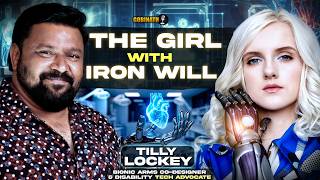
In this conversational interview, 19‑year‑old Tilly Lockey recounts her life after losing both hands to meningococcal septicemia at 15 months, her early prosthetic experiences, and her partnership with Open Bionics that led to the world’s most advanced wireless myoelectric bionic hands. She explains the hands’ technical operation – EMG‑based Myopods, Bluetooth connectivity, grip‑mode cycling, and the ability to perform everyday tasks like holding a bottle or brushing hair. The discussion moves through her childhood adaptation, the emotional impact of being different, the role of family and community fundraising, and how those experiences shaped her identity and advocacy. Tilly describes her evolution from a reluctant prosthetic user to a fashion‑forward tech influencer, content creator, public speaker, and singer, highlighting her philosophy that disability does not define her but directs her. She shares how music, headphones, and dancing act as mood‑boosters, how she finds joy in her cat Shuggle (nicknamed Pushkin), and her love for sneakers over heels, reflecting her fashion‑tech synergy. Tilly also reveals her dream of visiting Japan for its cutting‑edge technology and sushi culture. She offers advice for young people on self‑acceptance, vulnerability, curiosity, and the importance of community support, while promoting accessibility of bionic technology in regions like India. The interview ends with rapid‑fire questions that reveal her personal preferences and optimism for the future.
Chapters
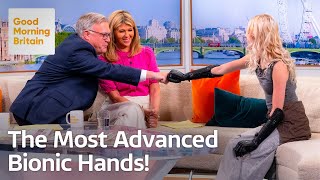
Just part of life now, isn't it, Tilly? She lost both her hands when she contracted meningitis at just 15 months old. This time next year, I'll have hands. She needs replacement arms that match her body as she gets older. I am so excited to introduce Tilly Lockey. Tilly is now 19 years old and yesterday became became the first person to get the most advanced wireless hands in the world. So Tilly, those are some spectacular hands you have there. Can you tell us a little bit about them? And it wasn't until I was 15 months old that I fell really ill with a disease which in its full name is called meningococcal septicemia strain B. What that does is it basically like kills off your body. Really killed off my hands. Dead, basically. They were dead while they were attached to my body. Yeah, I started working with Open Bionics doing that when I was 9 years old, and there's a company who make these ones.
What's the coordination? Because you don't have any physical connection. How these fingers are moving, how this is getting rotated.
You can actually take a look at this one if you want. Yeah, take it. Yeah, yeah.
So that if you want to close your hands, the muscle movement will give the instruction.
This muscle is to close and this muscle is to open. So I go squeeze to close, flex to open.
It's a connection between the muscles and the sensor.
Exactly. I'm kind of just like, if I'm doing something I'm enjoying, I'll like whip the camera out, I'll record it, and I feel like that sort of authenticity has done me really well. And I feel like I just had one message, yeah, like just to live your life to the fullest, to not try and hide what's different about you. So I always used to say my disability doesn't define me at all, but it's definitely directed me. And I don't even— obviously I've had hardships and things because of it, but like I said, like to picture my life any other way. I feel like it's really made me who I am as a person. I think everybody has their insecurities, but I think we all have the power to push through. And it's not comfortable, but it's just part of life. And I think the advice I'd give to people is just to know that we're all on our journey about that. Like, you'll never just wake up one day and feel better about it, so you need to take like little steps and little actions questions to help yourself through that? I'll teach you one trikural. Okay.
The meaning of the trikural is, if the God can do something, your hard work pays.
Okay.
Suits you so well. Hi. Hi, how are you? I'm so good. I'm happy to be in India for the first time ever. What's the first time to India?
First time ever. And I'm on your podcast. I couldn't be happier.
Oh, thank you so much. So nice to see you, so energetic when you are entering into the studio itself. I could see that the happy face, meeting people very happily. How the spirit is with you always?
I don't know. I feel like, you know, I got a second chance at life really when I was a child. Like, I got really, really sick. Thankfully, I don't remember that time, but I've heard the story so many times where I know how close it was, you know, to maybe not being alive today. So now that I am alive, I feel like I owe it to my younger self to live it to the fullest, you know, and just, you know, it's better to be happy and have a good time.
So what happened at the younger stage? You know, you lost your hands.
Yeah.
Can you tell us what happened at your younger age?
Yeah, so when I was born, I had all four limbs, like I was a completely happy, healthy baby. And it wasn't until I was 15 months old that I fell really ill with a disease, which in its full name is called meningococcal septicemia strain B. And meningitis is basically the inflammation of the membranes around the base of the spine and the brain. And that can often bring on septicemia, which is a form of blood poisoning. And what that does is it basically, like, kills off your body. So it really killed off my hands. Like, my human hands honestly looked a bit like this. They were fully black. They were, like, curled over, scabby, and they were dead, basically. They were dead while they were attached to my body. And I was told that I was going to die. My family were given 0% chance of survival for me. I was the worst case they'd ever seen, and I was obviously so small as well at the time. But obviously I'm here today, and it was after 1 week in intensive care, 3 weeks in recovery, a secondary infection, and I had to have 10 blood transfusions. But I was able to survive. That being said though, my hands were still truly dead attached to my body. They were no use to me anymore. So I was going to live, But they did have to amputate my hands at the wrist.
Both the hands?
Yeah, both the hands.
At the age of?
15 months.
15 months?
Yeah. So both hands at the wrist like that.
So then when did you realize that it was amputated? Because you were too young those days, right? So when did you start realizing that you were different?
I think that started outside of my own family. Like, I have 3 sisters and we're all like a super close family. So whenever I was at home, I never really noticed the difference because the way I looked at it is like somebody would have brown hair, somebody would have blonde hair, somebody has hands and somebody doesn't have hands. Like, to me it was a very, like, small difference. Um, I don't think I realized how different it was until I started going to school and things like that, where I was meeting peers for the first time and they'd obviously never seen somebody without hands before. Um, so I got, like, a lot of stares and things like that. I think the first time I really realized it was probably when I did what any other kid would do and, like, go to the park, for example. You know, when you're at the park, there's loads of kids, there's a proper, like, you know, child area. Um, so I realized that my sister could sort of, like, run off and make friends, whereas I could make friends also, but I kind of had to explain the situation and answer a million questions kind of before I could just, like, run off into the sunset with other kids. So I feel like that was the first time I realized that, you know, I had to go through, like, an extra bit of that process. And yeah, just that I even offered anybody an explanation at all.
Have you felt isolated on those days because you are too small to handle all those stuff, right?
Yeah, definitely. I mean, a lot of families now with young kids who have the same disability as me, they report the same thing. They're like, oh, my child doesn't want to go to the park, like the park really stresses them out because all these kids are asking them questions. And I feel like a lot of people feel like they need to tackle that so much, and they ask me how I dealt of it. And to be quite honest, like, at that time, the way I dealt with it is avoiding the park. Like, I didn't want to go to the park because I didn't like the way it made me feel. So there was little things like that that, like, loads of other kids would enjoy, which I would, like, actively avoid in order to not feel like sort of an alien in that regard. So I feel like I became, like, quite an introvert, um, and I was, like, you know, at home playing video games rather than in the park. But to me, that wasn't a massive deal because I loved playing video games, but it was definitely different to like a normal kid's or quote unquote normal kid's experience.
How this happened, actually?
So my first prosthetic I got pretty much like straight away. So I've been wearing prosthetics ever since I was 2 years old. I'm 20 now, so it's been quite a while. And my first prosthetic though looked very different to this. There was like no technology in it at all. It was basically a tube for my arm and then there were like 3 prongs which were meant to be fingers and they were were tied together by elastic bands, and the way it worked was basically I would put on this big harness, and the way I would move my upper body would pull on strings and then make this hook go like sort of left and right in a pinching motion. But I really didn't get along with this. I was like 3 years old still at the time, so, you know, you barely have any bodily coordination as it is, and then you're having to think about that. The strings are really hard to pull, so like Honestly, I just couldn't really operate it and I kind of looked at it more as a weapon than a hand, to be honest. But that was my sort of introduction into prosthetics and it wasn't a great one. So I feel like at a certain point I was just like, I feel like there should be something better out there. And so I just sort of flung myself into prosthetics, trying out whatever was available and giving feedback. I think that was the crucial thing. It was like getting to test this technology and then giving my brutally honest opinion back about what sucks, what's good, what I think needs to change. And yeah, I started working with Open Bionics doing that when I was 9 years old. And they're the company who make these ones.
How did you get that idea about these hands, this technology? Because this is the first collaborative kind of a product, right? So you work with them?
Yeah, I work with them. So I've always sort of called myself a professional guinea pig, you know, like testing the technology. Whatever is available. And yeah, this started when I was 9 years old and it was very early prototypes. I feel like what drew me to do it honestly kind of surprises some people because I lost my hands very, very young. So I feel like I've been able to adapt really well. You know, I spent a large portion of my life without that technology. So I learned to do like basic things like be on your phone, write, eat, that sort of thing. I did adapt and learn to do without. But I used to think about people, well, like yourself probably, who, who've had hands their whole life, all of a sudden to like have to lose them tomorrow. Because with the disease I had, it happens in like 24 hours and you never think it's going to happen to you. And I, even as young as like 8 years old, used to think about those people who had had hands and then all of a sudden to be without. And then looking at the prosthetics that were available, it was like this. Just really aren't good enough, you know. So I think that was the trigger. It was just making sure there was something for people to fall back on. And then working with Open Bionics, it was like a dream come true because we developed the function so much, but we also developed how they look. So I co-designed the arms. Before these ones, I was wearing really high-definition silicone ones that were quite uncanny, and I didn't really get on with them because I think a big theme in my life was like I was given a glove and I was given things to like mask what was different about me. So a big thing working with Upper Bionics was making them look cool and like fashionable and stylish and yeah, just letting people feel empowered by the differences rather than feeling like they've got to put a glove on and hide it if that's not what they want to do.
You wanted other people to get this facility.
Yeah.
They shouldn't suffer like you.
Yeah.
Right. How did you get that maturity at that age, that empathy towards people?
I think it's got a lot to do with my family. Like, my family were absolutely amazing growing up. And, you know, prosthetics can be really expensive. So these high-definition silicone ones I was wearing, I think the most expensive pair were about £36,000, which is steep, very expensive. And where I lived in the northeast in England, my community were incredible there and they all got behind me and they fundraised for my first prosthetic hand. Which was about £24,000. They did that in 24 hours, which is literally like £1,000 an hour fundraised for me by my community. And they had no reason to help me at all. They just saw my story in the newspaper and decided to get behind me. And I feel like that's always stayed with me growing up. Like, I wanted to make sure, you know, not everybody has that privilege. So I want to make sure that, you know, I'm helping in any way that I can to help more people have that experience because it's just such a heartwarming moment. Like, to think I probably wouldn't even be wearing Prosthetics here today had that community not got behind me at the beginning. So I feel like that's why accessibility has always been super duper duper important.
What's the coordination? Because you don't have any physical connection. How these fingers are moving, how this is getting rotated, can you explain?
Yeah, of course. Yeah. So you're right. There's like no wires or anything attached. You can literally just slot it on and off like that. So they're completely wireless and the battery is in the hand here. The hand is Bluetooth and so are these here. We call these Myopods. So these are the EMG sensors that are tracking my muscles. So there's literally just two like metal ducts on the inside. You can actually take a look at this one if you want.
Yeah.
Yeah. Take it. Yeah.
Yeah. Okay.
So you see those like metal dots? They're basically what's tracking the electrical signals. Of my muscles as I move them.
That will connect with your muscles?
Yeah.
So that if you want to close your hands, that— yeah, so your muscle movement will do the instruction.
It's this muscle here. So this muscle is to close and this muscle is to open. So I go squeeze to close, flex to open. And then if you flex again, you'll see the button on the back flash green and the thumb come around. That's me changing the grip mode. So it kind of works like a menu system. You're like cycling through all the grips. I can press that button here, and now if I squeeze that same muscle, you'll see only one finger goes. I could change the grip mode and get like, get something like a point like this. So it's literally all using those two muscles, but you can do all sorts, you know.
It's a big technology, you know, it's really exciting. It's a connection between the muscles and the sensor.
Exactly.
Okay. So now we are used to that, right?
Yeah, pretty used to it. That's why some people can sort of get away with saying that they're mind controlled, but they're not. They're not mind controlled at all. But because you get so used to using your muscles in that way, you know, it does sort of become second nature. So that open and close mechanism I'm super familiar with. The only thing I really have to be conscious of is where I'm at in that sort of grip mode cycle, because I think you can put up to like 25 grips grips in the hand. So obviously you're going to cycle through them, you're going to need to remember how to get back to the first one compared to number 25. But you can keep it as simple as 3 grips, or yeah, you can— it's really customizable. So that's the cool thing.
What all you can do with this hand? You can hold a bottle? Yeah, you can hold a bottle.
Yeah, so to hold a bottle, I would probably use this grip. So it's taken some practice. But, you know, everybody comes up with the grips that works for them. So yeah, there's like a grasp like this, which I find really good for like a hairbrush or something. I'll put the hairbrush in here, and then you've got like a normal close like this for anything like a cloth.
So you can hold a hairbrush?
Yep.
Can we try? Is it okay for you? Yeah, yeah, give me one.
So for example, like, this is my hairbrush from home. I would hold it like that. The thumb's got a nice grip on that, the fingers around it, and then I can brush my hair like so. Tackling the bubbles and tying it up is another thing, but brushing it is pretty good so far.
So you're used to that, or it's easy?
Yeah, I mean, yeah, it's pretty easy at this point. Definitely, like, you know, I'm a girl with long hair, so brushing hair is pretty important.
Okay, so cool. So we can shake hands and all is possible?
Yeah.
Yeah. I'll come. Strong hand.
Strong hands and feet.
Okay. So if you want to shake hands, your muscle will give the instruction.
Yeah. So I open the hand using this muscle. Then I'm going to shake your hand. Get your hand around and then squeeze this muscle.
Okay. That's it.
Okay.
Yeah.
And it'll close.
Welcome, Tilly Lockey. Thank you. Okay. What do you want to become when you were in school or when you are in this process? What do you want her to become?
Such an interesting question because I always think about the butterfly effect that has like led me to this moment because kind of everything I do now revolves around Bionic Arms, you know. So to think how different my life would have been had I not lost my hands at all, like I wouldn't have even discovered any of this avenue. This arm wouldn't have like all the features that I've helped put into it. So it's just really mad to think about that. But yeah, when I was younger, like I said, I was like a big gamer. I probably wanted to be like a Minecraft YouTuber or something like that. Like I never really was like, you know, the only thing I've ever really been super passionate about is technology and developing that because I grew up around like labs and things like that. And I feel like doing a lot of public speaking at tech conferences, which is what I'm in India for, I get to, I got to see a lot of the new technology. First. So I feel like when everybody was just discovering like chips and stuff like that, I'd already witnessed somebody getting one implanted live like 5 years before. So I think that always intrigued me and I just wanted to be in that space.
The one line that what you have said is really amazing. I was really excited and so proud about you that, uh, difference is not weakness, it's strength.
Yeah.
I've seen a video clip where you said this. Can you tell about this philosophy?
The best thing about humans is the fact that we all are unique. You know, like, I love traveling and like seeing different cultures, seeing different people. And I feel like it would be such a crime to the world if we did all look the same. And I feel like personally, like that sort of outlook came from kind of just me wanting to look like Iron Man from the moment I was like 4 years old. You know, I saw and always imagined prosthetics in a really cool light. Like I grew up watching Marvel and things like that. So I thought like going in and getting prosthetics, I was going to get like a Tony Stark Iron Man body. But then I was given this high-definition, really medical-looking silicone and I was just like, but first of all, this doesn't work very well. Like it didn't— it was $36,000 and it didn't open wide enough to hold a cup even. But the other thing is like it didn't make me feel good, you know? And it was like the complete opposite of how I wanted to I guess, like, tackle that disability because I never saw it as something that I needed to hide. I saw it as something that, you know, made me just who I am. And the way that we can, like, emphasize that now with flashing lights and, like, glitter and different covers, like, that's what I post all about on social media. Just, like, literally matching my arm to my outfit because it's just another thing that makes me who I am.
How has technology changed your life? Do you think it sets you a problem or it empowered you?
It's massively changed my life. I mean, being a double amputee, like, I think it's amazing that we have prosthetics like this out there. You know, just it's, it's, it's always a choice whether people want to use it because the body is very good at adapting as well. But I always thought it was really important for there to be a choice. And like throughout testing Bionic Arms, like I've been able to do some things I've never done before, like Being a double amputee, I always have to do everything with like two arms together. So I found multitasking really difficult. If I was like traveling and pulling a suitcase, for example, and wanted a cup of coffee, I'd have to pass on that coffee because I couldn't pull the suitcase and drink the coffee at the same time and things like that. Or if I was reading a book, I could just be reading that book. I couldn't be doing something else because everything is these two arms together, right? So it's just given me a lot of freedom to be doing something over here, something over here. And I also think it's the little things that people don't think about. Like, I always talk about the mental benefits. I'm very, like, expressionate with my hands, and I always have been. Even when I'm not wearing these hands, even with my arms, I'm like waving them about like this. But obviously, like, there's a couple of times where I'll be doing gestures and people won't understand because I don't have hands. For example, me and my friends at school, if we were going to take a selfie before I had these bionic arms, I would just sort of like, I guess, throw my hand up like this. And what do you think this is? You don't know, right? You don't know.
Yeah, yeah.
You don't know because there's no fingers. But to me, I can sort of feel them still. So to me, I would like naturally like throw a peace sign or something like that or give someone a thumbs up, but they wouldn't be able to see it. So now it's just really cool to be able to like articulate myself and gesture with these hands and have other people understand it. I feel like that's opened so many doors, um, just in the way that I communicate in total.
How did you become a content creator, motivator, technology advocate? And people are so happy to see you, they got a positive energy whenever you are getting into a stage or a conference, or especially youngsters. Do you feel so blessed, or you just wanted to do something to the society, especially youngsters?
I feel so blessed, like the fact that I actually get to, like, travel the world pretty much just talking about what I'm passionate about and meeting these people and telling people what's available now is, like, the most amazing thing. Like, it's such a pinch-me moment every time I get to come somewhere like this and get greeted by an audience, like, who are super interested and happy for me to be there. It's just amazing. Like, I wouldn't change it for the world. And it's quite funny because I never really set out to be doing this. I feel like that's been the funny thing with my journey is, like, I never set out to be a content creator. I never really had a plan ever. Kind of. I'm a very laid-back, plan B person, and it's just all sort of happened like that. I started social media kind of by accident in 2019. In January, I was invited to the world premiere of a film called Alita: Battle Angel. Do you know it? Yeah, it's a great film. And basically 20th Century Fox and James Cameron.
James Cameron.
Yeah, they collaborated with Open Bionics to make the Elite Arm body, Berserker body, that's what they call it in real life. They were wanting to bring it to life and obviously they needed someone to receive that arm. So they were like, oh, who should we give it to? And ultimately I was, I think I was 13 at the time and I was chosen to receive these arms, which I had no idea about to the point where I was literally blindfolded when they were like trying them on for size. And they surprised me with these brand new arms. And that was a very, like, public thing. I then went and went to the world premiere where I walked the red carpet for the first time. And something about that film is it has like a cult following, like this massive fans of Alita: Battle Angel. And like, it was originally a manga, so it's got like a lot, a lot of fans. And those fans found me on social media when I wasn't posting anything professional at all, when I was literally posting like selfies. Because I'm like 12, you know, they found that. And I was getting loads of comments all of a sudden being like, we want to see the Alita arms, can you wear the Alita arms? Because at the time I was just living my life with bionic arms. I wasn't featuring it in my content or anything because kind of to me, like, I've worn them my whole life, you know what I mean? I was like, I actually remember putting them on my, putting it on my story and being like, so a couple people have asked me to post with the arms, is this something you're interested in? Like, is it that interesting? Kind of like that. And they were like, yes, we want to see the arms. So from that point onwards, January 2019, I was posting like semi-regularly. Then 2020 lockdown, I did a lot of like TV and stuff in that period. And yeah, before I knew it, I had many followers across all platforms. And that was just crazy. Absolutely wild.
Tilly often hits the fashion rams, you know.
Yeah.
So how do you feel about it?
I love it. I love it. Like, two passions, sorry, in life are technology and fashion. And I feel like being able to, like, bring those two passions together is the best thing in the world because it's two things I really thoroughly enjoy. Like, I love fashion, I love technology, but it's also like it resonates so much with my story. Like, being given a glove to hide my hand before I was given a prosthetic that would even move or function. Like, this, this idea of masking what's different was so like prevalent in my life that, you know, being able to post on Instagram and TikTok and things now with arms that are covered in glitter and telling people why and showing people that it's okay to do that, you know, it's very, very rewarding. And, you know, I have loads of people like DMing me being like, I'm so glad I saw this tape because it's given me confidence in my own limb difference. And that's all I ever want to do.
When you are sitting alone and realizing about the life— this is the girl that the doctor said that once upon a time she will not survive. That girl is an inspiration today. She's a technology advocate and she's an inspiration to many people, and she speaks in conferences and youngsters are following you. Do you think it just happened and your intuition or your thought process made you to this position?
I've kind of just really just been living my life to the fullest. I think that's the best way to put it. Like I said, I never really had a plan with social media even. I've never had a, okay, I'm gonna, I need to post every Monday. I've always been like, probably to like my management's dismay because they like a bit of order, but I'm kind of just like, if I'm doing something I'm enjoying, I'll like whip the camera out, I'll record it. And I feel like that sort of authenticity has done me really well up until now. Like, I'm starting to take it a bit more seriously now I'm 20 because I can. But back in the day, I was so, so chill with it. And I feel like I just had one message. Yeah, like just to live your life to the fullest, to not try and hide what's different about you. And like I said, I feel like I really owed it to my younger self to live that way and, you know, be this way because like she— I always, I always speak about it in third person, strangely enough, just because I don't know if it's because I lowkey just don't even associate with myself when I did have hands. I always talk about it in third person, like I feel like my younger self, like she fought to be here today. So my only goal is to make my younger self proud and make sure I'm doing that justice.
Where did you feel that you are not just to live but to make change or to inspire people? At one point of time, you may started thinking like that way, no? Because people are following you. So when did you think that you, you are not here just to live but to make a change?
I'm very honored, like, every day that I find out, like, I can inspire people like this. Because like I said, my goal is to live my life to the fullest, and the fact that people can see that and get pumped about their own life and, like, want to do everything that they want to do and put their mind to, like, that's the best thing ever. I feel like I was like very, very stubborn when I was little. Like when I survived meningitis, you know, I was told I was going to die. I was able to survive it. But even then I was given like a list of things that I'd never be able to do. Like, well, my family were given this list and they were like, oh, well, you know, she'll never walk, she'll never run, she'll never play piano and things like that. She literally like ticked these off on a list. And I feel like my family, my parents are very stubborn like myself. And they were like, who are you to tell us what she can and can't do? You know? So you think obviously she can't play the piano. Like, the piano is such a hands-on sort of instrument. But my family were like, you know what, let's just get a piano. Like, they found like a like decrepit piano that was like, you know, balding away. And they were like, let's just put it in the kitchen just in case she wants to use it. Like, they were just never actively going to tell me, okay, Tilly, no, you can't do that. If it's there and I want to try it, like, they would welcome that. So yeah, we had a piano in my house like my whole life, and then when I was about 7, I started tinkering with that for the first time. Um, and I think I learned like Beauty and the Beast, like, Tale Was All This Time was the first song I played, and my mom recorded it like a proud mom, put it out on Facebook and things like that. And I just feel like every time I ticked off one of these things, which was like 'Oh, well, she'll never do that,' it kind of reinforced the belief to me that that's actually not true. Like, you can do it, like, whatever I wanted to do, but you just have to do it differently. So after that point, I got piano lessons, and another guy called Michael Mulroy, he was actually missing a leg, so he gave me these lessons for free, and he designed a prosthetic for me to basically, like, play triad chords on the piano. And so before we knew it, I was, like, playing triad chords, playing piano, All right. And that was made out of a toilet roll tube and a garden rake. That's what that prosthetic was made out of. So I feel like at that point I just realized anything is possible at this point. And yeah, I just really wanted to stress that, you know.
Especially the Gen Z, there are a lot of reports that they get depressed so fast and they feel insecure even though they have everything around with them. A person like you, what do you want to tell them? Not just for the Gen Z, many people, even for the looks and other things, they feel insecure, you know.
Yeah.
So people look for some validation. So what's your message to them?
That's a great question because I talk a lot about like self-love and positivity, but I want to stress that that has been such a journey for me. Like a couple years ago, I would like— I, I wouldn't— I wasn't in the position I am now even a couple years ago. I think when I was about 13, I kind of like reached my lowest point because that did happen. Like, it's never just been smooth sailing, came out the womb, never had any insecurities. Like, it's never ever been like that for me. And although I come across like really confident things now, and I am a lot more confident now, that's not to say that it hasn't been like a real challenge, you know, trying to adapt to like looking different and things like that. And it's still something I do deal with today. Like, there's so much that I'm still insecure about, but I feel like Yeah, you just have to, I feel like one day you just wake up and you're just like, damn, I've wasted so many like summers in particular wearing like long sleeves and like sweating. 'Cause that's what I would do. I would like kind of like debilitate myself to be able to like mask that for a while. And where did that get me? Like absolutely nowhere. So I think my message to those people would be, you know, like that's a very real thing. You know, I think everybody has their insecurities, but I think we all have the power to push through and it's not comfortable, but it's just part of life. And I think the advice I'd give to people is just to know that we're all on our journey about that. Like, you, you'll never just wake up one day and feel better about it. So you need to take like little steps and little actions to help yourself through that. And I want people to know that, yeah, I'm not perfect and I'm not insecure about anything. I'm just making choices every day to live a fuller life because, you know, it's not a fun life, just like lying in bed crying about what's wrong. You know, you got to live your life still.
You are honest, actually. To some extent, you are brutally honest. There is no sugar-coated words.
No.
Something like that. Even I'm depressed, I face stress that you need to help yourself. Probably people like you because of this honesty, instead of giving some gyan or something like that, you come up with the real experience and telling the people that I'm a normal person, I tried this way, why don't you also try this? Do you think this is the reason why youngsters follow you a lot?
I think a lot of people follow me because they like the tech and they think it's cool. But I would like love for people to like underneath that, see the deeper meaning. And yeah, it's when I get comments of people like, who really, like, hit that nail on the head and really get that message where I'm like, okay, yeah, cool, cool. So we are, we are seeing that as well as cool Barnacles.
Do you think they see you one among them?
I hope so, definitely. I mean, I did kind of, like, I kind of struggled with being, like, unrelatable a little bit when I was younger. Like, I think because I think anybody who's, like, kind of grew up around, like, health systems and things like that will get this. Like, I never really gelled too much with people my age. I always gelled with people older than me because I feel like when you're in such like medical turmoil at such an early age, you're first— you're forced to mature a lot quicker. So I always sort of got on with like adults and like teachers better than kids my own age and things like that. But I feel like now, like, they're all 20 as well, like it's all evened out now. And yeah, I think, I think hopefully that people see that, you know, I'm, as much as I'm living this like sci-fi dream and I have these cool Barnacoms, like I'm very much still a human being, very much deal with the same bad things, you know, that a lot of people do deal with daily.
I have some of your punchlines, so-called. Oh, yeah. So I just wanted, yeah. My disability doesn't define me. I have heard that. In one of our videos. That was so good, you know. People labeling themselves. Most of the cases, they themselves labeling on them if they have some problem or they feel that nothing will happen to me. My disability or my inefficiency because of the curse, it's happened, something like that. But you have said beautifully, my disability doesn't define me.
Yeah.
So can you brief it?
I think to elongate that phrase a little bit, as I always used to say, my disability doesn't define me at all, but it's definitely directed me. And I don't even— obviously I've had hardships and things because of it, but like I said, like, to picture my life any other way, I feel like it's really made me who I am as a person. Like, I was speaking to— I have my own podcast, funnily enough, and I was speaking to somebody else about this, and he's also missing a hand, and he's very creative and does like cosplays and all sorts. And he said something which really stuck out to me, and he was like, I feel like people who are limb different or have disability, there's like aspects of our personality that you've been like nourishing since you were tiny because you've had to adapt. You're always thinking outside of the box, so that often means you're very creative. And both of those things are things that I feel like are very like, you know, persistent in my own personality. So I feel like my disability and like dealing with that has directed me in a way that has made me very strong-willed and determined, and that's not something that I would want to give back, you know. So yeah, I think it's not to say that, you know, disabilities can't be really, really hard because they can be, but like I said, I just try to have a more positive mindset about it where, yeah, it's really difficult, but hey, at least I'm really strong-willed, you know, and I know through personal experience that it doesn't mean that I can't do something, I can just do it like a different way.
I've seen some of your podcasts. It's really interesting.
Really?
I may have a chance sometime to come and—
Yes. Oh my goodness. Yes.
And the other one is that I don't hide my differences. I celebrate them.
Yeah. Why? Because they're awesome. Because they're so cool. Because I think I dealt with the really high-definition silicon arms, and then I went into the lab of Open Bionics, and I tried on even their prototype for the first time. And the only way I can describe that feeling was just like instant empowerment. Like, I was 10 years old. I was finally wearing a hand that wasn't designed to make me blend in, but actually to look really cool. And for the first time, it just clicked. And I was like, this is how it's supposed to be. And that's just based on how it made me feel. You know, I was like, I want other people to feel this way and have this experience. It was so new. And yeah, like, for the first time I put on a prosthetic, I really did feel like Iron Man, you know? And I just wanted that experience for other people. So yeah, I always say now I don't just accept my differences, but I actually accentuate them in a way that, you know, makes them shine even more, like on a red carpet or online or in person.
I never seen you that you share any sad stories of your life. You always talk about that how you handle. That's it. Why you don't want to talk about, uh, sad things, or you want to keep yourself positive, or you want to spread that positivity?
I mean, I think it's important to stay positive online because I know I have a lot of like young people looking up to me and I would hate to like sprinkle this like negativity and make them feel worse about a situation. But like I said, I think I've definitely, especially, especially more in recent years, made a conscious effort to show that it's not all sunshine and rainbows as well because I feel like that's super important. But yeah, you're right, like you won't really get me online being moping or anything like that, just because it's kind of just not who I am. Like, if I have a down day, I mean, I'll have that, but it doesn't shape the rest of my week. Sometimes you just have to have those moments, and I'm very open about that. Like, I'll say I have that moment, but I do like to show people, you know, the happier parts and like show them that, you know, they can turn a negative into a positive. And turn pain into purpose. That's a big thing.
Have you ever thought that you're too mature for your age?
Yeah, I've been told this before. I've been told, yeah, I've been told. And yeah, I just, I think it's, I think it's to do with, you know, dealing with something so young that you mature massively. But I think I'm getting more like chill and down with the kids the older I get, ironically, which is weird.
Where you would like to speak a lot, say like in your podcast or the stages when there are n number of youngsters sitting there or in the conferences, where? Where you want to talk a lot?
Everywhere. I mean, I love doing events and things like that. I love being in person. And I've also tried my hand out at hosting recently as well, which has been awesome because I get to host like a whole event. I'll have my like live podcast episode segment as well, which is awesome. I love all of it. I love posting little snippets. I love being there in person. I love just speaking to rooms who, you know, want to hear, you know. So I want to speak everywhere and anywhere. Like the fact that I'm in India for the first time ever and able to speak here and even like be here with you is like such an epic feeling. I've been to like so many countries now that I just am like, I never thought I'd even get here. So yeah, we're not stopping there.
How did you train yourself to go to these big stages, conferences? You are too young, actually. Of course, you have a lot of experience.
Yeah.
Confidence, and you carry yourself very well. But how did you get this confidence? How did you train yourself to meet the masses?
Well, I gave my first presentation up on stage on my own when I was 14 in Mexico. So that was the first time, and I remember that like it was yesterday because I was terrified. I was so scared. And I remember the video, like, I played a video before my entrance, and that was like glitching, it wasn't working, the lights were flickering. I had this massive stage, and I was terrified. Yeah, I'd been feeling sick for like the 2 weeks before, you know, and that was the first big presentation. But I think it's the buzz you get afterwards. And I'm reminded that I'm like, I get to come to these countries to talk about, you know, my life and like what I'm passionate about. And then to hear people afterwards coming over to me and being like, this part really resonated with me, or like, thanks for sharing this part of your story, like this, I'm going to look into that later, or anything like that. I feel like that adrenaline— and you'll probably get this too— it just feels so, so worth it. And before that point, I'd done a lot of like activism, for example, for the MenB vaccine. I didn't have that vaccine. It wasn't available to me when I was a baby. So like even younger, I was like on the news and stuff with my mom talking about how important it is that this vaccine is available, people are protected from this disease and things like that. And that was successful. So I feel like just ever since I was a, I was a tiny, tiny kid, because I had to do so much publicity for fundraising and things like that, I've just always kind of been exposed to it. But yeah, my first presentation was definitely a daunting feat.
Okay, let's come to the softer side. So you like movies? Indian movies?
Yeah.
So who is your favorite? Do you know anybody here or do you like any stars, heroines, directors?
I don't know. I'm honestly not very good with like actors and names and things like that. But I think Alita: Battle Angel always has like a nice place in my heart, obviously, because I got to go to that premiere. I remember the credits started rolling and then I got to like slot the real-life arms on and just felt like a million bucks, like walking out of that cinema. So yeah, I like, I'm a sucker for like sci-fi. Surprise, who's surprised? Anything like futuristic and cool, Back to the Future, you know, things like that.
Okay, you're a singer too, right?
Yeah, God, you've done your research. Yeah, during 2020, that was my year for side quests. I went on a singing competition in England and I'm going to be so real with you, I sucked the whole time. Like, I actually could not sing the whole time we were filming that show. And then we had a break from filming to the final, and I got into the final somehow thanks to the public vote. The public voted me in, gave me a second chance in the final, and in that break I basically learned to sing, and I ended up going back and winning the competition. So I won that on CBBC, which meant I got to go perform at a festival before Ed Sheeran, do you know? So he was coming on stage and I got to open up basically that whole festival, which is mad. And then I, I put together like a little band and things like that. So yeah, here and there around the town.
What is the most favorite song of yours? Oh God, which one gave you that title? You know, the song which you have sung on the competition.
What I sang on the competition? I sang 'Cause I Love You by Lizzo. I don't know if you know that one.
You are a singer, you have to sing.
No, no, please, no. I haven't sung in years.
Just two lines for Indian audience.
But the other song that I sang was by Sia. It was called "Bird Set Free." And I actually, I wrote an original rap to go into that song. And I feel like that's what did it because again, I was like, I was, I got to put my own words in there and talk about what I'm passionate about. And that was all about like, you know, staying strong, having that willpower. It's a song called "The Bird Set Free." It's all about like the weight being lifted off your shoulders and like feeling free. Again. And then I released a single called Porcelain. You can stream that on platforms. And that's basically about, you know, being actually really delicate because I feel like I am as a person. Like, I talk about being strong and determined, but I feel like that determination, it's not, you know, it's not like I never get hurt, I'm not vulnerable. That's not the case at all. But it's about like when you do get hurt, it's about being able to pick up the pieces and then push forward. So Yeah, I got to release that song and that meant a lot to me.
This is your first time to India, right? How many days you are going to be here?
I leave on Sunday, so about 4 days.
4 days? So where you're going to visit in Chennai?
I'm going to the engineering college to do a little talk, so that'll be fun. They're doing bot, like robot wars tonight, so I'm gonna go check that out because I want to see what that's all about. We're also gonna check out the beach.
Okay.
We went to a mall today.
We're gonna check out the second longest beach we have. Really?
Yeah, that's Marina.
Yeah, and you should visit Valluvar Kottam.
Really?
Yeah.
Cool. I'll get a list from you of places we need to tick off before we go home.
Okay. Do you want to learn some Tamil?
Yeah, yeah, hell yeah!
We have something called Thirukkural. Hope you know about that. It's the most popular. I'll teach you one Thirukkural.
Okay.
It will be 7 words, that's it.
Okay.
Like a tongue twister too. Oh God, it would be really interesting.
Okay. Devatal.
Aha deninum.
Aha dinam.
Muyachidan.
Muyachidan.
Mevaruta.
Mevaruta.
Hulitarum.
Hulitarum.
Yeah, the meaning of the Thirukkural is if the God can do something, your hard work pays. Okay, suits you so well.
Oh, thank you.
See, there are people with little differences or bigger differences, they may not have the chances to get into some medical support or help like this, empowering like this. So what is your message or what is your suggestion to them?
That's why it's very important, I feel like, to show these people, even out in India, wherever I am, like, that it's okay to look that way. Um, yeah, I, I would say keep an eye out, um, do your research and things like that for anything that can help you out. I feel like it's one thing learning to love your differences as they are. I feel like that's something that you do need to do, like I wouldn't be as confident with my bionic arms here today if I hadn't accepted how I am without as well. That's why often when I'm giving my talks, I will wear one hand, you know, just so they can see the other hand because, you know, I'm not ashamed about this anymore. And I feel like that's an important thing that everybody— like a transformation everyone should have. Like when I did a catwalk in London at the back of the— at the end of the runway, I took one of the hands off to show that, you know, and people with no hands deserve to be on the catwalk as well as people with bionic arms, you know. It's not something to be ashamed of at all. But if they are looking into prosthetics and I think that would help them, there's no shame in that either. Like, so these arms, I don't think they're available in India yet. So my advice there would be to keep a lookout because we want them to come here as soon as possible. And yeah, the way that we can help get them here is we basically would need a clinic in India. So any sort of connections with any like hospitals or anything like that, would be the next step to get Prosthetics here in India, which would be really cool. And if anybody wanted to help and wanted to be an investor or anything like that, we have the Open Bionics Foundation as well where people can donate and all that money goes towards people who don't have the funds to be able to get a prosthetic like this. So that's an option as well. And I always, you know, say that when I'm— especially when I'm in the room with like rich investors, I'm like, This is a cause that everybody should get behind, please. So yeah.
They sound so strong, but on the inside they are so fragile and they are very sensitive. And you are also in the same generation but doing a lot of things. What do you want to tell them?
I think it's good to be vulnerable. I think we're better in that regard as like a generation, like knowing that we can speak about our problems and be open about it. I think that's what social media is really good for because you can really find your community and connect online. Like the amount of people who've messaged me, like glad to have found my account and then they'll ask me some questions and I'll get back to them because that's what it's all about for me. Like it's that community and, you know, if I can be a vessel to like ask you questions too, then for sure, like I'll be that. Yeah, I think it's a good thing to be vulnerable. I think it's so important to like have those down days as well, to not put on such a strong face. But I think it's important to work on that discipline and the determination to push through despite hardship. I think that's something that, you know, is a life lesson that anybody should learn.
Comparing to the older generations or the previous generations, generally this Gen Z or Alpha is so blessed, you know, according to me. They have all the technology, they have the facility, and they have better communication. They have everything.
Yeah.
In what way they are going to capitalize? This is a million-dollar question because artificial intelligence gives you all the answers. So when everything is available, what's the one thing that we need to carry, especially youngsters?
That's a great question. I think something we should carry is curiosity.
Wow.
Like, because we have— I saw a quote the other day and I can't remember exactly how it went, but you know, you're right. We have so much access to everything. Sometimes we get stuck, and I'm guilty of this, getting stuck in the, you know, the quick dopamine hit doom scroll. But there's also so much to learn out there. Like, there's so much to like look into and research and like projects going on that deserve platforming and things like that. And I feel like as a, as like a human race, I feel like we should keep pushing these boundaries. I think when it comes to AI and things like that, a lot of people are really scared of that. They think, you know, it's going to cause a lot of bad things. It's going to take over the world, things like that. Like, I've heard that before. And I feel like in this generation as well, what we don't have enough of is airtime of tech that's doing amazing things. So that's one thing I like to do, like get up and show people that some technology is doing like really, really good things. We get a lot of like doom and gloom and all this is happening, but I feel like we're consuming that on our phones 24/7. If you go a little bit deeper, you'll see all the good things as well. So I think it's important to, you know, be aware of of the good things that are going on in the world and the bad thing that's going on in the world, and keep that curiosity to keep on, like, pushing the boundaries. And yeah, like, there's so many, so many issues we can solve in the world, you know. And I feel like sometimes we feel like we're just a drop in the ocean, but I feel like everyone has more potential than they know. They're passionate and get behind this topic. So yeah, I would say Say something like that.
Actually, when you said that curiosity, I said, wow, because it is a really— I got excited because in the given opportunity, had some chances to meet the global leaders, say like, you know, Perplexity's founder, Arvind Sinivas, OpenAI CTO Srinivas Narayanan, Tesla's Vice President. I used to ask the same question. Everything is available. What one should carry? They said the same answer.
Really?
Yeah, that's what I'm really excited. Really?
Yeah. Arvind Sinivas said curiosity is the key.
Because everything is available. So you need to be curious to know things.
Yeah.
Otherwise that you will feel that you know everything. So when you have the curiosity, you go intense. Said the same thing at the age of 20. Girl, you are so good.
That's crazy. Oh my God, I'm writing that down. I'm keeping that forever.
Shall we have some rapid fire questions? Just short answers, some fast questions. Okay. I hope you'll enjoy that. Can you describe me in one line?
Describe me in one line? One line. Describe me in one line. Oh my goodness, you've stumped me. I have no idea. Dan, how would you describe me in one line? No idea. How would you describe me in one line?
You are a flawless wind, you know.
Oh yeah, really?
Yeah, just go on, but no flaws.
That's funny.
The second one, fashion or technology?
That's just rude. That is just a mean question. I can't pick, they're the same. In my head they're the same, like Yeah, I think technology is so fashionable and I feel like fashion is really technical. So I'm sorry, you're not getting an answer from me.
That's why the question is tricky. Fashion or technology? Because technology itself is fashion.
Yeah.
So that's why this question is complicated. Yeah.
I mean, I was going to say tech because I feel like tech does a lot of good in the world. But I think fashion does a lot of good in the world.
Okay, that's fine. Okay, your favorite social media platform?
TikTok.
TikTok, and we don't have it.
Oh no, I changed my mind. TikTok sucks. Instagram is way better. Okay, well, I started on Instagram, so Instagram always has like a really like soft place in my heart. The reason I say TikTok is because I feel like I can just take the mick a bit more on TikTok. Like, I've started to really just have fun and post whatever videos like I like, you know. Um, so it's just a lot— it's a, it's a funny little platform, that one, but for the professional content, go to Instagram.
The next one: one thing that gives you confidence always?
Music.
Music?
Yeah, or a good outfit.
What is the connection between the confidence and music with you?
I just feel like sometimes you'll go outside and you have your headphones on, and suddenly you can feel like you're walking a fashion show. You know, you got the music, you got the ambience in your head, and I feel like it's such a mood booster. Like, if I'm ever in a bad mood, I think if I just put on some, like, all the Disney classics, like High School Musical, something like that, like, it just immediately makes you feel good. Like, and you get— you can dance, isn't it? That, like, anxiety is stored in your hips or something like that. So when you're dancing, like, you're letting all that go and you're being free.
Dream place to visit?
Oh, Japan.
Okay.
I've never been to Japan because they're ahead of the game when it comes to, like, technology. And I've never been, and it's somewhere I've always wanted to go. And I love sushi very much.
Oh, okay. So one side on technology, other side on sushi.
Yeah, sushi.
You'll get great Japanese restaurant here.
Really?
Yeah, yeah, you'll find everything in India. Yeah, don't worry about it.
Yeah.
Okay, the next one, heels or the sneakers?
Sneakers.
Sneakers.
Sneakers. Sorry, I'm a fashion girly, but you'll never catch me in heels. Like, no. Okay.
What makes you smile instantly?
My cat. When I think about my cat. Cat? Meow. I have a cat called Shuggle, but we call her Pushkin. Don't ask why, it's a long story. But yeah, I recently moved down south and I miss her so much, but whenever I think about her, she makes me happy.
Okay, finally, one message to the younger people of the day, of today.
I hope you take something away from this conversation. I hope you know that whatever it is you're dealing with, because I feel like we all have something, you know, that you're not alone in that and there's always light at the end of the tunnel. I feel like I actually rephrased that a little bit when I was going through an operation I had on my leg back when I was like 13. This was part of my lowest point. People say look for the light at the end of the tunnel. I think I always tried to look for the lights within the tunnel as well, like little things, the simple joys in life, like when my friends were delivering me a chocolate bar, they were the moments I'd cling to. So I'd say if you are going through something right now, try your best. I know it's difficult to find those simple joys, like how your cat can make you happy or your favorite food. I think it's important to help yourself through those situations. And I hope you have a great day.
Super cool. It's really nice to have you as my guest. Well, you know that I didn't have any clue before meeting you. I just researched and my team worked on it, some information and all. But I never thought that I'm going to meet such a happy, positive girl.
Really?
It's so good that, yeah.
That's good.
Even though I am from, we are doing most of the podcasts in regional language, that I used to meet the global leaders all over the world and you are one among them.
Okay.
Way to go and keep inspiring everyone. I hope one day I'll be your guest in your podcast.
Hell yeah! Whenever you're in England, let me know.
Sure. Thank you.
Thank you so much.
Thank you.
More from Tilly
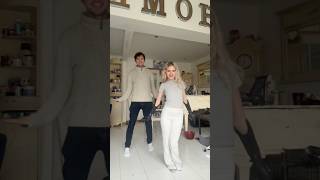
We had to hit the Alysa Liu dance!! 💃🕺 #dance #alysaliu #dadanddaughter #bestfriends
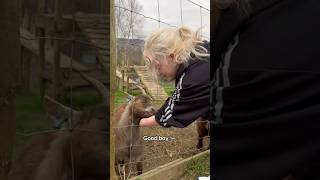
spiritual connection🥹💗🐐 I love this little baby #goat #wholesome #limbdifferent #girlhood
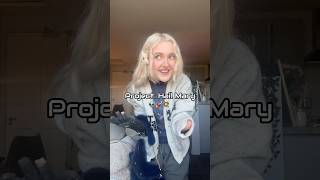
THAT WAS SO GOOD OMG IM never recovering🥹👽. #projecthailmary #scifi #ootd #cinema @Sony
trying to convince myself not to get bangs🙈 #hair #newhair #oliviadean #girls #relatable
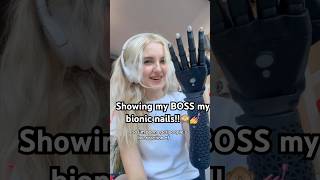
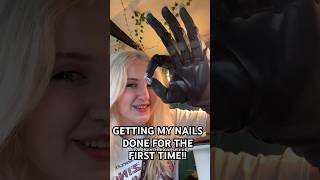
Getting my nails done on my new bionic arms for the first time!!💗#girlhood #nails #bionicnails
The Incredible Foundation Making Sport Accessible to Every Athlete | Bob Babbitt on Tilly Talks Tech
Cate Dunlap🖤 I get compared to a lot of characters so here’s my series inspired by them!🦾 #fashion