
He Tried Everything—But Nothing Changed Until...
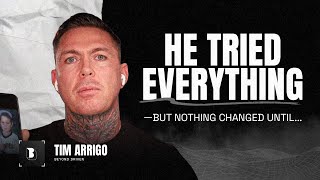
Tim Arrigo coaches Justin through his struggles with vulnerability and abandonment wounds from a narcissistic parent. Justin learns that behavioral change stalled because he wasn't addressing the deeper attachment trauma underneath, and the session ends with a prayer of surrender to integrate what he's discovered.
Chapters
When that part of you is triggered, it's really him that's triggered. So how do you speak to him and what do you say to him?
I let him know that he's important and his thoughts and feelings matter. He's deserving of—
So you're lying to him?
Well, I—
So the younger version of you shows up and then you're going to tell him, hey, you know, you're capable, you're capable of having a healthy relationship. You should be yourself. You should be vulnerable. You should be authentic. But the only issue is, is that I'm not actually following through on any of those things that I proclaim to be the truth, right? So he's saying, yeah, you're telling me that that's the truth, but why don't you act like it is? So that's the real question, is why— what, what is the action? Because it doesn't— the block for you is not the awareness, the block is not the understanding, the block is the integration and, and the contrary action. So what are you not doing? Justin, what's up, brother? Welcome to the show.
How are you doing?
Great, man. What do you got for me?
I got a lot. I'm struggling, Tim, with like vulnerability and authenticity. Like, I know it's, I know it's, it's kind of a broad topic, something that we can dive into. I'd like to try and get a little bit more of an understanding of A bit. It's one of my challenges, one of my struggles that I'm working through right now, aside from a few others.
So when you say that you struggle with vulnerability and you struggle with authenticity, describe that for me.
I guess the immense fear of judgment is not something that I've really come to recognize until recently.
Judgment of others or judgment of yourself?
Yeah, judgment of others. Judgment of others. Not being comfortable in my own skin, even in the work that we're doing. It's a big struggle to be vulnerable and just true to myself in front of a lot of these men.
Do you have a disorganized attachment style?
No. Yeah, a little bit. It's anxious disorganized.
Yeah, so it's a combination style. The dismissive is a part of it, the avoidant. Yeah, so judgment of others is a part of that attachment style. It's that we focus on other people's flaws as a way to maintain emotional distance. We have a tendency to focus on why people shouldn't be trusted or why they— why we shouldn't have to be vulnerable with them.
Yeah, as opposed to just being true to yourself and—
right. But let me ask you this.
What you feel is right.
How did your attachment style get fractured?
Well, my parents.
Yeah, tell me about that.
I never really had stability growing up. Uh, I escaped, uh, a physically and emotionally abusive parent to go find safety and security in a parent that was emotionally neglectful and used substances to cope with their, their own emotions.
So it's the abandonment wounds?
Uh, yeah, there's, there's definitely a bit of that. I would definitely say it's something that I do to myself quite often, is neglect and abandon myself.
So let me ask you this. This conversation is going to require you to get more concrete. So eliminate all the soft language, eliminate the maybe, guess, probably, eliminate all that. If you were to just speak concretely about what you know and what you feel that you know your truth is, why do you think you struggle with vulnerability and authenticity?
Because I question my capabilities.
Just now, now explain that to me.
I don't feel confident. Okay. I don't feel— I don't, I don't feel confident. I don't feel— I don't feel confident in my own skin. I hold importance, I guess. Okay.
Yeah, yeah. To me, to me, all of this, this comes from things that you feel inside, belief systems that you have from the traumatic upbringing that you continue to kind of feed into.
Absolutely. Yeah.
So it's a narrative that you continue to feed into. So your inner child shows up and he shows up and says, hey, I can't be myself, I can't be vulnerable, I can't let people get to know the real me, and I'm fearing abandonment. And then you look at him and say, yeah, well, that's true because you're not good enough.
Yes. Yeah. Pretty much.
Yeah.
It's a difficult narrative to not adhere to. Right? I'll recognize when it comes up and recognize what it takes to not align with that belief through opposite action, but yet it continues to show its face in so many avenues and aspects of my life. It's, it's, it's, it's in my, in my relationships. It's in my— it's, it's, it's like a complete self-worth, right?
Do you have a photo of a younger version of you?
Absolutely, absolutely I do.
Yeah, do me a favor, pull up that photo.
I got it.
Now when that part of you is triggered, it's really him that's triggered.
Yeah.
So how do you speak to him and what do you say to him?
I comfort him. I let him know that, I mean, you know, he's important and his thoughts and feelings matter. You know, he's deserving of good things. He's safe. That's usually my inner talk.
So you're lying to him?
So you're lying to him? So basically, I'm not taking a gray approach.
So the younger version of you shows up, and then you're going to tell them, hey, you know, you're capable, you're capable of having a healthy relationship, you should be yourself, you should be vulnerable, you should be authentic. But the only issue is, is that I'm not actually following through on any of those things that I proclaim to be the truth, right? So he's saying, yeah, you're telling me that that's the truth, but why don't you act like it is? So that's the real question, is why? What, what is the action? Because it doesn't— the block for you is not the awareness. The block is not the understanding. The block is the integration and, and the contrary action. So what are you not doing?
I don't know. I'm not, not— I'm not following through.
Don't say I don't know. I don't know is a defense mechanism. Don't say it.
I, I'm not following. I'm not following through on my, my, um, I'm not following through on my best possible self.
Yeah, why?
Because it's easier to align with my past beliefs and feelings.
Right, right, right, right. Why?
I've done a game.
But besides, yeah, I've done it for a long time. What do you gain from it? With any negative behavior— with any negative behavior, right? With any negative behavior, we always seek a positive result. So what you're doing is You're, you're staying in your— you're doing it because it keeps you in your comfort. The only way to overcome the fear of abandonment is to do what? Step outside your comfort zone and subject yourself to a situation where you could be abandoned.
Okay, so I would consciously put myself into a situation where I would could be abandoned.
Yes.
You then seek out that trigger to then potentially attempt to heal it.
Yeah, because the way that those belief systems got there, the fear of vulnerability, all that, the abandonment wounds, they got there through experience. That wasn't just something someone told you or you thought one day. It came from experience. Experience truly shapes the brain. So it's the experience that you went through that made that imprint on you psychologically, neurologically, behaviorally. So the only way to overcome it is through a new experience. You have to subject your brain to a new experience to teach and show your brain that those fears are, were, are less relevant today than they were in the past.
So I had put myself in that situation. I had I had shared that situation on one of our discussions where, um, a woman that I was dating had her own trauma. She was, you know, losing her mind, and I felt that. I felt that abandonment. I felt that boy get triggered, and in the moment I had comforted him, but I had spoke to him the same way that I had just shared with you, is it's okay, I recognize what's going on, you're safe, you know, you're able to comfort yourself in this moment. But how many times should I be— how many times should I be looking to trigger someone else to get myself potentially triggered? It— to me, it doesn't make sense.
How many times should you trigger somebody else to get yourself triggered? What do you mean by that?
Well, you're, you're telling me experience— if I have experienced or perceived a situation of my past as abandonment And the only way to heal and overcome a past wound would be through the same experience. However, reliving that same abandonment experience, you would then, with your awareness, you would nurture and comfort that wounded part of you as you experience the same situation. So I'm just trying to— I'm trying to figure out how I would go about doing that.
Well, just by being yourself. You're— you're far too guarded. You still have walls up. You're— you're not letting yourself be fully known. You have to be fully known. You have to step into the— these relationships with the fullness of who you are. What you're not— you're not trying to trigger someone else so that they'll leave you. That's not what I'm saying. I'm saying that you have to subject yourself to an experience that could potentially leave you vulnerable and hurt you. Transparency is just telling somebody what you want them to hear. Hey, I had a hard day at work, telling them information. Vulnerability is sharing something that could actually hurt you, that, hey, I want to share with you that this and this happened, that I have these abandonment wounds. Okay. Right. And see, the reality is most of the time when we share that with people, especially early in a relationship, They appreciate it. They appreciate that you have the awareness to even be able to articulate yourself to that degree. So number one, brother, you got to take down the walls. You got to take down the walls, and you got to know that the, the narrative and the messaging is powerful in your life because you have the recency effect. You have no experiences in your life happening now that can override that last experience. It's like if you have a fear of flying cuz you were in tough turbulence, well, the only way to overcome that is to get on several flights, right? Is to have some successful landings, is to face your fear. So you have to face your fear with courage cuz courage cannot exist in the absence of fear. You have to be afraid to be courageous. You have to face with courage entering situations that could leave you vulnerable to abandonment or hurt. But here's the difference. Vulnerability when you were 8 years old and abandonment when you were 8 years old posed far more of a threat at 8 years old than it does now as a 40-year-old man. Far more. See, but here, here's the deal. Your, your, your, your brain doesn't know the diff— your midbrain right? Your limbic system, where your hippocampus is, that stores all the memories, your amygdala, right? Your amygdala and hippocampus, they don't know the difference between 5 minutes ago and 30 years ago. So the perceived abandonment feels the same, like it's life or death, like my life is over, like I can't handle it. Now, none of that's true. Implicitly, it's true based on 40 years ago, but today I can feed myself, clothe myself, take care of myself, fend for myself. I don't need anybody. But the problem is, the reason you struggle to be alone is because you value being in relationship, and you're fighting this thing like, I should just want to just always be alone. No, you should be good on your own. That's there. But that doesn't mean that you should settle for being by yourself when being by yourself is not something that you value in your life. You value family, correct? You value having a long-term relationship, correct? You value having a partner, correct?
Yes.
Yes. So that would explain why when you're lonely or being alone, that you struggle, because it's not aligned with your best possible self. Your best possible self is a guy that is in a healthy, long-term, committed relationship. You see that for yourself. It's something that you want. It's a core desire. So you have to go after it and get it. But the problem is, is that you have to simultaneously be willing to subject yourself to relationships on your way to that outcome that could potentially hurt you or wound you. But you have to know that today you're capable of handling it. Today you can be there for yourself in a way that you couldn't before. Today, right, you can still provide, protect, and, and be with yourself in a way where if you were abandoned or hurt, it wouldn't be detrimental to the degree that it was when you were 8, 9, and 10 years old. But your brain has to learn that because that's not something— that's like me getting in a car crash and then I get back into a car for the first time. Well, I'm gonna feel anxious. I'm gonna be gripping the, the, my seatbelt. I'm gonna be holding on right to that little handle up in the corner of the car. Like, why? Because it's the recency effect. You need experiences. What was your most recent experience? It was a, of an, of a woman leaving you and quote unquote abandoning you, correct? So how did the most recent relationship that you were in, how did it end?
She walked out.
She walked out. And how recent was this?
Over a month ago, 2 months ago.
So 2 months ago, this person walks out of your life, just gets up and leaves. You had the same experiences from your childhood, and that event compounded on it. Basically what it did is it triggered a lot of that stuff that was already there. And that created a concrete narrative for you that this is how it is and that I really struggle with these things. But in reality, the only thing to help you overcome this at this point is experience. Challenging it cannot happen for you in a cognitive state. You're already there. You're already there. It's not like you're not aware. You're already able to articulate, connect the dots. You see the puzzle. It's clear for you. Clarity is not the issue. Execution is. Stepping out of your comfort zone is, putting yourself out there is the willingness to put myself in a state where I could be abandoned. Because what am I looking for? I'm looking for my partner. I'm looking for somebody to do life with. And that is going to require me to be 100% authentic. The real me has to shine through or the relationship will never succeed. And I will inevitably be subjected to the abandonment. How did your last girl that you were with up and leave? What were you not doing?
Well, it had nothing— had nothing to do with me and everything to do with her and her old— her traumas. Yeah, trust issues. And she had walked out.
But you did have your part, which was what?
I, I had triggered trust issues in her.
Okay, let me ask you this: were you authentic and vulnerable in that relationship?
Absolutely. I was. Yeah, you were. I was somewhat. Yeah. Okay.
From beginning to end, from inception, right, to the desecration of the relationship, were you 100% vulnerable and authentic? Yes or no?
No.
No. There's your answer. So basically, you created the outcome that you were afraid of by not being authentic. And when the real you finally showed up, when the real you finally showed up at the end of the relationship, it it was already over. Because guess what? An inauthentic version of you is not compatible with the love of your life. An inauthentic version of you is not compatible with the love of your life. So if I were you, I would be the most authentic version of me possible in every single interaction with any woman that I come in contact with that I you know, intend on dating or being in a relationship with. Because if you don't, your inauthentic version, the avatar, will only attract a woman who is compatible with that guy. And once the real you finally shows up, there's going to be incompatibility and your— the mask is going to fall off and you're going to find yourself in a relationship that doesn't feel right. So you have to be fully you. You have to be fully authentic. In order to find that person.
Yeah, I get it.
Okay, let me ask you this. What's the stuck point for you? Because you're stuck, you're frustrated, and I can tell.
Yeah, I almost said it again. Um, the, the, the stuck point, Tim, is I'm just not like aligning. Like, I'm not— I feel like I've I feel like I've lost so much, so much like awareness. I feel uncomfortable in my own skin. I hit this mountain, I made this big, you know, over so many months of doing a lot of this inside-out work and I almost like hit a peak and then I slowly, slowly just kind of started to not fall backwards, but just, you know, stumble. And it's— there's been a lot of positives that come through a lot of those stumbles and challenges, because the tools that I have now are not tools that I have had in the past. But, um, it's— it— I, I guess, I guess there's a part of me that thinks that it should be a little bit, a little bit easier than this. Like, I shouldn't have to like scrape and claw and like clench my fists to be authentic, you know. It shouldn't be the most uncomfortable thing in the world, or at least that's what I'm telling myself.
Well, authenticity should not be something that where effort is applied. Effort is applied in the facade and the mask. The mask and the facade require a lot of psychological energy. For you, authenticity, brother, that's just— that's the natural way that you emanate who you really are inside. Authenticity doesn't mean that you share every last gory detail of your life on the first date. Authenticity just means that you're comfortable being— yeah, you're comfortable being you and you don't operate out of insecurity. But what I'm really hearing from you at the end of the day is that you're frustrated about the fact that you're— you haven't met somebody yet, or that this hasn't, in your mind, quote unquote, paid off in the way that you wanted it to.
Yeah.
Okay. If it took you 5 years of working on yourself to find the love of your life, would it be worth it?
Yeah, it would.
Okay, but I wanna— I wanna take it a step deeper here with you because I can tell that it's— it's something deeper that you have to connect to. Did you have a narcissistic parent growing up?
Yeah, my dad. Okay.
Do you know what one of the symptoms of growing up with a narcissistic parent is, or a symptom of narcissistic abuse syndrome? You know what it is, a symptom of it?
Um, not off the top of my head, no.
Identity erosion. It's identity erosion, Justin. Your whole entire life you've created versions of who you believed you were supposed to be for other people. And I think the frustrating part for you is you're not fully done getting to know and love who you are. And I think that you've always kind of had an expectation or strings attached to that. That, yeah, I want to do this work inevitably so I can have this result with this person. But what I'm seeing from you is that, that, that hasn't come into your life yet because that work isn't actually fulfilled and completed. How much of this is, is, is not happening in the external versus how much of this is actually far more connected to the conditioning that's still in control? And the way that you go back to criticizing and, you know, judging yourself for what you are not doing, when in reality this is a byproduct of the fact that for the first time in 40 years you've actually been able to be yourself.
I understand what you're saying. That's why it's— that's why it's a new concept for me. And I have no reference point of it.
Yeah, okay. But talk to me about why is your affect so flat? Why are you despondent in this? There's something else there. What is it? I can hear like you're somber and you're overwhelmed, or you're tired, or you're exhausted, or I can see the kind of effort attitude coming through? What are you frustrated about? Like, own it, even if it sounds stupid. What is it?
I guess like, I wish it wasn't this hard.
Yeah, okay. Yeah, there it is.
I wish it wasn't. I wish it wasn't this, this hard. And the, the deeper we go, the harder we work, the more we uncover the more resentment I hold towards, you know, my parents. Um, it's, it's just a— just like a circle.
Yeah, totally get that, bro. But in reality, if you think about it, it's all hard because living in the way you were living before is hard too.
Yeah, it was very hard.
Yeah. And now you've just chosen your hard. You got to choose your hard, and you chose this, which is hard. But see, there's a difference. You have two kinds of suffering. You have purposeless suffering and purposeful suffering. Sometimes we confuse the two. We think that sometimes we're suffering and it's for no gain, no reason. But purposeless suffering is staying in toxic relationships, not working through your childhood traumas, not identifying the need for personal growth in your life, staying inside, right, toxic and dysfunctional cycles inside your life, using vices, self-destructive behaviors, right? This is purposeless suffering. We suffer with no purpose. But then there's purposeful suffering. That one last rep in the gym, that one piece of vulnerability inside a group. That one acknowledgement of some type of traumatic event that damaged the way that I view myself and others, exploring my core beliefs, identifying cognitive dissonance in my life, dropping vices and self-destructive tendencies. It's, it's a form of suffering, but it's purposeful. And I think what I'm hearing from you, bro, is you feel like all this is pointless. There's an element of you where you actually have lost the faith in what this produces in your life. Yes, that's what I'm hearing from you, that you've done the work and you, you feel as though like, why haven't I reaped the benefits of this yet? Why haven't I seen fruit from this yet? Why haven't I— right, why haven't I seen this?
There's been a lot of good that's come from this work. There's been a lot of change in myself that, that has come from this work. There's been a lot of positives, and I reflect on them every day. But this work doesn't end, and this work is not 90 days. This work is not a year. This, this work is, is, is every day for the rest of your life. And that truly is a fact. And I came in doing this work with a purpose of almost wanting to make amends because I came in so hurt and so lost. And I did have purpose, and that purpose was to uncover and work through, um, all of the areas that I had consciously and unconsciously neglected throughout my entire life. And after an extended period of time of breaking down a lot of walls and making a lot of changes and learning so much help myself, uh, the purpose has shifted and it's been hard for me to find that foundation again of what keeps me going and what, what is the next step. I will not stop what I'm doing. I will not abandon the work that I've done. And I will carry on to do this work. But what is the purpose of this? The purpose is me. The purpose has always been me. But that's a hard one to carry. Yeah.
Well, the purpose actually is family.
We do it for our kids. We do it for— we have external reasons as well why we, why we do things, right? And for me, it's me and only me right now.
Yeah. Well, that's your problem. You're not able to create a mental image, a visualization of how this will pay off in the future. Brother, what do you think the likelihood is that you as a 40-year-old man is never going to meet another woman in your life?
Oh, there's— I mean, it's, uh, very low, bro.
Yeah, yeah, extremely low. The fact that, right, a handsome, good-looking guy like you who's got his stuff together is never going to meet another woman in his life, he's never going to come in contact with another woman who's going to find him attractive that he wants to date, right? Uh, that's very low, extremely low. I think for you, you got caught up in a pretty common trap that a lot of us do, and you got caught up in the instant gratification. And I think for you, you were— your why, your reason, your motivation intrinsically, I think, has— you've lost sight of it. And I think you potentially used some external metric like a relationship, a woman, another person coming in or being a part of your life as a measuring stick to define how well you did and how successful you actually were in this. And you know what that really comes down to at the end of the day? The fact that the belief that what you've done and what you've accomplished is still not enough. It's a confirmation bias. You look at conditions in your life to reaffirm and confirm the stuff that actually got you here, that you're not good enough, or that it's not enough, or that you didn't achieve something, or you didn't do well enough, or you didn't do enough. And that's a complete reenactment of your childhood, that no matter how hard I try, it doesn't matter. As we all know, growing up with a narcissistic parent, I can tell you this: no matter how hard you try, it doesn't matter. And I can tell you that from experience. Doesn't matter what you do, there's never going to be a day where they listen to how you feel or care. But see, brother, the light at the end of the tunnel for you is for you to know that this is purposeful suffering, number one. Number 2.
Yes.
The light at the end of the tunnel for you is to know that you are a young guy in the prime of his life with many opportunities to meet somebody else. But because you're not fully believing in yourself, you're not fully feeling confident in the work that you've done. You don't actually believe that that's going to, that's going to provide fruit in your life. And so you actually don't apply the amount of effort that you should. Because the effort that you apply is consistent with the belief that you have in yourself. If I don't believe I'm gonna win, I'm not gonna try very hard. And so you're not applying the maximum amount of effort, which means that you're really not loving yourself. You're really not believing in yourself. You're not trusting yourself. You're not trusting the work you've done. So let me remind you from somebody from the outside, It is incredibly rare in this world to have a man have the ability to articulate himself with the awareness that you have. Number one, it's incredibly rare that a man would ever be able to vulnerably, honestly acknowledge with authenticity where he's truly at and what that's actually connected to. The biggest problem for you is that that conditioning is so powerful. Those wounds are— there's— they're very egregious wounds, by the way, growing up with a narcissistic parent. And not only that, but the emotional and physical abuse that you went through, those are, those very egregious wounds, and they show up heavily, and they'll continue to show up. Listen to me, brother. Those things will continue to show up in your life. It's a daily fight. But let me tell you this. You don't need a woman or a family to come into your life for you to recognize how amazing it is that you've done this work, because this work was the prerequisite for what comes next. And I'm not like talking to you while you're on your deathbed right now. I'm not talking to you while you got diagnosed with stage 4 cancer. I'm not talking to you that— I'm talking to you in a state of health and wellness in your life. I'm talking to you at the prime of your life. I'm talking to you in a state where you're more mentally, emotionally, and physically prepared for what's about to come down the pipe for you right now than ever before. You're more prepared than you've ever been in your entire life.
Absolutely.
And I think for you, you're hungry and you're ready and you're eager and you're chomping at the bit. But just because it hasn't happened yet in your life doesn't mean it's not going to happen.
I agree. I appreciate it. That's good feedback. I don't— yeah, I don't have the, the fireworks out right now. I'm just kind of soaking it all in.
But, uh, what's coming up for you right now? What's coming up for you right now?
It's not like typical breakthrough. It's not like a— it's not like a connection, and, and you, you, you've now— you've kind of cleared that blockage, you know? Like, it, it's not, it's not, it's not like the work that we, we normally do. This stuff is just put in your mouth guard, you know, bite down, and just power through, um, you know, gracefully, of course, right? But, uh, it, it's, it's tough. You're right, I'm eager. I don't want my end goal to be, you know, some woman in the future. Obviously, yeah, my best possible self is a, a man that is, you know, happily married and, uh, you know, builds his own, you know, family that he calls his own.
Um, well, maybe for you that's because you need to get out of your head and you need to get into action.
Yeah, and that's what I mean. It's, it's not, it's not like, like typical breakthrough that we're doing where it's, you know, you're connecting the dots. This is just, hey, like, I have to continue to make intentional choices on a daily basis to maintain that discomfort level understanding that it is through that discomfort where you become comfortable. Yeah, it's that long game. That's, that's like you said, that's that purposeful suffering.
It's, that's that investment, and it's the belief in yourself, because the only thing that's going to force you to get up and keep showing up and keep trying is the belief in a future that you cannot see. But if you ask anybody in life who's ever achieved their wildest dreams, they will tell you that they believed it before they could see it. A lot of people say, well, you got— I got to see it to believe it. No, man, you got to believe it to see it. You got to believe it. You have to be convicted of it. There has to be no other version of an outcome in your mind than the one that you are committed to. You're not saying that you're going to go down to the, you know, liquor store and win the Powerball tomorrow. That's grandiosity. That's delusions of grandeur. You're not there. You're saying that the healthiest version of me will attract a healthy person into my life that will create a long-term committed relationship that I'll be able to continue to grow and thrive in, that I'll continue to be happy in, and then I'll find a partner that's committed to their own self-mastery as well. And brother, the likelihood of that happening is extremely high, especially with the path that you're on. But those people are rare, and you don't want to rush that. You're on the right path. It's just that you haven't seen the fruit yet. And so the mindset is the scarcity mindset, right? The mindset is losing hope. The mindset is the fear. The mindset is, right, am I doing the wrong thing? Right? But the reality is, is that if you're doing that work, how could you ever be doing the wrong thing? How could it ever be not producing something in your life? Well, what's the missing piece for you? The cherry on top with all of this is for maybe you, for the first time, to recognize that you did do it for yourself. And maybe it's about recognizing for you to actually take that in. That maybe there's a reason that you can't connect to your success. Maybe you feel like you don't deserve it, or maybe you feel like— I mean, where is that really coming from? Because you did something great for you, and that something great that you did for you pays dividends into everybody's life who comes in contact with you, bro. That's already been proven time and time and time again. Because think about that. What are you actually saying in the way that you're looking at the situation? You're actually saying that what I did was not enough. What I did wasn't good enough. I didn't try hard enough. I didn't do the right thing. I didn't do the right work because it's not producing the result that I want right now. But you know as well as I do, your life can change. That's not true. That's not true, bro. You're just frustrated because you're not seeing any instant results right now. It's only been a couple months. And is it really that authenticity and vulnerability are something that's so hard that you gotta clench your fists and just bear it? Grin and bear it?
Well, it shouldn't be that way, but it feels that way, right?
What would happen if you just stopped trying so hard?
Well, and I know that that's part of my blockage too, is because it is of great importance, you tend to fix on it a little bit more, and you can critique yourself a little bit more than you probably should, and instead of just enjoying the path, um, Yeah, maybe just let up a little bit and just, you know, roll with it a little bit more.
Yeah, you, you, you having this relationship end was probably one of the best things that ever happened to you, because without that relationship ending, you probably never would have dug as deep as you had to. Remember, sometimes we think that we shouldn't have had to learn the lesson this way. Man, shouldn't have had to lose this relationship to do all this deep work on me so I could eventually become self-actualized, self-realized, and enter a healthy relationship by being the most authentic version of who I am. The reality is you probably would have never done the work had this not happened. You know as well as I do the reason that relationship ended is because you did not show up as the most authentic version of you. And trauma's like an antenna, man. The most traumatized version of us attracts the most traumatized people. And it's easy when you're traumatized to go out there and meet just anybody and feel temporary pleasure, but it's like a bucket with holes. No matter how many women you meet, it's never going to be enough. No matter how many relationships you're in, it's never going to be enough. But a lot different to actually do the work, seal the holes in that bucket, fill that bucket with something new and beautiful, make sure the inside is clean and there's clarity there in terms of what's inside of it. And then to take that and go outside into the world and look for someone who can meet you in that place. Because those people, yeah, they are rare, and yeah, they can be hard to find, but they're out there. And the beauty here is this, brother: you got a standard now inside your life. And the reason you're really frustrated is because you know that. So you can't just go out and meet just anybody and fill that hole with just any— you know, you know, you know that there's a standard. And because there's a standard, there's a certain type of person that you have to be with, that you want to be with, and that you're only now compatible with. And that's a person who's on their own growth, of personal growth, personal development, and you want that in your life. So would you rather walk around from a space of neediness, just taking anybody into your life with no standard, or would you rather have a standard and try to find that diamond in the rough that you could create a life beyond your wildest dreams with. It takes effort, it takes commitment, it takes dedication. But you notice even right now on this entire call, you know what your problem is? You gotta get hungry again, bro. What does it mean to be beyond driven? If somebody said, hey, this guy's beyond driven, he's beyond driven, what would he be?
Completely sold out.
Completely sold out. He's obsessed. Is that you?
Absolutely, absolutely. I mean, yeah, I, you know, I took, took some breathers, man. It's tough.
Gotta get hungry again.
24 hours a day.
You got to get hungry again, bro. You got to get hungry again. Get hungry.
Yeah, yeah, I know, I know. It's, uh, it's hard living your life like this though, man. It's not, it's not—
what's the point?
As we've talked about, it's, it's not easy, like eating healthy tracking your food and taking your this and doing that and, you know, doing your, your non-negotiable. Like, it's not easy, right? It's, it's not easy.
And I mean, think about it, if it was easy, everybody would do it, right?
Yeah, that's the point. Absolutely. No, you're right. And I've never been one to swim, uh, swim with the, swim with the school.
Yeah. But you know what also gives us hope, man, is our relationship with God. It's the faith in God's promises and what he tells us. And the number one missing link that I've noticed in your whole process is that. So maybe it's time for you to surrender, man. Maybe it's time for you to let go and let Jesus take the wheel. Maybe it's time for you to get to know him and what he says about you and your future in your life, man. What do you have to lose?
I don't have anything to lose. I don't know why I resist it.
Well, because you had an absent father who didn't really care about how you felt. So how could there possibly be a father out there that cares about how you feel and is close to you? You know what, we look at God through the lens of our— we look at God through the lens of our biological father.
Yeah, that makes sense.
And then we think that God's distant, that he's not interested in me, he doesn't have time for me, that he's going to punish me, that he withholds pleasures from me, and then I gotta conform and abide by all these rules in order to believe in God. No, man, brother, God loves you right where you're at. And believe it or not, it's, it's, it is our sin that connects us to God. And where faith begins is not believing in God. Where faith begins is a surrender to say, I don't know you, God, but I'm inviting you into my life, and I'm inviting you in so I can know you. Help me know you and understand what you want from me in my life. And look, bro, if it doesn't work, then just go back to the way you were living your life before. At least you could say you tried, and you could check that box. It's a hand-in-glove relationship, man. It's a customized glove fit specifically for you, and God wants to do life with you in that way. He knows you better than you know yourself.
Yeah, that's a good sales pitch. I like that one. No, you're right, you're right. All jokes aside, I mean, you're right. It's— there's nothing to— nothing to lose. And if it— if it doesn't align, then I can just go back and continue my life. I, I've always been one to believe in myself and that I was always in control of myself regardless. And I think that's why this program had always spoke to me and why this, this new way of life that we've adopted is, is so important to me, because I do truly deep down believe in it regardless of the daily challenges and the struggles that I go through to continue.
Yeah, how about today?
This mountain.
Well, how about today? You want to invite God into your life today?
How would I do that?
Just repeat after me and just really open up your mind and heart, man. When you say these things, like, actually mean what you're saying. Like, take it in. And when you say it, like, feel it. Okay, so let's start it off. Just repeat after me. Heavenly Father.
Heavenly Father.
Lord Jesus.
Lord Jesus.
I'm inviting you into my heart.
I'm inviting you into my heart.
I'm asking that you come into my life today.
I'm asking that you come into my life today.
I want to build relationship with you, and I want to know you.
I want to build a relationship with you and know you.
Forgive me for my sins, God.
Forgive me for my sins, God.
God, I just ask that your Holy Spirit come into my mind and body.
God, I just ask that your Holy Spirit come into my mind and body.
And just help me see things in a new way.
Help me see things in a new way.
God, I thank you for loving me.
God, I thank you for loving me.
And today I declare—
and today I declare—
that I'm going to fully commit my life to you, Jesus.
That I'm going to fully commit my life to you, Jesus.
In Jesus' mighty name we pray, amen.
In Jesus' mighty name we pray, amen.
It's as simple as that, bro. And today you just made the biggest decision you'll ever make in your entire life. Best decision you've ever made in your life, bro. Getting to know the Lord, letting him reign in your life, and trusting and having faith in what he's already promised you in the future. Says in Jeremiah 29:11— and now you can rely on this because now you know Jesus, so now this is true for you— says in Jeremiah 29:11, For I know the plans I have for you, declares the Lord, plans to prosper you, not to harm you, plans for a hope and a future. So God's going to give you a hope and a future, man. And see, now you can rest assured that you've done what you needed to do. We pray like everything depends on God, and we work like everything depends on us. And you've done the work. And what a beautiful opportunity now, man, to get to know God more, to let him change your heart and mind in terms of where you're going in the future. And I can just tell you, brother, that I got goosebumps right now, that today I've been waiting for this day with you for a while. I knew it would come.
And I'm honored. I got a big— I got a big smile on my face because I had a feeling this would happen. Yeah, yeah, bro.
Yeah, this is what you needed, brother. Yeah, this is what you've needed, bro. This has been the missing piece in your life, Justin.
I appreciate you, man. Thank you.
Appreciate you, man. Love you, buddy.
I love you too, man. Um, I have access to this recording too after.
Sure, we'll give you access.
Yeah.
So bro, welcome, uh, to your new life. Now you know God, bro. Now all you got to do is pray. Now you gotta just pray. Hey God, hey, it's Justin, just checking in.
It's that easy.
That's it, dude. You talk to God like he's your best friend, bro. He loves you and he knows you and he cares about you. And watch how things are going to start happening. The more you seek him, put forth the effort, Justin, and you will see. You will see. God will show up in your, in your life in miraculous ways, especially in the beginning when you first get saved. He's going to show up. He's going to show you that he's there and that he loves you and that he's God. And he's going to talk to you, and he's going to provide coincidence, so-called coincidences in your life, things that you cannot doubt or deny. God's going to be very much present in your life, man. Just seek him. Seek him in all your fears of the future, all your, your silent cries for a future that you want. God hears all of it, and he's going to give you peace in all that. Great call, man. Thank you so much for coming on, brother. Can't wait to follow up with you on this and see what happens. I also got some really good resources on, uh, fathers and our relationship with, uh, our earthly fathers and how that affects our relationship with our Heavenly Father. Um, sometimes we forget, we really do forget. We forget, um, that God's for us. We forget that, you know, God is with us, and we forget that, you know, our relationship with our Heavenly Father is much different than our earthly father. So, you know, You might have had an earthly father that was neglectful or abusive, but you have a Heavenly Father that loves you unconditionally, man. Beyond— it says in Ephesians— beyond even what you can even comprehend. The depth, the width, and the height and the magnitude of his love goes beyond anything we can actually even comprehend. So, bro, best day of your life. Best day of your life, man.
Appreciate it, buddy.
Yeah, look forward to reconnecting on this, man. And, uh, yeah, as always, likewise. And, uh, I got some stuff I'm going to send you, but bro, have a good rest of your day and start to build and foster that relationship with Christ because that's, that's going to add so much to your life. It's going to give you so much perspective. It's going to help you so much, man. So congrats.
Sounds good, man. Appreciate all you do, Tim. We'll be in touch. Got it, bro.
We'll be in touch.
Take care.
Bye-bye. See you, buddy.










