
I Blamed Myself And I Carried That Guilt for 40 Years
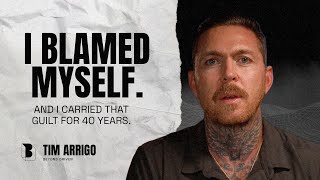
Tim Arrigo coaches Brian through 40 years of guilt over a drowning death when Brian was 10 and babysitting. Brian's trauma shaped an avoidant attachment style that cost him his relationship with his 23-year-old daughter. Tim suggests grief work, writing atonement letters, and group sharing to begin healing.
Chapters
It's not a coincidence that you've cut people off in your life to avoid the grief and loss. It's not a coincidence that your 23-year-old daughter not wanting to talk to you would bring up these exact same feelings. When you cut people out of your life and you just move on, what you're really doing is you're protecting yourself from the feeling of grief and loss that accompanies losing any relationship. And protecting yourself from that feeling of grief and loss is something that you learn to do at 10 years old. And let me ask you this: there's 5 stages to grief and loss. Do you know them? All right, Brian, welcome to the show, brother. What do you got for me?
Hey, Tim, how's it going, man?
Great.
So I'm looking for some help with kind of a, an issue I've had for my adult life, and it is I have this ability to just kind of cancel people out of my life. And it's, you know, hasn't really surfaced, right, until I started diving deep, um, the last couple months. And, um, the biggest, uh, issue I have is, you know, I have a 23-year-old daughter that has been out of my life for about 3 years. And the longer this goes on, um, I feel like the same part of me that, you know, can just eliminate people out of my life. Um, it's starting to happen, right? Because I'm starting to get super frustrated. It's been 3 years and, you know, I, I reach out to her all the time and I never get a response. So that's, that's essentially what, um, is, is driving me to, to reach out for help because I'm terrified that this behavior that I've, you know, I guess, you know, gathered over the, you know, last 20 years of being able to just write people off is starting to happen with her, and I'm looking for some help, brother.
Yeah, thanks for sharing that. It's a really good topic. I think a lot of guys can relate to— well, the first part is just on a foundational part that canceling people out or removing people from our life is a hallmark tendency of a dismissive avoidant attachment style. So your attachment style, I'm guessing, is dismissive avoidant, right?
100%.
Yeah. So this dismissive avoidant attachment style, it, it just shuts people out and just once you kind of cross, once somebody crosses you, it's over, right? Once they have, you know, breached trust with you, it's over. And, um, it can at times be a good quality because it allows you to only maintain and preserve relationships that are of the highest caliber. But at the same time, it can cause you to prematurely remove relationships that you really should work to rebuild. So let me ask you this. Have you ever lost anybody in your life before? Any— ever experienced any significant grief or loss?
Yeah, I have. Yeah.
Who was it?
So this goes deep, brother, but, um, it's— this started happening when, uh, to the best of my ability to kind of dig deep, I was 10 years old and, um, I was babysitting a, uh, a toddler that lived next door to me. I was you know, trying to earn some cash, and, uh, super close family friends. And, um, this little boy, his name was Joey, he was 3, and he, he disappeared while I was watching him. We lived in a place where we were kind of on a greenbelt, and there was a creek down below. And, you know, I freaked out, 10 years old, ran over to my dad. He was working on the car. I don't know where he went. And long story short, you know, we searched frantically for this kid, and Tim, it was the first time I realized, um, you know, the Holy Spirit was, you know, a real thing, brother. Because I was in his home looking under every bed trying to find— and I was in there, his parents' bedroom window, and I looked out the window and it's all trees, man. You couldn't see the water. And the next thing I remember, it kind of went blank and I was diving in this creek, man. I saw this white thing hanging on a branch was this diaper, flooded river, right? Like I was in Georgia at the time. So it's like, you know, it wasn't clear by any stretch of the imagination. You know, Georgia red dirt's a real thing. And I saw this white thing. I jumped in the, you know, rapids, grabbed this kid, brought him back. You know, he had description of what he looked like. Probably isn't okay to put on here, but it was pretty bad. I started doing CPR, screaming for help, long, you know, the kid passed away. And at that time, you know, after kind of really digging deep these last couple months, it's like, that's when it started. You know, I never really went to counseling that I can remember. So, you know, losing— you ask if I've lost someone, I think that is the beginning of it. And then since then, you know, I've been through a divorce. You know, I moved a lot as a kid. We moved about every 3 to 4 years. So it was kind of like You know, you, you have all these friends and then you lose them and you have to make new friends. So I learned at a young age to kind of just, you know, push things under the rug and move on. And that, and that kind of morphed into, you know, people. Um, and you're spot on with, you know, um, you know, if you're not in my circle, then you're out kind of a deal. Um, yeah. And I, you know, I've lost my mother. Um, 4 years ago to cancer. 3 weeks after her death, I lost my grandfather. Um, so I've had a lot of loss as of recent. Um, so yeah, I, I've, yeah, I've experienced loss, brother.
Yeah, I think the situation with Joey, God rest his soul, I think that that was, uh, I think that was extremely traumatic.
Extremely traumatic. And, you know, I, I, I, I have never done anything to address that, right? Like my parents, you know, counseling, I think I went maybe once or something, but they didn't really, you know, back then I don't even know, you know, if what therapy, you know, what it was clinical, you know, back then. Um, all I know is, is, you know, I keep diving deep per the program, you know, and I'm, it's been a wonderful experience by the way. And, and that came up and, and I'm like, I want— this has gotta, you know, there's something's tied to this.
Yeah.
Um, that has really altered my behavior in a lot of different ways. Um, for a lot of years.
Yeah. Well, thank you so much for sharing that, man. And you know, when you cut people outta your life and you just move on, what you're really doing is you're protecting yourself from the feeling of grief and loss that accompanies losing any relationship. And protecting yourself from that feeling of grief and loss is something that you learned to do at 10 years old. Yeah. And let me ask you this. There's 5 stages to grief and loss. Do you know them?
I, I should memorize them because you do. I just went through this with my grandmother.
Um, yeah, it's the denial. It's DABDA. Denial, anger, bargaining, depression, and acceptance. With the situation with Joey, you never got to move through those 5 stages of grief and loss. And you know what a 10-year-old boy You know what a 10-year-old boy thinks when he's responsible at 10 years old for watching a toddler and that toddler perishes?
I, I, I'm not really following. Um, what did I feel at 10 years old? Yeah, I, I felt a lot of guilt, brother.
Yeah, you felt like it was your fault.
I 100% did.
Yeah. Um, and you still do.
And yeah, I do.
Yeah. Even though consciously you know that it's not your fault, subconsciously You feel that it is because that's how the memory was left. That's how that file was stored away. It was stored away with an, with a piece of guilt connected to it in that Rolodex, in that file cabinet. And that thing was closed and locked. So, okay, let's, before, before we go forward, let's, let's unpack that for a minute. Why was it your fault? And I don't want you to talk to me as the man you are now. I want you to walk me through like what you were thinking then and like what, why. Like, walk me into that.
Like, I was responsible for this little kid at the age of 10, and I felt 100% to blame for him, you know, squirting out the back door and running down to the creek, man. It was horrible.
I think it would be unreasonable to assume that anybody would go through that and not feel guilty.
The crazy thing is, is, you know, I, I, I can remember the day like it was yesterday with all of the, you know, my dad, my mom, and the paramedics and everyone coming down there. And it was like this, this guilt. And then I, I don't really, I don't remember how I was instructed to move forward as a child. You know what I mean? I, I, I felt like I was, I was left alone to deal with it.
You weren't. Everybody probably to some degree had to project their anger onto somebody and you probably got the cold shoulder. You probably got the side-eye, you probably got the look, you probably got the, like, what are you doing? You should have been looking after him. Like, what happened?
It was a—
and this isn't to blame his parents, but I mean, who puts a 10-year-old in charge of a 3-year-old?
I mean, I think, you know, the fact that my parents were at home with me kind of probably— I don't know. I'm not trying to make excuses. I guess I'm just talking out loud. I just, yeah, it was a—
yeah. Why are you at 10 years old solely responsible for another human being? You're not old enough to take on that responsibility.
Right.
Not to mention you were just doing everything you could. You're a kid yourself. You didn't even have a fully developed brain at that point.
Correct.
And let me ask you this. What kind of environment did you grow up in?
I grew up in a pretty decent environment. You know, it was a typical, um, my mom stayed home. You know, she never had a job. My dad worked all the time. Um, literally all the time.
Um, you know, you got emotionally neglected by your father.
I 100% did. 100%.
And when you got emotionally neglected by your father, what was your perception of that?
My perception of that was, um, I thought it was normal until I got older, Tim.
Yeah, so you thought it was normal, but you ever remember wanting to connect with your dad and be close to him?
100%.
Yeah. So why did you think he didn't want to be close to you or connect with you?
I don't know.
Yeah, you do.
I, I, well, I think it was, you know, um, the way he was raised, right?
No, but you didn't think that at 8 years old. You didn't connect those dots.
Oh, I thought you— I thought you— I thought you were asking what did my dad think.
Uh, no, what— yeah, what did you think back then? I—
all I wanted was to have a, a decent relationship with him, and, and the relationship that I had with my father as a kid was, um, you know, you— it was all authoritarian.
Um, right. So what did you think the reason was that your dad didn't connect to you emotionally as a kid? Remember the box technique? Remember the list? Yeah, it's that I am what?
Not worthy.
Yeah. And what kinds of people aren't worthy? Yeah, you do.
I'm in a little bit of a fall right now. I'm sorry, Tim. I just— bringing up that whole Joey thing just spins me out.
Of course it did. Of course it did, because it's still active. So what kinds of people aren't worthy of being connected to? Um, people that are self-centered, people that don't deserve it. So basically you believe that I don't deserve to be connected to my father.
Yeah, I felt that exact way for a lot of years.
Yeah, so let's stop right there. So that means that you felt like it was your fault, that you were to blame.
Yeah.
Yeah. So do you think it was a coincidence that that day on that year when that boy was found in that creek, when you were supposed to supposedly, quote unquote, be watching him at 10 years old, do you think it was a coincidence that you blamed yourself? Take that in for a second.
I am.
Here you go, brother. It wasn't your fault. Wasn't your fault, man.
I've lived with this for 40 years, dude, and I've never talked about it.
Yeah, I know. I've been there too.
You just keep on keeping on, and then when you— when it comes up, it's like, holy crap. Yeah, I didn't— I didn't realize I still had all this stuff in there.
Yeah, wasn't your fault, man. You didn't know that was gonna happen. I mean, come on, bro. No, it's the last thing you wanted to happen. How horrible and how guilty you felt. Can you imagine how I feel horrible for that childhood version of you? I had to stand there and watch all that and see all that. The fact that you said that he didn't look good and that I couldn't even say the details of what I saw. I mean, come on.
It was, it was, uh, it was, it was horrible. It was 100% horrible.
And then you go in the creek and you dive in and you grab him at 10 years old and you pull that boy out of that creek and you try to resuscitate him the best you can and bring him back to life and give him mouth to mouth and do everything you can. Can you imagine what was going on with you that day?
I just remember screaming help really loud, man. I— the crazy part about it is, is— and I remember this, I've actually— it's been, you know, a, um, a huge impact in my life, right? Obviously for a whole bunch of different reasons. But when I was in that window upstairs, Tim, and I tell you, I don't know why I went down there. Why would I have gone down there to look? It was— I was pulled down there by something that was just— it was the Holy Spirit, dude. I mean, it was, it was— and, and I went straight to the bank where he was. I didn't go up and down the creek. It was like God had a leash on me and took me right down to where his, you know, the little sucker folded his clothes, bro, before he got in. And I just remember scanning and I saw this white thing and, and I remember that part, but I don't remember diving in. I don't remember, you know, I obviously remember pulling them out, but the whole 10 minutes, whatever it was, you know, it wasn't like it was right behind the house, man. We're talking 200, 300 yards. And all of that was just like I was picked up and put down there. It was a very surreal experience, man. That part I've reflected on quite a bit, um, you know, in my spiritual aspect of life, um, for sure, because it was, it was something, um, I, I can't really explain.
What do you think the difference would've been if you never went down to the creek that day and they found him later, and you actually going down to the creek and finding him yourself and trying to bring him back to life the best you could?
I don't know what the diff— the guilt would've still been there. Um, the guilt would've still been there in any other situation. I mean, that family lost their son.
Yeah. And you know, it's not a coincidence that you've cut people off in your life to avoid the grief and loss. It's not a coincidence that your 23-year-old daughter not wanting to talk to you. Would bring up these exact same feelings. And it's not a coincidence that, that, that, that day that when you blamed yourself, you took it to the extreme of really blaming yourself because you blamed yourself for the emotional neglect that you experienced from your father prior to that. You already believed that things were your fault, so of course you went right back to the same beliefs that you already had. And what you proved, you said nobody supported me, nobody told me something different, nobody helped me process it.
Yeah, it was, uh, you know, just kind of got brushed under the rug, man. That's, that's That's what I was— I was taught that, essentially. Yeah, in my childhood.
Absolutely, you were taught that.
It was always, you know, don't talk about anything. We don't talk about anything, you know, uh, about anything. Nothing was ever, you know, sitting down and talking to someone was never an option. Uh, it was, you know, that's just the way things were.
What happened? I didn't reach out to your daughter.
What happens when I reach out to her? I get no response, brother. I get no response. Um, you know, uh, her mom and I divorced, right? So there's a little, um, you know, backstory to it, I guess. You know, we were the closest of close, um, especially after the divorce, man. Like, I quit drinking, I quit everything. I put my whole heart and soul into that kid to make sure that she didn't feel any of the pain that I was feeling. From the divorce because it rocked my world, man. Um, literally rocked my world. And, uh, you know, I went through every stage of grief in that, um, except the acceptance part. And that just took, you know, with time, I guess acceptance came. Um, but I never purposely accepted it. Um, and, you know, uh, we had, you know, a lot of great, amazing years together. And then I met my current wife and You know, we had a child and, um, she graduated high school and went to college. And when she went to college, man, it just all went bad. And I, you know, I used to— she used to share location services, you know, with me so I could see where she was at, even though she wouldn't talk to me. You know, I would drive to her college, which is about 5 hours away, and I would just go knock on the door wherever she was. I did that for 2 years just to make sure she was okay. And then, uh, you know, that location was a blessing and a curse. And then I saw that she was coming home to visit her mother and she wasn't coming over to the house to see me or, or her brother and now her sister at that time. And so I kind of got, I got a little angry, you know, I called her out. So what are you doing? Why you can't come see us? Like you're, you're less than 5 minutes away. And I, I let the anger get the best of me and I asked her to remove me from her location services because it was killing, it was tearing me up. Knowing that she was here and she wasn't even making the slightest of attempt to come, you know, and I couldn't figure it out. You know, we had a great relationship, I thought.
Um, he was there and she wasn't responding. Look at the parallels between this and the Joey situation, right? Yeah, that you put— you said, I put my heart and soul into that kid.
I did, man.
The same way that you did with Joey that day at the creek. Trying to bring him back. Yeah, felt the same. Yeah, no matter what I do, it's not enough.
Kind of feel that in a whole bunch of different aspects of my life when you put it like that.
Yeah. You know what God showed you that day at the creek?
That I am enough.
That he was with you.
He was, man.
That he was with you. That the Lord your God is with you wherever you go. That he's been with you this whole time. He's never going to leave you. He's never going to forsake you. That he's with you. And even though things don't turn out the way we always want them to, God's still with us. But there's an opportunity today for you to forgive yourself, to forgive yourself for what happened with Joey. And you need to have a conversation with that 10-year-old version of you. You need to let him come and sit on your lap, and he needs to tell his side of the story, and you need to listen, and you need to tell him the truth. And then I would write a letter of atonement to your daughter. And I would tell your daughter about the Joey situation and about how the Joey situation is connected to you losing the relationship with her and the fact that you have avoided it because it hurts you and it breaks your heart. And to apologize and ask for forgiveness for any way that you might have hurt her in the process. And what that'll do is it'll clear up your conscience. It'll give you a clear conscience and for you to remember, bro, that you did the best you could. There was a responsibility that adults had that day that they didn't fulfill on. And it was sitting you down, getting eye-to-eye level with you, getting in the truck with you, taking a ride with you and telling you, hey Brian, you did the best you could. It's not your fault. This was an accident and you didn't cause this. You didn't create it. Brian, you couldn't have prevented it. You didn't see it happening. Brian, you did the best you could. And Brian, you even went down to the creek and even tried to resuscitate him and bring him back to life. You tried to, you tried everything you could. And I would, uh, I would do a couple things. You have a pen and paper?
Yes, sir.
First thing I would do is I would do the trauma healing exercise. It's inside the tools, and I would do it around the Joey situation, number one. Number two, I would do the grief and loss exercise, and I would put all the, all the, the loss in your life in that exercise. The Joey situation, all the other situations, the divorce, all of it. Your daughter, all of it. Then I would do a burn it away letter.
I appreciate you listening to me on this, helping me out on this.
Yeah, it's my honor, bro.
It's been a—
yeah, sharing all this.
Yeah, I've never really, uh, opened up about the Joey thing to many people.
I think you need to share that in group.
It's, it's, it's really hard to, uh— I'm a pretty emotional dude to begin with, man. I, I struggle. I, I get— I just get really emotional.
But me too, bro. It's a power. It's a— it's actually a superpower.
Oh man.
We're gonna work with you to harness it. It's actually the most powerful tool you could ever have because you can read a room, you can read people, you can read body language, you can feel energy off people, you can sense the vibe when you walk some. It's one of the most powerful tools. You're the guy that recognizes the guy in the back who's actually potentially gonna try to do something negative in the environment. You pick up on everything. It's the greatest, greatest attribute that you can have as a person is that sensitivity. It's an attribute. It's a skill.
So true, man. I'm, I'm really good at reading people.
Yeah, you are. That's what makes— it's cuz you're sensitive like me. And, uh, what I would do is walk through the trauma healing and I would share after you walk through that trauma healing exercise, share it in group, share it in group and say, hey guys, I got Tim, uh, Tim walked me through something on the podcast and I wanted to share it with you guys. And, uh, you know, when I was 10 years old and walk them through the whole thing and now I have this habit of cutting people off in my life and a 23-year-old daughter. And I've connected the dots here, here, here, here, and here. And let them know that story. Brian, thanks for coming on today, man. I know this is going to help somebody.
I appreciate, uh, appreciate you helping me out, Tim.
It's an honor, bro. It's an honor. Thanks for your time. And reach out to me if you need any help or any assistance on any of the stuff I gave you.
Okay, will do.
I'll be following up. Okay, bro.
All right, thanks, brother.
Stay strong.










