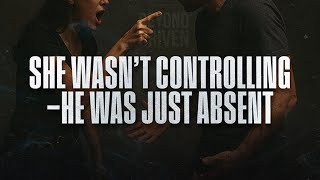
Tim Arrigo examines a marriage where Melissa's controlling behavior and Ryan's emotional absence both stem from childhood wounds. He traces how Ryan's shutdown triggers Melissa's need for control, and how her control deepens his withdrawal, showing how both partners fuel the cycle.
Chapters
Melissa didn't marry an alcoholic, but some nights when her husband Ryan would shut down, disappear into his phone, or pour himself a drink after a long day, her body reacted like she did. She'd get anxious, her heart would race, she'd start asking questions, pressing for answers, needing certainty. Where were you? Why are you drinking? Why do you always shut me out? And Ryan, he would just sigh and shake his head. I'm not your father, Melissa. See, that was the problem. He wasn't, but her body didn't know that. See, Melissa grew up with an alcoholic father, a man who could be loving in one minute and unpredictable the next. So she learned that safety wasn't real, that trust was a gamble, and if she didn't control everything, she would get hurt. She hated that feeling, hated how she'd be sharp when Ryan pulled away, how she'd criticize, micromanage, or demand more from him than he seemed capable of giving. But see, what Ryan didn't understand was this: Melissa wasn't controlling him because she wanted to. She was controlling him because she didn't know how not to. Ryan wasn't a bad guy, but he was struggling. Stress was piling up in his life. And he was leaning on distractions, numbing out with scrolling, drinking, zoning out instead of engaging and being present. The more uncertain he became, the more anxious Melissa got. And here's where the cycle formed: Ryan felt like a failure, so he checked out. Melissa felt unsafe, so she tried to control him. See, Ryan resented being controlled, so he shut down more. And his wife Melissa felt unsafe, so she pressed harder. Neither of them saw what was actually happening. Ryan wasn't just a guy who needed to be left alone. He was a guy who was struggling with himself. So his own self-doubt, his own ways of numbing out instead of dealing with life, was his issue. But for his wife Melissa, she wasn't just a nagging wife. She was a woman who had spent her entire childhood in survival mode. Reacting to instability. And when Ryan's struggles created uncertainty, her body went back into the only role it ever known— hypervigilance. So what changed? Ryan had to step up. He had to take ownership, and not just of his marriage, but of himself. He had to deal with the vices, the avoidance, the emotional shutdown, because a man who is certain in himself creates safety for his wife. Without her having to demand it. And for his wife Melissa, she had to face the fact that controlling him wasn't making her safe. It was making them both miserable. She had to learn, learn to let him lead. But see, that required him actually leading. Healing in marriage isn't just about one person changing. It's about breaking the cycle together. But it starts with one person. So my question for you, brother, is, are you leading with certainty, or are you forcing your wife to pick up the slack. Because if she's always pressing you, always questioning you, always pushing you, ask yourself why. Maybe your wife blames you because you're her only hope in changing this relationship. Maybe she blames you because she relies on you to take the initiative to actually do something. Both partners in a failing marriage are oftentimes lost. So check it out, brother, If you need help today, reach out to us about the Total Breakthrough Academy. See, the problem is the cycles, patterns, the conditioning, and the programming that's got you to this point. And the only thing that's keeping you there at this point is you. Anything that you're aware of that you're not changing, you're now choosing. So brother, choose wisely.