Built to Fix What Everyone Else Ignored | Entrepreneur Stories
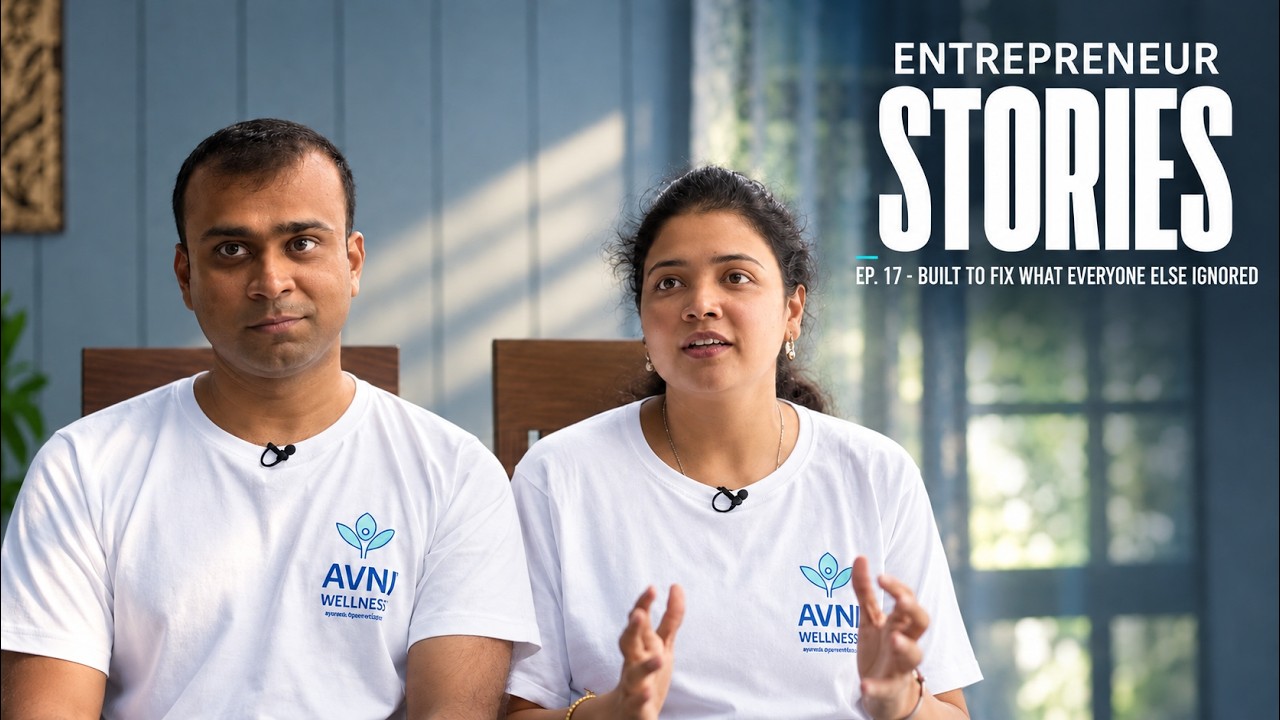
The episode features a series of founder interviews where each entrepreneur delivers an elevator pitch, shares origin stories, team details, market traction, and explains what a $1 million investment and partnership with Tim Draper would mean for their companies. The founders include Sujata Pawar and Purnank Prakash (Avni Wellness – reusable, organic cotton menstrual and intimate‑care products), Purnank Prakash again (Samaro – an AI‑driven event‑marketing platform aiming to become the "Salesforce of event marketing" and to launch enterprise AI agents), Rohit (Zodia Technologies – AI solutions that detect and eliminate energy loss in commercial buildings without retrofitting), and Vijay Kupchandani (Seven – a fintech startup offering a smart‑ring wearable payment device). Each segment details personal motivations (e.g., Sujata’s childhood cloth pad experience, Rohit’s cyclone‑driven climate concern), team composition (small, lean teams ranging from 4 to 13 members), product‑market fit anecdotes (customer testimonials, international client base), and the strategic value of Tim Draper’s network and capital. The founders collectively articulate how a $1 M infusion would enable scaling to millions of users, international expansion, AI development, and broader market penetration.
Chapters
So can we start with your full names, your company name, and sort of the tightest elevator pitch of what you guys do?
Apoorv and Sujata are doing what most personal care brands won't— building period and intimate health products for women that are clean, reusable, and built from the ground up with organic cotton.
One specific incident is the first pad, the sanitary pad that I've used, is a cloth. It's a traditional cloth, an Indian version of it. which my grandmom handed to me because that's where the first period happened, at her place during a summer vacation. And that experience was good, warm. It stayed with me for a long time. But then as life happened, all of us started using commercial sanitary pads that were advertised, you know, with girls running around in their white suits. And that kind of did not go very well with me. When I went deep, I realized that These pads have a lot of plastic and chemicals because of which they are causing these issues. And it is not just limited to irritation and infections, but they could also go inside the body and cause very deep reproductive harm. That was the moment when I realized that, okay, we need to solve this problem and maybe do it with some kind of innovation, bringing the good old traditional cotton formats back. But in a modern avatar. So that is the genesis of Avni.
Post our MBA, we were working— both of us were working in multinational companies. I have worked specifically in business development, in the marketing roles, developing companies and the growth path in the international markets. So that has been my experience.
Both of us are actually healthcare professionals. We are graduates of pharmaceutical sciences. So healthcare has always been on the On the primary radar, both of us in terms of the work we wanted to do.
So we were doing our MBA in marketing. So both of us met in the college.
Met in the college. That's where we kind of fell in love.
Yeah.
And then we got married.
You guys are a couple?
Yes, yes, yes, yes. A couple.
I started Avni Wellness before he joined in, a year before. And once we were all settled in, that is when he left his job and joined the organization. So, uh, we— there was a customer who reached out to us and she told me that since the longest time, since the time she remembers, she's been facing, um, very heavy irritation and infections with the regular commercial sanitary pads, all the more because she had sensitive skin. So I said, uh, the reusable pads that we are— we have developed particularly solve this problem because they are made of breathable fabrics, pure cotton. So she tried one pad first, and after 20 days— she used it during her first cycle— after 20 days, she gave me a call, and we actually spoke for the next 45 minutes where she told me that this was probably one of the best and the most comfortable period experiences she's had in the last 15 years because She did not face any problems. She asked me to increase the size of the crotch of the panty liner. We did that on her suggestion. So I'm very happy that customers not just love our products, but they're also so involved to the tune that they draw pictures and send us of how the design can be improvised, just so that it could suit everybody's body and their requirements.
From cloth pads to menstrual cups to iron supplements, Avni replaces a shelf full of synthetic, single-use products with things that actually work and don't cost the planet.
So hi, I'm Apoorva Agrawal. I'm the founder of Avni Wellness.
Hi, I'm Sujata Pawar. I'm the founder of Avni Wellness. Avni Wellness is a women's wellness brand, and we aim to detoxify women's health inside out.
So we are a very small team. We have got, apart from both of us, there are 4 people full-time who are employed with us. Then we have got our warehousing setup where all the products which we get third-party manufactured, they come at a warehouse, they get packed there, and then they are sold to the consumers.
What has been the best thing is it was not just about starting a business, it was starting a business around menstrual hygiene, which is considered as a very taboo topic. in the country. So we were a little skeptical, frankly, that how will our parents react to it, how will our, you know, friends react to it. You know, after all of this education, after all of this experience, you want to sell a sanitary pad? But when we pitched this idea to my father first, he was actually the most supportive. And then the next person was This guy sitting next to me. My father comes from a chemical engineering textile background, so he actually helped us set up manufacturing unit, help us source the best quality of technical textiles. So the support was overwhelming, especially because of the nature of the products, and the friends were also pretty supportive.
So what would the opportunity to work with To make for your company right now?
Just the vibrancy and the excitement that he brings to any idea on the table is something that young entrepreneurs like us really cherish, and we get that very rarely if you look across. And the second thing is just because he's worked with so many entrepreneurs across the globe, The experience and the nuances that he brings to the table will definitely be very, very valuable for our organization.
Avni isn't just selling wellness. They're making it accessible to the woman who's been told her comfort was never really the point.
What would a million-dollar investment mean for you guys right now?
A million-dollar investment would mean that we reach at least 50 million women in India. And change their lives.
That version of you that was, you know, at one of these big multinational companies, if that person saw what you're doing now, what would they think? Would they be surprised, or would they feel that it was inevitable? Like, like, what do you think the younger version of yourself would think about you taking the leap into entrepreneurship?
So for me, my younger self would be surprised that I've done this. And that's all thanks to her because she's the one who has, you know, given me all the confidence that we can do it together, or even I can do it alone if that be the case. So my younger version would be surprised.
My younger version would have expected this. The reason being, I'll tell you a story. Um, when, when I started my graduation college, the first day of college, there's normally an introductory session where the professor was asking all of us to introduce to the class and tell us what do you want to do maybe after you graduate or maybe 10-15 years down the line. That very day I stood up and I introduced myself and I told that I want to start a business of my own. So my younger version would definitely say that, okay, you, you had to do it, you're doing it, and you're going to do it very well.
So we're going to start with just like your full name, your company name, and sort of the kind of most concise version of what your company does.
Purnank built Samaro on one uncomfortable truth, that most events generate noise, not revenue. So he built a platform that changes that.
There has to be a new future that we have to define in terms of how brands do their marketing. And we really connected well with events, that this is the really high-touch point where you actually get to directly engage with your audience, have meaningful connection, you can show your expertise, and at the same time you can drive higher lead quality. So events are the things we had that vision, we saw that this is something which is going to become really big. Forget about wedding, birthday parties, and comedy shows that happen. I'm talking about serious business events that brands should do. So events are not anymore a trend. They have become essential for successful brand marketing. So that is what we identified, and we felt that this is the thing which we have to work on. There is a place in North India called Varanasi. So I am from there, native. So I did my schooling from there, St. John's School. And after 12th, I moved on to NIT Trichy, National Institute of Technology, Trichy-Rapalli. I did my Computer Science Engineering B.Tech there. And yeah, in 2014 I graduated and I moved on to Bangalore and then started my entrepreneurial journey. So our story starts in the first year of our college when I met my co-founder Mayank for the first time. So we both were big event enthusiasts, so we used to participate in a lot of events, also in the organizing of those events. We used to bring a lot of sponsors— Adobe, Coca-Cola, etc.— for the events that used to happen in our college. And in those days itself, we identified there's a lot of pain goes behind organizing every event, and it shouldn't be like that. And we saw that this is an opportunity where we want to work. And in 2015, just after one year of our college, we started working on this idea and started helping brands host their marketing campaigns. We track their journey from the get-go, when the person is interested in the event till they become the qualified lead or become the sales opportunity for the brand. In the other events, what happens is you do the event, you engage the audience, boom, that's over. But not with Samaro. With Samaro, you have an entire funnel of tracking everything that attendee is doing, and at every point you can identify if it is becoming a prospect or not. So this is something we want to replace with event marketing strategy. This is how you do your marketing, and this is how you close your prospects. So that is why we call ourselves Salesforce of event marketing. From 2016 to 2020, we were just doing marketing campaigns for a brand. So we're more of a service-based company. We used to pick a brand, work with them for months-long period, on-ground activations. We even launched Facebook's Oculus VR in India, even did Cadbury launches in India. So we have done a lot of work helping brands do their marketing campaigns. But in 2020, suddenly the whole event industry collapsed. No events were happening. We had a team of 15 people in the midst of pandemic and we had zero revenue. We had to survive at that time. So then me and my co-founder, our team of 10-12 people that time, we brainstormed together, came up with the idea, okay, why not host events online? And then from zero revenue, we rose up to customer presence in 45 different countries. So that was the time we felt that we could do anything. We have to just be, uh, follow the path, have perseverance, have determination, have a team that is backing you, and there is nothing which can stop us.
From registration to lead capture, Samaro gives marketing teams the infrastructure to turn every event into a measurable pipeline moment.
My name is Purnank Prakash. I'm the co-founder and CEO of Samaro. So Samaro helps companies build scalable marketing strategy that drives the pipeline. So in the simple word, this is what we do. So we have a very lean team. We are a 13-member team including 2 co-founders, and we believe in high performance and ensuring that the work-life balance is also there. So that's why we are working remotely completely. What I feel is that you have to have experiences, you have to understand the market much better, you have to be humble in understanding that some things won't work and some things might work. So you have to take your chances and go for it. That is what I feel has improved since I have grown in the event industry. My younger self would have felt that whatever he was doing at that time, that is the one that will change the entire history of marketing, how it's done. But now I have become more matured. I know that there are chances that will come our way. We have to be very good in making decisions, and there will be times we will fail. But the important thing is that how we rise back from there. So yeah, that, that is something, uh, that thick skin, that fiber that we have So what would the
opportunity to work with Tim mean for you?
Opportunity to work with Tim would mean a lot for us. So it's not because of just the money that we will be getting from it, it's because our 70% of revenue comes from the international markets. And Tim, what I have seen, he is the one who can actually take you to the different markets, make you a hit startup. And other than that, his experience, his expertise is going to help us a lot.
In a world full of event tools that do one thing well, Samaru decided to do everything and make it count.
So we are planning to roll out AI agents. So right now, the process of event marketing, it used to— the ROI to effort ratio used to be in decimals. With the solution that we have provided, it is moving into single digits. But now, if you launch AI agents, the things that that used to take months can happen within a few minutes. And that is where we want to invest this $1 million. We want to become the world's first enterprise AI agent for event marketing strategy. I feel it's like a meditation for me, to be honest. You know, I, when I'm thinking about my work, I don't think— I'm just present in the moment. I'm going— I don't think about anyone, what, what is happening in the world, what people are saying. I'm just focused on that. It takes me through ups and downs, but at the same time, I have— I don't have to my sanity. I have to be calm, I have to be organized, I have to keep my team pushing together. And that is what I feel that, that gives me the purpose, that gives me, uh, that vision, motivation to wake up every day and do what I literally love to do.
Could you introduce yourself, your name, your company name, and the shortest version of what you do? Like an elevator pitch.
Rohit and his team start where most energy companies stop, inside the building itself, where thermal loads shift, equipment ages, and energy quietly bleeds out every hour of every day.
During one of our undergrad years, we had a cyclonic event. due to which the campus was good. The campus interiors, we didn't get affected because it was on a higher land, but we saw a lot of land across most of the Chennai areas submerged. Now, once in a lifetime event happening quite often was a surprise to me. Then when I looked into it, it was like, okay, we were studying in books that the ocean temperature is rising and things like that, but this is something you are facing firsthand experience, right? And then when you have such events, you don't have power, access to power, access to food, everything is cut off. So it's, it's a terrible situation to be in as well. I thought like, uh, can we do something about it with the skills we have got so that there is a long-term benefit to the overall environment? So that is how one of the thoughts that went into which attracted us to solve this problem of climate change. So it was during my childhood, maybe around 8-9 years old, so I came across this autobiography by Dr. A.B.C. Abdul Kalam. So he was our then president. He was also a rocket scientist earlier. So that fascinated me into rockets and into different technologies. So that was how it all started. So I'm from Hyderabad, born and brought up. I did my undergrad at IIT Madras in Chennai and then back to Hyderabad while we were working on the startups. So we were straight out of college into the startup. In fact, we started up at, you know, final year of our undergrad, and that is how it took off. So me, me and my co-founder Sharath, we were good at making different technologies, developing different technologies, but somewhere we felt like can we use our skills to develop something that impacts our modern society in a positive way? And we felt energy is that critical element of our modern society without which it becomes really tough to sustain. And then we started working on different things like low energy power harvesting, or like, let's say, certain offshoot projects is what I moonshot projects is what I would say. And then we realized, like, why don't we look at buildings across us and see something, develop something that could be helpful as well. One thing, like, when we were starting up, what we always felt was, like, we being from India, how do we make sure the technologies we make is not just in India but made for the world as well? So that was something we always had in mind. But for the first initial few months, we were unable to do that internationally. But over a period of time, we were able to get that technology which is applicable internationally as well. And there are certain markets now we started working on, and that is something we take pride in now.
Using AI that plugs into existing systems without touching infrastructure, Zodya identifies energy loss in real time and delivers verifiable savings from day one.
I'm Rohit from Zodia Technologies. At Zodia, we develop different AI-based technologies to optimize energy for commercial buildings as well as industries. So we work on a hybrid model. Having said that, we wanted to give that freedom to our team. So our team is now close to 10 people. Right now, we are working with 30 major corporations in India and outside India, in US, Japan, Singapore, and Germany. What we have seen is a couple of similar things which our devices enable them to do. So one is making sure they have that value output in terms of energy savings or energy optimization right from day one. So that was one thing which always stood out for them. And then the second and most important thing which they felt was cool was like the ease of integration as well. Because it didn't require them a lot of infrastructural changes to make this happen. So that was the thing which they really liked.
Okay, so what would working with Tim Draper mean for your company?
So yeah, so working with Tim would help us, give us that exposure, give us that scale of technology what we are looking for, so that it shouldn't be— what we actually feel internally is it It shouldn't be limited to certain geographies or certain set of buildings. So it should be applicable worldwide as well. So I think working with him would give us that chance to make this technology truly global technology.
They aren't selling you a smarter building. They're making the one you already have stop wasting what it was never supposed to lose.
What would the million-dollar investment mean for your company right
now? A million-dollar investment would help us Scale this technology further, not just in India but outside markets as well, and also develop our technology further, not just to buildings but maybe to other energy infrastructure as well, right? So like solar plants, distribution grids, and things like
that. When you were young, if a younger version of yourself saw what you're doing now, would that person be surprised? Would they be proud? Would they— what would you think about Where your growth is
possible? I think this is an interesting question, uh, because in, in some aspects, I think, uh, the younger version of mine would definitely be, uh, feeling cool. Yeah, you're doing something good is something which you would feel about, but I think it was down the line, right? So you always The younger version always knew, right? Okay, this was something I always intended for, and then this is how it's happened. So, so yeah.
Can you start with your name, your company name, and sort of the most concise elevator pitch?
Vijay asked a question the payments industry hadn't thought to ask. What if your wallet wasn't something you carried but something you wore?
I always thought I should do something which involves some kind of a hardware play because, you know, I mean, hardware also gives you defensibility in many cases, you know, if you're able to get that IP right in the early days. And Apple Watch was really the inspiration that Light bulb moment, as you call it, right? So, um, of course, the watch form factor is not something which I thought we should attempt from some place like India, where we're not really a manufacturing, uh, you know, kind of a hub, so to say. I mean, and, uh, but the ring form factor is something which sounded very, uh, you can say, promising when we started. And we actually have come a long way and our thesis has played out the way we thought it would. So I'm a 4th generation entrepreneur. Everybody in my family has been entrepreneurs and this is my 3rd venture. So I used to sell mortgage loans for your house, your business, or mortgage against your property. Know, for your individual needs. That's what I did for almost 8 years. Then I dabbled with a startup idea which was around online loan comparison, which is like the same thing which I used to do offline but now online. And then you have a comparison between various banks, you know. That is what I did, learned a lot from that journey and used that to my advantage now in Seven because when I started This time I was pretty clear of how to attack the idea and how to build a team, how to structure the business model. And plus I had to some extent, you know, generated those contacts or network, you know, in the ecosystem where people knew me in advance. So that also played to my advantage. So that's a little about, you know, my journey. And academically, I am a commerce graduate, so it's— I've done My education in commerce. What's happening is that, you know, when you used to use cash, you have that guilt when you're, you know, kind of letting away from, you know, your hand that dollar bill, right? You feel that guilt. But with mobile payments, with credit cards, you don't feel that. And now with mobile phones, you know what, what in India we used to do is we used to type the amount. So at least when you are typing, there is some amount of cognizance that's happening. But here he's saying, I'm doing nothing. The merchant is typing the amount, I'm just tapping. So how much money is outflowing from my wallet, you know, is like something which I'm not able to keep a track on. One of my customers, uh, was on a Sunday afternoon, you know, watching Netflix, and I think they ordered something from outside and the doorbell rang. And, uh, he said that when I had to pay this guy, the delivery agent, I usually walk up to my room, get my wallet, you know, and try to pay. And I was just about to do that, but then I realized I actually have my ring on me. So he was in his pajamas and he actually said, okay, I'll pay you right here. And he actually tapped, he took the delivery and went back to his sofa. So that next day he called me and said, boss, you actually stole that small amount of money from my credit card usage to your ring. So that was a You know, very big customer testimonial feedback.
No app, no OTP, no battery. Just a fist on a POS machine and a transaction done in 430 milliseconds.
So my name is Vijay Kupchandani. I'm the founder and CEO of Seven. Seven is a fintech startup in the wearable payment space with a specific focus on the smart ring form factor. So we are a small team with 7 people. Mostly all centralized in one place in Mumbai. We don't have any remote employees yet. New B2B pitches, B2B2C pitches, corporate orders, you know, we keep doing that. Customer support, which is very, very, very critical on a daily basis, you know, because of new product and new habit that we want to teach customers, you know, because people are used to paying with their cash or cards. And phones. So teaching them that, okay, this is a new form factor, answering their questions, especially because it is to do with your payments. So there has to be that trust that needs to be built. So all of that happens. And then of course now we're trying to fundraise. So the entire last, I think, one, a little more than one quarter has gone into pitching and traveling and so on and so forth.
What will the opportunity to work with Tim mean for your company right now?
I think working with Tim is going to be exciting. It may open up access to certain geographies, certain organizations, certain connects in the US for us, which can, you know, prove really beneficial for both of us. And if, let's say, Tim and you know, his group decides to even invest in our upcoming or ongoing rounds, we can probably, you know, use that strategic relationship to venture into geographies like the US.
Designed, manufactured, and patented in India, Seven didn't import a product. They invented one and slipped it onto the finger of an entire fintech category.
What would a million-dollar investment mean for your company right
now? So we, you know, have raised in our journey so far close to a quarter million in, you know, since our formation. We are actually raising a million-dollar round right now as we speak, and we have commitments of close to half a million on that. So let's say if Tim decides to put in, let's say, even half a million, that completes my round of And if there is interest for more, we can definitely work that out.
What would a younger version of you think about what you're doing now with Wootz? Would that younger version think that this is a surprise? Would they think that it was inevitable? What would their feeling be?
Never thought about it that way, but I think connecting the dots back, my younger self was a little more, you can say, more passionate than, you know, and less rational maybe than my current self. So maybe that is also one of the reasons why it led to where I am today. So yeah, I mean, I'm glad. Maybe if my younger self was any different, I would have, you know, ended up somewhere else.
More from Tim

What if one vehicle could move freight from road to rail, without the usual bottleneck?



NFTs Died… Or Did We Get Them Completely Wrong? 👀#nfts #web3 #crypto #blockchain

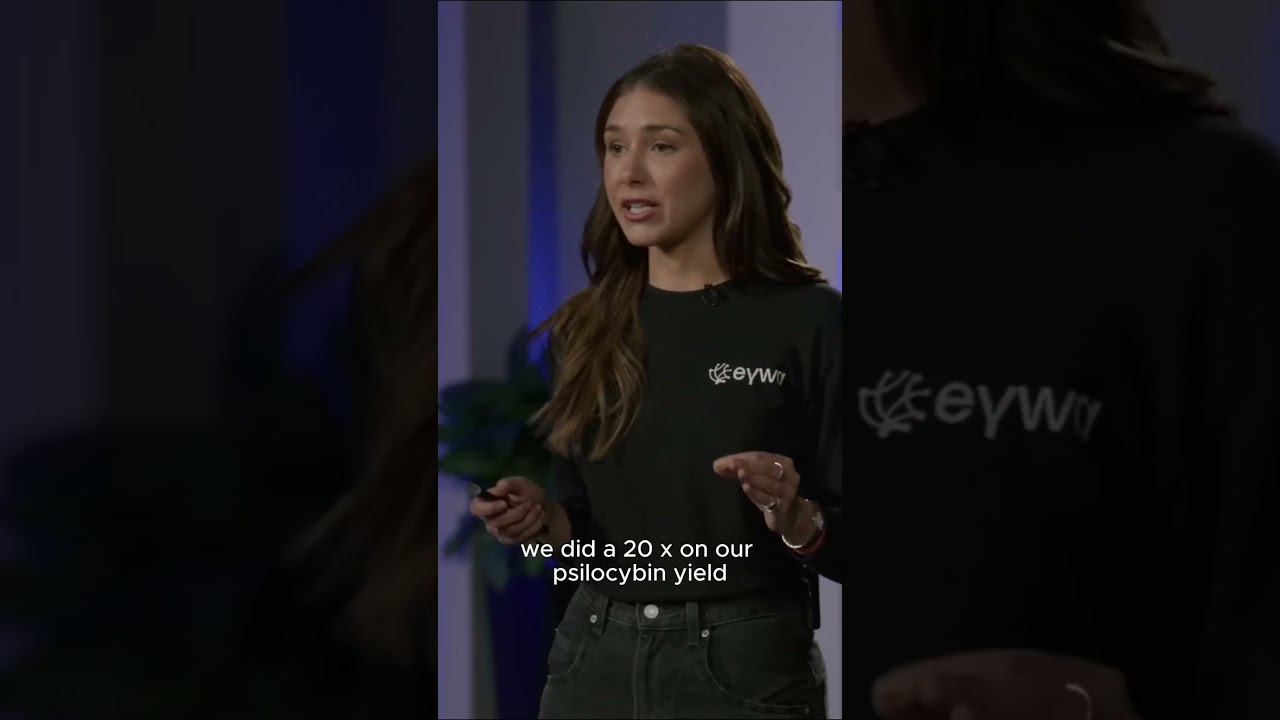

He Sold His Car to Build This Startup, Then Pitched It for $1M 😳 #Startups #AI

This Startup Moves Your Crypto BEFORE Hackers Can Steal It 😳 #Crypto #Cybersecurity