
Ep 20: The Impact of AI in the Survey Industry
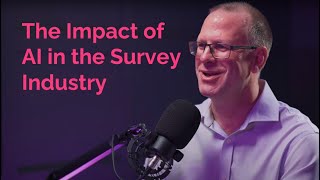
A recorded interview (2024) between Tim Davies and Jim (owner of Cube), exploring how AI and automation are being applied in a small surveying practice. Key points: automating disrepair report generation (using on-site dictation → rapid draft reports), operational gains (about 2.5–3 hours saved per report, faster turnaround), client-facing dashboards for status tracking, future scheduling optimization (traveling-salesman-style routing) and multilingual tenant communications. The conversation also covers business growth, marketing plans, peer mastermind benefits, and Jim's personal context (health-related note affecting onsite note-taking).
Questions this video answers
Approximately 2.5 to 3 hours per report.
They work on a two-week return target for reports.
Reportedly within 15–20 minutes (sometimes cited as around 15 minutes).
About 24 hours minimum from external transcriber (previous workflow).
About 50–60 reports per month with five surveyors and two office staff (at a previous period).
We're going visiting properties, we're identifying the issues, we're summing up in a very, very basic checklist, I'd say, of how we approach it. Recently we've been plugging these things into the system and getting a report in the format that we require for our client, all sorted out with the content that we've taken on site. So we've actually shaved two and a half to three hours on each report. Means we can turn things around. It means I can limit the number of staff that I'm sending out, we can do more inspections in a day because we know we can turn them around quickly. But being able to allow us the scope with our clients, we work on a two week return. If this thing's coming back in 15, 20 minutes of us plugging it in, we've got the time and the opportunity for us to review that in more detail, making sure that we've got the thing in the situation and arranged that the client actually likes.
I'm really excited about when we implement the traveling salesman problem, where instead of you guys having to book in, which ones are you going to on which day? We go, okay, we know these people are available, we know these are the locations, we know this is how long it's going to take. And we implement that as automation too, because then it's just freeing up even more admin time within the business.
Oh, most definitely, yeah. There's a lot of admin time spent trying to chase these people.
Hi, I'm Freya. Welcome to the Skynet business in the AI Age, the podcast that dives deep into the world where artificial intelligence meets business. Join us as we explore the latest trends, challenges and opportunities in this ever evolving landscape. From innovative startups to established enterprises, we'll uncover the secrets behind the successful integration of AI technologies. So grab a cup of coffee, sit back and get ready to unlock the mysteries of business in the AI age.
Hi, Jim, great to see you.
Good to be here.
So, let's start the beginning. Tell me about your journey with Cube.
With Cube. Well, I have been working in Central London for a major surveying practice for about nine or ten years. Thoroughly enjoyed it, great fun, big properties, big clients. But my wife took a turn for the worse with a diagnosis of multiple sclerosis. So got us thinking about maybe we need to do something a little bit closer to home, be around for her, thinking about the future, etc. So alongside the business, I started doing some private work. Nothing that clashed with what I was doing, the day job, but when that gets to eight Hours at night. After eight hours in the office, it starts wearing thin a little bit and a decision had to be made. So felt I couldn't not take the step. I would forever kick myself at not trying. So I set up Cube at that point, ran it out of the back of the garage, slowly built up clients and then got to the point where I needed somebody else in to assist. And fortunately, bizarrely, really we're thinking about that. And in through the post comes a CV and a letter from a young lad who decided he was wasn't up for going to university or anything like that. He'd done his some B tech in or HND or something, whatever it was in construction and really liked the idea of being a building surveyor. And I thought, well you're quite proactive, let's have a chat with you. So I had a chat with him. He was really keen, really up for it and he joined us. So we decided to move into supremacists at that point.
You didn't want to run it from the back of your garage then?
Not really, no. It was a bit too close to home again, mixed up with home and work and I know everybody sort of does this working from home thing, but I find that a bit too difficult. So he joined us and it meant realistically, rather than sitting in the back of our garage, needed some premises. So we pitched up in about half a mile from the house close to the train station, straight into London. So it was perfect for us. And slowly and over time built up a client base. Initially started with clients that I'd worked with in London. So we ended up dealing with some huge buildings in the city, some big industrial parks out in Frimley and Surrey area. We did a lot of conversion work so it was really quite high, intense, high value work and slowly started blending that in with some of the more local work with us and things of that nature. So we've spent a lot of our time and energy at the moment working for other surveying practices. So it's taking its toll a little bit insofar as, you know, if they're quiet, we end up being quiet. So we'd prefer to be our masters of our own destiny. So over the last few years we've been trying to build up and build up the image of the business and what we do and making it more efficient and trying to get us into a position where we're the go to surveying practice in Bedfordshire area and beyond. We feel we're sort of heading towards there now because a lot of our inquiries are Coming in naturally and organically. And we're also getting some referral work as well, which is really good. And referral work from other key businesses in the locality. So it's well known local agents and practices locally who are transferring some of their. The work that they no longer wish to do. But it's our bread and butter comes our direction. So it's been good, superb.
And some 18 months ago, maybe coming up for two years ago, we started exploring disrepair report automation, didn't we?
Yes, yes, that came out of the blue, I must admit. It was not something I'd been thinking about. And I'm part of a business group run by a gentleman you know as well, Tim. Fine gentlemen, fine gentleman. Part of that group is a discussion around the business and how you can work things. And I brought to it that we were doing these reports but they were taking quite a lot of time and effort to generate and it so happened that one of the other members of the group had been working with yourself, preparing some questioning or questioning App may have got this wrong slightly, but in order to try and facilitate an understanding of people's USPs and what it was doing and what it could do, I was really impressed with. And it allowed that business to actually concentrate on other things while that process was going on in the background, enabling him to get the data that he needed in order to sort of compile various reports and so forth. And I thought that's really, really good. And I brought to the team that we were having struggles doing this, that and the other. And it came out that he might want to have a word with Tim because there may be some opportunity to sort something out that might assist you. And yeah, I'm really, really pleased with the introduction, to be honest with you, because what we've got now, yeah, it takes a while because obviously we can't necessarily explain in one sitting what we do or what we're looking for or what. What it needs to look like. And so it tends to be extracted out over a period of time and it comes and you think, oh yeah, I forgot to mention this and forgot to mention that. But the. What it's doing and helping us with is, is absolutely dramatic. And the system is set up so that we can dictate on site our notes. Well, I may as well be open and honest. We're in that environment, aren't we? I've got diagnosis of Parkinson's disease and so over time I'm going to slow up and one of the symptoms has been my writing over the Last year and a bit it's become undecipherable. So me making notes on site is a no go.
You've actually got an excuse for having undecided. I can't write.
Yeah, I always thought it was that personally diagnosis great. I can tick the box. Gives me the excuse to use my Dictaphone while you see, there we go. That, that ability, you know, besides the lpd, but everybody else within the team that we're utilizing is now taking Dictaphones out onto site. We're going visiting properties, we're identifying the issues, we're summing up in a very, very basic checklist, I would say, of how we approach it. It's not difficult. We get into swing very, very quickly. And recently we've been plugging these things into the system and getting a report in the format that we require for our client, all sorted out with the content that we've taken on site, extrapolated from that is our conclusions, and placed into another part of the report. So we've actually shaved two and a half to three hours on each report in its compilation. Putting it together, it's just been phenomenal. Means we can turn things around. It means I can limit the number of staff that I'm sending out. We can do more inspections in a day because we know we can turn them around quickly. And our concentration is therefore on the editing side of it rather than the drafting of the report. And it's proved invaluable, really. And it's quite easy to pick up even for those guys who are not so familiar with utilizing Dictaphones. So took on board a guy heading towards retirement. Nothing wrong with that. We all are. But he was saying, oh, you can't teach an old dog new tricks. And I was thinking, oh, here we go. We're gonna have a delayed start. But within two or three inspections, he got into the swing of it and he was really impressed. Then, oh, I can turn this around really quickly. I'm actually getting the report back within 15 minutes of it being up, my dictation being uploaded, which just blows my mind.
It's magic, isn't it?
Yeah. What used to happen was a couple of hours being spen dictating the report. The dictation would then be sent down the line to a transcriber in Devon who typed it all up for us. That would take, you know, it would be 24 hours before we got it back as a bare minimum. And then we'd have to review it again as well.
I think I remember that there were Printouts going backwards of Fortune, the office that were being manually scribed on.
So yeah, very much so. Red scribbles. And when they were mined they were indecipherable as well. But yeah, so we've literally cut out the whole transcribing thing, the whole dictating the report element of it, which is saving, as I said earlier, about three hours, potentially off a time, but being able to allow us the scope with our clients. We work on a two week return. If this thing's coming back in 15, 20 minutes of us plugging it in, we've got the time and the, the opportunity for us to review that in more detail, making sure that we've got the thing in the situation and an arrangement that the client actually likes.
And ultimately the surveyor is the signatory on this thing. So it's not something that's written by AI, it's taking the PDF that was the letter of claim from the original solicitor, is taking the dictation that was recorded on site. It's incorporating bits of a standardized template, but all it's then doing is creating a draft for the surveyor to review. And so it is still the surveyors signing off on it, it is their work. And so we're not really displacing people, we've just got rid of all of the waste in the process.
Yes, yes, no, I agree completely. It was that aspect that we really wanted to keep. I didn't want AI generating the report because it is an individual's report, they're court based reports, so it has to be done in a certain manner so we don't lose the individuality of the report or the report writer. But as you say, we cut out the fat in the system and it leanly comes through at the speed that sort of is mind blowing really. To sit there and dictate potentially for two hours and then it come out within within seconds is always just phenomenal. It looks like it should do as well, which is even better. Yeah, so cutting and pasting and all that stuff just goes out the window. It's great.
Yeah. I mean it was a hard worked process to get it to that point and it's taken time, hasn't it? But I think now we're at a point where you can see clearly in a dashboard, you can place your files in a folder and it processes them automatically. You get those reports back, we don't have to worry about where they are because you can see the status in a dashboard. There's been a problem, it tells you there's A problem making it nice and easy. It's.
Yeah, it's simplified it, but it's also been beneficial from the aspect of the client as well, not just the reporting side, but the dashboard side. We haven't instilled it with a client yet, but in conversation with clients they're itching to get. Get to grips with it. We spoke earlier about potential opportunity in the Midlands with a local authority and in conversation with them brought up the fact that there was a large number of these inspections that they wanted carried out. And I said, well, the way that we can run it is to utilise our dashboard. So you can see exactly where these reports are in the process, whether they've been booked, have they been visited. Following on from that, where's the report in the system? When am I likely to get it? And you can then report to your superior is exactly what's going on with each of these. And if there's an urgent one that we want to bump up, then you can just pick the phone up. And that was accepted as an absolute fantastic tool and one that they really would like to see because it would appear that they utilized in house teams and couldn't quite understand exactly where things were in the system because they didn't sort of have any true setup to determine that. So, yeah, I think future's bright.
I think so, too.
It's a really, really good opportunity for us.
I'm really excited about when we implement the traveling salesman problem, where instead of you guys having to book in, which ones are you going to. On which day? We go, okay, we know these people are available, we know these are the locations, we know this is how long it's going to take. And we implement that as automation too, because then it's just freeing up even more admin time within the business.
Oh, most definitely. Yeah. There's a lot of admin time spent trying to chase these people. And I think we spoke about moving it to that stage, but then utilizing text messaging, and that was spoken about with the potential client. And what was discussed was, well, if you can tell us what their native language is, because we come up a lot of our tenants that we're going in to see, English is not their first language and they struggle and it's difficult then to get them to understand that we're not there for any horrendous purpose to actually assist them. And on the telephone call with somebody who doesn't speak English very well, it's quite difficult to get that across. So it was put forward to us that when we get to the stage where we can utilize the text message and we could actually have it potentially in a language that suits that individual. And again, you could even leave them a voicemail. Wow.
It doesn't matter. I mean, the capabilities are fantastic and it's just looking at where are the gaps in the processes and what's the right piece of automation to add to solve those problems. So we've gone from, can we automate the production of a report to, okay, what's the next bit within the business that it makes sense to automate? And again, it's not getting rid of people, it's just making those people so much more efficient.
Oh, yeah. I can get Sandra doing so many more things now. It's great. But, yeah, I'm looking forward to that side of it. I really am, because I think the opportunities there are a myriad for us. And the text messaging thing with the. Or voicemail or whatever it is, in terms of speaking the first language of these tenants actually was something that perked the interest of our potential client in the Midlands, because they've got quite a diverse population with a lot of their tenants are those who don't have English as their first language, and therefore they. They have apparently been struggling getting into the properties to do the inspections, which then delays things and then causes issues with the court process and all of that nature. So the ability to secure that meeting, that inspection earlier would be absolutely fantastic.
It's kind of crazy that somebody not having solid capability to speak English means that they should live longer in a desperate condition. Because some of the properties you visit are appalling, aren't they?
They are horrendous.
I mean, some of it is genuinely. They just should have opened the window, but you're seeing the full spectrum and if somebody can't get the help they need just because their English isn't great.
Yeah, that's.
That's devastating.
Yes. Yeah. And I agree completely with you there. And it's. You can see the. See the issues when you walk into the properties and these people genuinely, or more often than not genuinely have an issue. And it's quite disheartening to feel that you can't help them out just because they don't speak your language. It does prove difficult when you're actually on site, but there are other ways of getting around that.
Universal translators are close.
They're great. I use an app at the moment, but trying to figure out what their actual language is sometimes is more difficult than it seems. Yeah, it's good. Things are in that realm. I'm really comfortable in that particular aspect of my business. I think it's a real game changer. I haven't delved into the depths of what our competitors are doing.
I don't think it matters what competitors do.
I don't either, because I. I genuinely believe, having met counterparts on joint inspections and so forth, that everybody seems to have a different way of delivering and everyone has a different means of communicating what they've come across on site within the realms of the requirement to meet civil procedure rules, which is what we're governed by. But we get people who arrive on site with a tablet and proceed to input on a tablet. My concern with that was that my typewriting skills are not great and therefore I'm going to minimize what I put onto this piece, this tablet, in order so that I don't waste time stood in the property typing. And that in itself then restricts what we can report on. Because when maybe not picking everything up or I'm not putting everything down on paper because it would be too verbose to do that and take me forever to type it. So I'm glad that we're not down that road. We also get a lot of responses on joint schedules and things of that nature that come to us with. And that is their report. So it's an Excel spreadsheet that is just written into. And it just got no background to it, no backup to it. And it just sort of concerns me that that standard is bouncing through and seem deemed to be acceptable. Whereas I think what we're delivering is a bespoke report in the language of the surveyor, but just generated in a different way. And I think that's the way.
And at the moment, the fastest way we have to communicate the contents of our mind is through our mouth.
Yes.
It might get faster in the future. Um, so the fact that you can just speak everything that you're seeing is great. I mean, if you needed to add in the ability to interpret photos, and that's something that can be done, but it's. You can just walk around, you can concentrate on what you're seeing, you're just describing it, and then that gets put into the report, into the right place and the right structure.
Yeah, no, it's. It's great. It's great for me because it does allow me to put a lot more into that report. So we retain our transcripts just for the sake of legal completeness. Yeah. So we can refer back to it. But a lot of time I'll be striking stuff out of the report because I'm thinking, actually, I've put that in there to justify why I'm saying something, but it's not integral to the report. So there's more of my editing is deleting things that assist me in understanding where I'm going to make the report more concise, more definitive, rather than me having to start from scratch and start trying to recall what actually happened in the building when I was there four days before.
And you might have done six more since then.
Precisely. And that sort of confusion then starts causing more problems than it resolves. Yeah, it's really, really good.
Fantastic. So the benefit of the mastermind group at the first place, I've learned so much from the group that I'm in, which is obviously, it's a sister group to the one you're in, but that gathering of business owners and sharing things which you just don't share with people in the office or people at home, you can go into such a level of detail and get the support that you need. I think they're priceless, those sorts of groups.
Absolutely, absolutely. I've been involved with a particular business group for, oh, crikey, longer than I'd care to imagine. But the. I see slightly different benefits because I attend and I'm not a businessman, I'm a surveyor.
That's not true. That's how you see yourself, at least.
How I perceive myself. Yeah, that's correct. But I go along to these meetings and I sit there and I think, actually they've got the same problems and struggles that I have, whereas when I'm sitting in my office looking out, I'm thinking that I'm the only one who's going through that turmoil. So you pitch up and there's a problem with your staff and you bring it to the team and all of a sudden you find that three or four out of the group have experienced something very similar. And the guidance taken through and sort of that positivity of pushing forward all the time with understanding and knowledge base and utilizing other members of the team for issues that you have that maybe they've been involved with, come across, had an in, you know, or know, somebody you can assist with.
Yeah.
Hence yourself. It's been absolutely brilliant for that. Absolutely brilliant for that. And, yeah, I enjoy going on along once a month and just getting that pep for. For a morning, coming away thinking, actually, we're doing all right.
Yeah. Or you go in, in crisis and you come out thinking, okay, I've got a plan.
Yeah.
It's still such a valuable investment of time. It looks a lot in the calendar each month when you look at it and oh, I'm out of that day. But it's always a return on the investment.
Very much so. I agree with you. You look in the diary and when you're up to your eyeballs and reports coming out of your ears, that thought of going out for a whole morning or half the afternoon as well is quite concerning sometimes. But yes, you come away with almost a massive relief. I've been able to offload to somebody because it's difficult at home. I don't want to offload negative things at home, partly because when I do, my wife then decides that she's going to try and rectify it for me and that's not what I want. I just want to offload. Don't want to do it in the office with the other team members because it's not good. So it's good to be in an environment where you're comfortable with those who you're with, but you also know that they've got a level of understanding, they've got some knowledge of your business to be able to give you the right advice and projection and a means of getting through a situation. So been riding the ups and downs.
With that group and you see people sort of join and then leave. But I think on the balance there's always a core who have been there and been there for many years and it's helped our business no end. It's just being able to talk through things. And ultimately it was that group saying, when are you going to talk about AI Tim? When are you going to talk about AI Tim? When you're going to talk about AI? That moved us from just focusing on project management automation to selling AI services. So I ran out of excuses, which is why we're here talking now.
No, exactly. Well, that's a strident move and fantastic outcomes.
Yeah. I highly recommend this. Any sort of peer to peer networking, but especially the mastermind groups are invaluable.
No, I agree completely and I think that I'm not sure how your group is run, but we run it. The first few minutes of the session are just reflecting on where things are and then putting a score against how you feel about your business at that point in time and how you feel about your personal life. And whilst it's a business group, we're all humans and we all have a personality and we all have our issues at home which obviously have an impact on what's going on in the business. All of those things filter in and I Got my diagnosis of PD, brought it to the group and got a WhatsApp a few weeks ago from one of the members of the team saying, I come across this article, you might want to look at it and it's great. They're thinking of me and it's, it's, it's. You just feel a bit of a, like I said, virtual hug almost of.
Absolutely.
We're thinking of your keyboard.
Do you score yourself in whole numbers or you are percentage?
Oh, percentages. It floats, Floats, depending on what's going on. But yeah, it's been. The numbers have been going up, slowly going up. So they took a dip the other week, but they'll get back up there.
Absolutely. It's a great format and I think, yeah, we do exactly the same.
Oh, good.
Brian's got a system, hasn't he?
Yep, exactly.
So what's next in terms of growing Cube and getting more of an audience for this disrepair report functionality?
Well, we're on the push at the moment with the disreporting disrepair reporting. Sorry. Insofar as got another member of the group, so keeping it very in house, we utilize Chris as a marketing individual, so I don't know one end of a social media screen from another and as a consequence I don't know what to put on there, what platforms to use, how to use them best, etc. So we're getting that information coming through and he manages that process, set up our website, managing the website process for us as well. And then we're slowly getting ourselves into gear and aiming for inbound marketing more than anything else. That's where I want to be. I don't want to be cold calling and knocking on doors. I want people to come to us and I feel we've got the right setup that people can come to us. We've got a good team, a good setup with small, but we're reactive and the client first at all stages. So that has its own benefits. We treat the clients well, they refer us on, they repeat business and it continues to grow from there. So the housing disrepair functionality, that side of the business is slightly different. We've taken a step to say that we don't want to work for claimants. I don't necessarily agree with some of the means of adoption that have been taken up by the solicitors operating in that field.
You mean no win, no fee?
No win, no fee. Huge pressure on everybody in suppose we have worked a little bit for those solicitors in that arena and it's very much if you arrive at A property and there's not a thousand pounds worth of work to be done, just walk out. Well, I personally don't like that attitude. Maybe a bit of triage first would have potentially been worthwhile in that circumstance. And then there's the personal element to that, of we're not going to get paid for the fact that we've pitched up to somewhere in East London and found out that there's no work, you know, there's nothing to be done there. It's a bit of mould growth that is related to occupational use and not down to the landlord. So it's difficult working in that environment and there's a lot of pressure in that environment for a relatively low fee. And I don't want to be scraping the barrel and chasing the bottom line all the time. So I much prefer to work for those who are defending a case, not because I want to defend the case, but I want to get to the root cause. And if it is down to the landlord, then the landlord needs to know exactly what he needs to do to put it right. If it's not down to the landlord, then it needs to be encouraged to advise the tenant on how to occupy the property and minimize the impact of whatever's going on. So I prefer to be in that regime and get to know our clients in a way of the reporting side and how they want it delivered and then we can provide a consistent delivery for them. And therefore I don't need a lot of clients in that arena to generate quite a lot of work. And I believe we've got the right tools and everything in play now to flick those buttons for. For people moving forward. So we're out and about there with Chris, getting information out there of what we're doing, information about how we approach, information to the clients or potential clients about what disrepair reporting is, what should be covered, what is being covered, what risks there are, what they could do as landlords to mitigate their situation and things of that nature, just to try and bolster some way of explaining to potential clients what we actually know and how we can impart that knowledge base. So, yeah, it's really interesting times, actually. So I'm now thinking, not as a surveyor, I'm now having to think as a marketer and what comes into Playful's minds and how do they work and what goes on. And that's been quite interesting. That's been quite interesting, definitely. Yeah. So it's how. How that is all approached and how that manifests itself in terms of moving things forward is unknown. Quantity. But I'm hoping that we're going to start seeing some, some positive impact from that as we move on. I'm sure you will slow burn, but.
We'Ll see all the best things are baby steps. So how much of your view of artificial intelligence changed over the past years?
Dramatically. Always saw it. I never quite knew the impact of what artificial intelligence could do or would do. My perception, understanding came from television representation and yeah, not quite that diverse, but you know, news bulletins, things of that nature. AI is being used here. AI is being used there. What is it? Why is it being used? How is it being used? I couldn't quite see an opening or anything that could really work for us. The change has been very much okay, now what else can I get it to do in the business? And that's definitely been the forethought of my mind is what else can we get to improve our situation without taking away the personality of the business? So this is the first few. The next project that I want to start considering is our building surveys. So we do level three surveys, which is an RSCS categorization. So it's a full building survey. And we've had quite a lot of clients, some big celebrities buying very large houses. And that's the realm we want to get into. But we want to make sure that we're delivering consistently a report that is both comprehensive but also looks good and is consistent in its delivery. So that I know and I'm confident that my team are delivering the same report each time. Obviously different place, different client, different things. But the flow of the report looks the same. The way we're pricing things looks the same and all of that side of it. So there's some level of consistency. So we don't have a huge churn of personnel. But when we do have a change of personnel, we end up getting a whole new raft of different ways of reporting coming through. So if we can standardize that and make it as easy as possible for people to pick up and run with it, that gives me the opportunity to maybe utilize in house stuff, but also potentially external sub consultants to actually infill for busy periods.
And it positions you well for growth because if you've got that consistency and process, here's the process that you follow. The output is always going to be the same.
Yes.
And it arguably, it doesn't matter who does it, as long as they've got the basic understanding of skills.
Exactly. As long as we've got the right people doing that work at a reasonable level. The one thing it doesn't do is take away that personal element of have they got it right? Have they diagnosed this issue correctly? Which comes from us doing final checks on reports, etc. Which is a human activity. But as I said earlier, with the speed of delivery, we then have that scope to have it reviewed and peer reviewed to check that it's actually delivering the right level of reporting, the right level of consistent advice and resolution really more than anything else. If we can get into that and utilize our time, our professional time in the right areas, these reports start becoming much more usable, much more stronger, I would say, in their delivery to the clients. You know, they're getting a really bespoke, heavily checked and dissected document and people are still buying.
People, yes. The purchaser of the survey is having that interaction with a surveyor in person. They're just getting the output more efficiently from back office.
Yes.
So it's the ideal really, isn't it? We're enabling more people to work in this environment, but in a structured and repeatable way. That is going to be high quality.
Yeah, yeah, very much so. We. We've seen a slight decline in our instructions coming through from client, but that's something that we're working with at the moment. But tail end of last year, early part of this year, when we had the system running not in its full capacity, but it was delivering. Yeah, we would. We had five surveyors working for us and two in the office generating 50 to 60 reports a month. They were all going out on time with the right level of consistency and the detail being correct because we had the chance and the opportunity to review them. And what was being put out was being consistent, look and feel as to how it was generated and passed over and that information was constructed so that the client got the best deal out of it. Unfortunately for the issue of delivery to the client, we're never quite sure what goes on there once we produce the report and it's gone. Very rarely do we have any feedback as to what's going on with that particular incident.
Fascinating.
But the fact that we're not getting drawn to court, that very few of these actually head to court, it's a positive thing because it tends to mean that our report is probably consistent with the claimant's report and therefore there's very little to argue about. So we tend to only get involved with those where there's some quite large discrepancy between the two reports, so that the courts are not quite sure which one's taking precedent over the other. More often than not. That's because one person's reported on something different to the other which happens occasionally. But no, I think that's testament to us having a means of us producing this consistent report. The client gets a number of these back every day. Knows what to look out for, knows which section to go to knows the style of reporting so that they flick to that section. Have a whiz down. Okay, fine. We're comfortable here. We're safe. We can pass this over to the other side and walk away or we have a problem here. How are we going to deal with it with that particular claimant? So it's been working really, really well from that perspective.
Superb. I think we could talk all day but we probably should draw it to a close. So it's been an absolute pleasure, Jim, thank you very much for your time and we'll talk again soon, I've no doubt.
Excellent. Thank you very much indeed.
Thank you.
More from Tim

EP 60: Why Founders Become the Bottleneck — And How AI Changes Everything | Thea Brook









