
Ep 21: Transforming Care Through AI Technology
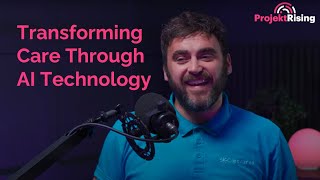
Tom Ash built Clear Lines, an AI service that analyzes legal and financial documents to give families care-funding forecasts and tailored advice. It costs £79 a month and handles LPA checks, wills, and estate evaluation, freeing carers from paperwork to focus on people.
Questions this video answers
£79 a month
17 years
It can almost accelerate the bed blocking process that we've got currently within the NHS in terms of getting people out of care, more out of hospital, more quickly into the care packages that they need. Whether that's residential or domestic.
It depends on who is in the room on the day as to whether you receive that plan or not. Because it's so personal led, it's so based on opinion and someone's point of view that it is just categorically unfair and it cannot be sustainable like that. You've got to think about the human and the user at the end of it as well.
Absolutely. I mean, as much as I love the idea of robots solving so many of the challenges around us, the idea of your parents or grandparents being catered for solely by robots in the care home is a pretty dark thought.
And if we could circle it right, background, let the carers care. Let's the automation. Let Clear Lines. Let us do the admin. Let's let us do the background.
Take away the distractions. Have people buy people.
Exactly. People do the people in robot. Do the robot in.
Hi, I'm Freya. Welcome to the Skynet Chronicles. Business in the AI Age, the podcast that dives deep into the world where artificial intelligence meets business. Join us as we explore the latest trends, challenges and opportunities in this ever evolving landscape. From innovative startups to established enterprises, we'll uncover the secrets behind the successful integration of AI technologies. So grab a cup of coffee, sit back and get ready to unlock the mysteries of business in the AI age.
Good morning, Tom, and welcome to the Skynet Chronicles.
Thank you very much for having me, Tim.
So let's start with clearlines.
Yeah, Clear Lines.
Tell us about your journey with clearlines.
So Clear Lines is a brand new service and product that we are bringing to market. It comes from the the depths of WMP Legal, who I know you've had my dad and the director on previously. So we spent 17 years preparing people for when they go into care. We put their legal plan in place, we did a little bit of financial help for them as well and made sure all the ducks were in a row to go into care and then it wasn't scalable because we've only got a certain amount of advisors in WMP Legal. So we were looking around for a solution and what we could do to enhance our service and there wasn't anything there. So clearlines was born from WMP Legal's need to scale. We've now set it up as a separate company. We said now it's a service in its own right. And we're bringing it to the market at the moment to help improve the care transition for people across the country.
So that's a great sort of segue into how does it help people?
Well, clearlines takes all of the, all of the clients legal and financial context and it puts it through the, through the app and it will spit out to them some legal advice and some advice around care funding that is personal and tailored to them based on their own context.
Okay.
And from there they get a report which is actionable about the, the actions they should take when they are looking for either care for themselves or care for a loved one. So it means that we've taken the lawyer's advice and the care funding advice that you might have to get previously in two separate locations and it's now deliverable to anybody just simply through the clearlines app.
So it's bigger than that though, isn't it? So it's not just for the family and the person who's going into care. It's a 360 view. So it helps the care providers as much as it helps the family of the person that needs support?
Absolutely, yes. So that is very much the client facing side and it's, you know, that's probably the most relatable to what we did previously. However, all the information that clearlines has got about a client is invaluable to a care provider. You know, we're talking about who they should be talking to, who should be making decisions. If that person hasn't got capacity, we're making sure that the legal pathway is as clear as possible. So they've got a clear line of communication to see what you did there? Yep. So they've got a clear line of communication to the right decision maker in someone's support circle. So we are able to provide the same report that we give to the family or the support circle of an individual. We can give it to their new care provider, which means that from day one they've got a clear view of who they need to be talking to. They also know how long the person can fund for, so they can build in some predictability to their, to their care delivery. They can also make sure it's appropriate. So they're not giving a £10,000 a week package to someone who's got £1,000 a week budget.
Sorry, that's just choked me up. Some people are paying ten grand a week.
Well, I'm going to take a little bit of artistic license there, but care at the moment is super expensive, you know, and if you can't get funded care and it's coming out of your pocket, I'm sure it feels like ten grand a week. But then if you add specialist services in there for, you know, an individual's needs, we can start getting up to that sort of number. So it's really important then for a family, a private individual, to know what's the Runway on this, you know, because the last thing they want to do is, is have an inappropriate service for their loved one. Because if after six weeks the service stops dead, well, then you've got a loved one who's in a care environment and are you going to have to downgrade their care package? Are you going to have to get them used to a certain lifestyle and then take it away? Are you going to hope the provider, you know, is generous and says, you know what, we'll eat the cost? Now, I don't know many providers who are going to regularly eat costs of providing over the top care. So actually if we get it right at the front end, both provider and family, then actually we've got a good bit of predictability, a good Runway and we know how appropriate the level of care that's being offered is.
And that predictability ultimately will allow us to match people to care providers based on who are the right fit locally with available space that cover the needs of that individual.
Yeah.
So it can almost accelerate the bed blocking process that we've got currently within the NHS in terms of getting people out of care, more out of hospital, more quickly into the care packages that they need, whether that's residential or domestic.
Yeah, 100%. So there's a few things within that, what you've just said there. So the first one is the matching, you know, client matching happens and there are brilliant matching services out there at the moment, places like Lottie who have live availability, but they don't necessarily have the funding predictability. And if you are going through a service like them, then it could be anybody within the support circle who is searching for the care. Now, families have agendas, so if we need to make sure it's the right person is making the decisions, we need to make sure that it's a harmonious decision because the transition into care is stressful. So what we hope to do is by putting that clear line of communication in, we know that the right person's making decisions, we know that the right decisions being made and have the interest of the person at their heart. So, you know, care is all about person centered care. It's a huge thing we make sure that the person is at the center in the eyes of the law and then in the eyes of the family as well. We want the right person making decisions who has the care clients best wishes at heart.
And that's a data made decision now, isn't it? So it's taking it away from the emotions or agendas of individual family members to going, okay, well based on the information you've provided as a family on this current situation, we therefore know and can make appropriate actions and predictions in terms of what's next and what's required versus it being, well, I don't want them spending 1500 pounds a week on care which could be my inheritance. And unfortunately people are that crass, oh 100%.
You know, if we go back to WMP legal when we do a probate for someone, we know that the families sometimes have spent too much on care. And because we've got our brother who's going, mum didn't need that, Mum didn't need that. We've got another member of the family going, no, mum had the best life possible. And so you've got that conflicting interest there. So you need to make sure that you've got the person centered bit is the person who's got mum's best wishes at heart. And we ensure that we have the right legal person in place to make those decisions. It's, it's massive. So care at the moment, it's a wonderful industry, it's full of wonderful people and everybody in that industry kind of has the same goal is to deliver amazing care for people. The process of getting into care is so subjective.
I thought you were going to say broken.
I'm not going to say broken, I'm not going to say broken. However, it changes day to day, there's not a great deal of consistency. So if we look at things like NHS continuing health care plans, it depends on who is in the room on the day as to whether you receive that plan or not. Because it's so person led, it's so based on opinion and someone's point of view that it is just categorically unfair and it cannot be sustainable like that people are missing out on what they deserve.
Yeah.
Because someone in the room decided that day. I don't necessarily think they meet the criteria today.
I don't think we can necessarily fund that given the current budget in the council or whatever the decision that's driving it.
Well that's an external factor. But if you take it back to the person, the individual, if I'm talking about my Parents or my grandparents care needs. I don't really mind about the political state. What I want to know is that I'm getting an objective process that will treat my loved one fairly without necessarily being subject to this person's mood on the day. It's so subjective that it's.
So is there an argument then for bringing in artificial intelligence based assessment where we remove that objectivity and bias and just assess the facts and data on a consistent basis?
There is an argument for it and it will ruffle people up and it will ruffle feathers. However, if you can find the balance of yes, there's very skilled professionals out there who will assess mental capacity, but then if you look at the factors that you have to hit for certain levels of, you know, how dependent are you on X, Y, z, and then that will give you your category. That is a data process. Mental capacity isn't necessarily a data process, but the other factors are. And there's so much in there that we do need skilled professionals. But at the same time, if we can remove some of the unconscious bias, because we've all got it, unfortunately, if we can remove the how's my budget looking? Situation, it would make such a fairer system for everyone involved, most importantly the person at the heart of that care package. So I'm quite passionate about it and.
It'S just a little bit obvious.
Sorry. Well, the thing is AI and tech and healthcare and care and adult social care are being forced down the adopt technology route.
Forced because of budget constraints.
So not necessarily forced because of budget constraints, forced because of the regulator cqc. Now people have opinions on cqc. I'm not getting into that debate right now.
You don't want to go for that one?
Absolutely not. No, we'll leave that one just there. Okay. However, regulators are important and they set agendas and one of them is how to. One of their goals is to get people to adopt technology. And that could be. There's loads of systems out there, there's loads of really important things that can be done, but it's being pushed on them quite a lot. You know, some people aren't ready to take that leap yet. However, if you can make small improvements through accessing AI, through accessing technology and taking what were parts of the care process that were previously done to varying degrees of success. But if you can level the playing field across the industry, then what's actually going to happen is you're going to make for a fair, a more fair and more equitable transition for everyone who has to enter a Care environment.
That sounds amazing. So how do we make that happen?
Well, everyone buys clear lines. Very, very fair and reasonable price, or they trial it at least. No, I mean the way that we do it is through education. It's parking some of our biases, parking some of our opinions on AI and the robots and what they're going to do to us and what they're going to take away from us and saying, let's give certain things a chance. Let's go. I'm going to try this bit of technology in this part of my process. Let's test it. Hey, let's all do sprints. We'll test it for six weeks, see what happens. Adapt if needs be, adopt if needs be, and then that's the way that we can slowly bring it in and put it in the right places as well. You look at care management systems and care record systems, super important game changer within the industry. And slowly all, if not most care providers are adopting them now. There's some wonderful ones out there like Birdie and Logmycare, and so they've had real success and I don't think anybody in the industry will argue their effectiveness either. So let's have a look at what's happened in care records and selfishly, let's look at care transition and how do we make that a more fair, equitable, accessible process. And that's where an intervention like clearlines could come in. And then when you're in the care environment, there's loads of full monitoring systems, security systems, just adopt them slowly because it's all appropriate, but you need to not take it all on at once. You've got to think about the human and the user at the end of it as well.
Absolutely. I mean, as much as I love the idea of robots solving so many of the challenges around us, the idea of your parents or grandparents being catered for solely by robots in a care home is a pretty dark thought.
Yeah. I don't think it's a hot take to say that the carers are going to be replaced by robots, but there are aspects of care that can have an AI intervention, that can have an automation, that can have a piece of software take over what was a pen and paper.
Yeah. So removing that manual admin, making a process more efficient.
Yeah.
More fluent and ultimately giving people back time so that they can focus on why they're in the industry, which is.
To care for people 100%. So, like I mentioned before, everyone in care is there to deliver care. They're caring people.
Yeah.
And you know I'm quite aware of how much I'm saying the word care, but it, that's what it boils down to now in that, in that environment. So if we can take away the manual process of let me just fill out all of this form and all of this data and then we'll analyze it ourselves and we'll then work out what your care plan is or how long you can afford this care plan. If we can take that away, we can do it for them. The person who is a carer and delivers care and is a professional carer can sit there and get to know the family, they can get to know the person at the center of the care package. So it's a massive intervention, it's a time saver, it's an efficiency and it puts the person back in the heart of their care package.
And the aspects that I don't think we've covered yet are the assessment and review of whether a will is in place, whether power of attorney is established, that helps protect the individual's estate, that makes sure that the right people are in place to make decisions on their behalf. And that's an integral part of the clear lines process, isn't it?
Yeah. So that is, you know, pretty much part is the heart of the clear lines assessment. So, you know, like I say, we're born from WMP legal. We took what would be one of our client fact finds, our client interviews, and we looked at what the most important questions are, we looked at what the most important processes are and we drew on our experience. And we know that, that if you're going into care without a lasting power of attorney, it's a gamble because if the individual loses capacity, by law, they're a ward of the state. I don't want that for Nan.
So can you explain what ward of the state means?
Well, it means that the family aren't making decisions on the care package for that person. They are under the control of social services by the local authority. And then that care package is subject to budgets, it's subject to availability, who's got the contract with the local authority at that time. Whereas actually, if you've got the right legal foundation, which is most commonly a good set of registered, lasting powers of attorneys, you're keeping your family member at the forefront of their care package. We go into elements. Should the person have, has lost capacity and there's no LPAs in place, it's not the end of the road. We can start looking at the court of protection and looking at deputy ship orders, but it's Only with all of this information done correctly at the start can you make the transition into care so much easier. Because doing everything, you know, retrospectively, it's just a little bit harder. Yeah, we look at, you know, the will. Now, if I get into the full commercials of running a care business, if someone passes away in a care service, there's still a bill that needs to be paid to the business so the business can continue to keep the lights on, keep functioning and keep delivering care. If there's not a will in place, it gets a little bit murky and it takes longer for the ultimately invoice to get paid. So actually if we put the right things in place at the start for a business, they've got the predictability of the tenure of care and then they've got an easier payment at the end for that invoice. And that's breaking it down to real simple. But, you know, businesses live or die whether invoices get paid.
Yeah, cash is king.
100. So, you know, we give that little bit of sight, we give that transparency to that client when they're coming in and then we look at other things around doing a proper estate evaluation. So anecdotally we know that some care providers. And this again goes to. It's not a standardized process and your experience of going into care depends on where you go and when you go. But some care providers want three months bank statements to show that you can afford care. It works. However, just PDFs, exports.
Write what you want on them.
Yeah, well, I mean, does that get into the fraud bit?
I didn't recommend it as a strategy.
Well, I'll put some zeros on the end of mine then. But what you also are looking at there is how does. How. What's made up of the estate? What is the estate made up of? Are we looking at potential value of property? Do we have to exclude the property? For a number of reasons. You know, when it comes to calculating funding for care, a house is an asset. But there's so many factors into whether it can be included in the evaluation.
Or not, whether it's even entirely theirs.
Yeah, exactly. You know, a lot of people have in the past or still are doing, are using fancy trusts that are coming off the Internet and they've got the information from the man in the corner of the pub. Sometimes it's appropriate, other times it's not appropriate and, you know, they don't know if they own the house or not. So we'll look at that for them. You know, we look at the benefits that they're receiving and which benefits count, which benefits are going to stop, which benefits might taper off. You know, we'll also, and this is particularly for, you know, the domiciliary care market, we'll also take the evaluation of the estate that we've done and we will degrade it by the cost of living. So we know that they've still got an electricity bill to pay, they've still got XYZ to pay, they've still got to feed themselves. So let's taper that off in the calculation. So actually, someone might look like they've got 52 weeks of funding. You know, they can afford 52 weeks of care if they don't eat. So let's pretty critical, let's put the cost of living in there as well. And, you know, maybe that trickles down to 48 weeks or in the current climate, 30 weeks. And, you know, if they shop at Harrods, 20. Yeah. So it's. It's all about making sure that everyone's got the right information. Because, you know, the thing says, we talk about the lasting powers attorney, the court of protection, we talk about the wills, it's all right and it's all well and good saying you haven't got one. But what we also do for the family is we provide them the advice and the information on how to get that in place.
Yeah.
So it goes a step further. You know, we are a partner to the care service. We want people to know that they've not got a lasting power of attorney in place, but we want them to know where to go to get that done. It's not solicitors, you know, you don't have to have a family solicitor in order to get a good, solid legal foundation. There's loads of providers out there and we'll tell you how to find that provider, where to go and what to ask that provider as well. On the flip side of that, that means that when a care company are onboarding their client, they're able to go, oh, there's no LPAs in place, but they've done clear lines, they've got the advice, they're putting them in place. So we might have a shaky start, but we know that that clear line of sight is coming down the line because they're getting a registered LPA with the Office of the Public Guardian, that.
Risk mitigation's in place and they're risk metric, if you like, is improving because they've taken the right steps in advance, massively.
You know, like I say, it's about the foundation, whether that person has the perfect legal and financial foundation at the start, that's amazing. However, if they haven't, we can build it, we can tell them what to do. All while this is happening, the care provider is delivering outstanding care. They're doing their job while in the background, we're just bolstering it by getting everything in place.
So you mentioned before we went on air that you're just about to do a launch. Tell us more about the launch of Clearlines.
Well, Clearlines has been developed by some lovely, lovely people.
Who are they?
Oh, well, I don't know. Just some guys from the back of a garage I found. No, it was Project Rising and you've done an amazing job in getting it to where it needs to be. We've got all of our legal experience in the past from WMP Legal. We're now bringing that all together and we're launching Clear Lines to the care market. And all we're asking people to do is put their head above the parapet, let us do the admin work, let us be your lawyer while you deliver the care. It's a really, really simple model. People sign up, it's £79amonth and they can use it for all of their care onboarding. You can even use it for people who are in care at the moment, as long as they've got capacity and they can fill it out or they have a member of the support circle who can fill it out and we can start building that picture of what people's foundation looks like. I mean, worst thing comes to us now. You know, we're talking extremes, but unfortunately extremes happen. We don't want someone in care having the son or daughter who wants to inherit as much as possible, being the decision maker, because what are they doing to their loved ones? Quality of life. We want the right people making the right choices to keep the person at the heart of their care package the whole time.
Superb.
So, left field question left field.
When are the robots coming?
I don't know. But when they do come, I will. I'll welcome them with a warm embrace. I say please and thank you to chatgpt all opportunities and I will happily embrace them and serve them as they wish.
But they're already here.
They are already here.
You've got a washing machine, you've got a dishwasher.
I've got a washing machine. Dishwasher.
They will not be intelligent.
And I say please and thank you to the washing machine all the time. It does a job that I really don't want to do? Well, I, I mean in all seriousness, you know, Clear Lines in its current form, I am the full time member of staff. I've, we've got a couple of other people who help us, but it's just me. So I use AI, I use automation in the running of that of this startup every day. I don't think there's an aspect of clearlines that hasn't been touched by AI or automation because it helps me in this current state work efficiently, it helps me scale efficiently and it takes a lot of pressure off my shoulders.
Yeah, I sort of say the robots are coming somewhat flippantly, but any business that isn't using AI and automation is being left behind by those that are. It's so easy to start and the difference it can make is immense. And we would never have got Clear Lines to market as quickly as we did if it wasn't for some of these tools in the first place.
Massively.
Even just the construction of the questionnaire. Yeah, that initially used AI to recommend how to categorize the different things, some of the wording options, we refined it, of course.
Yeah, yeah, yeah.
But it's accelerating every part of every business that's using it 100%.
You know, without AI, without automation, without a couple of robots here and there, we wouldn't be sat here having this conversation for another two years. Unless I went off and got a load of funding. I know I can't look at the camera, but if anybody wants to invest then just give me an email. Without that funding we wouldn't be where we are.
And just of course that's tomclearlines.co.uk.tom.ash tom.ash. you need to do a tom at as well, just in case.
Yeah, I'll get a tom out, don't worry if it's gonna lead to some investment. Um, yeah, but in all seriousness, you know, because we don't have investment, I would have to raise capital in different ways, would have to get out to the market in different ways. But with the AI, it, it gives me an army behind me of tiny little robots. And what are they doing? They're helping me bring this to market. You know, I use them in appropriately. I, I don't build, bend down to every one of their suggestions. You know, some of their marketing is a bit out there sometimes. However, as a brand, creating our brand identity. You know, we've got a very good marketeer at WP Legal who's helped me with Clear Lines as she's created the identity and then I use that identity that she's created and the robots to produce. A lot of our marketing, we use so much automation in, in the business and Chat GPT has proofread most of my emails.
That's probably a good thing. As long as you've told it to use English UK spelling.
Yeah, definitely. I was using Chat GPT nz. No, it's, it's, it's massive, you know, and I still dip into WMP Legal every now and again and I tend to dip in to install a new robot or a new automation because for them as a business, they're embracing it, they're using it and, you know, we're thriving with it. But I think Clear Lines is a completely different case. It's all AI. It's mostly AI because I'm there. It's mostly automation and it's. Well, you won't find a bigger proponent for it than me. I love it. I can't develop it like you guys, but I can use it.
So, looking forward, you've recently become a dad.
I have recently become a dad.
What do you think the future holds, the young Lance?
Yeah, I think the future, you know, is, is super exciting for young Lance. You know, in a world where AI is going to be the norm for him, he'll grow up using it, you know, his capabilities with it will be astronomical compared to what his old man does.
Yeah. They're going to look back on us and think, oh, they were so slow and stupid.
Yeah. Can you imagine how efficient their world is going to be like? That's the world I'm excited to see. And you know, you know, people say, oh, certain jobs won't get touched by AI, but I imagine if he goes into marketing and he's an AI marketer and he knows how to work with that. Oh, what, what a cool job.
Yeah. The job aren't going to get touched by it. Are going to be the ancient traditional jobs, the willow weavers. Yeah, the people operating a forge, showing people how life used to be before technology. Every other type of job is going to be impacted. It's just a matter of time.
Oh, 100%. You know, that person operating the forge is going to be at like a all day times. The theme for the tickets will be automated.
Yeah.
So it, you know, it's going to be everywhere, but what an amazing prospect. I actually had a conversation about AI and how we're using it with my uncle at the weekend and he said, oh, my job's going to be gone. And I was like, I don't think it is He's a financial advisor and he was like, yeah, you would just say, hey, Siri, what's the best thing to do with my 10k? And I thought, oh, if you think of it like that, you kind of.
But that's not the advice he's providing, is it?
Well, exactly. So, you know, if you have that bigger misconception, I feel really bad for you because actually, if you use AI in the right way, you could put together the best advice possible. You could put together reams of advice, you know, everything from invest it in origami. So why not stick it into a Airbnb or a buy to let product property, which is probably going to give.
You a better turn than origami.
Well, I don't know. There's many folds to origami. And, and, or why not put it. I don't really know the market. Why not invest in something that's, you know, green technology? Hey, invest it in AI. Like, you could get that, but you can get it quicker so you can service more clients, you can deliver a better service. Arlot at WP Legal said, oh, I like WP because we've got the personal touch, so I don't want all these robots and all this automation. And I said, well, actually, the more automation that we've got, the longer people can.
People.
Exactly. Let the people, people. And if we could circle it right, background, let the carers care, let the automation, let clear lines. Let us do the admin, let's let us do the background. And you deliver on, you know, you deliver the incredible, outstanding service that you deliver, but you can just do it more.
Yeah. Take away the distractions. Have people buy people.
Exactly. People. Do the people in robot. Do the robot in.
What a great way to end the podcast.
And it just.
Thank you very much for your time, Tom.
Thank you very much. Cheers, Tim. Thank you.
Pleasure.
More from Tim

EP 60: Why Founders Become the Bottleneck — And How AI Changes Everything | Thea Brook









