
Ep 24: How AI is Revolutionising the Marketing Landscape
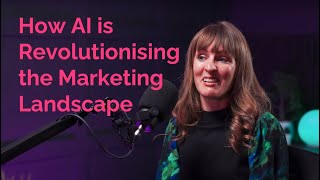
Hayley Foster from Keystone Marketing discusses how AI tools like Whisper and content generators are changing marketing work. She shares a case study where an AI-powered supplier-ranking tool replaced spreadsheets and integrated with HubSpot, and explains why marketing consultancies are becoming tech advisors helping clients adopt AI.
And I think actually the sector that we're in in marketing is always changing anyway. I mean, they actually say, don't they, if you're not changing, you're actually going backwards. And I think our role as a marketing strategic team is to make sure that we're really aware of, you know, what some of those changes are that are coming down the line, as well as embracing what's here and now. But I use that analogy because it's a really great one and in terms of where AI fits in as well. So we'll talk about being the conductor of an orchestra. So we stand at a slightly different level and we're surveying the landscape, you know, so we know when the musical instruments need to, you know, to come in. We know where you need a really great drum solo or a really great violin concerto, whatever it might be. But we don't play all the instruments at Keystone, but we're the conductors of the orchestra.
It's as bad as it's going to get today. And you think, okay, how far has the capability behind ChatGPT come in terms of forward predicting words? From being able to do a sentence, and that's just in the space of five years, really.
And now all at the click of a button as well. I'm still quite mesmerized, actually, when I use Chat GPT, Just the whole process of putting that prompt in, hitting enter, and then straight away, even visually kind of seeing it build across the screen, it's quite hypnotic. Hi, I'm Freya. Welcome to the Skynet Chronicles Business in the AI Age, the podcast that dives deep into the world where artificial intelligence meets business business. Join us as we explore the latest trends, challenges and opportunities in this ever evolving landscape. From innovative startups to established enterprises, we'll uncover the secrets behind the successful integration of AI technologies. So grab a cup of coffee, sit back and get ready to unlock the mysteries of business in the AI age.
Well, good morning, Hayley, and welcome to the Skynet Chronicles.
Thank you.
So let's start by talking about you, you and Keystone Marketing.
Okay, so yes, I'm the founder and managing director of Keystone Marketing. So it's a marketing consultancy I set up over 11 years ago now because that was great when we got to 10 years last year, had a, had a nice party and it's yeah, marketing consultancy. So what we really focus on is working with scaling B2B's that have usually got to a particular level of growth but have never had a marketing strategy to help them. And they're at the point where they want to take the next step to grow their profile or their bottom line, and they need some marketing strategic advice to help them do that. So my team and I will go in and help them understand exactly what the opportunities or the needs or the gaps within their marketing are and then develop the strategies that help them use those to grow. The other side of our work is we do a lot of work on community engagement, so with councils, not for profits, local government, and we use our marketing skill set to help them strengthen relationships with their audiences.
Fantastic. So you're busy, then, aren't you?
We are, yeah. And, you know, they say, don't they ask a busy person to get something done? And we like being busy people. So, yeah, we talk a lot about our agility and our ability to kind of jump fast on things and make a difference. And I think that's the buzz that we get is about making that difference for those. Those organizations that we work with.
Fantastic. So tell us about some of your customers that are particularly fun to work with.
Yes, it's a real mix. So, you know, when I started the business, you know, people would say to me, you need to think about niching, you know, into a particular sector, you know, really focus sector that you can support. And actually, we find that the role that we have and the job that we do supports a huge number of businesses. So right now we're working on the commercial side with organisations that are involved in insurance, in manufacturing, in software. And what we tend to do more often than not is work with the founder of that business. And so they've usually, you know, worked in that organisation for a number of years. They've been really passionate about their craft and they've built a business to do it. And what's fascinating for us with those organisations is, you know, we feel like we're on the journey with them. They've got a really great story and usually passion is at the heart of that, so it's something that they really wanted to deliver. We get to help them go further on that. On the community engagement side, we're doing some great work at the moment with councils both in Cambridgeshire and more widely, to help them think about how they can engage with their communities in a very different way. So not just thinking about producing, you know, the output or the initiative or the campaign, but actually thinking about how to get people to truly engage and buy into it. So, yes, some really fascinating things that we get to do, but it always starts with a conversation and anyone that works with us knows we do like to talk and so it's actually about trying to get under the hood of the business.
It's a conversation to find the story. That's actually going to go wilder, though, isn't it?
Yeah, yeah, definitely. And I think it's amazing what can come from a conversation, actually. We will often say, as a strategic agency, that actually, you know, it's a bit like if you were to take your car into a. Because you felt it had a problem, but you said, we're not going to let you look in the engine. We just want you to tell us what the problem is or tell us how you're going to make our car better. You can't do that. A mechanic would never be able to do that. They need to actually get under the hood and look at what's going on. And that's exactly what we do for the marketing strategy. We get under the hood of the business and really help them understand what they're doing, but where we see the gaps and the opportunities for them.
And is that mainly with a local focus?
So most of our work tends to be within Cambridgeshire. We've built up a really good reputation and lots of referral and recommendations come through from Cambridgeshire for that, which is great. But we also work more further afield as well. So lots of national companies that we work with and get councils in all parts of the country.
Yeah. That need to be local to do in person meetings is gone, really, hasn't it?
Yeah, yeah, absolutely. And I think, you know, there's probably a lot of conversations that you've had on this podcast around Covid and so on, but actually, I think it was that period of time that really let people and let businesses see that business could be done virtually. You know, we've got people that we work with that we've got great relationships with, but we've never met them, or we've maybe only met them once. And that's always quite funny when you do get in the room with them and you're like, oh, actually, you know. Yeah, we've all got arms and legs, you know, we're not just heads and shoulders. Yeah. Real people that we can engage with, but we're all about building those relationships and you can definitely do that online as well as face to face.
Do you find it takes longer to build that quality relationship online versus in person?
I think maybe we're more mindful of it. I think we maybe work harder when it's virtual to try and get that feeling of working kind of face to face. It doesn't necessarily take longer, but I think you have to be more mindful of it and more aware of it. I think what we've seen in the last few years is sometimes people might give more away virtually than they would face to face as well. You actually can, you can have a, you know, a laugh and a joke or, you know, you see a cat running across the back of the sofa and you can talk about it. And so those kind of human interactions that you maybe wouldn't get in a formal meeting, you can actually get if somebody's maybe working from home and you can see real life. We're all, you know, humans, aren't we? At the end of the day, my.
Dog will quite often interrupt a meeting to want to be let out of the office.
Yeah, yeah, absolutely. For me, it's my children. Sometimes they're commando rolling across the floor, you know, so they're not seen on video.
There's a BBC news interview like that, wasn't there, where the woman was going at commando roll across the floor?
Yeah, definitely. And there was one I saw with a baby coming in on a, you know, in like one of those baby strollers and things as well. And of course those things then go viral. I can't say any of my meetings have gone viral, but we have some.
Probably for the best though, isn't it?
Absolutely.
Stays in the meetings. Best that way.
Absolutely Right.
So how have you found the marketing industry's changed over the last 10, 11 years?
So, yeah, very, very much has it changed. And I think actually the sector that we're in, in marketing changing anyway. I mean, they actually say, don't they, if you're not changing, you're actually going backwards because things are happening so fast. And I think our role as a marketing strategic team is to make sure that we're really aware of, you know, what some of those changes are that are coming down the line as well as embracing what's here and now. I think the change to digital has leapfrogged massively from when I started the organization to where it is now. I tell a story about one of our first clients that we won was because I wrote him a letter. I had some letterheads and I sent him a letter and I signed it and I posted it and that was. That was incredible. But actually now our networks and our connections are much more digital for us as a business as well as what we do for our. For our clients.
Tempted to go back to letters.
I think there still has a place. If we think now, like years ago, you know, you'd have your. In you'd have your in tray, which would be piling high and, you know, not much in your inbox. And now it's our inboxes, isn't it? We've got hundreds and hundreds of emails. And the challenge for us, I guess, with the advent of digital is cutting through the noise for our clients, you know, for us for business development. But also when we're talking to our clients about how we can help them, how do we cut through the noise? Because there's so much now, you know, everybody's accessible, but everybody's almost weary with, you know, so many channels and platforms and messages being thrown at them. But I think that's probably one of the biggest changes about that advent to digital. But the ability to measure that, of course, is phenomenal. So if I think back when I started my marketing career, I worked in product marketing and I had a marketing budget and we spent a huge amount of our time, print advertising, for instance, attribute that. Absolutely. And we'd spend so long thinking about that campaign and working with incredible designers to produce it and so on. But the level of measurement certainly wasn't there in the way it is now.
For about that many people read it.
Yeah, exactly. You don't really know. And we'd run focus groups, so I'm talking a long time ago now because I've obviously worked in this for quite a while. But you'd run focus groups and you say to people, you know, can you know, what publications do you read and can you remember what ads you saw and so on. So it's very, very different. Whereas now in real time, we can say to our clients, that campaign that launched at 10 o' clock today, here's your real time analysis five minutes later, of how many people have viewed it, opened it, engaged with it. So that's game changing.
And how are you finding the different levels of engagement rate by different channels at the moment? It's fascinating when we look at our.
Stats, it really is. It really is. And so I think because we do a lot of community engagement, we're always looking at that in terms terms of how many people are engaging with things right now. For some of our clients in particular sectors, we're seeing a drop off in email. So we have to remind our clients quite a bit that, you know, yes, you know, these digital channels are a great way of being able to get your message out, but you can't put all your eggs in just one basket. You need to be thinking holistically. So we're seeing email engagement drop off significantly. So we could have the best message in the world, something that's going to make the best value or impact to somebody. But if they don't open that email, they're never going to know and you're never going to have the chance to.
Give them that message by email, aren't we? It's just like waves and waves and waves. And now with the AI writing tools, I think there's a lot more artificial content coming out.
Definitely.
And I think you ignore it, don't you?
Yeah, absolutely. And I think also as consumers, we're all quite savvy to it now as well. The challenge for me and my team is that people will know they're being marketed to now. So how do you get around that? When that email lands, they know it's a marketing email. And so we've got to be really, really mindful about, yes, what we communicate, but how we communicate as well. And for us, it's about making sure we think about all the tools in the toolkit. So not just focusing on one, but thinking about, you know, all of them.
Have you seen the robots that can write calligraphy and handwriting and they vary the errors on the letters automatically so you can send a message to a automated robot writer and it will, with wet ink, with a genuine impressions on the paper, write a letter.
Wow, that's amazing. Although. Goodness, no, I didn't know that. So I think, yeah, I'm definitely going to learn some things by talking to you today, Tim. Now, from my perspective, my handwriting is awful, so I probably need one of those robots to actually do my writing for me.
This is literally why I've used a computer forever. Because I can't write.
Yeah, no, absolutely. I think too fast, I talk too much too fast and so I write too fast. But the challenge for me then comes when I can't read my own writing. So, yeah, maybe I do need one of those robots to do this for me.
Or just AI taking minutes from the meeting.
Yes. Yeah. Well, that's one of the areas that we've really harnessed in recent months is the idea of that AI note taker to really help us. Because actually it's about using those tools to work smarter. And so now that's something that's there in all of our online meetings is the ability to make sure that it's being kind of captured and we can absorb that and review it and use it.
And have you found that you're able to be more engaged in the meeting because you're not actually trying to write down the notes and then Ask the questions, you're able to just dynamically go with it, knowing that it's all being recorded and written up anyway.
Yeah, I think the element of freedom that comes with that actually for us has been phenomenal. And it didn't take long for us to trust that system because it's actually really good, you know, the tools that are out there and they're just going to get better and better, aren't they? But, yeah, to actually listen. So we hear a lot, don't we, in life about how we don't really actively listen. And I think when you're online as well, you know, you're often thinking about, you know, am I looking engaged, you know, am I nodding? Am I, you know, engaging in this meeting? And so to be able to then actively listen to what people are saying and, you know, for us as facilitators, to then prompt questions that are going to get us the answers that we need, yeah, it's brilliant. And we use those note takers in all areas of our business. So it might be a prospect meeting. So actually I might not know what theme has come out of that, you know, what their real pain point is or how many times they might say, say a similar thing in a similar way. And so that can then really affect how we can produce our quotes and our suggestions for how we can help them. And it's brilliant for us to be able to run focus groups for clients using those tools as well. And we can say to our clients, you know, here's a summary of all the incredible content that was generated in all those focus groups. So it means we can get to those answers and those insights much more quickly.
Fantastic. And for me, the amazing thing is how that technology came about. So we've had the sort of natural language processing and the ability to take audio and convert it to words, but they weren't very good. And OpenAI were building out this ability to populate their models with loads and loads of data. It searched all of the Internet, they'd grabbed all of the books and they'd already used that level of data up. And then there's YouTube and YouTube's got videos on how to do everything. And they created a technology called Whisper, which they then open sourced, which was just far superior that audio to text conversion. So they could then use all of the video content as audio, as words that were then trained into these models too. And so off the back of that necessity to get information out of YouTube, now copyright questionable, but we'll leave that between the tech giants. But they've then open sourced this technology which has been incorporated into Copilot, Fireflies, Fathom, various other tech tools for doing these sort of meeting listening tools. And all of a sudden they've got. Brilliant. So now you could just trust them and you can choose which technology you use based on whether it brings all of the words of the meeting in. Because some of them are selective, especially around swear words. We chose one that would just write down everything I said because it was a good test.
Not because you're just generally sweary.
No, I am generally very sweary. I managed to mostly contain it in these. But yeah, so it records everything honestly. And so that was the one for us. But just that sort of the capability of the models and what they needed in order to feed it with training data, then creating, reinventing, almost something that had been around for a while and making it work perfectly so that it can become part of everybody's lives.
Yeah, I think that's it for it to be embedded in that way. But I'm amazed by how many people still don't know of that as a really easy to implement tool. So actually, although we're marketers and we're going in to create marketing strategies and execute campaigns for them, a lot of the time we're actually saying, did you know that there are AI note takers that could join your meetings? Yeah, absolutely. Or we're going to introduce ours to the meeting and then our clients might be like, well, well, what's that then? And so we end up becoming the role of an educator in that when, you know, we're not AI specialists at all, but we end up almost saying, did you know that there are tools like that that can help you? And then to see those in use, it's great.
But you're then taking on a higher value role anyway because you're educating them and bringing them up as a company in terms of their understanding of technology. So it helps to build the trust in you as experts in your field because you're using something and you're sharing how you're doing it with them.
Absolutely.
And I think that builds trust quickly, doesn't it? It really can show. It sits here, it records everything, it summarizes, it gives me the minutes, gives me the actions which I can send off to another system to then remind me about those actions if I want to. Magic.
Absolutely. And I think for us, we always want to be those true business partners as well. So where we can see things that, yes, fall outside of comms, but actually if we make sure we're working to best practice, and then there's examples of what we're doing that our clients can use. That's great. And I think we've all sat in meetings where things get talked about and actions might get written down, but they don't always. And then all of a sudden what's happened in the room doesn't ever then go anywhere else. And so all of a sudden there's an accountability there now as well, which is really good. We said we were going to do this thing, we need to go and do this thing.
And there's a record too, so if anything gets disputed later, you can go back, you can search across the meeting minutes, you can pull that information out and you've got the facts and data.
Yes, absolutely. So that's something that we use all the time, and it's now become kind of part and parcel of our own operational approach, which is good.
Yeah. And it accelerates every aspect, doesn't it? Because just writing a proposal used to take ages and now you've got all of the detail there. You can combine it with information that's in the wider Internet about the company, you can do a background search, you can pull that information in, you can produce a highly personalized proposal quickly that you as a human, just sign off on. Yes, that's appropriate and correct and accurate, ready to share.
And it becomes a really good foundation as well to then build a strategy from. And that's a bit where we then use our brains. So we will often talk about AI tools, as always, like an extra pair of hands for our business, but we're still the brains and we're just using those extra pair of hands to help us deliver the things that we're delivering for the client. So I use an analogy at Keystone where I talk about being conductors of an orchestra, which is, you know, I like analogies, but it's not a great one because I'm not musical at all. I used to actually fake playing the recorder because I was worried about getting it wrong when I was at school.
But everybody got the recorder.
Yeah, I can sort of hear it now. But I use that analogy because it's a really great one and in terms of where AI fits in as well. So we'll talk about being the conductor of an orchestra. So we stand at a slightly different level and we're surveying the landscape. So we know when the musical instruments need to, you know, to come in. We know where you need a really great drum solo or a really great violin concerto, whatever it might be. But we don't play all the instruments at Keystone, but we're the conductors of the orchestra and that's where we're seeing the AI tools come in for us now as well. It's another, it's almost like another instrument within our toolkit for us as conductors to be able to put out for our clients when we need them.
Did you see the clip of the three robots conducting an orchestra the other day?
I did. Well, I heard, I heard about it. So it was on, on the radio, so I didn't see it in, but I heard it. And they've made it very clear that they don't feel these robots are going to take away from conductors. But that actually for some of those really tricky pieces of work actually that might be where the AI robot can do it. But yeah, three arms, wasn't it?
Yeah, three separate robot arms, each with, I think they had different color batons too, pointing in different directions to different parts of the orchestra. Yeah, fascinating.
Yeah, yeah, absolutely.
I'm not really convinced myself. But did you see any thing of the we robot announcements by Elon Musk and Tesla?
No. No. Tell me about those.
So cyber cabs that can drive themselves.
Okay.
Robot buses and robots serving drinks. Although those robots.
Oh, that sounds interesting.
Yeah, absolutely. For me at home, gin fits now.
Yeah. You could get one in here, couldn't you, to like serve, you know, while you've got people in here?
Yeah, I think they were human controlled. But the degrees of freedom and careful movement that these robots had compared to where they were two years ago is a fascinating rate of improvement and the level of automation that we're seeing as possible now. And it doesn't matter that this isn't live implemented. You can't go out in the streets of London and hail a cybercap. But just the rate of movement, the forward progress is fascinating.
I think the scale of it is just phenomenal, isn't it? The scale of that improvement. And you know, I've heard the robots are coming quite a bit and actually they're not coming, they're here actually.
Tesla's the biggest robotics company on the planet. Every single Tesla car is a recording device that's sharing everything about its surroundings.
It's that first before it's a car, isn't it? Yeah.
And that's then feeding the creation of the full self driving model so they can drive themselves fully autonomously. And apparently that will start next year in Texas and California. How long it'll be. Why the world will depend on local legislation.
Yes, but it's amazing, isn't it to think how far it's come, but also it's just, it's not, not stopping. Those advancements just continue and continue, don't.
They, with every aspect of artificial intelligence. It's as bad as it's going to get today. And you think, okay, how far has the capability behind ChatGPT come in terms of forward predicting words? From being able to do a sentence, to being able to do paragraphs, to being able to do long form, to be able to have conversation, to now have live time, real time voice interaction, to take sources from various places and pull together these creation stories. And that's just in the space of five years, really.
And now all at the click of a button as well. I'm still quite mesmerized actually, when I use ChatGPT. Just the whole process of putting that prompt in, hitting enter and then straight away, even visually kind of seeing it build across the screen. It's quite hypnotic and scary and amazing in equal measure actually. But yeah, it's phenomenal.
And have you looked at some of the image and video creation tools?
Yeah, we've started to have a little look at them and again, I'm almost like my eyes full of wonder with all of these things because there's just so many different, different tools out there. And I think the challenge for us in marketing as well is to think about, you know, where, where we use them and, and where we don't. But yeah, it's just, again, it's phenomenal. We've used some of those for some of our clients. Like at the click of a button you can create presentation materials that are all in brand, you know, with all those colors and fonts and so on that you want just immediately. So yeah, at our fingertips we've got.
So much now and it's not stopping.
No.
So it's how do we keep up, how do we make sure that we're sharing those capabilities? As many companies as possible are benefiting from them.
And I think that's one of the challenges actually, Tim. So we see in a lot of our work that we are suggesting where AI could help our clients, but they're not always thinking about it themselves. And there's a mantra, isn't there in life that you don't know what you don't know. And I think there is a gap. You've got kind of the advocates that you know that are leading the charge and fully embracing it, and you've got those that are starting to be curious. But there's a huge amount of people out there that just don't even know, or they think they know and they think AI is just chatgpt, or they.
Don'T even think it's that and they still think it's Terminators.
Yeah, absolutely. So I think that's one of the places that we see our role being really quite strong is as that advocate and to be able to think about where it can help organizations that we work with, because they're not always thinking about it. But then I guess that's what they ask us to do for them.
Absolutely. That trusted business partner. So our first engagement together was on the IUR Renovation Underwriters project, wasn't it? Can you tell us a bit about that?
Yeah, absolutely. So this is an organization that we've worked with for a number of years, and they. What we saw here is that they had a need for a. I guess almost like a support tool. And they had created something themselves in Excel that, you know, did. Did the job, a very basic job of what they. What they wanted to. To kind of capture in terms of data and analyze it. But in no way was it sophisticated, and it was very basic in its construction, this sort of data capture tool. And it had quite complicated usage, I suppose. So what we were talking about here is a way for an organization to be able to rate and benchmark their kind of, you know, top businesses that they. And you had different people within the organization that they wanted to get their views from. So it might be people that were involved in the account side. They could have been involved, you know, at the front end from a sales perspective and so on. And everybody had kind of different views about these different kind of client organizations. And they'd never been able to kind of put all those views into one place to kind of measure, I guess, the benchmark for each of those businesses.
It's almost a small supplier ranking process.
Yeah, yeah, absolutely. Absolutely. And so they'd been working with an Excel format for some time. So it was a shared file that would go around the whole organization and everyone would work from one file, which risk there that somebody deletes someone else's work or the file disappears or whatever it might be. But the output of that was really valuable for our client because they were able to use that to make decisions and to benchmark the success and development of the clients that they were working with. And, you know, it's not a marketing function at all. But we always talk about being curious. I mean, my husband calls me sticky beak. He thinks I'm nosy. But actually, I just think it's curiosity. And curiosity could lead to some really interesting things. And in this situation, it did, because I could see that they needed this supplier ranking and I could see that they were struggling with the system that they had. But at no point was anyone thinking there must be another way. And I think that's where this whole thing around we don't know what we don't know, it becomes an issue because people persevere with something that isn't fit for purpose because they don't know there's another way of doing it. And so that's when we came across Project Rising, and it was actually through a mutual contact in our network. So I always think about the power of networking in these things as well. It's a great thing, isn't it, for someone to be able to say, I know someone who can help you with that.
Absolutely.
And that's how we came to meet you guys. And all of a sudden you showed us a completely different way of being able to generate that tool using AI in order to be able to capture all of that same information, but in a much more sophisticated way, with weightings and equations and measurements and an online tool that enabled each of those individuals in the business to rate those clients they were working with, but to do it in their own time, through their own kind of front end as such, so people could be really honest and transparent with their views in the knowledge that they were private. And at the click of a button, we were able to generate all those insights for them. So it was a fascinating project.
And I think then off the back of it, their internal data science team reviewed that data and they've now fed back and suggested they'd like some of the weightings and rankings modified so that it comes out with a better spread of an outcome.
Absolutely, yeah.
And then we're going to fix those slightly tweak the front end so that we can account for the change in needs within the organization and then automatically pump those results into HubSpot spot. And there's nothing complicated about any of those individual steps. But for the business, it's such a shift from going to passing around this spreadsheet to having their people interact on a web form and having the information analyzed, reviewed, processed, sanity checked, and then fed into an ongoing system. It feels complicated, but all of those steps are really just click the blocks together and it does what it says on the team.
Absolutely. It very much feels like that. Dr. Dot. And. And what was really interesting as well is that when we were able to see the first, I guess report of the data that came out and as you said, the data science team were able to get under the skin of it. It was a little bit like unpeeling layers of an onion, which is another analogy I use. But I always say, nobody cries, we don't have to cry, but we are unpeeling loads of an onion. Once they see that data, they then started to think, actually, we could use this to get even more insight. Or actually, yeah, maybe those ratings aren't quite right. Maybe we want to balance it in a different way. So it enabled them then to have the freedom of thought around, enhancing that tool further once they could see how much more insight it had given them in the first place. And what's brilliant about it is it now becomes embedded as business as usual. So we've got this scorecard now. So, yes, some refinements with what we've learned from kind of version one. But now this is something that they'll be able to use a couple of times a year as a benchmark. We'll have some incredible history on how each version of it has scored and.
How the suppliers are.
Yeah, yeah, definitely. And it's all based on input from their team. So the motivator there for the individuals as well, you know, they're being asked for their views and they can see how their individual views feed into a bigger picture for the organization and connecting it to HubSpot as well. So we talk a lot about HubSpot being sort of the operational engine for a number of our clients. So to see how what you do feeds into that is also really interesting.
So really, you've become a tech provider to them then, haven't you?
I suppose there is part of that, although that makes me feel a little nervous because it kind of takes me away a little bit from the marketing side of things. But. But actually, you know, for us, I think we end up working so closely with the organizations that where we can see there's an opportunity to do something another way. We really want to. To be able to help them. So, yeah, absolutely. We do end up saying to them, have you thought about this from a technology perspective?
It's actually a surprisingly common trend. So quite a few of our customers who work in that marketing and creative space are becoming technology providers because they have an insight of what the organization needs, they understand how the brand goes to market currently, and they can then say, okay, well, are you using some of these strategies on this part of your business? And so it's more common than you'd think. It's a Natural evolution, but also a protection. As the ad platforms are coming down and sort of eating the lunch of creating adverts, the democratization of AI tools are coming up and enabling anybody to produce content. That sort of gap that agencies operated in is reducing. And so if there are other ways to be innovative and make a difference for customers, then it's obviously the right thing to do.
We always want to add value. I think that's it. And so it's thinking about how we can use these tools to do that. And for us, you know, we're dealing with the hearts and minds of our organizations. You know, we're sitting down with, with those founders or, you know, on the not for profit side of things, you know, people who are, you know, leading teams at councils that are really invested and bought into what they want to deliver for their local communities. And so we, we need to add value, but we want to and we want to be on that kind of journey with them. So I suppose you're right, we are now becoming kind of tech advisors within that as well. And again, like I sort of use that analogy before, you know, using the right tools at the right time to get that, you know, get that impact and get that job done. I think the challenge for us is sitting kind of in the middle of all this. We're almost like a broker, I suppose, in a way to all the AI tools that are out there and we're not specialists, but often we can see the need or the challenge and we can think about where AI can be the solution. I think for me as a business owner, I need to make sure that we're also reviewing our own processes and our own use of AI as, as an organization as well. So that's kind of where we're at at the moment too, going through all our own business processes because we need to make sure that we are operating to our own best practice and, you know, working in the right, the right way for our clients.
So is this the most exciting time to be in marketing? It's certainly the most exciting time to be in tech ever.
Yeah, I think it is. But also I think it's a really exciting time to be running a business as well, because so many of these tools are game changing. So we've done a huge amount of work to look at all of our own business processes and to map those all out and then start having that conversation around what if, what if we could do this differently or what if we could do it more efficiently or quicker or what if we could enhance this in some way. And again that word freedom comes in. So the freedom to be able to think about how we're currently operating as a business, but how we could do things better is something that really excites me.
So how do you see Keystone looking in three years time?
Oh, I always find that really hard, Tim, when people ask me that. So I think in terms of where we'll be in three years time, I like to think we're still going to have a lot of the client relationships that we have now will just become even more deeply embedded within them to help support them as they, as they grow. And I think our use of technology as an agency ourselves will be fundamental to how we operate. And I think we'll probably be doing a lot more with AI for our clients, but we probably don't know what those things are yet because if we, I'll ask you, you know, where do you think? I guess from an AI perspective we'll be in three years, you know, can, can you see where we're going with that?
I think I can. It's going to be an interesting three years. So we've got this ever increasing capability of thinking within the models that started off as just text output. They were text in, text out. They're now something in and ideas and understanding out. And as they increase in that capability and their context window or working memory increases in size from what was just a few hundred, few thousand tens of thousand words to millions and potentially infinite, what can you then have it think about? Especially if you increase the amount of time it can think for. So there's a model come out recently that's allowed to think for longer before it comes back with an answer. And it can solve far more nuanced problems up to sort of PhD level. If you then combine that with an understanding of tasks and the ability to execute tasks and the ability to be agents and operate self sufficiently and you can join those things together, then you can solve a lot of business problems. And you can solve a lot of those problems without human handoffs. And if you've ever played Chinese Whispers, whenever you have lots of humans in a chain, the message changes.
Absolutely.
I think we can mitigate that and accelerate the business processes. So I think if we look ahead a year, two years, three years, businesses that are using AI will accelerate incredibly quickly. Businesses that have chosen to not will be left behind. And it applies in almost any industry. If you just look at the rate of change we've had. I like we're doing a video now. We're actually people here, but we could produce this so that we weren't physically together, that based on this single recording, we could change the entire recording of what we say, have a completely different conversation, create another video. And that's within the current capabilities of technology. I can take a photo and I can have it converted into a video of me being squished up or set on fire or exploded just by putting a text, an image into a model. We think how far it's come to get to that point and extrapolate three years, what's going to be possible?
It's fascinating, it really is. And I wonder if there's going to be some sort of polarization as well though, because we do see a number of clients and companies that we talk to that aren't thinking about AI within their business processes or to help them sort of deliver their business outputs. And yeah, in light of what you're saying, where it can go in three years for those that aren't even thinking about it, it's going to be an even bigger gap, isn't it, to try and jump over.
And some of those businesses aren't even using a CRM.
No, I know, absolutely.
If you're going from a business that is running on paper and a telephone to a CRM, that's already a huge leap if you're then able to automate huge aspects of the business. The communication between manufacturing, resource planning, between order management, between customer relationships that happen automatically. So it's a brave new world. But for businesses that have had their heads stuck in the sand, their pace of operation will be so much slower.
Absolutely. I think that's where almost like that word broker again comes in. For organizations like ours to kind of be that champion of it, to be that mouthpiece and to talk to them about did you know. So we're working with a manufacturing company at the moment and in fact it's a new product, sorry, project that we're going to come to you guys to help us with, which is around being able to think about how they can use AI to manage their kind of like post install opportunities, you know, for servicing and parts and so on. And at the moment it's a whole new area of income for them that they're just not even thinking about. And so I've had that conversation around, well, have you thought about actually how an AI tool could help you? We could create a process, we could build something and it could automatically engage with those potential clients for you and you know, take the money and book the calendar for it and get your guys out on the road. And it's just, it's not even been within their field of thought as to what might be possible. So I definitely think there's, you know, a need and an opportunity to educate business owners on, you know, things that they can do right now within their own business that could be supported with these tools.
And I think that need will be continuing. I don't think it's going to be a do a course tomorrow and you're then prepared for the future. No, because in six weeks time something new will have come out. And so it's kind of that continuous drip feed of here's the possibilities within an organization. Now we can go in and do a discovery phase where we show them the art of possible, where we sort of shine a light on what could be possible in the future. But look at as a business, you've got these processes in place, you've got these systems. Have you considered connecting the dots in this way? But if we revisit that business a year later, the art of possible will have completely shifted. So we can't just do single point of education, we've got to kind of become that continuous trusted advisor where we're guiding them on that journey. And some of our customers we've been on a process with for two and a half years from initially scaring the life out of them with what was going to happen to them now building out strategies, policy, recruitment programs, products that are entirely AI driven that they weren't thinking about. And they've effectively become an AI company over the course of two, two and a half years, whereas they were just a people resource company. But you can't do that based on a one off. It's sort of that continuous course correction and guidance. And have you considered this now try that.
Yes.
So that trusted relationship is going to be more and more critical.
I think I agree with you and I think it's about making sure that those businesses know about the benefits of embracing it from the beginning and then embodying it so it becomes sort of part of their business DNA. Actually that's where it needs to go. Doesn't, does.
And it's where there's so much potential. You look at business and you go, you realize you could be the first AI X company. Really? Why not? Nobody else is. And if you look at your business processes and you converted those so that your natural contact points are data that can feed into something that's operating behind the scenes, you can then scale your business so that instead of being able to service 50, 100, 200 clients you can service 10,000 and you don't need to be getting much revenue from those companies but it becomes a passive income stream for that business. So it's so exciting what you can do at the moment.
It really is. It's game changing, isn't it, for, you know, all manner of businesses and sectors and yeah, it's enjoying being part of it.
So what keeps you up at night?
Oh, what keeps me up at night? Normally my husband's snoring more than anything else. No, that's unfair. I shouldn't say that. I've tried to get into the habit of not letting things keep me up at night. I think the longer I've been running the consultancy, the more I realize if I'm not in charge of it, it will be in charge of me. And so I'm quite lucky that I don't feel there is anything that necessarily keeps me up at night in terms of worrying about the business and so on, which is a good place to be. And I try and have a really strong kind of mental mindset for the day ahead. Yeah. So I, I'm constantly curious and wondering what's going to happen, you know, within my business and within the world that we live. But I think I'm quite lucky and that I feel like I can sleep soundly. I'm always really proud of the day that I've had and the impact that we've made and then I just try and get my eight hours to go again the next day.
And what impact do you think these technologies are going to have on education?
Oh, I see it already. So I've got two children who are at secondary school. They're always asking Alexa what the answer to their homework is.
Please ask a better service.
So I think it's already having an impact. So I think the next generation is. We talked earlier about businesses needing to embody these tools. I think the next generation already are, you know, embracing these tools already. I feel that probably within the education setting they might need one of your discovery diagnostic days to understand how they can implement it into the curriculum. Because I think the curriculum is still very, very formulaic. Perhaps in, you know, we teach our children the things that we've always taught them and at home my children are always using technology and tools to help them do things. But within their day to day at school, I'm not seeing that happening.
The teachers have only recently started even leading into it. Eighteen months ago we demonstrated a marking system that could take an input material from a student marking scheme for their particular submission and score it and give recommendations on how to improve it. Now that could have been used by students in order to improve the quality of the homework, could have been used by teachers for marking the coursework. But there was significant pushback because they were already fighting for their hours. And so the possibility that automation might creep in and take an aspect of their paid work wasn't something that appealed at the time.
It feels like it's a bigger jump maybe for that sector to fully embrace it and to trust it and to see how it could work. But I think we're developing this real gap between the students coming through that are very tech savvy and going into an environment which is still sort of like sit, listen, learn, recall, write down what you know and we'll give you a score on it. And yeah, it feels like there needs to be a big change there, but I don't know what that will, what that will be or when it will be. And yeah, we will see what happens there.
I think it's fascinating. I think the education system is struggling to keep up with technology, but then most industries are. I was very glad when my son decided he was going to do a finance apprenticeship versus going to uni because I was concerned that a huge amount of the university course content was out of date and couldn't possibly keep up.
And I think for universities that, you know, thinking about them as a part of the education sector, there's a challenge there around. You know, students can now use AI to help write their essays and so on. I remember doing my 20,000 word dissertation all those years ago and it was based on, you know, my free thought out of my own head. Whereas now we've got all of these tools and how do the universities embrace it, but how do they measure it as well for all the students that are using it?
I think we're actually building a far more capable teacher than the teaching system has because you can ask any problem and get guidance on how to solve it. You can then ask a follow up, you can ask for a process of create me a series of questions to test my understanding on this and it will produce some great content. So I think we're getting to a point of infinitely customizable, personalized teaching that will probably outperform the traditional sectors. How you measure that capability, how you gauge the capabilities of an individual, are they actually that good where they're using a bot to apply for a thousand jobs and to then prime them with the script for the interview? Can they actually prove that they have that capability? Will be Much more challenging. But really, if we're creating these learners who are able to take on anything and look at it as a problem and then work with technology to solve a problem that's far more rounded and sustainable than somebody who just knows how to fill out numbers in a spreadsheet.
Absolutely. Absolutely. And I think that's where it'll be really interesting to see what the next generation brings in to this area as well. Because I talked and joked about curiosity earlier, but I think that's a big part of it. And I think the younger generation are more open to these things. You know, sometimes people can be scared of change, perhaps, as, you know, the older we get, we like. You know, we like what we like and we do things the way we like to do them. But I see that with my children, you know, they have got that curiosity. And maybe we're going to need a little bit bit more of that to come through the next generation to help break down some of these traditional sectors, which are quite kind of formulaic in the way that they work.
Either that or those sectors will be replaced. I mean, the same applies as it does at a company or an individual level. If you're not adapting, you're being left behind.
Yeah, absolutely.
Well, great conversation. Thank you for having me. Probably draw it to a close, but it was fantastic chatting. I look forward to the next project.
Yeah, thanks, Tim.
Thank you.
More from Tim

EP 60: Why Founders Become the Bottleneck — And How AI Changes Everything | Thea Brook









