
EP 26: AI Meets Emotion: Harnessing AI for Personal Growth
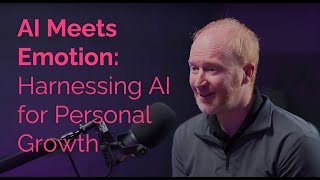
Coach Bevis Moynan talks about using NLP and AI to improve his golf game, dropping his handicap from 13 to 8, and how AI helped him turn 14 years of coaching notes into a Kindle book. They discuss whether AI tools can actually help people grow or just distract them.
I think everybody still gets a little bit nervous before public speaking. How they use that energy and focus it and can create good out of it is always interesting. But the course that you run that I attended was amazing for me. I would say that was a breakthrough in my public speaking.
And you think of the golf world. Most people are playing golf, making mistakes, getting frustrated, getting disappointed, not doing anything about it, and repeating so clearly that's not what the professionals are doing.
No, it doesn't. Generally, if you do the same thing again and again, you don't tend to get a different response.
And what I was just running through my mind as you were talking was there's never been a better time to be in business, and yet there's plenty of people out there who won't have that mindset right now. But listening to you, the opportunities there are huge. Hi, I'm Freya. Welcome to the Skynet Chronicles. Business in the AI Age, the podcast that dives deep into the world where artificial intelligence meets business. Join us as we explore the latest trends, challenges and opportunities in this ever evolving landscape. From innovative startups to established enterprises, we'll uncover the secrets behind the successful integration of AI technologies. So grab a cup of coffee, sit back, and get ready to unlock the mysteries of business in the AI age.
Good morning, Bevis, and welcome to the Skynet Chronicles. So, by way of introduction, Bevis Moynan, NLP practitioner, Breakthrough coach, timeline therapy trainer, motivational maps trainer, golf whisperer, and published author.
Wow, thank you.
It's quite a drum roll, isn't it?
Well, yeah, I hadn't really thought of it like that, but thank you. Yeah, it's been a bit of a journey to get there, so, yeah, exciting times ahead.
So let's start with Breakthrough Coaching, because it's top of my mind right now because I've just come back from a conference and the conference title was Breakthrough.
Oh, wow.
Okay, so tell me about your journey and how you got to the point that you are now.
Wow. Okay, so how long we got? That was the first. My first thought.
So how long do you want?
Well, I mean, I think really from a personal development point of view, probably started in 2008 where I went on an NLP practitioner course. I was very green in personal development terms. I was a manager managing people in a leisure business. And the cricket chairman of my cricket club at the time went on a strange NLP course and started talking to me about all this weird and wonderful stuff. And I had no idea what he was talking about, but he did kind of mention the fact had I had any leadership or management development training, of which of course we both know the answer was no. So. And the way he was talking, I'd never really been in that, enthused by training, but the way he was talking was certainly inspiring and there was a lot of energy and passion there. So that caused me really to look in that direction. I booked myself on a course and that was really my first. I'd never read any personal development books, so you can imagine I was walking into a room going, I don't really know why I'm here, I'm just curious. And I left that week with mind being slightly blown. I wouldn't say I was a fully converted evangelist at that point, but my confidence levels had grown. I'd stopped putting people on pedestals in terms of. I used to, if I'd saw the CEO, I'd get nervous and I'd be worried about, you know what I mean, I would have that kind of reaction. Whereas afterwards I felt completely comfortable pretty in most people's presence in business. And the fear of public speaking I'd been carrying had been loosened up. I wouldn't say it had gone at that point, but it'd been loosened up. So I'd got loads of value out of it. And that really caused me to start my personal development journey, I think, at that point. So that was the starting point and here we are 16 years later. Yeah.
And over those 16 years, or certainly over the last five, you've on some level trained almost everybody I know. I think. Wow.
Well, that's good to hear. We were talking earlier that we don't necessarily feel like we've got the most, the biggest marketing machine behind us, but I think we have over the years impacted lots of people and lots of referrals and lots of goodwill comes from that.
Absolutely. And you, you mentioned the public speaking course. I think everybody still gets a little bit nervous before public speaking. How they use that energy and focus it and can create good out of it is always interesting. But the course that you run that I attended was amazing. For me, I would say that was a breakthrough in my public speaking.
Well, that's great to hear. And I remember that course well and I remember all of them fondly and really that's everything we do is about breakthroughs. So the personal speaking course is a two day course where we're aiming to get people to break past their unseen barriers. It's such a lovely course because we get to see it. Whereas when you're coaching breakthroughs and breakthrough journeys, you don't necessarily see people go back into their life and have the breakthroughs on their own, having been nudged.
And pushed, but you kind of force it in very quick succession in that course.
Well, yeah, it's done gently, isn't it? But the first day people could have seen your face. So, yeah, it grows, doesn't it? I think you can't tell people on that course what they'll be doing at the end of day two because they go, no way. But each mini breakthrough leads to, oh, actually, I can stand it without thinking what I'm going to say. Oh, and I can actually know what to do with my body language. And hang on a minute, I can put three metaphors together. So, yeah, I'm glad you enjoyed it. And it's certainly part of the mix of what we do, which we love.
Well. And I now find myself watching people when they're presenting and trying to guess how many metaphors they're going to stack and how much they've been programmed based on how they're using their hands and how they're standing. It's brilliant. It's almost scoring their public speaking.
Yeah. It's interesting. I spoke to a chap who's a paid speaker recently. In fact, I think you may have introduced us, actually thinking about it. And it was interesting that he's not had any NLP training, but, yeah, he has, because of course, it comes in into a variety of different forms. So he starts with a metaphor of a. I think it's a parachute jump that went wrong and then leaves people on a cliffhanger and then ends it at the end. So the use of storytelling in business is so important, and it's one of my favorite things from NLP training is teaching the use of metaphor. Because back in the olden days, that's how we communicated. We were talking earlier about emotional connections to things. Business can be dry. So the use of storytelling brings things to life and it creates that connection, which is so important because people buy from people they like.
Yeah. And it just. You can see that. I saw a study that was looking at mapping of the brain during informational presentations versus storytelling. And you just see the whole areas of the brain lighting up during storytelling versus just a couple, when it's data based. And so you've just got to take people on a journey because you get that much more engagement.
Yeah, absolutely. Whether it be AI, whether it be therapy. So metaphors are actually a big part of the therapeutic world, whether it be parenting, you know what it's like you're trying to tell your kids what you want them to do.
Tell them.
Exactly. You get immediate resistance. Whereas if you tell stories about someone they're interested in and displace a bit of resistance, they may, I mean teenagers are. Can they, aren't they? They may catch on. Yeah, yeah, probably.
But you'll program me, aren't you?
Well, yeah, no NLP in here, on the side, in the kitchen. But you can certainly influence without being as direct. And I think that's the beautiful thing. And the danger with NLP is it can be manipulative and that's why it sometimes got a bit of a bad rap at times. But that's really down to the individual trainers and coaches who are using it. If their ecology is good and they're looking to help people, then it can only do good things. Bit like AI, isn't it? AI can only do good things in good hands.
Well, hopefully when it's put into anybody's other than good hands, then there's some controls and protection measures in place.
Absolutely, yeah. And yeah, the same in our world, which is more governed than it was, which is also a good thing.
So talk to me about your golf journey because this isn't something that's, it's not obvious how you get to a point where you're coaching golf pros.
That's a really good point. And it intertwines I think with my own journey because we talked about my first experience of Personal Development, 2008. I went on a Master Practitioner course in 2010 and being a bit of a sports geek, so I loved my cricket. Part of my own personal development journey was that I didn't turn up to county cricket trials. When I was 18, I was at Loughborough Uni. Dream of being a professional sportsman. Trials came along, came to the night before, didn't turn up. And I didn't realize at the time, but there was a bit of a self sabotage pattern going on. So that unfulfilled sportsman, if you like, was kind of my baggage, my weight that I let go of through the personal development journey, through NLP timeline therapy. And I finished my Master Pratt course in 2010 having had a big breakthrough. Let go of the fear of failure, let go of the belief wasn't good enough. And most people's reaction to that would be, well, I don't know what it would be but it would be perhaps business based. And that was certainly mine. I set up a coaching business the next day, but my other reaction to it was to go straight to the golf course because we learned some Things on the course that I thought, oh, I could apply that in golf. Oh, I could apply that in golf. So that the first thing I did was apply it to my own golf. And as a moderate mid handicapper, 13 handicap at the time, I found my golf handicap went from 13 to 8 just from applying what I'd learned without any lessons. And I went, oh. And I was, I was doing weird and wonderful things, counting to six twice in my pre shot routine, which I wasn't aware of. So I thought, hang on a minute, there's quite a lot of benefit here. And then serendipitously, I found myself on a good friend of mine. Now, Jamie Donaldson is a really good mate of mine. He was running a day by a guy called Jamie Edwards on the inner game of golf. Jamie had authored a book called Mental Ketchup. There you go, plug for Jamie's book. And I went along and I sat there listening and a bit like you were talking with and you're watching people speak, I was thinking, I wonder what he'll do next. If I was him, I'd do this. And then he did. And pretty much in my mind I planned out what he was going to say if I was him. And I realized he was just applying what I just learned into golf. And I was like, wow. Because also from a financial point of view, there were 80 people in the room paying 50 quid. And I was also thinking, hang on a minute. So it was started there really. We had a brand back then, Golf101, which is subsequently gone. We kind of pivoted on that and 10 years later I've been on a journey where I've loved applying at my own golf, I've worked with, people have been referred to me, ultimately led to me working with two amazing guys. Matt Tipper, who's now in the States, who won European coach of the 2023 and his client at the time, Adrian Moron, who's now, I think he was last year, top 50 in the world. But since he's gone to live, he's financially better off, albeit the world rankings doesn't reflect that. So. So yeah, it's been a great journey and can still is. And we were just talking off air about what we've, what we're just launching.
So tell me about more about what you're just launching.
Well, yeah, so that's, that's the problem in my world can sometimes be that the access to the information is quite narrow. So. And you think of the golf world, most people are playing golf, making mistakes, getting Frustrated, getting disappointed, not doing anything about it, and repeating. So clearly that's not what the professionals are doing.
No, it doesn't. Generally, if you do the same thing again and again, you don't tend to get a different response, do you?
No, exactly. So part of it is cultural. Can we actually help amateur go? Because the worrying thing for me is it's the good golfers that quit, so the really good players, all sudden life changes, family situations change and they can't quite commit as much time to it and then they can't cope with not playing as well. So what we've done is we've created an online course, 10 videos long, eight weeks long, that takes people on a journey so that they can get more out of whatever time they've got for golf. And it is about emotional resilience. It's about awareness, it's about setting themselves up for success and not failure. There's a lot of. You'd recognize a lot of some of the things you've learned in business in there because part of it is about culture. But then of course, there's some tricks in there. And what I mean by tricks is things that if you just know, make your life easier. You found you'll have noticed some of that from the public speaking course. There's just some stuff in there that most people don't know. So if we can get the average golfer to know how to manage their emotional state, manage nerves, anxiety, it makes a huge difference. So that's been really exciting doing that. And we've now also created a year's worth of content afterwards. So we've got kind of a membership site offering afterwards. So we're literally about to press the launch button on this. So we're quite, we're, well, I was going to say quite excited. We're really excited, slash, also a bit nervous.
As we was talking about off air. Nerves are a good thing.
Yeah, yeah, for sure. It shows. We make. It means something to us.
So it's good. Fantastic. And as if you're not busy enough with that, you're about to launch a book. Emotional resilience.
Yeah, it's funny, isn't it, when you don't really realize actually how crazy sometimes it's been until people don't do one.
Thing at a time.
Yeah, it's a good point. It's a funny one that, because it's taken us four years to get it published. And a big thank you to your help and support in the middle phase of that where I got a bit stuck and procrastinate for two years, but we got there and it. I'm as excited about that as the golf business, because writing a book's a funny thing. It's a bit of a personal journey in of itself, in that you're putting yourself out as you. Your thoughts, your emotions, your feelings. So I decided I had to have a bit of coaching myself to get there because there was a bit of nervousness about putting. I'd written a book previously mapping motivation for coaching, and that was a doddle because I was co authoring it and the way I positioned it in my mind was, this is someone else's book I'm contributing to, whereas putting this out as me. This book is 14 years of experience working with clients in a coaching journey. The patterns I've seen, the emotions that come up, how to handle them, how to overcome them, how to move through them. Things like grief, sadness, loss, anger, guilt, frustration, anxiety, all the stuff that affects people in this modern world. So I've got a very personal connection to the book because there's lots of stories of real people, obviously anonymized without names, et cetera. So, yeah, so there's an emotional attachment to it. I mean, also, my. My mum died during lockdown when I started writing it, and my dad passed away this summer when I finished writing it. So it's almost a little bit of a dedication to my parents as well. So, yeah, really excited. It's not literally as we're speaking, it's processing on Kindle, so. So by, hopefully at some point today, it'll be available both on paperback and on Kindle.
ALARM BELL GOING OFF Success NOISE we all like those success pigs.
Absolutely, absolutely.
And so the process that you went through to get to the point you've got the book now was born out of the series of webinars, really, weren't they? During lockdown.
Yeah. I think like everybody during lockdown as a business, we kind of went, what we're gonna do. And one of the things we did, just because it felt like the right thing to do, was just host some webinars for people who might be struggling. And I say struggling just might be having some challenges, because I think we all did to a degree. So it was good for us as well. So it was. Myself and one of my good friends, Callum Hardingham, hosted those. And I don't quite know how it happened, but each webinar ended up having a theme of an emotion. Interesting. We've been spending a lot of time talking about guilt, but that's another story as a bit of a pervasive emotion. Guilt and regret. Yeah. And they were just really, really enjoyable, useful, just very honest, authentic people being very real. And we were asked a lot of questions and just answering them to the best of our ability. And it was some moments later I thought, actually there's quite a lot of value in those. And that really, it's a lot easier to start writing from a source. So some of those original webinars then enabled us to go, actually, there's some. Some content here we can start working from, which has been really good.
Yeah. And then I remember it was about two years ago, so Christmas, we were out a business social, and you said, do you think AI could help write a book? Absolutely. Even though at that time we had very limited context windows in terms of how much information could be passed into and out of these models, we were able to break it down into chunks, take those webinars, convert them into transcripts, put those transcripts through to create a style of writing that was based on a natural style for you, and get to some very rough drafts for the chapters that then you're able to work on and make the book as wonderful as you have now.
Yeah, it was such an important process because I think at that point I'd procrastinated for two years. I'd surprised myself when I looked back because I'd got 20,000 words, but it was a bit all over the place and a bit of a mess. And then that kind of process that we went through to pull out of those webinars all of that content, really, really well. It went from being a stuck project to off we go again. And that was huge because, like you say, it provided a framework and a structure which allowed in the editing process as well. Joseph has done an amazing job. A lot of that chapter structure is still there. Obviously it's been through many iterations since, but yeah, without that input at that time, I'm a big believer in synchronicity. Without them put, that time would be where we are now. No, we wouldn't, because it would still have been stuck in. I'd have still been stuck in procrastination.
So we should probably have written a book about that process then, because at that time that would have been really.
Useful to the world for sure. And I think I've just seen in a different setting, we're talking about the golf world. We've been able to do something similar. Obviously, AI is moving incredibly quickly. You're at the forefront of that. So we've been able to do something similar with the golf book with Maximize your golf performance has. Yeah. Now got a book with it, which is crazy because I feel like all I've done is created content and then created teaching modules and be able to actually create a book which is the, the course run through. And that's been a very seamless exercise. So if they're business owners, and it's a funny thing, isn't it, because even I had this experience writing my first book where I was expecting it to be a lot harder than it was, and that was without any support other than just a creative writing process. So I think as business owners, if you think you've got a book in you, you have. It's not as difficult as you think and I think get support because actually it's, it can be, it's a really enjoyable journey and actually it can be a lot quicker nowadays than people can even imagine.
Yeah, crazy. As I said, I've just come back from this conference and I woke up in the middle of the night last night, got so much to do, so much to do. And a pile of business cards and somebody, while I was at the conference had a really basic business card scanning app. I thought, well, we can probably build one of those. And so went through to the office and in 20 minutes had an application that would take a photo of a business card, would convert the information on that business card into a set format. We'd then search the Internet to fill in more details about that person based on what was on LinkedIn and what was on Google to fill out this effectively a JSON, a data file that then passed that data file to a service running on make, which is just an automation tool, and populate each one of those business cards into a spreadsheet. Now, I could have put it into a proper system, but I just needed a really quick checklist of who's all the people I spoke to, who have I already connected with on LinkedIn, who do I need to follow up with? And the fact that you can do something so quickly now, and this wasn't high end coding, it was just do this, do this, make that, do that. I spoke with three different AIs in order to make it, but it's an amazing thing that can be done that quickly and anybody can use these capabilities now to change their business and change their life. So I think the process that we went through a year and a half or so ago on processing and working through those webinars and extracting the information to where we are now, to where we're moving towards with these intelligent agents that can just complete an action and have the same understanding and capability that large language models do. These things open up so many aspects of business. And I was reading during the night about a new chip that processes at runtime much, much faster than all of the existing models, all of the assistant hardware, insanely fast. But what that then opens up is we can increase the thinking time for these models to do work. So we've already got intelligence in them and normally we just ask a question and get an answer back. We've got the ability to ask a more nuanced, more detailed question and their think time has effectively just jumped again within the same amount of time because they can do much more processing real time. So where we're going, it's just absolutely breathtaking. We've got this incredible ability to think, an understanding of language, image, audio, video, the ability to then create in all of those modes too, and complete actions. Very exciting times.
It's interesting, isn't it? Because I think there's a. Obviously, you know, my propensity is to focus on mindset and emotion and the intangible things. And what I was just running through my mind as you were talking was there's never been a better time to be in business, and yet there's plenty of people out there who won't have that mindset right now. But listening to you, the opportunities there are huge because there's a consumer market out there of consumers and who are never going to, from a mindset perspective, be a creator. So if you are a creative type and you're somebody who wants to get knowledge and information out in the world to help people in any format, and ultimately all businesses help people, otherwise it won't exist. And all businesses give more value than they receive in financial return. Otherwise it wouldn't exist. Sometimes we get that wrong. Of course we do.
Balance is challenging.
Of course we all. We've all been on that pricing challenge and are still on it to some degree. But ultimately, if we know that all businesses serve and all businesses help people, then ultimately there is never been. There's never been a better time to be in business because the opportunities there are endless and growing now. And the nice thing, I think as a business owner, people sometimes come to me from a personal development exercise is I like seeing Bevis because then I don't have to think about personal development. I can park that with Bevis, which of course isn't true because it's their own mind and their own emotions, but they can kind of use that insight and that experience to help them in that space. What you're doing is that for businesses with technology, because you know me well enough, there's a spectrum somewhere around it and the capability and I'm at the far end of incompetence on that.
It's doing you a disservice.
Well, maybe I need some coaching in that space, but I would certainly say from my experience, I'm certainly not that skilled and it feels reassuring to know that through support and relationships you can contact someone and go, actually we need some help in this area. So yeah, and I think that's exciting, exciting for you as a business.
I don't think there's been a better time to be involved in technology. What we can do now is amazing and was impossible a year ago. And the iteration and improvement on the capabilities of the models, the connectivity of these capabilities and just the reasoning and understanding is mind blowing and very difficult for us to keep up with. And so within the team we have dedicated time for learning. The developers all have time on a Friday, every Friday that they're not allowed to work. They just have to research and play with something new and then bring that to the dev meeting on a Monday. And I've got time for prototyping and reading because otherwise we can't possibly keep up. But then I can go and have a conversation with somebody and go, oh, wow, yeah, we could do this. I've got an idea. I'm kind of interested in what we could do. Don't do it that way, but we can very quickly get to a concept that could work. And because the tools are so capable and we're effectively clicking together bits of Lego to make a solution, it's low cost to build too. It's just an amazing time.
And I think, yeah, I mean listening to you, we, there's lots of business benefits, aren't there? Again, from a motivational map point of view, I think about freedom and efficiency, there are efficiencies, aren't there? And then from a kind of business growth point of view, it's about how you get more information out there, more widely about what you do. There's so many positive angles to that in terms of making what you do more streamlined, efficient, but also ultimately, and all of that has real end business results. That's the, that's, that's, that's why we're all in business, right? We want to produce results and help people along the way.
Yeah, absolutely. I've been using a conversation bot for reflectivity each month and so certain day of the month I dedicate time where I have a conversation while I'm walking the dog with an AI with a headset in and it takes me through a series of questions and asks me how I'm feeling about things. It understands what's happened in the previous months and it just then comes back and at the end of it it produces a summary of how I'm feeling this month and my goals for next month and the fact that I can do that without having to. Well, I wouldn't get that sort of coaching probably. And I can now offload that thinking and just have probing questions asked when I'm in a relaxed state by something that I don't know doesn't really matter. What I say to it has been breathtaking for me. It's.
You just reminded me of one of my clients who's in America. Exciting journey. I mean, crike we could talk about this. There's a new husband and wife and this chapter move to America on a bit of a whim. Really wanted to be a professional golfer. I could never get him to tee the ball up in a proton because he was too much of a perfectionist. So he moved to America. I remember saying to him once that the money will come from where the money comes from and not many people believe you when you say things like that, but he wholeheartedly did and he moved to America, met a lovely girl lady called Morgan who they now got married. He was sleeping on her bedroom floor for a while. Very religious family and at the time time as a perfectionist he couldn't cope with the I will get some of this story. So don't worry. He couldn't cope with the poor equipment that he was because he uses one length clubs a bit like Bryson DeChambeau. So he's using this equipment and he God, this is rubbish. So he makes his own and he starts making his own equipment. And because he's at a venue where Bryson plays who's now the won one major and finished second this year. So he had an amazing year. Bryson gets hold of this one set of irons that Tom's made. He goes, these are amazing. These are way better than what I'm using. So cut a long story short, fast forward, fast forward a year. They've now got a million pound turnover club manufacturing business called Avoda Golf. So there you go, Tom, I've given you a bit of a plug there. And I was having conversations with his wife Morgan the other day and she's had a again without any detail, some challenges and she's been doing just what you've just said. So she's been questioning some of the things she's been told by certain people in her life, running it through AI and reassuring herself that how she's feeling and thinking about things are valid. Actually, it's almost a check. And I think if you go on the Deepak Chopra app, there's now a spirituality in our AI section. It goes back to where the intention, doesn't it? So if the world's knowledge is out, there's some guru gurus out there and there's a lot of that knowledge is online. So.
But making sure the prompt to control it is good and useful and isn't saying things that could take you down the wrong path is important. It's with great power comes great responsibility.
Yeah, absolutely. Absolutely. But I think that the possibility. I would never say that it's going to replace the need for coaching or therapy or counseling, but it can be a great addition to it. And it can also be a step on the journey for somebody who might not immediately go and ask for help directly from someone. It could throw things up for them positively. They think a bit differently and go, actually now I want to go and speak to somebody about this. And as we both know, being vulnerable, the hardest step on a personal development journey is taking the first one going and having a conversation with someone. And if AI can help people to take that first step in their own terms, in their own safe space. And then they go, actually now I want to speak to somebody that for me, that's just amazing because I. I don't know how. I've probably got 5,000 hours of coaching and therapy experience now, if I think about it long enough, there's a whole load of people who won't have turned up that I don't even know about because they never took that first step. And we've both got a friend who we know who's had but the crack. He's had seven suicides in his life, seven friends who committed suicide. And I just think, I mean a. That's tough for him. He's had a lot of working through that situation. But if there could have been something then that could. Those young men, and they were all men could have leaned on to get some support then I do genuinely believe a high is a space, a real job to do it positively in the personal development space. And it is doing it is because it's helping a lot of people who with good intention get their information and knowledge out there.
There's the can't remember the exact saying, but it's something along the lines of, the best time to plant an oak tree was 20 years ago, but if not then now. And taking that first step in self help, self improvement, starting a business, starting a task, working on your house, all of these things is just, okay, what's the first step? How am I going to break that down? And I think AI's ability to look through a problem and say, have you thought about these things? Here's an order of tasks that you could consider. Think about this and just leaning into that capability of understanding that's there from having consumed all of the books in the world and all of the Internet or most of the Internet is incredibly powerful and it's just something that we need to share with more businesses and more people so that they can mentally get over that point of starting. Just do something. Yeah, because it's fine to regret what you've done, but it's better to regret something you have done than something you haven't done.
Definitely, definitely. That's a good.
And that's actually a quote from Orbital, I think. Yeah.
And interesting. Nice reminder for me at the moment with that we're one year into a startup business. That's a good reminder for me. So thank you. Yes, the golf business is being launched and that's exciting, but there's a bit of nerves as well because obviously we're putting some money in it and you know what it's like when you put your money into things. Yes, it's always a bit of nerves. Is it going to work? But like you say, better regret things that, that you've done rather than haven't done. And I think, yeah, that point around AI of most people get blocked in business projects, either around starting or finishing, or as I did in the middle, kind of. Kind of that procrastination. And procrastination sometimes a good thing because sometimes you're just not ready, but sometimes it's not a good thing and you've been procrastinating for long enough. And that was certainly where. Certainly where I. So I think, yeah, definitely, if somebody's listening to this in business, then it's definitely worth considering how they can use AI to get moving on. So hopefully there's people listening, thinking, actually I've got a book in me or there's a business I want to start or an idea I want to get out there or explore further. And sometimes it might help people explore an idea and go, actually that's not going to work. And that's equally hugely valuable to not go down a blind alley or how.
Many plans did you have before you ended up with the current business? I know my main career was plan A. Then I had an idea of plan B, plan C, plan D, probably on E or F right now. Yeah.
And then it may well and probably evolve further in the future as well.
It already has. It's interesting, isn't it? You can strive for perfection and if you focus too much on getting something perfect, you never actually make any progress. It's like perfect is the enemy of good.
Yeah. That was when I wrote Mapping Motivation for Coaching. That was one of James's comp quotes that helped me. Perfection is the enemy of progress. He said, just write, just get it down. Don't worry about grammar, spelling, just write. I was like, okay, this is liberating. And yeah, and I think I now know so many people who've got creative content out there without it being hard work. Whereas I think I certainly believe writing a book was hard and it's not. And again, there's a bit of NLP in that. If you believe something's hard, you're not going to move towards it, are you? So I think AI is a place of making life easier. I think we've also got to be careful that our expectations of what we can do don't do that ridiculous thing. And we all start expecting ourselves to be ridiculously productive all the time. Because if you think back where we were, we're in the 70s where the first computers were coming out and everyone oh well, we are working three day weeks. It didn't quite work out like that because our human, our mind's ability to expect more of ourselves outpaced technology. So there's always a. I'm always mindful that I did. We did a spirituality day the other day in coaching and this first one I've ever done, one of the questions I asked was who here has feels like they've got enough time for themselves? And by look on your face you know the answer. I got back and these were people who were in the coaching world. But we're still getting answers of no, I don't feel like I've got enough time for myself. So I think there's a personal development journey if we can genuinely use AI to make our lives more efficient and speed them up. There's also, I think, a personal development journey with that that we don't just cram more in and actually create.
It's a real challenge, isn't it? I mean when you look at artificial intelligence and something gets to A point where it's working on a regular basis, it just becomes software and we adapt to changes in software and it just becomes normal and generally we stack more things on top of it. And hopefully that's not doom scrolling on something like TikTok. And it is value add, but it's incredibly easy to fill time and still feel like you're busy and not making enough progress.
Yeah.
So handling that productivity boost with mindset control is. That's another book, isn't it?
Well, it is. And I'm a big believer that the things that you. That challenge you are the things you end up supporting others with. So the whole Dharma Purpose bit is where you've had a challenge, you've moved through that challenge, then you can help support somebody else with it. And it's interesting, when you were feeding back to me about emotional resilience book and you golf business launch Magenta, doing its usual stuff around coaching and training, I was thinking, hang on a minute. So. So yeah, there's a journey I'm going on with at the moment. I do meditate and I do meditate daily, so I definitely on that curve. But am I as grounded and centered as I'd like to be? No, I'm certainly not. I don't. Even though I've done a spirituality, I'm certainly not a guru. I'm on that journey because my mind is naturally really busy and thinking about the future all the time. So I think, yeah, it's interesting. I do think AI has got a space to help people make their lives more efficient, to get projects started, and can be a beautiful accompaniment to a personal development journey. To just make sure. Let's use it to free up. Let's have the intention. There's nothing wrong with making loads of cash, by the way, but not just to make more money and be more efficient, but actually make our lives better. Yeah, that's because otherwise, what's the point? Ultimately, we want to have the best quality of life we can have.
So we've both got growing families growing as in the growing up. Don't want any more. Agreed. What do you think the future holds for them?
Jeez. Well, it's. It's exciting. It's. There are different challenges than we had. For sure. Yeah. I think I look back to the 80s and 90s.
I'm so glad there were no decent cameras.
Oh, well, for sure. Like the freedom we had in the 90s to just. I mean, I was a bit of an idiot. I'll just put it out there. And some of my mates Might be listening. Go. Yeah, you were Bevis. So in the university those days, early 20s. So I think the world's changed, isn't it? And I think the 20 somethings nowadays blow me away actually. They're way more mature than I think. I don't know what you were like in your 20s, Tim, but I'm not commenting. You're good, good. I just get that sense that the 20 somethings nowadays are way more mature. We live in a weird time I think, where actually younger people in some ways like elders and respecting our elders is a nice concept. But you can spend time with 70 year olds now, they're not necessarily more wiser than 25 year olds. That's weird. We just put that out there. We don't think about this a lot. But that is different. You go back 50 years ago, that wasn't the case.
But it's down to that rate of knowledge transfer, isn't it?
Absolutely.
You still will have to be learned over a lifetime of experiences in reading. And now you can get the answer to almost anything instantaneously. Now most of that will be accurate, but the fact that you can have that information at your fingertips in terms of actionable next steps. Just because somebody says, well, this is how you do it and I know, don't be stupid, that's not how you do it, that's how you've done it. There's a far better way and they know it and they like to throw it at us, don't they?
Yeah, for sure. And I think that. And that is the double edge, isn't it? The instantaneous nature of life. I mean Amazon as a business, wow, what a business model. And I'm hugely grateful I'm able to publish a book and get better returns on Amazon. And the whole publishing process is way easier than it was. You can order something and it'll be there tomorrow. I mean that is just bonkers really from where we were 20 years ago. So the opportunities for young people are massive because anybody can start their own business. And people often think the barriers to success are time and money. Well, we've all got the same amount of time and if you're confident enough you can borrow the money now there'll be people who are deprived and underprivileged backgrounds who will have more challenges, but those two things still apply. If you're perseverant then, then you can find the time and the money and the people that will help you if you persevere. So that's the positive side. The huge opportunities are available I, I tried to have that conversation. We used to, my mum, God rest us all, we used to have arguments because she would argue with me that it was an awful time to be alive and things were worse and I would say that I would have said there's never been a better time to be alive and she would accuse me of living through rose tinted glasses, which I do. Why wouldn't you? Why would you choose.
I'd rather be looking at it on.
The happy side and I had a great relationship with mum but we would have arguments on that basis on holiday typically if we had an argument that's what it would be about. The flip side, the challenge is you've alluded to it because everything is so instantaneous. My concern for young people is a lack of groundedness. My granddad used to play chess by post. Now that for me says everything here was someone who's prepared to play chess post the move off to somebody get the. And the rate of change between then and now is yeah for sure. And I can remember it because I'd be like I wasn't allowed to move the chess pieces. So we've gone from my granddad playing chess by post to my son who can sit, never not leave his bedroom and play pretty much computer games with anybody across the world instantaneously which again is a huge opportunity because he could be, could be a pro gamer who knows. The flip side my worry is, is because is about groundedness and centeredness and making sure that that efficiency that the modern world provides isn't just eaten up with tick tock and social media. Not that there's anything wrong with that but if you spend five hours a day on social media nobody's. I said this, I was being a boring dad the other day and I said to my son, you're not going to get to the end of your life and wish you'd spent more time on social media. I've got to tell you a cut. So I'm getting distracted now but I've got to tell you something else that he said to me. I was having a conversation with another parent who said to me he makes his son when he gets in from school, put his phone in a box by the front door and he's not allowed it back until he's got his bag prepped for the next day, got his tidies room and got his school stuff ready for the next day and I was telling Aiden my son this and he went dad, comparison is the thief of joy. And I was like programming thrown back.
Man, oh dear you do get the words back from them that you said.
Yeah, absolutely said. I've been waiting to say that to you for ages, dad.
You're absolutely right. The sort of speed of transfer of information and speed of processing. I was fortunate. When I was about 11, my parents took me and my sisters to Malawi for eight weeks.
Wow.
And we stayed with friends of the family at this amazing place. And dad was massively into photography and he took his big old camera selection of lenses and he was posting the films that he was taking from Africa back to the village we grew up in, Saltree, to the pharmacist who was then sending them off to be processed. When they came back, he was then sending the photos back to Malawi so that we could see the images that he'd taken of these various creatures and scenes. Beautiful. But now while I've been away, I'm just going click, click, click, click, click, click, click, click, click. Look through some of them. That one's junk, that one. I'll edit that one quickly. I'll move that one. Do some more of that. I get a better sunset tomorrow. Capture sunrise better. You just a speed of response is scary but the value that we place on the images has gone down. So these photos in Malawi, they were so precious because of the time that had been taken to get them, the process that had gone through. And now I can take 500 images in a few days and if I don't print some of them out. Yes, they'll be stored on Google, they'll be stored on Apple, they'll be reminded to me at some point. But they're not valued in the same way.
No. And I think that's, it's a really, really good point and a. A balanced viewpoint because we were talking about books earlier and so AI can be great in helping you get started, helping you reignite projects, helping you structure things, but there's a massive difference in terms of how you value something you've put your heart and soul into. So I think. And that's the same in any creative process, isn't it? That we've just. My mum passed away this summer. We've just found like three to 400 paintings in my mum's studio and I'm like, like Q emotion. I mean, my mum was, wasn't a commercial being. She never thought about selling. I mean she did, she sold about, I don't know, 10 or 20 paintings I'm imagining in her life. But she did do exhibitions etc, but really she just painted because she loved painting and so that kind of that I always think of art as a good example. What makes a great piece of artwork great? And it's actually something intangible. It's the energy, weirdly, of the painter. And the same thing with books and material. What is it that makes one singer? And maybe we talk about this in the public speaking course. What makes one singer amazing versus another one who's just as technically gifted but doesn't connect? And again, it's the intangibles. So I think you're quite right that when things are so quick and at your fingertips, do you quite value things as much? And it's just making sure we have that mindset of okay, and it goes back to the ground a bit, isn't it? Let's just have some grounded, centered time with our kids. Let's make sure they have some creative time. And also let's make sure they understand the value as much as we can, because otherwise we just sound like grumpy adults, don't we?
They won't listen to everything we say anyway.
True, true. And it's just for. Just for ourselves as well, to really value that. Be grateful for goes back to that comment about being grateful for technology and the speed and the efficiency as opposed to just expecting more of ourselves all of the time.
Well, I think that's a fantastic point to end today's conversation. It's always a pleasure chatting. I love it.
Thank you. Thank you. Really enjoy that, Tim. Thank you.
More from Tim

EP 60: Why Founders Become the Bottleneck — And How AI Changes Everything | Thea Brook









