
EP 27: AI Through the Eyes of our Apprentice
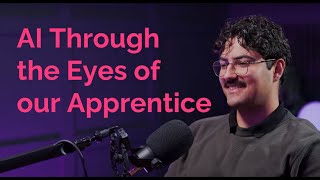
Leo, a degree-apprentice software developer, talks about blending work and university while building AI into projects like the SME Toolkit and Project Rising. He's seen LLMs cut development time and uses Friday experiments to test new models. The apprenticeship taught him teamwork and networking matter more than he expected.
I think we're starting to see a lot more businesses wanting to get into AI without quite knowing how to instead of they don't want to get into AI because you know, it's new, it doesn't work or it's scary or whatever.
Also such a huge fan of the degree apprenticeship program because if you were on a pure computer science course, you just wouldn't have been able to touch so many things and to play with so many concepts and been are brutally encouraged strongly to play with different things on a regular basis.
Yeah, and I don't. I've never been one to think that AI is going to take over the world or that we're going to have killer robots that go rogue. If you think about LLMs at the moment, I think they're definitely converging towards becoming a tool instead of outright replacing people. But it's going to be very interesting to see.
Hi, I'm Freya. Welcome to the Skynet Business in the AI Age, the podcast that dives deep into the world where artificial intelligence meets business. Join us as we explore the latest trends, challenges and opportunities in this ever evolving landscape. From innovative startups to established enterprises, we'll uncover the secrets behind the successful integration of AI technologies. So grab a cup of coffee, sit back and get ready to unlock the mysteries of business in the AI age.
Well, good morning, Leo, and welcome to the Skynet Chronicles.
Thank you for having me.
So Leo, you've been with us now for just over a year. You're a very early part of our developer team and you're currently studying your degree apprentice with us.
I am, yes. The degree apprenticeship.
Degree apprenticeship, which means you're actually working two jobs.
Yep. I always say it's like a 1.5 time job because it's full time work and then part time uni.
So that sounds bad. That sounds bad.
But it's quite fun though.
Yeah. So tell me about your decision to go down the degree apprentice path because you were looking at degrees and degree apprenticeship, what made you go for the role with us?
Well, throughout my whole life really the plan was to go to uni. When I was younger, I didn't quite know what I wanted to do, but I still wanted to go to uni. But you know, in sixth form really, they sort of open the doors a bit to apprenticeships. I think they really try to push university much more. So I think it's up to the student to do their research. So that's what I did and it was very last minute. I had help from Paul. So it's actually quite a. Quite a crazy story. My parents know someone who knows Paul, who then helped me find you. So it was like four levels of connection, something like that. Something crazy. But, yeah, it was tough to decide between university and the degree apprenticeship when it came to it. Obviously we had a few rounds of interviews. I think the more and more that I researched it, I prefer the degree apprenticeship, I think. So it. It's just a lot more appealing to me. You know, you have a full degree at the end of it with four years of experience, so you're automatically miles ahead of any normal undergraduate that graduates. So.
Yeah. And you've got to play with lots of interesting projects.
Yes.
Make some cool things.
Yes, definitely. AI is very cool and the possibilities are endless. So it's been a really fun journey integrating it into so much things, so many projects that we've been creating.
When you think it's been 14, 15 months and you definitely can't list the number of applications on one hand, I suspect you can't list them on two hands that you've worked on.
Probably not, no. I remember back when I first joined, I don't even think GPT4 was out yet. It was just 3.5 turbo. And now we're at 01 preview. So. Yeah. So massively it rapidly changes, you know, you can't even put it into words.
And you think back to the images that we were creating with stable diffusion to now they're photorealistic. All of the six fingers have gone. If you use gamma, you might still get six fingers, because I think they're using an old cheap version of stable diffusion. But image creation's come on so far. Word production has come on so far. Code production has just come forward so quickly now that every bit of code that we write is automatically checked and recommended for security and safety improvements. Were able to go, I want one of these. And you can just see a draft being built. So for your role as a software developer, what sort of impact has that had already? What do you think the impact is going to be in another two years, in fact, by the time you finish your degree?
Productivity wise, the impact is massive. The amount of time it saves is, you know, if you use it right, which sometimes it can be hard to do. If you use it right, you save so much time, which is cool to think about because a lot of the projects we do, automation wise, help our clients save time. So if we're saving time, helping them save time, you know. Yeah, it's lovely to think about, I think so, yeah.
So what's been the project that you've had the most fun on?
Probably Toolkit at the moment. I'm not sure if I'm allowed to say much about it here.
Why not?
Yeah, a lot of the projects we do are usually one developer working on it at a time. But Toolkit has been different. Lots of us are working on it at the same time now. I really like the team environment. I love teamwork.
I love.
I think it's great. All of us are sort of picking out little bits and pieces that we want to work on and then sort of merging it all together, working out challenges as we go along together. So, I mean, it's just been really fun. And one of the coolest things about SME Toolkit, I think, is just the thought of what it could become, especially with how good AI is now and the amount of businesses it could impact. That's, you know, it's a really good motivator.
Yeah, I think so too. And I think when you think that businesses and individuals generally find change hard, so the easier we can make it so that these sorts of capabilities that we're building and turning up in the wider public and that businesses have ideas for, if we can put them into something that makes it all super easy to do, where they just click in, connect that do this and they've got something back that's actionable and usable within their business, there's so many people we can help. And instead of it being sort of a back office, automation is cool because we can still change the way a business works. Developing an app as part of a project for a customer is really rewarding. But with the Toolkit, we've got the potential to help so many businesses and just shift them forward on their journey of using technology. And that blows my mind.
Yeah. I think we're starting to see a lot more businesses wanting to get into AI without quite knowing how to, instead of they don't want to get into AI because, you know, it's new, it doesn't work or it's scary or whatever. So that's really cool to see. And I think SME Toolkit is a really good way of sort of introducing them into the power of AI, because it can be sort of marketed towards a larger group of businesses and it's not so bespoke. You know, so many businesses can come in and they can see what AI is about and then hopefully from that they might start to think, you know, how can that actually help me in a more bespoke manner?
So, yeah, yeah, very exciting. Times, I mean, just boldly on its own would have been an amazing product. But the fact that we can wrap that as just one of a series of tools and go look at all these things that can change your business, just do this, this and this. Obviously we'll make that, the UX and the onboarding process slicker over time as we get more feedback from users. But we've got the potential to help so many people and that really is very exciting to me.
It's very exciting. Yeah. It's been really fun to work on. I'm sure it's going to be really fun to continue to work on, so I can't wait to see where it gets.
I think also the dynamic between you, Alfie and Danny has accelerated us too, because where we had been working on relatively specific individual projects, sometimes multiple in parallel, having you all focus on that one concept and pass activities backwards and forwards, bounce ideas off of each other, take the wins and learnings we've had from all of the different projects so far, it's been fantastic to watch. I can't even keep up with that dev channel anymore. I've stopped trying. I just asked Copilot to summarize what's gone on and if there's anything specific I need to do.
Yeah, it can get quite hectic. Yeah, no, I think Danny and Alfie are both really, really great colleagues to work with. I was really glad when Alfie joined us as a senior engineer because obviously he's had experience in sort of a more corporate ish setting. So, you know, he came on and some of his ideas are. They differ from what I would have thought, but in a really good way. You know, just shows the experience.
So, yeah, I think that meeting of minds is really important because we all come to business to code, to life with different ideas and so if we can bring those different ideas together, we can move much faster.
Yeah, touching on that code aspect as well. I mean, the amount of knowledge that I've learned is astronomical. You know, before I started Project Rising, I knew a little bit about how to code. I had done computer science at sixth Form. But with each new project, even projects that I've worked on that I come back with, come back to. Sorry. I mean, I always learn something new. There is always something that I learn. Yeah, I think it just goes to show how much knowledge there actually is that someone can intake. But yeah, it's. It's really cool.
I think, I think so too. I'm also such a huge fan of the degree apprenticeship program because if you were on a pure computer science course, you just wouldn't have been able to touch so many things and to play with so many concepts and been brutally encouraged strongly to play with different things on a regular basis because you just focus on. I've got to do this for this module, this for this module. And some of the work that you're doing, you're able to apply to your course. But a lot of the stuff that you're doing so far has been significantly ahead of the materials that they're teaching you, hasn't it?
Yep, definitely. Yeah. Also, one of the things that degree apprenticeships help with that, I suppose most degrees probably wouldn't, is away from the technical aspect. You learn things like how to behave in the workplace. You learn teamwork, you do presentations and research with your. With your class colleagues. I think that's invaluable. I don't think you get to do so much of that in a normal degree. And it is a lot more interactive and it is a lot more fun. Yeah. So I think I like the practicality of it because really, not only are you learning in the workplace, but also at uni, and when you bring those two together, you know.
And you're smashing it, you're smashing it both with us and on your course. I think your tutors are constantly amazed by your performance. Top of the class.
Yeah. It is hard work, but it's worth it. I think the best thing about it for me is that I enjoy it. I enjoy my work and I enjoy uni. So even if it is hard work, even if. Even if it does take a lot of time, it's all completely worth it. So.
So tell me a bit about Friday playtime.
Friday time. I always laugh at that name because it seems so childish, but I'm a big kid.
There's no adults in any room.
Friday playtime is where we all go off during Friday afternoon to play with things. So we don't really do any work, we just get to play. Most of the times it's AI tools or some sort of software that can help us in any way, shape or form. I think it's really cool. It's a really fun thing to do. Just the fact that, you know, I mean, Friday afternoons are notoriously like, you know, you get to Friday afternoon and you're like, I can't wait for the weekend. But now I get to Friday afternoon, I'm like, I can't wait. Can't wait to play.
What am I gonna make today?
Definitely, yeah. One thing that is challenging about Friday afternoons is that, I mean, the saturation of things that you can play with is really high. So it's really tough to pick out one.
Yeah.
And a lot of the times you see lots of very similar ones and it's tough to differentiate which is the best one. What's the best tool that you want to play with that can actually help you. So I think nowadays in software in general there's lots of copycats and, you know, some do some things better than the others, so it's hard to pick out the best ones.
I guess we need a better process for that, don't we? Because I think we see some new repositories coming out that are open source that we could play with, we see some new AI capabilities, we see some new software products and it's then just going, okay, well here's a list of all the things that are cool. Who wants to play with that cool thing? And then I get rabbit and just like, oh, that looks nice, that looks nice. And just last night I was reading about something called Circle Mind, which combines graph and rag, but learns on the fly and continuously adapts and remodels the graph based on the questions and answers. I thought swear, swear, expletive, that'd be really cool, but I know I haven't got the time to play with it. And whether it's actually any better than any of the other graph rag solutions that are out there or not or just hypersol is difficult to know. So we've got to do a better job of bringing together that list of possible and ruling out things pretty quickly. But I think it's the only way that as a business we can hope to keep up with the rate of change so that we can then share that understanding with our clients.
Yeah, one thing that annoys me a little bit is that whenever you go onto pretty much any new especially AI based software website, they throw around a bunch of buzzwords and they say a lot without actually saying a lot. So you end up having to do a lot of research and going through documentation things to actually find out what they actually do. That's something that's quite annoying. But every now and then you do get sort of like a cherry on top type of website that you know they are what they say they are and those are the most fun to deal with.
We had one a couple of weeks back, it might have been three weeks ago now, where one of the tools that was being researched sounded really cool. And then in the dev meeting on the Monday, we talked around the concept and went, hey, Wait, that's just this, this and this. And actually let's build that into it boldly. And we added the bones of that fact management and extraction into bordly in about a day. Yeah, that we wouldn't have, I don't think we would have conceived it if it hadn't been for playtime. So just, just from having a play and seeing what's possible, we've then made a significant shift in the capabilities of a product that hopefully will be able to help lots of businesses.
Yeah, I think that's sort of a bit of a problem for a lot of these new startup companies, you see, when they're purely AI based. If you're not one of the big ones like OpenAI or whatever, especially the wrappers around those, they tend to get copied a lot. And because technology and especially AI is moving so rapidly, they sort of can get left behind. And I've seen that multiple times AI based startups just get left behind or.
Completely made irrelevant by changes from OpenAI or anthropic.
Exactly. Yeah. So I think one of the really cool things about what we do is that a lot of the projects that we develop are very bespoke to the customer. So sometimes they might see software that they could use. Right. But there's one or two things that they want it to do that it just can't. So, you know, we build some bespoke functionality just for them, which means that we can sort of continue to get to do what we do and we don't really have that problem of being left behind sort of. I think that's something that's really cool to see, really interesting to work well.
And also when we deliver another project that's kind of an iteration on something that we've done previously, we're able to take that learning and understanding and go, well. If you think back to rag, oh well, we had these models that were running in this way. Okay, well we'll add in llama index, llama parse, ooh, we'll add in graph and then we can revisit those other applications over time when they come ready for some sort of a fundamental shift and go, well, okay, these bit elements of the code base are now have been replaced. In effect, we'll just swap them out. And that's fantastic, isn't it?
It goes back to that point about learning. Every single time I come back to a project, there's always something to learn about.
So because I'm evil very, very early on in your role with us, I said three letters that are Obviously horrible and nasty and involve in person networking and got you to choose a BNI chapter to be part of sitting in my seat. Why do you think I did that?
I mean, I suppose it sort of can tie into degree apprenticeships in a way that not only is it important to be technical and to be good at what you do, it's also important to know how to advertise yourself and market yourself and network with others and build strong relationships because networking is good. But when you do networking with people that you have strong relationships with, that's even better. So I think it's. I think you chose to do that to get me out of my comfort zone a little bit. So. Yeah. Is that right?
That is absolutely right, yeah. I mean it's obviously we work fully remote so we don't see each other in person very often. And the benefits of forcing you into that sort of regular having to go and people is good for your personal development. It's good for you getting out of the house and not just sitting a computer all day long, but in terms of building those skills of networking, of public speaking, of presenting on a regular basis. I think it's already benefiting you in your degree in that you've been forced every week to get up and go, hi, I'm leo. And in 30, 45 seconds, whatever it is, ask for something specific while sharing about project Rising and seeing what other businesses are asking for and being able to learn how other people are interacting. And I think building that networking skill and mindset, which isn't something they teach at school, is hugely powerful. And really I obviously want to replace me with you at some point down the line. So if I can make you a better leader of people, build your people skills, then I'm helping me in the long run.
Yeah, it can be quite invaluable. And I think what sets BNI apart from, apart from all the other ones is that it's very structured and it's structured for a reason. It's been going, I think almost 40 years now.
Yeah, I got my 40 year badge last week.
Oh, really? Yeah, I'm in the Norfolk region and you know Dan Kelly, he's the owner of the Norfolk franchise and he's a very competitive man. I think he loves it when the Norfolk region is up, up at the top. So that in itself is quite a good motivator for us. You know, just he's sort of like given us some motivation to keep going and he's given us a why, you know, in the featured presentations that people usually do. So they get 10 minutes. One of the members gets 10 minutes a week. Usually one of the slides is my why. And having role models and people that have been in BNI a long time, that can help you, give you more reasons why. That just makes it a whole lot easier and a whole lot more worth it, I think.
I think it's already done wonders for you and I think you'll continue to see the benefit over time. But it is evil of me too.
It can be quite tough. Yeah, I think because I only started my professional career just over a year ago, so my professional connections, I don't really have any apart from bni. So BNI is really about the visitors and the referrals and I think that can be tough for someone in my position, especially when you see so many other people that they come back each week with like lots of positive contributions. So visitors or referrals, sometimes, you know, it might make you feel a bit left out, but then I always sort of, I get to feel better as soon as I leave the meeting. Because when you go in there, the energy that they give you is great. When you come out of it, you know, you just, you want to keep going, you want to be a good member, you want to be able to get those referrals, you want to be able to get those visitors come in. And it motivates you a lot more than, you know, just going into normal networking events, advertising yourself.
Yeah, I hate traditional networking. I just can't do it. I can just about have a conversation with people on an exhibition stand, but only really when it's BNI focused people makes it so much easier because you know that they want to build relationships, they want to help you. That give us gain thing is real and we'll make it easier over time. I think also a lot of businesses within bni, it's owner managed. So you end up with the owners in the room.
Yes. Yeah.
And with the situation that you, Megan and Alfie are in, where your employees within a chapter, it makes it much harder to hit those metrics. But we'll get there.
Yeah. Hopefully I'll keep working hard towards it, so hopefully it'll all pay off.
So you're very early in your career, what are your aspirations over the next five to ten years?
Great question. Short answer, I don't really know. Long answer. After I finish my degree apprenticeship, I likely want to do a master's degree, probably part time. So working well, pretty much it's going to be similar working full time, doing the master's part Time, probably something to do with it or software engineering or computer science, etc. After that, I don't really know. I think I like to go the flow. I like to see where life takes me. I'm sure later on down the line I'm gonna find specific niches that I really am fond of and I think those are the ones that I'll pursue, but I don't quite know what they are yet. And I want to do a PhD as well in the future. Again, not sure what on, but I definitely want to do one.
So the pull of academia is strong, but at the same time is earning rather than doing it the traditional route and building up masses of debt?
Pretty much, yeah. That's why the degree apprenticeship is just so amazing.
So I'm going to have to bow and call you Dr. Leo maybe one day. Yeah, I look forward to that. So what do you think has been the biggest takeaway of going down the path of a degree apprenticeship again?
Very good question as well. I feel like I'll probably have a better answer at the end of my four years. But right now I think the best takeaway is just the balance that you get to learn from. Not only being technical but also having people skills, presentation skills, workplace skills. You know, I think in again, like I said before, in normal, when you do a normal degree, you usually probably wouldn't get those opportunities, at least not easily anyway. With the degree apprenticeship it's much more easier to do that and they hold you accountable, which is good. I like to be held accountable for things. It makes me want to be good at everything I do. So, yeah, that's probably the best aspect of it, I think.
So to anybody that's listening that doesn't have a degree apprentice in their business, why do you think they should take on a degree apprentice student?
It's sort of like an investment. I think if you invest well, you know, over 5, 10, 15 years, maybe you might see like a superstar. I'm not saying that I'm a superstar right now, but you know, you are a superstar. Thank you. But no, I think it is just an investment. I mean you're, you know, you're helping this person grow from someone that's just come out of college or sixth form, you're helping them throughout their at least early career and their studies. And because they're sort of doing all of that in one and because they're so young, because I think when you're young, learning is much easier. You know, by the end of it you're going to have A really great employee, I think. So I think it's definitely worth it to do some research, having degree apprenticeships within your business. So yeah.
And was it two, two and a half weeks ago? We had a work experience student with us. Yes.
Finley, was it? Yeah, yeah.
Finley, who's an amazing 14 year old lad who spent three days working fully remotely with us because obviously we don't have an office for him to come to. So he was working from his mum's finance or accountancy practice and we set him some challenges and how quickly he went from never having done anything other than putting a few prompts into ChatGPT to having an application, a baby application, an agent effectively, that was able to search his mum's email, extract the details of the swim meets that he was participating in, pull the date, the location, the events that he was swimming in and then populate those into a family calendar. And he did that in hours from when we showed him how. And I thought over the course of the three days he might complete one or two of the three challenges I'd set to him and he completed all three and made three other automations. So in the space of those three days we've created the most capable automation engineer within that accountancy practice and he doesn't work for that accountancy practice. And he's now seen the power of how asking AI to answer a simple question when baked into a process or application can completely change the way a business works. And while that was on a hyper personal problem that can be applied to anything and you think through that accountancy practice, how many emails do they get that have got invoices on them within the email? The body of those emails quite often contain all of the information that's needed downstream in the accounting systems. If it's got a PDF, can you extract the information that's in that PDF and how by breaking down that complex process into a series of baby steps. And whether they're in make or code doesn't make any difference. It's still the same fundamental steps that you go through to break down the problem. If you can make that much difference that quickly. The impact AI can have on a business just by them leaning in and starting small and building from there. It snowballs, doesn't it?
Yeah. I always at bni, whenever there's like a new visitor, you know, I always encourage them to at least have a look at AI tools like Chat GPT and see what you can do with them, what you can do with them and just imagine the possibilities when you take that A step further within your business. So, yeah, I mean, someone like Finley was, he was really great. Had cool presentations as well.
He did. And an amazing array of medals.
Yeah.
Just blew my mind.
Definitely. Yeah. No, when you get someone with that sort of drive, I suppose, you know, especially being so young, I guess it sort of ties into having degree apprenticeships at your business. When you have someone so young with that drive, just imagine the potential they could, could have. So.
Yeah. And that potential combined with the capabilities of AI, the rate of change that we have now and that change mindset, that willingness to try something new and not be worried about whether it goes wrong, because that doesn't matter. Life's full of. You make a series of mistakes and at the end of it you're better than you were at the start. There's no right or wrong. Really.
Yeah.
It's fascinating. I love that sort of attitude and mindset and we should have as much around it in the business as we possibly can.
Definitely.
And that was another almost an accident in terms of we didn't go looking for somebody to do work experience with us. One of the networking groups I'm in was working with the owner of the finance, the accountancy practice, and she needed somewhere for her son to do work experience. So that sort of synchronicity of how things just happen, you've got to lean into it, haven't you? When something comes along, you just jump at it and go, I don't know how we're going to make a three day remote work experience work, but we'll find a way because some good will come from it.
Yeah. I'm a big believer in the phrase where there's a will, there's a way. I mean, you know, you just, you see throughout history what humans have been able to accomplish, you know, why wouldn't you be able to do that? If they can, you can. It's even better when you have a good team surrounding yourself.
So, yeah, no, it's impossible with one, the more people you add to, it gets more and more possible over time.
Yeah.
And really anything is possible if you've got enough desire.
Absolutely. Yeah. I mean, even I, in my free time, you have free time, you're working.
Full time, then you've got a university, half time and you've still got free time.
On the rare occasions I have free time, one of my biggest hobbies is still things to do with tech. I, you know, I like it. Yeah. Whether it's exploring new tools or watching videos or even reading a few papers on technology, I Think it's really cool that when you have a job that you like, that really is at least a stepping stone for where you want to be. I think that's completely invaluable. I think everyone should strive towards that can be hard, it can be tough. Yeah. But I mean, you know, I think.
That growth mindset is what makes it so much fun. I mean, I cannot stop looking at the new capabilities that are coming out and working out how we can apply them. I don't think I could have a better job in the world right now. It's fascinating what's going on with. This is literally the best time in history to be in technology and every day it gets better. So even on these, some of these tools are bad at the moment. If you look at the AI video creation, they're not really that good. They're as bad as they're ever going to get. And if you go forward six months, what's going to be possible six months after that? And when we combine the reasoning capability that we've got just a sort of little witness of within, oh, on preview, when they roll out O1 and they're up, that's not running off 4.0, it's running off newer capabilities. When you combine that with agency and the ability to autonomously complete tasks, we're going to be getting into some really crazy levels of innovation. We're probably going to be hitting that OpenAI level for innovation where completely new science is being solved, where we're able to completely change material sciences, we're able to solve problems that have been beyond us before, when all we're really doing at the most basic level is asking something that can forward, guess a token what the answer to something is. But because it's been trained on all of the information in the world, we're giving it time to think through. We're asking it to cut across different categories of science. We can create magic and then at the end of it, write some code about that, make a video, a how to video about the code that you've just written. Make it nice and easy for anybody to start it. Well, look at this heat map of how the application's being used. Optimize the application so that people aren't wandering around. And I was chatting with somebody last week and just talking about within an application. The application can see if users are struggling, if it's created in the right way so it can understand, look, they're circling around or they're scrolling up and down, they just need to hit this button. But we haven't made that obvious enough. Now that could lead to a simplification and improvement of the UX or it could lead to them being encouraged through some sort of modal or pop up or communication. It looks like you're trying to do this. Do you need some help? It's like that Microsoft Windows Clippy but actually working on any application and we're dangerously close to that.
I think AI and technology in general really is really easy to be curious about which means that the innovation is both good and rapid. So it can be hard to keep up with. But some of the things you see that get invented, you know, it's even think back five years ago, you wouldn't even think that would be possible. I think it's, it's really great. Yeah. And you just, you see all of these different tools being embedded into all sorts of different things that ultimately make human life easier. Even things as seemingly little as UX help all the way up to solving equations or whatever. With quantum computing it's really fun to not only know about but learn about.
And that process of sort of simplify before you automate almost the Elon Musk model of getting rid of things that aren't necessary. And if you've got rid of, if you've not having to put some of the things back in that you've taken out, you haven't taken out enough. It's fascinating. But seeing how quickly any one of his initiatives has moved forward and taking the learnings from that in terms of how as a business model has that been successful and effectively it's break it down into micro phases, make sure each phase is profitable and gives the learnings to support the next phase. And if we're then having conversations with customers and going well, you've got this idea for an application. We're just going to start with this bit, we're going to make that bit work really well and then we can add on the next layer of functionality. If we think about some of the businesses that we've helped with, I mean the disrepair reports is a great example that's had several phases of improvement over time. And now shortly we'll be starting on another type of report within that business. And the learnings we had from that project were able to apply to others. We're able to say oh you've got some input files, you've got some audio, you want to produce a report. And the. I'm going to say anyway, the new capability that we're going to add to Toolkit in terms of automatic report Creation. It's come from those learnings and now we'll be able to help lots and lots of businesses to go through that problem and have a solution and it be a low cost solution because we've already had the learnings elsewhere. I'm in love.
One of the most fun things about software I find is that whenever you start creating a project, you start with a blank canvas and you build upon it and build upon it. It's almost like your own baby really. So you get to have lots of those.
It's a baby that does what you wanted to. Babies grow up, they don't do what you want to so much.
True. Yeah. No, it's. It's good to see all of the work you put into the iterations produce something so great that helps people.
So yeah, it's exciting times.
It's very exciting. Yeah.
What do you think we're going to see come out in the next six, nine months that's going to blow our minds, let alone the minds of general public?
Yeah. Another good question. I think it's hard to be someone who can predict the future. I know that Sam Altman from OpenAI, he said that he's got a lot of really cool things planned within that time frame. I think you said it wasn't GPT5, but my guess would. I think that at the moment text based AI has sort of hit a plateau really. Especially when you get to like GPT4O. You have to start thinking of new ways to innovate. Such as making it think with 01. Yeah, exactly. Yeah. And I think that because we're a plateau with text, you're going to see things like voice and video and images be worked on a lot more. So I think, yeah, I think over the next six to nine months the biggest changes we're going to see with non text based multimodal AIs. I think images and videos are going to greatly improve.
We're sort of talking around this plateau. Actually we've hit a plateau because, well, first of all, all of the text has been consumed but actually the capability we've got now in terms of immediate token response is arguably as good as it needs to be. We'd like to reduce the hallucinations but now with the combination of sort of graph and rag being embedded in those processes, automated hallucination checks based on is it aligning with the input that was fed into it and now extending inference time to allow it to think across far broader and effectively take that chain of thought processing which we were using ages ago. But embedding it within the model so that it can go through those steps. I think we'll see a leap in text, word, code because of those other things, not necessarily because of any improvements in the training process, just because we've actually already got all of the key elements in place. I'm very excited by the increases in processing time. That announcement that I shared on the dev channel this morning, just another huge leap forward in terms of inference speed. And if you apply that to these models that have been capped at 90 seconds worth of thinking, well, now that 90 seconds of thinking could do four or five times as much work. And if that means that the cost comes down to do it too, we're just going to see ever increasing improvements in terms of the inference output, even with effectively the existing training data sets. Gemini's currently got a bit of a leap on the OpenAI stack in terms of training model, just because of taking those 14 trillion frames of YouTube data with all the embedded information feeding that in. So it'll be interesting to see what OpenAI do in terms of video understanding and whether they can actually catch up with Gemini for that. Because I think that's really the only moat that Google have at the moment, other than the mines within DeepMind. But in terms of the Gemini product, that seems to be a differentiator. But it is very difficult to crystal ball, isn't it?
Yes, absolutely. I think when you see these massive corporations battle against each other, it's always the consumer that wins. You see, now they're buying nuclear plants to train AI, so I wonder what's going to come out of that.
But more efficient nuclear.
Yeah, true. Yeah, yeah. There's lots of. It's a bit of a tangent, but when you have something as big as AI and technology, there's probably extra bits and pieces that get improved that you wouldn't know about. So let's say they buy nuclear power plants for the sole purpose of training AI. How much better is the nuclear technology itself going to get and what might that mean for energy and electricity? Yeah, it's sort of similar to like F1 cars. I believe some of the innovations they've had have been translated into normal cars that we have at the moment. So, you know, when you have massive amounts of money being spent on something so big as AI, the amount of extra bits and pieces that can actually improve off of that is also something that people probably don't realize in the moment, but once you look back, it's a bit mind blowing.
Yeah, I mean, there's just huge Investments in terms of compute, huge leaps forward in terms of the amount of data that's being fed into these models. Massive investment in talent and that's creating new capabilities all the time. And we're just starting to see how those cascade into other aspects. And I think the formula one analogy is interesting because that's very targeted. What we're effectively doing here is we're increasing the amount of intelligence on the planet. So if you were to take the amount of people that live here, have them all focused on, on the common goal of solving problems, and then added tenfold, 100 fold more people, what could we achieve? Well, that's what we're actually doing with artificial intelligence. The cost of intelligence is trending to zero, which means we can apply it to many more things at the same time. So the problems that will be solved I don't think we've got any grasp of really at the moment. And if you look back to the impact that electricity's introduction had from those first days of lights through to where we are now, and you compressed all of that change into five or six years, that's the sort of level of impact we're talking about. And most people have no comprehension of the level of change that that's going to mean.
Yeah. And when you think about technology like artificial intelligence, you can't help but think about the future of what it could or the type of future that it could make. And Elon Musk is, you know, going back to him, he, he's very aspirational. You know, he wants to go to Mars and he wants to make human life multi planetary. So I think it's kind of cool to think about. But then it comes back to technology itself. Even though it might seem like we're a plateau at the moment, it's not going to stop and it's not going to go down. And has technology ever gone down? It's only ever going to go up.
And just some of those phases that he's been on. So SpaceX. Yeah, we've got reusable rockets, Whoopi do. Well, we've never had those in history. And as a result of that, anybody anywhere on the planet can have broadband. Now you can be in the middle of the sea and you can have broadband because of the array of satellites that have been put up. And now with the government efficiency, and I'm not even going to say it as the meme name, what impact is that going to have? How much of an opening up is there going to be of flights? I heard some, I Think it was somebody within SpaceX. Hint to a reporter that they expected to do three. I think it was 300 flights in the next four years.
That's a lot of flights.
It's an awful lot of flights. Now, some of those rockets are reusable, but they'll improve that window of reuse before they're able to go again. But historically, I think Musk has said that it takes longer to get permission to launch Starship than it takes to build it. They built one in two months, and it was waiting on the launch pad for two months for the paperwork to change. And I suspect things are going to change very quickly in terms of U.S. restrictions, what impact that's going to make in terms of Tesla, SpaceX and the wider society from those restrictions and roadblocks being removed. It is kind of scary in terms of what it could mean in terms of problems and things going wrong, but in terms of technology, acceleration is very exciting.
Yeah. Yeah. And I don't. I've never been one to think that AI is going to take over the world or that we're going to have killer robots that go rogue. If you think about LLMs at the moment, I think they're definitely converging towards becoming a tool instead of outright replacing people, because they have their own pros and cons. But it's going to be very interesting to see once we have the ability to overcome some of the regulations and limitations that we have at the moment, what's going to come out of that. So, again, like you mentioned before, it's the problems that are going to be solved. We're not, you know, we don't even know at the moment what those problems are or what they'll be. So.
I think that's a fantastic place to end the podcast. Exciting times, lots of problem solving to come. Thank you very much, Leo.
Thank you for having me. It's been a pleasure.
More from Tim

EP 60: Why Founders Become the Bottleneck — And How AI Changes Everything | Thea Brook









