
Ep 30: Redefining Influence: The Role of AI in Modern Marketing
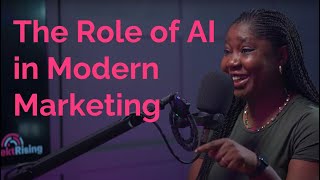
This is a 2025 podcast conversation between hosts Tim Adebola and guest Oloma about AI’s impact on marketing, ethics, bias in training data, virtual avatars/AI-generated personas, business adoption challenges, regulation, and inclusion (gender and diversity). They also discuss practical marketer roles (storytelling, persona building), Oloma’s background and upcoming book, and societal trade-offs between innovation and safety.
I don't want to create the kind of world I'm in currently. I want to create the kind of world I really want my kids to grow up in. I wish that people, government, people who are. Can structure things globally, locally, whatever, can see what we're saying. Because I think if they see it quicker, then they start to put the structures in place to say, how can we get there? Because we're gonna get there. My husband and I were talking one day and we're like, would you allow a robot perform your surgery if he was gonna have a 99% success rate? And I said to him, nope.
Really?
And he said, why? Like, you were one person I thought would be the first to say, I don't know whether I'm there yet on medicals. He was like, no, I will definitely take a robot rather than a human. That is at 75%. And then I'm like, okay, imagine this. You're going for the surgery, you've done the surgery, it's successful, and then it's about to close you up, and it reboots. Hi, I'm Freya. Welcome to the Skynet Business in the AI Age, the podcast that dives deep into the world where artificial intelligence meets business. Join us as we explore the latest trends, challenges, and opportunities in this ever evolving landscape. From innovative startups to established enterprises, we'll uncover the secrets behind the successful integration of AI technologies. So grab a cup of coffee, sit back, and get ready to unlock the mysteries of business in the AI age.
Good morning.
Hi.
Tim Adebola. Oloma.
That's me.
CEO of different marketing technology Consultant, Women in AI Island. Ambassador. Ambassador. I nearly said that right, didn't I? But it proves I'm human.
You got your eye.
I'm not yet a digital. Digital twin. So how are you?
I'm okay. I'm excited to be here. Happy to be here. Thanks for having me.
My absolute pleasure. So let's start at something fun and engaging.
Okay.
What do you think is happening with virtual avatars in terms of marketing? Do you think that there is a place for them replacing human generated content?
Yes. I think the time has come for us to have those very tough conversations because it's really gonna happen.
I mean, it is happening, isn't it?
It is happening already. Yeah.
I mean, there's. There are people who are paying significant sums of money in Japan to sign up to VTubers accounts where there is no. No person creating the content.
Oh, my God.
And they're just experiencing. Well, is it a relationship?
Yeah.
Interaction with something that is entirely digital.
I saw something on my way here. I think it was. I don't. Lisa Kudrow, she was saying something about a movie that was created by Tom Cruise or something. And it was like, what then? What jobs do you want us to have? If you're already creating something that is fully ar. Like that was like being real about it. Because then the actors, what happens to them if they really can just produce a nice movie? And it's doing really well on Netflix? Like, why do I need humans that are going to be.
I think Clint Eastwood has sold his image rights for future movies. I assume he has some sort of sign off on the content because that could be kind of interesting. Yeah, well, but yeah, that. That's signing off of image rights to create content to your. Wow, that's crazy.
That's crazy. That's crazy. But then you have all the issues then, then he has put on those lenses and starts to think about privacy rights, you know, human rights, all those things. And I think that's another old lens altogether for those that are looking at this and putting the guardrails in place to start to think, what do we have to do?
It's kind of like that, that ancient thing around copyright.
The.
Your. Your face, your Persona used to be something that wasn't copyable, but now it absolutely is. And yet every. Everything that we've built as a society is based on fair and appropriate use of copyright.
Yes.
If we didn't use grandparents, our parents, the ancient scientists and architects works, we would never move forward. We're just building on top of the shoulders of giants.
That's a good way to look at it though. Like.
But how are we doing the same with AI?
No, no. I don't know. I don't think it's. I don't think it's the same though.
Don't you?
Well, I think arguments are going to be back and forth for a while because at the end of the day, we're still humans. This world has not changed. And you know, we don't have robots moving everywhere, but that's gonna happen. Okay.
How many robots have you got in your house?
None yet.
You've got a dishwasher, you've got a washing machine.
Yeah, that's an interesting one. I remember SPE somewhere and then someone asked a question and said, I always feel bad when I use ChatGPT so much because I feel like I'm being so reliant and I'm like, if you were to go to somewhere and you don't know the place. Are you putting Google Maps, do you get halfway and say, I've been so reliant, I'm stopping this.
Do you get so reliant on electricity that you think about turning it off?
Exactly. It's just us understanding that that's where the world is right now. So there's nothing like overreliance, it's just happening, it's taking over.
It's taking over. So we're feeding in these vast quantities of data into AI models that are replicating the biases in society. So if you use an image creation tool, you're highly likely to get specific content based on the training data that went into it. So if you say a CEO, it's pretty likely you'll get a middle aged white man. And there are tools and methods of overcoming this, but it's still training on the data that exists. So we're giving all of this public domain, sometimes copyright information training these AI models so that they can have understanding, can create insights, can create new content. But who owns the work? Who owns that output?
Interesting. Who owns the output? Again, let's look at it from this way. Now you're saying the create, they're learning, they're putting things in and they're building this nicely. But where do we then have that detour of saying, I don't want to create the kind of world I'm in currently, I want to create the kind of world I really want my kids to grow up in? How do we then get the detour to say, is it us bringing more people into the room? Will that change it for the way they train the data? Or is there something else? Because at the end of the day, fine, who owns it? How is it going to be? You know, how do you own that and all that? But I think the better conversation, or maybe a conversation that can write off that as well, is, are we training it? Are we bringing the right people into the room to train this data so that we can actually build a world where CEO is not white, male, middle age, can be a female, it can be anyone.
Extensively.
Yeah, yeah.
Just statistically at a lower rate currently.
Yeah.
And I think we are seeing great changes there. I think Anthropic have taken an interesting approach with their consensus model. So instead of being selective about, they are selective about the data, but essentially you still need incredible amounts of data they're focusing on within the model. Does this align with effectively our view of how things should be done, how the AI should operate in order to be a contributing, effective member of society? And by checking the inputs that people are sending to the model, validating it against that, checking its responses, validating it against that before anything is shared back, ensures that the responses back from the model are a more fair and appropriate response.
Who is gauging that?
Who is gauging that? The leadership team and the research team are anthropic. And yeah, you raise a fascinating question, but who, who would you trust for these decisions? If you look across society as a whole, the really, really influential people are generally the people that just speak the loudest or have the most diverse of opinions or have achieved great things. But that doesn't mean they've done it in a great way.
Which is why I'm very, very adamant in the work that I do. Inspiring or encouraging more people to speak out. Like you said, it's the loudest in the room. People will listen to just people just having an opinion and then somebody wants to read the opinion and go like, oh, okay, I agree, or okay, no. So more people need to get to the point where they're contributing to whatever conversations are going on about this subject matter because that's the only way we can actually have a more inclusive pool of whatever it's for people to pick from or from those people to pick from. I'm thinking.
And do you think that the models could be tuned and trained to offer that viewpoint and then they themselves act as that voice.
Or they become rebellious, they go against whatever is is a common opinion. Yeah, but seriously, I think it's possible that they are trained in that way, but it's the same way that we're saying you can only think in the way that you are exposed to. If you're not exposed to something, you can never understand that point of view. For you to be able to say, can my model also be reflective of this? Do you get what I mean? So it's that exposure at the end of the day and you can force people to be exposed to what they're not exposed to. So they still need to be conscious about inclusion.
So you raise a really interesting point there about how we get how we encourage as many people as possible to be part of the conversation. And it's the same fundamental element of getting people to understand that they need to get involved in AI.
Yeah.
Before I impacts their business in ways they're not expecting. I think as individuals we've shown great ability to adapt to change over the years. We've all got phones in our pockets with access to the world's information, sometimes a fire hose of information. But as businesses generally Things are slower moving, more like an oil tanker than a speedboat, let alone a drone. And how we get businesses to understand what's possible, get them involved in those conversations, is critical and is a daily challenge. I think at the moment it's almost.
As if the businesses are looking out and watching for who's going to go first. And it's interesting because I keep wondering why all of a sudden is this particular decision about who goes first when many other times you want to go first so that you get the best out of it. So this is an interest. I was speaking to a room of CEOs recently and one of them said, the CEO, he was like, I'm more worried about the evil that this can bring than the good. And I already saw the problem there for the old. I'm like, imagine someone who is within your organization and is so right there on the spot, going, moving, and you just have to use, for example, on the. Under the table and then be like, oh, did you write this? Oh, no, no, not me. I didn't write it. Like, like, you know, chatgpt write it. I wrot myself he has to lie because he has a manager that doesn't even see the need for this. Do you know what I mean?
So just is so. I mean, it's almost that fear, isn't it?
Yes.
We've grown up around the Terminator films, all of these concepts around the bad that could come from technology.
Exactly.
Versus the lens that if you look across the impact of technology over the past 200 years. Yes, it's been overwhelmingly positive in terms of the output of mankind.
Exactly.
But just that fear fair.
And I said to him, I said, all the things you've done as a CEO, do you think it's something some other CEO somewhere could copy and be greater and better their work? He said yes, that he's done some great work, he's written some books. And I said, imagine those books are online digital for someone else to learn from. Like, oh, he never saw it from that point of view. I said, that's the data we're talking about. Yeah, that's you just being exemplary with it. If you've been a great CEO, some other CEO in some town would want to learn from what you've done. But if you don't get your data cleaned and put out there, then nobody's going to get anything from you. You'd have just lived in this world at the time where AI was training and then you contributed nothing to it.
And it's, it's the two Sides, isn't it? By writing that book. Yeah, that's been trained. It's been part of a training data set for models. I mean, Gemini 1.5 had read 35 million books.
Yes.
And knows them. And can quote a line from any of them.
Yes.
And how many people do you know that can accurately quote lines from multiple books?
Oh, my goodness.
It's insane.
It's a win. Yeah.
But the flip side to that is an organization, the CEO, he's got within his organization a vast amount of data, which actually is probably the only moat, the only thing that is truly defensible within the business is the data and insights that they've got. Yeah, but they don't have those insights because they haven't done any work on their data to make sure it's appropriately structured and mined. So it, it's a.
They have to see the big picture. They have to see the big picture. I think once they do, it's easier to find a path, you know, into those spaces. And I think conversations like this are also a good one in the arsenal of head of technology teams, you know, teams that are building. Head of data teams. Teams are building, you know, the pathway from the data that they are mining from the organization. So they need this kind of conversations to happen so that more approvals come their way and they're able to actually start to drive things within organization. So. Yeah.
And that. That need for decision making at the right level in an organization and how you gather those insights to make them an appropriate and timely manner is fascinating. A common problem.
It is.
So tell me about different.
Different. Okay, so different is. I remember creating the word different just for the fact that I wanted to spell the word different differently. So it's no big deal at all to it. Yeah. You know, and that was it when. And you know, that was done in Nigeria before moving to Dublin. I remember coming into Dublin about seven years ago and was so sure that I was going to be okay because my husband was the reason why we had to move. He had to work, was working for a bank. And he was like, hey, let's go. And I was so happy. Like, hey, go, you go. I'm okay here. I'm running an agency. Everything is fine. You can be okay. But it wasn't going to work like that because now we have a daughter and somebody had to make a choice like that. So, yeah, so we moved. And it wasn't easy.
The green and pleasant land of Ireland, which is green because it rains all the time.
All the time, all the time. Like now it's almost second nature. I remember always complaining before, but now I'm so used to it.
It's a beautiful country for a reason.
Yeah. It just starts to rain. The four seasons might happen just in a minute. Like, you just go like you're an island. So it's fine, you know. But yeah, I got in there and it was. It was tough, you know, just. Just blending, just finding the first person or first opportunity to throw you that hook.
Yeah.
Like, hey, you can do this, you know? But once that happened, oh, no. I just continued to run and saw from there. You know, you just need someone to tell you, okay, go now, go. Once you go, that's it. And yeah, and was. Was my first job with HubSpot and getting in there as well. I started off from custom onboarding. I think that's where we met.
It is.
And. And that was really fun, but I didn't want to stop there. I really wanted to go into product marketing and found my way in there as well. But always stayed in the tech side of things, you know, Always staying in that tech side. Yeah, that's where the fun is. And, you know, marketing can have all the other nice, pretty shoes, pretty dresses, have the nice manicure, pedicure things going on, but make stuff, you know, get the. Get your hand in there full. Full of grunts of, you know, that was really fun. And I think it was one of. One of those technology conversations around marketing that got me in a room with online with Dimash in a meeting. Was that co founder of HubSpot. And then we're talking about technology and he said, I think we said something about YouTube shorts. And then he was like, oh, do you. What do you see why you go there? And I was like, no, I don't go to YouTube shorts anymore. Because when I go over there, I leave in tears. I'm just always crying. It was like, why? And I was like, yeah, because every time he's always telling me about Kobe, how he died in a crash, how Michael Jordan had no shoes, how his family had. As in everything, it just makes me just start crying. And he's like, hell, no, that's not me. I don't see that. I've seen a lot of tech things, codes here and there. People are creating stuff. I was like. And he said, that's the power of algorithm. Like, they got us. They know what gets us. Yeah, works. Yes, exactly. And he was like, if algorithm can do that, AI is coming on and it's going to be doing way more than algorithm is. Doing that was the catch for me. I just left that session and I just went to Google AI marketing, like, whatever it is, let's do it. Yeah. And that's, that's how the journey started. Yeah.
And then you've taken on a new role within women in AI Island.
Yeah, yeah, yeah. That's exciting. I used to be head of comms for women in AI and that was interesting because I got to travel almost everywhere in Europe talking about AI. And then the cool part as well is lecture, guest lecturing many universities in Ireland on AI and gender. You know, it's so nice. It's really cool. You know, just look at, looking at how we need to get more inclusion from a gender point of view, you know, into the data we're training. And it's always interesting to listen to those, you know, those students as well and see their point of view. I remember sharing with them one of those examples about Amazon and the tool they had that was discriminating against women. And one of them asked a very important question was like, let's leave the fact that, you know, it did that, it's fine. But who approved that? And that was a good question. Like, even if the guys on the engineering rooms or whoever was building that missed it. Yeah, who approved that to go out? You know, so it shows that as leaders we need as well to be in there. We can just leave everything to those that are building and say, oh, we want an inclusive room of engineers or data analysts or data scientists, about those that are in leadership, who are marketers, who are, you know, financial leaders, whoever you are in the place of leadership, you should be able to ask the question and say, how did we train this data? You know, did you have everyone included in it? Did you have every voice included in it?
And yet the data that exists within society is skewed.
Yeah.
So overcoming that disparity within the training data and yet ensuring that the output from the models isn't biased and that isn't just gender related is there are multitude of biases.
Yeah.
Is challenging. And so we took a, we took a probabilistic fix to this where we looked at the problem and said, can any biases be construed from this output? And that can be. It was originally images and then effectively roll the dice and probabilistically add in other biases to overcome the innate bias in the original content. So you can take that, okay, it's a CEO, but instead of just passing CEO into the image prompt, you enhance it so that it then says any number of Other attributes. So the output from the image prompt builder is then representative of a wider society. If you run it 10 times, you get 10 different outputs instead of probably 10 white middle aged CEOs. And that understanding of where there is bias and the ability to overcome it can be applied for images, can be applied for vision content can be applied for video, which is fascinating. Now if you've played with Sora or Veo from Google. Yeah, the ability to just imagine something into existence, but unless you overcome the natural bias within the training data, it will just repeat what has existed in society before.
You have a great point there. When it comes to how you put the prompting, you know that that then takes it from this one type to many types is the storytelling. And I think we need to start to see, allow people own that thing about us being human as humans, we are our community, our exposure, the places we've been, where we've lived, how we've lived. So when you bring that best self of yours to prompting. So when you're telling it, I want this, but be mindful of this and can you please include that as well. You're training it in your own little way, but at the same time you're expanding what it is that you can get. So it will be tough at first because it's. There's no room for laziness to just go like give me this. But maybe it extends us as well to just, you know, tell more stories and get more out of.
Storytelling has always been the main. Yeah, the main deliverable, isn't it? But I think you can enhance the tools in such a way that even simplistic prompts can generate better quality output across all of the different mediums. But ideally you're encouraging people into. Don't just write a sentence. I mean I was playing with 01 when it first came out the OpenAI model and wrote a two page long prompt in combination with 4O using website research to create this incredibly elaborate prompt just to try and really test its thinking capabilities. Yeah, but what you get from that is that it's so much of a nuanced output. It's able to think through, it's able to come up with something imaginative and new. Yes, I think that's the best of times.
It's really going to be the difference between good and great. I think that's it. You know, if you want to do it the normal way and people already getting tired of like, oh, whenever I put my stuff in, it just gives me basic.
No crap in crap.
Yeah, you have to Put in the work like they think it's just coming to take over. No, we're not there yet. We're at the point where whatever you put in and as much as you can invest into what you put in is what gives you the output that, you know, you get out of things. There's a client I have as well that he would always say, hey, I thought we chat chippity and all that I wouldn't need your services anymore. But now I need it way more because I don't know how come you are able to get something out of it that I can get out of it.
And we've tried because we're developing brand Persona.
Yes.
We're creating the writing style. We're giving them as augmentation to the prompt so that it's on brand, it's on topic.
Oh my goodness.
That consistency.
Yes.
These models just create better magic and better.
And that's where you need the marketers. That's what I'm saying. Like, so that's where marketers don't feel like my job is going. We've been trained. We have the basics like you said, the Persona building, storytelling, having to understand, you know, the customer journey, the customer touch points, understanding. All those help us to be able to create things that normal folks who are not thinking that we can create. So you can do without your marketers, but at the same time, you know, you have to be able to be open to the fact that, you know, it's next level now. It's not the same way we used to work. Now people expect so much more from us. And it's your unique self that differentiates you from ending the big box and maybe just being mediocre.
And I think that almost takes us back to my first question, which was the sort of real human content versus AI generated avatars. We're about to see an absolute tidal wave of AI generated content that looks like people, that smells like people, as far as when you're viewing it on social media and streaming channels, but isn't authentic. How do you ensure that you're differentiating them? Yeah. Your true Persona from an individual or from a business perspective is coming through in the content that you're producing so that you are different from these swathes of beautiful looking people who represent a brand as it's been programmed to, but never make mistakes. Wow.
The never make a mistake part. I'll tell you one. My husband and I were talking one day and we're like, would you allow a robot perform your surgery if he was going to have a 99 success rate. And I said to him, no, really? And he said, why? Like, you were one person I thought would be the first to say, I don't know whether I'm there yet on medicals. He was like, no, I will definitely take a robot rather than a human that is at 75%. And then I'm like, okay, imagine this. You're going for the surgery, you've done the surgery, it's successful, and then it's about to close you up and it reboots. And he says, start by cutting this and it cuts you.
I think, I think when you're thinking through the safeguards that you'd put in through for model protection, that those sort of safeguards and protection, it doesn't report. Okay, but I think I would take surgery over human surgery all day long.
I guess so. I guess so.
But if you think about your domestic environment, will you have a bipedal robot in your home?
Yeah, I saw a movie recently on Netflix that had.
Was it subservience?
Oh, yeah, yeah, yeah, yeah, that's, that's that one great film.
I mean, I'm not sure she can act, but she didn't need to.
So my goodness, that was really, really good. That was really good. Yeah, I think that's something. But that also tells you, like, what I had about the, about the surgery as well. Like when they go the other way, like, if they go like, they have to be programmed, right? They just have to be programmed because they can turn on you. They can just go like doing all these great things and next they're like, I don't know you. And then all over again, like. So I think the training has to be done right, because it's going to take a while to trust. To trust them only.
But we do take insane leaps of.
Faith or risk for as well.
Efficiency.
Yeah, true.
If you think about driving, if you think about flight. Yeah, you think about almost anything. The devices we have in our homes, the fact that we keep animals until a few thousand years ago weren't domesticated in our bedrooms. I mean, we take risks.
That's a good point you make.
If you get to a point where you can have a robot in your home for £500amonth on a lease that will do all your chores or decorate or look after your garden or fix your car.
Okay, okay, but we can agree that we're not there yet. Because I'm just saying, why don't we have robotic cars on the road now?
Because we do, just not in the uk.
Or Ireland.
But if you go to San Francisco.
They will find them. Yeah. I just feel that we. There's a lot of work to do now. Like, we're in the age. We're in that era where this is happening. I have a feeling that we'll be, like, in the books, like, for years to come. I feel like, oh, like my grandparents were there when AI started getting trained. Like. Like that kind of era is where we are, is so cool. If we could just take the opportunity to really build something that will be so good, like, so, so, so good.
Do you think we're structured as a society for that? Pause. For that. Creating something that is good, perfect and safe? Or do you think we're just capitalistic and chasing.
I don't think we're there. I don't think we're there. And that's the. That's the pain. That's the pain. I wish the people, government, people who are constructed things globally, locally, whatever, can see what we're saying, because I think if they see it quicker, then they start to put the structures in place to say, how can we get there? Because we're going to get there. I think some of them are living in a phase of, can I just die and let another generation worry about this?
But we sit with business leaders.
Yes.
I've only got a few years left. I don't need to change.
Exactly.
That's the grandparents who didn't want to learn how to use a computer, and they can't. Online bank.
Yeah, yeah.
They just. There's no need. My head's in the sand. I'm just gonna ignore it. Yeah. It'll happen after I've finished. And they might be right. Yeah, but what if they're not?
What if they're not? That's so true. That's the thing. What if they're not? I don't know what can wake them up. Like, guys, what if you're not?
We need a cowboy whip going around meetings.
Like, seriously, can't you see this? You know, but I think that that's it. If you look at whether the leader of the free world, for example, and, you know, see the way the politics is and everything going on.
Who is the leader of the free world now? Is it actually Elon Musk?
As soon as Trump takes power, well, maybe I have a chance.
I think he's effectively vice president.
Exactly. Maybe he has a chance. Maybe he's building all this so that he can let them. He can whip them to say, like, guys, can't you see this? Maybe but my thing is someone there needs to be seeing things. But the way they're going, I'm like, I think we're going ages back. I'm not sure we're going in the direction.
I think America is going to pull back the legislation rather than increase it.
Yeah.
The AI Safety Institute in the UK is watching, listening and learning. EU have gone heavy on rules that are now impacting the adoption and release of technology within the eu. So, I mean, I have to be.
Proud of the eu.
Well, proud.
I don't know.
Sure that they've taken the right approach.
Well, you have to, like, look at it and say it's doing nothing versus doing something.
But by doing something, have they ensured that nothing happens and that Europe gets left behind?
Well, we, we've started to talk about it. I'm just saying somebody's talking about it. I just don't know if the people in the room have enough knowledge to be able to create stuff. That's. That's the one. That's the only part. I'm like, I don't know how. This is almost like ticking a box, because I look at those in the room and I'm like, how did they get there? Why are they the ones in that room creating stuff?
But if you think about the, the history of the creation of laws.
Yeah.
They've always been after the event. So when something's gone wrong, what do we do to improve it? There's an awful lot of people dying in cars. Well, maybe we should force them to wear seat belts. There's a lot of aircraft crashes. What can we do to reduce those number of crashes per flight? And over time, more and more legislation comes in to retrospectively fix things that have gone wrong. And I don't think we're set up for anything different now. So I think there will be issues that happen. There will be upsets, there will be accidents, there will be bad actors and then legislation will be brought in. But I don't think it's going to be universally brought in. I think different states and countries are going to operate on different frequencies. It looks like there is a full on AI. It's a dangerous use of language, but arms race between China and America. Europe has decided that they're legislating and legislating and legislating, with some exceptions. And the UK is too small to matter in the bigger scheme of things.
I think it's two choices for them. And I hear you loud. I hope they take it because it's either that or they have a scenario like what Happened recently with the CEO being shot. You know, we don't want things to go bad, and then people have to stand up and think that they're acting for the good. Do you know what I mean? So it's a situation where they have an opportunity now to get it right. But I don't know, like, his precedent may not be on that side of them getting it right, but more people need to see something and say something, because, like, seat belts, for example, people were dying and people were like, there's something has to be done. And then things were done. So I think we need to also get to the point where we all take action in whatever way we see something, and then we actually create opportunities for. For contributing to the legislation. Maybe those are the things that it can do. Because they don't know so much. Like, how would they know when something is a bad act, bad act on its own. But if they create an opportunity for people to suggest, to contribute to them and how they learn on how to make this, maybe there's a way to actually get there faster.
And. But that's the ancient model of democracy. That's how we. We put forward policies, we complain about things, and the politicians legislate. Yeah, but it's a slow process.
It is slow.
And the rate of improvement in AI capabilities and intelligence is exponential. So I don't know how those things balance.
But do you see any green.
I see a huge opportunity for society, but with risk.
Yeah. Yeah, that risk is really scary. Well, I think if we can look beyond the. And I think that's why a lot of conversations always come up and say, the evil, the evil, the evil to get. But I also feel like the re. The way we can actually have this conversation is to look at it from the good. The good is going to do. If only we can talk about that so much more. And I always make the connection to dance. If it's good music, if it's Zumba, it's something people would stand up, they would ride to it, you know, so we need more people really, really just showing up with good lyrics about the good that AI is doing in our world, just so that, you know, we have more people coming into.
Do you use Spotify?
Yes, I do.
And have you noticed the AI generated content that is getting into your feed? So you'll choose a song.
Yeah.
And then there'll be AI content that aligns to that, that is inserted.
I saw that and I was like, how did I even think of all this? Like, seriously, for me, I tripped. I was like, What?
Have you used Suno yet?
No, no, no.
It's amazing. You just put in I want a. And then you just throw a load of different types of music, really stupid ideas about lyrics in. And it creates two versions of the song in seconds with lyrics that are brilliant, that flow that in the styles that you've specified, gives you two different versions to listen to and then you can create a video that goes with it. That song there, who owns the output of AI If Spotify are doing it.
Yeah.
Then Spotify don't have to pay license fees. So the music that they're playing.
Yeah.
The amount of royalty fees they're paying out per hour of listening reduces because there's less.
Oh my goodness. I never saw it from that point of view.
So it's literally a cost saving for them.
Yes. And at the same time they're making people feel great about themselves.
Like depends on sort of music they're into. If you're into death metal and I don't think it's about feeling great about yourself.
Yeah, well, people were like, oh my goodness, I created this, I created that. You know. Well that's, that's an interesting one. I really like that. I'm writing the second book.
Tell me about it.
Yeah, I read the first one, it was great. But I want to do really, really much better because what I did with this one is I situated in 20 chapters, 20 different cities in the world and 20 different scenarios of how marketers can use artificial intelligence. Wow, it's brilliant. I really enjoy. Listen, I really enjoyed it. I really enjoyed just right like thinking about scenarios of where I have been impacted, of all technology. So I'll go like a conference or a coffee chat.
Well, I want to sneak peek. What's your favorite? Yeah, what's your favorite scenario?
I have. I love the influencer scenario.
Tell me about it.
It's just about how now people can still use influencers, but almost like the AR bit of things to say, who is your influencer? Who is that person? And creating that person into who it is. And then it's the one talking to your customers so much like the agent that they love to talk to, coming online when they're doing the chat thing. And it's really just nice. So you have the. Instead of having to pay so much for influencers to talk about your brand, you almost like get your customers to let you know what influences them, what gets them to move, what they love and enjoy about the people that they like. And then you creating almost Personas of your brand of that Little. So you come on and is your Selena kind of Gomez kind of, you know, agent, you know, giving you the vibes of your. Whatever the person could be Nicki Minaj, whatever it is like who influences you, is the person you're interacting with when you interact with the brand. So it's just getting marketers to think out of the box that way. So. Wow. Yeah. Yeah. If that particular chapter was situated in, in Japan in, you know, and it was like a nice, you know, come together kind gaming event and then the idea came on.
Fantastic. When does it get released?
Early next year. Yeah, next year. Thanks.
Exciting times.
Yeah.
I think I was listening to a podcast on the way over and it was talking about the. The focus on. Over. Over. What's the right term? Over. Investing in underpriced channels and really focusing in on social media content that is short form video. That's storytelling. But rather than planning out to the nth detail, we're going to do this campaign. It's going to be this sort of video and then guessing what the market is going to think, testing lots of different content and then just going in on the stuff that's converting and the ability for one story because of algorithms like TikTok to hit millions of people, whereas the previous 10 might have hit 10 people just because you've got it hit the right story. And so how do you encourage businesses to take that test and try mentality versus well, we're going to plan out our marketing strategy for 2025, 2026, we're going to post a video that's going to be our TV content as well. But it'll be in time for 2025 Christmas. Because that's the old mentality, isn't it? Everything comes down to a long term strategic plan.
Yeah. And I think a very. I've thought about this and I thought, and I've always thought the easier answer to this, fire your CMOs. Just let them go because they're not thinking in that way. Like what you've just said is a simple. You would imagine that that's how people are thinking now. But no, they just want. Can we just get this budget out there?
Like they want the easy life. We work with this agency, they work in this way for us.
Yeah.
They always come up with some brilliant ideas and most of the time they convert.
That's it. And then they take the Excel sheet. Excel sheets from last year.
Did you say sheet?
Yes. You know, exactly. And then just, they just copy and paste and go again. And you're wondering why I Had a meeting with a client yesterday and they're in the UK as well. Really cool company. And they just came on and said, you know what? We want to clean our data. And in my mind, I'm like, finally someone is doing something, you know? But it gets to that point as an organization that you say, I want to create a list of folks that have not engaged with any of my content in the past many years, whatever it is, and put them into little Personas and start to say, can I talk to them? Like it's them based on where they are. Yeah, that's. That's where you need to get to. Not for you to get that list and say, oh, we've not heard from you in five years. Like, I don't want to use the word right now, but, you know, there's a reason why you didn't hear from me. Can you just get off my screen? You know? You know, but people need to get to the point where they're really interested in getting the turnover for the business. Because when it matters a lot for you to say, we want to increase in revenue, we want to be the highest. Whatever we want to be, we want to be the best. When it comes to this particular product, you start to think the way you were saying. You start to think about how do we get there faster, how do we get there more effectively, how do we create campaigns that give us so much, you know, inspiration or give our customers so much inspiration.
What's the story?
What's the story? Can we build a story into every other element of the things that we're doing? Then you start to say, maybe there's no need for us to spend so much money on above the line, because what we're doing on digital is really, really getting us the result, you know, so it's those kind of thinking, but it's going to take a minute to get there.
I think it's going to take more than a minute, but it's a lot of fun.
Yeah. I think we need to consult for many of these companies. We just need to sit in those rooms and get them to think out of the box.
I think you just need the cowboy. You're not thinking about it enough.
Yeah. Yeah.
Well, it's been an absolute pleasure. Thank you for your time. Yeah, we've flown through what Dog. I think we could carry on for another three quarters of an hour easily, couldn't we? Yeah, it's been great. Thank you very much.
Thank you for having me. Had a great one. Peace.
More from Tim

EP 60: Why Founders Become the Bottleneck — And How AI Changes Everything | Thea Brook









