
EP 31: Strategies for Effective AI Integration
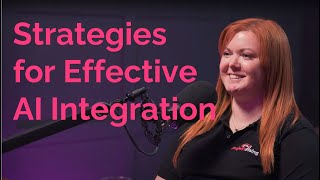
Tim Davies and Meg walk through how Project Rising uses AI tools across their business: Clap for viral clips, Midjourney for images, Fireflies for meeting notes, Cast Magic to turn transcripts into case studies, O1 for specs and pricing, and Guide for how-to videos. They focus on time saved and the prompt engineering that makes each tool work.
Essentially, Clap is great because it will look for the most viral or the most likely to go viral parts of every single podcast. It's much quicker than anybody could actually be cutting together these. These different clips and shorts. All of that is done by AI. I can remember days before Fireflies, where essentially I would block out time in my calendar 10 minutes after every single meeting, just to take my scribbled notes where I've been having to look down, not make eye contact with a customer, whether that's on Zoom or in person. I'm then blocking time out to then put that back into a CRM and that's 10 minutes gone.
I think we'll still get to a point where we need a second, Megan, but the amount that any of us are able to achieve, it's mad. Is just insane. The throughput we have as a company, and if we went back 10 years ago, I don't know how you do it with less than 50 people.
I wonder if there's a way of working out exactly how many man hours one person is saving. Hi, I'm Freya. Welcome to the Skynet Business in the AI Age, the podcast that dives deep into the world where artificial intelligence meets business. Join us as we explore the latest trends, check out challenges and opportunities in this ever evolving landscape. From innovative startups to established enterprises, we'll uncover the secrets behind the successful integration of AI technologies. So grab a cup of coffee, sit back, and get ready to unlock the mysteries of business in the AI age.
Good morning, Meg. I'll just do another quick, quick swoosh.
Sort the hair out.
It's okay. We're all good now.
Morning.
Welcome.
Thank you very much.
So today we're going to talk about your job at Project Rising and the different AI tools you use in order to be successful. When we recruited you, we recruited you to be a sales and account manager. We definitely didn't mention marketing, but you've definitely taken on marketing within your role as well, haven't you?
Yeah, happily as well. I really enjoy it.
So, obviously you're spread in lots of different directions. You're maintaining account relationships, you're getting a feel for what things could be different, what requests we get from the customer on the software we've already deployed, how we can convert their requests for content into future phases of work. You're also helping close new customers, and you're helping to share the story of the work that we're doing at Project Rising to a wider audience. So I don't think sales and marketing should be in that order. I think it's marketing and sales in terms of the logical process order. So let's start with marketing.
Okay.
We do this podcast and we have conversations with our customers, the lovely folks here at L Draw, then edit that video and turn it from being three cameras of fun into a seamless video. But you then do some magic with that in order to create the social media content, don't you?
I do, yeah.
So talk about that process.
So we use a software called Clap. Essentially, I take the YouTube recording and clap does a lot of the heavy lifting. And essentially Clap is great because it will look for the most viral or the most likely to go viral parts of every single podcast. It grades it on its virality score out of a hundred. Usually everything that we use is above 60 and it takes a little while to kind of process the video. But once it's done, it's much quicker than anybody could actually be cutting together these different clips and shorts. I make sure every single one is under a minute so that it's nice and short and catchy, but the rest is really done for me. So the captions. The only thing that I might have to do is change a little bit of American spelling. But other than that, Clap does pretty much everything for us. We've picked our brand pink colors for the wording and essentially that short video is then uploaded into our social media calendar and posted out. And a lot of the heavy lifting in between with the editing, the searching for the most viral part of the video, all of that is done by AI magic.
And it even chooses the emojis, doesn't it?
It does, yeah.
It just throws in emojis that work with the.
Sometimes.
It can be a bit heavy handed with emojis. Yeah, it can, but it's then taking that long form content and converting it into a raft of shorter form that work really well on TikTok, YouTube and all of the other channels. Really?
Yeah, yeah.
And it's fascinating watching one post that's produced perform differently on the different channels.
Yeah, absolutely.
And you can't really forecast it, can you?
No, no. That, that virality score that Clap gives it sometimes is. Is okay and. Right. You can definitely anticipate where in a podcast it's going to come up with those most striking. It's all to do with. It's looking at the, the content and what that catchy theme is that's being talked about in that specific clip of 40 seconds or something. But yeah, there's really no guessing beyond that what software or I guess what social media platform could sort of meet expectations and which ones can't. There's no rhyme or reason.
What it doesn't do yet, but I'm hoping it will soon or alternative will, is it's producing that sort of 45 second to a minute length video. What it's not doing is choosing the hookiest line in that video and putting it at the front.
Yes.
Because that immediate consumption drives how much the rest of the video is watched. So I don't know whether it's going to be that or Opus or something else that does a really good job of that verse, but one of them will. And then the performance of the videos I think will improve even more.
My intention is to have a little shop around, see what else is on the market. Like you said, Opus may be the best suit for us. But as social media is changing algorithms and things are switching up a little bit, what people are finding catchy is perhaps changing as well. Maybe we need to kind of move with that and use different softwares. So. So I'm definitely going to be doing some testing out of other softwares as well. I think it's good practice to do that as well and make sure we're always using the best of what's out there.
Well, even just converting the most recent Mastermind class that's an hour long of video, converting that into something that's five to eight minutes long of the best bits, that's going to require a different tool than Clap that we use for the podcast clips. And we just have to test and play, don't we, so it becomes part of that playtime. We're evaluating tools, we're then recommending those tools to our customers. And so we're then helping more businesses replicate the things that work for us to help them make them more efficient.
Yeah, absolutely. And we're at the end of the day, we're talking to businesses, but we are running a business ourselves. And so sometimes there's absolutely crossover in things that we might be using ourselves and things that other businesses could be making use of. So if we're giving it a go, playing with it, trying it out for ourselves, I've recommended various different things that we use ourselves to other people because they're facing the same needs or challenges or whatever it might be that we are as well. So why not sort of give that firsthand recommendation or advice on whatever we need, whatever they need as well.
So some of the content that we post on social media isn't video. It's images and words supporting specific campaigns and interest areas. So Talk to me about. Well, no, not even talk to me. What's your favorite text to image tool right now?
So this is my favorite part of the job altogether. The marketing side. Absolutely. I use Midjourney to create all of the imagery that we put out on social media. It's, it's. I guess you fine tune the process and then I've kind of taken that over. The prompt that we use is. Is identical every time except for the description of whatever the scene is, whatever the object is. So I can't remember it off the top of my head. You might have to help me out.
I don't want you to say it. Secret scroll.
There's definitely. There's the, the. The prefix which will be, you know, whatever it is. I think recently I've done, you know, a scene of a person holding a. Onto a steering wheel, driving in a car. So that part would change. But then the ending, using these colors.
In this particular style essentially is the construct of the prompt.
And that's how you keep a consistency in all of your imagery. And yeah, it's just. It works seamlessly for us.
We've been using that now for. I think, I think the January 24th website overhaul was the first time we used that particular process for all of the imagery. We've then continued with that same prompt structure on Midjourney as it's evolved. Thankfully, it doesn't need discord anymore. So it's a lot easier to use than it used to be. Yeah, but it's amazing, isn't it?
Just works great. It's such good fun. That's the most fun. Yeah, it's such a good. You have to. You have to be quite specific with it, I would say, because by using the term AI, a prompt can be very easily swayed towards a robot, towards just a person that is a robot. So you have to be very specific and very descriptive. That's something I've learned as I've gone along. Otherwise, just every single social media post that uses a static image would have a robot on otherwise. So it's actually. Yeah, that's a learning curve, but that's what it is, isn't it? It's always forever changing and sort of as I've been hired and have learned how to use these different tools, it's definitely something I've picked up on.
And I recently was playing with a tool called Cling, where I took the nebula image that we use, which has sort of got the twinkling stars and it's in brand colors, which was created with Midjourney And I put it into cling AI and said, animate. The flickering of stars and moving through the nebula just blew me away. And so just earlier this morning, I was talking with Chris here about how he could be using it for animating logos and the power there just to. To produce something that would normally take hours of editing. Being able to get to something useful quickly is fantastic. It's just democratization of capability.
Yeah. I would say you are very in tune with how to describe something in a prompt to get the best out. And that's something that I think when it's imagery and you're creating something, you have to be quite specific about. You've shown me the nebula kind of swirls and things, and the descriptive words you used in that prompt are something that I think really brought it to life. So that's something I don't think I. It's not always necessarily needed, but I think it helps to bring something to life more.
And I think that's prompt engineering in general.
Yeah.
If it's crap in, crap out. If you ask for a picture of a Smurf versus describing the scenes, describing the characteristic traits, describing what it's doing, you get so much more. And so whether you're interacting with text to image, text to video, or just text to text, how you describe something and what you're trying to achieve, and the more descriptive you are, especially with the more capable reasoning models, it makes a huge difference.
Yeah, huge difference.
Okay, so in marketing, you're using Midjourney, you're using Clap. What other tools are you using on a regular basis?
I mean, there's socialbee, but it's not hugely AI based.
So we're using that for scheduling, we're using metrical for reporting.
Yeah.
And then HubSpot, obviously, for CRM in general. But we're not using much of the automation within HubSpot, are we?
We're not. We could be. We absolutely could be. There are. I've just thought of one. So Cast Magic is something that we will use heavily for case studies. It's great. It's perfect for case studies. Whether that is a podcast recording where we've sat with a customer, or whether it's me actually going out and sitting down and asking a series of questions to a customer, and then taking that Fireflies transcript and turning that transcript into something on Cast Magic, which resembles quite a detailed case study. You can ask it to focus on certain points or certain subjects, or you can ask particular questions to get back certain quotes about. So I ask it things like give me five really positive quotes about Project Rising and that then translates into what might be used on the website or on social media or what have you. So it can be used for a lot of different things.
So essentially within Cast Magic, you're feeding in a recording or is it a transcript? Is it? Or is it.
It can be either. It can be a transcript or a record.
And then there are bank of prompts which are either standard or we've customized.
Yeah.
Which are then run against that recording or transcript to extract specific content from the interview or whatever the content is. So you can create a blog post, you can create a testimonial, you can create a series of specific comments or quotes by the customer and instead of having to go through it and scour it all manual.
Yeah.
Effectively you just run, run this, run this, run this output.
Yeah. And it's great with, I think it's nice to almost have a roughly kind of uniform way or format to our case studies. And so by repeating and saving the same sort of prompt, there's a little bit of variation in there, but it pretty much follows the same sort of format. So you've got, you know what the problem is, what the discussion was and what the solution was, and then return on investments, benefits, all of that kind of thing. And you can see through those that are on the website, there's a, there's a pattern to them, but it's not so rigid that it looks like it's been done by AI. And I've obviously gone in and tweaked them and changed them slightly as well. So it, it's a good process. Yeah. And when there's just me doing kind of these little switching the hats up. Why not make use of AI in those sorts of ways? So, you know, I'm still sitting there with the client asking them the questions, building a good relationship and you own those relationships.
So it's just working off of that, produce good content, isn't it?
Yeah. And it's just making use of what's there, what's available.
Fantastic. You touched on call recording and meeting recording. And the tool that we're using for that at the moment is Fireflies.
Yes.
So any meeting that we have on teams, Fireflies attends and it produces the transcript, it produces a summary, it produces a list of actions. But also for in person meetings we use it. And I think we've, we've still only really been scratching the surface on what we can do with that information. We've essentially got all of the customer conversations we've had in the past year, we've got the transcripts of. So now we're getting the ability to mine them, to extract consistent information, to use that. Objection. Handling, for example, to produce content in advance. And we would never have had that if we hadn't been recording those conversations. When you look at a business, the most critical asset they've got around them is the data.
Yeah.
We're effectively constantly harvesting data around our customer interactions and our relationships and our solution creation, which we can then reuse. And so any business that isn't recording their customer conversations, they're missing out on they. And it's so easy to do. Yeah, it just turns up, doesn't it?
Yeah, it's. It's brilliant. It's such a huge time saver. I can remember days before Fireflies where essentially I would block out time in my calendar 10 minutes after every single meeting, just to sit there and scribble, take my scribbled notes where I've been having to look down, not make eye contact with a customer, whether that's on Zoom or in person, and not connect with them to write down my notes. But then a total mess as well, because I've not really been concentrating and doing both. Can't multitask. So I'm then blocking time out to then put that back into a CRM and that's 10 minutes gone. Whereas that's 10 minutes I could be moving on to the next thing or using that transcript, which we now do, taking that transcript and putting it into a large language model to actually start with the next steps, with a to do list, with a checklist of what needs to be done, with notes and specs for devs and whatever it might be, you're already onto the next step in that 10 minutes after a call. So in terms of efficiency, it's huge. But in terms of actually, like you say, the data collection and what we're, what we're collecting, in terms of the company's intentions and whatever, it can be looked back on as well, if we ever need to, which can sometimes be a lifesaver. If there's one tiny little detail on a project where a developer has come to me and said, you know, does it need to be this? Or does it need to be this? And it could be something. So minute I'm like, that's fine, I can just go back and ask, check the, check the transcript or listen to the recording and, and find out exactly what was decided. And that's, that's just that ability to.
Ask a meeting questions. Yeah, who said this Ding.
Yeah.
What were they talking about? This.
Yeah.
It's magic. Really is.
From an account management perspective, it's awesome because there doesn't have to be. Before this, I would have had to go back to the client and ask them because there would have been. Unless I'd written it down on. You got to go back through a notepad.
That's always terrific. I never had anything I could read and most of the time I'd got rid of it before I needed to actually use it again.
Yeah.
So I just. I've spent 25 years winging meetings, hoping that I remember the important bits exactly and now just don't need to. So you can be that much more focused and engaged in the meeting.
Yeah.
You can ask the loaded and pointed questions to get to exactly what you need to without having to make the notes because it's all captured and then we can use it.
We even have our kind of calls where we are thinking about writing proposals for clients, don't we? And there are particular questions we will ask. Or structure a conversation knowing AI is listening and knowing that it's going to go into AI to be processed and churned through to produce a proposal at the end. There's almost ways that we structure our conversations, isn't there, Knowing AI is listening.
Well, I was in a one to one earlier in the week and Ollie specifically stated the action exactly as he wanted it remembered because he then didn't need to make a note. It's there in the transcript, it's identified in the action list and those actions can be automatically pushed through to other systems, as we found out, when it wasn't working quite correctly in pushing into HubSpot tasks.
That was interesting.
Meg had all of the actions for everybody that she'd been in a meeting with. Brilliant.
There were 700, I believe.
Did you complete all of those tough ones?
I did not. I did not.
But that capability is amazing and it's so integral to how we run the business that data capture and reuse. We have it in all of our one to ones, all of our internal meetings, all of our customer meetings and in fact, if it doesn't turn up for some reason, something's gone wrong. There's a bit of mock panic. Quick, get fireflies here.
You do. You become to rely on it so much and when it's not there, you. You do. You're sort of stuck and you think, would you.
I'm gonna actually.
I've got to pick up a pen. Oh, my goodness.
I kept that post it pad for a reason.
Yeah, exactly. But it is. But like we've just said that there's no competition between our scribbles and our notes on paper to what it picks up. It's. Yeah. So we need it.
And there are a variety of different tools in the market, but when we did original testing and I put them through the swearing test to see which one of them accurately recorded what I said, and there was only one. And that tool also works cross platform, doesn't care whether everybody's in the company or not. So it outperforms everything else that was out there and it's integral now, isn't it? Can't imagine a company without it. Which is crazy considering two years ago we weren't using anything like it.
I know. What surprises me is the new feature that everyone's talking about with slightly off topic, but voicemails and how it's now transcribed on an iPhone, it's really bad. It doesn't transcribe well at all. And. And yet we know the capabilities are out there for, you know, something that's on a phone line which, I mean, you've joined calls through your phone before on Fireflies still picks up perfectly. So on a phone line, but transcribed really badly. And there's no. You can't make any sense of it. Yeah, but you know, the capabilities are there.
Yeah, it works. It works seamlessly and it's reliable. And yet that Apple have implemented something that's half assed and doesn't work properly.
Yeah, was not good. And yet some people are amazed by it because it's like, oh wow, it's transcribed. And I'm like, yeah, but badly.
Nobody ever said that. That doesn't make any sense. Yeah, yeah, it's fascinating. Okay, so we've covered some of the marketing tools, we've covered the use of call and conversation recording. How about how we're producing our first draft specification and costings? Because that process is. I think a lot of people don't trust large language models and they're probably right not to trust them. But if you're asking very specific questions, you've refined the prompt so that it does exactly what you want and then you're reviewing that content and checking that you agree with it. It's massively accelerated our production of specs, our production of pricing, our production of the proposal. So do you want to explain a bit about how we're using O1 for that?
Yeah, of course. So we will always begin with a transcript. And that transcript will be from Fireflies, from a call that we've had with a potential client to build a specification, a proposal for a customer. And so it will be specifically based around a project that we're pitching to them ultimately. So we need, for starters, we need the proposal to have all of the qualities in it that we want to big up the project, sell it to them ultimately. And so we've devised a series of prompts that can draw out the most and specifically what we want it to be explaining and selling from a transcript. It is always a transcript, isn't it? So it's always words in, words out.
And I mean it's still words in but also web searches on that company in order to get some of the background.
Yeah, so we start with a bit of a template where the tool that we've built will we put in a web URL for the company along with the title of the solution and a couple of other things as well. And what is produced is the start of a document which has done a background search on the company and given a background statement. Then we work on a major opportunity statement, a solution statement, a problem statement, and that's the beginning of the document. So it's really sort of laying everything out as we've sort of understood it.
And how the consistent format.
Yes, exactly. The prompts are very, they dig right deep into specific things, don't they? So we want to be able to find out exactly the expected time that it's going to take one of our developers to build something. We might add or remove certain steps and phases because we were in the room with the people, weren't we? We're in the room with the client so we, we know exactly what was discussed and sometimes AI will add things in and it's very detailed and sometimes it doesn't need to be. Sometimes we just need top level overview.
So we need the detailed solution description for the developers. Yeah, and O1 is producing that detailed description based on the conversation with the customer and some extra information we provide. And then it's also producing a breakdown of the key areas of activity within the project and based on how we've told it to calculate time, it gives us a range of how long that's going to take the developers. Yeah, we're then able to run that past the developers and they'll go, we're not actually going to do that section at all. Or because we're using this as a baseline, we don't have to include that. We're able to replicate it from an existing project and that's a bit long or that's not Long enough, but it gets us to a draft task breakdown and duration almost instantly. And then based on that conversation with the developers, we're able to get to a price very, very quickly that is grounded in how long it's actually going to take us in order to make sure that we're making the margin that we need to run the company.
It's a nice calculative way of being able to know how long something's going to take, therefore how long it's going to cost. And it means that that burden, not that burden, but that can be taken, that job can be taken off of you slightly, can't it? I can then go ahead and sort of make these first drafts and all I have to do is run it by you at the end to make sure you're happy with it, rather than it being, you know, a very sort of labor intensive back and forth.
And we'll get to a point where I don't have to have any involvement in it. And then, happy days. Because pricing and specs are things that should be driven by development and the customer requirements versus needing my eyes. So I think we've now got a process that allows us to move more quickly, allows me to focus on having the conversations with customers about something new I've been playing with or the team's been playing with versus just spending our time working on the proposal process. It's exciting and I think the consistency we're getting in there and the level of detail that we're able to get from using O1, which just wasn't possible with any of the previous models, and now baking that into our application, now that we've got access to it over the API. Thank you. OpenAI is brilliant because it just means that we can make it seamless.
Yeah, yeah. Always evolving, always looking for new ways that we can make even our processes much easier and much simpler, aren't we?
Yeah. And that then carries on down because the proposal tool that we're building into, the toolkit, will take on some of these abilities and will offer those as configurable modules within it. You want to knock out a proposal, do you want to include pricing? How are you calculating pricing? Here's the model. And it can then be consistent.
We're like live testing our ideas, aren't we? We're the prototypes to then pass on to potential clients in the future.
If it works for us, then it'll work for anybody, won't it? So we just kid in a toy shop, really?
Yeah. That is the fun part about it, definitely.
So that covers off some of the sort of the proposal side. How else are you using AI in your role?
So I think from an account management place there, there is some really good tools out there for specifically I guess what I need. So at the end of a project, once something's been built, I think it's a very good sort of practice to put in place to supply how to guides on everything. You know, if this is being rolled out, this software that we've built is being rolled out to an entire company and there's a team of people who need to know how to use it as well as live demos and things. It's very useful to just have to hand guides on everything and how things work or troubleshooting or whatever it might be. I use a software called Guide. I've used it a fair few times now and I think it's really good. It essentially records your screen. You run through how your demo would be if you were presenting it, I guess to the team. And as soon as you click stop, you see it being built in front of you, which is something I love about AI. I like literally watching it appear before.
My eyes, self building Lego.
And I suppose they do it for effect, don't they? I'm sure it's all there recorded in the background anyway. We know, don't we? But it's the way they make it appear before you and it's literally typing out the words I haven't spoken on this screen recording at all. It's all done just by me clicking around, but it's watching my cursor, it's watching where I click and it creates a script. And then there's, there's options. You can either have somebody present, you can have an avatar in the bottom corner, you can pick who you, what you want them to look like, what accent you want them to have, whatever. But it will essentially stick to a script of something that's been AI generated. You can go in and edit it. It's very specific, so sometimes you just want it to say click on login. But it can be really specific so you can tweak it, you can change it. And essentially it's taken screen grabs of everything. Everywhere you've clicked it nicely highlights as well where your cursor is and things like that. Just makes it really user friendly. And it's a very, very good tool for saving me a lot of time. I've been subject to creating lots of how to guides in previous roles. It's just part of account management. It's part and parcel I think. And I've had to do them by hand before and they can take a day to do a whole tour of a platform. And these I can do as quick as I can. Click. It's making it so. So it's a huge time saver. And that's kind of my favorite new tool, I would say, that I've started using and I can whip one up really quickly, which obviously then when it comes to kind of the release of a new product and getting it out to a company, it all just means there's less delay and it means that I can get those out to the team that need it even faster.
So over the last year, you've seen a lot of new tools and capabilities evolve.
A lot.
Can you jump forward 18 months, two years and imagine the sorts of tools you're likely to be using then?
It's very exciting to think about that and just how much more from one person, what I could be doing and the capabilities that I could have to be able to do different roles. But keep it with just one person is insane. You know, I can't imagine there needing to be, I guess, like another one of me because it's. So long as we're testing and playing and making the right informed decisions on what tools to use and prioritising and working on my time prioritization, there's so much that one person can do if they're using the right tools. Yeah.
I think we'll still get to a point where we need a second Megan. But the amount that any of us are able to achieve, it's mad. It's just insane. And you think if you look at the throughput we have as a company, and if we went back 10 years ago, I don't know how you'd do it with less than 50 people. It's just crazy.
I wonder if there's a way of working out exactly how many man hours one person is saving, say for example, in our company. You know, like how you can because.
You just get so used to the new status quo.
Yeah.
You go from, okay, we used to make notes and we used to send out minutes.
That alone. Yeah.
Just crazy. It used to take what, two, three days to put together a good proposal. Building a solution might have taken months to being able to get to a reasonable MVP in weeks and potentially quicker. These things are just accelerating and compounding. So I don't know how you'd. You could do a bench exercise, you could write it all out. Here are all the tasks we do. How long would it take? But I don't think we'd believe the numbers because you just get so used to it.
Yeah, and we're already very used to it. We're already, I think, so blinded to how much time we save compared to a regular company. I think if a very traditional company came and watched us for a day, they'd just be in awe of the different shortcuts and things that you can take with AI to get to where you need to be. I think some people would be gobsmacked.
Yeah, I think a lot of companies just don't have the mental agility to make that shift. They're so focused on this is how we do it. And that way of doing things is gone. And so the companies that are shifting into AI tools, that they're embedding intelligence into their processes so they happen without human, as much human review. You still need a human in the loop compared to traditional businesses. It's just doesn't make any sense. You can't operate in that way and be able to be high performing now.
No, we, we set aside time within our week to play with new tools. And even if we come away from that time and are thinking, do you know what, I don't think that's for us. Some people might see that as a wasted, waste of time. That's, that's time wasted. Oh, you could have been doing, you know, this, this and this instead. But I think that's the difference between us and other companies out there is it's not wasted time because we could have looked into that, that could have been the next best thing for us. And obviously, sort of over time, you know, the chances are if you play with that many tools, some of them are going to be great and they're going to be put to work. But that, I think that's the difference between sort of an agile company who are looking to move forward and forever changing and being able to keep with the times compared to someone who might be a little bit more static or ahead of the curve. Of course. Yeah, it, yeah, you, yeah, it's just part and parcel of the industry I think, isn't it? For us? But maybe we take it for granted.
Well, I think we do, but we learn from it too. So we're able to share those findings. When somebody goes, oh, what's the best tool for this? Well, we tried this, this and this. Based on the analysis in Playtime, we recommend that one. And this is the tool we're using internally and this is how we're using it.
It's all from Experience priceless for other people, isn't it? Yeah.
We're not just spouting, we know stuff about AI, we're playing with it day in, day out, building things, testing we moving forward and ditching anything that isn't good enough. Yeah, it's a lot of fun.
Yeah. I've even dabbled with. I can't seem to remember the name of it. It was the ux.
Oh, UX Pilot.
UX Pilot.
Yeah. That's good.
I think. I'm not a UX designer, but put a UX designer on that and the possibilities are it was awesome. And I guess that's just me dabbling in another. Another world of. Yeah.
Customer journey. Mapping to user interface is something that's evolving very quickly and being able to again go from a conversation with a customer to. In order to achieve that ideal, here's the best user interface and then converting that into an application. It's moving very quickly.
Yeah, it was.
And you can get something and get something pretty basic almost instantly.
What I was putting in was bringing back okay stuff, but yeah, with a better prompt it would be insane.
Yeah. And then that being then handed off to a development environment which is also working with AI in order to produce content. Yeah. Amazing.
Yeah. Yeah, it's good.
So it's not going to stop, is it?
No, I don't want it to.
You don't want it to.
It's great fun.
Can you imagine going back to EdTech?
No. If I did, wow. It would feel like. It would feel like going back to the dark ages. I think education technology itself is really accepting AI into its. Its world. But I don't think the companies that are running the education technology are doing everything that they could be. But perhaps that's just, you know, that the education's not there in themselves to know, because I didn't before I started working here. You know, it's just. It's like any industry. It's just opening your eyes to the possibilities. I do think it's more advanced than other industries. But everybody's got a way to go, haven't they?
I think so.
That's. There is no end, is there?
And that's why this sort of, this journey, this transition so important that we're telling as many people as possible as possible.
Yep.
Because if you don't get involved, you're just being left behind.
Yeah.
And I say that and people look at me like you're just trying to sell. Actually, I'm not. I just want you to benefit from it. But just try this. This and this, you don't need anything from us. Just use these tools and tell me whether it worked for you or not. And if it did, let us know what else you're struggling with. Yeah, because there's so much potential. We don't need to sell solutions. We don't need. Because we can describe how to be more efficient and then companies will want to embed some of that capability and then that becomes a service for us.
Yeah, yeah. It's just getting a toe in the door, isn't it? A step closer to convincing people, hey, look what it can do, you know, go and use it for yourself. You don't need to hear me kind.
Of preaching about it, because it's not about the sale for me. It's about helping companies. And sometimes that means we help them, we don't make any money from them, and so be it. If they're then able to say, well, we were working with Tim and the team at Project Rising and they just told us we needed this. They know their stuff, something good will come of it. It's like give us gain mentality. We don't need to benefit from every customer interaction or conversation we have. We're just helping to spread the word of what's possible.
Yeah, absolutely. And there's a lot to spread, isn't there? There's a lot out there, a lot of new advances, a lot of good news stories for AI. And it's always a hot topic, isn't it? Anytime you bring up AI, even. Even if it's just you and I talking about weddings earlier, if you're a wedding and you sat next to somebody you don't know, what do you do for work? Oh, I work in AI. And that's it. You're off. There's a conversation starter.
Yeah. Even if it is very quickly about.
Robots, it could be anything, couldn't it? But yeah, Terminator will come up at.
Some point in some conversation. It's guaranteed.
Yeah.
So what's the thing that you're most looking forward to using AI in the next three months?
I think it would be. It would be great to get my teeth into a voice AI project. It's not something that I personally, we as a company have explored in voice AI projects, but for me, I would love to explore that a lot more and the capabilities. And hopefully there is a project sort of on the horizon where, even if it's just on the account management side, I get to dig my teeth in.
Sold. So let's make a Meg voice assistant.
Yeah. I have dabbled with cloning my own voice before.
So let's do a complex clone. We need a. I think we need greater than 10 minutes of you speaking. Okay. But then from that we'll create a clone and we'll do some test customer calls because then they've already. They know that we're going to be using AI and they're comfortable with that.
Absolutely. I mean we've, we've set up a process before, haven't we, in the past, where if you call a certain number for Project Rising, you get through to, I think, is it your voice asking if somebody would like to book in a meeting?
I think we dabbled with that and then changed it to something that definitely wasn't me because that just seemed a bit weird. And I quite like the idea of Meg making some customer outbound calls to book in follow up meetings.
Absolutely. Yeah. It would be good fun. It's probably the form of AI that I've used the least myself. I've used it for some funny presentations and things where I've cloned my voice and welcomed people and it definitely is memorable. People have remembered that, that I've done the presentation to. But it's. It's one of the lesser modes that I've, I've experimented.
It's not very widely adopted yet either, but the capabilities are there.
It's. Yeah. And it's only getting better and better, isn't it? I think even since I started at Project Rising, I've seen a huge difference. I've seen a really significant sort of increase.
New releases every couple of weeks from one of the companies behind it.
Yeah, that's definitely the next box to tick off, I think for me.
Okay, cool. Done. Exciting. Right, we better go back and start planning that one then. I want to start playing.
Absolutely. And again, it just means that when I'm sitting opposite a client, it means I know a lot more about it and have used it firsthand. Like we keep coming back to. Really it's all about knowing it ourselves, isn't it? So that we can talk about it and recommend it.
Fantastic. I think that's a great place to stop. Thank you very much.
Thank you for having me.
More from Tim

EP 60: Why Founders Become the Bottleneck — And How AI Changes Everything | Thea Brook









