
Ep 33: Brand Engagement: The Winning Game Plan
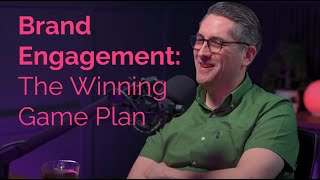
Tim Cooper and Freya talk with Peek and Poke about building branded HTML5 games for marketing and events, from Match-3 games to arcade cabinets. They cover how the studio evolved over a decade, then shift to AI scaling laws, where computing power per dollar doubles roughly every six months, and what that means for game production and creative work.
So whereas Moore's Law was doubling of transistors every two years, scaling laws is approximately doubling every six months. And that means the cost of intelligence is trending to nothing. How quickly can we get a reshoot of Game of Thrones series 8 so that it doesn't feel quite so rushed? I think we could probably do it end of this year.
I do wonder if it'll ever get to that. I think that 10 years ago or 10, 20 years ago, when everybody started having, you know, more powerful laptops and computers and things, there was a real shift in the creative industries, you know, because suddenly all of the tools that were, that people had for doing professional grade production, you could run on a laptop, but really all it does is it allowed those people to get a bit further along the journey. There's still that last 10, 20%, which, you know, which is the difference between.
A good film and a shit film.
Absolutely, yeah.
Hi, I'm Freya. Welcome to the Skynet Business in the AI Age, the podcast that dives deep into the world where artificial intelligence meets business. Join us as we explore the latest trends, challenges and opportunities in this ever evolving landscape. From innovative startups to established enterprises, we'll uncover the secrets behind the successful integration of AI technologies. So grab a cup of coffee, sit back and get ready to unlock the mysteries of business in the AI age.
So, Tim Cooper, owner of Peek and Poke, computer gaming legend and friend of mine for, well, most of my life.
Yes.
Great to have you here.
Thank you very much. It's good to be here. We first met when, I think it was my 16th birthday party, wasn't it? And we've, we've known each other ever since. So, yeah, you asked me to come and speak on this podcast and, and.
We'Re not going to talk about those early years. We'll just pretend everything was always professional.
I've been told not to, not to mention any of them.
So tell me about Peek and Poke.
So Peek and Poke, we're a. I guess the best way to think of us is a bit like a games company crossed with a, with a marketing company. So we, we essentially make games for brands. We have a suite of games and we customize them for a brand to use in their marketing activity. So if you're someone like Green King or JD Sports and you've got customers and you want to punctuate your other marketing activity, you want to do a fun thing to kind of engage with customers in between purchases, that sort of thing, we have take our games and we customize them to the, for those different brands depending on, you know, the, the campaign and the scope of the project.
So tell me about one of those games. Look at the skiing or the football one that you've been promoting recently.
Okay, so those, yeah, both of those are quite recent games. I guess the skiing game is quite typical. We make a lot of our most busy time of the year is at Christmas. So every year we have clients and they want to uh, they want to do a new Christmas game and they, they, they, we have some clients who've been with, with us for 10 years plus and each year they want to do a, you know, a fun different game.
It's a.
But particularly on the B2B side, they, they really want to send a, a kind of a fun thing to their clients, to their customers. Just a sort of one client once described to me, it, it to me is a bit like the, the fun Christmas tie, you know, in terms of all of their marketing. It's a way for them to sort of let their hair down and sort of kind of connect with their audience, have a fun way. So that skiing game is fairly, it's about average size for those sorts of games we make. We don't make, you know, Call of Duty or anything like that. They're not mobile games, they're all HTML5 games. So they work in a web browser, either on your phone or your desktop computer. They can be very easily shared.
With.
A customer or a client.
And you'd expect people to play that once, twice, three, four, ten times. What was the most recent record?
Well, we do have some where the players will play for sort of thousands of times, especially our Match three game. That's, it's very, it's quite engaging. It's only got 10 levels. But people, there's something about a match three game, if you get it right, that it's very.
I'm sorry, I'm stupid, I don't know what Match three.
You don't want to. Okay, Match three. Have you played Candy Crush?
I have played Candy Crush.
Okay, so Candy Crush is a Match three game. It's probably one of the kind of the, the best well known Match three games. So we've built a like, I guess think about like a cut down version of that. But we put a lot of time and effort into the way it feels, into the way that you kind of interact with it and you're matching whatever the tiles are, they change for different brands. So some of our clients will take our off the shelf games. We call them ready to go games. And in Those ones, they will stick a logo on them and customize, then send them to their audience and off they go. For the larger brands that we work with, they'll want to customize it a lot, a lot more. So we'll recolor it to their brand colors, we'll add in brand characters if there's a. For some. We did a Match three for IBM fairly recently. So it was just putting in like various product logos that you're matching, that sort of thing. So that, yeah, our Match three game is one of the. Is the most engaging I think, because it's very, it's a very understood mechanic. There's something very zen like about playing it. It's not very unlike some of our other games, like that skiing game we mentioned. That's a very twitchy sort of game that's about you start off slowly and you get faster and faster and faster and it's seeing how far you can get. So that's the. There's a running theme to all of our games. They're quite simple to play. We don't for budget purposes. They need to be fairly easily reskinable for clients. But we put in quite a lot of effort into making sure that that slice of fun that you get is actually fun. You know, that's the thing. Many, many years ago, we used to make bespoke games, bespoke flash games for clients. And the problem with, with that business model was that there was never enough time and never enough budget. So you would end up with a client would come to you and they would say, we want to make a game, it's going to be really fun. And they have. They'd come up with their fun game and we would build it. And of course the mechanics weren't ever right. Yeah, it was all built around the brand first and foremost. So it was built around the message that they were trying to get across, which is fine. But it doesn't make for a fun game, especially when you've got a tight deadline and a tight budget because you just run out of time. So yeah, about 10 years ago when the. Had to reboot the business and when that happened, we moved from working with Flash technology to HTML5 technology. And at that point I decided that we had been sort of thinking about changing the way that our business model worked. Various clients had been struggling with budgets for even, you know, for games and we were struggling to get them to work properly at the, at the, at the budgets that they had. And I was getting a bit tired of delivering stuff that I couldn't quite finish. You know, I always wanted to really put more effort into the games and make them better and make them, you know, really polish them up. But we never, there was never the opportunity to do that. Not. Well, there were sometimes, but it was, it was tough. So when we rebooted 10 years ago, when we became eventually what we are now, peek and Poke, we decided that we would have some games that we had worked on initially. We would work from a base. So it started off and we just had some core frameworks and tech that we would just build upon and then we would tailor those games to clients. We still do that service, our tailored service. But what we found after quite a few years was that people would come to us and they would say, oh, I want that game. You know, how much does it cost? Or they would come to us and they'd say, I want a game. Oh, this is what I want. How much would it cost? And we tell them, they go, oh, okay, I've got, I haven't got that to spend. What about that one there, that Christmas looking one? Can I have that? Can you just put my logo on that one? And we would go, oh, well no, because that's, we've made that for that brand. You know, we can't put your logo on that brand's game. And this happened enough times, I thought.
Maybe actually they're telling us the message here, aren't they?
What we should do is we should build a game that we can put a brand on. So we did that. I think it was about six, six or seven years ago. And that turned out to work quite well. So that's what's become what we call our ready to go service. And that started off as quite a man process, but over the years we've just been building that the kind of the, the tech in between. So now it's almost not quite put.
Name in, choose color, put in logo and it does it. But it's on that path to automate basically that.
I mean, you can't choose the color of the games at the moment. I mean we've talked about doing it, but then it just gets a level of that. It's just not worth it at the moment, but it is. You get an editor, you can change all the copy in the game. You can, you can, there's, there's select placements to put other sort of prize images and, you know, logos and things within the game itself. So, so it's when you're doing a Christmas or a seasonal game or if it's A. It's a themed around, you know, your industry. For a lot of clients, they don't really need it to be fully branded, they just, they just want a logo in it. So. Yeah, but then for the bigger brands that we work with, they obviously, they're much more keen for it to be a fully branded experience, something that they can. That feels like it's there.
And so you've got sort of that gold, silver, bronze offer where they can have something cheap and cheerful if they want to not have a huge spend on marketing budget right the way through to fully. Something fully custom.
Absolutely, yeah. So we work on a licensing model for the core. The core game, we call them engines, but for those core game engines we have licensing. So you can have, you like to fit for a week, you could license it for a year. It depends on the use case. So for events, for example, that's one of the. When we're not doing Christmas games, we're mostly doing games for events. So you're going to a trade show. This is particularly for B2B. You're going to a trade show, you've got a stand, you're in a trade show hall. There's lots of people you want. You want to be able to coax people into your stand. You want a fun way to kind of bring them in. And if you haven't got any, you know, if you, if you haven't got many team on the stand or you haven't got super outgoing people trying to get people to talk to you at an event, you know, this is something I struggle with. Absolutely.
You need something to attract them in. You see some people running an exhibition stand and they've brought a baby or a dog. You can't always bring a baby or.
A dog, but you can. Or a bug for cookies or something. Yeah, absolutely. So, I mean, those things work as well. Right, but. But if you can sort of invite someone to play a game with you, you say, hey, do you want to play a game? We're, you know, giving away a prize of whatever that is. You know, it usually works best if it's something that you, that you offer, because then if someone's interested in winning the prize, your service, your product, then there's probably a good chance that they're.
You know, you're getting an engaging conversation while you're playing a game and that's it.
And inevitably it's, it's a really good icebreaker because it's. Because they come in and they play the game and they sort of ask you, oh, what do you do then? We go to shows and people say, oh, there's games everywhere that we're showing off and they say, what do you do then? You think like, well, duh, exactly.
So you're now embodying some of those games in an arcade unit for events, aren't you?
Yes.
Well, how did that come about?
That came about because we wanted to sort of have a bit more of an impact at our own events. So we bought, There's a company down in near Luton and they called Bespoke Arcades, I believe, and they, they create these arcade cabs that are, you know, for people's man caves and things like that. And so we, I bought one of these and had it skinned up with peek and poke logos and things and we took it to events and what have you. But it's quite fragile. It's got a glass screen on the front, this old machine. And it was just. We would take it as a bit of a spectacle to kind of help show off the games and show people what we were doing. And quite often people would say, oh, this is great, could I rent one of these?
Or.
How can I get one of these on my stand? So, thought about it for a bit. Well, I'm not sure you really could really do this. And we, we had one client and they, they bought one, they wanted to go to lots of events. They were a techie company so they were, they were quite keen to, you know, get one and, and they didn't mind getting their hands dirty. And this, this thing was quite fragile. I was like, I was like, I'm not sure that's a good idea. But so this, again, this happened enough that we start to think, oh, okay, maybe there's something in this. Maybe we should start to think about how we can, how I can make this happen. And the problem with it is it weighs like 80 kilos. It's a big heavy thing. So we were thinking, well, I wonder if we can make something that we could design it. So it's like a Transformer, you could take it apart and put it in the back of a car. So I went down this route of talking to manufacturers about how to do that and that was going to be very, very expensive, so making a whole new product. So we thought about it for a bit and thought, well, until we prove there's a real want. Need for it, then that's going to be quite hard.
So please tell me you MDF'd it with some hinges.
No, what we actually did is what we realized was that we were Thinking about the problem wrong in that getting the cab. The way that we were shifting the cab before is we had this dolly and we would lift it onto the dolly and then we'd have to wrap it in sheets and things and then lug it in a van. And it was just really hard work. And it needed two people at least because you are kind of like both trying to lift onto the thing. And the other thing with this machine is it was really hard to enter data because it was just. There was no. It was just a regular old screen with a. With a piece of glass in it. And you had to enter all your name details for scores using the, you know, if you want proper lead data, you want an email address. And some people have really long email addresses. And watching them kind of typing it.
Was just taking too long.
It was just.
It was okay if you had to put in three letters.
Absolutely, yeah. But then that's not very good as a lead, you know, so. So what we ended up doing was realizing, oh, it'd be great if I had a touchscreen. And so the other thing was other people would. People would use this old machine and they would try to touch the screen and just watching people go, oh, right, okay.
There's a lot of messaging coming from customers here.
Yeah, absolutely. Yeah. I often. The whole. My whole story of being in business has been kind of watching things and reacting to stuff that's happened. I accidentally started a Flash development agency because I, you know, 20 years ago or whatever it was because people just kept asking me for Flash work. And then when Flash disappeared, people were asking for. They were still asking for games. And so it just has always been. I wouldn't say I was particularly clever business wise. It just. One thing has led to another, has led to another, has led to another.
Surviving as a business is pretty much success nowadays.
Yeah, absolutely, yeah. So these arcade machines, what we eventually realized was we went back to the bespoke arcades place and we had them mount and I found some really good sort of gaming touchscreens which come from the, you know, the gambling world, I think. And I found some other bits of hardware that we wanted and I found a box, a company that would make the case a big. A massive case.
Like a flight case.
It's a flight case, yeah. So what are they called? NSP cases. And they. And they. I said, I don't suppose you can make a case. I want it to do this and we've got to get an arcade machine in it. And they were like, yeah, no problem. So I Sent them all the dimensions and they sent me all designs back and then we had this case. And actually because of these cases, you can actually get. One person can kind of. You lie the cap down in the case and then you sort of attach the rest of the shell of the, of the case into it and then you can tip it on its end and you load it in a van and all that sort of thing. So we've managed to solve most of the problems of delivery and now you only need one strong person rather than two. But at the moment I'm still doing the deliveries because it's still quite an early stage and I want to kind of iron out all the problems before we start outsourcing it to somebody else.
But you didn't set up in business to drive a transit van.
No, I mean, I like driving a transit van. Well, yes, it's quite good fun us. That's still fun. I'll probably still keep doing it for a bit. But the, the, the, the real reason for doing it is because it's, it's a value add for the, for the clients. You know, we, we have, we've actually got, I think we've got like three booked in this year now. So it's making slow momentum, slow progress. But it's. Again, it's just sort of things. I, I've always. I, I'm in business because I just. I like making games. I've always liked making fun, interactive things. That's always been my, the motivation behind what I do and the business decisions that I make haven't really. Maybe they haven't been the best business decisions, but they've been because I've been. Wanted to do it. I thought it was like something that would be fun to have a go at or that would be better for the project, for the game, for the outcome, you know, that sort of thing.
And so can you put any of your games into these cabinets now?
Most of them, but some don't really. Some aren't appropriate. So if you've got a Mastery game, for example, it'll work because there's a touchscreen on it now, but, but then you don't need the controllers. It's. It's like the best games are things like we've got a maze game, which is a. You know, it's a bit like Pac man, you know. And we have recently been working on this football game. So that's, we've got two control sticks for that. So that's as a two player. We tested that, an event we went to recently. That's quite fun because it's, it's you. You can have two people against each other at the same time. It's, it's kind of. You know, the thing about games is the way you make them even more fun is you make them multiplayer.
Absolutely. Rivalry.
Yeah. So that's it. Yeah. You want a bit of a trade show. That sort of thing is just people flock to it. You know, they go, what's this? That's what. Yeah. So which is the effect you want to. You know, I'm quite interested in the, in the idea about how games in physical spaces, like just how people react with them when we go to our events. I always love going to our events because I like to see people playing with them and seeing how they. Seeing what happens. It's like you see these emergent behaviors, you know, like they're tapping the screen and that sort of thing. It's about trying to, I don't know, just kind of evolve it, you know, keep building.
You can see that actual love for the game, which is difficult to see when you've skinned a game for a company and they're using it in their internal promotion and marketing. You can see the interaction based on. While somebody's played it 10 million times, okay, they clearly have a bit of an addiction problem to that particular game. Maybe they shouldn't be playing computer games, but. Whereas when you're in person, you can see how people are actually getting into it, loving it, trying those things and practicing on the games in the ways that you wouldn't think of it normally. And it's part of the reason we got into games in the first place is just being able to get people together and have a laugh over a game. And that was always the amazing thing. So tech is moving pretty quick now. Ready Player One was a great film many days, many years ago. Now VR hasn't really lived up to its expectations yet, but do you think we're going to get to a point where people stop going out and live in these virtual worlds?
I don't know about live. I think, I think there will be a portion of the population that might happen for it's, you know, some people are already doing that. Right. They're people who spend all their time playing games with or without a VR headset. It's interesting to think about the future and where will it go? It's only getting better and better.
It is moving really quickly. When you think back to when Doom came out, it was great running around and shooting things with a variety of guns and now people have made that run entirely in a large language model. So instead of having vectors drawn out, having it all just thought about at runtime through inference, which is kind of crazy. And I think some of the latest 590nvidia chips, I think a lot of their compute isn't ray traced. I think the basics are ray traced. And then they're imagining on top of that, on chip, on device, locally running in your house.
How fast is that running?
Insane fast.
Right. I was always wondering about that Doom test. I saw a little bit online about it and I was wondering if it was. What's it really doing behind the scenes? You're not getting a game experience, you're getting something that looks like Doom. Presumably it's not really been thought out from a. It's just inventing, isn't it? So it's not.
It is inventing. I think you're right. It's difficult to understand quite what's going on. I saw a fascinating series of tests running on Snake. So explaining the concept of Snake and then saying you're starting in this position and having two LLMs compete against each other. So you weren't expecting it to be real time. It was waiting for the responses. So, I mean deepsea was taking quite a bit of time to come up with its answers, but then scoring the performance of the models based on how often they won versus the others and just having this league table produced out of it. And now I've seen somebody doing rock paper, scissors in the same way. So just explaining the construct of the game and then having models fight it out to prove who's the best. So we're having.
And they're doing it with language models.
Yeah.
Not like custom neural networks or.
Nothing fancy at all. Well, incredibly fancy. Quite fancy. With immense training. But yeah, they're just explaining, here's the rules, this is your current location. Go.
Right. But presumably it's still quite slow because if you're talking to an LLM at the moment, it's still. It has to think about it. Right.
So it has to think about it. But the rate of acceleration in tokens per second is breathtaking. So we used to. We read about six, seven words a second and GPT4 was performing outputting higher than that. So it was a relatively strong thinking model.
Sure.
And it could operate probably 20 tokens a second.
Yeah. But when you're reacting to gameplay, you're doing it much faster than that.
Yes, you are. But now DeepSeekar1, the 70 billion model is running on cerebras and outputting 1600 tokens a second. Right.
I don't know what Cerebras is.
It's a specific inference chipset. So it's compute designed just for processing LLM output.
Okay.
So that rate of thinking is increasing. And while that's probably not quick enough to play a game against an experienced gamer, the impact it's making in terms of playing these basic games is it's getting faster and faster all the time. And the cost of that compute is coming down. So Ray Kurzweil has got this graph where he shows from 37 to now, this just logarithmic improvement in computations per second per dollar.
And is that cost as in the cost of the chips or is it cost of the power? Because there's a power consumption.
There is a power consumption thing, but it's a combination. And the scaling laws reckon that the compute, the tokens per second per. It's per dollar per watt, is improving every six months, doubling every six months. So whereas Moore's Law was doubling of transistors every two years, scaling laws is approximately doubling every six months. And that means the cost of intelligence is trending to nothing. So it's going to get quicker and quicker and cheaper and cheaper for thinking to be done.
Do you think you'll just continue or do you think you'll just reach a limit to that?
There's been a lot of talk about a plateau and about the cost of the training of these models effectively increasing by an order of magnitude each time. And obviously that can only go on so far because there's only a finite amount of money in the world. But now by increasing the inference time or the thinking at runtime, we're seeing great improvements that are overcoming that. So there's kind of two scaling laws going on in parallel. There's the increase in the training, the system, one thinking, the snap decision, and then there's the increasing in. Well, what about if we give it 20 seconds to think about an answer? Do we get a better quality answer? Yes, we do. Okay, what, what if that was a day? And what if instead of saying write me a poem about my dog, you were saying, come up with a cure for this specific cancer and it took a day.
Yeah, I was following the, the, the, the, I was watching a, watching a video or reading an article about it, the alphafold stuff and the, and the solving of the proteins problems and, and it just, it's amazing. It was talking about how it was. They have all these scientists and they're trying to map out these proteins and they've been doing it for, well, since they discovered proteins and up until I think they said 2019 or 2020, they'd mapped out 100,000 and then between then and now it's like two and a half million more.
And they've open sourced all of the output.
Yeah. And that, the, what I think is the even more exciting scary thing is that now they've done all this, they've just opened up entire new fields of study. There's, there's whole new solutions to problems coming. And you know, what does that mean for the future? Good and bad? You know, what does it.
Well, I think in terms of good we can expect to see significant cures for diseases that have played humanity and our pets and livestock and everything else around us. We'll see huge advances in material sciences. And what will that open up in terms of. Well, I want to go on a space elevator. That's a life goal that I'm probably not going to be able to achieve. But maybe if we're able to open up the ability to produce things in terms of materials that we haven't been able to previously, what does then that then open up? So there's huge potential in terms of applying this ever increasing thinking ability to problems that have been challenges forever. There's also concerns about bad actors using these capabilities in ways that we wouldn't want them to be done.
Absolutely, yeah. I mean that's a big worry, isn't it? But to go back to that. Ready Player one. If we live in a world where we're solving all the world's problems of this amazing technology, if we're, I don't know, maybe cleaning up the atmosphere and the seas and the, you know, decarbonizing and maybe people won't want to just hide in their computer games for days on end.
I think some people will though, won't they? Because they'll get their experiential fulfillment from sitting in a comfy chair and playing a game and having their back massage so that they don't have to move out of their chair too often.
Buy their teslavot or something. Yeah, yes.
And then you, you look at some of the films as Wall E where they were all just sat in couches and everything was being done for them by robots. Yeah, it's kind of a sad, yeah, a sad future.
But yeah, I wonder if we'll just end up with, you know, people talk a lot about the AI technology removing people's jobs and I don't think that's a, a bad thing. So Much. If it means that it strikes me that then at some point we're going to need some sort of universal basic income. Everybody, if there's technology is solving all the problems, there's potential for a word of abundance. And in this, if that's true, if we do have a word of abundance, then what do people do? I guess some of them will spend their time. Yes, Some of them will be in.
There, some will play computer games.
I think we'll have a society of, of, you know, artists, entertainers, athletes. I think if that, you know, if it all goes on in that direction, it's a quite exciting time. Whether or not it does or not. Who, who knows? I keep wondering sometimes that maybe we're heading for a Star Trek type future and then other times I think maybe we're heading for something a bit more like Judge Dredd. Maybe it'll be somewhere in between, I don't know.
Thankfully there's been an awful lot of science fiction over the years that models out all of those different potential scenarios.
Yeah, totally.
And hopefully it will have the best bits of all of it.
Yeah.
But is fascinating watching this technology advance and seeing the rate of improvement being applied in ways that we wouldn't see. So have you seen the unitary go robots with the little wheels like dogs with wheels.
Dogs with wheels. I saw something the other day, it was. Yeah, it looked like, you know, like the walkers in Star Wars. It's like.
Yeah. Cross between the AT ATS and between the monkeys in wizard of Oz.
Yes, something like that. Yeah. I saw them walking upstairs and like sort of slowly wheeling up upstairs and downstairs. Yeah, they're quite.
And they can just jump off these huge drops. They can navigate things.
They're like equal parts cool and terrifying.
Yeah, yeah. Do you remember the Black Mirror episode Metalheads?
Yes.
The combination of these two things make.
Me a little settled. Yeah. I don't like the idea of that's not good.
But at the moment we're seeing amazing positives and I think we're seeing people able to do far more with their time by working in partnership with this technology. So what impact is it going to have on the game production process within peek and poke for us?
I'm not too sure. I know that in the wider game industry because we sort of sit sort of on the peripheral of the. Of the games industry. We're sort of doing something that's quite niche. We don't make big 3D environments and things but I know for those larger companies there's AI tech's being used for all sorts of things for map creation, character development, scripting, some art production as well. I know there are some art tools that are coming along for helping with art assets. There's definitely a whole raft of mobile app developers who are, who are building games with AI generated art. For us that doesn't really work. At least I can't see a way for it to work because we're working with brands and they want it to be a particular way and because of the pipeline that we have and the size, we're only a small business and so building, trying to train models to do what we do at the moment just doesn't seem like it's going to be a good use of our time, at least for now. I mean, I don't know, about a year from now or two years from now. I don't know. I think what I can't see is an easy way to get these art systems to do what we want to do. And I wonder if by the time they actually can do that quite easily then they'll just be built into Adobe products and, or Canva or something like that. So I think at the point when those tools I saw the other day there were some tech demos of some. There was an Adobe tool taking an illustration and animating it and we were all like, you know, in the office, we're looking around, the artists were going, you know, a bit worried but I think the outputs video and you know, for a game dev. Yeah, that's kind of, that's great for a cutscene but it's not very good for the actual building it into the kind of the, you know, the makeup of the rest of the game, I think. Yeah. If they can do something similar that makes seamless sort of vector based animations. I don't think there's anything quite like that yet. I mean I could be wrong but I'm sure it's coming.
Yeah, I think some of the meshing technology is getting really good. But you're right, I mean video is really impressive.
Yeah.
If you want a five second video, you can get a five second video. That looks pretty convincing.
Yeah, but it's. I think, I think I said on a While back on LinkedIn, I said it's magic but I think it's a magic trick, isn't it? It looks like magic, but behind the scenes it isn't. It's just sort of, it's just, it's just combining.
There isn't really any.
It doesn't really know what it's doing. Right. It doesn't Know that it's making a picture of a human. It's just a database of tiny little parts.
Arguably it doesn't need to because if you look at Hollywood films and the average frame shot, period, they're quite a short duration. And if you can stitch a series of those five second frames together, how quickly can we get a reshoot of Game of Thrones series 8 so that it doesn't feel quite so rushed?
Yeah, I wonder.
I think we could probably do it end of this year.
I do wonder if it, if it'll ever get to that. I think that about 10 years ago or 10, 20 years ago, when everybody started having more powerful laptops and computers and things, there was a real shift in the creative industries because in lots of different places, so in music, in art, you know, because suddenly all of the tools that were, that people had for doing professional grade production, you could run on a laptop. Right?
Yeah.
And so what that meant is you got a lot of amateurs who suddenly could kind of have access to these tools.
It was democratized.
Exactly. Yeah. So they could flood the system, but really all it does is it allowed those people to get a bit further along the journey. There's still that last 10, 20%, which, you know, which is the difference between.
A good film and a shit film.
Absolutely, yeah. And I think that the AI tools, at least for the moment, they've just kind of moved that a bit further along, but they're still, they've just made the, the difference between a complete amateur to doing something that looks pretty impressive is like 90%, 95% now. And you can just use a tool to do it. But, but that last 5%, that's still, that's still where the creator value is. That's still where the, where the, where people are needed, at least for now. And I don't think it'll ever go away. I think there's, you still need someone to have a vision for the creativeness of it, you know, for the, for what? You know, the message they want to tell, for the story they want to tell, for the, or the, the creating the feel of the thing. You can train the LLMs or the AI on what other films have done, but it can't come up with something new and have a feeling about that. Right.
Well, it could analyze high performing films in a particular category and establish the themes and traits of a movie that might be successful and to establish the story arcs and the characters and the character backstories and from that then generate a script and a screenplay. So you might be able to get somewhere. But I don't think you're ever going to get the truly adventure.
What Marvel films are doing at the moment, isn't it? It is, and they're not doing very well.
No, they're not. But we watched the Gorge this weekend and that. And I won't ruin it for people that haven't seen it, but it has a concept to it which is pretty much new in films. It's existed in books, but hasn't really been touched on that much in films. And could AI have come up with that? Well, probably, because it's got access to all of the books. So actually, if everything that we've done as a society is building on the copyright of previous generations, all of the stories are. Well, I read this thing and this thing and I thought about that and I created something new. I thought about monsters and thought about plants and wrote Day of the Triffids. Is that then just an evolution of that theory? And could it have extrapolated to that? And so could you get to a point where you could create amazing new content?
That's an interesting thought. If you're combining one medium with another and getting it to.
That's all we've ever done, isn't it?
That's what we've done. Yeah. I mean, it's where. But it's a. It's also a case of people's personal experience, isn't it? That's the key thing is that the. A lot of the stories that are written or the. Or the movies that are made, it's. They're usually there's not always, but usually there's a creative at the heart of that who is. Who has got some sort of vision about or always wanting to tell that story or do that thing. And they've had some, you know, that's through lived experience. Right. And the. Are the AIs going to have that? I don't think they will.
I don't think so. And I think if you look at the evolution that your company's had, would an AI have said go out and make arcade machines and take them to exhibitions?
Probably not. But, you know, I suppose that's also because, again, to go back to that, I'm not a very good business person. It's all about.
But you've monitored what, watched what people want and how people were interacting things, and you've built a business based on that. And so you're right that lived experience is crucial. And I think that's why the combination of people and AI is going to be so powerful people by people.
Absolutely.
If you can enable that relationship and that interaction to take place by automating other things behind the scenes so that the good people are able to do more good peopleing, then those businesses will be successful. If you rely just on technology to do everything, then it's crap in, crap out.
Yeah, 100%. Yeah.
I'm not going to swear on this, am I?
You've done it.
Well, Tim, that was an absolute pleasure. I think we've had our time and we should carry on this conversation at the pub.
Okay, Sounds good.
Thank you.
Thank you.
More from Tim

EP 60: Why Founders Become the Bottleneck — And How AI Changes Everything | Thea Brook









