
Ep 34: The Digital Shift: Redefining Education
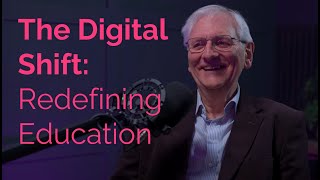
Tim Davies and Pete trace computing in education from 1980s BBC BASIC replacing paper registers to today's AI agents and autonomous vehicles. They discuss the RM33 PC, why small businesses struggle to adopt new tech, and the safety questions around self-driving cars.
But the cost of a computer is still the cost of a computer. The rules seem to be that a desktop was a grand and a laptop was two grand. And that hasn't really changed that much for a good one.
What's changed inside it is dramatically the computing power. When the phone I've got in my pocket is, I don't know, a thousand times more powerful, you have in the palm of your hand, quite literally, the ability to do things that you might only have ever dreamed of. You can book a holiday. You had to go to a travel.
Agent by doing this podcast. By helping people understand some of what's possible, by working with businesses to help try to break down that barrier, to show what is possible, to demonstrate, build solutions. We've got to do it, because if we don't, so many of these businesses are just going to be. Then it's not going to be left behind. They'll be wiped out. I saw a fascinating analysis that was saying that if you compare the improvements in compute and cost from effectively just from Moore's law, from the 60s to the speed of. Choose a vehicle. Car. If a car in 1960 was only able to do 60 mile an hour, obviously we know that's not true. And every year it improved at the same rate as Moore's Law, then by now every single car would be capable of going faster than the speed of light. Hi, I'm Freya. Welcome to the Skynet Business in the AI Age, the podcast that dives deep into the world where artificial intelligence meets business. Join us as we explore the latest trends, challenges and opportunities in this ever evolving landscape. From innovative startups to established enterprises, we'll uncover the secrets behind the successful integration of AI technologies. So grab a cup of coffee, sit back, and get ready to unlock the mysteries of business in the AI Age. Well, good morning, Peter, my favorite podcast guest ever.
Hi, Tim.
It's very strange calling you that. Much preferred dad.
Go for it. I don't care. They've called me all sorts of my life.
I've called you all sorts in your life too.
That's true.
Okay, so let's start with your first ever wow. Moment with computers.
Oh, heck. Oh heck. 1984. 85. I was in charge of a growing adult education and youth program in Sauttery. We'd gone from a few hundred enrollments to 3,000, and we needed a system to deal with all the paperwork. We had paper registers, paper contracts, paper receipts, paper enrollments. It was just piles of paper. Absolutely. It was a total nightmare. And no statistics, because to get statistics out from 120 square mile catchment area to find which areas were popular, which areas of the curriculum were popular. It was just a non starter because there were 3,000 enrolment cards to ferry through.
So these were physical. Actual card?
Oh, yes. Actual cards, yeah, actual cards and actual paper receipts. You had to handwrite everything. No tills, nothing. We weren't allowed any of that. And being a bit of a maverick, I suppose I brought a till in and I was told by County Audit that I couldn't use it. So I drew up the 20 odd rules for using this till and presented it to them when they came for audit and they said, oh, oh, oh, could we use those elsewhere? So my rules for using a till in adult education were taken across the county and then we had all this stuff that we had to deal with. So the acting head of maths at the college at the time, a lovely woman called Sue Chilton, said, well, I've done some, some computer programming. And she and I bought BBC basic machines, BBCB's she programmed, I specified, and we actually formed a business partnership in the end. And the wow moment came when we saw our first tutor contract coming off an Olympia typewriter with a connection through to this BBC computer which had dual five and a quarter inch floppy drives. And that was this is doing that because it had to be spaced properly, it had to be set out properly and sewer programmed all of that stuff and there it was coming out and from that we could get all sorts of statistics, I could target the program, all sorts of stuff. So that was my first wow moment. Boring as it is, it's not boring at all.
Careful with the table taps because you'll set the mics off and I'll get in trouble.
Oh, dear.
That was me telling you off.
Why not?
Okay, so BBC Basics.
Yep.
And then they started appearing all over the place, didn't they? So it wasn't just on the college campus. At some point you magicked one into the study.
Well, it was very slow process. Sue and I formed a business partnership, so we actually bought BBC Basics for the business. So that was that. We had one each. She was doing programming, I was doing testing and further work. And then we had one in the office in Sartre, which I was training my staff to use, but it was only BBC Basic and the rest of the county were very slow to pick up the software and the hardware. We were selling the hardware and the software, but others didn't really want to know, they didn't see the need. So we were way ahead of the game. We sold into a few colleges, but most of them didn't really want to know, or they were sticking with typewriters or they were sticking with paper systems, but they hadn't gone from a few hundred enrollments a year to 3,000, which is what I'd done. So I could see why they weren't as interested. From a business point of view, it was a nightmare because we couldn't sell the software. We were doing all the work but not getting many of the benefits and we knew nothing about support contracts, so there were no support contracts. In fact, if we'd had support contracts, we wouldn't have sold the software at all because nobody would have bought it because they didn't, you know, the on costs were such. So we were doing support literally in our own time and we'd have a call from a college in Cambridge that was using our software. Oh, well, it's crashed again. Only to get out there to find that what was happening was the secretary was lovingly rocking against the main switch that was powering the computer that was turning it off mid flow.
He literally turned it off and on again.
Literally, yeah, no wonder it was crashing good old DBF files. So, yeah, well, DBF came later, but, yeah, so that was the start. But we didn't have the money to go into a PC platform. PCs were even more expensive than BBCB's, so by the 19, late 1980s the business had effectively ceased to be. But county had got really interested and in 1989 I was seconded into shire hall from Sautre to official title was Project Development Worker to sort out an IT system for community education in Cambridgeshire. Long story short, I ended up as the chair of the National User Group for a particular piece of software made by a company down in Dunstable Plus Business Systems. And that system was adopted by the county after a spirit series of specification rounds and all the rest of it, which I headed up. So I was then support for that system across the county and all the colleges across Cambridgeshire. But at the same time, the county boss of an organization then called Education it, which had employed me and taken me in, basically said, well, we don't want to lose your skills, Pete, because you can do what you do. And apparently I did it very well. I don't know, they said, so that's fair enough. And I became a senior IT consultant within Education it. So I was then specifying systems for the Career Service for Primary Schools. I was project managing, systems design, system planning, system training, system implementation, and I ended up doing that in Hertfordshire for a career service, in Lincolnshire for a career service. All still employed by Cambridgeshire but they were farming me out at consultancy rates. That's right. And that all seemed to work pretty well until it all sort of came to an end when the primary school system got to where it could go and the career system got to where it could go and then they didn't know what to do with me so they made me redundant. I was 51 and I said, well hang on a minute, I've been doing this, this sort of stuff for the last, I don't know, 12, 14 years. I've been working from home since the early 90s. No, because you've seen the computers in.
The office and benefited from the hand me downs.
There you go. And so I thought, well I've been doing it for 14 years, I can carry on doing it. I was still chair of the National User Group with this piece of software and I was being asked to support London Borough of Hillingdon, London Borough of Hounslow, all sorts of places up north. So, well, I can go out on my own. So eventually, long story short, again we set up CCCS Sortre limited, June and I, my wife and I and we ended up as a consultant and I was working with then the Quality Improvement Agency, going into adult education colleges, going into local authorities, going into FE colleges, work based learning providers advising them on what they need to do to meet the data returns required by the government and how to use the data. So I was one of only four specialists in the country, traveling the country doing all this sort of stuff. You know, one minute I'd be up to Liverpool, the next minute it'd be Newcastle, then down to Dorchester and you know, you didn't see me for days on end because I was away. So that was sort of a development and nothing like the career I started with because my qualifications are as a biology teacher and a youth worker and that's how I started. But it was because of the development of the adult education and youth program. It got me into computers.
And so that transition coincided with a rapid introduction of personal computing beyond the dual five and a quarter drive on the BBC Basic, quickly into intel architecture, away from the smaller floppy drives to proper hard drives. I remember Luke bringing a laptop round that his dad had loaned him which had dual three and a quarter drives and you had one for the operating system and one for a game on this thing that weighed nearly as much as a car. But computing advanced very, very quickly and I remember you spending quite a lot of time with dbase and that sort of getting me interested in what was possible with databases. How did you make that transition from what was mainly focused on specific implementations of software to a wider use of the. What became ultimately office toolsets?
That's a fascinating question and I can't honestly answer it straight because I don't really know. As far as I can see and think back, my boss, lovely guy called Ian Nelson. Ian sort of said, well Pete, can you do this? And Pete, can you do that? And oh, here's a box of Software, here's his DisplayWright4, here's project based software. And I said, well, where's the training, Ian? He said, you're a computer consultant, go and learn it.
So you just went and played.
So I learned how to tree a piece of software and work out all the functionality and all the interrelationships and all of that stuff. So I was, I suppose, very well placed because I had all of these pieces of software I could look at. And there was another piece of software that we used in Community Ed that was used across the county and I was very familiar with that, that used DBASE4. And so all of those things I was analyzing, I was looking at the way software worked. So that gave me, I suppose it gave me the skills to look at other systems like the Career Service and specify them. And I can still remember the 67 page specification I wrote for the Career Service. It was huge. And then we had to get a piece of software to meet that specification that was provided by Cadbury Schweppes IT Net. But I then worked with Cadbury Schweppes IT NET on that piece of software to get, to develop that the way it should go and to implement it in Cambridgeshire, Lincolnshire, Hertfordshire and so on. So there were all sorts of openings that I had that probably these days wouldn't be available because computing was in its very, very earliest days and apparently I was good at specifying what was necessary.
I think you're wrong. I think that's almost exactly what I do now. It's the same thing. I'm still just playing with and the team are playing with the latest capabilities and translating that into what's possible and then looking at a business problem and going, well, you can use these things in this way and it does that. I mean, obviously it's belittling the process a little bit, but it's not really any different. Moore's Law has accelerated the available compute, has reduced the cost of compute. So we, well, on a, on a per calculation basis, massively well, you know, but the cost of a computer is still the cost of a computer.
BBCBS were 1,200 quid. They weren't cheap. And 1200 quid in the 80s, not 1,200 quid now. So you're looking at three or 4,000 now.
Yeah.
And my first PC was a research machines RM33, which also cost my latest tablet, which is, you know, I know Surface Pro 7 that I bought a couple of years ago, 1200 quid.
The rule seemed to be desktop was a grand and a laptop was two grand. And that hasn't really changed that much for a good one.
But what's changed inside it is dramatically the computing power. I mean, the phone I've got in my pocket is, I don't know, a thousand times more powerful than my earliest PC.
And when you combine that power with the distributed intelligence. As I was driving in this morning, I was having a conversation with my phone, asking about the journey from Monte Carlo to Monte Carlo tree search into Q Star and how these learning algorithms and solvers have progressed over time. Just having a conversation while I'm driving as though somebody sat next to me. And that will ultimately become. To call it a research paper is ridiculous, but it will become a blog post of some sort with a diagram on it. But you can have that conversation with something that isn't human, has an understanding of the world and history just because available compute keeps on increasing.
But you see, as your dad, alarm bells are ringing, that you're having conversations, not concentrating on the driving.
Yeah, but I've been having conversations when I've been driving, talking to you for years. And you never did that, did you?
Never, no. I can remember driving up the old A14 dual carriageway and I was one of the early people to get a mobile phone because my specialism, I was needed by various people. 0806-806-118, but never mind. And I can remember having it on my shoulder driving along at the A14.
That is naughty. Well, it wasn't illegal then.
No, but very naughty now. And the A14, frankly, was far, far quieter than it is these days.
Yeah. So, yeah, so you've obviously seen this arc of available computing and the proliferation of what was once a very expensive device used in very isolated use cases to mass application of computing. You've seen the number and different types of compute devices that we've got in our house with the kids. What surprised you most about that? Or is it just normal and expected.
If we go back 120 years long before computers. Well, apart from Babbage, and you look at the adoption of the car, then a car has become generic. A must have, pretty much, unless you're living bang in the middle of a city. Well, in the same way, a computer has become absolutely essential to modern life. It's essential for communication, it's essential for doing stuff, it's essential for ordering food sometimes, you know, all sorts of things. It has just become part of the fabric of life. In as much as this table has utterly commoditized. Yeah, yeah. And relatively cheap. Now, you know, you can pick up a cheap tablet for a couple of hundred quid. I know that's still money, but it's much cheaper and will do far more than ever. My BBC basic would have done it, whatever it was, 1200 quid. So you, you have the ability to research the world on your phone. You know, it's not a phone anymore, it's a computer with a phone app. So you have in the palm of your hand, quite literally the ability to do things that you might only have ever dreamed of. You can book a holiday, you had to go to a travel agent, you can order food, you can look up a car, you can buy a car, you can sell a car. Everything you can do in the palm of your hand.
I, I set a agent running a research question a couple of weeks back and we're obviously going to Orlando with the kids. And I asked, can you create a list of different budget types and catering types, options for lunches and dinners while we're in Orlando? Low cost, lots of variety, happy to buy some from supermarkets. And it asked me a couple of clarifying questions. And then it spent 10 minutes researching, sending requests off to the Internet, pulling back the information, writing a report. And I then said, okay, that's great. Now can you give me options for three treat nights, including one night at Mexican? And it went off and it did all this. And it's written a bible that I've now printed off and given to Kelly because clearly remember, wait, Kelly's going to make the food decisions. But just the fact that you can do that, that's not me spending time searching the Internet. That's me handing off that responsibility to effectively an outsourced resource that isn't a person that's doing the work for me.
See, I've taken the easy way. I booked a saga holiday.
Well, when you reach that age, absolutely. But it is just fascinating how much you can do and how easily you can do it now. And where does it stop?
I still worry about Those who can't use, don't use, won't use the systems that are available. And there is still a digital divide and there will always be so. And that leads me to worry about all sorts of things. You know, my basic training as a youth worker, I was working with young people from the age of 22, in fact, before that as a volunteer. And I see those youngsters, some of whom I'm still in touch with over 50 years later, and I worry about some of them in urban parts of Telford, where there is a clear urban divide, there's a clear divide of wealth and all of these things. And I don't know how we get over that. I really do not.
No. I don't know from an individual perspective, but I think we've got exactly the same problem from the business perspective. You go a little bit north of Cambridge, there's effectively a tech divide, and you see the amount of businesses within 20 miles of where we live and their understanding of what's possible, their adoption of this technology is very, very low. And the risk of therefore being left behind is absolutely huge. So by doing this podcast, by helping people understand some of what's possible, by working with businesses to help try to break down that barrier, to show what is possible, to demonstrate, to build solutions, we've got to do it. Because if we don't, so many of these businesses are just going to be. Then it's not going to be left behind, they'll be wiped out.
Yeah, because I was 40 years ago, in the 80s, I was doing exactly that, and then in the 90s, I was doing it with a wider range of Systems. In the 2000s, I was working on consultancy helping people use systems. And that's always going to go on because the way technology is developing, the capabilities of the technology, AI. I mean, I don't understand AI.
The rate of improvement in IT is true hockey stick growth. So it's moving so quickly that even with a team of people dedicating half a day a week just to trying a new concept teacher and reporting back to it, we can barely keep up. And we're actively trying and we're working in that space. So a business that is just sort of watching from the side, it's very challenging.
Yes, yes, it will be. And that's why specialists like Project Rising are so critical for people. And I'm not being paid to advertise Project rising.
A quick 20 quid under the table before.
Oh, thank you. That'd be good. Yeah. But in the same way as I was doing that 30, 40 years ago, showing people what systems can do then, you're doing that today, but with the very latest technology and trying to keep up with that as well. And, you know, absolutely admiring. Really proud of what you do.
Yeah, I mean, it's the same thing though, isn't it? We've just, we've basically just carried on what you were doing. I've stolen the idea.
Good for you, good for you.
But it is just an amazing time to be involved in technology. Every day I experience wows. What was the most recent wow with technology that you've seen?
Oh, dear. I don't really know anymore. I don't get wowed by technology because I'm using Microsoft Office Suite day in, day out for work that I do now. I'm not at the cutting edge of anything anymore. So I'll do some analysis. I'll program spreadsheets to do some analysis for me. But no, I don't really have wow moments other than I bought a new PC, must be a couple of years ago now, and my old PC, you know, taken its time to fire up. It was getting a little bit slow.
Because of the Microsoft update.
Couldn't possibly comment. And there it was, dang finished, poof up. And I thought, oh, that's a bit quick, it's now a bit slow.
I wonder what happened two years later.
Yeah, my, my desktop state, hard drive and all, you know, all the bells and whistles.
Don't think the hard drive and the RAM and the chip have slowed down, dad. I'm not sure that's how it works.
No, I don't. I don't either. I think what's happened is that there's.
So much bloatware on it, stuff on.
It now, you know, constant updates. Yes, I've got disk cleaners, I've got updaters, all the rest of it. But actually the machine is struggling through the hedge of umpteen bits of software and that's the way it's going to go. You know, bbcb, you could get away with a program that was probably a few kilobytes. These days, the same program to do practically, essentially the same thing is half a terabyte when it's ridiculous because it's doing much more. You know, there's all the visuals on screen. There was none of that. It was a green screen, one character at a time on a green screen. Whereas now you've got full user interface on screen, you've got touch screen, you've got everything else. So it's moved on dramatically from where we were and where it'll be in another 20, 30 years time. I've been forecasting that a keyboard that we lovingly use to input would have been gone by now. I was saying that 40 years ago. I think that will be gone because I think speech recognition will be so far advanced that we won't need it, won't need a keyboard. And I think we will get to the stage. If Elon Musk's neuralink goes anywhere, then we could be in a state where actually what you're thinking gets interpreted straight into the machine.
Well, the first guy that had the neural lace installed is outperforming gamers in online gaming because effectively he's got an aimbot. He doesn't have to move the mouse to point where he wants to shoot. He thinks it and it shoots.
That's right. Yeah, that's right.
So he's faster in these online first person shooters.
Yeah.
Than people who've got all the best equipment. Because he's got better equipment. He's got a direct interface. So the latency is that much lower. I was watching something this morning and Elon Musk was talking about how quickly he thinks fully autonomous vehicles will be on the road. And he was being asked about a 10 year forecast. And he said that in 10 years 90% of the driving will be fully autonomous. And I thought, okay, well if you qualify that to the United States, then probably, I think globally that's highly impractical. Given what we saw when I was young in Africa, the level of adoption of autonomous driving there, I just don't see it. But he then said that 50% in five years will be fully autonomous. I've always been on the side of thinking technology adoption will happen quicker than it actually ends up happening. And he's definitely in that space. So I don't know about the keyboard. I think there's going to be some people that hang onto it forever. The mouse itself, you just assist. Well, somebody somewhere is still going to be running Windows xp, aren't they?
Or earlier.
But I had a wow moment a few weeks ago. I was testing a new AI model and I just put in a prompt that said, I want to create a web only application running entirely in the browser that uses the webcam to analyze the hand gestures of the person who's got the camera recording them. And I want you to list out the hand gestures used, including NLP anchoring methods, and then list the top three. And I'd like there to be a start, stop and a reset button. So a relatively Complex request in terms of a prompt to an AI, and I gave it to it and it wrote it and it worked. First time.
You've just given me a wow moment. But you won't know why. I've been involved as a musical director of choirs for, as you know, 40 odd years and I've been involved in musical director training. The wow moment is about being able to analyze what musical directors are doing in front of their choirs and being able to help them in ways they can understand. Because at the moment you go on a course and you get told all these things and you get videoed and all the rest of it, but actually being able to do it in the privacy of your own home. Yeah. To have that interface with a system that can help you understand what you're doing here and the effect it has on the 40 or 50 people in front of you and the audience behind you is actually pretty stunning. So that's my wow moment.
And actually, when you think about it, is the hand movement, peak of the hand movement in time with the beat? Are the hand movements predictable? Are you using the right emphasis? There's all sorts of nuances that you could play on that. But the irony is that while you do it to control a choir, I do it when I'm jumping around to music. It's the same hand movement, just a little bit exaggerated.
I have to tell you, for some conductors, it is the same hand movements. We call them monkeys. No, the subtlety of movement. Is it boring? Does it say anything to the choir? Is it able to control volume? Is it able to control expression? Is it able to control the beat? Is to able. And there are so many things going on here in front of a choir that. Yeah, yeah. One of. One of my other interests is musical conductor training and helping directors develop their skills if they want to. And a lot. Just. Just want to do the. Sorry, sorry. Microphone. Just. Just want to do this.
And Energizer bunny directors doesn't help the choir any.
But never mind.
They just don't watch.
No. Well, that's. That's truer than you think.
Well, I know, I remember I was in a choir or two.
Yes. But usually looking at the back of my head while I'm playing the church.
There was Bergstrom. Allen too. Didn't watch him. So you've said that in 10 years you think the keyboard will be gone.
Hmm.
What impact is it going to have made to driving, do you think, in the next 10 years?
Driving?
Yeah.
My car is five years old in October.
Yeah.
And I set the Sat nav up to go down to Portsmouth because we had a job to do down Portsmouth for family driving down the A3 had something called pilot assist and all of a sudden the car started to break. I was doing 75 miles an hour and I was heading at a roundabout I'd forgotten about.
And it sorted it for you?
Not entirely, but yeah. Slowed me down from 75 miles an hour, that's for certain.
75 mile an hour reported, which was probably 72 or thereabouts. So perfectly legally.
Yes, absolutely. Yes, it was. But interestingly, my speedo tells me I'm doing 33 when all the speed signs along the road say I'm doing 30.
They're all over spec to 10%. Yeah.
Anyway, so that was. That's a car that's nearly five years old. Okay. So a car that's bang up to date has got even better lane assist if you want to use it, even better detection of obstacles ahead. But it's still nowhere near autonomous driving.
No.
And that's a challenge. You know, there are so many potential obstacles on the road. Coming over, There was a dead bird in the road. I wanted to avoid it. The other night I was coming back from a late night meeting and a hair ran out in front of me. The car didn't stop. It was too fast for the car to react. I only know because I saw it and I heard the thumb.
So you saw it, but it was also too fast for you to react?
Absolutely it was. Absolutely it was. And so there are, I mean, there are LIDAR systems available now that will help enormously. The human brain is very fast indeed at recognizing things that a computer has yet to understand.
Yeah, I mean, we've been evolving fight or flight for a long time. I saw an analysis of a lidar versus a camera based system and the test was there was an amazingly detailed print of a road ahead and the LIDAR based car recognized that this wasn't a real representation. A camera based one was tricked and went straight through it. I think it was 70 mile an.
Hour.
Which is interesting.
Yeah.
But I think, I think the level of control in these vehicles now has advanced immeasurably. We don't see much of it here, but if you're in San Francisco, then there's been fully autonomous vehicles on the road for quite some time and they just work. The Google ones are very heavily trained on exactly which roads are where. The Tesla ones have learned it effectively and are working off the cameras. Whether they should have LIDAR or not is an interesting question. But I think Musk's argument is they don't need it, based on it being cheaper too.
But if you think about a country road in this country, coming across country this morning, ran through lots of twists and turns, lots of blind bends. You don't know what's around that bend. You're trusting that the vehicle in front that you can see the lights of is not going to hit anything. So you're going around the bend at the same speed. A computer's got to be able to understand all of that and at the same time compute the distance to the hedge alongside you and the white line here and the lorry that's coming at you.
The current lane keeping assists. If you're going down a country B road and it's winding and there's a lane marker, they rigidly keep you in that lane, even if that's actually dangerous. And you really, you can see ahead, you want to take the apex of the corner far more smoothly, but the car won't let you do that. It literally fights you unless you indicate to cross the line.
But the problem is the lane markings are not consistent. No, the sides of the road are not consistent. Sides of road are decaying badly. So you're trying to avoid bumps while trying to avoid the lorry coming at you the other way. So a computer has got an enormous amount to do to be able to recognize all of that. And I'm not sure, but then this is me, 70 odd years old, being a bit skeptical about it all. I don't think a computer yet has the capability of doing that. Whether it'll have it in 5, 10 years time is a different matter.
And it's probably not a computer. So the interesting thing with the Tesla deployment, obviously is the cars are absolutely riddled with individual compute devices, but they're then feeding back that road data to effectively a monster supercomputer that's crunching all of those scenarios and then building the next release of the software. So arguably they're the biggest robotics company on the planet and have so much of the world actually modeled just from where these Teslas have been driving, which is crazy, because the availability of data to train a model or train a computer on how to do something has always been the biggest challenge. And actually they've been hoovering up data for a long, long time.
They have. But if you look at, for example, Google Maps, there's an area that I go to regularly where it hasn't been updated in probably six years.
But if so, I mean, that's the Google car Hasn't gone down there. But how many Teslas have gone down there?
I have no idea.
More than the Google car.
Yeah. Yeah.
Interesting.
Yeah.
So we're in for a roller coaster of technology adoption.
I'm hesitating only because it's got to be affordable and it's got to be affordable for what one politician called the man in the street. It's got to be affordable for everybody because otherwise you'll end up with in cars, for example, where those that can afford it will have the very best technology and those that can't, won't.
I think for driving, it goes further than that. I think that people will be insured off driving on the roads and only the elite will be able to afford the insurance because the computers will be safer driving.
I'm insured off the road now, practically, but that's me.
They're going to keep ratcheting that, I think, dad. But if you can get a car that is perfectly reliable, is a better driver than 99.9% of drivers on the road, which actually might not be that difficult. And then you deploy those on mass and they're available 24 7, you don't need to go out and buy a car. You just say, I want to go from here to here, and one turns up and takes you there. Then actually the joy of driving yourself and owning a car will just be reserved for the super rich, because everybody else won't be able to afford the insurance because you as a driver will be more dangerous than all of these legions of automated vehicles.
And I can see that coming. I think it's 20 years off, but I sort of hope I'm right because I enjoy driving.
Well, I enjoy driving too, but I would very much like to be able to do a day's work, have a dinner and then on a Friday evening, go to sleep and wake up on a Saturday morning in the Highlands, do some biking and then have a beer, get back in the car and wake up on a Sunday morning back at home.
That's cool. That's called a Caledonian sleeper.
It isn't. It doesn't actually do what I want because I have to be in London in order to catch it in the first place. It doesn't really quite work, but I know what you mean. But if I could do that, I've got no problem. Just cozy up in the back of a vehicle, have a sleep turn up somewhere else.
Yeah, that'd be good. I mean, when you get on a plane and, you know, because we've done it and one day you're in the UK and the next day you're in Australia or in Bangkok or in Hong Kong or Singapore or wherever. That's just magical. And it's still magical to me that we can be so far in distance so quickly, and if a car will do that for relatively local journeys, then that's great.
And we get on those planes knowing that they're not actually being piloted most of the time. That's all autopilot. It's not a big leap. I saw a fascinating analysis that was saying that if. If you compare the improvements in compute and cost from effectively just from Moore's law, from the 60s to the speed of. Choose a vehicle, a car. And if the car's speed. If a car in 1960 was only able to do 60 mile an hour, obviously we know that's not true. And every year it improved at the same rate as Moore's Law, then by now every single car would be capable of going faster than the speed of light.
Yes.
That's nuts.
Absolutely.
It is. And yet we haven't seen that level of improvement. You can get a car that will do 300, just about. But planes have actually stopped getting faster, getting slower. Yeah.
Four sevens that we flew on to go to Australia or wherever they were doing 500 odd miles an hour. Dreamliners do about 450. Yeah.
I mean, you could still sit for sort of 550, can't you? But I never got to go on Concorde. That makes me sad. And we're still not really that much closer. Boom. Looked like they might have solved the sonic boom, but we'll see. Long way off. I think we're more likely to be able to go to Mars than we are to get to Australia in a sensible time.
Yeah. I mean, 40 years ago they were talking about hothole aircraft that would take 40 minutes to get to Australia or something stupid. Because it was going to go rocket powered, basically up and over and back down again.
And that may end up being Starship.
Ooh, who knows? Yeah.
Apparently there's going to be a Optimus Tesla Bot on Mars by the end of 2026. As long as the reentry is stable, it might be in one piece.
Yeah. Yeah. Be interesting, wouldn't it?
It would. It's been fantastic chatting. Thank you very much for coming on. I think we better leave it because we could talk all day.
Yeah, thanks.
Awesome. Thank you.
More from Tim

EP 60: Why Founders Become the Bottleneck — And How AI Changes Everything | Thea Brook









