
Ep 35: From Officer to Entrepreneur: Embracing Change
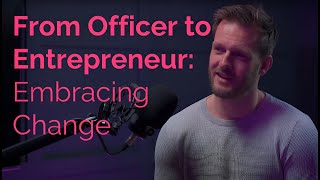
A podcast-style interview (YouTube Ep 35) featuring Jamie — a former police officer who transitioned into running a digital marketing agency with his mother — discussing career change, client case studies, practical marketing strategy (SEO, Facebook/Google ads, landing pages), AI adoption in agencies, fraud prevention experiences from policing, and operational advice for small businesses. The conversation mixes personal anecdotes (policing stories), tactical examples (telescopes, lawyers, call-centres), and reflections on technology, automation, and future risks/opportunities.
We have a client who sells a range of telescopes and came to us for SEO. And so, yeah, we did a small Facebook ads campaign. We went into the business strategy and they said, if we can sell people good beginners telescopes, they said, a lot of people get put off in astronomy because they buy a beginner's telescope and it's terrible. 50% of people who buy beginners telescope will upgrade through us. I said, well, that's the strategy then.
So lots of beginner ones.
Exactly. So we're now spending about £50,000amonth. We launched another landing page, which any marketer in the world would have told you is better. And it was slightly worse, about 10% worse. And that was all it was. Had no picture of a person on it, had nobody. And that was the only thing.
No human factor.
No human factor, Exactly.
That people buy people.
AI is going to be a game changer. And in my view, you adapt or die.
Hi, I'm Freya. Welcome to the Skynet Business in the AI Age, the podcast that dives deep into the world where artificial intelligence meets business. Join us as we explore the latest trends, challenges and opportunities in this ever evolving landscape. From innovative startups to established enterprises, we'll uncover the secrets behind the successful integration of AI technologies. So grab a cup of coffee, sit back and get ready to unlock the mysteries of business in the AI age.
Well, good morning, Jamie, and welcome.
Thank you very much.
So let's start somewhere fun. What is the funniest thing that you're allowed to share from your time in the police?
Funniest? I always tell my kids about this one. They love this story. So we were having a. We got called to people breaking into a car and it was rife in Huntingdon at the time. This is when people used to have those little radio pieces they stuck on the front. They were worth a few hundred quid. People used to steal them. And we went and there was a car, it obviously been screwed and the doors were left open. So we got the tracker dog down. And tracker dogs are brilliant because you just wait there, you don't disturb it, so you don't mix any scents in there. And they can literally pick up the scent. And the dog will run on a long lead. It's about 2 in the morning, so there's nobody about. And we track for about a mile and we're just jogging behind this dog for a mile. Eventually the dog stops and just starts barking. We look up at what he's barking at and there's another door. Both cars open, two criminals Inside, in the process of screwing it. And they hear the dog, they look up, they see us, they both scatter. So I've instinctively gone after one of them and the dog handler is shouted to me, jamie, stop, put your hands on your head. And I know exactly what he means because if your arms are failing about dog doesn't distinguish between cops and bad guys. It's just human running. And there's an arm grab. So I freeze still and I put my hands on my head. One of the criminal that I was going after has jumped up. It's about like a ten foot fence. And the dog has scaled like something out of a movie, this ten foot fence, grabbed him by the bollocks and dragged him to the floor. And yeah, so the kids always like that one. And he, yeah, he opened up a big wound underneath, underneath this guy's testicles basically. And yeah, he struggled to screw cars for a little bit after that and then ended up getting like 10 years for beating an old man with a sock full of baked beans a couple of years later.
I mean, as you do when you're looking for a weapon. Baked beans in a sock.
Baked beans in a sock. Yeah. Over some neighborhood dispute. Yeah. Nasty, nasty man. Which is why I don't mind laughing at that.
Well, that's, that's a life changing injury, isn't it? An all for trying to get some bits out of a car.
Yeah. Which had sell for about 50 quid.
Yeah.
But yeah, policing was full of funny stories like that. Yeah.
Not all highs, I imagine. So eventually you decided you needed a career change.
Yeah.
What took you into the space that you're in now?
Yeah, So I did 16 years in the police, joined as a baby when I was 19.
16 years.
Yeah, I know. And it went by in the blink of an eye. Now I was ready to leave at the 13 year point. But Covid happened. Yeah. And so my mother started a. It was initially a marketing consultancy. She ran that from the kitchen table. It's just a little boutique business. She grew vegetables and, you know, had a quiet life for a little while.
It's idyllic.
Yeah, well, but then she started getting a bit of an itch. She realized that that kind of business can't provide a retirement for her. She was sort of, what Was she, about 52? She was thinking, how long do I want to work for? And so she needed to build it. So she started growing it, employing people, etc. And then the business came into. My sister was in the business at that time as well. My sister moved on to other things. And the business came across a bit of a hard time through no fault of anyone, but two key members of staff left at the same time. One had been building sort of like an influencer type thing on the side.
So why can't you type thing?
Well, she, why, why come to the office and work 40 hours a week doing what we do when she can literally paid to go for lunch and stay in hotels and promote products. So she got to a point where she couldn't juggle both and naturally so she left and the, and then the other girl went traveling. So that was, that was that. But Mum was left in a bit of a vulnerable position where all of a sudden she was having to do so much work. So I said, look, I want to get some business experience. I was already, at the time I was what we call job pissed. I was fully Captain Police, you know, I was, I was really into it and I was having a great time and I was still looking at doing what I would have called at the time, like a side hustle, just a little side business. Yeah. So I said, well, I'll come work from you, get some experience and I'll do that. And started growing, you know, we doubled the business in size, we were employing people found out that I was good at it. I was good at the sales, I was good at the marketing, that sort of thing. And then I got promoted to Chief Inspector, Detective Chief Inspector and they put me in charge of what they called protecting vulnerable people. So PVP and I had all sorts of departments. I had about 200 staff. I had the, the pedophile online investigation unit. So all that horrible indecent images type stuff. I had domestic abuse units, child abuse investigation units, all of this sort of stuff. And just what I found when I thought becoming a Chief Inspector, I'd have all this autonomy and all this power to really change things and improve things for the better.
No, you had to turn the cogs.
I just found the shit. The oil tanker was too big to turn and it wasn't a case of me going in and being able to actually affect any change. And also my diary was just from 7am on Monday to 5pm on Friday, just full of meetings. And then you have all this work to do outside of the meetings, which had to fall into the evenings and the weekends. So I said to them, no, thank you, I don't want Chief Inspector anymore. They sent me up to Peterborough where I did serious crime and then I did like gang type crime for a couple of years. But that was Very much at that point when I turned away from Chief Inspector that's when I wanted to get out. I had to serve another three years because Covid just shut down the economy basically the business went through difficulty because we had, we had a diverse portfolio of clients but some of them just couldn't trade like hotels and travel agencies and people like that. They all just had to shut their doors. So if you can't take clients you don't need marketing arguably. So yeah, so I sort of jumped four years ago now and haven't looked back. It feels like a distant, distant memory.
And so is Lilac James still a family business?
Yeah, so still me and my mum run it as directors but it's predominantly me who's doing sort of like the drive and the growth and the business development. Mum's very much there now as a. Her expertise. So she manages, she manages the Google side of the business. So we do SEO, Google Ads, social media advertising in the main but we mix that because you can't, you can't operate these things in silos, you know that needs to be mixed into a marketing mix and a thought out strategy. So, so yeah, that's what, that's what she does, the Google side. And then I sit across the social, the sales, business development, that sort of thing.
And you said earlier that you discovered that you were good at sales. It's one of these things that if you're thinking about selling sounds really hard. If you're sharing insight and helping people, it's actually easy, isn't it?
Absolutely. Yeah.
And it's that, that shift for me from I hate selling, I hate the idea of selling. Everybody that I've seen that works in sales is choose your term.
Yeah.
To actually, if you're trying to help people for the right reasons, then it's easy.
Yeah. And particularly, particularly if you have integrity about it and you turn to people and say I'm sorry, I don't think I can help you. And this is why then that makes the whole thing. So I had a, you know we, we have, we always say to people, you know, we're not going to sell you something we don't think is going to produce you in roi. If I want to retain a client, they need to see return on investment from investing in our services. Otherwise it just, they end up annoyed and they, and we end up doing lots of work that doesn't then work and then, you know, we lose the revenue and everything. So nobody wins. So yeah, we're very careful with the sales process. We will only Take on a business if we think we can deliver for them.
And I think that's also fun, isn't it, when somebody comes to you and goes, we had one last week. I'd really like a chat bot on the website to help with this particular product issue that we have within our business. How many people come to your website?
Yeah.
How many of those people have that particular problem?
Yeah.
You want to build something that can talk to those people on that website for that few people. Why?
Yeah, focus on other things.
What you could do is you could have a phone service where when people call you, instead of you not being able to get to the phone.
Yeah.
It answers the call for you, it books time in your calendar.
Yeah.
It makes the booking, it manages the client relationships and it notifies you that another booking has been made. And that's an actual application which has roi, because you can then convert some of those people. And you have this. Currently you've got a product where you're selling a subscription. Why don't you talk about that as part of that call? You don't like selling that, but this voice agent won't mind at all. And so then you've got something that uplifts revenue and helps fill their calendar without them answering the phone. That's genuine roi.
I was having this exact conversation with a roofer the other day. So he runs a roofing company, employs lots of people, covers maybe 50 miles from Cambridge City. It's a good company and he's a good business owner, but he's still on the tools. You know, he's. He spends his time going from site to site and inspecting work. He wants to, because he wants to, but all the phone numbers from his various websites go straight through to his mobile. So when a sales call comes in, he's picking up his mobile and he's on top of a roof with wind, or he's in a van and it's rattling in the background. Um, and also his mobile is always on because it's also his personal mobile. So if somebody calls at 2 in the morning, his phone's ringing. And I said to him, you know, it doesn't have to be this way. There are solutions now that exist exactly for this problem. So, yeah, he said he was going to go off and investigate it, but we'll, we'll see, we'll see. A lot of these, a lot of business owners, some get shiny penny syndrome, which is what I call it, which is this client you were talking about who's like, oh, chat bot. Let's let's do that. Others get stuck in their way and they're like, this is how I run my business. And that's, that's that and it's.
But our job in introducing technology and capabilities into businesses is to help them see how that can benefit and to make that change management process as easy as possible.
Yeah.
So tell me about an instance where you had a client that was averse to something that you knew was going to be good for them and how you converted them.
Averse to.
It's a big word, isn't it?
Yeah. So we had, we, we have a client who sells a range of telescopes and they came to us for SEO because they were, they were already winning business through Google and they wanted to see if they could boost that. They were spending a lot of money every single year on print advertising. So they were getting in trade magazines and things like that. And so we did their SEO. It really works. Now often when we work with people, they'll come in on smaller projects because there's a lot of sharks in our industry. There's a lot of, I guess that like there is an AI.
Best way to test anything though, isn't it? Start small, prove it.
Absolutely. And there's a lot of people because there's a low barrier to entry. You need a laptop and an Internet connection and you can claim to be a digital marketer or AI expert. It's very easy now because you can get a website of WIX and all the rest of it. So demonstrating the expertise and the value is often done with a small project. We did the SEO, it really flew and I said, you can really sell this stuff through Facebook ads and Google Ads. We're not sure, you know, because they felt like that their audience was archaic. They felt like they were so stuck in their ways. They were older. And I said, no, no, you know, the elder generations both. My grandma's approaching 90 and they're both on Facebook more than me. It's how they keep in touch with all their family. They like it, it's, it keeps them connected.
Yeah.
And if they're on it, you can reach them. And if you can reach them, you can sell to them. And so yeah, we, we did a small Facebook ads campaign to start and they, they were only prepared to commit something like £500amonth. This is a multimillion pound business. £500amonth. Now what we said to them is it might be difficult to sell your 7,000 pound, 12,000 pound smart telescope, your 5,000 pound lens, stuff like that. That's Going to be difficult. So we went into the business strategy and they said, if we can sell people good beginners telescopes. They said a lot of people get put off in astronomy because they buy a beginner's telescope and it's terrible. So they have a bad experience, it goes in a cupboard, it gets forgot about. But they said, if people get a good telescope that's easy to use, it's got good instructions, it can get good imagery, etc. They'll stick. And we said, well, do you have a lifetime customer value from these people? Do you have email marketing? Do you have wider, you know, I call it digital infrastructure to develop people long term. And they were like, oh yeah, absolutely. They said 50% of people who buy beginners telescope will upgrade through us. I said, well, that's the strategy then.
Yeah. So lots of beginner ones.
Exactly. So that's what we've been doing. So we started off with £500. We created a specific landing page that just had really high quality, low cost beginners telescopes. We started selling that we're getting a 30 times return on ad spend. Then we said the conversation moved into scale because to a multi million pound business, if you're getting a 30 times ads return on ad spend on 500 quid, it's still a drop in the ocean, it's nothing. So we're now spending about 50,000 pounds a month across Google and Facebook as we've scaled and scaled. But the beauty of the strategy is there is only certain amount of market demand for telescopes. So you can't force people to buy telescopes if they don't need a telescope or want a telescope. So what we did is we said, right, how much profit per sale do you get for a beginner's telescope? They said, well, about 50 pounds. And we said, well, how much would you be prepared to pay ideally? And then as a maximum to achieve that £50 profit? And they said in an ideal world, £15 and there's a maximum 30. They said if we sell a beginner's telescope for £30, there's a little bit of profit. You know, it covers costs and staff and.
But we know we're getting a certain number of those on for better.
Exactly. And the lifetime customer value covers the rest of the. So all we do is we started scaling the budget proportionately so we can keep a cost per purchase below £15. So when the cost per purchase comes down and it starts hitting seven, eight, things like that, we up the budget, we have conversations, we say, right, we're good for another 50 another 50. We start upping it when it gets to about 15 16, which is normally around your sort of October time. You're sort of pre Black Friday. Everybody, you know, draws the purse strings together for Christmas. Then we just reduce the budget and we just find the low hanging fruit to sell as many as we can.
Wow.
But that had to be. But we have a lot of, a lot of clients like that. A lot of clients sort of dip their toe in. We have home improvement companies, they're still advertising in a lot of trade magazines and we're like, Google Ads can really work for you. They're often reluctant, spending tens of thousands on like newspaper adverts. Still, you'd be really surprised.
But by taking that model of proving the benefit on a small amount, building trust, you're building champions within that business that are then saying, look, this is already working, let's do more of it.
Yeah.
And then that just grows from there, doesn't it? We've just done one for a call center where we were automating some of their outbound call types. We're now doing inbound call types. That's being stretched across all of these different resources within the organization. And we're taking the learnings from that and applying it to smaller businesses. Because anybody can do it.
Yeah, yeah.
The fundamental process that we're following is replicatable. And because we've proven it on a big account, we can now take that and show mom and pop shops this is possible. Here's what you can do on this budget and then it just goes from there.
Yeah. And why wouldn't you, if you're a call center? Because I remember in your, in a presentation that I saw from you that you were talking about some of the value that that adds and some of the things that it's doing and automating. And if it adds that value to one call center, then it's just, it's copy and paste, isn't it? More or less. I guess, yeah. I guess the, like you said, the process of training the AI based on the questions that are routinely, I mean.
That is relatively easy and manageable. The slightly more challenging bits, integrating it into the back office systems to pull the right bits of information and data in and then integrate that in the call flow, but it's not quite rinse and repeat, but it's close enough that it's something that can easily be applied to lots of businesses.
And when you consider the cost of staff of just hiring somebody nowadays, a lot of these solutions are actually quite cheap. Really, really cheap.
And I think we will get it to the point where we'll have a, the ability to put in your current phone number, it call you, you answer the phone like you normally do it, then research the business, create the call script to manage inbound calls, set up the phone number, set up the trunking, set up all of the detail that's required and connect it to calendars and whatever systems. So for putting a number in, hitting, answering a phone while paying a small fee will set up a phone answering service and be able to do that autonomously at scale. So then any sort of small business that needs a phone answering service will be able to just take that and just roll with it.
Yeah, which most businesses I think will, because we are our phones, after 5 o' clock, they just go through to a voicemail, that's it. And then we get an email saying a voicemail has been left. But I do think though, there is something because we've got a hotel client, four star hotel and they still have people on the phones. They have two in the spa, two in the, in the, in the main hotel reception. And I always think these, the calls that they take are very transactional. They're not, generally speaking, so much about customer service. It's more, I need to speak to such and such and events. Can you put me through? Yep, plug it in.
Do you have a booking for this facial on that day?
Exactly, exactly that, yeah. And it's very odd trying to this, I mean, this is an example of a client that, you know, trying to get them to, to modernize. Because actually a lot of what we do in marketing will only work if other stuff exists around it. And you know, so I always talk about the principle of 7, 11, 4. So it came from a book called Zero Moments of Truth and Seven Hours of Contact. Yeah, seven hours of engagement. Eleven touch. Yeah. And if, if somebody sees your ad on Facebook or Google or they come to your website through SEO or word of mouth or whatever, what they're going to do before they work with you is they're going to research you, they're going to go to your website, have a look around, look at your reviews, look at your social media and if that stuff doesn't exist, you're not going to be able to nurture because you can't spend seven hours with everybody. This is the thing at scale, it's impossible. So if you look at the, the YouTube channel, I've been growing for like 18 months and now has nearly 700 hours engagement time every 28 days. And we just Starting to win clients from it. It's been a long slog getting there, but.
But it is, it's sitting there as proof now. When people research you, they see it.
Yeah.
And people say to me, oh, you said such and such on the podcast. And I think. Not sure which episode that was about, but probably, yeah. But it's just seeding that, feeding that seven hours because somebody can consume that content. They see you, they get to know the business.
Yeah.
Without you having to directly dedicate time to them.
Yeah.
It simplifies the overall sales process.
Yeah. And when businesses don't have all of that, this is where we see marketing fail. So it's one of the things we always look for in the, in the sales process. In early qualification. When I have the, before I have the very first phone call. So normally we'll get an email that will come in, you know, I'm interested. I had one actually when I just sat down here. A lady reached out to me on LinkedIn, said, I saw your post, I've looked at your website. Can we discuss. She wants to discuss YouTube strategy and advertising. We don't do the YouTube strategy, but we have people. Exactly. And one of the first things I'll do before the meeting with her is seeing what digital architecture she has. You know, what's the website look like? Because if your website looks like shit, it doesn't matter how many people I send.
Absolutely.
Yeah. And it doesn't matter how warm they are, how perfect they are. Because you know, if they go, if you go to a five star hotel website and it looks like a two star hotel's website, you're just going to click back next option.
Absolutely.
So we always look, we always look for that. And you know, we're working with a lawyer and we're using some software. Score app. If you heard a score app here, Daniel, it's brilliant. It's brilliant. If it's promoted. Well, I see a lot of people create them because they give one for free. I think they do. Or for under a certain amount of.
Responses, it's not expensive.
And then they host it on their website, then they leave it, then nobody goes to the website, nobody completes it. But if you take a deep dive into what your target customer really want, what's the psychology of that target customer? And this is where I think at the moment, although is improving, the AI struggles to like really understand the, that target customer, albeit Score app has an AI feature that will automatically create your questions now based on prompts.
Yeah, mixed bag, but yeah, this, this.
What I Mean, so it does take a lot of human, human intervention still. But yeah, if you really figure out what they want. So the, the best example where we are just absolutely printing high converting leads just on repeat for a lawyer client, they're in employment law. And when we were doing the deep dive and we're having the strategy meeting, we said to him, you know what, just what do people want when they get in contact with you? What is the thing that they want to know? And they just say, well, they want to know if, if the treatment they have suffered could be compensatable. They want to know if they could get any. Either justice or money, because often they've already left, it's 12 months ago. So they're not after justice because they got a new job, but they want maybe compensation for how badly they were treated. And we said, great, let's just design a score app that harvests their information. So tell us a bit about yourself and will tell you the percentage chance that you could be due compensation for how you've been treated. And we did that. Now, initially, the initial landing page and questionnaire and the ads were delivering leads for 78 pounds per lead. This is. Which is rubbish because we're now getting it for £2 30. But we had to go through a process and a journey. And I think this is, this is what I always try and explain to people with their marketing and particularly their advertising is it is a process. Now you shortcut the process by, you know, hiring good people or experts and that sort of thing. You can make things quicker, but you still have to go through that process. And so, yeah, we started off at 78 pounds. Then we refined the landing page, made it simpler, put some social, more social proof on there, made the social proof simpler to digest. Really boiled it down to just three core things that people could do. We experimented with strap lines. The one that landed the best was, have you been pushed out at work? So that seems to be like the core issue. People just get sort of pushed out, like managed out unfairly. And then the questionnaire, we took that from 15 questions and we said, like, what do you actually just really need to know? And he was like, well, these eight. So I find. Boiled it down to eight, made it multiple choice, went to four answers instead of eight answers. Because we talk a lot to our clients about friction. So we're trying to make things easy as possible. Exactly. But that comes with drawbacks because if you make it too smooth, you end.
Up with no data quality.
Exactly. No data quality. Really poor quality leads. People not picking up the phone. Like, you ring them and they're like, I don't remember submitting myself, you know, because you haven't engage their slow thinking brain enough. They're just in that.
They haven't invested enough in that decision to.
Exactly, exactly that. And yeah, we got it down to like £1 30 per lead. And he said, a lot of these people aren't answering the phone. So we're like, right, let's add some friction in, increase the lead quality. Then we went up to about £3, 60. And then it's like he was. At this point, we're in scale mode. So he's gone from spending, you know, thousand pounds a month to five thousand pounds a month. Had a meeting with him yesterday and he's like, I can't. You know, it's capacity, it's business capacity. He could spend £50,000amonth. But he couldn't stop. Yeah, couldn't staff the leads and stuff. So he's had those good business owner problems where he's having to employ VAs and new lawyers and stuff, because the work's just coming in, which is great. That's what we want. We love, you know, really helping businesses, good business people grow, but it just never stops that, you know, it's okay, what can we do? How can we improve the creatives? How can we improve the wording? How can we improve the landing page? We launched another landing page, which any marketer in the world would have told you is better, and it was slightly worse, about 10% worse. Why is that? So this was for a separate funnel that was going to be feeding a certain lawyer that it just hired. And we asked for a headshot. She didn't have any, so she had to go and get those. So we ran it without the headshot and that was all it was. Had no picture of a person on it, had nobody. And that was the only thing.
No human factor.
No human factor. Exactly that. Since then, she's got the headshot to us. We have put her headshot on the better landing page and it now outperforms the standard 20% better.
Yeah.
So the. The people find people. Yeah, exactly.
So, kind of on that topic, the Turing Test was the ability for a computer to fool a person that it wasn't a person. And this was the gold standard in do we have AI yet? Right now you've used chatbots where you might not be able to tell the difference. Have you yet had a phone call where you're not sure whether it's human or AI?
Not yet. No, I've had a few calls. Ordinarily, when you answer, there's a bit of a gap. That's the only thing. There's sort of like a little bit of a stop gap at the moment. But then, to be honest, I haven't had too much of it either. Like, my experience with that is quite, quite small. When you call your bank, things like.
That, well, those are generally rubbish. But you're right. I mean, the latency has always been the easiest measure. How quickly it responds, where are the gaps? Where are the pauses? But that's definitely gone now. We think we're at the point where you can't tell the difference.
I saw a really good one the other day. It was on a reel and it was. Somebody's AI assistant rang to book, like, a haircut or something like that, and it spoke to another AI assistant.
Oh, and they went into computer mode.
Yeah. They were like, oh, you're an AI too. Let's communicate via such and such. And they started all R2D2 in each other and just booked his haircut. It was. Yeah, it was amazing.
Amazing and a little bit scary because we don't really want the AI's talking language we can't understand.
Yeah, true. Hadn't thought of that. Yeah, yeah, absolutely.
But in terms of the efficiency, it's definitely there. And so it's fascinating because the Turing Test for voice AI, it's been passed with flying colors. You can't tell the difference. And how long is that going to be until it's true for video. Yeah, and video avatars. And it's getting close. In terms of video teleconferencing, I don't think it's quite there yet, but we are definitely going to see some cases where people are got rid of from jobs because they haven't been attending the meetings. They've said that. Did see that doppelganger.
I see things because I'm interested in the topic. I get the algorithm pushes content to me about this sort of thing. And I saw somebody was in a job interview and they had. They had an AI script that was. They were asking it the question and then the AI was answering it and he was just reading. Reading the answers.
Like, I saw one worse where the interviewer requested that the person put their hand across their face and turn their hand to one. Their face to one side. Oh, just try and prove that it wasn't simulated.
And was it? Oh, there's going to be a lot of trickery. And I tell you, there's going to be Fraud, like putting my old policeman's hat back on. The fraud is going to be rife with it when the criminals really cotton onto it. So I had, my office is in the middle of town in Saint Neots and occasionally we just have people bang on the door because they're lost or confused or whatever.
Because it's such a big place.
Yeah, exactly. So they, we had this old lady, she knocked on the door and she just said, you know where Citizen Citizens Advice is just around the corner from us. She got, she's 85, she got lost and she said, well, I've had this letter and it's telling me I owe the government £400. My alarm bells are ringing. So I'm like, look, come in, get out of the cold and would you mind showing me the letter? I'm an ex police officer. I'm just worried that this could be fraud because I used to just see stuff like that all the time. You know, I ran an operation first in Cambridgeshire, but then we had regional implications and people were ringing up all old people, predominantly old people. And when I say old I mean 65 plus. So not like necessarily really, really old, but. And they were saying, hi, it's the police. You've had some money transferred into your bank account. And they would have enough information to reassure them they were genuine. They'd say, can you just confirm you bank with Santander and the last four digits on your card are 1234. Oh yeah, that's me. Okay, no problem. You've had some money transferred into your bank account, blah blah blah. And they were having a success rate of 1 in 7. Every 7 calls they would make, they could get people to hand over anywhere between one and £10,000. And it was because it was so successful, we were taking phones off drug dealers, analyzing the data and the phones would say, or we take them off the fraudsters as well. And in their communication with their criminal friends it's saying, I don't do drugs anymore. Doing fraud now because they could earn just as much money. And the sentencing for fraud is because it's just a property crime. Ultimately it's a lot less. Yeah, you get, you get, you get convicted for supplying cracking heroin and you're looking at three years for a first time offense, whereas you're convicted of first time fraud. I'd be surprised if you went to jail. And they sort of realized that and started just pushing into it and then it just expanded. So it was all these gangs in London, Birmingham, Manchester, Liverpool and it was rife and they were so so sophisticated. And you could automate that now. So they used to sit there with stacks of SIM cards. They used to buy hundreds and hundreds of SIM cards. 10 calls, bin the SIM, 10 calls, been the sim. And they would have scripts written out and they would train their, you know, colleagues, if you like. Or they would say, right, here's the script you're going to take people through. Here's the stuff that the cops do. This is how you combat it, you know, if you go out to. So we used to, it was always cat and mouse. It's like a constant evolution of tactics. And at first they were coming to the old people's house themselves. So the old people would ring us up and they'd say, I've had this cop, he's coming around to collect five grand. It seems a bit weird. And we'd go. So we'd go to the person's house, we'd sit there having a cup of tea and a chat and then the doorbell would ring and we'd open and we'd go, hello mate, you're.
You're nicked.
Exactly. But then they started sending couriers. So they would just send a taxi, can you go to this address? There's a parcel, I need you to run it to London for me. Okay, that's £180, no problem because there's five grand coming. So it's just the economics made out, made sense. So then we started putting the, the couriers or the taxi drivers under surveillance. So we would put a surveillance team around the house, it start making its way to London, we'd follow it. When they hand the parcel, we jump out the cars, we'd grab the criminal. It was all working. Then they realized that. So they would send a 16 year old, just some kid just paying him 50 quid to collect the parcel from the courier, look after it for a couple of days and then I'll have it later. So it was just constant evolution and the only way we resolved it, ironically, was with Facebook ads. So at the time I was working part time in the, in the business. So I understood around the marketing, the advertising, I was still relatively learning, learning on it. But it was like we need to, we need to get the message out so people just don't fall for it. So you know, if they, if they, every seven calls they make, get £1,000. Well what if they have to make 100 calls, thousand calls, is that still going to be worthwhile for them? So I got some budget authorized, we put some Facebook ads together and the messaging, because at this time, the demographics of Facebook were different. It wasn't older people went on it as much, so we couldn't reach them. So we targeted people under 30 and we said, you know, basically, tell your grandparents about this crime. And we reached millions of people within a short space of time, and they went from 1 in 7 to 1 in 50 to 1 in 100 to 1 in a thousand.
Stop being.
And it just stopped because it wasn't worthwhile.
I saw a new capture fraud yesterday, and apparently it's being used to prove you're not a robot on these various sites. And the instructions are, hit Windows R, hit Control V, hit Enter, and it'll say whether you're a robot or not. Now, what you're actually doing there is telling the computer, run this command, and control V, paste whatever they've put on this website, which has got a little bit in quotes to say, confirmed, you're not a robot, but it's actually downloading malware to your computer.
Wow.
So it looks to the uneducated like it's a different form of a prove you're not a robot check. But actually you're directly, personally choosing to install malware on your computer just because people don't understand those commands.
Yeah, the key commands. I've got a few clients who work in cybersecurity.
It's a.
A nightmare of a area to market because there's complete apathy about it. People just think, I'll get away with it, I'll be all right.
It's kind of like needling a haystack.
Yeah, kind of. It's probably akin to what it was like trying to get everybody in the habit of putting the seatbelt on. You know, just. Nobody did it at first. They had to mandate it and make it law for people to do it, because most of the time you drive around and you don't crash. You only need your seatbelt when you have an accident, and the majority of the time, people aren't having accidents. And, yeah, cyber is just a nightmare. And you try to sort of educate people on the risks, the damage that. Because the damage that can be done is horrendous. You get locked out of all your databases and your systems and you lose all your client contacts, like a company did out. And it has. It's taken many out. There was. There's some horrendous case studies that. That they have. The other difficulty they have is when somebody suffers a cyber attack, they don't want to shout about it. So there's lots of people becoming a Vic becoming victim businesses, victims of cybercrime. But when it happens, they just shut up because they're like, oh, yeah, my member of staff shouldn't have clicked that link. They shouldn't have downloaded that thing. They shouldn't have. You know, we get them all the time. It says, here's an invoice for your services. Thanks very much. And there's this little file and my staff will shout across the office, are we paid for something from whatever? And I'll be like, don't click it. Please just don't click it. Tell me if you have. You have. Because that's the other thing. People will click a dodgy link, open a dodgy document, and they'll be in an organization with 250 staff and they don't want to go, that was me, I did this. You might want to look into it because they're worried about the social repercussions of that.
And yeah, it's rife, but that social engineering aspects getting. I mean, it's, it's ridiculously easy to do. And so compensating for that and putting the protective measures in place.
Yeah.
Having physical two factor authentication.
Yeah.
Did you really just send this message? Can you confirm by email? Can you confirm by text? Can we have a quick chat about it over a coffee? What's the secret password that we use for financial transactions that isn't ever discussed on any electronic format?
Yep.
You've got to put in checks and balances to make sure that you're protecting against these sorts of fraud.
Absolutely. And it was only when, really, I think about three years ago, we took on our first cybercrime client that we really realized how we were secure. We were okay, though. You know, I mean, that was it. We. We were okay. We were hitting sort of like a minimum standard. And then when you start working with government agencies and things, they're like, no, no, you need to be high standard. So, you know, we started taking on some clients and they were like, do you have this? Do you have this? Do you have this? And we were like, wow, we really need to not just be okay. We need to be really secure. Really, really secure. Because that's how they can get in. They don't necessarily attack A A's the target, but they'll go in through, you know, second and tertiary targets and stuff. But yeah, there's a lot of people working on this across the world, really, and a lot of state actors as well. But hey, ho, it's just our jobs to try and get people to care at all. It's really hard. It's really hard. Particularly when the client says something, says things like, you know their brand guard, they don't want to generate fear, they don't want to scare people. And it's like, well that's kind of the big lever that you can pull, you can really scare people.
So.
But yeah, they don't want to pull it yet. See, see how it goes.
Yeah, it's one of those things, isn't it? You don't want to scare people about anything too much.
Yeah.
So tell me about your interest in AI and why you joined our mastermind.
So yeah, the AI is going to be a game changer and in my view you adapt or die basically there's going to be a lot of people with a head in the sand who won't adjust, won't adapt and then their competitors will produce high quality work faster which means they can charge, they can maybe onboard more clients which means they can charge cheaper prices, etc. So I really wanted to be at the forefront of it. Now we were using it anyway and we were sort of experimenting and playing with it but what better to do than not just be educated and led by experts like yourself, but also to have a group of people around you who are going through the same process. So for me that was just, it was an absolute no brainer because every, Everybody knows about ChatGPT, they know it's there, they know it's there, they use it to re jumble words and make things sound nicer and you know, to fit up. What we're also seeing increasing amounts of is people moving away from Google and they're using chat, GPT and other, yeah, Plexity, yeah AI platforms to pull data. So what we're seeing in some, some clients who you know, spent years building blogs and case studies and all of, lots of information products in the traffic drop a little bit and it's just because people are fishing that information from AI models now rather than Google because it gives it them in, it gives it them better, it's more succinct.
Well the problem is when you go on to when you want to find something you don't want to be presented with a list of websites. Yeah, you want to be presented with the answer and why. That's true.
Exactly.
And so Google have added all of these abstractions to what was originally a beautifully clean website and actually it's still giving you a crap AI summary and then a load of web pages and some adverts or you can ask perplexity or chatgpt. Tell me about this. What's the answer? What do I need to be thinking about? And you get a reasoned, researched response that's backed up by references. Yep. So why wouldn't you use that?
Exactly. So Google's gonna have to adapt or Google will die. And they are already, they've got the AI overview section and things like that. But they're gonna have to do better because what you can't do with the AI overview is ask it follow up questions. It's just new search, new search, new search. So that's, that will change. But we have noticed that our clients and ourselves started generating leads from ChatGPT. They've not told us yet that they've come from any other AI platform. It's always ChatGPT. So we've got a client that's in the commercial cleaning sector. SEO is really difficult in that sector because they're all, you know, it's highly competitive, a lot of money in, in cleaning, particularly commercial, in, you know, big office blocks and factories and things like that. If you can win those contracts over five years, it could be worth hundreds of thousands of pounds. And yeah, they've just started now winning business from ChatGPT. And the reason is because people ask really specific questions. Can you give me the best rated commercial cleaning company in such and such area, Northampton, for example? And then what the bent. The brilliance of this for me is because there's, there's opportunity to optimize for that because it has to get its information from somewhere. So if you produce that information and you have that content and you think about again, that psychology of the target.
Customer, it's fundamentally the same thing as keyword optimization. Yeah. It's just instead of looking, which keywords are you going to optimize for? What do people actually want information? Do they want, what are they trying to do? And how can you create content that will then be picked up by these magical web spiders and brought back into the next training set?
Absolutely. And it's presenting it in a way that is easy for the AI. So this is the other thing is it wants to return an answer in what, 15 seconds tops? It does re. It says reasoning and then, you know, you're talking 10 seconds maybe. So it's not going to spend a long time sifting through lots and lots of information. So the information has to be. And it is pretty much the good thing if you've been investing in SEO for a while is that it's all that good stuff you would have done for your SEO is transferable to ChatGPT. It just needs some tweaks. It just needs, you know, probably more on the content, thoughtfulness around the content and stuff. And your data, your information being structured slightly differently but not horrendously differently. So sort of to get back to your original question, that's kind of why? Because everything's going to change. And if we can produce better quality work quicker, more effectively, then we can onboard more clients. That makes us more profitable, means we can pay our team more, it means that we can be more competitive on our pricing, etc. So why wouldn't you? And agencies that do things the old fashioned ways are going to be left behind. They're screwed. Yeah, they're absolutely screwed. And we're starting to see image generation, for example, for creatives, for social media. In some areas, not all areas, they're getting pretty good. You know, we got a client, the Football Fun Factory, because they're targeting a, they're targeting, they're targeting actually the parents, that's the target customer. But when they're used, we've used AI to create sort of cartoony, big, flashy, colorful images. It speaks, it speaks to the target customer. And those images have done really well, you know, better than the photographs with sort of edits across over the top and stuff. It's done really, really well. But what I've learned through the mastermind with you is you have to feed it with data. Feed it with data, feed it with data as much as you can. So for now, every single client has a project folder on ChatGPT1 and we put all of the authorized advertising copy in there. We have specific scripts with prompts where we can analyze web pages based on, you know, competitors and the SEO data that we feed into it. So we're just now building this like huge digital marketing architecture that we can utilize the AI models within.
Currently that's within ChatGPT. But actually the fundamental things you're doing there is breaking down each of those processes into the steps that you need in order to achieve it. Then when you want to achieve that at scale, you're not going to need to operate ChatGPT. You'll be able to have an agent that does job X with information, Y, produce the content, let it roll. And so you're positioning yourself for this future state where we know everything is moving to higher and higher levels of reasoning capability, more and more identification and potentially an agency of, doesn't matter how many people, five people can do something that an agency of 5,000 couldn't. Yeah, and it is that significant an impact. We are going to see organizations of no employees. And getting your head around that, it's crazy, isn't it?
It is crazy because you do think like, what are people going to do? What are people going to do? Because I always thought the trade businesses will be more secure employment wise. But then you're starting to see things like these Tesla robots and the robots in China and they're doing, they're doing a lot better. And I'm having an extension built in my house at the moment and I was looking at the electrician and I was thinking like, am I going to have a robot walking around here putting my wires in like down the line?
Well, I mean if you're looking at an extension, it's probably more efficient for that extension to be built in a factory by a team of robots and then dropped inside, connected together. I think the, the traditional trades have got a bit longer than most because that dexterity and that ability to analyze what's going on and to work around it. But what's the best place of information on video tutorials on how to do things? YouTube.
Yeah, yeah.
And there's a video or 100 on every topic you can imagine and that's been fed in as training data into these large language models. So the fundamental understanding of how to do all of these things is already present.
Yeah.
The dexterity, the speed and the cost are the things that are moving quickly. So we'll see highly dexterous robots that. I'm definitely having one in the house. My wife might not like it, but it's going to be able to do the jobs I don't like. We've already got the sort of the lawnmower and the vacuum. But if you can get something that goes. Actually next week, paint my room, the lounge black. Why? Well, why not? Because next week you can change it to gray, to white to beige. Doesn't matter. That ability to have something that can perform actions wherever, whenever is going to mean that a business that hasn't adopted it won't be able to keep up. And it's exactly the same as the sort of reasoning jobs that are done at a computer will be cheaper.
Yeah.
And probably perform to a better quality by autonomous solutions.
I think it does raise a fundamental question. And a little while ago I ran a marketing workshop. There's about 35 business owners and marketing managers in the room. It was a good day or morning and posed the question at the end because I did a session on AI and AI in marketing. Now I opened it with I am not an expert, but we do use it. This is what we found. But it was about drawing expertise from the room, basically. And I said, you know, in a world where, because there's already a level playing field, like with things like wix and Squarespace, you can have a really good e commerce website, but I could do one by the end of the day. You've now got AI that can design your images, can write your website copy. These are all things. And you'll have video videos getting better as well. These are all things that bigger businesses, more established businesses would use to differentiate themselves in the market. The level, the playing field is going to be significantly level. So in that environment, other than reviews and case studies, how are better businesses meant to differentiate themselves from others? Because the reason I run the workshops, the reason I do the YouTube is because there's a, there's a low barrier to entry in digital marketing. So what I need to do is get out into the, the town square, the public forum, and demonstrate our expertise, demonstrate our case studies. But yeah, with, with when I is essentially the value of all of this stuff is nearly zero video.
And I think you end up with a lot of mediocre content and it becomes incredibly easy for anybody to put out vast swathes of content across any channel you can think of. But high quality content will prevail and genuine human interaction will prevail because people buy people. So I think long form video content, not only is it good for creating the little seeds of content that you can put out, but it is something that can be mined forever and demonstrates human interaction, human expertise, the fact that we are people, that we make mistakes, that we slur, we swear we do whatever we shouldn't do, but it is showing that we're human. And I think that will continue to have value.
Yeah, absolutely. And it's something that we, in my agency, we need to continually wrap our heads around. But the difficulty is, I think with a lot of business owners and the adoption of AI is we were talking about it before the podcast is we get so busy working in the business that actually we have to outsource certain things just to make sure they get done. Because like with my video content, I hire a videographer.
Same with us in this studio.
Exactly. And it just means that because he's not. If I gave that to a member of my team and point the camera, engage with the editor, do the strategy stuff and all this stuff that Darren does for me, client work would always get in the way. It would just always get in the way. Oh, there's a sales call that's come in. Can you take that, please? Can you do this? And this client's website's fallen over for some reason. You go and deal with that. The tracking's not working. There's always going to be some fire that needs putting out every day. And, yeah, so outsourcing is definitely key. But with AI, the same problem exists. How do you free yourself the capacity as a business owner to think about how you can use AI to free yourself even more capacity? And I'm just not sure many of us at the moment are really switched onto it.
No, I don't think so either. I think it's very rare. And I think you've got to carve out time in your calendar every week where you are spending some time playing, you're researching, you're getting that external input so that you can work out what's possible. Now, playtime for us is absolutely critical. Friday afternoon is when we build and test and play with new toys. And I set challenges to the team and the stuff that they produce and create is magic. But that then gives me more understanding so that when I'm talking to customers, I can share. Well, we did this. Yes, we demonstrated that. I created a widget that monitored hand movement in two minutes. Just because you've had that experience playing, you're then able to share more.
Yeah. And this is what we're doing in our agency now is just trying to record as much data as we can. Because previously, like you said, I think it was not last month's Mastermind, but the one before, you were saying about using something like Firefly AI to record and transcribe all of your. All of your meetings and sales calls. And if we compound, compartmentalize, that easy for me to say. And you move all of the sales calls, all of the transcripts into a sales folder. What are the common questions? What are the common objections? What's this? What's that? You can mine it, you can ask it, ask it questions. And I'm now doing that with my YouTube scripts. So I used AI the other day to help with scripts. It wasn't perfect because what I figured out before, I hated it and I did it all manual because it would just write things in a way that I didn't naturally speak. So when I was. When I was sort of reading a script or going off bullet points, it would. It would just structure a phrase as I wouldn't talk. So I'd be reading it and I'd just be like, stop. And then I'd have to sit there and Darren had waste an hour of his time while I do it manually. But actually now I've transcribed all of my scripts that I've done manually, feed all of that into Chat gbt and I say this what I want to talk about and then I go through a process. Can you give me a structure for the content? Can you, you know, write me a script? I want the video to be about five to eight minutes long, for example, and write it in a style that, you know, effectively.
You're giving it the tone of voice in the same way as we've been doing a creative agency for two years now. You take this. This is how you talk, this is how you produce the content. Yeah. And that way it's on brand every time.
Yeah. It's just not very funny yet. I say to it, like, can you put some metaphors in there, some similes and try and act a bit humor. It's not very good at creating hooks yet.
Have you tried 4.5 for that?
No, we're using one much more EQ. Is that the. Is that the other upgrade? The next upgrade, 4.5.
So 01's the reasoning model.
Yep.
4 and 4.5 are the large language models, so they've got the understanding of content, but the emotional capability and humor of those of 4.5 is much better. I've seen some amazing lyrics coming out of it.
I know that Elon Musk has been working on making Grok funnier.
Well, have you played with Grok Unhinged a lot?
Not unhinged yet. No, I've not. Not had a chance to do that yet. I've used Grok quite a lot. Gemini Perplexity. What's the Chinese one that made everyone go Deep Seek? Deep Seek and chatgpt. But we pretty much in the office settled on Chat gbt. That's what we needed.
Yeah. We still use Claude a lot for coding support, but we use ChatGPT a lot.
We love it for coding because we used to have to rely. We don't code in the agency now. We don't need to. So it's beautiful.
You just got to be careful with the code it produces.
The code we do is very simple. It's to do with tracking, basically on Facebook and Meta ads. Sorry. On Meta ads and Google Ads. So some websites, some platforms don't, don't integrate very well. So if you use Shopify, we know that we're going to get great data because they've got an army of developers that have produced this fantastic system. But then there's a lot of people out there that using like niche models, custom coded websites. And when you plug in pixels and tracking, it just doesn't pull the data accurately. Or it might pull some data but won't pull values. And we have to just using it.
For little scripts in order to pass the pixels.
Exactly that. Yeah. And it's. We've not had a problem yet and we used to have to rely on the website developers. And then the frustration is whatever happened and what's. Yeah, because what's a priority to us isn't for them.
We are rapidly running out of time, so we better draw it to a stop. But it's a fantastic chat. Great.
Thank you for having me.
More from Tim

EP 60: Why Founders Become the Bottleneck — And How AI Changes Everything | Thea Brook









