
Ep 36: The Art of Selling in an AI-Driven World
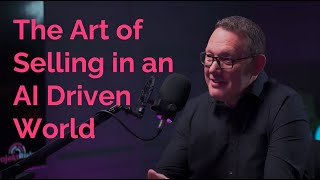
A podcast interview with Simon White (sales team developer) and Bob Stewart exploring modern sales practice and how AI/automation is changing selling. Key themes: practical sales skills (cold calling, demos, discovery, role play, gamified KPIs) and pragmatic AI adoption—using ChatGPT to save time, improve email/proposal quality, voice AI for calls, CRM automation—balanced with concerns about job displacement, IP/memory in models, and environmental costs.
Too many of my clients, their staff don't want to pick up the phone. A question I often ask my clients is, when was the last time you went to see your top 20% of your customers? An analogy that I like to use is if you're not giving your partner a foot massage, sooner or later somebody else will. And it's the same with our clients. If you're not going.
Never heard that one.
I would say, even on the simple end of things, the ChatGPT would be saving me hours every single week. So I'm saving time, but it's also improving the quality of what I'm doing.
I ask an audience of whatever size room, put your hands up. If you're using ChatGPT, almost everybody will put their hands up now, even those that are obviously embarrassed that because they haven't done it initially when everybody else has. We're still in very early stages, and yet if we stopped the technology development now and applied that unilaterally across every industry and business, the increase in output. Production would be phenomenal.
Yes.
And we're not stopping.
Hi, I'm Freya. Welcome to the Skynet Business in the AI Age, the podcast that dives deep into the world where artificial intelligence meets business. Join us as we explore the latest trends, challenges and opportunities in this ever evolving landscape. From innovative startups to established enterprises, we'll uncover the secrets behind the successful integration of AI technologies. So grab a cup of coffee, sit back, and get ready to unlock the mysteries of business in the AI age.
Good morning, Simon. How are you?
Good morning. I'm brilliant, thank you very much.
So, Simon White, developer of sales teams, let's start with an easy one. Tell me about your first ever sale.
Oh, my goodness, that's. That's a tricky one. I remember my first day in sales, which is August 7, 1997, that I started working for a small outbound telemarketing company, generating leads, setting up appointments. So whether I would have set up an appointment that day. So sold the appointment, perhaps. I don't recall the first actual sale, the actual sale I made. I remember some significant ones, some big ones, some important ones, but I don't remember the actual first one, but I remember my first cold call on August 7, 1997. It's burnt into my brain. Didn't go well. Well, there was a lack of training, it was a lack of any kind of coaching or anything around it. It was a case of, here's a list of companies to call, here's a half an hour brief about what our client does now phone some people up and see if you can get a meeting. Maybe it was a little bit better than that. I don't remember it being much better than that, but it was, yeah. Picking up that phone, phoning a stranger, interrupting their day, not really being able to articulate the proposition well enough because you hadn't had enough training. You didn't know how to get past gatekeepers very well. You didn't know any persuasive communication. I was 21, straight out of university, bonked with a phone and a headset and a basic contact management system in front of me, and just said, right, I'll start at A. Not the best approach, I should add, but we start at A. And start making calls.
I witnessed a sale far before somebody started their career. At the weekend, my daughter was negotiating to wash the dog and she was trying to do a deal and she understood that there was a problem. She knew what we wanted to achieve in terms of outcome and she was negotiating on price. She didn't realize that she didn't have the appropriate backing for the price that she was requesting.
Yeah, don't overplay your hand.
No, but it was interesting watching it happen. So I suspect your first sale was a long time before you actually started work in sales.
And I do use a lot of techniques on my family. So the children.
Are you sure you want to put this out on air?
Well, luckily the wife's no longer on LinkedIn, so it's okay. But with the children, you'll use your alternative clothes. Would you tonight. Would you prefer broccoli or peas? Not. Would you like vegetables, yes or no? Would you like broccoli or peas, for example? I did a post on LinkedIn myself a few days ago, and it was about my children cleaning their teeth. You don't have to clean all your teeth, just. Just the ones you want to keep, which we use that in account management. You don't have to look after all your clients, just the ones you want to keep. So we use that kind of stuff around the house a little bit. Not everything works on spouses, I should add.
No, no, definitely not. You've got to be very careful with those sort of techniques because that can come back rather hard.
Very much so, yes. I've got some funny stories.
Yeah, we won't go into those ones. Just in case. She is on YouTube.
Of course she is, actually. Yes, good point.
So tell me about a recent example of a sales experience that you've seen. That was a car crash. I know you've told me about one off Air. I don't know whether that's the one you'd want to share or not.
It's not the one I can share. No, I can't share. I've seen some horrific examples and I'm now struggling to think of any examples I can give you on AIR where I'm actually connected to the people involved, so.
Well, the good news is that you're helping them to improve.
Yes. Yeah, that's. I don't know, we might have to skip that question. I generally, I don't know because I'm connected to all the people involved and I sometimes don't change names.
But unless you change names, industries and specific details, it kind of gets known, doesn't it?
It does, it does. I can't think of. I can't think of somebody who's not paying me money, so.
Okay, well, let's change.
Edit that one out.
We're not going to edit that one out. We'll leave that one in because it's good and it's nice. You don't want to do any harm to your customers, but you are helping them and improving them, so that's all good. Okay, let's change to the impact of automation and AI on sales.
Incredible. I mean, just in my own business, and in my own business, it's me. I would say, even on the simple end of things, the CHAT GPT would be saving me hours every single week. So I'm saving time, but it's also improving the quality of what I'm doing. So in terms of time saving, I treat ChatGPT very much like an assistant. So I will talk into my smartphone and I will say, help me write an email to Fred. This is what I want to say. Use my normal tone of voice, because it's learned my tone of voice and I'll talk into it and I'll give it that short, simple task. But whilst I'm doing that, I might be cleaning my teeth, I might be doing something else, I might be grabbing a drink or grabbing my stuff, whatever it might be, and then I'll come back to that at some point that day. It might not be immediately, but it's there, saved for me. So it's, it's saving me time, it's improving my work. Because one of my most common prompts that I use is improve this for grammar and clarity. So it's still me, I've written it, but it just, just tweaks it, makes it a little bit better, but also I use it for brainstorming. It can be quite lonely when you work on your own. So, yeah, there's no one else in my house. You know, I could work from client offices and I have that option. But when I work at home, I might just say to ChatGPT, I'm running a course on this topic. This is what I'm going to be included. Is there anything else I should consider? I'm not asking it to write it, but it might just go. Give me one thing. You know what? Yes, I could include that. And that's what I'm using. So even in my own little simple business, it's saving me hours a week and it's improved the quality of my work. Now, in the bigger scale of things, how's it going to impact sales? Well, you made a really good point when we were chatting about this a few weeks ago and I'd asked you the question, we were in the room full of people and I said of the people in this room whose jobs are safe and whose jobs are at risk. And we were talking about the general back office admin kind of roles maybe becoming obsolete. But you made a very good point. You said to me, don't think about it in those terms. Think about it in terms of the skills of the people. If they're willing to pick up the phone, stand up in front of a room full of people, get out there on the road and go and see people, see clients, then they'll adapt. But it's those people who go on a zoom call and don't want their camera switched on, those people who are just happy to stay in the shadows, who won't go to a networking meeting. Those kind of people are going to struggle more with the adoption of AI. I thought it was a very good point.
So if you take that through to the sales process, a lot of people want to be keyboard warriors. They want to do it by email, they want to do it by text message. They're scared of picking up the phone. They certainly don't want to rock up at a customer's offices or a potential customer's office. How do we help them through that transition to make them comfortable in the skills that are going to be essential, which is people being people.
Yeah. I don't know if it's also a bit of a generational thing as well. Too many of my clients, their staff don't want to pick up the phone. They don't like cold calling because they've convinced themselves it doesn't work. And in some industries it doesn't work as well. In others, it still works just as well, as it ever has. And in fact, sometimes even better than it has in the past, there's less people doing it, less crowd. They don't, you know, even call existing clients. You know, when was the question I often ask my clients is when was the last time you went to see your top 20% of your customers? This is a question. And they'll go, oh, no. Well, yeah, but we spoke to them on the phone the other day or we sent them an email the other day. Yeah, but when did you actually get in the car and see them? When did you check in on them? You know, an analogy that I like to use is if you're not giving your partner a foot massage, sooner or later somebody else will. And it's the same with our clients. If you're not going. I never heard that one. If you're not going to see your clients, someone else will. They're on someone else's prospect list. Somebody else is courting your clients right now. The good ones and the bad ones, even the ones you don't particularly like, someone else is trying to win them over. And it might be that you're doing a brilliant job for them, but actually they just feel that you don't care. When was the last time you just checked in with them? You said, look, I'd love to come, come to see you, see you, new offices, whatever it might be. So go back to your question. How do we overcome it? The individual has got to want to improve because sometimes you can give them all the skills in the world and they still don't want to do it. So it could be that you might have a square peg trying to go into a round hole in sales because sales means a lot of different things to different people. You've got sales, but you've got account management, you've got relationship management, you've got all of these other business development, all these other words where on a job description that someone might see on, indeed, it might say, you're going to be the relationship manager, you're going to be the business development manager and all this sort of stuff. And then you get the role and you turn up on day one and you're given a target and you're given KPIs and you're like, well, I didn't realize it was going to be like this. I thought I was just going to be, you know, a few inbound inquiries and I was going to, you know, work on a proposal, but I didn't realize I was going to have to go networking and pick up the phone and be responsible for whatever it might be. So it's a tricky one. We can give them the skills and we can coach them to hold them accountable for putting these things into action. But some people just, unfortunately won't make it in that respect.
It's interesting because we're currently kicking off a competition within the company, and the aim of the competition is to increase the amount of demos that are done of initially one tool, but there'll be other tools that they're also demoing. And in order to encourage everybody to participate, we've created a scoring system where there's a score for actually doing a demo, there's a score for a referral, there's a score for a close, but there's also points if you create another demo, if you create a piece of collateral that helps other people to generate demo opportunities and to close. So we're trying to see which things people have a natural affinity to. And we're not talking salespeople here, I'm talking my entire organization. So everybody, whether they're a bedroom coder or whether their natural job is out in people and selling, even if they never signed up for that in their life, which I didn't, it's just to try and get everybody involved in that process so that we can share more of what's possible in these tools. And it's been fascinating just seeing some of the objections, I guess, and how we're then handling those objections. And you're helping us to overcome them with the training that you gave us last last week and the guidance that you've given us. And I'm now having bits of your training quoted backhanded by the team, which is fantastic. So just seeing how you can sort of tune a problem, which is an organization having not enough salespeople bluntly to how can we use the people we've got and build out people who have those skills in the future? Because I look across the team, I think every single one of them could be a great salesperson of the sorts of technology we're working in. But you have to break down those barriers gently, and they have to get comfortable in that.
Yeah. And the KPIs you've put together are brilliant. You know, having those. And I love that term, by the way, bedroom coder. Creating other collateral as part of this is brilliant. The thing with. With. With, let's call it prospecting or pipeline building, there's always something more interesting to do than pick up the phone and phone a stranger.
Yeah.
You know, back in the day, you know. Oh, oh, no, I'll do the photocopying, I'll bind up that proposal. No, no, I'll, I'll get to the. Oh, I didn't get time to cold call today and, you know, I'm not saying it's always cold, but yeah, it's great how you've done. I love to gamify this kind of stuff. I've got a lot of. Amazon should be paying me a commission because a lot of my clients are encouraged to buy a Wheel of Fortune wheel and they're about 60, 70 pounds on Amazon and we'll put some KPIs together. So it might be if you make a certain number of phone calls that week or you've done a certain number of LinkedIn posts, whatever it will. Direct messages via LinkedIn, whatever it is. On the Monday morning startup meeting, you get to spin the wheel and you might win a five pound Gregg's voucher. You might get your car washed, you might get whatever it might be. And if you've got 10 salespeople and seven of them get to spin the wheel, but you're one of the few that don't get to spin it, then you feel a little bit embarrassed. You're a little bit, oh, I need to step up next week. And it can also encourage a little bit of pressure at home as well. So if one week you take home, whatever, it might be not encouraging drinking, but let's say it was a bottle of champagne and your partner goes, oh, where did that come from? Oh, it's because I hit my KPI in terms of my LinkedIn post this week at work. Oh, great. Then the next week comes and you, you don't take a bottle of champagne home. Where's the champagne? Oh, I didn't do my, my posts. Why, why didn't you do it? And you. So you get in coaching at home. So I do, I like that you're.
Encouraging marital strife to do sales before.
That's it. But I do like to gamify stuff. I do like someone to stand up in a room and physically spin a wheel. We can do it online if they're, if they're built, if they're based in different locations. But I do like, I like that. Have a dice, roll a dice. You can, you can pay one team against another and do sort of battleships and stuff like that to make it fun, to encourage people. Yes, we can reward results and that's what we get commission and bonuses for. But I really like to incentivize the input. It's not necessarily how many meetings you set up. That's important, important KPI to track. But I want to know that you've did the effort to get it. Did you go to enough networking meetings? Did you make enough calls? Did you send enough emails? Did you whatever, whatever you have to do in the top of the funnel? If you're doing that, that's great. We can tweak everything else. But if you're not even starting at that point, then we're struggling.
It's fascinating because I had one particular objection was wanting to have a perfectly tuned demonstration for a specific customer. And I had to sort of guide through and say, what you don't realize is that 99.9% of people on the planet have no clue of what's possible with the current state of tech. So the fact that it's not perfectly tuned doesn't matter. You're looking to get a wow moment and then for them to tell you the problems that they've got because of that wow moment. So you're just almost sowing a seed, stepping back, letting them think, letting them talk, and then they're going to tell you exactly what they need. So the demo itself doesn't necessarily close that sale. It might open a far bigger opportunity that we didn't know existed. Just because they're then telling us about their problems. Because you've shown them something magical.
Yeah. And in that training that we did last week, and that was all about how to do a great demo, 70, 80% or more of that training session didn't focus on the demo at all. It focused on the discovery. Do we understand where they are right now? Do we understand where they want to be? And then we can show them how to bridge that gap. It was all about asking the questions and the discovery of that and summarizing stuff back to them. And all of that stuff is what we were covering. The actual demo part actually is important because it's got to be credible and all the rest of it, but it has to come further down the line until you can't just go in and pitch an idea until you've done the discovery. Yeah. You know, and I always say in the very first session with any company I do, I always ask the question, I always say, introduce yourself what you want to get out of today's course and if you had a superpower, what would it be and why? And people always say things like, I want to be invisible, I want to be able to fly. And that ties into the first activity I do where I always say Asking great questions as salespeople is our superpower. The better the question, the better the answer. That's the key to what we do. Everything we do in sales pretty much ends in a question mark. Whether you're building rapport with somebody and saying, how was your weekend? I wouldn't necessarily do that one, but it ends in a question mark. Whether you're overcoming objections by asking an open question, whether you're closing by asking a closed question. All of these things end in the question mark. So that's what we've got to get good at.
I love it when I go onto a team school and I can hear kids in the background because you've immediately got something. You don't have to pick a piece of art out on the wall or something in the background to talk about. You've been given input. Something to actually start a conversation with and ask questions.
And when we did ours the other day, exactly what I was talking about with yourself. I was talking about the logo on your office wall, your home office wall. In my office. I've got a bookshelf behind me and different things going on as well. I've got props in my office. I did bring out during the training the other day a U bend. A toilet. U bend, Didn't I? I've got a DeLorean time machine that I use as well. And different. I've got different things like that even for the virtual training. Then when we get in, the real training. Got rope and all sorts of stuff. But we spoke about the vinyl on your. On your wall for a while. And I love that. I detest virtual backgrounds.
I do. There's been study that shows it's actually harder work for the brain watching somebody that's got a virtual background because as they move, there's a flickering around the edge and it causes additional processing. So watching Zoom, where people have virtual backgrounds has been proven to be more tiring.
Yeah.
Than when they don't.
Yes.
Madness.
And then they pick up a piece of paper to show you something and you can't read it because it's gone all virtual. I was having. Back during COVID I was doing a coaching course and it was virtual. And the guy who was doing it had a virtual background, and it was of space. So the moons and the planets and stars and whatever. And it was just to show me your room. I don't care if there's washing in the background. I don't care what it is. Just. Just give me real. I want real. I don't want virtual. I want to get to know the person.
And the thing is, it only takes a few hours to stage a room. Leave it in that way.
Yeah.
Make it part of your workspace, because then it's done.
Yeah.
Madness. So, obviously, the demo that we've been doing at the moment is based around voice AI, and the use case that we've been marketing is answering the call and booking meetings when people are unable to answer the phone. But there is a potential use case for that technology for outbound calls specifically, where they are is a known relationship between the customers. It's more questionable for cold calling, where we can create an avatar, create a Persona, choose an accent, give it a sales script, make sure that it understands spin, selling Toad, any other aspect that we want to put into the configuration of the call, and then have it make calls through a list. And that could be following up and checking that somebody's definitely still coming to a meeting. It could be trying to do an initial discovery for a customer. What are your thoughts on the risks of that technology?
I think it'll be adopted. I think a lot of people don't want to do those calls, even though they seem to be fairly straightforward calls. Were you happy with your MOT or whatever, those kind of calls? I think it's going to be more cost effective than employing people to do it as well. I don't know about the risk. You've got. That dilemma is, does the AI announce that it's AI? And I think.
Which is a choice.
Yeah. And I think if it's confirmed, confirming you're happy, you know, happy with the mot, or you, you know, you definitely come to that meeting. I think it's absolutely fine just for IT to know it's AI and even to sound robotic. I know it doesn't because I've heard your demo. It sounds very human. But. So I don't have an issue there, I think perhaps with more sensitive issues. I. With my bank, it's not the same, but it was an online chatbot with my bank, and I get so frustrated with it because my Alexa is stupid. This chatbot on my bank is even more stupid. Right.
Is that the new low, then? Alexa's like, here the bank was on the floor.
I mean, a few years ago, everyone was like, oh, Alexa, do whatever I ask. Alexa, what song are you playing? I don't know that one. You're playing it.
I'm here only to sell you more things.
Yeah. Um, so, you know, if I. So I'm always. I want to speak to a human. I want to speak to A human. So I think with sensitive things around banking, stuff like that, then definitely, maybe at the moment a human gives, gives people that reassurance. But, but for low, lower level, for outbound calls, I'm very comfortable with that. And I don't mind really whether it says it's AI, I don't find that as a negative. I don't need it to pretend it's Bob from Birmingham with a Brummy accent. It can.
We just created a new Persona, but it can be.
So I'm comfortable with that. I think it's going to be great. I do worry a little bit about where it's going. I love AI from the point of view that we can use it to make humans better and our planet better. Finding more efficient ways of engineering an engine, finding cancer quicker, all of that. I love all that. Yes, I love all of that. But I do worry about the unemployment. You know, if you, if you, you know, you can replace a lot of people, those back office people. Okay, well what, what's their next role going to be? They're not all going to go and program AI because at some point AI is going to program itself. And so I worry about that side of things. But at the moment I'm embracing it because I love it. It's helping my business. But yeah, I worry about for my children. You know, my daughter is planning to be a doctor. I'm sure she'll still be a doctor and a lot of that was. But she'll be using a lot more AI in surgery and she wants to be a surgeon, so she wants, there'll be that side of things, I think. Okay, what more about my son? He wants to be an engineer or make sure he's going to work in an area of engineering that will be less affected on a negative basis. So it's, it's worrying about that our children and grandchildren.
I think when I look at surgery, I think almost all surgery will be fully robotic because the level of control, understanding and dextral ability is just going to be far superior to what we can do. And if you look at the neural lace technology that Elon Musk's company are creating, all of that surgery is fully robotic because it's the only way you can get these fibers down into the right parts of the brain accurately and that will trickle down. But it is interesting when you look at the future, where do you guide your children towards? And I think having those people skills, being comfortable, having challenging conversations, being able to close a sale, whatever format that takes, but also having a broad Spread of experiences that they can pull on and be able to talk about because so much comes from that. Yeah, I think that's going to be the most powerful thing because we can't predict what jobs that will be in 3, 5 years time. What industries will have completely shifted to AI and robotics in a similar. And extend that out to 10 year time frame.
Yeah.
So you've kind of just got to be comfortable with change, highly adaptable and able to talk about the experiences you have in a way that break down barriers.
Yeah, absolutely. I don't think AI will replace salespeople anytime soon. It's an extra tool and I think using AI to update the CRM system, for example, things like that are brilliant. But I think it will replace some parts of sales. So maybe on the inbound call handling in a call center, some of the outbound lower level stuff, some of the preparation work. But if you're selling something that's quite complex and you need to go out and see people and that side of things, I think humans have still got that for a long time to come.
I think so. And I think the key skill for us to be focused on is how do we augment those people. So when a salesperson is going out to have an in person meeting, how is all of the rest of the stuff that would distract them from the preparation, from worrying about it is just sorted for them. So anybody that's not recording their conversations and calls, I don't understand what they're playing at. Just having something attend your virtual meetings and your in person meetings and produce a transcript for every sales meeting you have becomes something that can be mined. You can identify all of the objections that are being raised, how they're being handled, identify the optimum way to handle those. Create a training guide for new employees. When people are struggling to do research and write out a proposal in detail about a company before they share it, the first draft of the proposal should be automated. And if you're getting to that point where the people are just able to focus on actually building relationships, building rapport, understanding the problem that the customer has and everything else around it is just happening, then they can have more of those conversations.
Yeah, absolutely. And I've, I've, you know, going back to the simple version of ChatGPT, I've taught it my tone of voice, I've taught it how I write emails, I've taught it how I structure proposals so that it can guide me a little bit on that again to just make it that that extra 5, 10, 20% better than it would have been before. Yeah, I like my conversion rate was high anyway, but it's definitely gone up even more because it saves that time. I don't have to rush in. I think I can get it perfect and it's done.
And you're able to do it quicker because it saved you time so you can do more of them. So it's not just improving the conversion ratio, it's convert, improving the closed sale.
Yeah, yeah, absolutely. And there's certain tasks that salespeople traditionally don't like doing.
Most CRM anybody, they don't want to.
Update their CRM, they don't do enough preparation before a meeting, they don't write up their notes afterwards. And CRM proposals are so superficial a lot of the time because they haven't gathered enough information in the discovery stage, so they can't articulate that back and repeat that back. So recording it and doing everything we've just been discussing sets them apart from everybody else. So if you can adopt AI into your, into your, into your business, it's gonna make a massive difference. Not everyone wants to. I know people, friends of mine who go, oh, AI, no, it's gonna, that's.
Fine, yeah, but say goodbye, dinosaur.
Yeah, yeah, yeah, absolutely. I was thinking about it on the drive in because I got stuck in traffic. In terms of adoption of AI, are we at the innovator stage? Are we at the early adopter stage? I'm not sure where.
I think we're still early adopters. And actually for most businesses, probably before that, in terms of production, deployment of solutions, there's an awful lot of people if you, I ask an audience of whatever size room, put your hands up if you're using ChatGPT, almost everybody will put their hands up. Now, even those that are obviously embarrassed that because they haven't done it initially when everybody else has. But if I then ask questions about how they're using it, what they're doing, how they're then using versions of their response and prompt to create chains and create a high quality output. There's very few people that are even doing that, let alone deploying solutions within their business that automate parts of those processes that used to be done by humans.
Yes.
So I think we're still in very early stages and yet if we stopped the technology development now and applied that unilaterally across every industry and business, the increase in output production would be phenomenal.
Yes.
And we're not stopping. So every week there's a new release, a new capability, and actually part of the Challenge now is just understanding what's possible. And so a lot of my job is just talking to people about what can be done now.
And there was a bit of that in the last week and a half, I think maybe two weeks at the out the outside on, on LinkedIn this new trend of creating an action figure based on yourself. And I've seen. And I did it. I didn't put it on LinkedIn because I was already, I was already. It was already a trend for a week. I was always. It was, it was so last week by the time I did it. But I sent it to my sister and a few people just to show. And some people put on LinkedIn, oh, what a waste of time. Why are people bothering? But actually it was just to see what's possible and just get people used to doing prompts. And I think one of the byproducts of this is become very good at all getting better at briefing. I used to work for a marketing agency. Getting a brief is accurate brief. I'm a nightmare for it still. Can you move it there? Can you do this? Can you do that? But it's getting us better at prompting. So that was what it was about. It was a bit of fun and it showed people what was possible. And yeah, I'm still seeing a few come through but in a few weeks time no one will do it again. Something else will come up. But it was great just to see people having a bit of fun with it. Although my daughter did say to me, you know, every time you prompt chat GPT, you know you're getting rid of X amount of water in the Amazon or something, whatever, whatever Eco the thing.
She said, well, I don't think you get rid of water.
I don't know what she said, I was only half listening.
But I mean there is an argument around the power consumption used to generate images and it isn't insignificant. And we're producing more images now than have ever been produced in all of the time of man.
I mean I worry about the image companies, you know, the getty images and people like that, you know, used to go on and you could buy royalty free images from unsplashing places, but you could buy images. But now chatgpt and say give me a, give me an image of a squirrel cartoon squirrel giving a foot massage to another squirrel. Which I did the other day done for that for a LinkedIn post. It wasn't a thing.
I think that might be a thing.
And it did it within, you know, 30 seconds or so. And that was it. I didn't have to pay any extra for it. I paid £20amonth for ChatGPT. It did it.
And early on, when Stable Diffusion first was released on into the Wild, a lot of the images that were coming out of it had the Getty logo, and so they were obviously sued. But the impact to the, the platforms that were selling this licensed imagery will be huge. And just watching the journey that canvas come on from being a lightweight, consumer arty tool, to now directly competing with Adobe in the enterprise space and incorporating all of these different tools and technologies in a way that is incredibly easy to use. So you can go on a journey in ChatGPT and you can say, based on this conversation, now, create me an art image, or take my photo and make it this and tweak the logo in that way and happily do it. But it's not giving you the layers that you can then manipulate in traditional art package. And so those tools where they're combining these technologies is just breathtaking. And you're right, the impact to the traditional Getty and the like is huge.
Yeah, yeah, yeah. I mean, when I do LinkedIn training, we're obviously looking at getting their profile right. So they need a banner, they need a good headshot, they need a persuasive headline that isn't just, just their job title needed about section, et cetera, et cetera. Well, you can sit there with a blank piece of paper all day and trying to create that stuff, but you might as well just go into ChatGPT and says, you know, I need your help to write a persuasive headline for my LinkedIn profile. This is what I do, it's what makes me different. This is who I, who my target audience is, or whatever the bri, whatever the prompt is, and it'll give you half a dozen.
Thing is, if you've been using for a while, the memory function within, it means it's actually remembered quite a few of the characteristics about you and they've now extended that significantly, possibly worryingly so, but I'll come back to that. But if you ask it, produce me the ideal LinkedIn profile based on everything you know about me. I think you'd be surprised what it come back with.
I sometimes do that similar demo. It tends to come up in LinkedIn training, but it can come in any session I'm doing where I know you were saying that you stand up in front of a room for people and say, who uses ChatGPT? And most hands go up, but I still get quite a few hands, not go up when I ask the question in my smaller small groups and I was like, oh, yeah, yeah. He's like, oh yeah, I've heard of that, or whatever. I said, let me just show you. And I bring out my phone, I'll say to chat GPT, what do you know about me? And it will go, oh, yes, Simon White, you develop sales teams, blah, blah, blah, all this sort of stuff. And then it will start going a bit deeper. You like your emails to be direct and short and you don't like phrases such as just reaching out, just following up, you don't like to include, I hope you're well. And it will give me all of these things that I've taught it over the time and it's. And it's remembered. Although the classic one that it seems to completely forget every time is that EM dash instead of a hyphen.
It can't help at the moment.
You've forgotten. Can you replace the EM dashes with a hyphen? Yeah, of course. You still haven't done it, have you? No, I'll do it now. But that one thing.
But now with the new all encompassing memory, it's also going to remember your squirrel foot massage thing and it might incorporate any aspect of any participation you've had in producing the output. So you're no longer relying on the knowledge that's within the trained model, you're relying on an unpredictable additional context that's being added based on anything you've previously asked. Yes, and I think that the barrier between personal use of ChatGPT for everyday queries and shopping and finding coupon links and whatever else you're using it for, and that then mixing with the professional use is going to be a challenge because people have those gaps and barriers in their heads. They've not stopped that in the way that they're sharing information into these models.
Yeah, that's a very good point. Because the way I use it, of course I'm in the sales space, but sometimes I'll be asking it as a question where my Persona isn't that of a sales development, sales training coach.
As an Expert copywriter with 30 years.
Of experience, I'm pretending to be somebody else so that I can understand the challenges and objections that that kind of person faces or all of that. So it all kind of gets mixed in. I also worry a little bit about some of the, some of the things that I've created. So I've created this process for having really good meetings called Toad that I talk to all my clients about. And of course I've put that information into ChatGPT. So is that going to come out somewhere else?
Well, it will be used in future training.
Yeah.
So unless you've requested that you forget this chat or you've deleted all the.
Memory, I delete a lot of stuff like that.
But deleting isn't the same as never remember. It just means you can't see it.
Yeah.
So I don't think that deleting chat instances means that that chat conversation, the input and output won't be used for future training.
Yeah.
So everybody is just building this wealth of information and ChatGPT has huge gravity. So it is the most commonly used platform by consumers, which is just helping to build out the next wave of training. And so the models that come and are constantly released get smarter and smarter, but also know the things that we weren't necessarily meaning them to know. So I wouldn't be at all surprised if Toad comes out in future model releases.
Yeah. I.
The thing is also linked to your website. That wouldn't be a bad thing.
Yeah, he knows my website.
If you put Toad on your website. No, I think you should.
Yeah.
Because then that just becomes a natural point that it'll link out to. Because people are using ChatGPT as a search engine.
Yeah.
And if they come across a sales concept and it's got a link to your website where you can hear more, that then allows you to have new clients identified that fit to the top of your funnel. I think we're more protective over IP and opinions than we should be. And actually, the more we're putting out that is our authentic selves, the better it'll do in the long run.
Yeah. Mind you, I give that concept to hundreds and hundreds of salespeople every year, so they will go off and use it and adopt it and stuff. So AI is exciting in sales, but there's always that darker side to it. What's going. What it's going to mean. We just don't know what the future holds. It's getting cleverer and cleverer. But I still think that you and I have spoken about getting in the car and going to have a coffee with a client. Makes all the difference walking around that. I was coaching some staff from an accountancy yesterday and I was saying, you get out and see. See your clients go and do those review meetings in person. Don't to sit on teams unless they're a mile, you know, miles and miles.
Away, perhaps, but they're accountants. I mean, they want to stay inside nearly as much as software developers.
Do, but get out. Because when you're walking around, you might say, what are that team over there doing? Oh, they're working on a new piece of innovation, blah, blah, blah. That might lead down to a conversation about R and D tax credits, which you wouldn't have necessarily had if it had been on a team's call. So getting out there and seeing people makes a difference. I've picked up clients who I've met at another client site. One day I was with a client, new client, and he said, oh, have you met Greg? I said, who? This is this guy fixing their printer. This was years ago. And he said. I said, no, I haven't, and shook Greg's hand. And Greg's a client of mine now because I met him on site at another client's office. You don't get that on teams. People don't go, oh, hi, I thought I'd just put my head in. They don't. You meet other people. Have you met my boss? Have you met my md? Have you met our head of this, head of that? All of a sudden you've got in there with one contact and just by going there, you've now got two, three, four, five other names that lead to other opportunities and a more secure account.
I was on a training course last week and it was talking about inviting visitors to networking events. And the angle that was put across, which is as a question, what's the number one reason people don't come to a networking event?
The unexpected.
They haven't been asked.
Okay.
And it's that simple. It is just putting yourself out there and it's still a form of sales, isn't it? You're still building relationships and network, but actually asking, saying, would you like to. Can we have a coffee? Would you like to discuss this in person? Building those relationships that we thrive on is more and more important as technology creeps into the easier tasks and repetitive actions within our lives.
Yeah, that's a very good point. I love that. Yeah. I go to a networking meeting in Northampton and I've just think about, well, so many of my clients are in Northampton. Why don't I take some of them along as visitors? I've only just recently joined it, but, yeah, I'm just thinking in my head now that who I'm now going to invite to the one in May. So, yeah, that's a good point.
Go through your contacts. I said this to the team the other day when somebody said to me, so I don't know who I should do a demo to, and I said, when you're practicing, when you're doing your early ones, do it with somebody who already likes you, who loves you, who supports you. Go through your phone, find the people who, if you called them in an emergency, they drop things to help you. They're great people to do a demo to because you're going to get honest feedback. You don't mind if they're brutal with their feedback because you already like them or love them. But that practicing will open doors anyway because you're still showing them something, you're opening their eyes and they may go, oh, well, Bob, would you would be able to use that?
Yes.
So just using your A plus contacts for something is priceless.
Yeah. Just like I, as you may remember, I used to be in the magic circle years ago when I was in my 20s, early 30s, doing close up magic at weddings and parties and that kind of stuff as a hobby. You practice on your friends and friends, family, but they can be the hardest audience.
Oh, absolutely.
So I don't like doing magic to people I know. I like doing magic to strangers. I'm happy to stand up in a room full of people if they're strangers. But, but, you know, doing it to, to, to my wife and kids. Oh, I saw what you did there. You know, they get used to it.
But, but if you can handle that really tough feedback from people you like, then it becomes much easier when you're not worried about what the other person at the other end really thinks about because there are plenty more fish.
Yeah, yeah, yeah. But doing magic to people, you know, it's tough. There's no barrier. No, yeah, but, but definitely what you don't want to do is practice sales on your best prospects. You've got to cut your teeth on other people. That does mean also role playing as well. I'm a big fan. If you're going to do, use this as an example. If you're going to do it, you know, cold calling, spend 15 minutes before your cold calling starts that day with a colleague and just have a role play just to get your mind into it. Throw a couple of objections in, get you, you know, be like going to the gym. We were talking about going to the gym before we came on air. You've got to stretch, you've got to, you know, you've got to get the right clothes on. You've got to get, you've got to, you know, get ready for that workout. And it's the same with, with, with, with cold calling or doing demos or going to meetings, whatever it might be. Get your head in the game. Think before that networking meeting. What am I going to say if it's my 60 seconds? Yeah. What is my opener going to be when I walk into that room? Who am I hoping to see there? Am I going to go straight to the coffee? Because that's where people tend to huddle around, et cetera. Just think about what you're going to do. You know, every meeting I go to, I'll do a load of preparation for a new business meeting. If that new business meeting I think is going to last, say an hour, my preparation for that meeting could be an hour. But I'm thinking about, I'm going to their LinkedIn, of course, I'm going onto their website, but I'm also putting together some, maybe some spin selling questions that I might use. I might think about what makes me different to that audience, what experience have I got? All of the. All of that kind of stuff that might take an hour or whatever, some period of time. Anyway, so I said when I come to that meeting, my head is completely in the game. And if that meeting is on Zoom or Teams, then I'm going to have some notes around the camera. They can't see what I'm looking at, but it's their prompt. And I would say 80 of the time, I don't really even look at those notes. The process was enough. I don't need to look at it.
Yeah.
I can just go from, from memory. But.
Well, I think we've had a fantastic chat. We could talk all day. You shared some absolute gems. So let's draw it to a close there. But thank you very much.
My absolute pleasure. Thank you. Take care.
Awesome. By.
More from Tim

EP 60: Why Founders Become the Bottleneck — And How AI Changes Everything | Thea Brook









