
Ep 40: Empowering Caregivers: How Technology is Transforming Dementia Support
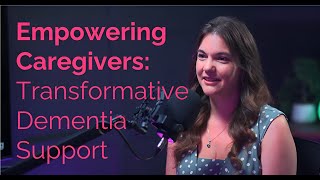
Dr. Emma Williams left her dementia consultancy to build Less Distress, software that predicts and prevents behavioral crises in people with dementia. The tool digitizes behavior analytics to give caregivers personalized interventions before distress happens. An NHS pilot is planned, with a minimum viable product expected in 2 to 3 months.
Questions this video answers
July (investor event in July).
London Tech Week.
Approximately two to three months from late June (to a solid MVP for testing).
"One of only 80 behaviour analysts in the whole world who specialises in dementia care."
Staff churn ~28%; onboarding cost ~£3,500 per new staff member.
You've now got investors going. We want to work with you.
One of them said, this is what the world's been waiting for.
Is that on the website yet?
Not yet, actually. I'm building the pitch deck. Ready for an investor event in July. And it's on there?
Absolutely should be. And if you think back to 2017, pre behavior analyst to where you are now, would you have had even the slightest inkling of the journey that you would go on?
No, because in between that, I did a PhD in smuggling.
As you do.
And using kind of behavioral science to influence smuggling behavior, for better or for worse. For better, I hope. Hi, I'm Freya. Welcome to the Skynet Chronicles Business in the AI Age, the podcast that dives deep into the world where artificial intelligence meets business. Join us as we explore the latest trends, challenges and opportunities in this ever evolving landscape. From innovative startups to established enterprises, we'll uncover the secrets behind the successful integration of AI technologies. So grab a cup of coffee, sit back and get ready to unlock the mysteries of business in the AI age.
Good morning, Emma.
You're welcome. Thank you.
So let's start with a nice easy one. Tell me about the start of M Will Care.
Okay. We're going in first like that, are we? So I work as a behaviour analyst and I started the UK's first behavioral consultancy business back in 2021 that specialised in behavioural approaches in dementia care. Quickly realised there wasn't enough of me to go around because obviously everyone is really in demand for a behavior analyst in dementia care. And what I wanted to do was scale up that business. And so I found a scheme via Business Wales called an Accelerator Growth and applied to that with that first business. They rang me up and said, emma, we love what you're doing. We can only support tech companies at this time. Are you able to start another company and it be a tech company? And this was on the phone in the middle of a Birmingham shopping center.
The answer was yes.
Yeah. I didn't even hesitate. I said, yeah, of course I can. It's no, no big deal. Hung up the phone and I was like, okay, no idea what I'm going to do here. But that's where it started and that's where it kind of emerged from, really, is taking how to kind of take my knowledge and expertise and then put it into a digitized version.
So let's step back and make behavior analyst for dementia something that is understandable to people who haven't had the misfortune of being exposed to that.
Yeah. So up to 90% of people who are living with dementia experience distressed behavior at some point in their journey. And those distressed behaviors are normally always trying to communicate a need. It's just that that communication gets lost in translation, you know, when someone's got dementia. So what I do is go in, analyze behavior, find out what need isn't being met, and then help caregivers, you know, whether that's paid or unpaid, caregivers to intervene with an intervention that's personalized for that person. That means that they no longer have to engage in those distress behaviors to get their own needs met.
So that could be something as simple as taking somebody out of an environment where they're about to get spooked by music and taking them to a quiet space.
Yeah, yeah. And you know, you've got really kind of simple interventions that you can put in place. Really complicated interventions as well. It very much depends on the person who's supporting them and where they're living and what setting and environment they find themselves in.
So there's just a monumental unmet need within society for this. There are so many people who are struggling with dementia and the carers who are supporting with them are obviously struggling. Yeah, even more.
Absolutely.
So how did that then apply to making a tech company? Because you'd been waved to flag. Yes, I could make a tech company on the offer of some finance support, I assume from Business Wales, lots of.
Business support rather than financial at that stage. We're kind of emerging into that now with Alzheimer's Society and their accelerator growth program.
Okay, so you'd said, yes, I can make a tech company.
Yeah.
Then what?
Spent some time pondering it, lots of brainstorming and essentially what it kind of then boiled down to is in some care settings, care staff are asked to fill in different behaviour or all type forms. So they're asked to fill in what a behaviour might look like, what's happening before that behaviour and what's going on in the environment in general. Now, generally speaking, staff aren't given any training to fill out those forms. So as an example, with my first company, I do a six hour training on, on how to effectively fill those forms in. So obviously care staff that are run off their feet doing their job already, they've got no hope. So we'd get really, really badly filled in forms. And so what we're doing with less distress is taking that kind of analytics journey to then guide people to answer the questions. So we get really good data from them to then be able to make intervention suggestions that they can then carry out in real time. And it will also then pred future behaviors based on patterns that it sees in the data.
That's patterns across the populace, isn't it? So it's not necessarily an individual has demonstrated this previously. It's people who have had these sorts of trigger events are more likely to be susceptible to this. The numbers are suggesting this is a potential situation. Here's how you could prevent it effectively.
Yeah, essentially. And kind of really analyzing all the different variables that may or may not apply to that person and then going from there.
Fantastic. So you were then spotted by the Alzheimer, is it Alzheimer. Uk.
Alzheimer's Society.
Alzheimer's Society. And they have a accelerator where they're helping businesses who have the potential to make a difference within the uk, aren't they? So tell me about that journey.
It's been amazing. So they've provided us with lots of contacts, lots of support, business wise. So just last week we were in London Tech Week showcasing the prototype and it was amazingly received. So one in three people are going to be diagnosed with dementia. So, you know, you think of somewhere as huge as London Tech Week and the amount of people that were in that building, a third of them are going to be touched by dementia. And the people that were there were all coming up, they all had personal stories and I had probably about 20 investors who all expressed an interest in being involved, not because. Not just because they see the scale of the problem, but because they have experienced those problems themselves, whether it be mum, dad, you know, aunt, uncle, spouse or whatever. And they want to be part of the solution. They want to make the world a better place. So just having those kind of opportunities and that voice to kind of say to people, look, you know, we can do this. And having people open doors has just been amazing.
Fantastic. Yeah, it sounds like it's an amazing opportunity. Perfect timing, you know that there's an unmet need because you've already been providing that service.
Yeah.
So normally when we're talking about automation, so if you've got a model that, you know, works, you've tested it and then you automate part of that, then that likely is going to work. If you're going in RAW and just saying, okay, we're going to create a product that does this shiny thing, then when the rubber hits the road and it starts being tested, that's where you hit problems. But you've already got a tried and tested process, you know, this works. You had incredibly detailed visions of how this app would work and how it would be delivered, which makes Our job, really quite easy. Just put it together, just do a thing.
Yeah, we will. So what? I've worked in care kind of 27 years now. I've been a behavior analyst since 2018, and I did. So to become a behavior analyst, you have to do a master's degree and you have to get 2,000 clinical hours before you're eligible to sit a board exam. So throughout that time, I've been specializing in dementia. A lot of other behavior analysts work within autism fields or learning disabilities, but I knew that wasn't really a path I wanted to go down. I have worked with kids in the past, but it just wasn't something that really kind of made me passionate. And seeing how unsupported this whole population of older adults are, so not just the person themselves, but also family members and caregivers. It just the amount of suffering that's out there is something that really should be addressed and I could see a way to address that. So that's exactly what I've kind of set out to do.
Fantastic. So you've got a prototype.
Yes.
You've shown the prototype off at Tech Week.
Yeah.
You've now got investors going. We want to work with you.
One of them said, this is what the world's been waiting for.
I mean, that sort of. That line on its own is gold, isn't it? Is that on the website yet?
Not yet. Actually. I'm building the pitch deck ready for an investor event in July. And it's on there.
Absolutely should be. And you've had other businesses come to you and say that they're willing to offer services on a pro bono basis, which is just fantastic. So it feels like it's rolling downhill and gathering speed. What's next?
So I. Well, so we're also collaborating, obviously, with people with lived experience, because they're the ones going to be using it. So obviously we want to involve them in development of it. So we've got different groups of people lined up who are all chomping at the bit to be testing out the product. Once we've got it, you know, where we want it to be. I've also got an NHS contract, which I'm due to start imminently, where I'll be testing it myself to make sure that it's doing what I think it should do. And then once we've kind of run some testing, you know, more iterations, we're ready to steam into providing that help to those people who really need it.
And all the time, throughout all of the different versions, we'll Be gathering that understanding information that's going to form the Insight engine to make these early warning indicators that will make a difference in people's lives.
Absolutely.
Very exciting.
It is exciting. And I've got. Well, actually, tonight I'm meeting with another behavior analyst. So one of the investors advised that, you know, we need to get someone else on board to kind of consult behaviorally, which I completely agree with. So it's not just kind of my opinion then and so to speak. So I'm meeting with her tonight and again, she is super excited to be involved. You know, no offers of money yet, but she just is excited to be involved, to be able to create those positive changes that we need to see.
Fantastic. And we met because somebody that I've worked with previously, Tom, is on the same accelerator as you.
That's correct.
And he just said we should talk. And it's been fantastic. It's been a whirlwind.
It has.
We've gone from nothing to something quite quickly.
Yeah.
And it's very. I've loved the journey and I think the product has a real potential to make a difference in the world.
Absolutely. And having people like yourself and your team on board is. Is what's going to drive the change that we need to see. And it's also what investors like to see because they can understand that other people are behind us. It's not just, you know, a stab in the dark of a random idea. It's actually something that's scientifically evidence based and really solid in its kind of methodology.
Yeah. Amazing times. So when does it start to make a difference to people?
So we need to do, obviously some more building, more testing, more logic built into the wiz that you're building. But I anticipate. Where are we now? Nearly at the end of June. I anticipate probably two to three months. We should have something that's a solid MVP that we can be testing with people and getting that feedback and training the models.
Fantastic. That sounds like it's a long way off, but it really isn't.
It's not. No.
Because there's been this problem in society forever. And so getting to a point where in a matter of two to three months, change could be happening. That's fantastic.
Yeah. And lots of people were saying at Tech Week that we are coming into this at a perfect time. So we're ahead of anybody else that's even remotely considering doing anything similar. There just isn't anyone. And for us to be at the stage we're at, we're in a really good place. And I think that's why we've been getting so much support and offers of help, because people can see this changing the world and the way that dementia is cared for and understood and, and people are supported.
Fantastic. And then what?
Then we. Then we. Then we explore the world. So this will be a global product. I have no doubts about that. And yeah, just entering different markets, making sure it's available. I'm not even too sure what that looks like right now, but I know that when people find out about it, they're going to want it and they should have it because it's really, really what's needed.
And if you think back to 2017, pre behavior analyst, to where you are now, would you have had even the slightest inkling of the journey that you would go on?
No, because in between that, I did a PhD in smuggling.
As you do.
And using kind of behavioral science to influence smuggling behavior.
For better or for worse?
For better, I hope. So. The work I did there basically was how we can use behavioral science and specialist dogs to influence smuggling behavior. So I was doing experiments at ports with various items of contraband, planting dogs, planting drugs in random places and lots of kind of different experiments. We did some stuff on the dark web. We interviewed actual smugglers. Covid put a stop to some of those because we were going to actually go into quite a renowned prison and we had lists of smugglers that we were going to interview. We had to take a step back from that a little bit. We had to find other ways of exploring those people. But we managed it quite successfully. And those findings from that, again have gone international to be implemented in different places.
So, to paraphrase, you're a doctor in smuggling, correct?
My nickname is Dr. Smuggles, but actually it was a year and a half ago. It's before I applied to Business Wales, when I was trying to get the first consultancy business off the ground because historically there's been no funding for providing behavioral services with the older adult population. So it was really hard to get contracts through because it was places like local authorities, NHS who would be paying those contracts. I got some, but it wasn't getting the kind of traction I needed. And I actually looked into retraining as a software developer because again, there was a scheme going where they would train you up a software developer. You know, they said there was like an interview at the end, guaranteed interview, and I thought, well, sod it, you know, I know I'll be good at whatever I do, so I'll just go ahead and do that. And it turned out to be a scam, so completely fell through and then I was, you know, in a bit of a state because I thought, well, bloody, I've tried to make this career, I've tried to help, it's not working out. Like, what am I doing next? I even applied for two jobs at my local haven because I thought, you know, I'll, I'll just be a go and be a guest entertainer, I don't care, I'll. I' have been the best guest entertainer they've had. I couldn't even get an interview.
And so if you'd have put Dr. Smuggles, maybe that would have been different.
Yeah, maybe it would have helped them. But then when business Wales, then that's when that all took off. You know, I applied to that, they accepted me and it's been flying ever since. And I think it's, it's funny how life takes you where it takes you. It's almost like I had to hit rock bottom to then be able to come back fighting. And, you know, I never lost that passion for providing that care. It's just I wanted to make a bloody difference.
And the fact that there's no funding for it is just madness. When, yeah, care costs so much. Fifteen hundred pounds a week now.
Yep, minimum.
Just absolutely insane cost. And you would think with that amount of money flowing into the care system, yeah, there would be more desire to provide benefit to reduce some of the challenges. I mean it's a very hard job.
Yeah, absolutely.
An unforgiving and barely thanked environment. Minimum wage, paying the bills, begrudge paying as much as they are. The people that are getting the care have got workers who are on minimum wage who are running around, they're probably over populated in terms of the number of beds that they're trying to look after. So anything that can be done to improve the experience of those suffering and those working in those environments is a benefit. It's never going to bring the cost down because there's business there and effectively the people are building the care homes have got to cover their capex, but it has great potential to improve the quality of care.
Yeah, well, so for example, in the care kind of industry, staff churn rates are about 28% which is really high and costs about three and a half thousand pounds to onboard a new staff member each time. And people come into care because they want to care, generally speaking, you know, and then when they find out what the actual reality is of that care role, lots of them are given little to no training. They might be Given an hour's dementia awareness course. Some care staff have been put through my training courses in North Wales. They're really actually driving it forwards. The contract that I mentioned earlier in the nhs, that's going to be the first time in the UK that anyone has put a behavior analyst within dementia care. And so staff kind of enter this care environment, find out that they don't have the toolkit to be able to provide care, and then they get fed up with being, you know, hit or slapped or whatever because they don't understand how to provide that care. And then, yeah, people leave. And that, that cycle just continues. And when people's behaviors aren't understood, what we end up with is lots of placement breakdowns. We end up with carer burnout and we end up with people living with dementia who are then put on unlicensed antipsychotic medication which sedate them in general, but doesn't actually meet their need at all. So whatever unmet needs they have going on inside, they're still there. They just can't communicate them even more now. Which, you know, if you think about it, if it was you, and let's say your arm was itchy, but you can't physically move your arm to scratch that itch, if you didn't have dementia, you might say, oh, can you, can you just scratch there for me? But because you can't communicate that anymore, you've got this itch that is driving you up the wall. So you might start shouting about it and they'll say, tim, pipe down, sit down, stop creating a fuss.
I get that.
And then so you refuse to sit down. So what happens is you still shout and you're still, you know, being a problem or considered a problem. And then you might get put on antipsychotics where you now can no longer stand up and shout, but that itch is still driving you up the bloody wall. And it's, it's just, you know, that it's the reality that millions of people are facing day in, day out, and it's horrific and that's what we need to change.
And it's inhumane, really, if you think about it.
It really is.
It's just somebody's got a problem, well, we quieten them down, chill them out, then the problem's gone away. No, you've just put them in a box that they can't get out of.
Exactly, yeah.
Shocking.
And it is, you know, it's not caregivers fault, it's just that they're not.
Taught, they're not trained it's almost the systems. The only way of dealing is to just throw out more chemicals.
Yeah, exactly. So as another example, and especially this, is how less distress is going to help with scenarios like this. So something I've seen myself firsthand is let's say we've got a gentleman at 2pm every day and he gets very, very agitated and aggressive, you know, hitting out, maybe shouting, wandering around, really not settling. And you might have a caregiver that tries, you know, tries to get him to talk with her or, you know, go and do something and he's doesn't want it whatsoever. What I've seen happen is actually at 2 o', clock, that's when his wife used to come and visit the care home every day. But she's died years ago, but obviously he doesn't remember that she's died. So at 2 o' clock he's still expecting her to be arriving. And the way that less distress will help with that is that it will obviously notice the patterns and then say a quarter to two, it will pop up an alert for a caregiver that says Mr. Jones, or whatever you know, that person's name is, he is likely to start experiencing some distressed behavior in 15 minutes. It's related to his wife. Go and look through some photos with him of his wife, talk about nice things that they used to do together. You might only need to spend five or ten minutes doing that. And that meets his need of being able to see his wife, you know, in a picture and talk about those nice things that they used to do. And that kind of five, ten minutes. Yes, it's five or ten minutes, but it might save half, three quarters of an hour of trying to chase around a care home where he's very upset.
It's beneficial in three ways. So it's improving his experiences. Yeah, it's reducing the direct impact from his disruption, but it's also reducing the impact to the other guests.
Yeah.
And so just that simple action, that five minutes of dedicated time armed with the right information can actually impact multiple people's lives for the cost of five minutes. So the time savering overall, not having to deal with his flare up, not having to deal with the flare ups that happen around him because there's been commotion that has cascading value.
Absolutely.
So give me the pitch. You're going into a care home, they've got 100 guests.
Okay.
How does this benefit them?
Do you want me to do the pitch I was doing at Tech Week?
Do it.
Okay. So I'm Dr. Emma Williams, I'm one of only 80 behaviour analysts in the whole world who specialises in dementia care. Up to 90% of people living with dementia will experience distressed behavior at some point in their journey. And what less distressed does is analyze, assess, predict and proactively prevent those distressed behaviors from happening in the first place by kind of looking at patterns and analyzing different environmental conditions.
Fantastic. How do I buy it?
You can get in touch with me. Yeah, so we will actually. Well, we've got a few ways of rolling this out. I know you and I have discussed this before. We've got individual app users for, you know, unpaid carers and our goal is to be able to provide a version of less distress for free for the unpaid carers because we've seen how much they suffer, we know that they're left with no support and I really, really want to change that. So that's kind of one version that will be rolling out. We will obviously have different tiers as well. We'll be rolling out in care homes. I'm not sure if that will be standalone app or API with existing care app providers and we can kind of explore that as we develop it and then. Yeah, rolled out everywhere we possibly can, really.
So, nhs.
Yes. Yes. So, yeah, we've had some talks actually. Remind me to tell you about the collaboration talks we've had with some other smart tech information. So NHS short term stays, it's not going to be as beneficial compared to people that have long term stays there. The reason being is that obviously there needs to be time for the technology to kind of learn a particular person. If they're only in and out in a day, it's not going to be as effective. But I've worked in places where they go onto an assessment unit, they're meant to only be there maybe two weeks, maybe three weeks. They've end up in their 18 months plus because there's nowhere for them to go afterwards. So in those situations it's going to absolutely be beneficial.
I think there's still a benefit when it's a short term stay.
Okay.
Because the user is a user, they have a unique user id. If they're the powers of attorney that are granted to their family, they've given approval for that data to be shared with the nhs. Should there be any short term stay, then somebody who is an individual care user working using the app from home, they go for a stay at hospital. Why wouldn't that information be available?
Oh, so it would kind of. Yeah, it would go between the two settings. Yeah. I mean that would be an ideal.
Situation and fundamentally it's just a data and a consent agreement. So if we can get that right up front, then anybody who is being helped by the app will be helped wherever they travel, wherever they stay.
That's definitely ideal situation because then it's the continuity of care, which is obviously what we want. Yeah. So that would be amazing if we can get it to work like that.
From a data perspective, it's a row in a database. It's just having permission to use that data in the right way. So I see no reason why that can't be done. And then it becomes far more of just a short term fix. It becomes effectively for the life of that patient.
And that's what we want. We want to be able to provide that support and help. That's what we are aiming for.
Fantastic. So what's next?
Getting the prototype more developed I think is the next main step. So I've already started creating lists of where we might go next with it and what we kind of need to then integrate and what that might look like. I'm really excited to talk to the other behavior analysts tonight because I think, you know, my brain and her brain together are going to winning there. Yeah, it's going to be so much more information and really help take us to the next level.
Fantastic. Exciting times then.
Very exciting. Yep.
Awesome. So outside of smuggling behavior analysis motorbikes.
I do ride a motorbike.
You tour?
No. So I live near Snowdon, so I've got Snowdonia mountainside surrounding me. So that's my preferred areas. The trouble is I'm quite small. I'm only 5 foot 2. I'm on a 650 bike. It's already been lowered as much as it can be lowered. I'm still on tippy toes. So it's hard because to be really confident on a motorbike, you really want to be able to get feet down. So I'm, I'm half considering at some point exploring getting something like a Honda Rebel, which is more cruiser type look, but it would be that bit lower. But I do love my sports bike. So there might be another bike coming in the future. Might just have two.
You know what they say about bikes, it's N+1. N is the number you've got.
You're encouraging me then.
I'm not encouraging you. This is from my own experience on mountain biking. You. The collection's good.
Yeah, I agree. I just need a bigger garage and then I'll, I'll add, add some more onto it. But yeah, I went to a super bike store in. Oh, there's a. One of the biggest superbike stores in the uk. It's up north somewhere. Sat on, you know, they've got thousands of bike there, sat on loads of them, couldn't touch the floor on any of them. I found, you know, a staff member and I was like, can you tell me which of these bikes in this entire store that I'll be able to sit on? He just looked at my legs. He was like, nah, it's happening. I was like, great, thanks a bunch.
Not what you want, is it really?
No, no. But there are options. I'll. I'll be exploring them at some point.
And how does this journey with Alzheimer's society continue now? When does their support run to.
We have our next big in person event on the 1st of July that is in front of investors again and so we're doing like a pitch type panel and where they've got some investors that might be interested in the products. Then we've got an evening event where there is a wider bunch of people coming again. Yeah, I think you're coming, aren't you? Yeah. So you'll be telling everyone about the tech because I don't know anything about that. Yeah, we've got lots of different investors coming along to the evening events which is really exciting. So we've got that event and then they actually do run another program. So this is like the baby business development program. They run another one then which comes with investment and it comes with more doors that can be opened with, with their support. So they'll still continue on their support on the program that we're on now. But if I get onto the next bigger program then you know, we're off to the races even more then.
And I think given what you've seen over the past few months, it'd be madness not to, wouldn't it? They're obviously helping the right doors. Absolute connecting you again. Giving the opportunity to talk to investors at Tech Week. Being on that stand for the day must have been amazing.
It was, it was incredible. Other people couldn't believe how much of a queue we had with less distress. They just were gobsmacked.
And was this because you deliberately placed between the bar and the investors lounge?
No, no, no, no. They were just interested, I promise. Oh, I have to. No, they, they just were really, really interested and can see the value of how much it can help people. And like I said, people were coming with their own personal stories and just really opening up.
Yeah.
And they really liked you. Know, the field I'm already kind of dedicated my career to. They believed in us and what we can do. And, you know, they loved that you guys were working with us and developing that, you know, off your own back. Essentially. They just thought it was outstanding. And so, yeah, I'm very positive for what the future is going to bring next.
Absolutely. What an amazing place to end the podcast. Thank you for making the journey and thank you for sharing.
No worries. It's been a pleasure. And thank you for your continued support as well.
Always a pleasure.
It.
More from Tim

EP 60: Why Founders Become the Bottleneck — And How AI Changes Everything | Thea Brook









