
EP 48: Video Production: AI Tools and Keeping Creative Control
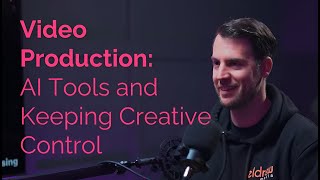
A recorded interview between Tim Davies and Chris about how recent AI tools are changing video production workflows, licensing, and creative control. They discuss practical uses (AI-generated music via Suno, video-frame interpolation/transitions, image-to-video pipelines, storyboarding with ChatGPT, automated clipping/transcription), current limitations (consistency across generated frames, safety filters for children, cost/token constraints, paywalls) and the outlook for adoption in commercial work.
Chapters
Artlist will only allow you to whitelist three clients, which is absolutely no use to us. Whereas the AI Suno, it's got just commercial use and presumably because it's completely generated, there's no way that it could get flagged for copyright. Certain platforms like TikTok is very quick to give you a copyright block, but there's no way to appeal it.
So it's been a long standing issue and it's accidentally been solved by AI?
Yeah, pretty much.
There are definitely tools that are making it easier and I think just being able to lay it out is a map like this helps a huge amount and to then spin off into different angles. So I also then took that same seed image and had me getting on my sleigh and taking off into the sky, petting a reindeer, eating mince pies and drinking whiskey. Drinking whiskey through a straw and then after too many whiskies through a straw, making my white beard full of rainbow dust.
So are you almost like laying out a storyboard and it's going to follow that?
Yeah.
Hi, I'm Freya. Welcome to the Skynet Business in the AI Age, the podcast that dives deep into the world where artificial intelligence meets business. Join us as we explore the latest trends, challenges and opportunities in this ever evolving landscape. From innovative startups to established enterprises, we'll uncover the secrets behind the successful integration of AI technologies. So grab a cup of coffee, sit back, and get ready to unlock the mysteries of business in the AI age.
Good morning, Chris, and welcome.
Morning. Good to be on this side of the camera.
Finally got you after two and a bit years.
From there to here, I'm in the hot seat. Done a couple of these recently, so hopefully I'm a bit more warmed up than the last one.
I think the brilliant thing is, during the time that we've been doing this podcast in your studio, you've turned from total AI cynic to user of AI.
Yeah, well, I think a lot of people have. I mean, you've got to embrace it or you get left behind. So.
So what's amazed you in the past couple of weeks with AI?
I'd say that the main one that we're actually implemented as well, pretty much straight away. Is it Suno, the music one? Yeah, that's pretty phenomenal, to be honest, to the point where I have actually canceled our Artlist subscription. And Artlist is basically the music library that we've currently been using for several years.
And that's since the last episode, isn't it?
Yeah, because you. I wasn't even here. But you'd obviously sold it to Max, which is one of our editors and he was quite impressed with it and had been making all kinds of tunes with and without lyrics. And yeah, he showed me it and I was like well let's try it for a corporate. Well I could add kind of job, see what it does. Because one of our regular clients we need the same sort of style of audio but you. The track has to be different but of the same sort. It's like the funk tracks. There's only so many funk tracks that are available on Art List. So yeah, we're just typing a funk song, very little prompts even. So you can tell it the kind of tempo that you're looking for. I'm yet to find that you can tell it how long. That's the only thing I've found so far. You. Unless I've missed it, I'm struggling to tell it. I. If I type in I want it to be five minutes long. It will ignore that currently but I'm sure that will get fixed. But we can loop it in there anyway.
Just tweak and enhance.
But yeah, it's pretty phenomenal. Like you don't. It'll generate two songs instantly anyway. Much like chat GPT image generator, you'll get a few options or Photoshop, but most of the times the first one it chucks out is. Is fine and it's good. And I'd been having a few customer service arguments with Artlist over certain licensing issues. Because we work with so many clients we need to be able to whitelist certain channels and Artlist will only allow you to whitelist three clients which is absolutely no use to us. Whereas the AI Suno it's got just commercial use and presumably because it's completely generated, there's no way that it could.
Get flagged for copyright shouldn't do it's new content.
And certain platforms like TikTok there is very quick to give you a copyright block but there's no way to appeal it. So even though you're paying like a yearly license fee for something like Artlist or the equivalent even on TikTok you just. There's no way to get it cleared again. So it's then making life hard for us because we're having to provide it with no music so they can put it on in the app. So hopefully this is actually going to resolve solutions.
It's been a long standing issue and it's accidentally been solved by A.I.
Yeah, pretty much. And it's. I've used It. I've used it personally in edits the last week or so and I know Max has been using it for. Since you were last in. So. Yeah, it's good.
Fantastic. And you were just telling me about an example. Was it a boy band doing some sort of scene switching? You tell me a bit about that.
Yeah. So it was used within some behind the scenes content at a concert. It was for naturally. Some of the content I'm showing on my algorithms is other video companies, whether they're in US or UK or wherever. And it was a behind the scenes of a concert where you've got different cameramen dotted around and they've got their headsets on and all of this. Um, but the. The transitions between going from one cameraman behind the scenes to the next. All of that was AI generated. So they'll go from the real footage. You take the last frame of the end of the clip and then the first frame of the next clip and just tell AI whichever platform, there's loads of them. But yeah, it will take the last frame and the next frame of where you're trying to get to. And in this case it's just created a whole render where it like zooms down the crowd. There's people everywhere, goes around. You know, like the. The barriers, the metal barrier fence. And it's put all of that in and it'll go down the line and then turn around the corner and then come to the next guy who's on.
The camera in ways which would just be absolutely impractical in a gig.
Yeah.
And they've just done it all effectively by magic.
Yeah. And that is almost undetectable. And it's got kind of natural motion blur which hides a lot of imperfections anyway. And again, it's something we're starting to explore with, particularly as we're doing a lot of kind of ad work, like paid ads. So that opening scene needs to be quite grippy.
Yeah. Having something that grabs attention straight away.
So we're starting to experiment with how we can use that with the footage we are shooting. But to add that element that's pretty much impossible to do in real life. So interesting to see how that develops.
It's amazing because it's moving so quickly. Things that were basically rubbish two years ago. Some of the image generators. You could get postage stamp image of something from text. It wasn't very good.
No. I mean the still image generation, in my opinion so far is miles ahead because it's had a lot longer to develop.
Yeah.
Once you're starting to try and get. I mean, there is workarounds. I'm not sort of keeping on top of it that much because we still can't use it that much in our work. But trying to get consistency from sort of generation to generation, we've had a little play about. I was trying to make a Christmas ad for a client. Unfortunately, it didn't really work because I found lots of limitations and didn't quite have the time to sit and work it out. But I was trying to make a Christmas ad and I was struggling with the fact that I was able to generate 15 seconds of video. But then if I'm trying to generate the next scene with the same person, in this case it was a little girl. So trying to generate the next scene with a little girl, she will suddenly completely different little girl in a different.
Consistency was a real problem.
Yeah. And at first it would generate her and then I ran into issues where it was like, oh, you're trying to generate children. And then it started trying to bring in some kind of safety measures where it was like, you, you're not allowed to do this. And I kind of give up eventually. Yeah. I have since learned that you can do the same thing where you. You can AI generate the still image of the little girl and then AI generate the same for the next frame and you can get character consistency with a still image. So I believe the fix is to generate the before the end frame and the next frame in still image, get the consistency and then ask it to do the video generation. I think that works. I'm yet to.
It's better. I think it's still an improving journey. So you can definitely get consistency in the image generation either by seeding the image or by giving incredibly detailed, effectively code description in a JSON file of. These are all of the attributes to do.
But I was quite excited because one of the platforms, I think it was SORA too, it said, oh, we've now got character. Like you can fix a character and save it so you can generate them, so you're happy with it and then it's saved as a character and then you just put their name within the prompt. It works for stills, but it doesn't seem to work for video just yet.
And have you seen the deal that they've just done with Disney?
No, but I can imagine OpenAI were.
At risk of significant legal issues with Disney and many other providers about the presence of specific branded characters within the video output.
Sorry, it was just generating their characters without.
Yes, absolutely. You want Mickey Mouse doing whatever Mickey Mouse would Do whatever.
And it's copyright issues.
Somehow they've played an absolute blinder. And not only have they got permission to use the entire back catalog of Disney, but Disney have invested a billion into OpenAI.
Wow. Okay.
Which feels like almost too good a win, doesn't it? Yeah.
But if you think you know the likes of Disney and then all like your favorite childhood toy stories and all of that, the hours that they are spending historically to create that, surely AI can kind of cut that into a tenth of the time.
Surely it can. So potentially that gives Disney the ability to mass produce at a cheaper price point.
It gets good for all of their staff that are working on it for years and years. But that's the problem.
Yeah. And I don't know how many are still doing the traditional frame by frame drawings anymore. I think that's pretty rare. But it's, it's a big change that we're going through. There's new jobs appearing all of the time. I was reading just last week about the five jobs that AI is going to create. And I read through it and I thought, these are really woolly titles. One of them was the Chooser. As in it was which one I'm going to do is going to tell you which things you should be implementing within a business. I thought, that's never going to make it into a job title. How lame.
Yeah, I mean, I guess naturally it's going to kill off a lot of jobs, but it will just create other jobs that have. Because you still need a user of it. Well, at the moment, until there's some kind of robot that can do it as well and you can tell it what you want and then it will just do it. But yeah, it's quite fun at the moment.
I don't think that fun's going to go away. I think it's just the technology is becoming more accessible. So we're going from something that you had to be really, really skilled to get good quality output out of. We were writing 4,000 word prompts to get photos out of Midjourney two and a half years ago, and they were amazing images. But now you can give any of the models a lot less information and still get really high quality output. And you don't need to worry about shutter speed and ISO or any of that stuff anymore. It just magically handles it all for you.
Yeah, it is pretty crazy how it can mimic sort of camera effects and it gets the lighting right. And I was just saying before we started, one of my clients has used a headshot that we shot and then just aied it into Father Christmas. Well, it's the same guy, but it's got a beard and a hat on. But in their case it's quite moody lighting and it's got like, much like in here, like the pink lights, but theirs is green so you get that reflection down the side of their face and stuff. It is rep. It's replicated that on the Santa suit and everything. So it's really kind of took, took the scene and just made it what he asked for.
And I think underneath the skin. That's because the models have a remarkable understanding of real world physics. So even when you're producing video now, you can say a waterfall, blah, blah, blah, blah, blah. And the water looks real, the lighting's correct, the distortions on the water are appropriate and these things were just utterly impossible. And the remarkable thing is that that's happened basically by training on YouTube videos. Okay, so we've got this mass volume of videos that people have been uploading for however long it's been. Feels like 20 years. I bet it's not quite long.
So the AI is learning what stuff looks like via YouTube.
It's effectively in the same way as the language models are trained on vast numbers of words and build the relationships between things. Yeah, same's happening for the video models. So they have an understanding of object persistence. You can throw a ball and have a camera pan and then see the ball land in the right place. Even though that process was out of shot, which doesn't really make any sense, the model shouldn't be able to do that. And an understanding of the reactions of inertia and friction, which again you would think, how are you picking this up? But effectively they've just learned the relationships based on how it's in video.
It is crazy how clever it is at predicting sort of something out of shot what would be there. Because even on Photoshop. I know, I mean they keep releasing new Photoshop versions, but I, I, that's the other one we use quite regularly is the Expand Image. It's fairly low level now, but it's crazy how clever it can be. Yeah. And the reason we use it a lot is because the need for different aspect ratios now. Like we're now needing vertical and square and wide and if it's only shot in one perspective and actually I need it taller and I don't, I don't want to crop in because you're losing the image of whatever it was. Yeah, well, let's just generate the top and bottom.
Let's just drag it up almost, isn't it? And then there's the extended piece of the image that wasn't there.
And it will give you three options and at least two of them will be great. In Photoshop's case, it's best to give it fewer prompts because the more words you put in, it actually starts generating that word on the screen.
I've had it where literally as text.
Yeah. I've had it where I've written expand and suddenly the word expand has come down on the piece it's generated. And I'm a bit like, it'll always do one without. No, there's always one that's great. I don't think I've ever had to regenerate it again. So I guess that's why they give you three options.
Yeah. I mean, it's ultimately. It's still early technology and as good as it is today, it's as bad as it's ever going to get. Every week we're seeing improvements. I did a presentation at the beginning of the month to a group as a part of a mastermind. And I went through something called Alum arena, which lists the highest performing models by different area.
Yeah.
And we got to the text to video one and I said, currently number one Google Veo, but Clingo one's just been released overnight. That will take the leader point. It just hasn't happened yet. It's just down to how quickly it's tested and how it's used. And then the following Saturday, I had a play in a tool called Flora and Fauna, which is really just like a table. You lay out things. And I uploaded a headshot selfie of me in my office looking grumpy and said, make him into Father Christmas.
Yeah.
And it changed my out.
Make him happy.
I had a beard and had all of the clothes on. Make him into a reindeer who did exactly the same. So I'm sat in my office chair in my hoodie with a reindeer head on. And then I took the Father Christmas one and said, okay. Put it in a snowy background in a pine forest. And it replaced my office with a pine forest backdrop. And then you could still see a little bit of the chair. And I said, we'll take that chair. Bit the chair out. And it did. And then I used that image, which was effectively entirely artificial already. There was only really my face that was part of my face that was still real.
Yeah.
And then used that as the seed into Kling01 to produce a variety of different video scenes. So I Had one where it said you can't trust video anymore. I had another one of me singing a carol. I then took that one of me singing a carol and used a video editing model, different form of Klingo 1, to change the Father Christmas suit from red to black. And it was still exactly the same scene of me singing a carol, but all in black and white instead of red and white. And then because I'm a bit strange, I said, okay, give him a devil horns and red eyes. And so I'm singing a carol in a black robe with devil horns.
So is this the project Rising Christmas ad?
No, I was just playing.
But it used to go on LinkedIn.
I think it very nearly did. I didn't quite get it to the point I wanted I might do some more editing because I actually wanted to do scene by scene video that was entirely simulated of me just saying you can't trust video anymore.
That's what I was saying. It is very possible, but it's still very time consuming because it's not clever enough to just get on with it and do it itself.
There are definitely tools that are making it easier and I think just being able to lay it out as a map like this helps a huge amount. And to then spin off into different angles. So I also then took that same seed image and had me getting on my sleigh and taking off into the sky, petting a reindeer, eating mince pies and drinking whiskey. Drinking whiskey through a straw. And then after too many whiskies through a straw, making my white beard full of rainbow dust.
So are you almost like laying out a storyboard essentially? And it's gonna follow that?
Yeah.
So what. Sorry, what was that platform?
That was Flora Fauna.
That's the problem. There's so many and they're all behind a paywall. Generally. It can get quite pricey to experiment with them.
Yeah. And because there's so many new things coming out all of the time, how do you keep up? How do you understand what's possible? And takes a lot of time for my team and I to keep up with what's possible. And there is some platform on top.
There's some platforms and I like Artlist, as mentioned earlier, they have actually created a video generation model that I guess is some kind of interface that is then using multiple models like Sora and Kling and those where I think you can then use those within their platform. And I guess they may have done some more work to make it a bit more polished.
And I don't think they are I think they're literally just white labeling a video model.
Well, I have, I actually yet to use it because again, it's behind a several hundred pound paywall really. And I think their selling point was it's helping with the consistency. So whether there's some code they've done to join them together or maybe it's just, who knows? That's what. I don't need it enough to warrant paying that much money to test it. And then it's not like there was a trial on it or anything. So.
Have you seen the capability within Opus clips where you can take the long form video, you can clip it into the shorter form ones where they, they score based on the likely viril of the short video they put subtitles on. But there's now an option where you can add AI generated imagery that matches the scenes. And so it goes between the scenes of. If it's a conversation between us, when there's a trigger word, that trigger word will put up then an image that's part of the video and it's all just automatically created. Okay. So they've just done an integration to an image model that they're then including as part of their service because they think that that might make a difference and might perform well.
I need to retry Opus clips because I kind. I've tried it probably a year or so ago and it was fairly early doors and it, it wasn't at a level because of there's certain standards that we need to hit because we're charging the client.
Yeah, absolutely.
And I didn't feel that it was good enough that we could put it out there. It had a lot of imperfections that I couldn't pass to the client. And then if the client's doing it themselves, then that that's on them to do. Wasn't good enough for us to, to resell it. I didn't feel.
We still see that the, the clipping isn't always correct and you have to adjust the clipping at start and end points to make sure words aren't dropped.
Yeah.
So it's not perfect, but it does help accelerate those. Some of those lower level tasks.
Yeah, they're all tools that's. Well in some cases drastically speed up workflow. But they still need the Schumann to check it and make adjustments and re prompt or whatever needs to be done I guess at the moment. But they're only going to get better and better and better. That's the slightly concerning point.
Well, I think only concerning if you're not embedding them in your process and still selling people services. So people that want a podcast, they're not talking to a computer, they're coming to a studio for an experience and a service. And if the editing process behind that's accelerated, then that's just back office admin. So are you using storyboarding with AI tools at all to create sort of an example of what the process might look like for a shoot?
I've used it for written storyboarding and that's quite phenomenal really. I. My way of shooting, particularly unless it's a scripted ad, if it's more of like a corporate video, I'm still a little bit more turn up on the day and I'll. I'll see it live and capture it and if I need to ask someone to do something, I'll just come up with everything on the spot. I'm not great at app planning, to be honest. That's just the way my brain.
You're using people skills?
Yeah, well, apparently. But I have had instances of a client that if. If they've got it in their head. No. They want to see something, whether it's visual or just written, then obviously you need to give them that to give them the reassurance. So I have used it in that case and have been impressed with what it's chucked out and it obviously does give you ideas that you've maybe not thought about.
And was that essentially just describing the scenes in words?
Yeah, well, in this case it was for. We did a shoot for a company that modifies Harley Davidson's and they had a Batman theme and a Bane theme. So two bikes and then they wanted a video for each bike and then a video that was like a head to head of the two bikes together. And. And we needed to go to central London at nighttime, early hours to shoot the bikes driving through central London. But the client was quite particular, not, not worried. But I think he wanted to be reassured that we knew what we were doing and everything was planned out. So basically the opposite to how I would usually work. So I just gave chat GPT. That's the main one I use. I know there's other equivalents. I just outlined exactly basically what the brief was, what gave him as much detail of the bikes that I knew told it. The storyline that we were roughly trying to achieve in the Batman and Bane theme. To be honest, I didn't give it that much and it chucked out a story storyboard. In this case it was only sort of text based. Well, actually, no. I did generate almost like a Sketched style one, which I think I did share with them, actually. In this case it was more just to keep them happy rather than we were going to follow it. But it did quite a good job, actually. It's something we could probably implement more regularly, I guess what it. Because a lot of our jobs are for all kinds of industry, it may well. It could give you a shot list, but it doesn't necessarily know what. What shots are available, I guess. Yeah, it's good. I guess it could be a good tool for giving you ideas, but I still like to just go in a bit manually at the moment.
That's it. So you recently covered the Wacky Races event, didn't you?
Yeah.
And you put a lot of cameras on a lot of cars.
Yeah, that's it.
The editing process for that. Talk me through that, how that works currently.
So again, at the moment, the editing side, well, hopefully you might be able to save me a lot of time if you know of other softwares. But in terms of video editing, there's not. Well, not in the professional space. There's still not many AI tools. So we are very much going through. On any job, we would import the footage and then cull it, which is basically going through and selecting all the usable clips and then bringing that into a timeline manually and moving the clips around into the order that we want it. That's just basic editing 101. I'm sure there is some tools that can do it, but they're not within the professional platforms as of such. They're always quite behind, I find. There's actually what. What's crazy is things like Capcut, which isn't really looked at as a professional platform, they're often kind of leaps ahead with some of the stuff they're implementing. But it's for consumer level, really, or sort of prosumer. We do well because of that reason. We have used it for certain things because it can do some things that you wish, you know, like your main final cut or DaVinci could do. DaVinci I think is probably a little ahead than some of the others. The only. The only main AI edit that I'm aware of, which is only really for multicam edits and things like podcasts, is called autopod. But again, that is only available on Premiere Pro. So it only works for one platform which we don't use and that works for. It can auto edit a podcast, supposedly. Although I've not heard great things where you tell it which angles are who. So you'd say this angle's Tim Tim's audio is this audio here. My audio is this channel here. And then it will use the audio waves to cut the camera angles. So if your mic activates, the camera will automatically go to you. Little bit basic.
It is a bit.
And again, it's not clever enough to know that. Well, I'm nodding while you're talking, so you want to see that I'm reacting to you. It wouldn't ever do that. So again, not really. Not really there.
I don't think we're there yet. But I think the ability to analyze videos, break them down into scenes, describe those scenes, understand the timeline from when they were recorded is definitely coming. We're doing some work analyzing video from public speaking, and the insights that we're able to pull from that video analysis is crazy. But we have to approach it in a very structured way. So we're passing video in, we're asking specific questions, and then we're getting responses back. We're not using that to trim a video to a time point. We're literally just analyzing, providing feedback. And even then, we're still having to use two different AI models to get the output that we want. But you can kind of see that the ability to analyze a stream of video, break it up into the likely scenes in a similar way that Opus does, based on the script currently describe those scenes, identify whether it's good, whether it's blurry, give it a quality score, and then match and put those into an inferred timeline and allow you to adjust the transitions that you can see it coming. It's not here yet.
You would think that isn't particularly difficult, though, particularly to analyze the clip. Like if the camera's moving at the start and then suddenly it's nice and stable. Well, cut the janky bit off the front and then put it there. Put it on the timeline. I don't understand why that isn't already a thing, really.
I think it's just not a thing because of the token cost. Okay, so in order to analyze what could potentially be hours of video per shoot from multiple cameras, that's just going to be an awful lot of GPU processing in a data center somewhere.
Yeah, I guess so.
There's an efficiency trade off and therefore a cost trade off. And actually, while it could be done, probably it's just not going to be cost effective yet. But give it two years, it'll come down by factor of 10, and then it's achievable.
Yeah, well, you're right. I mean, my other business, we do weddings. The Biggest job of the weddings is to call the whole day. So you're talking, say 10am through to 10pm, you've got 12 hours of footage. Pretty much every wedding follows the same format. It can't be too difficult for it to say, here's all your usable clips of the bride getting ready and they're all batched together. And then here's all the ceremony footage. And we do again, for weddings we do a multi cam. So you've got two cameras at the front, one at the back, maybe a fourth one. It can automatically sync those four together without me telling it how to do that, or even there's a lot of automation for that. But I still have to pick out all the clips and tell it to sort of sync them together. That kind of already exists. But if it could just know that all those four clips look like they're from the same point of time and just do it.
Also be able to infer that's definitely the bride, that's definitely the groom, these are the best men just based on their position and then group and categorize.
So it couldn't at the moment edit a wedding ceremony because the autopod thing, in theory it should work for that, but it just wouldn't.
Unfortunately, I don't think we're there yet. Similarly, somebody was saying to me the other day that AI cannot create SVG logos.
Okay.
Now you can create a high quality logo using a text to image prompt and the right tool. You can't do vector, but they can't output vector. And I said to them, but surely it's easier. How many people do you think are going to be working on that? Because ultimately a vector is just describing something in words. It's just a text output. So you can train a model specifically for that purpose to create vectors. They've already got an understanding of the world, so if the major labs aren't working on it already, I'll be amazed. And if they're not, then somebody hopefully will already have started working on release one soon.
Well, you would have thought it would be easier for it to generate straight lines and blocks rather than creating pixels.
But it's just the way the models are developed and trained. But given that we've pretty much mastered words in, words out, and this is just a different form of code ultimately. And the capability to produce code now is pretty exceptional. Yeah, it's just another form of code output.
Some of the upscaling stuff's quite cool. Yeah, like you can take a lower res photo and upscale it again. Things like Lightroom, it's been in there a little while now. Photoshop, the latest version's got it built into now so you could take say an 8 megapixel photo and it will upscale it to like a 32 megapixel photo. And it is great. And again, we do use that occasionally because some of our video cameras technically can take stills, but they're not. They're only 12 megapixel. Yeah, only 12 megapixels. I remember when I was in my bedroom at parents house and I got my first two megapixel camera and that was pretty amazing at the time.
I can go back even further. I remember using paint on a Windows PC and making images of cars pixel by pixel.
Really? You remember your first pixel? Yeah, but yeah, all of that stuff, I guess it is all AI. You just kind of. They release these things and you start using them. But again, I would use that. The Lightroom. Yeah, the two things in Lightroom, the Upscaler and also the Denoise. The Denoise is pretty amazing as well. So it will take noise being like the grain. So the picture would be grainy because it's a little bit dark or underexposed. And honestly, it just takes out it all. It's phenomenal. That's probably the most impressive part of Lightroom is the Denoiser. And same again. In the wedding industry for photographers, they're no longer worrying about, oh, we need a flash, we need flash. Oh, I haven't got my flash set up.
Because it can just be fixed. Yeah, it's crazy, isn't it?
It's a dark dance floor. Oh, it's a bit grainy. All the grain's gone magic. It takes maybe 10 to 15 seconds per image. So if you do them in batch, it can take quite a time, but it's not long really.
But. And you can be doing something else while it's doing.
Yeah, that's the thing.
It's not like you sat there having to be there because you can set up the batch, you can process all of the ones off the dance floor to have the same processing on them. Yeah, it's done.
And again, there is or some auto editing in terms of doing the coloring as well. I've had hit and miss results with that. I have used it successfully, but I'm. I don't know if I'm a bit too much of a perfectionist, but I do still go in and manually tweak them. Whereas I. A colleague of mine, one of his colleagues reckoned he could edit three wedding photo galleries in one evening using AI. So that certainly means there's not much quality control.
No, I mean, there's a can and should are different questions, aren't they? Because just because you can do something doesn't mean it's necessarily going to be of the quality that you should be outputting.
Yeah, I forget which one that is I'm using now. Imagine AI or imaging. It's pretty good. Again, it's quite expensive though, because to process one sort of corporate photo shoot gallery, it's the best part of 30, $40. And then if you're then having to retweak it, you start to wonder, I shouldn't have to.
Was it actually the right use of time? But then I still edited a photo manually the other day because I just wanted to get the coloring and lighting right and it was early in the day on a big mountain and I needed it to be brighter and lighter than it was and I wasn't going to trust AI to do that. I just wanted to keep on tweaking until I was happy.
The good thing about Imagen AI is you can upload well, the more the better. I think. It wants 3,000 of your own photos and then it will clone your edit style, which is fine if you're a wedding photographer and you've used the same preset for the last two years. I personally don't have 3,000 photos of the same edit that I can upload, so it doesn't really work for me again, but some people it would. I like to. Everyone will be different, so I like to mess with it.
It's part of the art though, isn't it? And that's going to be very difficult to replicate with AI, because you're putting your mark on everything that you do.
Yeah, exactly.
But I was playing with Gemini 3 Pro, Google's latest thinking model, and combining it with their ridiculously named Nano Banana Pro, and I gave the input of a grid reference, a time, a date and what else? That was it. So three things. And I gave it the grid reference of just outside Peterborough Cathedral, 1303 AD, at three o' clock in the afternoon on the 25th of November.
Yeah.
And it described the scene, described what would have been happening at that time, who was ruling the country. The fact that it was. I can't remember the name of the festival on that date, described some of the things that would be happening and I said, make the image. And it just produced this amazing image of the front of the cathedral still being worked on and people moving animals through. And it was Just absolutely mind bending. I then did just outside the hospital I was born in at the day and time I was born.
Yeah.
And just. It's just crazy seeing the cars from what doesn't feel to me like very long ago but clearly is dated because of the dating of that time.
It's quite amazing because you think of how much research it has to do behind the scenes in pretty much just that.
Yeah. That understanding of everything that's going on almost world and history understanding and then being able to pull it back together and produce a photo that makes you feel like you've just stepped into a scene. Absolutely.
Just how you remembered when you'd just come out.
Well obviously you don't have memories of that early and you, you tinge everything in terms of. I don't remember the cars from when I was a kid looking as old fashioned as they do when you see them now, but they certainly do.
Yeah. Yeah, it's pretty cool. I'd say that the final, the final tool we have used quite successfully. I mean I'm still quite a fanboy of ChatGPT and I've now got my wife onto it because she used to mock me.
I'm sorry, I feel like I've won.
Yeah, well you have, you have. You weren't in the house hard as well. She used to mock me and when I found out you could speak to it I was like oh, so I'm having conversations and I, I like to wind her up. So I was, I just chatting to him like I'm talking to him on the phone. She thought it was. Well, she wasn't very impressed first and then she started using it and I reckon she uses it every single day now. But yeah, we've used it in a work capacity. So say we do some corporate events again similar to a wedding where you've got eight hours of corporate event so you know, keynote speaker filming the crowd. You've got hours and hours of presentations being given at the front. The old way of doing it is to literally, to almost watch it back, filter through it, put markers on all the more interesting bits. Now obviously you can just download a transcript of every word that was spoken, chuck it into chat GPT or equivalent and then ask it to pull out all the most interesting parts, give me the timestamps of those parts so then I can say to probably ask it to filter it down further based on how long the video I want it to be. So say I want it to be 90 seconds, ask it to filter it down a second time. Then I've just got a list of the exact time points and what was said and I can then either filter that again just visually, or go into the edit software, find all those time stamps and drag them all into a timeline. So I've only got the good bits and then I would do my usual filter it down based on what I.
Think is best, which is an amazing acceleration of a process that wasn't possible. Well, wasn't possible a year ago because you didn't really have the context length to handle that long a passage of text.
Even the transcripts a year ago weren't great because all the words were wrong and now they're pretty reliable.
But if you take that process forward, there's going to be a tool that's going to allow you to do it automatically, isn't there? To get you to a first edit, not a final output, but a first edit that you can then tweak and extend and adjust.
That's the thing. The part it's currently missing is the link into the software where the software.
Will be the linking to the video almost, isn't it?
Yeah.
So it's still going off words and understanding the words. It's not then aligning that to the clips of the video. But we've seen with Opus that it's possible to produce short form clips. So it's not a massive leap to go to that step further where you're getting a first edit automatically.
Yeah.
So where are we in two years time, Chris?
Well, I don't know. I mean, I think there's definitely an avenue for us. I mean, we're starting to play with it and there is agencies that are already doing it where they are equivalently filming using AI. So they'll generate the clips instead of going out with the camera and then forming the ads based on that. Really? I don't know how long that's going to last.
It makes me cringe because I think people buy people and I really like that human interactivity and I think that's critical in every aspect of work and life. But there is things having fully simulated. It's not going to be a niche.
I don't think there's got to be a use case for it, such as the Christmas ads though, where it's impossible to film.
You think if you wanted to produce a scene out of CES in January without flying out there, can you do it based on the photos of the event? Probably. And so you can see it's going to happen, but I don't know.
I feel like we need to Start promoting that. We can do it just in case it becomes a thing again.
It's using the technology to make sure that you're competitive and that people are still. You're the trusted advisor, aren't you? You're able to give them the suite of services that they want and the way that it's delivered will change and evolve over time. But ultimately you're still selling video services.
I mean, you've got. What are we on year two or three of the Coca Cola ad? Bnai, they're obviously using that as another talking point, quite cleverly in a way. But even, I mean, even this year it still had a lot of flaws. But that gets people talking and they're talking about the Coca Cola ad and not the Pepsi ad when it's essentially.
The same ad that they've been doing for goodness knows how many years. Yeah, amazing, isn't it?
But that's the kind of job that, I mean, where someone might brief that into us and then we're just using the tools to make sure that the final output is good enough and usable. Yeah, but we'll see.
So it's going to continue to change and we don't really know where this journey ends, do we?
No, no. I'm still a little bit worried about it, but I think there's certain industries where it needs sort of the hands on creative element that hopefully the robots won't have for a little while.
But I think there's always going to be a place for people because people buy people. That back office might be automated very, very aggressively, but as long as there's still space for human relationships, we'll all be fine.
Yeah, let's see.
What a fantastic place to end. Thank you very much for your time, Chris, and it's great having you on this side of the camera.
Great to finally get on. Thank you very much.
Thank you.
More from Tim

EP 60: Why Founders Become the Bottleneck — And How AI Changes Everything | Thea Brook









