
EP 52: Or8tor: The AI Coach for Better Public Speaking
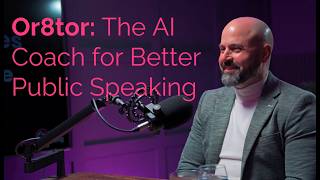
Pete built Or8tor, an AI coaching app that analyzes your speaking on video and flags filler words, eye contact, pacing, and gestures. It offers templates for TEDx talks, sales pitches, and networking. Regular practice with real feedback builds confidence and creates business opportunities.
Chapters
I've never been afraid of just giving something a go and just getting up and making myself look silly. So on the first day I did get up and at Toastmasters they do this thing called Table Topics. So you get up and speak for 2 minutes about something totally random and unprepared. I did that and they count your ums and ahs and they give you feedback. And I totaled, I totaled something like 50 ums and ahs in 2 minutes.
That's impressive, Billah. I had it recently at a conference. Back late summer, early autumn. And I was, I think, in the afternoon slot. And the first speaker of the day was Declan Curry from the BBC News, giving an update on the economy. The closeout speaker was Eddie the Eagle Edwards. And I'm just looking at this going, what on earth am I doing on this stage? Why do they even want to hear from me?
Love that. Hi, I'm Freya. Welcome to the Skynet Chronicles. Business in the AI Age, the podcast that dives deep into the world where artificial intelligence meets business. Join us as we explore the latest trends, challenges, and opportunities in this ever-evolving landscape. From innovative startups to established enterprises, we'll uncover the secrets behind the successful integration of AI technologies. So grab a cup of coffee, sit back, and get ready to unlock the mysteries of business in the AI age.
Well, good morning, Pete, and welcome. Welcome back.
Welcome. Yes, thank you, Tim Davies. It's a pleasure to be back.
So we're going to talk about something a little bit different today. We're going to talk about our journey from a conversation about what could be to what's any day going to be a publicly available public speaking coaching app.
Isn't it exciting?
It's amazing.
Really, really exciting.
So you came to me with an idea and we spent probably an hour on the phone bouncing backwards and forwards as to why we needed to tweak that idea to make it better. And we came up with this concept that public speaking is something that everybody struggles with.
Absolutely, yeah.
It's allegedly the, the biggest fear in society, which is just—
I was gonna say, I hear it transcends spiders and heights and deep water and all those things. So yeah, getting up and speaking in public is enough make anyone run away.
But, but it shouldn't be, should it? I mean, it's just telling a story.
Yes.
Yeah.
And I think people get— I think people get bogged down. One of the challenges people get bogged down with, which, you know, obviously the system will help with, is that people worry about the words they use and the details and the facts. And actually, a lot of it isn't to do with that.
Absolutely not. And so we discussed this potential around public speaking, that it was challenging, and we We'd obviously spent some time playing with different AI technologies for your business flagship partners. Sure. Developing Allied. Um, but this was different. Instead of understanding legislation and rules and guidance and giving feedback in words, this was analyzing video, analyzing audio, and then giving an understanding back to the user of what was possible. So it was on the very, very cusp of what was possible with AI at the time.
Sure.
Certainly wasn't affordable at that point in time, but we could see signs that it was going to be possible. Um, and then I went off to global conference with B&I and met the lovely Laura. And from then we've sort of formed a thing, haven't we?
We have.
I don't know, it's not got a label.
Trio.
A terrible trio.
An awesome trio. Laura's amazing though.
I think, yeah, she is. And I think because we put that cadence in of a weekly meeting talking about how we could push this forward, what it might look like, it's taken a while for us to get to the point of, yes, let's do it, and yes, the technology's ready. And then as we've gone along that journey, we've evolved a brand almost by accident in parallel. Um, so tell me about your journey in public speaking.
Oh yeah, so that's a good, a good start. I, um, interestingly, when I, when I first went solo, uh, and left corporate land, I realized that I needed to be a decent trainer, and I didn't want to be one of those dreary trainers with a PowerPoint presentation at the front. Um, so my first foray into speaking was Toastmasters. And I reckon I started doing Toastmasters about 7 or 8 years ago. And I remember, I remember off the back of knowing that I wanted to get up and train, I'd done a presentation. So when I'd worked in corporate land, at the end of a leadership development program I was doing, I had to do a presentation to the senior leadership team around all the things I'd learned and all the things I'd covered. And I remember going into a room at HQ surrounded by HR and a couple of like the senior bosses, and my knees were absolutely knocking. I was really, I was really like so scared about it. And, um, yeah, so I ended up, uh, I ended up— you know it's bad, it's one of those moments, you know, when other— the way other people respond to you. So someone said, you can sit down if you'd like, and just like pulled a chair out. And I was like, they could actually see your knees. Yeah, yeah, literally, literally sweating, knocking. Yeah, so I had, I had no idea what good speaking looked like, for a start. Uh, obviously I've seen YouTube videos like anyone else, but I'd never had any training or anything like that, no expectation. So that was my very first, you know, as you ask, very first foray into speaking there. And then I went to Toastmasters because I realized that if I was going to be getting up and doing training and bits and pieces as part of the new business that I was creating, that I'd need to be better. So I did that did Toastmasters, and I've never been afraid of just giving something a go and just getting up and making myself look silly. So on the first day, I did get up, and at Toastmasters they do this thing called Table Topics. So you get up and speak for 2 minutes about something totally random and unprepared. And I did that, and they count your ums and ahs, and they give you feedback. And I totaled, I totaled something like 50 ums and ahs in 2 minutes.
That's impressive filler.
So yeah, mega filler words. And I'm being really conscious not to add them now. Um, yeah, so it— people don't even realize they're umming and ahhing. I remember watching my dad years and years ago, he got interviewed for— so he was a policeman and he got interviewed. He was involved with, uh, Holly and Jessica, the Soham murders, and he got interviewed as part of that on ITV News and he ummed and ahhed his way through it. We watched it back and we, we were laughing at him because it was, um, ah, um, ah. And obviously people just naturally I speak like that, and they don't even realize until, you know, we're on video now. And then when the audio transcription comes out and you see all the ums and ahs in it, you're like, oh my God, I need to stop the filler words. So it's much better to pause. And obviously Orator, Orator helps with those things, doesn't it? So, and since then, you know, we're talking 7, 8 years ago, I've been on multiple training and different, different— I've invested in different training to improve my public speaking. Which ultimately culminated in doing a TEDx, and that was incredible. So I went on formal training courses and then also got coaching as well and learned some really interesting things about the ability to record yourself speaking and your body movement and what really is translating, what that message is really sending. Certainly even TEDx. So it's only 12 months since I did TEDx, and on the lead-up to it, I was sending videos of me doing the talk to the coach that was helping me. and we were looking at my body language. And one of the, one of the strategies we used was to turn the, turn the volume down on what I was saying and speed the video up 2x speed. And it turned out I literally looked like I was pleading, like I was like, please, please listen to me, please like me. So, uh, yeah, really interesting. So we ended up with a slightly different, um, a slightly different stance, I suppose, because body language is vital, tone's vital. And, uh, we've obviously culminated all that experience that we've had into, into building the app.
And the funny thing I've seen over the years is it's not just the training. Obviously, you've not just been on training courses, you spent a lot of time practicing the art. Oh, whether that's consciously or when you're delivering training to groups, when you're leading mentor and events, it's constantly sort of practicing noticing what you're doing, pausing and sort of taking that feedback in. And essentially we've looked at, is it possible to accelerate that so that it can be something that anybody can do in their safe space while still getting consistent feedback? But ultimately, nothing, nothing tests you better than live performance.
Yeah, absolutely. So one of the things I think we're speaking is it's a perishable skill. So you have to practice and you have to do it regularly, which is what one of the things I think is really valuable about the app. Um, we have both been members of a regular networking group that meets on a regular basis, and as part of that, there is an award for the best, the best pitch, I suppose. So you get 45 seconds to land something, and over the last 4 or 5 years, I've always used that as an opportunity to practice different strategies. And how they land. And I'm quite proud. I, I worked out the other day that I've, I've won the award, I think, 25 times in that period of time, which is, which is obviously great because then you get to do a longer, a longer pitch. Um, I think actually it's 30 seconds rather than 45, but yeah, 30 seconds. So you really don't get long, and you don't want to be too pitchy either because people just switch off. So you need to have a hook. Um, one of the things that people do when you only have 30 seconds or even a minute they end up just waffling crap because— and rushing because they want to speak so much in that period of time. And interestingly, one of the things I've learned through practice is that speaking with a speed of around 90 words a minute is probably about right. So if I write a pitch, if I'm looking at a pitch and it's— I've got 30 seconds, there's definitely going to be no more than 45 words in there, absolute maximum. Absolute maximum 45 words. In fact, the less the better, and they're more impactful because then you can use silence, you can use tone, all of those kinds of things to actually deliver a better message.
We see it every week where somebody is desperately trying to read their script and they'll be staring— if they're in person, they're staring at the phone. If they're doing it online, they're staring at the screen and you can see their eyes scanning. It's just like, just slow it down. Share one thing and share it well. Yep. And that's going to have more impact. Where we're almost— it feels like we're mentally programmed to try and share everything we know, and actually less is always more.
Sure, absolutely. We, you know, we value knowledge, and so therefore we always want to. And one of the things through my business I've learned is that through employing trainers and doing quality assurance on trainers as well, is that we are so keen to share everything we know, we end up almost like knowledge dumping on people. And actually, communication isn't that. It's about really clearly articulating a message in a story rather than knowledge dumping, because that's what engages people most. If you watch the very best speakers, you know, I always— one of my favorites is Tony Robbins, and he's absolutely brilliant because he's so controlled in the message that he gives.
And I'm not sure I want to be at a 12-hour session. Well, no, but I think the, the pure genius speakers aren't the people that say everything. They sow an idea, and you see that idea percolating in the audience. Yeah. And if you get great questions at the end, you know you've done well. If people come up to you afterwards and say, oh, you, you had this, this slide, and you think, well, you weren't actually looking at a slide if you're about to say, and you said this. And it's how you seed ideas to people so that you can see that growth happening in them, and then they come back to you, and then you can really build an ongoing long-term relationship. Because all that— that's all we're really doing.
Yeah, absolutely. And, um, you know, it's almost like, um, the best way I can explain it is, is rather than— rather than knowledge dumping, what the best speakers do, it's almost like a novel where there's like a narrative and you share a bit and then you don't share too much, and then you introduce characters. And people remember— really interesting learning, I suppose, for, for people is I, uh, in my TEDx, I speak for 15 minutes about motivation and disengagement at work, and I share some big statistics. The one thing everyone remembers is Arthur, because I tell a story about Arthur, and everyone's worked with an Arthur, and that's what everyone remembers. So everyone comes up to me and goes, I remember Arthur, or I've worked with an Arthur, or I know an Arthur, you know. So, and that's what, that's what lands. And it might be, it might be using a prop, it might be— there's lots of different tools you can use to make something memorable, but, uh, knowledge dumping isn't one of them generally, because people just don't remember those things. We're not geared up to remember that stuff.
Well, and also we're not always the most knowledgeable people in the room. So early on in my career, I had moved from IT into engineering project leading and into research at Perkins Engines and Caterpillar. And I was presenting to an audience of hundreds of engineers and I've got no MechEng degree and I'm talking about something that they know in detail and I don't really understand everything about it. So I can't knowledge dump. And that for me was one of two absolutely pivotal moments in my public speaking journey. Just know your content and deliver content that you're intimately familiar with, and don't worry about the audience because actually it's only the, the first couple of front rows that can actually see you anyway. The rest can't see that your knees are knocking together.
Well, that's also true.
Yeah. And the second one for me, I, I was in a road traffic accident in Germany and knocked out the front of my face. And while I was going through the repair process, I traveled with Upwork to various different businesses at the time and I was due to present at Bloomberg in New York to a couple hundred people about the benefits of Upwork as a freelancing platform and how we could deliver lots of their campaigns of work with remote freelancers. The evening before, my bridge fell out, and so I had a temporary bridge that was effectively glued on with some fake teeth, and it fell out. Couldn't get any glue to sort it. And had to do the presentation with just a gap in my face.
Bless you. Oh wow.
And after that, I didn't really care what the audience thought. It was just about sharing the story appropriately.
Sure.
So those two sort of relatively brutal experiences just stopped me worrying about presenting at all, really.
Interestingly, I, um, one of, one of the most memorable speaking gigs that I did was for a conference, a transport law conference, uh, set up by solicitors. 300 people in the room, so it's decent room.
Yeah.
And we had the— so there was a former senior traffic commissioner and the current senior traffic commissioner in the front row. And I tend to— so to give, give the listeners who aren't in that industry a little bit of insight, traffic commissioner essentially equals God. They're basically like— the senior traffic commissioner is basically second only to the transport secretary. And they're the people who basically give people who run HGVs and buses a license to be able to operate, and they take them away, and they hold public inquiries and those kinds of things. And they can be, you know, they're pretty frightening people generally in the industry. They're fairly, fairly influential. And, uh, yeah, I've got Beverley, the former senior traffic commissioner. I've got Richard, who was at the time the, the current senior traffic commissioner and is still a practicing traffic commissioner but stepped away from the senior role having done his, done his period of time. And I was talking And that one of the things you have to realize is, and it really lands well in the way that you've been saying, is that I'm never going to be the expert on that stage in that room. You know, there's some really, really clever, knowledgeable people. But what, what I can share is my story, my observations, the way I see the reality of the way things are happening in a way that people resonate with it. And, um, it was really interesting because I went on before Richard, the Senior Traffic Commissioner, and he, he quoted me throughout his talk. He'd obviously prepared a talk, but he sort of referenced it back several times. So I was really, I was really pleased. That was a big— I felt like a nice big credit to have, uh, have them smiling and clap and engaged. And like I say, if I'd, if I'd gone for the knowledge piece, I don't think it would have been the same thing. It wouldn't have been the same thing at all.
It is definitely tailoring the message to the audience that are going to be present, isn't it? Do you still get imposter syndrome?
Yeah, I think so. Um, so I think that, I think that's normal. I think so. Imposterism is really interesting, isn't it? Because I think, I think that's what keeps you sharp. I think that I have to— so the, the simple answer is yes, yes I do. And I guess to elaborate on that, imposterism is essentially when you kind of have a pinch-me moment, like, I'm not sure I belong on this stage, or I belong in this room. And many coaches will tell you that you just have to own, own your message and own your experience, knowing that all the things that happen to you— so you have to have that positive, positive mental attitude, positive belief in yourself, which you also have to have. You have to have that as well. But I think it's the imposterism that keeps you really sharp I think, uh, it, it's a bit like, it's a bit like any other stress. Too much stress is bad for you, but enough stress makes you perform at your best. And I think, and I, I, to an extent, I don't think I ever want to lose that because that's what keeps me really, you know, it keeps you alive, keeps you sharp.
I think it's a really good sign that you're pushing yourself.
Yes.
Because if you're getting to a point where you're just completely confident, you're on top of your game Well, you're not going to be on top of your game for long. I had it recently at a conference back late summer, early autumn for the Food Equipment Association's national conference. And I was, I think, in the afternoon slot. And the first speaker of the day was Declan Curry from the BBC News, giving an update on the economy. The closeout speaker was Eddie the Eagle Edwards. And I'm just looking at this going, what on? 'What on earth am I doing on this stage? Why do they even want to hear from me?' Love that. Um, did my presentation and then was on a panel. And as you say, when people reference the, the things that you've said during your presentation, you know things have hit, don't you? Absolutely. But it doesn't stop the just the pure 'What on earth am I doing here? Why do they want to hear from me?' moments.
Absolutely. Yeah. And, and then you have to remind yourself that you're there because you're there on your own credit and you know, so do you have those conversations as well, like the little pep talk?
Yeah, I guess so. I mean, at the time I sent my dad a text, I said, what the hell's going on, is this a simulation? So yeah, definitely still have to have the pep talks to myself. Um, and whenever I'm getting ready for any big presentation, it's just, what am I going to say, am I happy that it's going to meet the audience's needs, and can I put it across in a way with the cadence of speak that is going to be memorable and it's going to stick. Because sometimes you'll go to an event and you'll see these absolute geniuses babble, not have control of volume, of pitch, of pace, and the message just gets lost. It doesn't have the same impact as just being careful with your words, stopping and pausing and changing the inclination based on what you want to say. And I think what we've done with Orator absolutely allows us to capture that. So we're able to look across a recording of video and assess simple things like body language and gestures, eye contact, filler words, but then the entire transcript of what's been said, whether it— the message hits home, whether it has a hook. And we can create different— we call them templates within the app, but essentially different things that are being assessed. So for the likes of the BNI, um, 30-second or 45-second, 60-second, depending on the size of the chapter presentation, here's the things that are expected. If you're preparing for a TEDx, then clearly it's a different set of things that are being checked for. Absolutely. But it's still the same eye contact, Sure. Body language, hand gestures. Yeah, that are critical. And by putting this in a format where we're able to almost gamify it within a group so that for an organization like BNI, for their chapter meetings or any of the, the different networking organizations at a room level, people can see that they're improving and can get best speaker awards because people love recognition.
Absolutely.
But the feedback that is given can be private or can be shared. Yeah. And they can put it out to their social media for feedback. And actually, that's what's caused one of the delays of us getting it on the App Store, because Apple came back to us and said, oh, you're a social media app now. Okay. Because you're sharing, um, public— personal content publicly. Yeah. And allowing feedback on that. Yeah. You've got to have measures in place to allow inappropriate content to be taken down, to be moderated. So we had to put in a content moderation layer in order to meet the Apple Police's requirements of what makes an acceptable app.
I'm glad, I'm glad you're on with this stuff because it blows my brains, mate.
I think we're on submission 6 now just to get past the Apple Police, and they've got a list of things that you have to achieve. You go through it, you answer everything. And then they go, you didn't answer that. You didn't ask us that. Yeah, it's just this iterative process. Somebody said the other day if we'd have gone to put it on Android first, it had gone straight on with no problem whatsoever.
Oh really?
I don't know whether that's true or not.
Okay, but at least, at least we've jumped, you know, that could lull you into a false sense of security, couldn't it? So at least, at least we're on it.
All of the changes we're making are making it a better app and a better experience and a safer experience, more importantly. So I don't begrudge anything other than the time it's taking to jump through the hoops.
It's been a— it's been an investment in time, and I think, I think it's proven us meeting on a regular basis really does help edge things forward, doesn't it? Um, because it's been an iterative process, edging, edging week by week. I'm really excited by the product. I think it's— I think, like, I wish I had it 7 or 8 years ago when I first started, because there's nothing— you know, we talk a lot about psychological safety, which is ultimately where, you know, people feel safe to take interpersonal risks. And, and speaking is one of those things. It's not really a psychologically safe thing to do. Um, you know, you put yourself there for, for, for blame, for, you know, for, for all of the things that could potentially go wrong. And ultimately, I'll Our biggest fear is being shunned from the tribe, isn't it? And by putting ourselves out there, there's a risk of that. So the Orator creates a really safe environment for people to be able to practice things and watch back, which I think just using a smartphone, which we've all got available to us, and the app, I think that the feedback is absolutely immense. I certainly know that the, you know, the practice of speaking and then getting feedback really helped me. Over the years with Toastmasters, with TEDx, you know, all of those, you know, and even just feedback from audiences when, when I've gone and spoken. That is what makes you better. An orator can do it all without you really having to get out there and do it, you know, which is amazing.
And it also helps you get over two of the most significant barriers in public speaking, which is the sound of your own voice and how you look on film. Yeah, because it's giving you that rapid feedback. Sure, it's giving you pointers on what you need to improve, and it's scoring you, and it's giving you this of the specific feedback, but it's also the ability to play back. And I think that's really important because the journey I went through with this podcast, from absolutely hating the sound of my own voice to being able to just about tolerate it in small snippets— yeah, um, and being okay watching yourself on film, it's not easy. It— you have to have that exposure.
Absolutely.
By actually watching, that's how you get to improve, isn't it? Because you can see what you're doing wrong really clearly. And so I think what we've built with the app now is really powerful. Interestingly, if we'd have built it when we first thought about it, it would've been too expensive to run and half the functionality wouldn't have been possible. Yeah. So as AI capabilities have accelerated, sure. And the cost has come down in delivering those. Mm-hmm. What's gone from a theoretical, we could do this, and we've done some of it in analysing adverts previously, has now got to a point where we can do it. It's a high-quality, consistent output, and it's affordable to the end user on a simple subscription model. Whereas if we'd done it previously, I suspect the subscription cost would have been very high.
Sure.
And the quality just wouldn't have been there. So we've— as we've— it's taken time to get to this point, but because it has, we've now got a far higher quality output.
Yes. Um, it's just really exciting. I'm looking forward to— I'm looking forward to getting out there and getting in people's hands to play with, really, and seeing, seeing the impact that's going to have on them and their confidence as well, because confidence is everything when it comes to, when it comes to these things. And yeah, I'm just, you know, excited to see people becoming speakers who probably didn't think that or never really believed that they could, and they're happy with the practice. And you are right, there is so much value in, as uncomfortable as it feels, watching yourself, hearing yourself, seeing yourself back that is the, that is the feedback you need to get better. Um, I've done— I worked out the other day, I've done around 500 podcasts of, of my own, and everyone, everyone without fail— I don't necessarily watch them back, um, but I listen to them back. And I, I, I'm not a big fan of my own voice, to be honest. People will probably say otherwise, oh, you must love the sound of your own voice doing 500 podcasts. Um, but I listen back and I usually speed it up because it makes it quicker. But it's really valuable, really, really valuable feedback because I'll listen— you know, I've interviewed you before on my podcast, and listening back, you can, you can almost step into your listener's ears and go, well, what's the questions they're asking? And what's the question I actually asked? And what's the question I answered? And I think I think when you listen back, it gives you that second take of going, oh, interesting, because I'll watch this back and you ask me a question, I'll go, I should have gone in that direction, I should have answered in that way, that would have been much better, that'd be much more engaging. And over time, those— that practice really does mount another— it really adds up, I think.
I, I think we've been really fortunate having Laura as part of this team. From me first meeting her in Hawaii at global conference to the presentation she did on stage.
Sure.
On effectively storytelling in public speaking. And then over the course of the last year and a half or so, she's been building relationships that have enabled her to do a live test with Ivan Misner, who's the founder of BNI. There's what, over a third of a million Getting over 350,000 businesses, I think, globally within BNI.
Incredible. Yeah, incredible.
And this guy came up with the idea and helped scale it, and she was able to do a live demo on stage where he recorded his speech and we then shared the feedback back with him through a page outside of the app. That's just so powerful because the journey that she'd been on, she was able to get that moment with him by telling the story of how we met and how we've built the app together as a team. It's, it's a brilliant story, and I look forward to sharing it far more widely.
Yeah, it's just, just incredible, isn't it? The fact that you and I met, met locally here, and have— we've worked together previously on different projects, on podcasts, and, and on Allied as well. And then for us to have that conversation, which puts it on your radar for you to then go to the BNI Global Conference. And I'm not sure if listeners will have picked up, but Laura lives in Hawaii, which is wild, right? And then she's been like— the commitment she's had to show, because we've been meeting at 4:30 UK time, which is at times— so when our clocks—
dangerously early.
Yeah, when our clocks are back, it's 5:30 for her in the morning. Yeah, and then when the clocks are forward, it's 6:30 in the morning for her.
Is that, is that right?
So it's like, you know, big commitment for her. She's having to get up early and get herself on screen to come see us. So, you know, and then, and then you're right, she's nurtured some amazing relationships being over that part of the world where a lot of, um, particularly for B&I, where there's a lot of the head honchos, I suppose is the right term.
I don't know whether that's the right terminology or not, but the, the head office is in the US, and I think Hawaii is a very pretty place to go to.
Yeah.
So I think that some of them travel in that direction.
Yeah. So it's all, it's all sort of culminated into like a beautiful story really of just how the universe puts things together that are meant to be, that are meant to be out there for people. So really exciting.
I think it also is a brilliant story around leaning in. So it's easy to, to join an organization like BNI, to join a chapter to turn up every week to do your presentation from your phone that you've used ChatGPT to write for you, and I think it's great, um, to then do a year and think, okay, well, I haven't really got the, the business I was expecting from that, versus, okay, how do I really put my all into this? Both you and I have had leadership roles within BNI chapters to really try and push an organization forward. And as a result of that, we've had exposure to regional and to national and global opportunities. And it really comes down to when something presents in front of you, take both feet forward and lean in and just see what happens. Because I don't know about you, I've not really had a career plan. It's literally just been somebody said are you interested in this? And I've gone, yes.
Yeah, there is, uh, yeah, there is some real, uh, it's really interesting, isn't it, where you, you know, in the simplest form, uh, Neville Wright, who's an entrepreneur that we both know locally, did very well, um, building and selling Kiddycare to Morrisons for multiples of millions of pounds. His thing is always, yes, what the answer is, yes, what's the question? And, and there is, there is some truth in that, isn't there? I think, uh, leaning into the opportunities that are presented to you Certainly one of the things I've worked through with, with all of my Breakthrough coaching and bits and pieces is that there is an element that's important to just surrender to, surrender to the opportunities that become available and just realize that that is, that's what's meant for you at that moment and just allow it to happen. You know, when, when we originally discussed it, you know, it's, it can be really difficult because you're guarded around your time. I'm busy, there's lots going on, there's, you know oh, maybe in a couple of months I'll be a bit freer and I'll be able to spend more time focusing on it. And sometimes you just gotta grasp, grasp the nettle, as one of my old directors used to say. Grasp the nettle and get cracking.
And you never know where a conversation goes. No, it's from us just having a chat about what could be to a chance meeting in Hawaii, to that regular cadence that we put in it's created opportunities, hasn't it? And it will continue to do so.
Absolutely. And then, and then I think what's really valuable is the, the impact that's then going to have on users of the app. Because when users of the app use Orator and build their confidence and start to speak more regularly in public, what will happen is, is they will build their influence, they will build their confidence, they will improve their messaging and then they will create likewise their opportunities, and then that is going to be exponential. So, you know, Orator very much as an app is for me an opportunity creator that I think will really improve people's lives and businesses and outcomes.
I think so too. And I think if you look at an individual within an organization of a chapter like BNI, if they become more confident in their presentations they'll get more one-to-one meetings, they'll generate more referral opportunities, they'll get more business, which then helps them be a more engaged member within the chapter. That can grow across a chapter and you lift the capabilities of an entire region, really.
Yes.
Because if you look to some of the chapters there in small business areas, there's a lot of businesses in and around Peterborough, but there's so much potential for them if they can get their messaging right. And actually just practicing on a regular basis, getting comfortable actually asking for something. Ask and you'll get. If you don't ask, there's no chance of it happening. So I think you're right, we'll see a significant lift in users' ability to help themselves, really, just from getting more confident in their messaging, more confident asking for things, and actually not worrying too much about being told no. Somebody said an amazing line to me, which was, be an asshole, just keep asking. Yeah. Um, and if you knew that if you asked 100 times, on the 100th time you'd be— choose your metric, marry the most beautiful woman, be a multi-billionaire, it doesn't matter— you, you take those risks a lot more often, wouldn't you? Of course. And yet we're, we're not comfortable asking, we're not comfortable being told no. And if you can get better at that, which only comes from practice, then I mean, you could be a hippie and say the universe provides, but it does.
Yeah, I totally agree with it. Um, you know, Orator, essentially, whilst that, you know, we, we say it's public speaking, um, or improving public speaking, ultimately we're— the, the app is training people to improve their influence And one of the questions I often ask my coaching clients is, what percentage of your success is down to your ability to influence other people? And usually the response I get is quite a big number. It's normally quite a big percentage.
Or you just get tumbleweed while they're thinking and too scared to say other things. Yeah, exactly, exactly.
And, and orator is directly going to have an impact on our ability to influence.
And that's why we chose the tagline, speak with infinite impact. Because you don't know the impact that your words can have. Um, I get people saying, oh, you said such and such on the podcast, and I have to think, well, it sounds like something I might have said, but I don't actually remember saying it. But the words we use have power, and they have power beyond what we might see or understand. Um, so I think the more we can help with this, the better it'll just generally be for society. So it feels like one of these things where we're actually giving something substantial to society.
I take— yeah, I totally agree. This isn't, um, yeah, it isn't, it isn't just an app, is it? It is around, it is about creating opportunity for other people, enabling them to develop and influence others, which is I think really exciting.
So where's next on your speaking journey?
Where's next on my speaking journey? Isn't it interesting? I, I've put two proposals out in the last couple of days, so Um, there's a couple of hundred person conference happening in Birmingham in September, uh, which I've just, uh, I've put together. I, I tend to specialize in a certain keynote that I do, um, but they were looking for something quite specific, so I've just tailored a keynote for them. And then, um, I've also got an application in for a large supermarket chain for their conference this year. So, um, yeah, they're the two that are on my radar at the moment. And, um, Yeah, exciting times ahead. We've just, uh, I've just been working on a, on a showreel and some bits and pieces for my speaking. So yeah, there's, there's lots more to come.
So that showreel, you sort of, you said that quite lightly, but this was effectively a rerun of your TEDx?
That's right.
In a theater? That was a professional crew? Tell me more about that.
Yeah, okay. So, uh, a couple of months ago I went to, uh, Trinity Theatre, uh, which is, which is interesting when you talk, when you about, um, the fact that it was Trinity Theatre in Tunbridge Wells. Um, so Trinity obviously is three, and talking about the performance trifecta, uh, so there's an element of serendipity there. But yeah, so I went and spoke. So it's a speaker day, uh, and what the, um, what the people filming do is they record people delivering their keynotes and, and then they create showreels. So a showreel is a vital part of If someone wants to be a paid speaker, it's a vital part of their marketing, uh, that they use to, to be able to send, and that demonstrates the quality of their speaking and how they do that. So yeah, that was a couple of months ago, and at the minute, you know, well, I said a couple of months ago, it's probably about 6 weeks, and there's like an editing process and toing and froing and bits and pieces.
And then you're actually going to have to watch yourself speaking again.
Yeah, and then you have to watch yourself speaking. So yeah, that, like I say, I've watched it back a couple of times and asked for some feedback and stuff. There is some more edits that need to be made, but it's nearly there. So hopefully by the time this podcast goes out, it'll be, yeah, it'll be ready to go.
Fantastic. And other than Orator, what are you looking forward to in 2026?
Well, 2026 is exciting all round. So Flagship, my consultancy and training business, is growing this year. We're starting the process of recruiting a senior manager for that business to help lead it. And I am building my coaching and speaking practice. I've got a, I've got a big goal of a, of a certain amount of income that I want to create from my speaking this year, and, uh, that, that's, uh, on, on target as we speak at the moment in February. So we'll see how it ends up in December.
That's fantastic. I think I was chatting with somebody this morning about goals and aspirations and positive mentality and mindset. And I think having accomplishments written in the 'we have' or 'I have achieved' effectively, so it's written in the past tense for the end of the year, yeah, and then that just slightly changes the way that you look at it. Rather than it being an abstract goal, it's something that feels like it's real, it's done, and now it's just the path to get there. And I think it comes back to positive mental attitude that you spoke about earlier. You've got to have a way of viewing things that are going to set you up for success.
Yeah, I, um, I couldn't, I couldn't advocate for what you're saying more. I think that, I believe that having a, having a vision, having a really tight vision of what we want, uh, and the outcomes we want, I think by, by setting that, that emotion and writing it down and, and committing to it, what naturally happens then is the— my belief is, is that the, the universe provides all the opportunities you need to succeed to that, and it the more aware you are of where you're heading, the more likely you are is to accept those opportunities and see what— see the opportunities for what they are. All the challenges that you might come up against, they're all part of you on that journey to achieving that, that vision that you've set. So I'm a big, big advocate for that for people, because if you don't have a vision, then you don't really understand what the purpose is of the challenges you're facing or the different opportunities that come up. You just drift, drifting along.
I think that is the perfect point to end our conversation. Thank you very much, Pete. It's a pleasure as always.
Appreciate it.
Thanks, Tim.
Thank you very much. Thanks for having me.
More from Tim

EP 60: Why Founders Become the Bottleneck — And How AI Changes Everything | Thea Brook









