
EP 54: AI Changes the Way Businesses Are Built
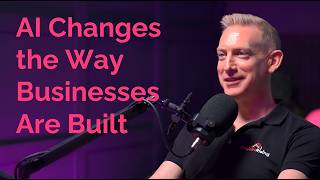
Tim Davies, founder of Project Rising, discusses how AI is reshaping business operations. His company helps small and medium businesses adopt AI through a structured toolkit that identifies high-impact problems and delivers quick wins. Davies predicts that within ten years, many businesses will operate with minimal human staff, relying on AI agents to handle admin and development tasks.
Chapters
So 10 years' time, lots of small businesses, lots of micro-businesses operating almost headless teams.
I think 10 years' time there's going to be— getting towards a majority won't have people.
So how do the people fit into that equation?
Nobody knows is the honest answer. So if you look back at the impact from electricity first being harnessed to it being universally deployed, That apparently took 100 years. We're seeing this shift in AI in a matter of 10 years, and yet the impact will be far greater than the impact of electricity. And you just look around in your daily life, how many things use electricity, and yet if there was intelligence embedded in processes, how much more could be done? So it's, it's going to be a roller coaster.
Hi, I'm Freya. Welcome to the Skynet Chronicles: Business in the AI Age, the podcast that dives deep into the world where artificial intelligence meets business. Join us as we explore the latest trends, challenges, and opportunities in this ever-evolving landscape. From innovative startups to established enterprises, we'll uncover the secrets behind the successful integration of AI technologies. So grab a cup of coffee, Sit back and get ready to unlock the mysteries of business in the AI age.
Well, good morning, Tim Davies.
Good morning.
So, bit of a change of pace today. I'm in your seat.
In the croaky seat, you see.
Yes, unfortunately to everybody listening, I have something going on with my throat which has given me a wonderfully deep voice, which will break, I'm sure, partway through this podcast. So yeah, this is not my normal voice, but it's It'll do.
The one we've got today.
Yes. So, um, everybody, I'm Jackson Howell. I am the sales director at Project Rising, and I am in the— I suppose not the hot seat. You're in the hot seat. I'm in the cold seat. I'm going to be asking the questions, going to be interviewing you for a change. Normally you're over here interviewing guests.
I am.
How are you doing this morning?
Doing wonderful.
Good, good, good. Um, so I'm going to get straight in. I'm going to talk about Project Rising.
Okay.
Because obviously people know a bit about you, but tell me a bit about Project Rising. How, how did Project Rising start? What was the point at which you went, I'm going to do this?
So Ollie and I were working at Upwork together. We'd worked together at Caterpillar too prior to that, um, and we were delivering campaigns of projects for FTSE Fortune 100, really big international companies using the platform Upwork, and it allowed us to match a single hiring manager to a single freelancer. But our customers wanted campaigns of assets delivered. And so while we were using the platform, we were finding the freelancers through it. Essentially, I had a team of project coordinators, consultants, project managers who were spreadsheets, Skype, scribbles, and Upwork in order to make these campaigns be delivered. And we thought there must be a better way. And we asked the wider organisation whether it was possible to modify the platform to support the needs that we had, and they were too close to IPO, so that wasn't an option. And so we said, well, should we go and try ourselves? And so we, we convinced each other it was a good idea that we'd start off building a project management automation solution so that we could effectively have teams of freelancers working on projects delivering X.
What year was this?
This was 2017. Um, so we left Upwork at the very end of 2016, start of '17, and, um, 9 years ago plus a week or so, um, we launched Project Rising and didn't know what we'd let ourselves in for.
Indeed, yeah. I think a lot of startups come out of ideas of, oh yeah, we could do something better here and let's go do it. And then you sort of jump ship and realise that reality kicks in. So this is kind of, were you using anything to do with that? I mean, AI wasn't really a talked about topic back in 2017.
So AI was, but generative AI wasn't at that point. I mean, the Transformers only came out in 2017 in a paper from Google. But there was still ML capabilities for sentiment understanding. There was lots of automation capabilities. So effectively we were connecting the dots between what were fancy functions of code, people, and an interface in order to get something that was most of the way to being a project manager. Yeah. And it worked pretty well for the time. It was excellent. We built it using a low-code platform called Mendex, which was then bought by Siemens, and we've still got part of the platform running on there. Nice. Which we use for the pharmaceutical project delivery. But we'd got an understanding of some of what was possible. And when I was talking at a mastermind group, I was regularly asked, what is it you're actually doing? And then told you should just start talking about AI. And so I did. And then the business has evolved to where it is now. So we're still delivering automation solutions using AI, ML, but now very much focused on how we help small, medium-sized businesses, owner-managed, to reach this gap of the sort of the capability understanding to get them the benefit of the AI capabilities to make their businesses run sweeter.
Yeah. Yeah, so back then building a lot of automations, putting a lot of tools around automations, and I guess the kind of early stages of AI. And at what point did it change in your sort of timeline that more powerful AI came into it and you went, oh, actually we can do even more things? And what did that kind of influence?
It's been really gradual from a— if we sort of step back, so GPT-2 came along and we could effectively fake a sentence at a time from a project manager. And it was, it was okay, but it was still better than the templated copy. And when we combined those sort of personalizations with really early large language models with the templated copy, we could create stuff that was pretty compelling with an understanding of the project, understanding of what was going on. But then as more The word capability, I overuse it, but effectively, as new toys came out that allowed us to do more things, we integrated them. And that's not changed over time. It's just the rate of new capabilities is increasing all of the time. And so we're just having more and more things that we need to play with and understand so that we can share that benefit with our customers.
Fair enough.
Fair enough.
So company evolves, technologies come along, company starts to grow. That kind of early days, what was the kind of thing that went, this, this is what, this is what works for us as a company, is this is what works for customers, this is what we're going to focus on. Because obviously as a, as a, as a software type, like, agency growing through building things, developing things, you kind of, you disappear down all kinds of different rabbit holes.
Yeah.
Was there a moment where you went, right, that, that's what everybody is after, that's what we can deliver?
No, I don't think so. I think it's been an evolution. So we made a decision relatively early on that we would try and retain our IP wherever possible, and so we baked that into our contracts. And at the time, we knew that there was revenue potential in the future, but we didn't really have a, a plan for it. But what we have had by delivering these really specific automation solutions is an understanding of the challenges businesses have and to see the commonality of those challenges. And then instead of having unique disparate pieces of IP that solve one problem, we're able to look at it and go, actually, there's a kernel of repeatability here. How do we make that more widely used? And obviously that takes us to the toolkit.
I mean, that does segue quite nicely into my next sort of set of questions around the toolkit and what— where, you know, Project Horizon has gone through this timeline and now it's approaching this, this kind of next chapter. We've accumulated a lot of technology and a lot of solutions to quite common problems that businesses are facing. Tell me about toolkit.
So the most common problem we see in a business isn't we want— we've got too much admin or we can't generate enough sales. At the moment, what we're mostly approached for is we don't know where to start with AI. What can AI actually do for us? Because the rate of change of capabilities is increasing, that capability gap, that adoption gap is increasing all the time. So businesses don't know where to start. They don't know the right tools to use. And they don't have the time or the resources to learn. And if they dedicated them, are they still picking up the right things at the right time? And so the toolkit solves two of those challenges. A, what we do with all of this IP that we've been accumulating, and B, how we solve problems for businesses so that the problems we've seen in a large multitude of business over, over 1,000 projects how we then apply that on a regular basis as a suite of products. But not just a, here's a toolbox and the only tool that you actually know how to use is a hammer. It's a guided onboarding that works iteratively. So on that first engagement, it understands what the problem that the business has most significant at that time, helps them to solve it, demonstrates value quickly, and then offers other things that can be solved and guides them through implementing those other solutions. So it's delivering value incrementally at the rate that they're comfortable adopting it, rather than just going, here's a new suite of tools, you need to learn everything now, good luck, which no one ever does. Software adoption always fails at change management. So if we can make that change management gradual at their own pace and delivering continuous value, then we think we've got it right.
Well, that is, I mean, that leads to a very interesting topic, which is around change management and around AI tools. You've got obviously a lot of businesses that are adopting AI tools to a certain extent, but they're mostly dabbling with the kind of low-end stuff. They're playing with ChatGPT, they maybe have looked at some other tools that are out there. How do we, how do you get them past that sort of threshold of dabbling into, no, we're actually going to use it in earnest and actually make use of these tools. And how does Toolkit fit into that, help them?
I don't think a set of tools is the answer. So I think if a business is trying to use AI and they're just every month adding a new subscription of another tool that might solve a problem and they're spending a bit of time playing with it, they're really not getting to the benefit that AI can apply. And so ideally we do a clean look at the business and say, how do we make it AI first? What are the challenges you've got there? How do you structure for the future in this combination of work delivery between humans and agents so that people are peopleing and the agents are delivering the admin that nobody actually wants to do? Many businesses aren't quite ready for that, so we have to guide them through it. And so we're just looking at what's the easiest way to get a company to start making a change. And generally that seems to be around, we want to increase sales. So naturally that's where we're focusing most of our attention.
Do you find that a lot of businesses turn to AI as a quick fix, a quick solution to things?
I think they think it can be, um, and then realize they haven't actually saved any time and they're probably doing more work. There's a cartoon that I love which shows, um, somebody generating a really long-winded report using AI and then passing it to their supervisor who's summarising using AI because they didn't want to read the long report. So actually the short version being passed between two people would have been more efficient than spending all of that compute writing a long form and then summarising the long form. So we've got to use AI in a place where it's actually making a benefit.
I suppose in those kind of instances, users are using AI, people using AI to do tasks that they've always done because it fits in their old way of working.
Yeah.
Whereas I suppose with a lot of businesses moving towards using AI aggressively, they're actually adopting the whole way of working as well that is around the way AI works to support them.
It is, but quite often we see that actually they're not ready for that much of a shift. No. And so the solution that we might implement might just be a folder-based solution. It might be putting data into a spreadsheet so that they can see a spreadsheet. There's no value from an overarching AI business process point of view of that, but it gives them the confidence in the solution when the human is still involved in that check of the process. So it's, it's almost baby steps towards where they can get to, and we've just got to be the guide.
I think that, that leads on to the big topic of of bigger businesses, the likes of Amazon and other big players, you know, letting go of thousands of staff, replacing them with AI, which is just a big sweeping change which is going to backfire. Well, do you think it will?
First of all, I'm not sure that all of the staffing reductions are actually due to AI, right? I suspect that it's, it's a useful label to give to it, and actually they were overstaffed in many areas of the business. And so they can go through a cost-cutting exercise and then with what's left, look how to best apply AI. Some businesses have gone more extreme and got rid of 50% of their staff and said, right, now with the people that we've got left, we're going to deploy AI effectively and we're going to make it work. That's a very aggressive approach and it can only be done if you've got time and capital. Yeah, but I suspect that quite a lot of the redundancies that big organizations are doing are actually market demand related rather than specifically AI cost reduction, and they're just being mislabeled.
Yeah, I mean, just to sort of contain that statement I just made about, you know, big sweeping changes in AI, it's kind of a big— it's a fine line between bringing AI into to support as you say, people doing the peopling and companies taking very aggressive approaches where they think that AI is simply just going to replace people. How do you— we touched on this topic before, I think, when you, when you, when you, when I was on the other side of the table and you interviewed me, um, about people being concerned about their jobs and protection. And we brought up the topic before of JobPockets and things like that. But if you are in this kind of industry, any industry that is not at a threat of AI, but is bringing AI into the workplace, what would you say to somebody to say, okay, how would you make your job more valuable given the fact that AI is here? What could you do?
I think you can look at it with two lenses. You can look at it effectively, there's a scale of performance of people in your role. And if you are towards the top of that ability and delivery end of the spectrum, then your job's secure anyway. And you can move to that by using AI. If you are performing less well than your peers within a company, if the company gets into challenges, then they'll make redundancies. And in all likelihood, they'll get rid of the lower performers within the organization. I think anybody can become a higher performer by understanding how they can best apply AI within their role. To make them more efficient and make their, their work output of a higher quality. But we do see people that take that too far and think that, okay, well, that means every, every output I do, I can just use ChatGPT and then I'll be better than everyone else. In all likelihood, you're just actually going to be the mediocre middle by doing that because you're not demonstrating that level of expertise in combination with AI.
So you see AI in its, its current format is very much a supportive tool.
There are exceptions to that, but it— the best use case is using it to enhance people's performance right now. We obviously see space within code development where we're leaning very heavily into AI agents. But that doesn't mean that we don't need developers anymore. It just means that the developers become a higher-level role orchestrating teams of people effectively. It's just those people actually are agents and how we then continue to enhance our delivery process. And I think we'll see that same pattern everywhere across industry. There will be more and more agents, there will be more and more robots that are doing roles, but the people that understand how to interact with those enhance the overall output will win.
Interesting, interesting. So students coming out of university, they're going straight into this kind of world now that's AI augmented. Obviously we've got a couple of young individuals who work with us, the developers, but they're empowered by AI, aren't they? They're not intimidated by it, they're actually using it in their day-to-day.
Yeah, and when we, we take on people on work experience, it's because they've demonstrated an aptitude and a desire, and usually we know somebody and they sort of come through a know-like-trust relationship. Um, but if we can see that passion and that capability, then we'll take them on a journey with us to show them how to make the most of it. But for people that are struggling to find work, find a company, volunteer, learn, dig into the tools, see what's possible, and share what you're doing.
There's never been a better time to be involved in technology because these tools, they're not, they're not inaccessible, you know, they're not, they're not really gatekeeping, especially with, with ChatGPT, Claude. They're free, they're available, you can use them.
Yeah, I mean, if you really, you want a minimal level subscription in order to get the best capabilities, but you're talking £20 a month. Yeah. So somebody who's very early in their career, go to your folks, say, I need this and this is what I'm gonna do with it and I'll share what I found into how you can use these capabilities. Then go and talk to businesses and say, I'd love to do some work experience, not looking for pay, or you are looking for pay depending on how you wanna frame it. Can I spend a few days working with some of your team? Then you've got that on your CV and it's just layering that experience. But truly, don't ask, don't get. It applies everywhere. If you are— keep on asking, then you'll be successful.
No, no, it's true. It's— that's what I did when I, I first got into technology and got a job. Just, yeah, a bit of chance to get a bit of learning on my own and, and getting into a business and going, hey, I can do this. I'm not very good at it, but I can do it.
But I'm learning.
Learn fast. Yeah. And I used all the tools that were available to me. So it's definitely a good strategy. Okay, so going back to, to businesses adopting tools. Where do you think businesses are going to be in the next— so the landscape is changing so rapidly. We've got new tools coming out every day. The quality difference between video generation from 2, 3 years ago is vast compared to where it is now. At the rate at which we're accelerating, 5 years, 10 years, how do you think business is going to operate in that space? These tools—
I think we'll see businesses that have no employees in that time frame, probably sooner than 5 years. So somebody with an idea will work with an AI or a team of agents or an AGI, depending on what's available. And they'll say, create, create this business, here's some seed money. Or you might not even need the seed money, to be honest. And we're seeing the first signs of those already with people building out basic businesses based on the back of Open Claw. So I think we'll see businesses that are competing with name brand names that everybody knows that have no employees. Um, and that makes it really challenging from a cost perspective because the cost to deliver the services when you've got no employees and you're only paying for compute comes down significantly. And that compute doesn't have to be in a hyperscaling data center. It could be on a DGX Spark in somebody's bedroom or lower-level compute. So I think we'll see those types of businesses making a real impact. We'll see very, very small teams of people massively outperforming larger teams because of the agility. Make a decision, code's written, the service is bought, and it's out there overnight. Whereas from my experience in big corporate, sometimes you might have a team of 60 signing off on a decision over a series of months. You just can't compete with speed of decision-making. And actually, even if it's not the perfect decision, because a decision's been made and a bet is then backed on that, you still move forward quicker.
Interesting. So 10 years' time, lots of small businesses, lots of micro businesses operating almost headless teams of people.
I think 10 years' time there's going to be getting towards a majority won't have people.
How do the people fit into that equation?
Nobody knows is the honest answer. Um, as these changes happen, some will be quick. We'll see some businesses that have been around forever all of a sudden going to administration. We've seen it before, they get announced all the time. Um, but I think that will happen more quickly, and there'll be disruption from a brand and a company that nobody's ever heard of that has been able to undercut them. And we'll see that with the SaaS companies pretty quickly. So big names who've been used to having huge revenue through their software as a service product, all of a sudden completely undercut by something offering the same service for same or better service for a fraction of the cost. And many of those businesses won't have staff, but they'll be offering the same service that the SaaS was. What those people do that worked for those companies, many will start their own companies. They'll look at, okay, I can be that ideas person, I can be an entrepreneur, and my team can be a combination of people and AI. But we will be facing the need for universal basic income of some sort, I think.
Interesting. We're gonna get really deep into an almost political area of future life. I mean, we all don't know how this is going to affect, it's obviously affecting a lot of people's lives already, but it's really interesting to see the reality of what it's gonna be like in 10 years. Unless we enter into an age of abundance as well, with AI being able to handle all kinds of menial tasks, will we find ourselves actually having more time to do better things?
I think we will. And I think we've been held back. I mean, if you look at just software development, there's never been enough developers on the planet to write the amount of code that society's wanted. And so software's been expensive, but it hasn't needed to be. And so if you're able to have a vast amount more resource delivering output, then the output costs less and is available to more people, and the profit made from those businesses can be reinvested in a form of abundance, um, somewhere between universal basic and universal lovely, um, provision. I don't know how it looks, but I think it's— you can read a lot of sci-fi books and see a lot of different ways that it could evolve. Um, but it's certainly fun times to be alive.
Well, even the, the, uh, well-named podcast, ironically named podcast. Yeah, yeah, I don't— it's, um, I've always wondered about that when I, when I saw your podcast a while back.
Do you know why we named it that? So many people over the years said— excuse me— whenever I mentioned AI, oh, you mean Terminators. I'm like, well, I might as well just go all in on it then.
Yeah, yeah.
I don't mean Terminators at all. No, I mean helpful, useful solutions that are solving genuine business problems. But Skynet has a certain ring to it.
It does, it does. Yeah. So you think so, SaaS companies, they're, they're— I've seen this, we've seen this happening, it's happening in real time. You know, I've got big players in the industry who are having their platforms almost cloned by smaller teams, more individual developers who are going, I'm going to build a better version of this. Yeah, you know, they're, they're sat on their laurels of being, you know, long-term players in the industry. Ah, we're protected, we're invincible. And then you've got small development teams now spinning up same versions overnight, offering it for, for less with more features.
I've been playing with a piece of software called Whisperflow, which allows you to effectively type without typing, just using words. And I was chatting with somebody who'd taken a screenshot of all of the different parts of the application, all of the pages of the website, and over the course of weekend had built a competing product using Claude Code. Now, I'm not going to name the person or what they were going to do with that, but this is a brand new AI-enabled SaaS solution that is already being cloned within minutes. The ability for somebody who understands how to describe a problem well, and that product definition and spec development is an art without question, but somebody that can do that can build many, many things now. We see really good examples of this and we see really quite horrific examples. We inherited a repository that we were working with a customer to get them ready for a beta, and that repository that we got from 3 people vibe coding was incredibly challenging, and the database was entirely dumbfounding. I've never seen so many tables for so little reason.
Um, so vibe coded into oblivion, basically.
Yeah, yeah. And keep on adding features, keep on adding features without an understanding of how to structure code and repositories, and you can get yourself into trouble very quickly. But for basic features, that— one of my favorite apps when I was in corporate was a little timer that you could just set when you were going off to do something, and when you got back, it would tell you how much you'd been paid for the duration of time you were gone. So you could see how much you earned while you went to get a coffee, for example. Um, that sort of little app can be made immediately now with AI, with very little skills, and it just comes down to how you host and deploy it. And if you can get an understanding of that, then you can build basic apps.
That's really good. So I mean, that's, that's, that's a lot of where the practice is coming for people entering into this industry as developers, is just playing with with those tools. Although the, the Claude Reddit board is saturated with people building, uh, use— it's not use tools per se, it's the, um, the usage of Claude. So your tokens, how much you've used, and there's so many versions of the same thing over and over again.
It's such a snapshot of time. It won't matter because at the moment Tokens are key, and tokens in the latest greatest model are key. But actually, you don't need the latest greatest model in order to do the majority of work output. And I think we'll see a huge shift to on-device and on-prem AI where the lower-level tasks won't use a big hyperscaling data center at all. Mm. But we're already seeing high-end jobs in San Francisco into VC-backed startups specifically stating the amount of tokens that are available as part of that job.
Really?
So developers are actually not just getting a package, they're also getting an understanding of their flexibility in using AI tools to write code. And we see Danny burn through billions of tokens. So I completely understand why that, that might be necessary. Um, but I think ultimately those tokens won't need to be on a data center. You'll be able to run it locally.
I mean, it's a short-lived problem, isn't it? It's the current state of things. Like I said, it's this current snapshot. But over time, all this technology is gonna change. Rolling back, when I first started using a bit of AI was Jasper AI, or Jarvis as it was, and then it got trademarked, I think. Strike against it. That was really expensive.
It was really expensive. It wasn't very good either.
No, it wasn't. But it was like $300 a month.
And all it was was a ChatGPT wrapper. Yeah, what a GPT wrapper. Yeah.
And now we're, you know, we're down to free. And so the cost of— we've talked about this before as well, you, in your own words, you said about the cost of computers coming down quite a lot.
It's trending to zero. There was a presentation on stage at NVIDIA's GTC conference, and Jensen Hung, in one part of it, said that over a 10-year period the cost of compute had dropped by 40 million. I don't know about you, but I find that really challenging to visualize.
Yeah, no, I can't.
It's— and so we're just seeing this rapid reduction in the cost of intelligence, and that means that that intelligence can be used more widely than it ever has been before. So there's obviously huge investments being made in data centers really interesting moves being made in order to power them. But ultimately, that, that cost of overall cost of intelligence is coming down despite the investment in the data centres and the cost of electricity. And all of those factors will improve over time. So we just end up with a capability that can do what a team would have been needed to previously. The CEO of Anthropic, has said that next year, 2027, we'll see a country of experts in a data centre. So if you think of 50 million people in a country, and if they were all expert level, what would they be able to do? And them all being available in a data centre.
Still hard to consider. It is hard to consider.
But think of the problems that we'll be able to solve. Mm-hmm. So we're just starting to see signs of Maths Olympiads where competitions are effectively being— humans being outperformed. We're already seeing that within code. We then see it within high-level problem solving, and diseases will just start being solved. And it won't then be actually a challenge of can we come up with the appropriate candidates? It will be the, the testing program to get it signed off for deployment. Will be the bottleneck because so many new solutions will be available.
It's wild, really.
It is wild.
We're, um, I read the other day that we're, we're in one of the, the biggest one-off, or possibly the biggest technological revolutions ever with AI. Yeah, I think, can't quite see it.
You can't, but, and that's because of the pace of change. So if you look back at the impact from electricity first being harnessed to it being universally deployed, that apparently took 100 years. We are seeing this shift in AI in a matter of 10 years, and yet the impact will be far greater than the impact of electricity. And you just look around in your daily life how many things use electricity. And yet if there was intelligence embedded in processes, how much more could be done? So it's, it's going to be a roller coaster.
We're getting very, um, Twilight Zone almost approaching.
I, I think it's just so exciting, the fact that I can be reading about something new or watching a podcast and then wake up in the morning and look, and I've got 3 more things that I need to understand. And just that volume of new magic, and it is magic, and how that can then be applied is thoroughly engaging.
Okay, so every week we have conversations about the things that you've come across, the things you're working on. You also run a playtime in Project Rising.
Yeah.
Tell me a bit about what playtime is, we'll tell everybody else what it is. Playtime is.
So Playtime is born out of— it's impossible for any one person to keep up with what's possible. Um, and to basically— I stole what Google do with their, um, offering a half a day or a day off for a week to work on private projects. And I said, instead of that, let's spend Friday afternoon not working on customer delivery but testing new capabilities, be that a new tool and a new language, a new capability, whatever it is. And we give the team freedom to choose what they want to look at in any given week. And there's a requirement to play with it and then make a 5-minute or less video on it. And then we save those videos and we make them available and we review them in a Monday morning meeting. The power we get from that is, is compounding. So every week, because it's not just one person looking at new technologies, we as a team understand many more things than we did the week before, and we can then see how we apply that. And so many of the things that we'll see, we'll test and play with, and they'll be good but not quite good enough to use. But it might then seed an idea into how we then apply something more widely. Um, and we see it time and time again. So even in the solutions that we go, we're definitely never going to use that again. But what it did here was interesting, and that can then seed a conversation that can be a product or a solution that we're offering or that we're using internally to be more efficient.
Got any examples of ones that you recently looked at and went, no, not suitable or not ready?
Well, I think that it would be inappropriate to name specific—
you have to name specifics. No, I don't think— don't name their answer. Name maybe what it did just for the things that are in, you know, that are coming out at the moment that are not— they're being worked on, but they're not, they're not quite ready for primetime yet. There's certain types of tools or certain types of systems. Now we've seen— you could say that, you know, video, video editing— well, not video editing, but video generation 3 years ago was not ready for primetime.
No. And it's still probably not ready for prime, primetime. It's not quite Hollywood level. Um, but I think video is an area where we just see rapid advances. I think the bits that are more interesting is where it's something completely new and novel, the application in a new space. So a few weeks ago, we looked at something that was able to look at a repository, which is where we store code. Think of it as just a folder on a— in the cloud, but it's a folder that has certain controls on how it's used and how it's deployed into use. But when you're looking at that with an AI model in order to do agentic coding, where the code is being reviewed and assessed and written by AI, sometimes they lose an understanding of everything that's there. And this solution that we looked at was effectively building a map— it's called a graph— of the islands of interest and their relationship to each other. The version that we tested was pretty but wasn't deployable in that version in our development process. Will we apply something that delivers— I can't talk— that develops an update, a graph of that repository for every repository going forward? We will, and we'll watch that initial release and we'll see which ones are better and easier to implement. And then that'll become part of our process. And that will mean the AI agents that are doing code for us have a better understanding and they don't forget when they're working through something. So that's an example that wasn't quite ready. And even last week when I was testing the Pencil agent swarm with CursorBuild, where I could ask it to build an interface and we could see these agents with their cursors moving, updating, building out an interface live. It was fun. It was great to see. Is it ready for us to deploy Agent Swarm capability? Not quite, because we need to understand how we can apply it to make sure actually it's adding value rather than just looking pretty. But it was a brilliant example of something that made me just go, wow. But actually the value for our processes isn't quite there yet. So it, it's just a way of having the team have an understanding of all of what's possible that we've managed to see. And given that there's 3 new things when I wake up every morning, it's still only a fraction. But it means that we understand more than every other business we meet, because every week we're testing, playing, and we're using that knowledge to move forward and to move their customers' businesses forward.
You've got to practice what you preach, I guess.
Yeah, learn through play.
Indeed, indeed. Yeah. So once it didn't quite work, is there one that's something that's coming out of the last maybe a few months ago, or that did make it, make the grade and find its way into everyday workload or into a client project?
There's been so many, so many that I even lose track.
Even a particular favorite? You went, oh, this is, this is fantastic, I love this.
I think the, the combination of handoff to agents within Linear, uh, project management tool, and the early demonstration of ability with cursor agents— those two things in isolation were cool. What we've built because of them massively outperforms what both of them could have done in isolation. And the benefit that that's going to give us, and therefore our customers over time, is just huge in terms of recursive self-improvement of code and customer issues being dealt with, and then just the output being reviewed by humans. Um, it's effectively the same as me going out and hiring 100 developers without having to manage them. It's a huge impact.
Is a massive impact. Because you are literally taking all of that effort and power and you're sending it something that can run instantly.
But, but we're still bringing on people to work with it because that understanding of the business challenge, that understanding of how to talk to people about a problem and then continue to evolve the space that we're working in requires people. So it's not a replacement. We're still adding staff. but we're doing so in combination with AI so that actually our work output increases exponentially. Yeah.
And their role was less sort of nudging code around and doing the grunt work and more of the interesting solving problems.
Absolutely. I mean, it's getting us away from the age-old problem of nobody actually documenting their code, nobody looking at the logs, waiting until a customer reports an issue and then working out who's going to work on it and when. These challenges just disappear and become solved. And we're then validating that their work output is of a high enough quality to deploy to prod, but we're getting that in a staging environment where we can test it almost instantly. Game-changing for us.
Yeah, definitely. For, you know, for the tools that we're using, and obviously being at the absolute forefront of, of the technology, we're getting exposed to all of the latest and greatest tools. But Talk me through some of the businesses that we've, you know, you've worked with recently and the problems you've solved for them and what kind of, you know, we're looking at building agent swarms and these quite clever and complicated systems.
But the customer doesn't need to care about that.
No, no, no, absolutely. It's more of a, they're not, they're not going to be using those kind of tools right now. They're a little bit further behind in the stuff. They're still solving admin problems.
I think We're solving problems for them. How the problem's solved is irrelevant, really, isn't it? So it can be a black box to the customer. They've got a challenge around we need to find new prospects, we need to call customers that we haven't spoken to recently, we need to understand where we're increasing our cost of subscriptions, which ones we've got, which ones we can cancel. We need to understand the signals in our marketplace in order to be able to find the right candidates to move faster. To make the right investments, whatever those individual challenges are. How we solve the problem for them doesn't matter. They don't need to know we're using this technology, that technology, this combination of agents and models. It's just noise to them. And actually we're making it to the point that they're benefiting from everything that's possible without having to spend all the time learning the lingo, learning the tools, learning how to deploy it. Working through the guardrail challenges, how you interface these different capabilities to make sure you're getting good quality output. We solve that and all they care about is that the problem that they had has gone away. So they're, they're not struggling to make new sales. They've got lots of new sales opportunities. They've got more meetings for sales than they can handle. Their proposals are going out instantly. They can see who's accessed them and when. They can automatically follow up if somebody has looked at a proposal 3 times and hasn't yet made it. Button and signed it, they can get a notification that they need to pick up the phone and have a chat because there's something not working that should have been. But it's giving those data and insights to allow them to move really quickly and just benefit from AI so that people can do more peopleing.
Okay, so those businesses, where are they benefiting the absolute— if I would— let me rephrase my question actually. So if I was a business But, you know, say I'm a recruitment agent, big organization, lots of people, lots of moving parts, lots of data, big CRM, lots of candidates, lots of business I work with and so on and so forth. We don't use AI, but we've got a lot of admin work, a lot of things happening. I come to Project Rising and I go, help me. Where would you start with that process and what would you suggest to them?
What's the biggest challenge you've got today? What's it costing in terms of man resource, time that's being spent on the problem? And let's look at how we can solve that for you. And we like to work in these bite-sized pieces. So we will do AI discovery where we'll generate a roadmap of what the business needs to do, all the changes it needs to work on. But the best adoption we get within a business is where we solve a small problem quickly and then move on to the next problem.
Do you think that's where businesses trip up? They go, we need AI. They go straight in.
We need an AI strategy. We need an AI policy. We've given all of our team ChatGPT, but we don't seem to be any more efficient yet. Well, really that's because it wasn't a joined up plan and it wasn't actually solving the problems you've got within the business. So by focusing on a quick win of a known problem within the business that has a clear return on investment, it becomes a self-fulfilling prophecy. The person that chose to do that, which is often the business owner, becomes a champion. They begin sharing among their peers what they're doing. The team are obviously bought in because they can see the benefit. They come up with ideas of, well, can we do something around this? Can we do something around that? And then it just becomes effectively a prioritisation of the challenges based on the impact that it is having within the business. We're just able to solve them and move on to the next one. It means that we're working on lots and lots of different problems, but those problems actually have a lot of commonality between businesses. And the core business processes don't really change, which means where we've solved a problem once, quite often we can apply a version of that more widely within the toolkit.
So a business, so someone listening is not going, oh, we need to adopt AI, we need to, it's not. The AI is not the thing that you're actually looking for.
They might be looking for AI and thinking they need to adopt, but I'm still going to ask them the same question. Yeah, what's the problem you've got within your business? It's the same as when somebody comes to us and said, I need an AI chatbot on the website, and I think, they expletive, don't. How many people are on your website? How many people are asking questions that are going unanswered? And what's the cost of those? Actually look within your business, where's the real holdups that are stopping revenue, stopping growth, causing people to pull their hair out. And one of the examples we had looked at recently was the creation and population of a spreadsheet based on, um, independent contractor costs. So they're working time, when they're working, how they ultimately get paid. It's a very common problem within a business of how you better manage that. That particular customer wanted the data in a spreadsheet because that's how their process worked. And so we'll support that. But the overarching understanding time worked, understanding who's done what and when, and resolving that to a payment process exists almost universally. So we can just look and go, okay, well, we've done it once, we can do it again. And there might be tweaks in that. It might be using a spreadsheet, it might be interfacing to different systems, fundamental process is the same.
But that very customer, they couldn't have just gone out and gone, oh, I need AI to solve this problem, into Google. And that's not, that's not the problem they're trying to solve with AI. It's a, it's a workflow.
Yeah, it's a business process challenge that can be made more efficient with AI rather than, um, yeah, fix my X. You'll get a document that tells you how to do something. It will guide you through it, it'll answer your problems, it'll be incredibly positive and confident about your abilities as a person asking the question. But it's not the same as actually implementing something and implementing something that works consistently, delivering good quality work on an ongoing basis without drift.
Okay, so these are the kind of heavy uses of AI in business and the, the kind of tools and systems they're going to be using to evolve. But what do you— I'm gonna make it a little bit more fun. Like, do you use AI yourself in your day-to-day?
All over the place.
All over the place. But not just for business. Do you use it for anything else? Do you use it for anything that's been changing for you that's been more helpful in your day-to-day life?
Yeah, I mean, I've used it for holiday trip planning, um, scheduling, managing to-do lists. I've used it in multiple different business fronts in terms of— I've got a company that I started a long time ago for wedding cars, and I hadn't updated the website in probably 10 years, and it was very dated. The contact form didn't work, the mobile, the phone numbers were all wrong. And in the course of 2 hours using an AI tool, um, completely changed the look and feel, the style it chose the photos that were best matched to the style, created all of the new copy, edited everything, fixed the contact form. I then added something to the contact form so that when the contact form submitted, I also get a text message so I can't miss the contact form email because I'm rubbish with emails. Um, but it did it in 2 hours. And so it's just using what's out there for any aspect. I just love technology. I'm always playing.
Brilliant. I was thinking of something I used the other day. I, I wanted to mod a game, Fallout 4, and Fallout 4 VR specifically. Yeah. Doesn't work very well out of the box and there's a lot of mods for it. There's a wonderful guide. It's very, very lengthy, very lengthy.
And Bible rather than the guide.
And there are, I think, something like 100 mods required in order to get it operational. Wow. And this is the kind of fun thing I was thinking about with AI as well. I say fun thing, it's more of a, I kind of take a second brain to process this stuff away from my head where it just gets complicated and there's a lot to digest and I get distracted. And just to take all that and I just took the article, the entire article, put it into Claude and said, could you just give me the instructions. Yeah, walk me through this. And Claude went, yes, there's a lot of editorial in this. Let me strip that all out and I'll get to the point. And it just went through step by step. And on a daily basis, there's probably a lot of people that are using AI in business and, you know, for themselves personally that are using the likes of ChatGPT free, um, very low-level type accounts to do those kind of things. So And a lot of people I've spoken to have posted about this before. Oh yeah, I use it just to do this, just to help with the list and so on and so forth. So getting to my point, which is the grand scheme of the kind of bell curve of adoption, where do you think we are on that at the moment in general?
Are you talking about the bell curve of AI as a whole entity? Because I think there's probably lots and lots of little adoption curves.
Yes.
If we look at AI as the technology it will ultimately become and the benefit it will give mankind, we're still very, very early on in adoption. And actually the number of businesses that are really pushing heavily into being AI first and making the most of the capabilities, they're in the minority, absolute minority. So it's still very early days, but there's already huge impact that can be made. And I was just thinking, I reckon this is the longest period in— apart from when I've been asleep— for 3.5, 4 weeks for me not using AI. So I attended BNI this morning, was online from 6:45 to 8:30 during the meeting, using it for various different little bits. I drove here. While I was driving here, I just had podcasts on, and now talking to you. And that's what, probably an hour and three quarters? That's about as long as I go. In fact, it'll be a bit longer because I've got another guest after this on the podcast. But a morning without using AI, and that's very unusual. And usually it's multiple applications, multiple use cases all of the time. Utterly immersive.
So you're, you're well in the early adopter stage and using it in us all the time.
Yeah, but if I wasn't, I wouldn't be doing my job. So I need to understand everything that's possible so that I'm benefiting and I can share that with our customers. But also, I really like playing with new technology. It is just a— every day is Christmas Day if you're coming down and opening a new present and seeing how you can use that.
Yeah, yeah. Well, especially the speed at which it's developing. Like I said, there's 3 new things every morning. Yeah, it's constant. So if I'm— I'm just gonna sort of round off some of the things that we've been talking about. But if I'm a, you know, I'm a business owner listening at the moment and I'm going, yeah, this is all really interesting and some of this stuff sounds very complicated. What would you say to them is the best place for them to get started if they want to go I want to, I want to utilise some of these tools. I want to empower our business, do more, be more efficient. So there's a lot of reasons why I would want to do something, but where should they start?
They've got two choices. I think they can either personally choose to lean in and learn, in which case it's find podcast channels that you like, find writers and content that you appreciate, and spend time every day dedicated to learning more, and at least once a week testing and playing. So carve out time, at least half an hour, ideally an hour a day, and more once a week, just so you can actually play and build things. Or talk to an expert that can help so they don't have to. And it really depends on the mindset. If they want to personally have to have that understanding of as much as they possibly can, then they need to lean in. If they just don't have the bandwidth or interest, then talk to a company like us and we'll help them and guide them along the way.
Um, I think that's a lot where it comes down to is, is ultimately time. If running a business is very time-consuming as it is, and to start looking into a whole new world of technology systems, that's where the experts kick in.
Yeah, I mean, some people have that technical aptitude to just pick up new things, in which case lean into it. But you still probably want to have some consultants on hand that are going to guide you and say, actually, probably best not to use that one for that problem within your business. And it's always been the case, we still talk to experts. You would think with all of the word capabilities of the AI models that there wouldn't be a need for a copywriter, but we've just been working with a copywriter on our investment offer for the community round, and he's done absolute magic with it. Along the way, we talked about a lot of sci-fi, um, but he solved a purpose that I couldn't solve using technology because it required more than just prompt and response. It required an understanding of getting into the customer's head and writing from that perspective, which he was able to deliver. So I think there's always a need for human experts, and it's just how we make those human experts have more time for human interaction, more peopling. Because if we're doing that, we're taking away that admin, we're making them more efficient, then everybody's happy.
I think that's, that's the big goal, isn't it? Yeah, people, as you say, people doing the peopling, there's more time for them to do the, the good stuff.
Yeah, go network, go walk, take the dog out. Go watch a film, learn something new.
It's going to be interesting the next few years, the abundance, the time, the, you know, the admin gone to the AI.
I think in some businesses, yes. And some people, yes. Others are going to have the same turmoil they've always had because they'll choose not to adopt, to hide their head in the sand. And at a business level, that's incredibly dangerous now. At a personal level, it's like grandparents who chose not to learn how to use a computer and they couldn't access online banking.
Yep. Yeah, no, that sounds very familiar.
It's common. Yeah.
Well, Tim, thank you so much for being in the hot seat.
My pleasure. Wasn't that hot?
No, no, I definitely could have asked you probably more probing questions. Maybe next time. But I'll keep raising the bar if I'm back on this side again. You definitely will be. I'll keep raising the bar and making it more challenging. Um, because I think there's this— it's— yeah, we're in an interesting world. I, I myself do not know what's going to happen next. It's, it's changing every day.
I think anybody who has an inkling of what's going on, if they say they can see 3 years out, they're lying. It's, it's changing so quickly.
It's just vertical at this point, isn't it, really?
Yeah. Yeah.
But Tim, thank you very much.
My pleasure.
You enjoyed being interviewed for the change.
Good.
Yeah. Good stuff. All right. Roll.
More from Tim

EP 60: Why Founders Become the Bottleneck — And How AI Changes Everything | Thea Brook









