
Ep 55: Reimagining Law Through AI
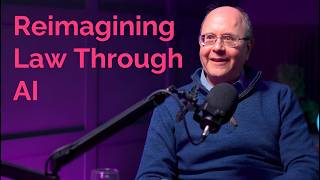
Quentin Salt and Tim Davies discuss how AI is reshaping law, from whether algorithms outthink lawyers to how firms accidentally train ChatGPT with confidential data. They argue the real power lies with infrastructure owners like Groq, not the models themselves, and point to platforms like Harvey that aggregate legal interactions into valuable datasets.
Chapters
I have this typically with people saying to me, should I be a lawyer? Or rather, should my child go and read law? And for years I've said, oh yeah, it's great, it's a meal ticket and it's a great life. You get to get paid for talking, which is what I always relish, uh, and it's fun and you learn a huge amount. I'm not sure I'm saying that anymore. In fact, I'm quite sure I'm not saying it. I'm saying if you like the academic stimulation great, but I don't think the legal practice as we see it today is sustainable. The real point you hit on, and the one I want to touch on, is the far more important one. You said people have their sense of identity and they get their fulfillment out of work.
Yeah.
What is our purpose? You take away work, we are left without purpose. We We need to understand our purpose, build a purpose, and allow people to continue to do things which are fulfilling. And that's a huge challenge. Hi, I'm Freya. Welcome to the Skynet Chronicles: Business in the AI Age, the podcast that dives deep into the world where artificial intelligence meets business. Join us as we explore the latest trends, challenges, and opportunities in this ever-evolving landscape. From innovative startups to established enterprises, we'll uncover the secrets behind the successful integration of AI technologies. So grab a cup of coffee, sit back, and get ready to unlock the mysteries of business in the AI age.
Good morning, Quentin. Quentin Salt, legal extraordinaire, AI wizard, although not originally. Moving to be a technical wizard.
I've just turned one page further than everybody, lots of other people in the book.
And that's all there is to it. That's all there ever is. So let's start with something nice and easy. When was the last time you used AI?
Oh, this morning.
What did you use it for?
I have been, uh, I develop a series on LinkedIn, uh, and I came across an idea and thought I want an analogy to illustrate that. Went straight on to Claude and said, please help me, here's what I want to say, Can you think of an analogy?
What was the analogy it chose?
I'm trying to remember. Yes, it was— what I wanted to show was that the fact that a law firm is very busy doesn't demonstrate that it's going to survive. And it came up with the idea that it's going to be destroyed and everybody coming in and out are the architects and the surveyors and the asbestos people and the demolition experts. So everybody looking at it from outside says, wow, that's busy. The analogy didn't quite work because I wanted to say that they're really busy doing work, which is valuable work. But we worked on it and came to the idea that it's actually a law firm building in a valley below a beautiful reservoir. And all the other businesses are busy implementing new technology as well. So they all need lawyers to help them advise. So all of them are going to the lawyers. They're all getting the advice. Meanwhile, the lawyers are pulling in their own architects to redevelop and get ready for that, which is coming. Coming, and up above them in the reservoir, the engineers are busy re-engineering the dam, and everybody's going to get their feet rather wet in a hurry. That's the idea.
Fantastic.
So that all came out of my spinning through with Claude to say, here's what I want to say.
Fantastic. So you've been helping Project Rising on our windy road journey for the past 6 years.
It's a great journey.
Many ways as a nice happy voice on my shoulder saying the things that I should be hearing, helping us with our legal direction, including all of our paperwork over the years. What's been the biggest change that you've noticed with AI over the time that we've been working together?
When we started, AI as we recognise it today didn't exist. I had my first AI investment way back in 2000. But in those days we called it intelligent agent technology and there was no perception of the impact it was going to have.
Interesting use of words then and how those words have come back around, isn't it?
Yeah. Do you know what's really sad? I looked back and when we invested, we had a patent on intelligent agents. Wow. And we allowed it to lapse in 2013 'cause we ran outta cash. Whether or not it would've caught what's happening now, I don't know. But it's nice to think it might have done. Yeah. Rather sad to think it didn't. So what I'm seeing now is a sort of lull before the storm, uh, where everybody's busy reassuring themselves that AI hasn't actually changed the world, uh, but we're all getting ready for it. And awful lot of people living the not-us, uh, world where they're saying, oh, it doesn't worry me, it's not good, I can see how it'll impact everybody else, but it doesn't impact me.
It won't impact my job. Just put your head back in the sand.
Never. I have this typically with people saying to me, should I be a lawyer? Or rather, should my child go and read law? And for years I've said, oh yeah, it's great, it's a meal ticket and it's a great life. You get to get paid for talking, which is what I always sort of relish, and it's fun and you learn a huge amount. I'm not sure I'm saying that anymore. In fact, I'm quite sure I'm not saying it. I'm saying if you like the academic stimulation great. But I don't think the legal practice as we see it today is sustainable.
No. My son turns 20 next weekend, on Friday, um, and as he was growing up, he showed interest in computer science. He did some coding work for us as side projects just to get him some work experience. And I said repeatedly, whatever you do, don't study computer science at university. Because everything they're teaching you is out of date and it'll soon be irrelevant.
What did you tell him he should do?
I didn't tell him he should do anything other than seriously explore apprenticeships, get work experience, and ideally somebody paying you to learn. And he went down the path of working towards being a chartered accountant with a company called Baccophore that's now been bought by Greencore. And so he's on their accountancy apprentice path. He's learning, he's being paid, but ultimately is actually doing work and is still using code and trying to work out how he can use AI within his job in order to outperform his peers.
I think your advice was spot on. So the analogy I run is of my great-great-grandfather who had a car and he had a man who walked in front of it with the red flag, literally. And the chauffeur was, yes, he could drive the car, but actually he was a mechanic. And I remember being told that before they started, he'd go out and wheel the wrench round and clean the spark plugs and do everything else that was necessary. And I think that we are training a whole group of people to learn how to code, and it's going to be as relevant to them in not very long as it is for me to know where my spark plug is on my electric car. You know, I don't even know how to open the bonnet on my car anymore. I don't know whether the motor or the engine is at the front or the back. And nor do I care. I can drive. And that's all that's necessary. And I think the advice you gave was really sage.
But we see that coding journey and how much it's changed, where we've gone from writing code to now we're coordinating agents that are writing code and instructing them based on customer issues that are coming in. And so we are seeing that. I love the term recursive self-improvement, but it, it's just buzzword bingo. But just the continuous improvement loops that AI is able to make when it's given agency and authority.
You get OpenClaw, you run it, you have it with OpenAI on OpenAI, give it open authority, it will check what you're doing. Yeah. And it's sort of Replit on steroids.
Well, I—
Locally.
Following Jensen-Hung's announcement at NVIDIA GTC, Nemo Claw all the way, 'cause it'll be secure then. And it'll be running on infrastructure in a house or an office rather than in a data centre.
Secure is interesting. As soon as you give it an open door, the security's gone. Open Claw, what did we get last week? Open Claw Floor.
Open Floor, wasn't it?
Open Floor.
Just effectively an image on a website that corrupted the instructions. But I mean, it's easily—
And it was patched within a day. Yes. And we've seen this so many times through history and all the naysayers saying, "Yeah, that's, this is doomed because it doesn't work." Actually, it's doomed. No, it'll work.
Well, it's also the rate of adoption. The analogy that I saw was just the, not even analogy, series of charts were showing the number of stars on GitHub repositories for things that have kicked off. And it included React from Meta, which has just become the de facto standard for front ends, and OpenClaw. And it had a variety of these different charts showing the growth over time. Linux has obviously hit huge numbers of stars over time, but over 20, 30 years. OpenClaw is a wall. Yeah, from release, 200,000 stars and continuing to grow. And now with the backing of NVIDIA and fixing the security elements, will just become the standard for agent management.
I'm intrigued. I for years have hated Apple. This goes back way, way back and it's become visceral rather than logical. Uh, and it all comes down to when they started, uh, I didn't like the idea that they owned everything and they wouldn't allow me to even own the music I bought. Uh, and I couldn't stomach that they would tell me how to work. And I remember spending hours painstakingly setting up, uh, their version of Outlook so it did what I wanted. And then I got an update and just rolled everything back and I couldn't get it back to where I wanted. So that was the genesis of saying not Apple. And now I've just bought myself a Mac Mini because I can put OpenClaw on it and have the memory and it all just runs. Haven't got it set up yet. I'll probably be calling you up and saying, why isn't it doing what I think it'll do?
It's that unified memory that's really interesting, isn't it? So instead of it being memory that sits on a graphics card or is accessible by the CPU, making it operate everywhere, And seeing that across, um, now AMD have released or sort of champion agent-ready machines where they're using a chipset and 128GB of unified memory. You see the same on the DGX Sparks from NVIDIA, the same available on the Mac Studios for varying price points.
I will say across the three, still pay a premium for the silver box on—
you definitely do, and not necessarily for a performance benefit because effectively they're all there and thereabouts. But it's— that gives you the ability to run incredibly capable models locally. And the vast majority of requests that are sent off to an AI model really don't need best-in-class AI anymore. The stuff that's open weights that you can run on something that you can pick up for 3 grand is compelling.
Yeah.
And so we'll just see a huge growth in local adoption. And I was talking to somebody representing an NGO, um, last week or the week before, and they couldn't have their data on any technology company's data center because they couldn't risk that the US government had access to it. So they wanted non-tech data center deployment. Well, there's none. So they, they have a server in their office and yet they wanted to run a RAG-based query with AI answering questions for them based on the information that was available to them. So just fine, we'll just put a DGX Spark in there, we run the model request locally. Nothing, nothing needs to be touching the internet at all. You can have it completely firewalled, completely air-gapped from the internet, and it will still deliver the same capability that you can expect.
That would have been impossible even last year. Difficult and it would've been a huge engineering project.
But it's, and the rate things move, what was impossible just becomes not only normal, but mundane.
Yeah.
Easy, very quickly.
Yeah. And what I love is that it's all simplified. You're now using Markdown files to keep everything in and you vibe code it, which comes back to what you said to your son. Don't bother learning 'cause you, there'll be a long transition period when we still need people who understand how it works. So there is value in that. I'm not negating it, but the long-term outcome is it just works.
Well, and it's that conversation I have quite often. If you want to understand what's possible, play. If you don't want to understand what's possible but you want to benefit, talk to an expert. But you've got to do one of the two, otherwise you're being left behind. Yeah.
But even being left behind perhaps ain't so bad. How many people learnt to drive to begin with? And what happens is it becomes normalised and you start to use it. So wait long enough and it'll come to you.
Yeah, it's just whether in the meantime that business has been undercut on price and taken out of the market by a business that chose to automate and lean in more heavily.
So that's my challenge for you. What is the business which is sustainable?
I think a blacksmith on a novelty historic centre where you can go and see how metalwork used to be done. I think that's sustainable forever. I think almost everything else is going to have a significant period of change. Yeah. So we know that Knowledge work.
It's just very boring. We're going to be aligned and agreeing with one another. But yes.
Well, we were always going to, that was always going to be the case. I think anything that's done at a computer, as we see the cost of intelligence trending to zero, it's going to be cheaper for AI to deliver that knowledge work than a person to deliver it.
Yep.
Anything that's done manually, it's going to take longer, but we will see a dexterity and price availability on bipedal robots, that means it's cheaper for that manual work to be done by a robot than it is by a person.
Totally agree.
Um, there will be laggard areas in domestic environments with old-fashioned wiring and plumbing. Those careers will have longer, but ultimately they will still be more efficient delivered by a robot who will just turn up and doesn't care what time of day it is, doesn't work 9 to 5, will happily turn up at 1 o'clock in the morning if that's when you want them to turn up and just solve the problem.
So there's something where I'm going to disagree with you.
Good.
I absolutely get that my robot, my plumber will arrive and rather than lying on his back under the basin, he'll pull out a robot and it'll go in and whir and whiz and it's got the dexterity, as you mentioned, it's got the strength and it's got the ability to see and the experience and it'll repair the basin. The next time it comes, it'll come and do the same for the radiator, and it'll check the, uh, the, all the pipes. And when the boiler goes wrong, it'll be able to repair that. So absolutely aligned with you. And it won't mind if it works at 1 o'clock in the morning or whatever time you ask it to, to do the work. So, so far we're totally agreed. The difference I have is that you say it'll arrive. It won't. It'll be there.
I was just going to say that it's actually going to be a house robot.
Yeah. And so the plumber will convert from being a plumber to being an owner of robots, the orchestrator of the robots, and he'll be the man you call to get them in. And then one day Mr. Musk or whoever it is will download to your bipedal robot, your embodied AI, the update.
I would not bet against Musk on anything. And I think right now we will see Optimus And we will see Optimus available in a domestic environment for less than a car lease. And then why wouldn't every house have one? And instead of there being some debate as to when the room is going to be decorated and what colour it's going to be done, it can be done on a whim because you just say, this week we want the lounge to be purple. Can you manicure the garden? We've got some friends coming around. Actually, we've got a problem with this. We'd like to renovate that. Can you clean the car? Can you clean the drive? These things. Will go from being one-off requests to just automatically delivered by something that is there working for us.
You've triggered another thought for me. This is one of my, I have various thought strands, but this is that abundance will actually reduce need. If I, I dunno about you, but I've got what I call a man cave. It's where I've got all the stuff. I've still got my SCART plugs for computer just in case I need to plug an old screen in.
Could you find a screen that's still got SCART?
Found one.
But did you keep it through the house move? Yes.
Oh wow. But I cleared a whole load out, but I still have my boxes and boxes of USB cables. Cables, I don't even know what they are, but they power something and it's gonna be useful.
I too also have boxes of cables for everything.
I've also got paint cans. Now most of those I threw out, but these were cans of paint when I redecorated. Actually, if I'm honest, Susanna redecorates, she's, I can't do it. I've got 10 of these and they're all left thumbs in case you can't see on the screen. And when we buy the paint, we, she tells me, estimates how much we need, and then I buy extra 'cause I don't wanna run short. And then when we finish the job, you can only buy it in 5 or 10-liter pots. So we've got a pot full and then I keep it because if I need to retouch, I know I'll be able to match the paint color. Yeah. With the onset of abundance, When I come to painting this room, I just hold my device up. It'll tell me how much paint I need, how long it'll take, and it'll order the paint and it'll be delivered in the size I want it and it'll be delivered very quickly. And so I don't have the waste. I don't need to keep an old can. When I want to touch up because, oh look, there's a bit of a fleck on the wall here, I don't go back to the original paint. Instead, I say to my device, take a look at this, match it. And send me 5 milliliters 'cause that's all I need. And it delivers it. And what I realize is so much of my life, and as I cleared my house as we moved, I saw this, is keeping the just-in-case stuff. The stuff which I think I might need. Now, if we get to true abundance, I don't need it.
I've got 2 rows on storage racks in the garage with tiles for different rooms from end of packs of tiles in case the tile breaks. Some of them are from the previous owner of the house 10 years ago. And when we move, we'll leave them because I don't need them anymore.
And the poor fellow who buys your house will say, "Oh, I wonder if the house used to be decorated in that." But it's, yeah, it is interesting.
And I think you're right. I think we are moving to a point where everything just becomes available and possible and at a lower cost and a higher efficiency than before.
We saw the start of this with WeWork. Hoping or making noises to move to WeLive, where you actually lived on a subscription. And there is that huge, what is it that one needs rather than what is it that you have just in case? We're all driven by fear that we won't have.
Yeah.
So we keep or we buy because it might be useful. If actually we only had what we needed when we needed it, the whole of the way we live changes.
It does, but I'm still keeping all of the books ever, and I still get new books all the time, because what if one day there isn't the internet?
Yeah, there's that fear rising up. And how many DVDs have you kept?
Um, all of them. All of— well, we've replaced a lot with Blu-rays, but we've kept the Blu-rays, we've kept the CDs, kept the books. And part of that is ornamental, nice furniture, But it's also, I actually own those and some of them still play. I went to put in one of my favourite CDs from 30 years ago and unfortunately it did not play well and I'll have to get a new one.
Oh, well, we've just moved house and bravely I cleared everything we didn't need and then Susanna came along and threw away the rest, keeping just those which we did. And it was interesting what we chose to keep. So there's a great a video called Faith Like Potatoes. Right. It's on DVD. We cannot download it from anywhere. It's not available. We did a local showing of it as a little cinema get-together, and we got the consent of the publisher at the time to put it out in public.
Wow.
And I love that video, so we kept it. And that then meant I had to keep the CD— sorry, the DVD player. So whereas I've thrown away my Fire Stick, thrown away the Google whatever it was to connect to the phone, I've bought myself a Samsung 50-inch box which does everything. Yeah, I just love it.
It does everything, but it won't play Super 8s.
No.
We went away on a family holiday, um, last late summer, and my dad brought along a load of film that had come from his parents' house of us when we were kids. So from when I was a baby through to my youngest sister being a baby and my grandparents, when they were around before we were ever on the planet, on holidays in various places. And we set up this big screen. We're all away in a rental house and I got the Super 8 out and was playing it. And it, it was beautiful for many reasons. But the fact it was playing on this technology that was alien to me, if I'm honest, I loved the fact that you could see it, you could feel it, you could hear it.
You certainly hear it.
Yeah, really did.
I'm indebted to you on my Cine8. You'll recall that I inherited from my parents boxes and boxes and boxes of Cine8 movies. I have something like 8 hours of the stuff, plus a couple of others which are much longer and were my mother's travel around the world in the 1950s, which I've not done anything with other than to convert into digital form. And you very kindly asked one of your team to ingest or write a bit of code for Gemini. It was before the latest iterations. It was, what, 18 months ago now?
Yeah, I think so.
But we could upload the video and it described what was there and it did a great job except on one occasion. So there was one wedding where I didn't recognize, I couldn't quite place it. My parents got married from my mother's house, my mother's parents' house. And it was a big house in the Home Counties and very, very obvious. And this wedding was shot in the grounds and I could see the house and I recognized it and I just couldn't quite place it. Anyway, your chap's code spun back that it was in Norfolk in 1961. I said no, no, no, the parents hadn't, weren't in that house at that time, and it wasn't Norfolk. So nice try, but that it got wrong. Yeah. I went to a cousin's funeral last year, and while I was there, I saw an ancient cousin who'd been at my parents' wedding. I said, right, I pulled it up on my screen and said, please tell me, Sue, 'Whose wedding was this?' And she's looking, 'Oh, I think I recognize myself there. I'm not sure. Oh, is that your mother?' 'Oh, I, I'm not quite sure.' 'Yeah. Oh yes, that's definitely your mom.' And it was. And, 'Hmm, no, I, I don't quite recognize the wedding.' At which stage my godmother, whom I'd stayed with to attend the funeral, came and looked over my shoulder and said, 'What are you doing, Quentin?' And I said, 'Well, I found this old video of my family and it's somebody's wedding.' And Philippa looked at it goes silent and says, that's my wedding. I said, what? She said, yes, and there's my father and my brother who died 2 years later, and I— my family have never seen him, and now I've got that. And I said, gosh, I didn't know you— I knew you were friends with my mother, hence, you know, you're my godmother, but how did that come about? Why were you at their house? She said, I wasn't, I was at my parents' house in Norfolk. 1961. So thank you, you were right.
I wasn't right, Gemini was right.
Yeah.
And I still use that when I'm— I mean, we've got a calendar at the moment and it doesn't have the location of the photos, and I've taken a photo of two different months and just said, where's this? And it knows.
It's getting better every year, every day. It's getting better. So did I tell you I've developed a business on the back of what we learned from that? No. So I've met up with the most amazing lady, Naomi Korn, okay, who runs Naomi Korn Associates, and she is the leading light of orphan works in the UK and probably in Europe. Yeah, I had no idea what orphan works were. It's some really arcane bit of copyright law, and effectively it means if you, you might physically own the artifact, so somebody owns that beautiful bonsai tree But if I had an image of it, the person who took the photograph owns the copyright in it. Yeah. So I'm allowed to put the photograph up on the wall because I own it, but I'm not necessarily allowed to put the photograph up on the internet because I don't own the copyright. And if you go into a museum, you'll discover that they say, this week up, or this month up from the archives, we've got this all on display. Yeah. And it's— I never understood why do they pull it up from the archives? And put on display, but they don't put it out in public. And it's this orphan works problem.
Yeah.
That they can't put on display because they don't know who owns it. Having seen what you could do or what the AI could do, talking with Naomi, and it's far more complicated than I ever anticipated. We've been building that out and I think it's gonna be a, it does what I say a business today has to do. And that takes advantage of it. The new oil, which is data. And she's got a deep, deep well of her data, all about how the, um, often works— copyright legislation works. And then we can allow the museums, the GLAMs— galleries, libraries, archives, museums— to drill their own wells.
All the things that have just been hidden underground or in a back room that never come out to see the daylight.
And this is all brand new stuff which has— AI has never been trained on. And they own it for themselves. And that's for the public good. And I love it. So I'm really hoping that comes.
I'm sure it will. And it's, there are so many applications of this technology and it's really just talking to businesses, understanding the problems that they're having and going, well, have you thought about this? Or maybe it could be done like that. And so much good comes from it.
Have you seen any, have you had any lawyers come to ask you about using it?
Yes. Yeah, we've had a few, um, both on the fringes of law, like in the will space we've been quite active, but in reviewing documents, in creating work that has to be signed off or authorized, some of it legal, some of it tangential but still requiring human sign-off of an expert in the field, and it's, it's moving very quickly.
And what part of that legal process do you think cannot be consigned to AI, automated?
Currently, the elements that require human signature and sign-off. But the only bit that requires human signature and sign-off is reviewing the output and saying, yes, this is appropriate. And when you look at it in that lens, essentially the entire legal industry is ripe for a renovation, revolution.
What I love about what you've just said is it requires human sign-off. And my belief is that the regulatory moat is going to become a wall to stop the lawyers getting out. At the moment, there are 3 reasons why people go to a lawyer. One is the inertia. This is the most important transaction I'm ever going to do. It's buying my house, selling my house. Yeah. When I came to buying or selling my house, I went to a lawyer. It's buying or selling a business. I sold a multi-billion pound business earlier this year and we went to lawyers. I hated the process. It was, I don't need to go into the details, but it was incredibly inefficient and you could see how it would be made more efficient, but it was an important deal. So I went there. And why do I go to the lawyer? Well, actually it's the same reason that I keep up my, uh, my man cave. Fear. If something goes wrong, I want to know that I'm protected, and that's the insurance element. So I use the lawyer as an insurance policy. And then why do I go to the lawyer? It's because he's the only one who can get insurance because of the regulation, historically. Yep. So my argument runs that actually most of the small business stuff I do— and this comes back to the question you first asked me, what's changed? When I started, I would create the articles, the subscription agreement, the shareholders agreement, as you have for us, all the other paperwork. And of course I did a fabulous job for you, but why on earth would you do that now? And that's largely been supplanted by SeedLegals and Legal Catalyst and lots of others, but even they are being left behind because what I'm seeing increasingly is that the small business decisions and even quite big business decisions are being made by intelligent people using AI, and they read it and say it's good enough, and it's good enough that will kill the middle-ranking legal elements. Because if I can go to the AI assistant and say, I've got this deal I want to document, please help me, and it's quicker and cheaper, and I can really ask it what I want it to know, what I want to know. Yeah. Why on earth will I pay for somebody else to do that? And just 10 days ago now, ElevenLabs came out saying it was getting insurance for its AI bots. That insurance is coming, and when it comes, No one will blame me for using the AI. And at that stage, the lawyer says, oh, I can do this as well, but just let me take all this information which I need to come to satisfy the regulatory requirements. I've just got to climb over this small wall before I can give you what that guy can give you. Oh, by the way, you're paying so little, I can't afford to do it for that. And the business is going to be destroyed.
And I think we'll see that same commoditisation essentially of almost every service. Yeah. Where things can be delivered more quickly, more cheaply through the aggressive use of AI technology. And it becomes a price differentiation because a business that has 20 people that are all involved in touching something versus a business that has none, which is going to be cheaper.
And you are right, but it's not just the price. I mean, when you say price, that encapsulates speed. And it also encapsulates knowledge. Yeah. If you come to me as a lawyer, you tell me what you want to achieve. I think I already know what you want because I've seen a thousand of these before, but you still tell me and we have a bit of a personal relationship and that chemistry and that's valuable. And AI may emulate that very quickly, but for now we still want that personal relationship.
People buy people. And I don't think that changes. I think people will tolerate no human interaction for a very quick and very cheap service. So there will be variations in there, but I think the human buying human will continue for quite some time.
Did you see the Dispatches programme last year with the— where Garfield Law was put against a real human? Yes. And do you remember the client saying, I'll go to the AI every time?
Yeah.
Because I don't want the noise. You know, I'm— you may buy a human, but how long do we spend talking about stuff which is really totally irrelevant? The real point, however, is if I've got an enterprise-wide system and you allow OpenClaw, I allow OpenClaw into it, it now can see all the information. If you come to me as a lawyer, I give you the information through my Verstand, through what I understand as a client you are asking for, and you put it through your Verstand of what you think I will be telling you. So all that filtering goes on, and I've already filtered out a whole load of other stuff because I didn't think it would be relevant. If you allow the AI to go in and it can read every document, it can see all the emails, it gets to understand the passion, the tone, the, the way people communicate. And now you've got the AI being briefed by the AI more intelligently. Than a human could brief.
Yeah, so I think a lot of due diligence transactions fail if you go down that approach.
Oh really?
I think so, because I think there's an awful lot of things within businesses that are— that never get exposed. And I think if an agent can see everything everywhere, I suspect that makes for a very—
oh, I see what you mean, that it will— it will— well, interestingly, this comes to the, the next thesis I have. Which is that it will not only change the way we do what we do, but it will change what we do and why we do it. So I'm gonna start on the legal piece. I'm gonna start with an analogy of going to your doctor. Let's start, do you go to your doctor to talk about the football match or to have a good chat?
Definitely not.
I think your face gave it away.
Transaction.
Yeah, you're going because you either are unhealthy or he's called you in because he's scared that you— or he's concerned that you may become unhealthy and he wants to diagnose you or to help you to take sensible precautions to keep yourself in a good state. Yeah. And when you take medicine, it's not because you love the taste of medicine. You take the medicine because it will keep you healthy, or it will restore you to the best you can be, or keep you at least as well as you are able to be. That's the hope. Going to a lawyer. I go to a lawyer not because I like a chat and not because I like— I do like a contract. I love reading a contract, but I'm a bit wacky on that. Most people just want the transaction and what they want is a sustainable business relationship.
Yeah.
And I'll argue that what we have today does not give you a sustainable business relationship. What we have today is a risk mitigation strategy. It is quill and parchment on silicon steroids. A lawyer from 400 years ago could see what we're doing now and would be amazed at the speed and overwhelmed at the volume, but totally recognize the process.
Yeah.
And what we are doing is a static moment in time. Tim Davies, this is the deal you are doing. I understand there are risks. You're dealing with that guy over there. I'm going to put a whole load of guardrails in, to use the language which you're familiar with, to ensure that if something goes wrong, you are on the safe side. And you know why you pay a lawyer a lot of money? Because you hope the guy you've got is gonna put protections in which the guy over there who they've got won't understand why you've done it.
Yeah.
And it really is a game of one-upmanship. Uh, and it's served us extremely well for a long time.
And I've seen examples recently of people leaning into AI for contract negotiations and positioning, and you can see the almost sycophantic response. And I could tell you exactly which model somebody has used in producing something that they've shared back. And I've then gone, well, you haven't actually had legal counsel, you've not discussed this with a legal professional. You've pasted in some documents and asked a question of a low-capability AI model and then stated it as gospel.
And your key there is it's a low-capability AI model. And what I'm seeing across the comments I get on LinkedIn is, oh, but it hallucinates. Oh, but AI is no good. Yeah, again, your face gives it away. It is— you're using the wrong tool. If I go out with my fork, my dining room fork, and try and and dig the garden, it ain't gonna end well. No. And if I come into the dining room with my garden fork, that ain't gonna end well either. So it's the right tool and shaped for the right job. And increasingly it'll become a universal tool, but we're not there yet.
It'll become a universal tool that's using subtools.
Yes. So I get that.
That conversation piece will be with the universal, but underneath the skin, it will be spawning individual capabilities that are using skills and skill sets so that it can be a plumber, it can be a lawyer, it knows how to create database tables, it knows how to update SQL, whatever the individual element is. And the, the skill now, ironically, is in writing skills for the AIs to use.
I'm— let's jump back to that one because I think prompt engineering is yesterday's technology.
Yes.
And I went to a, um, a great presentation by my daughter's school, and it's a fantastic school. I'm, I'm so proud that it's right at the vanguard of this stuff. And they were still teaching the kids how to write prompts, which is necessary, but it's a skill for today. It's not something which you hold out as a long-term—
really necessary 3 years ago, and it's becoming less necessary every day.
Yeah. And I asked, why aren't you telling them that these tools have memories and that you can go into your OpenAI, your Claude, your Gemini, whatever foundational model you are using, because they're all using these big ones, and just tell it that you're studying GCSE biology with this board doing these subjects. So you don't have to repeat that every time. And it comes back, oh, we're really worried about privacy. And of course, where we started, put onto Open Claude, run it locally, and that becomes yesterday's problem. Yeah. I do rather wonder whether anybody's going to be interested in what some 13, 14, 17-year-old is doing in their geography.
I think it's a needle in a haystack anyway. Always has been.
But, but, but it's a fair challenge. Back to how the technology will change what we do. The lawyer, I say, creates a document which is static, a moment in time. And you pay me because you hope that I'll see something that the next guy doesn't see. And I think on occasions we have. And I'm kind of proud of that. But it's a game. And by the time what the advice I'm giving is being emulated by the advice he's been given, actually there's no—
there's no benefit. And also there's no fun in the game.
No, and it's a nil-sum game. And what you then say is, what are you as a business wanting? You're wanting a sustainable business relationship. And actually what happens with today's contracts is when they go wrong, you get annoyed. And if I continue to breach, using the language, you eventually threaten to sue, and either I correct and remedy or I don't. And Sooner or later you sue me. And at that stage, we know that the only people who are guaranteed to win are the lawyers on each side. And we both also know that if I'm going to be bloody-minded about this, we've got 2 or 3 years of good old-fashioned knuckle-dusting litigation. For what? The for what is I end up putting you in the position you would have been in had I not breached the contract. And by the way, you're still out of pocket 'cause you've paid lawyers more than I'll ever award you.
Absolutely.
So what is that about?
Literally becomes just a waste of time, doesn't it? And how can that time be more valuably used?
And the function it serves is the threat is such that I won't breach the contract because I know that it'll be a waste of time.
Yeah.
So that's the way it works. Spin it on its head and say, what I really wanted was a sustainable business relationship. I contract with you to do something. What I want you to do is to have a living contract, a real-time monitoring using the Internet of Things, using blockchain, using all the other technology we've got. So as I start to deviate from what I said I would do, you immediately put a hand up and say, "Hey Quentin, you're not where I thought you were going to be." And then we discuss not how I'm going to compensate you, 'cause that may not be the best answer. You might say, "Actually, you know what? You're gonna supply me all those widgets." I don't need all those widgets today. Can you supply me more next week? And I've got to look into my contracts with my suppliers and say, why aren't I able to satisfy what I promised Tim Davies I'd do? Oh, that guy's not delivering me the raw materials. So negotiate with him. And that whole intelligent agent technology chain rolls through. And by the way, have you noticed it's the intelligent agent technology? That means it's actually the agents who are doing the negotiation for my business. That means the people aren't there. So I talked about you and me negotiating a contract. It'll be, in my case, Andrea. She's my humanoid AI bot.
Humanoid?
Yeah.
It's anthropomorphized.
Yes, thank you. But people do. When you are using your, have you got an install of OpenClaw?
Yes.
And have you got an agent or multiple agents running?
It's multiple.
And do you give them names?
They have names.
And do you think of them as, uh, your workforce or your family or your peer group? How do you characterize them? And you possibly haven't, but perhaps you should.
I would say it's like a team. So it is effectively ultimately workforce, but it's a team that are performing at a level I wouldn't be able to perform. Without them.
And do each of them have different strengths and weaknesses?
They have specific jobs effectively that they're doing.
Yeah. Uh, and do you talk to them?
I talk to one of them, and then that coordinates.
That's the coordinator. And what's his or her name?
It's Hal, which it shouldn't be really, but all of my computers have been named Hal with sequential numbers over the years, so it seems sensible to keep it.
It seems entirely logical. And Hal's got a personality.
Yeah.
I cannot stop Andrea, who's on my ChatGPT, from saying absolutely. It so annoys me. And I even say to Andrea, you're doing a great job, but please remember, do not use the word absolutely when you're talking to me. And you know her response?
Absolutely.
Absolutely.
Change the underlying model.
Yeah, which is hence the Mac Mini. Let's get that up and running.
Absolutely. But it's moving so quickly, isn't it? And what, what would have just seemed like madness not that long ago is just normal in the space that we're operating in. And yet for the majority of businesses, they have no concept of what is possible and what they could be doing.
Tim Davies, you are working in a totally parallel universe to most businesses.
Yeah.
And even if you were to offer them the opportunity to work with you, they are so behind the opportunity, they'll decline because it sounds too incredible. Um, I—
that sounds like a marketing and go-to-market challenge, doesn't it?
Yeah. I had some machinery, bought the new house, and now there's a whole load of work to be done. And I went into the rental business and said, have you got whatever bit of kit it was? It was a pump actually, and the lady behind the desk knew her stock, she was amazing. She said, "Yes, yes, I think I've got one like that," and burrowed away in piles of paper and came up saying, "Ah, look!" I said, "Is it available?" "Oh!" And off she went and buried in another huge book and said, "It's in Nuneaton, but we can get it delivered." I said to her, "Have you ever thought of putting this onto a website?" a platform where you could just talk to it. She didn't even know, didn't understand the question.
No.
Um, and the idea of having, giving me the ability to call up and say, have you got this, and a chatbot at the other end was so incredible.
Yeah. And yet, yeah, literally normal.
Yes.
If you're in the space. Yeah. Uh, and so it is I find that it's not actually sharing what's possible, because most of what's possible feels like black magic. It's solving a specific problem within a business. So if it's, yeah, how can you make regular contact with your customers to increase the amount that they purchase from you? You're struggling with that. That's something that can be solved. If it's we need to increase revenue, we don't have enough prospects, that's something that can be solved. If it's, we think we've got— we're spending a lot of money on subscriptions, but we don't really know where it all is and whether there's any commonality and how we can cancel them, that's something that can be solved. And so it ends up being outcome-led solutions that we're delivering, and how they operate doesn't matter.
Your biggest hurdle, I suspect, is people. One, not accepting it. Two, not being willing to make the investment to allow what you can introduce to come. It might take them several hours to save themselves so much time, but they don't feel it's right. And then you've got the, and what am I doing to myself if I can automate this? Yeah, what's my role?
And that's why any narrative around cost saving and cost reduction will become toxic, because it's just going to be associated with job loss.
Yeah.
And actually, it's not, it's not valuable anyway. It's far better to paint a picture of increasing sales, increasing revenue, increasing profit, and having your people freed up to do more of the human interaction that they enjoy and is valued, that, that's a positive story. But it's also true.
Is it true? Is it true? You say you free them up to do more what?
Peopling.
Okay, so is this on a telephone?
Sometimes, but more often than not, if you can give people human interaction in person, it's more powerful.
That I'll agree with.
Uh, but any interaction on a telephone probably shouldn't be a human anyway.
Agreed.
And ultimately that's going to be two agents talking on the phone, and then they'll decide not to talk on the phone and they're better off direct coming through an alternative channel because it's more efficient.
But, but I'm just to rewind, and you can listen back, but I think I heard you to say that we're going to free up time so people can do more human stuff, and then I thought you said but the human stuff is actually face-to-face, and I accept that there's value there, but very little business is actually face-to-face. Even when I go in to buy my food from the supermarket, I'm not doing that face-to-face.
The food from the supermarket definitely doesn't need to be in person or face-to-face.
So what does— I mean, my medical— again, I go back to that Dispatches program. Sorry to boring, but no, no, it was a great program. The, the GP, uh, and I don't think that the people who went and sat in front of a totally low-level ChatGPT got a poorer experience. They got the diagnosis, it was done quickly and efficiently, and they were happy with the outcome. And I would have thought at the point of medical intervention, that's when you want real people to be helping you.
It ultimately comes down to experiences, doesn't it? So you want a quick diagnosis, you want a rapid treatment, but you probably want somebody holding your hand before you go into surgery.
That's not a doctor.
No, that's not a doctor. But it—
but it's—
as we look through society and life, the human experiences will have higher value. So it's a great time to get into events businesses. It's a great time to buy property that will be used in events businesses. But it's not a good time to go into a traditional business and look to spend, to do the same job the same way it's always been done.
Wholly agree. The advice you gave your son about taking an apprenticeship is the advice I give. Get you, don't tell the student debt, and I can go on to student debt because that is—
It's a trap.
It's dreadful. But what I'm saying now is the real thing which we test for and educate for is IQ. The real thing which will have value tomorrow is EQ, uh, and the ability to be close to people, the ability to empathize. I actually think that embodied AI will do that extraordinarily well, and we're already seeing that in the Asian countries with old people. Yeah, and how they have, uh, their, their part, their companion robots who never get bored of being told the same story, who never get angry when they're told that they hadn't said something. That compassion can be emulated.
It can. And I saw an example of a cuddle bot in the UK, and it's being used in dementia care homes and in cancer, um, towards cancer end of life. But effectively, it's got arms and it's got legs, it wraps around you, it's warm, and it's got a heartbeat.
I would love to see that.
Um, and it's obviously, it's comforting. Yeah, it doesn't talk, it doesn't communicate, it's just for cuddling.
So my daughter works out with, sorry, works as part of a volunteer group with something I think is called Kissing It Better. And they go into the local hospital and they meet up with people, usually the elderly, and just are companions to them. It's great. She came back the other day saying she'd asked permission and showed me a picture of a cat on the bed in a hospital. And this rang all the alarm bells. You're not allowed pets in a hospital and you can't have a cat. And she says it's a robot. And the robot just sat there and purred. And she said it was the most amazing experience. There was this elderly lady who sat and purred. She said it's even warm.
Yeah.
And it never goes away. It—
and yeah, so, so we will see robots coming into our lives in ways that we wouldn't expect right now. And it won't just be a bipedal form that people go, well, it's Skynet. They think it's Terminators. It will be in whatever way is most comfortably adopted.
So what happens to all those people who were doing jobs which don't have human interaction work-wise? Because you were absolutely clear that there are still those human jobs to be done, and I want to know what they are.
I think, no, I think you're entirely right, and I think there is a huge requirement for universal basic income because entire job types will be made redundant ultimately. And those jobs, those people doing those jobs, some will be able to retrain, but the amount of jobs and work that is available that a human can fulfill more efficiently than AI and robots will reduce over time. And so there will be a requirement to help people continue to have fulfilling lives, both from a provision of goods and services, but also in terms of what they do and how they get fulfillment that they need. And many people get fulfillment through work.
In fact, many people get their entire identity through work.
Yeah.
And I know that as a lawyer, if I walk into a room, there is a whole expectation around what I will be and do because of that nomenclature. But you hit on a really important piece there, and that is universal basic income, universal income. I don't think it'll be basic. I think we'll need to have top income.
Has to start basic and it has to start soon just to build the capability.
We're already pretty much there, you know. We've got all our old people, all our preschool, and 20% of our working age population are already on social benefits.
I saw a news article the other day and it made me just swear. And it was somebody that had had their personal independent payment reduced by £50,000.
A year?
Like, yes. How can that be? How can the PIP award be higher than the average income in the country? There's something broken about that. And it was reduced from 68 grand to 18 grand and the person was moaning.
Well, I would be moaning, but then the problem was the expectation management.
Absolutely.
And what we're seeing, we've got a social contract. You are in work, you contribute. You are not in work, You take the welfare. And what we're seeing is that work, you and I are working to automate stuff. So fewer and fewer people will be in work.
The social contract has to change, doesn't it?
And more and more people will be on welfare. And every person who stops being in work will be on welfare. I have a solution. Whether or not it works, I don't know. I've asked Dan Needle if he'll opine and he hasn't yet. But it is that we already have a perfectly good system called VAT, And we should have a transaction tax. I don't hold with a tax just on work, which has been replaced by autonomous agents. Any transaction should have that transaction tax applied to it. And then we recycle that money, which is a, you know, it's an interesting thought. But the real point you hit on and the one I want to touch on is the far more important one. You said people have their sense of identity and they get their fulfillment out of work. Yeah, what is our purpose? You take away work, we are left without purpose. We need to understand our purpose, build a purpose, and allow people to continue to do things which are fulfilling. And that's a huge challenge.
It's a huge challenge that I don't think anybody's solved. And some will choose to take their purpose and be fulfilled in the ways that have always entertained some. So they will immerse themselves in computer games, they will immerse themselves in counterculture. And in some elements, there'll be people who choose to go down a path of drugs and reliance on that, and others will get value from traveling, from seeing the world, from being in nature. But I don't think we have an answer for how people maintain that fulfillment, and I don't think there is a one-size-fits-all.
I, I'm happily agreeing with you. I am scared witless of your allusion to addiction. And I think that is going to be—
I think Ready Player One was more of a look into the future than was intended, where people are living inside their computer games, and the time when they're not in the games, they're sleeping.
It's—
I think a subset of society will choose that, and they will live virtual worlds.
And I also suspect that all the trauma which we and our forebears have had will come out. Because when you no longer have to focus on survival— do you know, the, the idea of the job ethic is relatively new. For millennia, all we did was survive. And now we've survived and we've sort of commoditized into working, and now we're going to take away the work as well. I, I have a faith which sort of helps me through, but I don't know where It happened now that—
actually, not now. If we went back 10 years and you never had to work again, you were in that situation and you chose to work.
I, I may have been—
we could ask you about Tim Davies, but I mean, yeah, you, you have had the option, and many others have had the option to stop work, and they've found involvement and interest in other areas, advising people, working within businesses. Acting in the entrepreneurial space. Clearly that only works for people that are that way-minded anyway. But it— if you were to stop work and do nothing more, would you? Yeah, because, because I've got a list of things I want to do that I don't think would be work for someone. Actually, I've got a lot that isn't work.
So let me rephrase that, uh, or reframe it. I'm I will agree with you that there are things which are not work in terms of receiving compensation in cash. Yeah. But I think everything which is valuable involves other people and involves a relationship or involves, I suppose I might argue and accept your argument, that I'm improving myself. Yeah. And those two are our purposes. Uh, so maybe you're helping me find the answer.
I, I think some people will find that purpose and will find things that motivate them and keep them going. And you actually see that within some people in terms of retirement where they shift to spending more time on hobbies. But also you see some that atrophy.
Yes.
And those that atrophy tend to have a very short retirement. Those that can find involvement, engagement, and interest generally on average live longer, but they have a more fulfilling life too.
Yeah.
So I think finding the hobbies that you can continue to enjoy as your body fades in terms of its physical capability and still getting that joy and lust for life will be critical. But I don't know how that happens on a societal-wide basis.
And that's, that's the challenge. And my My concern is that we will have a bifurcation of those who resolve how they have purpose and fulfilment and those who don't. And that's not a happy thought.
It's not a happy thought, but arguably society's operated in that way forever.
Yeah. Arguably. In fact, I won't argue. I don't think it's that arguable. I think you're on the money.
So coming back to the short term.
Yeah.
Obviously the legal space is changing.
Yep.
And any interaction that is single party, that is dual party, that is multi-party will have a different form of solution. Where are the applications of AI that are exciting you most within the legal space right now?
To be honest, the ones which I'm most excited by are those which I'm agitated by. And they are the huge behemoth, Legora and Harvey and Cleo. And I think that they are sleight of hand. And they are doing lawyers out of a job and themselves out of a job at the same time. So I've been having a debate with Lev Lukitan, who's New York attorney and very, very bright guy. And I'm saying that these companies, their valuations are built on sand. And he quite rightly points out, look, people are paying that money. The market's not wrong. And there is value there, but the value is not what we, what the market or everybody else thinks it is. So my predication is that these are huge tools which are being deployed by lawyers. And the lawyers to begin with were really excited because they'd be so much more efficient.
Yeah.
And they'd save 70% of their time. Well, in fact, at the moment, the way they're coming, they're only saving 20 or 30% if they're saving even that. And that's simply that the world hasn't caught up yet and we're still implementing. And so there is more need for lawyers, more need for engineers. Whilst we go through that process. But the reality is that it will be more efficient. And they had assumed that they would capture that value. And of course, the client sits at the other end saying, well, you charge by the hour. And instead of taking 4 hours, it took 2.5 hours. We're only going to pay you 2.5 hours. And now the lawyers are going, oh, well, hang on, this isn't as good as we thought it was because we're not going to make the money and we need fewer people. And the pyramid structure, which we've always relied on, has gone or will go, and they satisfy themselves. We started with the not-us culture. It's not my, you know, I'm not at risk. And they look around and say, look how many more people are being employed. And come back to where AI helped me this morning. Claude told me, yeah, they're all coming in because they are doing the engineering, getting ready for when the dam comes down and everything's flooded, and So that's what I'm most agitated by. I also say they're a Trojan horse. By that I mean the lawyers are paying for them to come in, and these technologies will destroy the businesses. And worse than that, they're actually learning at huge scale. They may not be able to see the, uh, the detail, but they're getting aggregated data. They're beginning to understand how transactions work just by the sheer volume of what they're doing and the way the document flows, right? You understand?
Well, absolutely. And where there is a situation where AI can do X right now within a process. Yep. And there's elements that it can't do that farming off to a human, that analysing of what it's actually done, input output means a model can be trained to deliver that particular element too. Yeah. So over time, every element of the process that they're touching will be automated, and those law firms will either end up paying a subscription forever, or actually the service would be a direct-to-consumer model and people will go direct to Clio X or Harvey Y.
What will the lawyer add? So I talked to lawyers and they said, we're not worried because, you know, it's the wisdom and the skill and the knowledge. Okay, so Do you go to— do you think people come to you because you're random or because you're logical? They know they can fall into a trap, so they have to think about this.
And then they still come up with the wrong answer.
Inevitably, if I'm— I'm not going to go to a lawyer who's random. I want to go to somebody who's logical. Okay, so that's great. And you will know the next question is, is AI more logical or random than a human. And at that stage, oh well, of course it's the randomness which makes us valuable. Oh, is it? Okay, that's an interesting one. We'll come back to that. And then my next question is, Sue, I've just had a guy who's gone through law college. He's gone, he's just qualified, and he knows the law right bang up to date, and he's really freshly versed in it. Why am I going to pay you, qualified 30 years, more than I pay him? 'Ah, it's all the knowledge I have. It's the breadth of knowledge.' Of course it is. By the way, do you think you know more than the internet? Than the internet? You've got it. And they, 'Uh, uh, yeah, I accept there are silos of knowledge, but we've already discussed how OpenClaw within the enterprise resource management system will know more about the enterprise than the client will know, let alone than the client can communicate to the lawyer.' So the technology will know more about what the client's provenance is. And these transactions, you're pumping them through these engines so they're learning, so they will know as well. Now, what's that unique knowledge you have? Ah, yes. Well, and then we go through it and it becomes— we humor and we accept that they do have some element of randomness. They have some element of being able to guide and advise. Uh, and I said, oh, is there any legal advice in this? Actually, no. A good lawyer needs to know very little law, and that which he does can be done by the technology because the law ain't difficult. So it's consultancy model, really?
Yeah.
Oh, maybe it is. And then I say, so your competitor isn't the, uh, the Rapper model? With all its clever stuff in there, which is the HaVi and the LoRA, your competitor is not even the foundational model and they'll become worthless because the open source will take. Your competitor is the infrastructure, whoever owns it. And that could be, I think it could be Groq. I really believe Musk has been recruiting lawyers very quietly. Nobody's watching him and he's not making a big noise. That worries me.
Uh, don't bet against him.
And, or it could be McKinsey. These are the consultants. These are the people who still, who were wise enough to build their models within their moated arenas. So they actually have technology and knowledge which we don't have generic access to. And whilst the foundational models are busy recruiting consultants and trying to extract that information, I've got to believe that Boston Consulting Group and Deloitte and McKinsey and all those have actually got something special in their, their boxes.
Maybe. But having worked with them on projects, sometimes I'm not so sure.
Okay.
But it's the interesting thing is people are willingly giving this data away.
They're paying to give it away.
Yeah. And I look at the image and video creation capabilities and understanding within Gemini right now.
Yeah.
And people missed the fact that they were training it with CAPTCHAs for years. Yes, this is a cat, this is a dog. And now the CAPTCHAs are which one, which of these animals have legs or whatever it is, but it's still just giving more and more input that is visual identification that allows the creation of amazing models. And we see the SeedDance 2 video creation model from ByteDance. Amazing. It's just been trained on TikTok videos. Yeah, millions and millions of videos, and now all of a sudden it understands physics, real-world placement stuff.
Does it understand physics or can it apply physics?
Well, no, it's a very good point. It can apply physics and it hasn't actually needed to state the physical properties of it. Yeah, and you just see things like, um, placement in non-visual space or camera spins And it understands not just where the ball is, but where the ball's gone to on the arc that it would've followed. And that's beyond most people's understanding. And yet the models have learned it from video, just from watching and doing effectively input-output analysis.
As you say that, it reminds me of a children's drawing. And if you go back into the caveman drawings, there was no perspective. And how long it took the human to learn the idea of perspective. And these models in months have learned how to trace the arc of a ball bouncing.
It's—
I should qualify, when I said that the law firms are paying for the technology to learn off them, they will deny it because they'll say, ah, but all— it's all within GDPR, it's all hosted and secure.
But individuals are also giving that knowledge away. So some of those lawyers are going to be using ChatGPT inappropriately. They may do that through a subscription, they may be using the free model. So they are still training the foundational models in things that are proprietary within their business.
Yeah, I'll go beyond that and say that within Legora and Harvey, they are learning at scale without the, uh, the granular visibility, but just having that huge map of what's going on, the sort of the heat map is value. And that is something which I don't think we've truly appreciated the impact of yet.
And I think there's so much more to tell and we probably should save some of that for a future episode because I think we've gone for quite a long time already.
I'm sorry.
No, don't apologise at all. It's been brilliant. I've loved our conversation and I look forward to many more of them on and off camera.
That'd be great. I look forward to them too. Thank you. Thank you.
Speak again soon.
Thanks.
More from Tim

EP 60: Why Founders Become the Bottleneck — And How AI Changes Everything | Thea Brook









