
Ep 56: AI: Creating Space for Better Human Connection
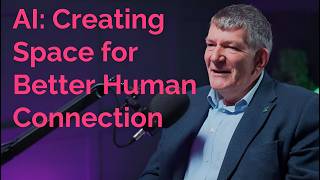
Tim Davies and Oliver Hemsley discuss how AI can support business without replacing face-to-face trust and conversation. They explore Tim's AI company's testing process, the risk of losing conversational skills to automation, and why human connection remains vital across Oliver's varied roles as a landlord, judo coach, and councillor.
Chapters
Yes, I remember when I first started my gardening business, there was a doubt because I was young. I was only, what, 21, 22, and people would question whether I really knew what I was talking about. And I used to find reverting to Latin was quite useful because they go, "Oh, he knows Latin names for these plants." So were you using the actual Latin? Oh yeah, no, correct Latin. Yeah, I hated Latin at school, but because I enjoyed plants, I realized that actually I should have listened to the teacher in Latin.
So I think we will see people who lean in too heavily into technology and lose the art of conversation. And being able to meet somebody, to shake their hand, to have a chat with them, to look them in the eye is a skill that they don't really teach at school. And it's a skill that technology could take away from many people very quickly.
And the fear is those people won't know that it's gone.
No.
And then they'll wonder why it's not as easy as they thought it would be.
Hi, I'm Freya. Welcome to the Skynet Chronicles: Business in the AI Age, the podcast that dives deep into the world where artificial intelligence meets business. Join us as we explore the latest trends, challenges, and opportunities in this ever-evolving landscape. From innovative startups to established enterprises, we'll uncover the secrets behind the successful integration of AI technologies. So grab a cup of coffee, sit back, and get ready to unlock the mysteries of business in the AI age.
Good morning, Oliver Hemsley, and welcome.
Good morning, Tim Davies. How are you?
I'm very well. So let's start by way of introduction. Well, we could say amazing networker. We could say landlord, investor, politician.
Yeah, with a small p.
Yeah, with a small p. Yeah. Let's start with something nice and simple. When was the last time technology amazed you?
Oh, I would say quite recently when I, uh, wanted a solution. Uh, I'd written some words and I couldn't find an answer, so I'd written some garbage basically, and I went through it and I thought, I've been speaking with this guy called Tim Davies and he told me to go and play with ChatGPT and all that. So I went off and did that and I was quite amazed. Um, I didn't use it, but I was quite amazed.
You didn't use it? What did you use instead?
I used my version of what it had written. Okay, so I personalized it.
Yeah, you made it human again.
Yeah, absolutely. That was my question to it always, is how does it know me? And I guess it learns it from interactions.
Yes, yes, to an extent it does. I mean, that, that learning is somewhat on the surface.
You see, this is where I get the doubts from, you see. I think, yes, it's brilliant, and I'm thinking, yeah, I really need you sitting behind me going, yeah, do this or do that.
No, I think the technology is brilliant and we need to have a process for getting that sort of trust, but trusted expertise on the side. And we have lots of channels that we go to for it.
Yeah.
And we also do obviously the playtime that we've talked about many times before where on a Friday the team are testing and evaluating new toys and then sometimes building it far quicker than I can imagine. We had a great one last week on Monday. One of the team brought this new technology and shared a 5-minute video. And then I traveled to a conference on Wednesday, and on a Thursday morning we have our automated code review meeting. Yeah, where we just review the progress that we've made in accelerating our own internal processes. And I saw just a link in the notes because I wasn't actually in the meeting. I have a message. Is that what I think it is? Have we already built that? Yes, sure enough, we had fantastic— yeah, taking a new concept and then making it into something that we're going to deploy internally, that in a couple of weeks' time will be a product. And just that rate of change is—
will you then use that externally to support people as well? Yes, you just use it, train it, and understand it.
Essentially, it's going to be a brain that we can deploy into businesses that learns about the business and has it described in a Wikipedia format So a human can read it and navigate it, but it also powers agents to understand about the business.
Wow. I think, I mean, business generally, the problem is that who do you go to? How do you know that, you know, Project Rising is the one to talk to rather than someone else? And I think, how do you prove it? And it's, we've got so much out there now that it makes it really complicated.
And a lot of it comes down to human connection. So the irony being, as an AI company, the best business that we do is when we go and see people in person.
Yeah, face to face.
When we meet at events, because then you can have an actual conversation, you can ask questions, and you can pretty quickly cut through who's just recommending tools and who actually knows what they're doing.
Yeah, but that's your inside knowledge on it, isn't it? So for us as sort of makey-learns, it's quite difficult to know, are they talking about the right stuff? I mean, I glean from people like you, and I do sort of deep dives on businesses to understand what they're offering. But looking and saying, okay, so does he really know? And it's those natural conversations you have that make that real difference and you realize, oh, they actually do know what they're talking about.
Yeah. And I think, I mean, you can still do very, very limited tests, can't you? Just, just show me something then. Show me, give me some proof that you actually can do what you're saying.
Yes. Yeah.
Because even somebody that started yesterday using the right tools can make a dramatic difference in a business.
Yes. Yeah.
That doesn't mean that they're no good. It just means that they're new to it.
Yes, I remember when I first started my gardening business, there was a doubt because I was young. I was only, what, 21, 22, and people would question whether I really knew what I was talking about. And I used to find reverting to Latin was quite useful because they go, oh, he knows Latin names for these plants.
So were you using the actual Latin?
Oh yeah, no, correct Latin. Yeah, I hated Latin at school, but because I enjoyed plants, I realized that actually I should have listened to the teacher in Latin. So, but hey, you learn afterwards, don't you?
And are you still an avid gardener now?
Uh, not as much. I enjoy a garden, but I'm quite happy to sort of, you know, look at it rather than get my hands dirty on it. But I still have to because I've got an acre and a half at home.
Yeah, you can't leave that all to the robots yet, can you?
No. And those auto mowers, they're no good from my standing. I mean, I'm sure they're good for some people, but not mine.
It works well for me.
I like stripes.
You can get stripes now.
Oh, can you? Oh, there you go.
And weighted rollers.
Oh, well, you need that to get them. Yeah. Do you get the vibration though? Because that's what scares the moles off during the summer.
I don't know that you get the vibration. I imagine there's a module you can add for that.
Somebody somewhere will have thought of that. Somebody will design it, won't they, if necessary.
I hadn't realized that the vibrations were sending the moles away.
The petrol engine and the vibration created is why beautiful lawns don't have moles in them because of the vibration into the ground.
Nice.
Yeah.
Learn something every day.
Yeah. Yeah. And not useful sometimes, I'm afraid, Tim, but.
It is useful.
But I quite like moles, but.
Well, yeah, in the right place.
Places. It's a bit like flowers and weeds, aren't they? You know, they're only just the same thing but just in different places. Yeah.
So tell me about your journey back into small p politics.
Well, I actually got elected originally in 2015, and I rapidly ran up through the ranks, unintended. So I was— I led Rutland County Council through COVID, and then due to me falling out with Boris, we won't go into politics proper here, I left the Conservative Party, and they didn't like that, so I got kicked out, or left before they could me out because it would have been a bit bloody. And I've been quietly waiting in the background. So I've remained a county councillor but just been on the back benches and I've been working with the Liberal Democrats. Not that I'm a Liberal Democrat, just make that sure. I persuaded them they really needed my skill set and they agreed. So they signed me back on the 1st of April. I don't know whether that's a clue there, but hey, you know.
Fantastic. And so you're covering Rutland area with what responsibilities?
So yes, Rutland and I have transport, highways and waste. Of all exciting things.
They are exciting and very topical given the amount of holes in the roads at the moment.
Yeah, but you know, people comment about that and I left Rutland to go and see a new client I'd got in Northamptonshire. And you know those bollards they have, the sort of marking roadworks, whatever. The hole was that deep, there was only about a foot of it sticking out of the hole. So I'm thinking our potholes aren't that bad.
That's not too bad at all.
But there's a whole lot of criteria and I think that's a problem people don't understand. They see a little bump in the road and they report it and they want, oh, come on. But actually, you know, we only have finite amount of money which government give us, but we do the best we can. But Rutland is good, but we can improve, and that's my intention to make that happen in the next 2 years before I will be no longer needed.
And so is Rutland going to become part of a bigger unitary authority?
Uh, I can't be certain, but I don't see that we're going to remain as we are because the government have made it very clear, except for the Isle of Wight who got special treatment, but they are 140,000 people, we're only 40,000 in Rutland, so we're small numbers. So yeah, we will become part of something. It'll probably be Leicestershire-based, but there is nothing certain yet.
One of those joys of politics.
Yeah, that, you know, there's all sorts of parameters that sit around it. So if you've got a— if you're more than 15 miles from the decision-making point, the quality of the decision and the impacts that happen to your communities get less.
Yeah.
So for Rutland, we are going to be more than 15 miles from decision-making points, probably. Therefore, you You know, are they going to remember us when they're making decisions? Because there'll only be 8 county councillors representing Rutland. Currently we have 27. So it's quite an interesting mix. What it's going to look like still to be worked out, you know, during the summer months we'll get to hear a bit more about it. And are we going to be paid as they are in Leicestershire? Are we going to be paid as we are in Rutland? You know, so there's lots of questions. Not that we're there for the money, of course, and one must make sure that people understand.
Is there that much of a difference then in terms of the pay structure?
Oh, in some places, you know, they get paid you know, enough to reason, live on. Rutland pays sort of, you know, I think £4,000 something for a county councillor. As you get more senior and you have more roles, then obviously they expect more from you, they give you more. But I went— when I first became leader, I went off on a training course with the Local Government Association, and I met the lady from Kent, and she was on £60k plus. Wow. And I was, I think, topping about £18k, and she had 2 PAs as well. I'm going, hang on, we need to do something about this. Rutland is small and beautiful, so I understand why we are where we are.
I love that you added beautiful. It is a beautiful county.
Well, it's the beating heart of the UK. Let's be honest, you can't describe it as anything else.
I won't describe it as anything else.
No, that's good, Tim Davies.
I actually like that it's quieter and not such a high-energy part of the country.
It's interesting that because you get those people who go, yeah, we've got Rutland Water, it's great, we get visitors, and then you've got people who don't really want the visitors. But that helps the high street economy, you know, it's a whichever way it goes.
Beautiful rolling countryside though.
Yeah, yeah. Oh yes, yeah. You're a man on a bike, aren't you?
I am.
Yeah, you'd enjoy that.
Yeah, I do. Yeah, many, many a time. Need to get back to it. So you are a man that loves networking. You've been involved in Rutland Business Network for a while.
I've come to like it. It wasn't something I chose to do. So I was briefly with the Rutland Chamber of Commerce, keen to try and see that get going. And that really immersed me back into networking I've been to the odd event and it was literally the odd event and suddenly there I was sort of having to do some networking and I really enjoyed it and seeing those businesses grow and develop, you know, and encouraging people to step up and, you know, speak at events and things like that. It's just unbelievable.
Yeah, you can see the growth in people just from that turning up timid.
Yeah.
To growing through a few conversations, getting them on stage and everybody hates public speaking.
Yeah.
Until it doesn't worry them anymore and then they start to enjoy it.
I think it's still a bit nerve-wracking. I mean, if you talk to Cathy Rice-Oxley and people like that, you know, you, you never go away. I was standing outside there, you know, this morning going, okay, deep breath, concentrate, you're fine. You know, what's Tim going to ask me?
Tim doesn't know.
I did realize that from conversations we've had before. But I think, you know, it's like my judo. I'm a coach and you see, you know, a novice, and that could be an adult, that could be a, you know, 5-year-old, comes on the mat and he's really scared because you see somebody doing a big throw and you go, oh God, that's frightening. And then you actually get them them to sort of start doing simple things like a breakfall and things, and then suddenly there they are. And, you know, 6 weeks in, you're thinking, well, whoa, slow down a bit, you know, you can't do that. So yeah, it's really nice to see that development in people generally.
So that's interesting. You're, you're applying that, you're seeing that same growth both in sport and in business.
Yeah.
And you've now got involved with the new Peterborough Business Network too, haven't you?
Yes, a little bit. Yeah. I mean, it's finding time to fit some of these things in because you've got to select what you can do. But I was very lucky to remain with the Rutland Business Network that then became your business network. So, uh, and Tony Gardner is absolutely brilliant at what he does anyway. But I would say that I did— I got paid for that, by the way. £10. Yeah, I hope more than that.
So what drives you to still be involved in business and to still be pushing forward?
I just love that interactions. I love the challenge, and I don't feel like I'm as old as I really am.
Uh, this is 21, aren't we?
Well, we are, yes. Yeah, sometimes 36 depending on who you're talking to. But, um, I think it, it's just, I love people. I love seeing things happen, uh, and connecting people up in the right way because I think that's where one of my strengths is, a really good connector. Yeah, from the networking. So I can see who to talk, you know, get people to— I think I've done some work with, you know, pointed somebody in your direction. Whether they'll get it, I don't know. But, you know, you just got to open those doors and do those introductions and you see stuff going and wow, that's incredible.
And you never know where a conversation goes, do you? That's, that's been the most rewarding thing for me from networking, is you can have a conversation with somebody and it might take 6 months before you think, actually, they— these people need to talk.
Yeah.
And it can be life-changing for them, but it just takes that time to seed sometimes, doesn't it?
Yes. I think they have to understand that you did know what you were talking about, you know, coming back to that authenticity of people.
Yeah.
And you can see the reasons for it. And they fight themselves mostly because we're big self-doubters, aren't we? And especially if you work for yourself and you're in a darkened room often that you go, I don't know, I should, I shouldn't, I don't know. Therefore, actually, yeah, and I need that conversation or somebody else reinforces it. I also find that, you know, actually, you know what, Tim told me I should do that or whatever. And you go, all right, I should go and do that now. But I'm holding a lot to your responsibility here, Tim. You do realize that?
I've probably already messed up then, but I'll keep trying. But you mentioned imposter syndrome. I don't think that goes away. I think the people that don't have imposter syndrome aren't trying to grow anymore. And if you're striving to be something more, then you've constantly got that niggle in the back of your head of, am I good enough? Is what I'm saying appropriate? Am I useful?
Am I relatable? Yeah, I— yes, no, I think we do suffer from that regardless in the back of one's mind. You know, actually asking you, you know, can I, can I come and talk here Uh, you know, I was thinking, do I really want to do that? Why am I doing that? I go, no, I want to do it. I'm really excited by it. You know, I'm thinking about TED Talks, you know, do I, don't I? You know, um, well, I know it's just those sort of things and trying to fit it in with a busy life because you say landlord and things. We're just about to start a new phase of development. Um, so, you know, that'll be full on for 3 or 4 months.
So what are you going to build now?
We're building another 6 units. So we've got 6 we've just done, which turned out to be 5 because a couple of people wanted bigger spaces. And you run foul of planning and all that. It's ridiculous. Anyway, that's another subject. Um, so yeah, it's just there's a demand for, you know, uh, small units in Rutland.
So these are small industrial units, are they?
Yeah, yeah, sort of 6 meters by 9 meters. I've got a waiting list, so, um, always good.
Better get them built then.
Well, absolutely. That's what my wife's saying. And she's saying you need to get this unit down because I've got a building that's in the way of the development. Which has classic cars in it which I'm restoring very slowly, I hasten to add, and you would allude—
okay, well, in that case, you've got to tell me about the classic cars. So what's in the garage?
There is a 1984 Audi Coupe, uh, and it's not just an ordinary Audi Coupe. So it was hand-built by Richard Lloyd Racing, um, so under the banner of GTO Engineering. He used to build Porsches for Le Mans and things, so he knows a little bit about building cars. And he did, uh, well, I don't think he did it personally, but they, um, put a improved engine in it, lowered suspension and sort of, you know, bigger boot and a bit of improvement. So it was a really fun car to drive and unfortunately I just got it ready to go back on the road having been off for a few, couple of years because we had children and it didn't really work as a sort of car for children and it caught fire. So I left it for a long time in the back of a shed and I've now started on it. So the engine's out and the cylinder head's gone to have work done on it and we're just redoing the welding. My son's doing the welding on it for me. I've tried welding and I found it just— I, I get too frightened every time the spark appears, so I pull my hand away.
Yeah, I don't think my hands aren't steady enough for that.
So, uh, he's, he's done an engineering degree and, uh, he's quite happy doing it. So we're getting there slowly. So that's got to come, but I've got a donor car as well that's in there which really doesn't want to go outside because it leaks in certain places. Uh, but my son's thinking he'll have the donor car and cut a chunk out and make an Audi Sport because even an Audi Sport lookalike's worth 70 or 80 grand. I have tried to explain to him it'll probably cost him 100 to build it, but that's, that's adult knowledge.
It's miles per miles.
Well, there is that, yes. Yeah, I think he— yes, I think that's what he's looking for. And so yeah, be good.
Fantastic. So how long is the project going to take?
Why do you ask awkward questions? Uh, as long as it takes. I know, I think now we've got to focus on it, so I'm hoping to get it back onto rolling stock probably by the end of the summer. But at the moment, it's where do I put it while I take the building that is in down. So there's some, there's some rushed work to be done, but we'll get there.
And when that building comes down, then the plans are already through, you're ready to start?
Yeah, so it's just that the, the pad that they're going to— new building is going to be on is directly behind. So while you could construct it, it's just safer for everybody to take it down and I like a clean working site because it just becomes complicated. Having been in project management of those sorts of things for many years, you can do without the hassle.
Wow. So judo, cars, gardening, politics, landlord— not really just landlord, also construction.
Yeah, well, that's the first set of units I got is a converted henhouse. So we took the walls out, we jacked the roof up, took everything down basically, and built everything up underneath. So that gave me the first 10 units. That we have in our portfolio. And then I've extended that to the outhouses, so I've got another 5 small workshops.
So before you made that change, how many hens would have fitted in the hen house? Because that sounds like quite a big space.
Yeah, 9,600 square feet. When we had it, it had about 5,000 hens in maximum, but then it went out to contract and they just packed it and there were 8,000 hens in. It was horrible. Um, and then it wasn't big enough for the egg collections. They, uh, legislation came in, they had to disinfect and everything else, so it that they'd have to come and only take a third of a lorry full. So they said, build 2 more houses or we're not going to carry on contracting. So the guy who we contracted out to pulled out and we left it. It was derelict for about 5 years. So I said to my parents, you know, what are you doing with the building? I said, well, it's just going to fall down at some point. So I said, can I have it? So we did a deal. I took it off their hands and did the work.
Fantastic. So all of the properties that you're putting are on family land essentially?
Yes. Yeah, we're trying to make it so we're looking for next generation stuff now. So we've formed a new company and You know, we're trying to make it so that we can pass some of it on without mis-reuse taking it all off us.
There does seem to be a trend towards that, doesn't it?
It looks like everywhere you look there's another slice being taken, yeah. Or the date for retirement's being moved further away, but I think that's Kia Starmer, isn't it?
It's 107 now, isn't it?
I think so, yeah, yeah. So it's good job, you know, I'm checking out at 103, so, you know, just after, just before I get it, yeah.
Crazy times. So as you look around the, the growth of artificial intelligence and robotics, and obviously you follow the news stories and you hear presentations from silly fools like me and others, what's surprising you and what do you think the next couple of years hold?
It surprises me that people, uh, grab it and think that it is absolutely the answer to their problems, uh, because like any solution, there's some nuancing around the edges that are needed to be done. Um, where's it going to go? I think it's going to take over a lot of roles. I think the understanding from people talking is that their jobs are going to go, but I think they're just going to end up being able to work more efficiently. And so we're going to see a streamlining in companies of numbers of personnel doing specific jobs, but the front-facing bits hopefully will be improved because you look at You know, I'm picking John Lewis, but I don't mean to pick on anyone particularly. You know, they've got a lot of, uh, customer focus, but when you try and get something fixed, they're not very good at it. So that needs to be redressed because otherwise companies are going to start losing their customers, and that's going to really hurt their bottom line.
What do you think the people do who are freed up from these companies, whether voluntarily or not? Do you think that there's going to be jobs for them to go into, or do you think that that becomes an increasing dependent— dependency on the state, essentially?
I hope it's not a dependency on the state because I think that's, that's sort of a, you know, not a good place to be for one's mental health. But I think that there's opportunities to be able to develop other things. So looking around, making use of one's, uh, what you've learned, you know. And I've realized in my journey that actually I know a hell of a lot but I've told myself I don't, you know, this imposter syndrome stuff again. But it is those things and going, actually, people need that because so much knowledge is just retiring and being lost. So capturing that knowledge and being able to put it back into the front end, uh, would make a huge difference. Whether that's human or whether you can do it through, you know, feeding stuff into AI, I don't know. I mean, that's, that's beyond my skill set.
I think that there's two really interesting opportunity trends at the moment. There are a vast number of businesses that have been owned by baby boomers who are looking to retire.
Yeah.
And so there's opportunities for the next generation to buy in, buy out, potentially depending on the deal structure, those sorts of businesses, and then apply technology and learnings to them.
Yeah.
Yeah. The other is experiences. We, we love meeting up and doing things.
Yeah.
And as AI takes more and more of the, the thinking and the monotony, and robotics leads into some of the manual activity that people have struggled with, there is going to be more free time, whether that's in terms of people working less days per week.
Yeah.
Or people deciding to retire early, or people not having work. But there are going to be a large volume of people who want to actually do things together. And I think human activity businesses and experiences are going to be crucial.
It's very interesting. Yeah, and I'm with you with that. I think actually we've got stuck, haven't we? We've come through, uh, the 40-hour week, the, you know, retiring at 65, um, you know, working 9 to 5. And actually, life doesn't have to be like that. And the sooner we can break some of that and actually accept that we have some free time and it's okay to go off and do stuff and therefore those experiences and things. So yeah, I think there's a real opportunity there in development of that and those skill sets. And I look at, you know, the people like Emily Potts with, you know, exit planning. You know, my parents wouldn't have understood what you're talking about. And now we actually need to be doing it. You know, I exited a business without any plan and it was a disaster. I got nothing for it other than the cost of the equipment. Different. Now looking back, and therefore you think actually we're moving towards these things, and therefore the opportunities for sharing of information and all that is, is much better, and you get better value, and then you get a better pass on as well because you've set it up ready for that. Because I think a lot of people get stuck in the business and can't let go, you know, and they like to keep their hands on the reins. And I see that a lot from people I'm working with that, you know, they want to grow but they can't because they're the blocker sitting at the top going, well, I want to know everything. Well, you don't need to know everything, and I'm doing it this way because that's I've always done it. Yeah. Um, yes, well, that's a classic one. Yeah.
So if you could go back and advise you at the point when you exited that business and didn't get anything other than the money for the equipment, what advice would you give yourself?
I would have said take myself seriously. I did in the business, but I didn't have contracts, so it was all very loose. Yeah, I'll turn up next year and carry on cutting your grass and things. So there was no need in my mind for a contract. But that sort of discipline that you put in there and then how you operate. So a lot of it was in my head, you know, and how I wanted lawns cut and things. So I did get towards distilling some of that in the last days because I set up a franchise of that business. Uh, not that it became a success, but it was, um, the experience that that generated because you have to look at it through a different lens. So I would say to myself, yeah, actually take it seriously and think about the future. Think about where do you want to go? Because you're not going to be a gardener when you're 70. Um, other than your own garden if you like it.
And it's still going to hurt your knees. Absolutely.
The landscaping bit was the bit that I'm probably glad I've retired from because, uh, you know, your grip starts going and, you know, carrying two big 3x2 paving slabs just to show off is now something in the past.
Yeah, probably a good thing it's in the past. I think that would kill me today. Um, so what advice would you give to, um, somebody starting up a business now?
Look at the end goal. Why are you doing it? I mean, obviously it's a way of life, a source of income or whatever, to meet a need that you have. But actually take that view and say, what's this going to look like when it's matured? And that's a complicated one because you really don't know, especially if you're young. You've got all those lovely aspirations. I see people saying, well, I'm going to set up a coffee shop. You go, that's great, fantastic, really good idea. Where are you going to do that? I'm going to do it in Oakham. Okay, so how many coffee shops are in Oakham? I don't know. Well, there's 9 already, so, you know, would you be sensible to do that? How are you going to stand out from the crowd? So those things first off, but then actually think, how do I pass this on? Because I don't want to be a barista for the rest of my life. I want to be doing something, you know, I want to be, enjoy the privileges of having run my own business. So think about those journeys and find people who can help you with that, who've got the experiences, who've been through that mill to be able to then say, yeah, I can see now this journey incrementally, that's where I'm heading. I'm not looking to just be the pot washer for the rest of my life.
I think that and understanding how the technology is going to continue to shift. So I think if you ask anybody what's going to happen in 3 years' time with AI, I don't think they're going to really know. Brutally, there'll be opinions, but the rate of change is so significant most people won't be able to see that future.
Is there a risk that AI becomes so controlling? I mean, I was talking to a friend of mine who's got a Kia, I think it is, and it went in for a service and he was bored and he read all the instructions on it, um, and it, it said that actually we can turn this car off if we want to and we can reduce the mileage you can do. And actually that's all built into our things already. So is AI going to give Big Brother, if you want to call it that, the opportunity to be able to say, well, you can't do that? Do you think we're too maverick?
I think it's already here.
I think we just don't know it.
George Orwell wrote—
is that Animal Farm or 1984?
1984. Um, I think it's— we are in a situation where everything can be monitored and therefore probably is monitored. It's just the level that that understanding is applied to change our lives.
Well, I suppose, yeah, making tax digital and all those things is probably just a thin end of a wedge for You know, some of that.
I don't even think they really need making tax digital because they can already see inside all of the bank accounts. Yes, I understand.
Well, they're doing it over here. Look over here. Well, they're actually busy doing stuff over here, isn't it?
Distraction. And the level of CCTV available now and the analysis that can happen on that, we are in a situation where should the state want to monitor us, it definitely can.
Yes.
Yeah.
Which is really quite concerning. But, but I enjoy living in the country where it's more difficult for them to spot me. But there again, they have drones now as well, don't they? So hey.
But I mean, in terms of can AI control us, at the moment AI doesn't have that level of independence, so it's executing specific requests rather than operating at a level of full autonomy.
So you think I've been watching too many sci-fi movies, really, currently?
No, because any of those sci-fi futures have the potential to be our future. I think it's good to understand what some of the possible is.
Yeah, yeah.
But at the moment, can your car be shut down remotely? Well, yes, but your Audi can't.
That's one of the reasons I'm building it.
If there's an apocalypse, I've got a car that doesn't have any ECU or any governing. It's it will still work.
Yeah.
Um, in fact, when I started that business, I didn't really know what I was doing. This is a repeating story throughout my life, but now I've— I realized I've got a business that's AI-proof. Yeah, because people are always going to want to be driven to a wedding in a classic car.
Yeah, because what have you got? You've got a—
it's a '49 Bentley.
Bentley, very nice.
Which seemed like a good idea at the time. Um, and I mean, very—
do you, do you put the cap on? And, uh, or do you—
on occasion.
On occasion, yeah.
And it, it's a joyful day because you can't really be at someone's—
aren't they?
Yeah, you can't be at somebody's wedding and be part of that and be in a grump.
Yeah. When there's happiness all around you, it's just a very strange person if you go.
It's just the time requirement, because if you're working all of the hours and then and come the weekend you're driving for a wedding. Sometimes it's, yeah, it's a bit much.
But isn't that a mindset, you know, you go, okay, I've got to take off my business persona, I've got to put on this one, my other business persona. Well, yeah, but it's, it's a pleasure, isn't it, as you say. And it's that actually helps refresh you.
And it's retirement planning. So long after I finished, um, involvement in AI, I'll still be doing things, and that'll be one of the many things I'm doing, I'm sure.
Fantastic.
So what difference do we— we're going to see in the next few months? Are businesses really making the most of the technology that's around us at the moment, do you think?
No, I don't think they are. I think there's some who are absolutely, you know, smashing it, but I think there's a lot still sitting on that sort of, uh, wall looking in going, yeah, do I, don't I? And, and some of them have had experiences and they go, oh no, I didn't like that very much. But I think it's that support that's needed for them to be able to understand what can be done. And of course, you know, your computer's got to be quicker, so you need more power, you know. So the Windows 11 now, which I've been told I've got to upgrade to— well, no, I— but half the things, you know, with council, of course, it can't have the security tags it needs.
So the council still ran on Windows NT.
Well, apparently not. I'm about to get some new IT from them, which would be good. But I think it's all those things that, how can it benefit me? You know, as a— I don't like to call myself a consultant, but as a connector and a sort of networker, how can AI help me? Because I've just read an article today, they were saying about, would it help if they did auto responses? And I'm thinking, Yes, it does, if you get an inquiry. A bit. A bit. A bit. But my fear is that you've then given the responsibility of somebody else to talk for you. And I then— so let's say we've used it between us, and then I meet you. I've got to remember what that said to you, probably, because otherwise you're going, well, we talked about that last week. Well, no, it wasn't actually me, it was my, um, you know, AI equivalent. So I don't quite know how that works, but that's just me being—
I think we will see people who lean in too heavily into technology and lose the art of conversation.
Yeah.
And being able to meet somebody, to shake their hand, to have a chat with them, to look them in the eye, is a skill that they don't really teach at school, and it's a skill that technology could take away from many people very quickly.
And the fear is those people won't know that it's gone. No. And then they'll wonder why it's not as easy as they thought it would be, because I'm using AI, why isn't it working?
Well, it's—
maybe I'm cynic.
No, I'm just as cynical as you are. I think you can, you can be bombarded by emails and messages.
Yeah.
You could choose to be constantly consuming content from social media. And you're none the better for it. Um, actually picking up the phone and having a chat with somebody, meeting them, is some of the fun of life. And we just need to be using technology for the back office things that are the mundane so that we can spend more time actually interacting with people. People buy people, don't they?
Absolutely. Yeah, you can't, you can't get around that in any way.
You can do fully remote— we're a fully remote company.
Okay. Yeah.
But if we never meet the customer versus we've had in-person meetings, 4 times more likely to convert the business.
Yeah.
Well, it's— there's no point staying completely remote. So you have to, you have to meet, you have to get to know each other, you have to understand what's going on in the business because then we can make the recommendations that actually makes a difference.
Because I think when people talk, sometimes you can feel there's a hesitation or a question that they don't really know how to ask because they don't want to appear to be stupid, or they don't want to be, um, felt like they don't understand what's going on. But actually, those— I know, I reckon there's never any stupid questions asked, because if you don't know the answer, you need to understand it. But I think that you can see in the face, you go, okay, so you're not certain. So what, what's holding you back from this? And those sorts of things, AI, I don't think currently will be able to—
it may pick up hesitation and might pick up facial recognition, but, you know, it can pick up facial, facial gestures and emotions and some of the things that we're just talking about, and it will be able to react and respond to that. But I don't think we would take that response in the same way as we would take if it was from a human.
Yes. Yeah, you're absolutely right there, aren't you? Because as you go, yeah, right. Okay, whatever.
So we've got an app that monitors hand gestures, eye contact, body language, filler words, and provides feedback for public speaking training. And it gives great feedback and encourages continuous improvement and allows you to compete between your peers. But I don't think it's the same as having a dedicated coach you're working with in person. It, it's great for moving you along. Yeah, but having a human expert in the room with you is priceless, but it's also expensive. So it's that balance, isn't it?
Maybe it's a sort of an aid that is useful to begin to shape you, and then you meet with a person because we're we have body languages that we don't understand. You know, I talk to people, I've interviewed a lot of people for businesses, and you know, they sit there with their arms folded, you know, that typical closed position. Now, some people are comfortable with their arms folded and they don't see that as a problem, but all those subliminal messages we send every single time. Yeah, I remember meeting a very senior politician and he sat there with his legs apart and he scratched certain parts of his body.
And, you know, was he a prime minister?
No, he wasn't. But, you know, he was— so could have been. Uh, but it's just, you look and you're thinking, do you know what you're doing? You are just so ignorant of your body language and what you're saying to the importance of this conversation we're having. Interesting, he's no longer in that role. He's no longer a politician, as far as I know. But I just, you know, we're so assessed by stuff we don't even know. When people turn up, I used to do something when lads used to come for an interview. I would give them some, something to fill in, just, you know, name, address, bits and pieces for me, which I might have even captured. But I said, just, can you just fill this in? I'd nip out to the office and go and have a look in their car and how they kept their inside of their car. You know, they might have children, it could be scruffy, but if they got, you know, fag packets on the windscreen, Sun newspaper, absolute classic, but, um, you know, the McDonald's wrappers in the footwell and That gave you an indication of how they felt about their own vehicle. So how are they going to think about my vehicle or my customers' properties?
Yeah.
So it wasn't a decider, but, you know, it was a sort of just a little check. So I think we don't realize how much we transmit when we just being us.
No. And I will pick up on all of that. But again, taking feedback. Yeah, I think feedback is better delivered by a person.
Yes, I'm sorry you didn't get the job.
People aren't being told that.
But no, no, it's just dead silence now, isn't it?
I mean, send out a million applications through the click now to apply button.
Yeah.
And hear nothing, apparently.
That's— yeah. Well, when I was looking at— so when I lost the role of leader of the council, I was looking for stuff to do, and I thought, well, you know, maybe a NED would be good. And I must have sent out 100 applications. I got one response. A thank you, but you're not what we're looking for. And the rest, nothing, just radio silence. And I think that's a bit disrespectful that you've taken time to put together something. And I know that a white male over 60 probably just gets swept into the basket anyway, but, um, it's just we're losing those skills again, um, that etiquette that maybe we could refresh.
It's interesting, isn't it, because the advisors you— when you're running a business, the advisors you pick up along the way, they don't always come from where you expect. Yeah. Um, so I have a weekly meeting with one of our investors, and I didn't ever think we were going to have that sort of relationship and connection where we were talking on that frequency.
Yeah.
And we have other advisors who I meet with. Brian Soanes, once a month, his Business Academy group of business owners, and we go and set the world to rights and share what's going wrong and provide some pretty critical feedback to each other.
Yeah, but it's a safe space.
It's a safe space. And all of our businesses have grown as a result, whether financially or whatever metric you choose. Having those advisors that you trust and can keep you accountable but can also give you the occasional kick in a way isn't going to break you, that you accept you along. Yeah, yeah. And it comes back to that relationship. You do take feedback from people that you trust, and that generally takes time to build, doesn't it?
Yes. Yeah. I've just started a network with another couple for the sort of senior Rutland businesses, trying to get them in a room and just talk about problems that they have. And they're very similar with what— sorry, I've just got the frog now. Whatever size your business, you know, we suffer from recruitment, you know, transport, getting your staff in, whatever it might be. And it's just interesting. And those conversations are beginning to now really, uh, have some deep meaning. And you can be honest with somebody about something. And I think that's something that is really important because I think it's quite often— I think you were mentioning before we even sat down to talk about AI wanting to please you. Um, actually, I just want the truth, you know. Am I ugly? Just tell me. You know, don't beat about the bush with it.
There is definitely some, um, overzealous responses from some of the AI models. You've done a great job. That's a fantastic idea. You look brilliant today. Yeah, it's almost like it's manifesting for you.
Yes. Yeah, yeah. So I think as long as one retains a human filter in all of those things, I think that's what's important, isn't it? Not believing it's the answer to everything. Because there is somebody who's fallen in love with their AI. I suspect there's many people that probably barely have, but they are brave enough to be called out on it, whatever.
But yeah, and I think the advances in robotics is going to lead to some really quite sad relationships where people choose not to go out and meet people.
Yeah, well, I suppose for them it's, it's a safe space for them, isn't it, to, you know, that there's not that challenge, you know, you're not going to get if you're always being told everything's good and you're okay and you did it, you smashed that, whatever, when— why would you want to go out and find that actually some people going, oh, what are you doing that for? That's rubbish. Maybe.
But that— you're absolutely right. I think the vast majority of people would be comfortable with that as a situation. But if you go out and do hard things, that's where the growth happens, isn't it? The hard things that you, you're not sure you want to do or you're not sure you know how to do. By putting yourself in those environments, that's where you become better at whatever discipline you're working in.
Absolutely, yes. You've got to go and do it, and you've got to get those knocks back. Not necessarily totally hard knocks, but, um, it rounds you. You know, I was bullied at school, uh, and it taught me to be very resilient. So I have amazing resilience. I'm cool under pressure. Yeah, because don't matter, really, real pressure. Yeah, you— whatever you throw at me, it's fine, you know. And then one person described me as exciting to work with. I'm not quite sure what they were talking about, but hey, you were taking all the risks because it didn't matter. Well, probably, yeah, yeah. You know, I don't mind if people want to have a go at me, that's fine, that's your opinion. When we were doing a project at Rutland, a gentleman came up and not quite physically threatened me, but put his finger very close to my nose and told me that my father would be disgusted with me. And I looked at him, and I was not quite a black belt in judo then, but I was getting that way. I looked at him, I just went, okay, whatever. Uh, and nothing. I assume he was disappointed that I didn't react, but, um, there's no point. He's got his view, he's entitled to it. Just let him get on with life.
The ability to react and the choice not to, that's— yeah, that's one of the basic trainings in martial arts, isn't it? You can recover yourself in a situation.
And yes, you don't realize what you've learned, actually, especially in martial arts, you know, because I don't know if, if a situation occurred how I would react. But there again, you know, I've had things flare up in front of me, people getting a bit aggressive, and I've known how to step in and deal with it without having to use aggression myself.
Yeah.
Um, so yes, you do learn, but you're just not aware of it. So again, that maybe comes back to self-doubt, does it?
And the benefit of gradual programming. Yeah, because that's essentially what it is, isn't it? If you're practicing and practicing and practicing and doing something hard, you're getting better at it.
Yes.
And over time you become better for it.
Yeah, I think it's when other people look at you and say something and you suddenly realize, oh, maybe I am actually quite capable. You know, I now run the judo club, you know, so people look to me for guidance and I'm thinking, I'm I'm not the best coach there by any stretch, but I do understand the sort of, you know, the needs of offering a safe space, making sure you teach them how to fall over safely. You know, those disciplines— respect is one of our big drivers. You know, if I see somebody being disrespectful, I will step in and have a quiet word, and then we'll escalate it to a point where they train with me, and that usually sorts them out. Yeah, you know.
So where do you run the club?
Oakham Enterprise Park, which is what was Ashwell Prison many years ago.
Fantastic.
So we've got a big gym there, which is great, with a sprung floor. It's probably the best judo club in the East Midlands as far as facilities.
And how many members do you have?
Uh, somewhere between 70 and 80 at any one time. Mostly the money we get pays the rent, which is what we have to meet. So we're all volunteers. We've got level 1, 2, and 3 coaches. Just about to try and get 4 more people through their coaching qualifications just to strengthen, because we've got a growing interest Um, so yeah, how was your youngest member?
How old is your youngest?
You can— you can't start judo till you're 5, uh, so 5 to 8, you're in the sort of what we call kano's, um, because Jigoro Kano invented— you didn't invent judo, but he took all the various martial arts and put together judo as such. And, um, their brain capacity and the understanding of interaction is believed that before 5 they're not quite there. Some parents would argue with me that that's not the case, but luckily I go, no, they can't come. So 5 to 8 is a learning journey for them, and then from 8 onwards they get into sort of juniors and they start being able to be graded and all those sorts of things, so we can monitor their progress.
And how many of the students are competing at a national level?
Uh, we've had several in the past years. We've got probably 6 or 7 who are now looking at doing the competitive route. COVID really put a sort of curveball in because we went from having 70, 80 members to 3. Luckily some of them carried on paying, but the first session back after COVID, I stood there with 3 people opposite me. I'm thinking, this isn't going to make a judo club. So we've worked quite hard, and obviously people wanted activities, but trying to get known out there and things is difficult because it used to be a school program where you'd go into the school. So you go into the primary schools, run sessions, whatever it is— archery, zumba, or whatever— and then the children could go, 'Mum, can I do that?' or 'Dad.' So they'd then bring them along. Of course, that's all gone. Yeah, so I mean, whether that's across the board, but certainly in Rutland because they're all academies and things and they don't have the capacity to be able to— because I have to go and do a risk assessment on the journey to the place, risk assessment for the place, you know, and that's, that's half a day for the whatever, even though the place has a risk assessment. We have full risk assessment of the dangers of doing judo, but they're not allowed to use that. They have to write their own whatever legislation, you know, somebody put there thinking was sensible. So that's gone. So now we rely on word-of-mouth things. So we actually do a really good thing. We have trophies which we give to the juniors. So they come along and they do a bit of judo and we go, you know, Johnny, you did really well today. Here's a trophy. Put your hand on your heart, promise to bring it back next week, and off you go. And of course, they then take it to show and tell.
Yeah.
So we've got in another route which works well. And then we do stuff with the Scouts and the Guides and things like that. We'll run sessions.
Um, yeah, it's all about spreading the word, isn't it?
It is. I mean, we're lucky in that if you type judo into Rutland, you're pretty much going to get us because there's no other offers immediately. Yeah, even though people's told me they can get me to the top of Google, I'm going, yeah, I don't really need to be at the top of Google because I already am.
Uh, what for? It's not a huge place.
No, no, no, 40,000 people and, you know, we got 70, 80, and it's just great seeing people, and we interact with the other sports clubs. So coming back to some of the connecting businesses, I'm trying to do something similar with sports clubs. It's a little bit more difficult because they're all very precious about their supporters, their, their sort of, you know, um, way of doing things. But I've been angling for trying to get a good sports center in Rutland for many years, and I think that opportunity to give something for the youth, because there's very little for them to do according to the parents, but there's 120 sports clubs in Rutland. Wow. Yeah, so it is literally anything from archery to Zumba, and several of them, you know, there'll be 5 or 6 versions of it in there.
So fantastic. Yeah, it is a lovely part of the world. My parents moved over to Saltrey when I was young. My grandparents retired Stamford. My grandparents used to constantly take us to— it was either Burleigh or Rutland.
Yeah, it's a nice spot, you know, as you say. Absolutely. And it's got a bit of everything for you. You know, and even when they flooded the valleys, which caused absolute, you know, disgust that they should do such things, but actually it's turned out really well. You wouldn't know it.
Well, created a hub, haven't they?
Yeah, yeah. My father was Commodore of the first, uh, first Commodore of the sailing club, so he was on the steering committee before the headwater and then was the first Commodore. So yeah, spent many a happy hour down there putting mooring buoys in and all sorts of things.
You do occasionally see more of it during drought periods, don't you?
Yes.
Yeah, because there are still some village buildings that are visible sometimes, aren't there?
Yeah, there's not much left because most of it was removed, but, um, yeah, you can see one or two bits here. Probably put a drone over and you'll be able to see a bit more. I suggested Viking burials, but I was told that wasn't permitted, you know, as an offer for Rutland.
I think it might slightly conflict with Anglian Waters.
Yeah, they did say no, that wasn't possible. So But if you don't ask, you don't get.
No, it's— it would be amazing, wouldn't it?
Oh yeah, you know, we've got some Viking blood around here.
So what's next? What's your next project?
Very good question. Um, I think probably I want to do a bit more traveling. So we've just— our children are old enough now for us not to have to be at home all the time. So we did South America, we've we've done South Africa, uh, so we're looking at China maybe next year.
Fantastic.
So just maybe picking a destination every couple of years and going and spending, you know, 3 weeks just traveling around, um, enough time to soak up a bit more. Yeah, and learn, do we want to go back, don't want to go back, you know. Love South America, um, we're quite happy to go back there. I was quite surprised, I went up Rainbow Mountain, um, and I wasn't the oldest person who went up Rainbow Mountain, but when I said I wanted to join the group going up Rainbow Mountain, the guides went, 'Are you sure? You know, it's quite hard work.' Um, and I thought, 'Damn you, I'm gonna do it.' That's all the drive I needed. Thank you. And we went up as a group that was, uh, we went with a really good travel company and they just had a nice group of mixed people, mixed ages and things. And, uh, yeah, we got to the top and yeah, I was just sort of, yeah, there, stick that in your pipe and smoke it.
Absolutely.
I'm not going to be told I can't do something.
We went to the O2 on Saturday and climbed to the roof of it.
Oh wow.
Which is a fantastic experience. It is not physically challenging, but you cable on and yeah, yeah, still. And when you get down the other side, there's a sign saying congratulations, you have burnt 450 calories. No, I haven't. It says 150 right here when it was monitoring my heart. Obviously you're super fit, so I don't know that I'm super fit, but I'm not, not that unfit that it burnt 3 times the calories.
No, no. Actually, O2, quite interesting. Um, the, the porter cabins that we used to build that, uh, ended up— a couple of them ended up in Rutland.
All right.
Because, uh, we ended up— I was responsible for helping put in the, um, Kids Dome, which was like the preschool for Langham.
Yeah.
So the parents were asked to get together, and my wife was supposed to be at the meeting, but she didn't— she wasn't feeling well. So I went, ended up being chairman of the committee that put that in. So, and we ended up with them. So we called it the Kids Dome. As soon as we handed it over to the school, because that's the— you've got lottery funding that the school couldn't access, so we did that. Uh, as soon as it got there, they renamed it, which I thought was a bit disappointing because I thought we built in some heritage into the words here, you know.
Yeah, okay, well, yeah, it's just the way of the world, isn't it?
Yeah, yeah.
So more travel, but you've got a car to finish, a—
yeah, that's Le Mans next year, probably. Yeah, we'll go down. So we went to Le Mans 2 or 3 times with, with my mates. So I think we're going to take the two boys down and have a long weekend down there. My brother-in-law's got a yacht, so we'll probably do a bit of sailing. We did some last year. I think we spoke about that briefly. And I'm going off there again. He's just sent me the itinerary of when, when he has spaces on board. And we'll either do the long haul, take it back to the dry dock before at the end of the year or whatever, but we'll talk with him and have some fun.
Fantastic.
Yeah.
So it's definitely a busy with business but a lot mixing in lots of pleasure.
Yeah, it's, it's that balance, just working when I need to, meeting with people. You know, the, the business I've got, Stone Soup Solutions, is very much about being there, and I work probably 6 hours to 12 hours a year with any one person. Yeah. So I spend time talking through with them. I'm there for them outside that, but they don't actually need that much input, but they just need that confidence. So Um, and I work that on a retainer model, which seems to work quite well.
So that's just setting people on the right path and checking in with them.
Yeah, making those introductions, you know. And so, uh, you know, building their confidence, but also, you know, I mean, one company doesn't even have a 5-year plan. And I went, you're wanting to grow this? I mean, they're experienced business people as well, they don't have a 5-year plan. And they were, well, we know what we're doing. I said, well, where do you know that? He says, in my head. I went, well, that's no good.
Good. Doesn't translate well to the team either, does it?
And, you know, if you want to go and borrow money or any of those sorts of things, you know, because they will need that at some point, um, you know, the bank manager wants to see something a little bit— well, probably we won't be going to a bank manager, we'll be going to one of the funding groups probably. But, um, you know, they want something a bit more solid than, yeah, I've been thinking about it, and yeah, you know, they— so putting in the fundamentals. Coming back to what you're talking about, you know, what advice would you give yourself is actually take yourself seriously. Yeah, you know, map out where you want to be, what you think it's going to look like. There's going to be some changes. You know, I was responsible for putting in the 50-year vision for Rutland, you know, which turned out to be called the Future Rutland Conversation. But it was about what— where do we want to be? Because if you keep on just going, well, I want to be there, I want to be there, you end up way over somewhere else going, how did I get here? Because it's not in your journey, it's not in your plan, and you get disrupted and you get sidetracked and all those things. So Clear vision is absolutely paramount.
And does that apply to kids as they're leaving school too? So what advice would you give to an 18-year-old who's just finished their A-levels?
Go and explore as many opportunities as you can, because I think many people end up in a career that they didn't want. Uh, I, I don't think we help them particularly with the way our systems work, but just immerse yourself in the different opportunities. And then make a decision. I made the mistake. I, I have an HND in business management. Uh, I went off to Australia, worked for lots of people and thought, you know what, I can do it better than them. Uh, and slightly naively, yes, some of it I could do better than them, but some of it I clearly couldn't. So I paid for my own mistakes for the first 5 years of running my own business because, um, I didn't learn at somebody else's expense. I'm not saying, you know, go and learn all your mistakes at somebody else's expense, but just that nurturing you get from being in a business working with people, listening, paying attention. Why do we do this? Well, we do this because— and there's reasons always. There's the story about the three bricklayers, isn't there? You know, the, the one who's— he's asked, he said, I'm just laying some bricks. And the second one's asking, so I'm building a wall. And the third one says, well, I'm building a hospital. They're all doing the same job, but they're taking something different from it. So I think for children, go and explore, find out what you can take from it. You know, are you going to be happy doing this? Because many children come out with degrees because that's the way our system pushes you, and then go off and do something completely different because the degree has no relevance other than proves that you can learn to a higher level than the A-level students or the GCSE students.
So I love the book Stone Soup, but can you just share an abridged version of it?
Tim Davies, great that you read it. You're the only person I've ever spoken to who actually has read it and reads it to the children. Yeah, which I find quite bizarre. So yes, um, the Stone Soup story is probably sort of mid-1800s in Europe. There's a man traveling with the world on his back. He's had a pretty hard time, and he arrives at a village, and the village has been struggling because they've had some droughts, harvest's been a bit poor and things, and they're quite insular. They don't really want to see strangers. So when he knocks on the first door, he's given fairly short shrift and told to move on, and all he's asking for is maybe just some scraps of food that could help him whatever. So he goes through the whole village, and the outcome is that they've all said, you know, no, thank you very much, we can't afford to give you any food, whatever. So at the end of the village, there's a beautiful little clearing, and he sees, well, it's a nice place and some running water here. So he sets up his camp and gets his fire going, gets his pot out. And actually, interesting, I think somewhere in my pocket here— one pocket, the other— yeah, I've got the stone that he had. Okay, so, um, he gets a pot going, and, and then he takes his stone, he polishes it, he puts it in the in the pot. And the villagers are sort of quite interested because, you know, it seems to have settled and it's not quite what we wanted, but hey, you know, well, so they're looking. And then he samples the liquid and, mm, it needs something. And one of the people says, well, what about some salt? Oh, that would be great, thank you. So go and get some salt. I'm sure they didn't speak like that in the 1800s, but, you know, we're modernizing it a bit. And so gradually the villagers all contribute something to it. So eventually ends up with this lovely, rich, luscious soup. Soup. So he takes his stone out, polishes it, and puts it back in his bag. Um, and he then offers soup to everyone, and it's the most amazing soup. So I mean, the reason for my analogy to my business is that I bring the ingredients that you might be missing from your business and help put it together in a really good rich blend.
It's a great book. Um, it had animals in the version that I read to the kids because obviously it was all pictures. Yes, but it's, it's just one of those stories that you read and you You know, not necessarily asking for much, but the contribution of something small can make a big difference, can't it?
Absolutely. Yeah, it's interesting how many versions there are, because when you told me about the animals, I went off and I thought, right, okay, I want to get myself a, a, one of the earlier copies. There's like, you know, probably 20 versions out there, so I think, oh, where do I go? So anyway, I've got a plan to get, get an original from somewhere.
So fantastic.
Yeah, I think I should have it, right?
I think so. Yeah, even if it's just on the wall.
Yeah, yeah, yeah. Not allowed to be touched.
Well, it's been fantastic chatting. Thank you very much for your time.
Thank you very much, Tim Davies. Really enjoyed it.
More from Tim

EP 60: Why Founders Become the Bottleneck — And How AI Changes Everything | Thea Brook









