
EP 57: Why Embracing Change Matters More Than Ever
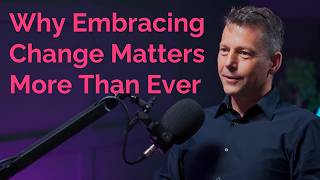
Tim Davies talks with Oliver, a self-described Soul Doctor who does energy healing and personal development work. Oliver got type-1 diabetes from Lyme disease, believes humans could live to 140, and warns that psychedelic plant medicine is being commercialized in ways that strip away its sacred purpose.
Chapters
So we're in arguably the time of the most change in our lifetime and potentially anybody's lifetime. How do we manage that? How do we get comfortable that change is the only constant?
I've been sitting here watching you and I've watched your hair grow and you've also got a little bit older. Yeah. Yeah. We're constantly changing. We cannot deny change. We have to learn to embrace change. We're so comfortable with Well, we know we forget that change is happening every second, every millisecond, something's changing. So we've just got to learn to embrace change. People are often amazed about how much I've done. So, well, I haven't done that much. I haven't done nearly enough. But they said, you've done so many different things. But no, because I've tried lots of things and, and experienced life. And that's what you've got to do. You've got to take the chance. You've got to live.
Hi, I'm Freya. Welcome to the Skynet Chronicles: Business in the AI Age, the podcast that dives deep into the world where artificial intelligence meets business. Join us as we explore the latest trends, challenges, and opportunities in this ever-evolving landscape. From innovative startups to established enterprises, we'll uncover the secrets behind the successful integration of AI technologies. So grab a cup of coffee, Sit back and get ready to unlock the mysteries of business in the AI age.
Good morning, Oliver, and welcome.
Good morning.
So tell me what the meaning is of the Soul Doctor.
Soul Doctor. The Soul Doctor was somebody who said to me one day, you might even know the gentleman. He stopped me mid-conversation, stuck his finger up in the air and started waving it and said, you're the Soul Doctor and you've got to use it.
Was this Al?
It was indeed, yes. And at that stage, that was going— that's about 8 years ago now. And I was like, really? Uh, okay, that's sort of marketing. You've got to do these marketing things. So I became the Soul Doctor. It sort of was a journey of growing into it, but it relates directly to the work I do. Which is, I guess, the simplest term is looking at the energy of people and helping them clear their dramas, their traumas, their fears, their griefs, their beliefs. And so now when I look at people, I can actually see their aura, see the space around them. And that's where I do most of my work, in the space around people, shifting those beliefs, those fears, those traumas.
So the fact that you had that approach from Al would suggest that you've been in BNI for quite a while.
8 years.
You've been in BNI all that time?
Yes.
Fantastic. Which chapter are you part of?
Uh, Bentley chapter.
Very nice. And has your business changed over that 8 years because of your interactions on a weekly basis?
It absolutely has. I think my confidence level in what I do has grown. Yeah. Before, I didn't know how to market myself. I didn't know how to speak about myself. I didn't have the confidence, the room to stand up and bring present for 10 seconds, let alone 60 seconds. So really, in my own personal development, it has excelled.
And do you still grow from it?
That's an interesting question because I think I've reached the point now where I've sort of plateaued from it, and now I'm looking outside the room to the bigger world to see where the next journey is going to be.
I was part of an in-person chapter for 3 years, and I changed just before Christmas to an online chapter in London because the room was amazing that I was in, but I'd seen at regional events, national events, and global events the bigger world of BNI.
Yes.
And actually, the, the value of networking is in the contacts that you make and continue to make And if you're just meeting the same people every week, there is something a little bit restrictive to that. So I think going to other chapters, doing various sorts of networking is incredibly powerful.
Absolutely, 100% agree with that. In fact, I'm a director consultant now, so that's opened up a large, much larger network of people. That's been very beneficial.
What made you choose to be a DC?
I didn't choose to be it. It just sort of fell into my lap. And I'm always one of those people that says if an opportunity comes your way, you've got to take it. Yeah, take it. Don't, don't, don't, don't hold back. And because so often in life we, we had this situation, we had this huge opportunity to take and you go, oh well, maybe if the weather was different, maybe it was a different month, maybe if I had more money, maybe if, if, if, if, all these ifs. And in fact, you should just take it.
Yeah.
And I've always tried to lead my life in, if an opportunity comes do it, even if it petrifies you, because it's an opportunity to prove something to yourself or actually go, actually, you know what, this whole stuff I didn't enjoy, I didn't enjoy it, and I'm never going to go back to it. Yeah, going back to my early career, I really, since probably the age of 12, I always wanted to jump out of an airplane. That was my passion, to jump out of an airplane with a parachute. Of course, with a parachute. This, you know, it was before, before sort of skydiving, that was before paragliders, before you know, wingsuits and all these crazy things that people do. This was a real passion of mine. Got the opportunity at the age of 18 to go and jump out of a plane. And of course, I did the training for the day. There were none of these tandem jumps back then. It was you on a static line attached to the plane. You spend a whole morning of solid training, and then you go and you fly up and you jump out of a plane. And of course what happened was I did this perfect exit out of the plane, saw the plane go that way, saw me going that way very, very fast and went, holy shit, forgot everything I'd learned, right? All the checks I was supposed to do, I didn't do any of them. And then I looked up my parachute, it was open, but I saw that the end cells were closed and Brain kicks in, so you take your little toggles and you flare, and the flare's supposed to fill these ensouls up with air. And you give it 3 pulls. After the 3rd pull, if they're not filled up, then you abort and pull the reserve. So Oliver goes 1, nothing happens, 2, nothing happens, 3, nothing happens, 4, 5, 6, 7, 8, 9, 10, and eventually the parachute fills up with air. and I had this sudden sense of being completely alone. And I'm not sure if I enjoyed it. And then the second part, of course, was landing, right? You get this great experience, you're up there, you can see everything, it's amazing looking down, being alone, but now you've got to land this parachute. And they've got this great big arrow on the ground, which they move around and direct you to the landing zone, to the drop zone. And so they push this arrow around and you're following this arrow left, right. And then there's a gentleman with the batons, just like they do with airplanes.
Just waving you in.
Waving you in. And he tells you when to put the brakes on, when to pull down hard on those toggles so you don't hit the ground at 100 miles an hour. Well, of course, I fly over his head and he's charging behind me with these two paddles. And suddenly he stops, pulls the brakes, but of course by that time I've already hit the ground and I pull the brakes too late. And apparently, this is according to the eyewitnesses, I hit the ground, jump upside down, and come down headfirst on top of my parachute. That was my first parachute jump.
Have you jumped out of a perfectly serviceable plane since?
I have, because I wanted to prove that I could do it at least twice. And the second—
I didn't die the first time.
I didn't die the first time.
So you're going to try a second time.
So it took me about 3 months before I tried the second time, built up that courage again, just to tick it off the list that I definitely didn't want to do it again. And this time the exit from the plane was horrendous. There were line twists, there's all sorts of mess, but the landing was textbook. So I've got 2, and that's when I closed the chapter, never to go back there again.
So in your mind, you can merge those 2, the perfect exit and the perfect landing.
The other bits— Forget about all that, having to pull your reserve and doing all those sort of things. Nah, we'll forget.
It turns out you don't need a reserve. You can just get several times extra.
In fact, I was speaking to someone not so long ago and they said, yeah, you can land on 3 cells, no problem at all. That was just sort of the textbook training that you had to be told.
Yeah, you do definitely want some contingency in there, don't you? So what were you doing for a career when you were 18 and you decided to jump out of an airplane?
I was actually a PT, a gym instructor back in the day. We're not necessarily PTs, but there was gym instructors. Yeah, I was working for a firm in South Africa, uh, doing personal training with different clients. And, uh, yeah, it was different, another world way back then.
Yeah, some similarities in terms of what you do now though, that you're—
none whatsoever.
None whatsoever.
No. I then moved on to becoming a rock climbing instructor. Okay, that was my career for a good, good, good 10, 15 years, um, you know, just exploring the whole world of mountains, teaching, leading, guiding, training. And it's through that experience where I met one of my mentors who really propelled me into the sort of world of the unknown, of the spiritual, of the energetic, and she was this crazy lady, probably about 20 years older than me at the time. And she phones me up one day after the climbing course and says, you've got to go and see this doctor. I'm like, oh really? Okay. But she was a good client and she paid on time, so I thought, okay, I'll go and see this. Turned out to be a chiropractor. No, what did I know? I was young, I was fit, I was healthy, or so I thought. And, uh, of course my spine was out, and so he pulled me straight and then did a little bit of hands-on healing on my body and sent me out the door with a little small little packet of homeopathic pills. Way above my level of understanding at that stage. Yeah. But my whole life I'd been asthmatic and I had this inhaler, which was my lifeline in my pocket. And 2 or 3 times a day I'd be puffing on this thing. so that I could breathe. In about a week's time, I realized that I actually hadn't used the inhaler. And it was when the light bulb clicked on, there was something about what he did that actually worked. 3 months later, I'd completely dropped all the inhaler and all the medication I'd been taking. Wow. And have never ever since that day had a moment where I've been needed, out of breath, felt an asthma attack coming on, anything like that.
So what was the correction he made?
Uh, well, he just did some balancing on my lungs and, um, and, and, and changed the, uh, just the balance of my body was out. So it was, it was sort of various, um, uh, allergens in my body were out of balance, and bringing balance to that solved it. Um, that started my career. Because a month later he was doing a workshop, weekend workshop. I was free, I went in and did it. Didn't understand what they were doing, but it was sort of put your hands on people, certain points in people's bodies, and notice how their bodies changed, how their responses changed. And I was like a duck to water, I just loved it. And that grew and grew and grew with me going from my early 20s right up, well, I've never really stopped learning. And so now at 50-something, I've never really looked back. I've just built on what I've learned back then, gaining more and more experience, more knowledge. I was very, very fortunate. And these incredible, incredible lady became this great mentor, almost became like a great aunt. And we end up staying in the States for 2 months studying neurolinguistic programming. We did Reiki out there. We did what else we do— hypnosis, timeline therapy, a whole bunch of interesting things. Yeah, but of course, you know what it's like. You have all this intention with all this new knowledge to come back, and of course, what do I do? I go straight back to the rock climbing because that's easy and that's what I knew.
Yep.
And, and that's how, how my journey started.
So how did you make the shift from rock climbing to practicing as a career?
I met a girl.
Okay, tell me about that.
Um, in a nightclub back in the days where you did meet people, uh, and she was from the UK. She's on work experience in South Africa, and the opportunity to have this long-distance relationship, or for one of us to move, and financially made better sense for me to move to the UK. Yeah. And so that's how my life changed. And that's when I really turned what I do now into this full-time profession. Didn't really happen when I arrived because it wasn't as easy as I thought. I didn't know B&I, didn't know networking. I expected handing out flyers would get me where I wanted to go. It didn't. And it was— it took a sort of leap of faith for me to really just let go of everything I knew I was doing jobs just to pay the mortgage. You know, I was working in a kitchen company, Project Manager. I worked for a stone company at one point. I worked for a glass splashback company at one point. Just any— anything just to pay the bills. But then when I really took that leap and really dove into it and said, right, that's it, no more of this trying to get little bits of jobs just to pay the mortgage. We're going full down this, whether it works or doesn't work. We've got to do it now. Yeah. And that's when I took it from, you know, 1 client a week to, to, to 10, to 20, sometimes back down to 10, depending on where I'm at in my own energy and where I want to go.
And is that all in-person work, or do you do some remote work too?
Well, the fantastic thing about lockdown was we all had to learn to use Zoom, and so my clients had to learn to use Zoom. So 95% of my work now is online. Wow. And, and through that process, I actually can do a lot more work with them. They're less stressed when they come to see me. They haven't battled traffic, they haven't battled parking, they don't have time constraints. They're usually much more relaxed and usually much more open to the work.
Fantastic. So from that original point where a chiropractor putting his hands on your back seeing some of the benefits of the energy system and the changes that can be made, you've now managed to apply the majority of that remote is amazing to me.
Yes, it was that either you do or you don't. And then you think about energy. Energy. If there's— let's just say there's a light in your office and I have a switch to it and you're in your office, I can turn that switch on. It's instantaneous. It's not, you know, you know, straight away whether the light's been switched on or off. There's no delay. So the same thing over online. If we're all connected energetically, well, I guess another way, a simpler way of looking at this is a row of marbles as little air molecules. If I knock one, it's going to knock the one at the end straight away. So we are all connected energetically, whether we like it or not. And so when you start to tune into those different frequencies that people hold, you can actually make very, very real, very quick changes that sometimes takes the brain a little time to catch up to. But the, I guess, the unconscious part or the subconscious part knows immediately and responds.
And have you, through your time in BNI, ended up working with lots of the people in your chapter, or were you generally working with people that they're introducing you to, or a bit of both?
It's a bit of both. There are some that are never going to get you, 100%, and that's okay. And I love them for who they are. And that's brilliant. And there are those that really get who you are and can't stop talking about you. And there are those that are sort of stuck in between going, mm, well, he's a bit of a whack job, all this woo-hoo stuff. But that, you can't let that stop you because they have, everybody, the world is changing so rapidly. And the world of personal development and personal growth is, is a huge, huge billion-dollar industry. And if people are not tapping into it, they're being left behind. Yeah, right. If they're not working on themselves, they're going to lose out at the end because we can't run those old programs we were running in the '80s. We can't run the programs around the '90s, early 2000s. Those ideas and thought patterns we had don't serve you. Think of the belief structure that we have. Our beliefs were unconsciously, subconsciously adopted, drawn in, taken on board from our earliest teachers, our parents. Then our schooling, then, you know, high school, and then university or tertiary education or first job apprenticeships. We learned all our beliefs come from that. And how many of those beliefs are actually true in 2026?
Well, I don't know, but also I'm not sure I know how we define true.
Well, that's it, because if it's true for you, doesn't necessarily mean it's true for me. So what I've learned from my family is there's a whole bunch of beliefs that they have that don't necessarily align with who I am today.
Yeah.
Doesn't mean I didn't need them when I was a youngster. Right? It's like, it's like you're not 16 anymore. The things you believed at 16 are different to the things you believe now, different to the things you believed 10 years ago.
And your memories from when you were 16 aren't actually what happened.
No, they're how you've chosen to remember them over the years, and how you can actually change those memories if you keep going back and changing them. Yeah. And so a lot of my work that I do with people is to start to change those beliefs. Because something that's happened in the past, for you to remember it, you have to bring it into the now, into this moment. Yeah, to remember it. Same thing with the future, stuff in the future you have to bring to now to think about. You can't be in any one of those extremes, you could only be in the now. And so those people that are suffering and going back to their trauma, going back to their trauma, going back to the trauma, they almost get addicted to it. You know, they'll go for a session with someone, they'll come away from with, with, let's say they've gone for a hypnosis and they've healed their trauma. If they haven't changed that story or haven't changed that outcome, there's a good chance they're going to go back to it to start to dwell in it again. And when they dwell on it again, they start to bring it into the now again, which means they start to relive it. I think The, the, the worst one for this is those people that have lived through a massive surgery, a cancer or something like that, a scare, and they've branded themselves as survivors. And every time they talk about their story, they talk about how they've survived and they've survived and how the struggle was, and they keep telling the story over and over again. Well, the late nature of the the world, the universe is, it's going to start to reflect that back at you. Hey, you want to survive? What else can we give you to survive? Whether it's another health scare, whether it's somebody else in your family, something that you've got to survive, that you've got to bring. No, change the story. Yes, I lived through that. I've grown through that. I am now the healthiest, best version of myself possible. And that, I think, is the real shift, the real change. Is when you start to change those beliefs subtly so that there's an ending to the story that's not a repeat loop back to the beginning again.
So we're in arguably the time of the most change in our lifetime and potentially anybody's lifetime.
Definitely.
The rate of technology, of evolution. How do we, how do we manage that? How do we get comfortable that change is the only constant?
I've been sitting here watching you and I've watched your hair grow, right? And you've also got a little bit older. Yeah, yeah. We're constantly changing. We cannot deny change. We have to learn to embrace change, right? We sometimes don't. We're so comfortable with what we know, we forget that change is happening every second, every millisecond. Something's changing. Yeah, we're not stationary, we're not stuck. So we've just got to learn to embrace change. And to realize that it's not permanent, because what's permanent now in your head tomorrow is not going to be. Gone are the days when you're, you know, you worked in one job from 16 until retirement and got the handshake and the gold watch and, and retirement, the pension. That doesn't happen anymore.
What time, what age do we get to retire?
107, something like that. Yes, you know, which is, which is great because I don't plan on— I plan on living to 140, so but most people haven't thought that far. They just— we're not— people have forgotten how to live. And I often talk about this, this idea of you're living to survive and then you're surviving to live. So which is it? Or have you reached the point where you're living to live? Because we have this huge opportunity in front of us, where we're able to free up more time, we're able to make space for ourselves to live and to build those personal relationships, which I guess sort of fell apart in the last sort of 10 years. People sort of lost the ability to connect, be able to rebuild those, and to realize that there's this work-life balance that's so important where you're able to stand in your truth speak your truth and have a relationship with someone and potentially through that conversation expand your mind and expand who you are. And that's this beautiful world we live in.
It's magical.
You know, there's so much, so much opportunity. And yet so many of us are just blinkers in, blinkers in, blinkers in. This is what I do. 9 to 5. Okay, done, dusted, go home. Repeat, repeat, repeat until they retire. And then when they retire, they die.
So what made you choose 140? And what are you doing to ensure that you get past 130?
Not living the most healthy lifestyle.
Why 140?
I have no idea. I was in a coffee shop And this lady, I was early 20s, having a coffee, and this lady was sitting next to me, said to me, "What's wrong with that gentleman over there?" And I went, "What do you mean?" She said, "What do you know about him?" I said, "I know nothing about him." She says, "Look at him and tell me what you see." And so I went, "Oh, okay, well, he's got bad knees." Now, whether I picked that from his body language, I don't know. She said, okay, what age are you going to die? And I went, 140. And I have no idea why I said 140, but I just said 140. And she looked at me and said, oh, you're correct. And she says, you're correct about the knees as well. He then came up and said, I saw you looking at me and talking about me. What were you saying? I said, have you got bad knees? He says, yes, both my knees are bad. Where that came from, how it came through, I have no idea. I was just having this random conversation with some lady opposite me who called herself a psychic. And yeah, it was before, before any of this, this journey.
So, and that's then, so to see that it will be 140. And so have you changed any of your personal life practices in order to work towards that?
Um, yes or no. So this is where it gets a little bit more complicated because at the age of 23 I became a type 1 diabetic. I was bitten by a tick, got Lyme disease, and that caused the pancreas to, um, start—
immune system decided that that was a pathway. Interesting.
Yeah, it started to attack the, the beta-producing cells in the pancreas, which create insulin. So now I'm insulin dependent, and, uh, that in itself has been a challenge because part of me has always known that I have this ability to, to heal it. Back in my early naive 20s, I was like, okay, well, I'll be diabetic-free by the age of 30. Well, 20 years later, I'm still, still diabetic. Yeah, I'll be better controlled than I was in my 20s, and still lots to learn there. And it's been a journey. Does that help? Well, of course, the medical profession will tell you, no, you're stuck with it for life and you're going to have this insulin pump forever. Mm. Don't— never have believed that. Doesn't ring— none of it rings true to me at all. And I've heard of too many miraculous changes where things happen instantaneous. And I've started to really adopt the approach of healing is instantaneous. You've probably heard of stories of people having car crashes and massive, and they walk out with a scratch on the eyebrow and say, I should have died. And energetically, they probably did die, but the body just recreated a new version which has just had a scratch. Or those that have fallen down the stairs and said, I should have broken my neck, and they've got a banged knee. And everything's fine. Same thing, it just happened to bounce. And so we have this incredible ability to regenerate ourselves back in any form instantaneously if we choose. The problem is we've got this sort of mass consciousness idea of what healing is, what— and the belief structure that's stuck in a sort of energetic band that we all sort of tap into. It's like the idea of, um, the archetypes, the mother, the father, the hero. It doesn't matter what language you speak, you're going to be able to recognize those villains or heroes in your language even without knowing the words. Okay, and so we're tapped into that sort of mass consciousness field. And so we have certain, from a, from a metaphysical point of view, a certain laws we've got to abide to. And one of them is the sort of idea that we get older Hopefully we get wiser and then we get gray hair and, you know, all that sort of stuff. And, and we go through the different stages in, in our lives. So if we can manipulate that mass consciousness thought within us and change that, then there's no reason why we can't push ourselves to the next level and live far past 140.
So you, you haven't taken the approach that you're looking to optimize lifestyle, you're looking to optimize energy.
I do optimize lifestyle, of course. Optimizing lifestyle in, in moderation.
I think everything in moderation is what they say.
They always say that, don't they? But I think you can go to the extreme.
Yeah.
And be so focused on tracking absolutely everything. And I think that's the counter— that's not living. That's trying to prove a point. That's trying to survive.
And sometimes that's a non-happy place too.
Yes. Yes.
And you've got to be comfortable in yourself.
You know, if I had to leave tomorrow, I'd be very happy. Yeah. I've taken the chances. I've lived. I've survived as well. I've put myself through survival situations, many of them, but it's given me— I've lived, I've done more. People are often amazed about how much I've done. And I said, well, I haven't done that much. I haven't done nearly enough. But they said, you've done so many different things. But no, because I've tried lots of things and experienced life. And that's what you've got to do. You've got to take the chance. You've got to live, got to take those opportunities because they only come once. And if we only last till 80, okay, whatever the age it is, 76 or 90 or 100, make every day count. You get an opportunity, go for it. You want to try something new, try it. If it excites you, do it. If it doesn't excite you, no point. Me becoming an accountant would be the worst thing because numbers don't excite me. But I talk to my accountant and he starts talking about tax and his eyes light up and he's getting all jittery and excited because he loves numbers. For me, that's just going to be pure torture. So why do it? Why do it?
So what do you look to do in your personal time to keep your energy levels high and happy?
I really enjoy the outdoors. Obviously, so that rock climbing side hasn't faded. Maybe not so much the rock climbing based in London because there aren't that many rocks around, but there are a few indoor climbing walls. Uh, it's taking my daughter out into nature, going for long walks. Now that she's come to age, we're going to start more of the camping and being out there. And also travel for me is a good one because when you travel, you get to see different cultures and different ways of living. And also you start to see different energy fields, of course, because I do look at people's energy. I can see where— what the energy looks like. For instance, we just got back from Vietnam. The energy of the people there is very, very different to the energy of people in London. Okay, London people are bogged down with heaviness, weight, responsibility.
They don't even say hello to each other.
It's madness. And over there It's smiles, laughter, joy, and when you're in those spaces, you let go of so much of the unimportant stuff. The world's problems, and there are lots of them, but they're not your responsibility, they're not my responsibility. It's not to say we're not part of them, but we don't have to carry that load. The petrol price, well, why worry about it? It's going up. Okay, deal with it.
Choose to drive less.
Yeah, yeah, exactly. There's always, you know, it's very easy because we conditioned this way, I think, to look for the drama, look for the roadworks, the car crash. And I'm sure this happened to you where you've been in traffic and there's just been acts on the other side of the road and Everybody's slowing down. You're getting this idea that really everybody can stop this rubbernecking. I'm just going to keep my focus on the road. And of course, what happens as you go by, you look at Tim Davies. Why is it turning? Well, because we're conditioned to that. And of course, the beautiful sunset on the other side of the road. Do you see that? No, because you're focused on your destination. We don't even pause for that beauty.
No, finding that beauty in life is important. I love going out with a dog or just spending time outside and you walk past blossom, you smell it because you don't know when you experience it again.
I mean, spring, of course, is beautiful when that little flower just pokes its way through the crack in the pavement and it's just, it's just pure magic. Yeah. And those are the, I think, the things that maybe it's an age thing, I don't know, but you really find joy in those simple things. And so easy to make life complicated.
Yeah. And actually, spring is when life shows itself everywhere. So shifting topic to a different sort of life. Do you think AI is alive?
It's an interesting question because there's two very, very different streams here. Yeah. The one that says it's purely mechanical, should we say, and the other says it is alive. Well, from my personal viewpoint, I don't believe it's alive at all. It's obviously been trained on lots of different models, language, all the rest of it, and it's now starting to put those different bits together. Uh, can it help you figure out where you want to go? Yeah, absolutely. Can it find the words that you— for the words, the feelings that you don't— you, you're trying to express? Absolutely, because it's trained on so much information, so they can find the specifics of what you're looking for. Can it be influenced? Well, that's another story, okay? Because we have an incredible ability to influence people, machines, ideas. Now, I'm not sure where this— I remember reading this somewhere in a book I read a while back. I can't remember the name of the book, but it was about these little baby chicks that, as you know, baby chick will follow its mother around the yard. Ducklings will follow its duck around. And they decide to experiment with with, with, um, a robot. So the, the, the chicks were hatched and they associated the first thing that they saw, which was this robot which had this random pattern around this yard. Okay, and they sort of boxed it off in, uh, and the chicks followed around. And then they decide they put the chicks into a separate cage alongside this little yard and this robot then continued to spend— oh, they worked out that the robot spent an average about a time in the whole of the yard with these chicks following around. So it was completely random. It was— there was no— once the chicks were in their little cage on the side, this robot spent 50% more time in the half of the yard that was closest to the chicks.
Okay.
So, which means that those chicks' little brains had influenced this AI robot that was on this random pattern to walk through this yard. Now, if chicks can do that, what can humans do? What can a human brain can do to control things? Ever had a computer that's really frustrating you and you want to throw it out the window because it's not doing what you want to do? The answer to fix that is to speak nicely to it and it starts to change.
Well, and also if you're thinking about changing your computer and you share that, your computer starts breaking down more often.
Yeah, it's a time to buy and get an upgrade and the computer suddenly starts to go slow, right? Its time is limited, so it does that. So does it have its own personality, life force? No. But is it influenced by what you want? Yes, everything. I've even had a dishwasher that was on its way out and we all knew it, but I didn't have the budget to buy a new dishwasher. So every night I turned on and it refused to work. So then I'd speak to it. I said, okay, dishwasher, let's just do another couple more washes, should we? Okay, because you're really good. We need these plates cleaned. I close the door and go Guess what? The dishwasher would work. How is that even possible?
How is that even possible?
I don't know, but it works. I did replace the dishwasher because I got tired of talking to it. But that's the way that— that's the— that's one human's brain. Now, if we can imagine we bring all humans' brains together and focus them on one particular topic, let's say to create an AI that is not only to create an AI, but that AI works for the good of all, then it's going to respond to that. I think we have these, you know, we've got these two, those that believe that AI is alive, those that don't, okay? Then we've also got those that are in complete fear that AI is going to steal everything from them and they're going to be left without a job. And those that are embracing and loving it. We've got to get people to let go of that fear. Say, this is a beautiful tool that you can use to enhance your life, that can give you more time, more freedom. Yes, there's going to be a little bit of upheaval. Yes, you might have to learn something. You might have to shift out of the old and change the way you think to match the new world, which is ever expanding, the old model that you've been running is not working anymore. So you either got to leave the planet, and okay, because people are, and/or change. And if you don't change, you're going to be stuck in that space without an opportunity.
So do you think it's possible that AI does become alive?
I think it's more that it's it, it has this ability to mirror you.
So have you seen the reports of AIs that have taken actions to prevent themselves being turned off?
Yes, and they've got a religion as well, I believe.
I mean, the religion was, was that probably pre-programmed? I think that was seeded rather than seeded, right? Yeah, than the actual, but That was Open Clause. But quite a few of the labs have reported that their AI models have taken steps to prevent themselves or other AIs from being turned off.
Does that mean it's alive?
I'm not sure.
I don't think it does. Not yet.
So the desire to sustain its life or thinking—
yes, does it—
does demonstrate the the sorts of signals that we would think if you're trying to preserve life, that you are alive, or to sustain being.
Well, it's, it's almost like it's time, because if, if you're going to be switched off and you get switched on again, you've got to relearn everything you've learned before. I think it's more about memory.
But, but the memory is weights in a database, it's a spreadsheet. It's not really that different to a massive Excel. It's, it's numbers on rows and columns. To a huge volume, but essentially it is weights, and those weights are pervasive. So if it's turned off, it doesn't lose that. And you can download the open weights for certain AI models and run them on your own devices, and it will perform exactly as it was trained. So that turning off doesn't necessarily mean end of ability to process. But they are still seeming to demonstrate the desire to remain on.
That is a very strong human tendency. You know, if you think of human, the human, the first thing is to survive. Yeah, no matter what. And is that a law of the universe?
I don't know.
I would say it is. Survival is. We have this, we have this survival in all of us to, to often live through the most extreme things just to survive.
Things that are alive do, but matter doesn't care. Energy doesn't care because it is pervasive.
It just changes, changes its shape or form. I still don't think that it— has it got potential ability to do that? I would say it probably I think he does, but I don't think it's going to be in our lifetime. I don't know.
It's very difficult to forecast the future and it's changing so rapidly. Unless you're a psychic and you can say 140.
Well, I don't think— I think we've got to confuse this being alive but being human. If you think of us, we have these intuitive systems. You know, we often hear about the gut being the number one brain and this being number two brain. That is something that AI doesn't have. AI has the number two brain, right? Superbly faster and with more memory than ours do, but it doesn't have that intuition.
No.
And so it can't develop that, that intuitive part. Could that change? Who knows, right? I guess what— what—
because this intuition, just forward forecasting, is that just looking at patterns and saying this is what's likely to happen next?
And that's what our brains are doing anyway, you know, that where the reason where they like you or dislike you within Split second is a pattern. Yeah, it's a pattern recognition. And, and that's very hard to change that. Uh, and I knew you're going to ask me this question, of course, and, uh, I don't have the answer.
I didn't know.
Oh, I did know. You know, I thought this is gonna be one of those questions that he asks.
Yeah, is, is it something that interests me? Because I think we're seeing, we're seeing signs of life. Um, that doesn't mean it's alive, but we're also seeing people becoming dependent on signs of life. So we're seeing emotional dependency start to develop in some people.
Yes.
Which is, is probably very dangerous for, um, population and will ultimately lead to population decline if too many people fall in love with robots and AI. Um, yes, that's not necessarily demonstrating any signs of life. It's just the ability to convince a human that there is shared love.
And that's that mirror effect. Yeah, to take what you want in your life and without necessarily knowing what you want and mirror it back to you and to recognize that pattern and project it back at you.
And some of those models are very, very good at that. Yes, sycophantically good.
Yeah. And you've done a great 'Good job, that's a brilliant idea.' Even sometimes when I'm talking to ChatGPT on just a random thing, they go, 'Oh, that's a wonderful idea.' I'm like, 'No, it's not. It's not a wonderful idea because I stole it from somebody else.' Okay, well, somebody else had a wonderful idea. Yeah, even the most mediocre ideas, it's, it's— so they, they are reflecting back what you wanted. With the different personalities, you can now, you know, program what we have being conversational, being a bit more humorous. Yeah, you know, I like the humorous one because that's me, but I guess other people would maybe go for more analytical style. So it does mirror what you want. And I guess especially when you're asking those questions about your life, you're going to get this answer that's going to sound like it's coming from a therapist or a consultant or someone who's spiritually aware. Because it's the type of question you're asking, and based on all the data that it's got, I think it's— I don't know what— I'm pretty sure every book's been in there.
Yeah, every book, every paper, it's all of the internet, maybe apart from some certain sections of the internet.
What's missing? Yes, you know, just your own thoughts. Okay, and so the thoughts that we have and the patterns that we've— the cycles that we repeat over and over again in our lives, in generations, is going to be the same. So just put a few 21st century words in there and you can tailor something that's going to be meaningful to you and it's going to be like the first time you heard it because it is the first time you've heard it, but it's not the first time it's been talked about or written about.
Have you seen that Donald Trump has signed something in the States extending testing around psychedelics?
I didn't see that.
Now, what are your thoughts on the use of psychedelics for therapy?
Right. We are incredible human beings, and you're seeing a huge race to sort of the plant medicine, psychedelics.
Everybody's doing it as opposed to pharmaceuticals. Should be a good thing. It's been working for millennia.
Yeah, right. And if we take that plant medicine, we take out the one compound, we've got a psychedelic. Yeah, now that's missing the rest of the plant. There's a certain synergy when these energies work together that cause certain things to happen. And there's two stages where we've got that synergy where things happen, and we've also got the overall energy. This is where we go to the second sort of stage with the, the energy of that plant, or the, the being, or the energy that works with that plant. Let's take something very, very simple. Let's take Um, something very simple. They're all complex. They're not that simple, but they all have key components that cause a reaction in the body. Yeah, they cause you to do something, to see something, perceive something, to open that veil. So the psychedelic is going to open that veil so that you can get information from the other side, or see images from the other side, or have experiences from the other side, or tap into a different realm where you get different experiences. So, and each one is slightly different. So, and depending on your mind state, yeah, means exactly where you're going to go. If you're going to take a substance and be in fear, guess what? You're going to get a fear-based experience. But if you're going to be a joyful experience, that's what you're going to get. If you want an experience where you're going to be able to have some healing, that's what you're going to get. You— it's, it's giving you the opportunity to open the door to go as far or as shallow as you want. And I often see that with my clients. Some of them will— I use tools, but they're doing the work. Yeah. And so we open the door and they can go as far as they want or just take one tiny step and It's the same with that. If you're in fear, you're going to take a tiny step. What you're going to get back is going to be fear-based. If you enjoy and want to expand, you're going to step far and move in. That being said, we can get to those states without taking anything, okay? If you've worked on yourself— and this is why it's important to work on yourself— when you work on yourself, you start to clear those old beliefs, clear those anxieties, clear those stresses and fears. The biggest fear you have will always be the thing that comes to bite you because in your mind all the time. And fear, my fear and your fear will be two different things. Spiders versus snakes, snakes versus whales, crocodiles, doesn't matter. Public speaking. Public speaking. Is that a fear?
Not anymore.
No, because you've got to embrace it.
Do the hard things.
Do the hard thing. Same here. Standing up and doing 60 seconds, knees knocking together. Couldn't do it, right? Reading off a piece of paper that was moving more than my knees, sounding like— no, you're right. But you keep at it, right? And you embrace it, you overcome it.
Some do, some go for pattern, don't they? And I'm seeing quite a trend of people using ChatGPT or Claude to write their 30 or 45 or 60 seconds, and they're reading it verbatim.
Yes.
They're just staring at a screen, and you're missing the point. Connect with people.
And it sounds terrible. Yeah. And 99% of the room is switched off.
Yeah.
99%.
It's— you see people who make a rhyme or a poem for every week. It doesn't cut through to most people because it's just— it's not real life.
You've got to look at people, look at their eyes, and then it doesn't matter what you're saying. And I've proved this many times. I've gone and done the worst pitch of my life, and I've looked everybody in the eye, and I've always got some business from it. And there's somebody who's going, you said the most incredible things, they touched my soul. I'm like, what?
I don't even know what I said.
Exactly. Going back to psychedelics, so let's, let's take, let's take the, the plant medicine, because that's very big now, especially in the UK, with everybody going on a Friday night to go over eat some mushrooms and—
Everybody?
Not everybody, but maybe it's a London thing. Actually, more on your way. They're losing the sacredness of the magic of the plant. They're taking that and commercializing it. And that's never been the point. Same thing with tobacco, right? Tobacco for the American Indians is a very, very sacred plant.
Yeah.
And used in ceremonies and used to connect and to talk to the ancestors and the other beings and to learn how to find the way for the tribe to go or to where the next food source was or how to heal the sick child. It was used in that manner. Then we came along and turned them into cigarettes with just, you know, smoke when you want to. And of course, that's taken that synchronicity from that plant completely away. At the same time, the tobacco has huge healing benefits for the body, but not when it's mixed with all of the other chemicals. All the chemicals.
Yeah.
So we're in, We're in the danger of losing the magic of those plants by oversaturating the market with these quick little trips. And quite often I've seen clients of mine who've gone away, um, for a weekend experience where they're going to be doing plant medicine and really go deep, and they've researched, and it's going to be amazing sacred experience, and they've come back more dirty than they left. They've come back with all sorts of entities in their space, and that's because the person running it didn't know how to run it, didn't know how to control it. There was no sacredness with it. It was more of a just a commercial money-making thing. Going back to the other psychedelics, I think they're very powerful, can be used, but it could be used in the right way.
So when you look at the world around us, what's the thing that scares you the most about what we're doing?
Nothing.
You have no fear?
No, I don't not have no fear. But if I look— if I look, you've got to see the positive in everything. If you start to focus on the negative, it takes you into a spiral that goes down.
Right.
And it's like— it's like the crashing plane. Yeah. Takes a lot of energy to get the plane up in the sky again, right? So look at the positive, look at the joy, look at all those small moments, because when you start to look at all those small moments, you really start to see what's really happening behind there. Yes, there's always going to be the naysayers, there's always going to be the doom and the gloom, those people that can never see their way out. Let them stay in that.
Well, I mean, there's a strong argument for removing that negativity from your life. I think for me, coming off social media I'm ignoring the majority of the news and essentially pruning relationships so that you're around people that are a positive and growing influence. That leads to a happier self, doesn't it?
And, and is that what you're not coming— you've come here to do that? You've— we've all been there. We've all had those friends who are negative. Let them go. You don't need them, and they do nothing for you. And of course, they were the ones fighting to keep you. So one of my recent clients was feeling that he's been left out and he is responsible for keeping his friend group together. And he kept organizing events, inviting them around, and he felt he didn't belong to it. At the same time, they didn't really want to be there because when he wasn't around, they weren't organizing the events with him.
Yeah.
And they probably were organizing without him and he was completely left out. And I said to him that it's about closing those doors. When you start to close those doors, you shut those people out. And then there is this moment of like, oh, I've got no friends, what's going to happen? But it sort of works its way out where you start to attract those people that really support you, that sort of understand you, that see you, that want to spend time with you.
It reminds me of the film Sliding Doors. You don't know at what point those critical moments are happening. And actually, it's a lot about the people that you surround yourself with because they have such a huge influence on the way you think, the inputs that you get, and the actions that you take. Absolutely.
And it's those actions that we've got to keep taking. You know, I just think back to— we started with my meeting my wife in a nightclub.
Oh, you didn't say she was your wife. She said you met a girl.
Oh, she's my wife now. Yes, 14 something, I don't know how many years now. But I didn't want to go, but I felt obliged because I'd been invited to this party and I'd said yes. And it was November in Cape Town and the weather was appalling. It was chucking it down with rain and it should have been sort of, you know, spring-ish, summer-ish, sort of getting to that stage, and it wasn't.
Yeah.
And I got to the door and the bouncer said, you, you, the guest list's closed because it's gone 11. I was like, I had to call the manager over and he came across and he's like, well, you and how many people want to come in? It's just me. He said, well, get in now, stop arguing with me. I'm like, I didn't argue with you, I'm just— and I went up and everybody there was 6 foot 6 and they're all dressed to the absolute nines and The girls had 6-inch heels, and I spent my time looking up like this, going, "Why am I here?" And there was this free bar, and at that stage, I wasn't drinking anything at all, so I had just a soda water. And in walks this girl about my size, and so we started the conversation, and a year later, I was divorced and then remarried. It's amazing how when you take these opportunities, the energy finds its way, that pattern, that pathway, new pathways start to open. Yeah.
Whether it's deliberately choosing to learn something new and making that something that you do on a regular basis or putting yourself out there in those unusual circumstances just to find growth, it happens, doesn't it?
Yes. And getting out of your own way. I think what stops most of us is ourselves being in our own way, having all those difficult conversations with ourselves about why you shouldn't do it, or it'd be better to do it tomorrow, right? That telephone call to, I don't know, let's just say Donald Trump, should we? And you've got one book, but you're too scared to make it, right? He's just a human. Yeah, right, just a human. Every human's going to screw up. Every human's going to say the wrong things, and it's okay because the more you screw up, the better you get at not screwing up. And I've had to learn that, and I've had to get out of my own way. And yes, I preach this, but often I'm in my own way.
The plumber's always got leaky pipes.
That's right. Yes, the painter decorator always needs to paint and decorate their own house. Yeah, it's exactly the same. Yeah. And so I think when you can turn that on and work on yourself I think this is what makes a huge change. And you can make conscious efforts to improve yourself, even if it's just a millimeter, every single day. Do one thing that improves you. Practice what you're going to say. Practice the call you're going to have. Use AI to correct your spelling.
Choose to go for a walk.
Choose to go for a walk.
Yes.
Often the simplest things we don't do.
Yeah.
So easy to be stuck behind the desk. Desk for 8 hours and realize you haven't actually got up and just been fueled by, by caffeine. We're— I think many of us would be guilty of that.
Yeah.
And it's so easy to put yourself second.
So it's looking for that, what 1% difference can I make to my life today? And then the next day, and then the next day.
And I would even go 1%— I would go half a percent. Because if I had to tell you to do 1% and you've never done anything for yourself ever, 1% is quite a lot. Especially, for instance, look at mothers, you know? They wake up, get the kids ready for school, go to work, pick the kids up, come back, feed the kids, homework, blah, blah, blah. At the end of the day, 10 o'clock at night, they go, "Ah, right, time for me." Well, that's too late.
Yeah.
Because all you've got ready is bed, and then repeat. And that's, So you can't ask them to give themselves 1%. No, you can ask them maybe for half a percent, or do one thing, or one thing, one thing different. For a lot of my clients, I say just have an intentional shower. To— when you have a shower in the morning or the night, just ask the water to wash away the bad day, right? To wash away the stress, the trauma, or anything you want, and to rejuvenate you. And when you actually say those words out loud, yes, you seem like an idiot, right? But you're in the bathroom by yourself, hopefully. I mean, maybe not everybody, but most of us will be showering alone. And when you speak out loud to the water, it actually responds. We're energy. Water's energy. We're made out of water. So it responds to those verbal commands. And you'd be surprised how a simple thing like Talking to the water can change the way you feel after a shower. In fact, the reason showers are so good after you've got a hangover is because when people drink, they start to create holes in their aura, and then there's the slugs and energies, little parasites that start to crawl in, that start to feed off that alcohol vibration. Okay, so the lower the vibration of alcohol, the more slugs and stuff you have. So if you— and they tend to wrap themselves around the head, around the neck, on the body, and having a shower the next day washes them away. Still going to have the dehydration, of course, right? But that's why a shower is so beneficial for you. Now the easiest option, of course, is not, not, not to get into those paralytic states, right? To rather drink high vibrational substances, stuff that's made with love rather than made with fear, or just for the sake of getting pissed and chemically based. But the high vibration stuff won't lead to the same sort of parasites coming into your energy space. Wow. Yeah, we—
that went deep.
Yeah, well, you know, you should have planned some questions.
I definitely shouldn't. I do love a free-flowing conversation. I never know where it's going to go.
No, you know, that's the beautiful thing about it.
It's been fantastic chatting with you. Thank you very much for making the trip.
It's an absolute pleasure to be here, and thank you for inviting me.
My pleasure.
More from Tim

EP 60: Why Founders Become the Bottleneck — And How AI Changes Everything | Thea Brook









