
Ep 58: The Product Mindset Behind Better AI Solutions
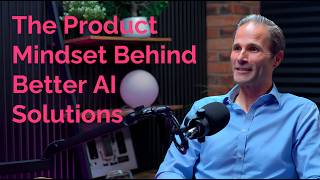
Rob Goddard and Tim Davies discuss how small and medium businesses can cut through the noise of AI tools with a product-first approach. They cover data ownership, local LLM deployment, and building organizational knowledge systems, while grappling with how fast model releases are making prompt engineering obsolete and what that means for jobs.
Chapters
You look at any other development like this that we have ever had in the history of the human race, and it's created more jobs. And I think the issue with it is pace, in that yes, it will create more jobs. We're already seeing jobs that we didn't think would exist, but the pace at which it's happening is the thing that is really scary for a lot of people. There's just, there's nothing comparable. And when there's nothing comparable, it's really hard to get your head around. It's like space is a never-ending thing, you know, What do you mean? Give me something I can relate that to. Well, you can't. So getting your head around it is just impossible.
Change is the only constant.
Yeah.
And it's only going to increase. Anybody in any career, any stage in their career, if they're comfortable being adapting to new challenges and they can communicate and they can hold a conversation with anybody anywhere about anything, those things are going to see them in good stead. Yeah, sure, robots will fix robots, but if you're willing to learn and apply those skills to the challenges around you, you'll be successful in life.
Hi, I'm Freya. Welcome to the Skynet Chronicles: Business in the AI Age, the podcast that dives deep into the world where artificial intelligence meets business. Join us as we explore the latest trends, challenges, and opportunities in this ever-evolving landscape. From innovative startups to established enterprises, we'll uncover the secrets behind the successful integration of AI technologies. So grab a cup of coffee, sit back, and get ready to unlock the mysteries of business in the AI age.
Good morning, Mr. Goddard, and welcome.
Good morning, Mr. Davies. Welcome back. Indeed.
Although this time from a different standpoint.
Yes. Yeah, it is a slightly different angle today.
So the last time we spoke on the podcast, you were effectively leading product at Oliver. Yep. And now I'm delighted to say you're leading product at Project Rising.
Yeah. And it's really, really good and very exciting. I was thinking about this over the last couple of days and there was an analogy that I've now forgotten that someone said on one of the podcasts I was listening to, undoubtedly car-related, and It comes down to the value-add that I think people are getting out of AI. Yeah. And how you can see how easy it is for people to get confused by what is available out there, overwhelmed by what is out there, and assume that they should be doing something with AI but not knowing how they should do it. And even speaking to people close to me, um, people try to use AI, but they don't know how to prompt properly. They don't know how to think about how things can fit together, and they can't really see the full potential of everything. And you look at large corporates, they're bringing out their own people to do this. They've got the money to invest in it, and they, they're not moving as quick as they should probably, but they've got teams of people looking into it. But when you look at small, medium businesses, they don't have the capacity to take this on board, and yet they've got the appetite because they can see what, what difference it can make to their business. So it's really exciting to be thinking you can add value really, really quickly to people that will be really, really grateful and appreciative of it, that will share the success of it. So you feel like you've really achieved something. So you're not just looking at a long sort of 5-year stretch at what's the next big thing that we're going to work on. You're delivering immediate value to people that really need it and are really grateful to see it. So that, that's So that's one of the things that really drives me for this. It's really good.
It's huge, isn't it? Because you can see all of the major AI labs are putting out forward engineers. So they're putting out employees into major FTSE Fortune 100 companies to effectively tie them into their platforms and models. And that's never going to cascade down to SMEs because there isn't the staffing and there isn't the budget to justify it. But also the SMEs don't have to be tied into our model. They can use whatever's the best for a specific thing. They just don't know what that is and they need somebody to guide them.
Yeah, exactly. And I think you look at some of the things that some of the big labs are launching, you know, Claude, I'm a huge Anthropic fan. And you look at what they're putting out, it's great, but you've really got to know how to use it and when to use it. And I think knowing how to use something like Claude CoWork, you know, you can learn how to use that really quickly. It's brilliant. But you're then using it in pockets within an organization. You're not using it in a way that your organization is benefiting as a whole. And I think those are the things that people really need the help with, is understanding what can this look like for a company so that we can actually put together an entire strategic vision for what we need to do rather than just going, oh, there's a new thing called Claude Legal or whatever it was.
I've got a new magic widget that just works for me.
Yeah.
As opposed to for the whole organization.
Yeah, exactly.
Exactly. Fascinating times, isn't it?
I think so. I hope so.
So what's the thing that's most excited you about AI in the last week?
I think one of the things I was quite excited by the announcements around Claude Legal, funnily enough, only because I know a couple of people in the legal industry and I keep going, you've really need to start looking at this because you've got a document-based industry that is really rife for this kind of work. And again, it can— you can look at it from the case point of it can decimate an industry, or it can really, really increase the value that people can get out of you as an organization and your ability to scale as a small business and compete with much, much larger, larger companies, um, in your segment. And some of the statistics are quite scary. I think in this, within this, within a week of Claude Legal coming out, I think I read another article that Anthropic were now valued at $900 million, $900 billion, sorry, which is more than the global legal industry is worth.
The valuations are bananas.
The valuations are nuts, but they're really, really scary headlines for people that are in some of those industries thinking, right, okay, well, what's going to happen to us?
And actually it's just a continuation of what was happening anyway, because you see the successes of platforms like Clio and Harvey, where they're going into legal practices and selling them dreams and simplifying their processes, but they're also harvesting all the data on how they work. Yeah. To ultimately offer a service in the future, in all likelihood, that doesn't rely on those individual practices and can be direct to consumer. I think all industries, all jobs need to look at what's happened with copywriting, what's happened with software development, and know that it's coming. And there is just going to be this bow wave of new capability. And how do you make the most of it within your business?
Yeah, I think the other interesting thing actually is a conversation we were having this week around people being able to actually own their own data and host their own LLMs. Yeah. And people kind of think they can do that, but they also go in and think, well, we need— we'd surely— we need a big data center for that. It's like, well, that's not how it works. It's much, much easier to do it than you think. You need the right skill set in order to do it. And again, that's where we can come in and help people do that and set up and say, right, yes, you can use the large LLMs for doing this and this and this, but you really want your data ownership to be a unique part of your model. Therefore, you keep this much over here. We can help set that up for you. We can build that. You can build it, we don't care, but you've got to retain that ownership because that's what's going to give you a big differentiator going forwards. And again, it's just another sign of things that people don't understand what the capabilities are or fear the worst of those capabilities.
Yeah, I think that there's a new flagship model that comes out every other week or so and people then jump on that and think, I need to use this. Do you need to use that? What are you actually trying to solve? And actually the vast majority of what they're trying to do within the business can be done an open weight model that can run locally. Yeah, on, on significant hardware, but still locally. Yeah. Um, with no token cost. And Anthropic, we know, are about to put their prices up again. They probably will have done by the time this is broadcast. So the, the data center restriction that they're not building data centers quick enough means there's a limit on overall token production. And the demand is going up, all that means is they're going to put the prices up because they've got to actually bring in the revenue to justify the valuations they've got.
Yeah, I'm probably, I'm probably guilty of this as well. You get a new model released, it's automatically put onto whatever systems you're using. You don't go in and turn it down, do you? It's like someone saying, I've given you an extra 100 horsepower on your car, but you'll only get it if you really put your foot down.
But you've got it when you go to the shops in the village too.
Yeah, it's— yeah, I think the rate— I don't think we've— we've never seen anything where the rate of growth is as quick as it is now, and yet it doesn't need to be. It's going as quick as it is because people can develop these things as quick as they are now, and there's a lot of competition in it. But from an actual use case scenario, 99.9% of people don't need half of what is out there right now. No. So yeah, there's much more cost-effective ways of doing this as well, let alone, you know, just at least knowing what you should be doing day to day.
It's cost-effective and it's data security. And that understanding doesn't sit within businesses where there's no technology department. It's just an owner-managed traditional business. They need a hand.. And so we can guide them down a path of, look, you've got all of this information in all of these different data masters. You don't need to pull it all out into a central place. You can have a brain built that understands what's going on in the business that can then give every employee a human-readable form, a guide as to we need to do this. We can go and find it in a wiki, or you can search against that wiki, but that can then also power all of the agents within a business. Using the right data, no risk of hallucination and high-performing repeatable output.
Yeah. And it's carrying the right tone of voice for what the business want people to hear from it. So you think of, you know, onboarding was a classic one in my old world. We grew a company from 300 people when I joined to 6,000 by the time I left. And it wasn't all me, I hasten to add. Um, but the onboarding process there was, was brutally efficient, but there was a lot that went into it. And to understand how to bring people into a business that quickly, make them understand how that business operated, what the, the ethos of that company was, what the mantras of that company were, and keep that instilled in people in the business when they were deployed in 250 different locations, which It was a real feat. It was really an impressive thing, but it took so much effort to do that. And you look at the capabilities that we've got today, you build these brains with the tone of voice of the CEO or the head of ops or whatever company brand voice you want. And it's going to interpret things in that way. So you get someone join the business, they can come in and go, right, okay, tell me a bit about the background. You know, who started this? Who did what? How should I talk about this? What the company mantra is, all of that stuff is going to come from that local LLM that's governed and managed and isn't getting stored elsewhere. You haven't got to worry about where your data is going, but you're getting responses that are effectively the same as you would have got had you had an hour with the CEO that day asking the questions that the CEO in a small business just doesn't have time to answer.
No, that's it. And we've, we've seen that with the business that we've been in consultation with. They've been a customer for many years, but they're now looking at this Brain as a solution to stop the MD having to answer so many questions. But actually the power is so much greater than that, because when everybody in the company gets the same source of information every time they ask, and it's easy to access, it's efficient, it improves the individual's performance but also frees them from the monotony of the admin tasks, because we can use that same information to drive the agents. Yeah.
And I think the other thing in that is the, the friction it removes, because I think when people start to see reliable, consistent information coming out of AI, they start to sort of take a step back and relax a little bit. And they don't start looking for that information elsewhere. You know, I'm a big Anthropic fan, but everything I'm doing now, I'm validating with multiple other LLMs. So I'm now spending 3 times as much time, you know, yes, I'm still 300 times more efficient than I was, you know, a year ago, whatever it might be, but I'm now writing, you know, a prompt to get an answer, to then write another prompt to validate that answer, consolidate everything, and then write it again. Um, I think having something that allows people to know I've got my core set of data here that isn't getting tainted by anything else that's out there, and if it's going out there to get other information, it's citing that within the response that it's giving. So it's, this is what we think your company knows about this particular situation, but you should also consider this and this and this and this. That's the way that I think, certainly for me, I find it a lot easier to sort of digest that and go, right, okay, that's what I should be saying, that's the right tone of voice, this is the right bit of information for this business. But there are other considerations that I can take into that. So you've still got someone who understands how to answer the question in terms of how the business, I guess, want them to be answering that question with the right information. But you're also empowering them with enough external information for them to be able to add further value to that as well.
Yeah, and that, that power of compounding where many people within a business will be using very similar prompts. And actually you don't need to burn tokens every time if you're asking the same question. But when you're working with, uh, leading labs, every time you ask a request, it's a token burn. There's no reuse and refining. So when you've got all of that information happening in one space in a safe environment, you're able to see the trends within the prompts that are being asked. And then build better understanding and information within the business.
Yeah, that's just what I was going to say is I was hoping you weren't going to get there and I could sound really clever. But yeah, you know, the more you see the same questions coming in, right, why are we getting those questions all the time? What are we doing? What could we be doing better? Whether it's in the onboarding process or explaining this new part of the business or this new market that we're going after or whatever it might be. If people are continually coming back in and asking the same questions about that, we obviously haven't done the right job of explaining what that thing was going to be in the first place. You can also argue it's irrelevant by that point because people are answering, asking the question and getting the right answer out. So it's also fine. But there's, there's always learnings to take out of the volumes of data that we can stitch together now. And I think that's one of the other things that we're sort of looking into a lot is what can you actually infer from the data that you've got, from the questions people are asking, from the answers that people are giving and the decisions that they're making. So what was the reason for a decision that was actually made? Look at the decision process, look at the context behind why someone chose to take answer B instead of answer A within the options that they were given, and then learn from that accordingly. Because that is what is effectively going to shape your business as it grows. You want to make sure that you've got an understanding, whether you see it as an element of control or not. It's— for me, it's more a level of understanding about how your business is going to grow from there and how it's going to get to where you want it to get to strategically.
And you can apply that same looking and lens to processes, to products. Why is a process going wrong at this point? Why are people asking this question repeatedly? Why are— within a product, is it being used in this way versus the way the developer thought it would be? And realigning that customer journey so that it actually meets what the customers expect from an application or product rather than how it was designed by the UX, the product team, the developers. Because we all know every time anything's developed, the way the developer builds it is not how the user uses it. And we can better align that with the data that we're now getting and using the insights and understandings from AI to improve that.
Yeah, and I think there's another step removed from that as well. I think you get things that a user uses differently to how a developer developed it. But I'm going to kick out a little bit at some of my old friends who will no doubt listen to this. The developer probably built it the way that the product person didn't spec it anyway. So there's already a difference between what a product person understood about how a process should work, how the developers implemented it because there's been some technical limitations or time limitations or whatever it was. It goes through QA, it goes out to a user and the user goes, it's not quite what I want, but I know that if I actually use that field for that and that field for that, I can get this result. And the problem that you get with that is the product person is then looking at how that's working, going, well, the user seems happy, so I don't want to change anything, but I know they're not using it right. The developer's going, you know, I've done the ones and zeros, everything's fine. I'm stepping away from this. We're done. But if you don't understand how the user is using it and how they're using it wrong, but getting the right result for what they want, when you then change something and say, oh, we had this inferred feature, and it had 3 fields in it and 4 buttons, whatever, you know, number of pages, whatever the function was. We're not going to make it better by doing this and this and this. And you've made that feature better. But that's the feature that you thought about in the first place. It's not the feature that the user is actually using. You've just broken a workflow that's brought a small business to its knees. So you have to take big learnings from what's actually happening there to go back and go, okay, we can see that people aren't using it properly or 30% of people aren't using it properly, but they are still using it. If they're still using it, they're still getting value. So we've got to understand what value they're getting out of that and whether we need to turn that into a different feature, split that out so that we can maintain both ways of working, or at least clarify something within the interface or something that says, this is how you do this, this is how you do that, you know, however you choose to do it. Feel a bit on the spot now. But yeah, you've got to take that data back in to go, we're going to do something with this now because we want longevity in that client and how they can use our products to make their business succeed. Yeah.
And I think that element, I mean, it leans into customization for specific customers. Every business thinks they're unique.
Every business is unique.
Every business thinks they're unique and follows the same fundamental practices to operate as a business. So there is commonality, but every— you're right, every business is unique. But that helps us, and we can help them lean into that. Because if they are specific in a way that they have to operate within their business, we can craft something that meets that exact need, and it can operate for them exclusively while using common understanding and capabilities that other businesses always use.
Yeah.
So that ability to be completely custom for any individual business is something that the labs will offer the ability to build any number of agents you want, but you're just going to end up with businesses that have got 10,000 uncontrolled agents and nobody knows what they do. Whereas if they've got an expert partner guided to— actually, we've built this custom thing for you, it's being used in this space by these people. These people aren't using it. We're getting strange inputs from this person. Is it exactly what you need within the business? And that feeds beautifully into autorecursive self-improvement, where we're going to be able to see from the logs how things are being used, and then dynamically change and improve them. If for one specific customer, something's not working quite right at the right place, that can be auto-identified and fed back into a self-improving feedback loop where they get something that works better the next day. That's kind of crazy in terms of software development, where we've always relied on individual people. And relies on a quality of code, understanding of codebase, restrictions and best practices. But when that's done right, that's going to be game-changing.
Yeah. And I think if you, you know, you could go back, look back 5, 10 years ago, the principles are the same as what we always wanted when we're developing a product. You know, we want to make sure that we're delivering what the customer wants. It's adding value to the customer. They're using the product and will continue to use that on a recurring basis. And in order to do that, we need to understand how they're using it, where they're using it right, where they're using it wrong, what other systems they've got in the ecosystem. But that whole process was, you know, I suppose, archaic now. You know, a lot of people are still working in that way, but it's what we always wanted. It's just now on steroids.
I don't think it's archaic. I think it was very, very people time intensive. Yeah. And so only larger organizations could afford to staff it. And even when they did, it probably only happened for some of the solutions some of the time because there was always going to be resource constraints. But now that can be applied to businesses of any size where you can have these best practice solutions deployed seamlessly to any number of customers in parallel.
Yeah, and I guess the other thing is, is looking at the systems that clients have actually got in place and the amount of access that we can have to those systems as well. Obviously, if they, if they grant that. You've got a much better ability to look at how those platforms are being used in, in relation to how the solutions we deploy are being used. So, you know, we've— there's always things that tools are meant to do that they don't quite do. So there's always these layers that we can put on top of, you know, other tools that are out there that are used day to day. But understanding not just how our tools are used, but that actually we're seeing an uplift in the amount of data that's going into this other system that this client is using. Well, what can we now do with that data? We're seeing more information go in there because of what we put in place here, which is great. It's what we expected, but we've now got more data. What can we now learn from that? And is that something that we can take to again, just help that client with another step in the process, which inevitably it will lead to at some point. If, if you've got more data going into a system, there's clearly decisions that need to be made around the data that you're gathering. Otherwise you're gathering data for the sake of it. I don't think anybody wants to do that. I think there's a lot of it. But I think to gather the volumes of data that people are gathering today and not look at it just is a real, a real loss of opportunity. So I think, again, just with what we can put in place with some of the Agentic flows that we're developing for the clients, to be able to use that to analyse the data that's there as well and come back with those learnings that people might not have thought of. Is a huge value add.
I was asked a question at a CEO leader briefing last week: what one thing should businesses do now and do it universally? And I said you should record your meetings because you've got your data on SharePoint or Google Drive if you're a heathen. You've got your information in your email system. You've got all of these different things in your various different systems and data masters in the business. But if you're not capturing that knowledge that occurs when your team members talk to each other, you're missing the biggest, most powerful part of the data about your business, which is the knowledge that's in people's heads. Because if you're hearing the same thing coming out time and time again from people, they're sharing their knowledge, their insight in a way that isn't stored in any system. And I got some pushback from a couple of people saying, well, we can't do this because Well, that's okay. If you've got a good enough reason, don't. Yeah, but I would say for those individual circumstances, don't record those meetings. But for everything else, do. Yeah, absolutely. Because the value in that data is priceless.
Yeah, I think the other thing I'd throw in there is— I hang myself out to dry here. Careful. Yeah. Meetings today If you look at the ratio of meetings that you do online today compared to what it was, whatever it is, you know, 5, 6 years ago, it's almost not a ratio anymore. It's just meetings are now online. Meetings are not face-to-face anymore. When you were face-to-face, not just in meetings but in an office, you sit down and you hear the two people behind you talking. You go, oh, I can, I can help you with that. Or actually that's really good knowledge because I've got the same problem over here. And we haven't got those interoffice conversations going on anymore in a lot of places. And you haven't got people sat in a meeting paying full attention anymore. I can't look around a room and know who's paying attention in a meeting these days. You can see someone's not looking at a camera, but you don't know if it's because they're looking at their phone or they're looking at their laptop and they're doing something completely different.
Or they're looking out the tree in the window thinking.
Yeah, just dreaming. And I think your point there about having those transcripts, it just pays massive dividends because that knowledge is then not lost. That is all available sitting in that business brain and is tapped into by any of the systems that choose to point at it. So the fact that I didn't hear the conversation from the two people behind me is irrelevant because when I ask the question or when I go into one of my agents, say, I was thinking about this. Oh, well, you know, Jeff and Bob were chatting about that the other day. Yeah, here's what— here's, here's the, the transcript of that conversation, or here's what we can infer from that, and this is the problem that they were trying to solve, and that's the client that it was on. You should talk to those guys. And I think having that back is a huge value add because I think we've lost those sort of— I hate the phrase water cooler moments, but you know, you have lost those sort of relationships that you used to have with people in the business. And by capturing as much of those conversations as you can, even if it is just the meetings that you have. But by being able to put your own notes into those things, you can choose whether other people have access to some of those notes. So all of the knowledge that is in your business truly is in your business, and it doesn't matter when those people leave. You know, no, we never want to lose good people, but if you do lose them— I always, always had a point where I always used to say to people, like, you know, if you come into a business that I'm in I want you to be leaving in 3 to 5 years' time, assuming that you wanted to leave. I'm not saying I don't want anybody longer than that. You know, if you choose to leave in 3 to 5 years' time, which a lot of people at the ages that we were employing is probably the right kind of cycle for what they want to do. I want you leaving as a better person. I want you leaving with more knowledge. I don't want to worry about the fact that I was giving you all this knowledge all the time. And then when you went to leave the business, it was like, oh crap, now I've lost that person. I've lost all that knowledge. You want people to be as good as they can possibly be. And not have to worry if they leave the business. Be upset that they've left the business 'cause, you know, he was a really good guy, I'm not gonna see him anymore. You know, I really enjoyed working with her and, you know, had a good bit of banter, but you know, they've gone, but they've moved on. That's great. But I haven't lost the knowledge that they brought into the business because it's now available as a source for everybody else to go into.
Yeah, it's priceless, isn't it?
Yeah. Yeah, I think, yeah, that's, it's a really big deal and I think it's underestimated a lot. What we've lost in terms of the day-to-day communication that we used to have and that knowledge retention. It's a big thing for, I think, from a management perspective as well, when you're bringing people into a business. What people used to learn just through attrition, just sitting and hearing a manager on a phone talking to a difficult client and defusing a situation, you know, people just don't get that anymore. You know, I had a great boss that I used to work for, a guy called Derek, years ago. And I've said this to most people at Project Rising actually, he used to make us deliver bad news to clients. Yeah. And he wouldn't care what client you worked on, he would just randomly pick someone. So project's running late, he'd just walk out and go, you phone that client. You gotta tell 'em we're, we're late or we've gone over budget or something's gone wrong or, you know, system's gonna be down for an hour, whatever it is. And it got you, it got people used to communicating. 'Cause it's quite easy communicating when you're talking about something you love, right? I'll always default to my cars if I'm in a difficult social situation. If I can be talking about cars, I can talk about it all day long. But if I've gotta talk about something really specific, that's where I used to feel awkward. But what he did was sort of made you aware, you know, go in and rip the plaster off. You don't go in and go, hi, Mr. So-and-so, you know, how's your day? Yeah, we've just been working on this thing, blah, blah. You go in, you go, look, really sorry, but your project's gonna be running late. And he made a point of teaching us this. It's like, you don't, you don't beat around the bush, just go in, deliver the bad news, bang, done. And it's skills like that that you start to lose. So I think the more we can do to maintain the kind of knowledge and value add that managers can give to other people as they're coming up through a business, whether it's about how to operate day to day, how to communicate, anything like that, the more you can put into that brain to help people on a day-to-day basis, the better off it's going to make you. Um, you know, it's funny, I was, um, over the last few months, obviously, you know, vibe coding a lot, it's just sort of feel quite rekindled back to my youth. Um, and one of the things that I'd worked on was my personal brain, and, and it was all about those, those quotes that you hear that you think, oh, you know, I'd love to come out with that one night when someone says something and I can go bang. But you always forget them. So I need somewhere where I can log that. And then those things about, you know, communication skills. When you're in a certain situation and you need to, you know, you need to get out of a situation, or you need to defuse something, or you need to understand how to talk to a person of a certain character that is clashing with you, how do you get the best out of both of those people? Um, so you start to drop all of this knowledge in, and then before going into a meeting, I go in and I go, right, Just remind me, this is the type of person that I'm meeting. I think this is the type of character they are. What's my best way of communicating with this person? And it's not about manipulating them in any way. It's not about trying to turn the situation around so that you've got something that they don't have. It's about how do you get the best out of both of the people in that room so that both of you got the best possible outcome. Yep. And I think you can apply that to any element of business as long as you've got the right information that is accessible. To everybody in that business, I think it makes huge dividends. But the right information is the key part. So you don't just want to allow anybody to just dump something into this brain and go, hey, this is what I think. No, no, it's a curated system that says, right, this is, this is how this business works. This is how we operate. This is how we communicate with people. This is what, this is what our values are.
This is what success looks like.
Yeah.
Do you worry about the future for our children?
I'm really— I'm stuck on the fence. Yes, on one side, absolutely yes, I'm terrified of the future for our children. I have a son who loves programming, loves it. And he's doing a computer science degree at the moment. And he's finished his first year, he's doing really well, he's absolutely loving it. He's going into his second year. We were talking the other night about him, you know, whether he wants to do a master's or not. And I think, you know, I don't think he will. I don't think it's what, you know, we really want or we necessarily see an advantage in anymore. And you look at what the world is going to be like when he comes out of university wanting to be a developer. And I keep sort of saying to him, it's going to be a different world. It's not going to be sitting down coding yourself anymore. You're going to be validating what LLMs are building for you. But there are key skills that he has. He's a very, very good communicator.
He's brilliant.
You drop him in a room, he was like the Pied Piper when he was young. Like, kids would just follow him around, you know. We'd go to a party for, you know, kids at school or whatever. He'd come along as like the bigger brother, only a couple of years older. And these kids would just gravitate towards him and they just play with him, he's absolutely great. Drop him in the middle of an old people's home. Yeah. And he would just, he'd probably talk more than they would. He's absolutely brilliant. And that's a massive skill that I think is lacking. And the ability to understand, the ability to allow people to talk, understand what they're talking about and interpret that into something that a machine can understand to build a solution for it, I think is absolutely key. So I think there's merit in what he's doing at the moment. I think if you look forward another few years, I, I don't know if we were looking for apprenticeships when he went into his uni degree, but the apprenticeships were— there were probably 20% of the apprenticeships available the year that he went in that were there the year before, because I think a lot of the Big Four certainly were, were looking at culling a lot of those. Um, my daughter wants to be an actor. She, she's, she's— well, I say she wants to be, she, she is. She's, she's fantastic at it. And you look at the ability to now produce a feature film with no actors and no scriptwriters and no special effects artists and everything else, and it's doable. It's not great yet, but it's about a million miles away. Yeah, exactly. This is, this is bad as it's ever going to be. Um, and you know, my youngest is 12, doesn't know what he wants to do. Yet. Um, we can't quite work him out yet. We don't know whether he's like me or like his mum or a mix or whatever. So we're sort of just diligently watching, waiting for him to make some decisions and get off YouTube and the Xbox. Um, but I think the thing that comes out of it for me at the moment, certainly with, with my older two, is the authenticity. So having someone in a room who can understand a problem that isn't a faceless robot there is a lot around that, having someone you can actually communicate with, bond with, and feel like you've got a relationship with. I don't think— I hope to Christ that AI never gets to that point.
I don't think it matters if it does because people buy people.
Yes, yeah, yeah, we'll come back to that. I, I fundamentally agree with that. I do agree with that. Um, And then on the other side of it, you know, my daughter is an actor. You know, people want to see something authentic. You don't want to go and see a West End play and have a load of robots jumping around on a stage, you know. You want to see people doing that. I don't want to see— you know, you can argue so much stuff in Hollywood is fake now anyway with special effects and stuff, but you know, they're at least real people that, you know, tangible and you can, you can see. I have the same thing with advertising. Um, different clients have different views of whether to use real people or fake people in advertising. And there's— I, I feel like it's an unjustifiable thing in my head, but I have this thing where if someone is selling me a product, I want it to be a person. And I know that that person is acting. I know that they're lying about how good that pro— no, they're not necessarily lying, they're probably embellishing the truth about how good that product is for them, um, and how wowed they are at how clean their kitchen floor is. But that's a person. I could bump into that person they're real. Having a fake person selling me something that's already faked up a little bit because we've done a little bit retouching on how clean that floor was after that fake stain landed on it, it just feels unauthentic.
So what do you know?
No, I won't know. And that's why it's, you know, it's an unjustifiable thing in my head. Yeah. But if I knew— and I think there are companies that are taking stances on this— if, if you know that the people that you're seeing in marketing are real people and that's a person taking a real sip of a real drink, that's different to seeing a fake person taking a fake sip from a drink that wasn't even there. Um, so I, I think authenticity around that is, is going to be key. On the other side, you look at any other development like this that we have ever had in the history of the human race, and it's created more jobs. That I feel like that's the straw that I'm reaching out and grabbing hold of. And I think the issue with it is pace in that, yes, it will create more jobs. We're already seeing jobs that we didn't think would exist. So I think that's fine. But the pace at which it's happening is the thing that is really scary for a lot of people. You know, you're not seeing things happen over a 20 to 50 year period like we've seen before with other technologies coming out, whether digital technologies or mechanical technologies. By seeing it at the pace that it's happening now, and as we were saying at the start, the pace that these big companies are launching new features and functions, there's just nothing comparable. And when there's nothing comparable, it's really hard to get your head around. It's like space is a never-ending thing. Well, what do you mean? Give me something I can relate that to. Well, you can't. So getting your head around it is just impossible. How can it just be keep going on forever? It's rubbish. There's got to be something, right? It's got to be inside a marble. What's outside that marble?
And then, yeah.
So, you know, it's really hard when I can't, you know, I said to you the other day, you didn't know, I sent you something that you asked me to do and I was like, just be careful of all the analogies because I've said to Claude, I love an analogy. I like being able to take something down to a base level. In all the meetings that I used to have with people, I'd always quite happily go, look guys, I'm going to be the idiot in the room. I'm gonna just go back to that original question, really dumb it down, because if I don't understand something, there's a pretty good chance that someone else in the room doesn't understand it either. So just trying to get down to a really core understanding of what's actually going on is absolutely paramount. And because we can't relate that to how quick things are happening now, it becomes really difficult to accept the fact that actually everything's going to be okay and we're going to be living in a world where for 400 quid a month, you've got a robot walking around your house doing the washing and the cleaning the car and cutting the grass and doing all the jobs that none of us want to do. Surely that's fantastic, right? I had a conversation with my wife the other day. She showed— she sent some, some buying signals for a domestic robot that would load a dishwasher and put the washing out.
Something buying signals, something that you've already bought.
Yeah, it's already on order. Um, it's arriving with the car. Um, so yeah, I, I, I think, yes, I'm scared because there's uncertainty. And I think whenever there's uncertainty, people get scared. Um, I think it's very easy for— to look at the people that are running the world at the moment going, look, everything's gonna be great, and you know, you're all going to have driverless cars driving around, and you know, when you're not using your car, it's going to be giving people lifts everywhere, and you're going to be earning money out of it. And then you've got your robot doing this, and you've got this doing this. And you're never gonna have to work again, and it's gonna— your life's gonna be great. Okay, so we're all going to be sitting on beaches somewhere, that, that, that sounds good, but that feels like that's still a couple of years away. So what's going to happen in the next couple of years? How are my kids going to eat? What am I going to be doing for a job? How am I going to protect myself and my family over this transition period? And I think that's the thing that is sorely missed at the moment, is there's no real clear journey for how we're going to get from where we are today to the utopia that we're being sold. Whilst there is still this vision of robot wars that, you know, there will always be the argument about that. We used to have this debate. And yeah, I think I feel really empowered by being able to use the technology that's out there today. I feel accelerated in pretty much everything I'm doing. But there is that nagging doubt of, well, that thing that I've just done there, how would I have done that before? And is that someone's job that now doesn't exist? And of the new jobs that are going to exist, is there a natural transition for that person to get from A to B? Or are we looking at new jobs for the new generation coming through and massive decimation of jobs that exist for people of my age going forwards?
And I think the thing is, we don't know. No. We do know that change is the only constant.
Yeah.
And it's only going to increase. So with anybody in any career, any stage in their career, if they're comfortable being adapting to new challenges and they can communicate and they can hold a conversation with anybody anywhere about anything, those things are going to see them in good stead.
Yeah.
I don't think we can rely on the new jobs magically coming. We've seen prompt engineering as an entire— oh yeah, that's okay, there's new jobs coming, prompt engineer. 12 months later, What was that? Why was that even a job? It's part of everybody's job.
Yeah.
Um, so we'll see things happen very quickly, and I think some of the jobs that will spring up will be very short-lived. But in the last few weeks, I've become a robot engineer because I've had to fix one of my domestic robots, and it's out of warranty, and I could just sell it and get another one, but actually it just required some new gears fitted in a motor that was buried deep within this thing. And I could get them 3D printed, delivered for a fiver. Okay, fine, I'll work out how to disassemble, fix, and reassemble this robot.
Yeah.
So we know there will be more jobs, and yeah, sure, robots will fix robots, but if you're willing to learn and apply those skills to the challenges around you, you'll be successful in life.
Yeah, yeah. I think I've got a big thing for, for communication skills. I've spent a lot of time over the last probably probably 4 or 5 years just sort of embedding myself in podcasts and, and other things from, from good communicators. And I'm probably really starting to get aware of how many times I've gone, um, on this conversation so far.
I'd say we'll just say it.
Excellent. Yeah, you put more in now, won't you? Um, but I think that is— it's a massively, massively underestimated skill and I think the more we can do to help people with that. So like I said, you know, in my little second brain thing that I built, I've got all my little communication skills built into that. Yeah. So I can go in and say, look, remind me about how I should, how I should handle this situation. What should I say here? You know, I'm going into a conversation with a, with a CEO. What's, what's the best thing to do? And it's like, right, cut out all the blurb, just go in and go bang, bang, bang, bang, bang. Those are the 4 things that you need to hear. You know, what's, what's the problem? What do we do now? How do we interpret this? What does it mean for us? Whatever those 4 key— I'd have to look it up, but I can look it up, that's the point. Um, so it really, really helps to develop those things. And I think probably my concern with, with where we are is that because of coming out of COVID and everything else, we've got generations of people coming through who aren't necessarily good at communicating with each other. They've come through school where they haven't been communicating as well with people. We've got a lot more tolerance for allowing people, I think, to segment themselves and label themselves with things that mean, well, I can't communicate because of this, therefore I can't communicate. And there are underlying things in there, no doubt, but you really need to learn how to communicate because it might be one of the only things that we've really got left, and it's a huge value. And everybody, everybody has massive value. You know, everybody has potential. It's horrible seeing wasted potential in people. So I think when you, when you see people, especially young people, drives me nuts. As you know, I spend most of my life in coffee shops working and sponsored by Gail's. Sponsored by Gail's. Um, yeah. Um, my wife found my loyalty cards the other day for all the different coffee shops. It was literally just like, how many of these things have you got? Um, but you see, you know, you, you'll see kids walking around town as they get kicked out of school, and, you know, some of them, you know, head up, shouting at each other, chatting, laughing, great. And then you get the other ones that are just really, really timid, always on their own, and just sort of looking down the floor. And you just, you just want to sort of grab them and just go, right, just sit down, let's just, just talk. This is, this is how we can communicate.
But, but some of those people from when we were growing up went on to be the owners of tech companies. Yeah. To own massive accounting practices. Yeah. The geeks have taken over the world. So there still something for being the quiet thinkers. Yeah, but they have to be able to converse, they have to be able to put their point across. And that's why I'm so passionate about public speaking coaching. Yeah. And what we can do in that space to help anybody just become more articulate and better at getting their point across quickly.
And it's frustrating. I always say to people, there's a typo in the Bible, it's the geek shall inherit the earth. Um, and they did. Yeah, yeah, I think absolutely they have. And it's, it's quite ironic, I suppose. Um, but yeah, I think being able to help people gain their full potential— I get in my head there, I just thought for a minute it's like a runner sort of taking steroids. It's not, it really isn't. It's like a runner training for months to become a better runner. The fact that I've got this— we've all got massive sources of information that we can tap into now. So you've got, you know, we've had this for years, but it's just never been quite as digestible and accessible at our fingertips as it is today. For people to not know how good that is, is a real waste. For people to not know how to ask the right question is massively frustrating. And, you know, we said the prompt engineering thing, yes, that's, that's pretty much disappeared now because everybody has to do it.
Yeah, disappeared as a unique job.
Yes.— but it's still one of the biggest skills right now. I had a friend who messaged me the other day, he was away on holiday and he said, 'AI is a load of rubbish.' And I had no context for it and I just went back straight away, I was like, 'You asked the wrong question. I don't care what it was, you asked the wrong question.' He's like, 'I just, I asked it, I'm in New Orleans and I want something to do for the day.' All right, send me the— send me the prompts. And he sent me the prompt. It was basically like, you know, I'm in New Orleans and I want something to do, you know, during the day and in the evening or something like that. It was a really simple prompt. So I went back with another prompt and it was, I'm in New Orleans on this day, I'm staying in this hotel, I want 3 things to do within a 15-minute walk of the hotel, which is this postcode, uh, it's going to be a Tuesday, make sure that everything's open, um, double check you know, that one thing isn't going to— isn't likely to overrun and mean that I can't get somewhere else, make sure that I've got enough time to get between each destination. Because AI is good, but it assumes too much. It's not always giving you the right information. So you've got to ask it like it's a bit of an idiot. Yeah. And ran that prompt and got a completely different set of responses. And yet, for a smart guy who's not used to using AI, —but it's just making sure that you're adding the context.
Yeah. The more information you give the AI, the better response you get back. Yeah. I used to joke that you can ask any of the large language models to write a 500-word blog about cheese. First of all, the answer you'll get back won't be 500 words long, but the blog post will be cheesy. If you say, I want to write a 500-word blog about the history of Stilton with tasting notes, pairing notes, and give me some understanding of why it's such a great cheese, its history, its heritage, and construct this in a they ask, you answer format, you're gonna get a high value blog content. But you've gotta know how to ask the question. Yeah.
And I think I told you this the other day in one of our conversations actually. Part of me loves this story, part of me hates it. When I was about 12 or 13, I was on a scout camp and I was sat in the rain peeling a bowl of potatoes. Getting ready for dinner and gave the bowl of potatoes to one of the guys in my little troop, whatever. So, we can go and put those on the fire, boil them up, and, you know, we'll get on with, you know, whatever else we had to do. I figured I've given him something to do, he's going to go and do it, happy days. He comes back 2 minutes later with half a melted plastic bowl and no potatoes. And worse, he hands it to me, he goes, oh Rob, I put it on the fire but it melted the bowl and now the water's on the fire and the fire's gone out and all the potatoes are dirty. That sticks in my mind about— I used to be harsh with this and I used to say the power of stupidity, and it's not the power of stupidity, it's lack of experience, lack of knowledge. Anything like that. So that, that is the thing that I kind of carry with me with every prompt I write. Yeah. Is how much information are you giving this person, this thing, around what you're asking it to make sure that the outcome is going to be not just what you're expecting but correct? Because it might not be what you're expecting, but it doesn't matter as long as it's correct. So yeah, I think the, the quality of how you use this thing that we've been given is absolutely key. And that's another thing that can be helped when you're building solutions for clients. There are ways of building in the guardrails around this and the prompt enhancing so things happen behind the scenes.
And so they, they don't have to give all of the context if that context is augmented. Exactly. Um, and it's just having that understanding of how to deploy that within a business that the vast majority missing. Yeah. And don't know where to start.
Yeah, because it's, you know, you— I think in a lot of cases it's very easy, it always has been easy to boil the ocean, but that's not going to give you the results that you want. You've really got to be good at looking at what are the key issues that we've got within a business, what are the key drivers that the business have got, how can we get there, and what's the priority around that. And then you can start looking at those priorities and working out what we can actually do to help, what's required around that. And then break that down into the tasks that we need to do in order to give them something that's going to give them that value add. But it's got to be— you've got to be focused on the outcomes and you've got to be measuring the outcomes because the outcome might be right on day one, but 6 months later, you know, like we said earlier, you've gathered a load more data. Well, let's see that the outcome is still actually correct, or if we've got enough data now that says that we can aim somewhere different.
So what's the most exciting thing for you about Toolkit?
I think the concept of having a series of tools, having a series of agents, tools, products that we can put into an organization where they don't have to think about what's an agent, what's a tool, and what's a product, and which one do I use for this, and which one do I use for that? They don't have to think about that. To have something they can go in and say, my problem today is X. And Toolkit goes, right, that's the problem with X. These are the agents that I've got. This is how we're grouped together into the different task sets, roles, outcomes that this person is likely to need. That's what they need to do. This is the ingestive information that's coming in from that user. That's what I need to give them. Coupled with the fact that if they ask for something we can't give them, that's just another instruction for us. And that goes into our toolkit, our Project Builder, to say this is a new request from this user. We can't currently do that. Whether it's that we need to stitch the agents together in a different way or we need 7 new agents to do different things, that kicks off the entire development process for us, automates that through the workflows we have, and we've got a solution for them within 2 or 3 days.
I like the idea of somebody at the end of the day going, oh, I can't find a way to do this, and they go back in the morning and it's there. It's there. And I think we've got the ability to deliver at that sort of pace, and that's just amazing to me.
Yeah, and I think it comes back to the, the really exciting thing for me about this opportunity is being able to finish a week and, and go I've added value. Not just I've added value in the company that I work for, right? We all want to do that, that's great. But you want to know that your clients feel like they've got value from you. Yeah. And they're not even thinking about how much money they're spending because they're going, that's nothing. Yeah. The value that we've had from that investment is 10 times over. Yeah. So it's a big deal for me, you know. You want to feel like you're adding value to people, you want to feel like you've got a purpose. And I think this is a really good opportunity to do that because there are so many small businesses out there, medium businesses, that, as we said at the start, need this help because they don't have the time and they don't have the knowledge. And some of them are going to have some seriously good ideas and input into what else can be done going forwards, but don't have the mechanics to be able to put that together all the time. And it's not really what they do. But to have clients coming to us going, it'd be great if there was something that could do this. Fine, yeah, give us a week, we'll come back to you. Yeah, yeah, that, that's, that, that's huge. I think I'm really, really excited about that. I am too.
Well, we should probably draw this to a close. Um, we've managed to not talk about TVRs or Porsches other than analogies, which is excellent.
Excellent. But now my wife listens to this, she's going to be like, you're talking about Porsches? Why are you talking about Porsches?
Because we're always talking about Porsches. Okay, thank you. You noticed that the company phone number is two different Porsches? Loved it. On that note, thank you very much for joining us, Rob. I'm delighted that you've joined us.
No, me too. Me too. Looking forward to the future.
More from Tim

EP 60: Why Founders Become the Bottleneck — And How AI Changes Everything | Thea Brook









