
Ep11: The Impact of AI on Charity: Little Miracles' Story
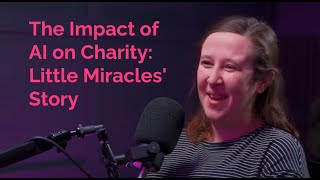
Podcast episode (Ep11) hosted by Tim Davies interviewing Emily from Little Miracles, a UK charity supporting children (age 0–25) with disabilities, additional needs and life-limiting conditions. The conversation describes the charity’s services (counselling, adapted caravans, sensory spaces), scale (18 branches across eastern England, 300+ volunteers), fundraising model (no government funding; grants, local business support, events), volunteer and staffing challenges, and the operational impact of adopting a CRM (HubSpot) — including benefits (single family records, triage workflows, reporting) and a serious pricing shock (an unexpected ~£70,000 bill). The episode also explores how automation and AI are already aiding grant pipelines, reporting and triage, and the potential future role of assistive technologies for children with complex needs. Personal family case studies illustrate the charity’s life-changing impact.
Questions this video answers
0 to 25 years old.
18 branches (across eastern England).
Over 300 volunteers.
About £70,000, with a two-week deadline to decide.
Over 80 users trained.
So Little Miracles is a charity that supports children from the age of 0 to 25 and their families with disabilities, additional needs and life limiting conditions. And the services that Little Miracles offer aren't available on the nhs. So we provide full counselling for the whole family. So not just the parents, we'll see the siblings, we'll see grandparents if we need to, aunties and uncles. We run it all through HubSpot and do all the paperwork through there. On the admin side of it, which has been a huge help because before it was just a big massive spreadsheet that nobody could work, that in itself.
Comes with challenges and we've had one significant challenge off the back of HubSpot deciding to change their pricing model overnight.
So, yeah, that was quite a shock.
How do you see automation and potentially artificial intelligence being able to help Little Miracles?
Hi, I'm Freya. Welcome to the Skynet Chronicles, Business in the AI Age, the podcast that dives deep into the world where artificial intelligence meets business. Join us as we explore the latest trends, challenges and opportunities in this ever evolving landscape. From innovative startups to established enterprises, we'll uncover the secrets behind the successful integration of AI technologies. So grab a cup of coffee, sit back and get ready to unlock the mysteries of business in the AI age.
Hi Emily. Welcome to the Skynet Chronicles. It's your first ever podcast. I feel really privileged.
Thank you for having me. I'm a bit nervous, but yes, it is my first ever podcast.
Well then let's dive into the details. So tell me a bit about Little Miracles.
So Little Miracles is a charity that supports children from the age of 0 to 25 and their families with disabilities, additional needs and life limiting conditions. We've got 18 branches over the east of England at the moment. We've got two holiday caravans that are purposely built, adapted for children with wheelchairs and with additional needs. And we've got centres that are complete safe spaces with complete open access floor plans for them to attend, sensory rooms, massive gardens that they can run around and let off steam.
Fantastic. So that's a brilliant explanation of the top level detail. What does it really mean to you?
It means everything to me. I've been there for 12 years. So I started as a little volunteer at the age of 16 doing my Duke of Edinburgh award and as it grew, I grew with it, so I started managing centres for them and then as we started on taking additional branches, I helped oversee that. I'm a trained nurse, so I work with children with complex health needs and do work with children that are on end of life care particularly. So I work with families that are absolutely at their breaking point and without Little Miracles, they wouldn't have a lifeline to go to. And the services that Little Miracles offer aren't available on the nhs. So we provide full counseling for the whole family. So not just the parents, we'll see the siblings, we'll see. See grandparents if we need to. Aunties and uncles will put funeral plans in places. We'll help families fundraiser funerals if needed. And it's a very bespoke service that fits every family how they need. It's not just a template that we just roll out every time. We'll focus on what the children. Like we've done last birthday parties, last Christmases, we've sent families on holiday because we know that they'd never get to go on holiday with their child if we didn't. Yeah. And we do lots.
That's amazing. So 18 facilities, where are they spread over?
So we start up in Boston. Some of them run out of community centres at the moment. So as we grow, we start taking on buildings as we meet the need in the area. So we start up in Boston, work our way down through sort of Kingsland, Holbeach, Peterborough, all the way down to Milton Keynes, across to Cambridge, Ramsey, St Ives. I'm sure I'm going to miss some because there's too many to remember off the top of my head. Ely all over. So growing as need is shown. So if a family get in contact and say to us, we really need some help in our area, We've just took on a branch in Nottingham and Leicestershire because they had a group of friends that had nowhere to go and had been Facebook stalking us basically, and thought we could really do one of those in our area. So as the need is there, we'll open a branch, starting with a team of volunteers, which tend to be mums that have all become friends, and then as we develop, take on paid members of staff, put counsellors into the area, family support, support workers and develop as the branch needs. So not every branch is exactly the same. They all have different groups of staff and activities dependent on what the predominant needs of the children are in that area.
Wow. So huge scope, ever growing region, near infinite need.
Yep.
How do you raise the money to support it?
Lots of fundraising.
So tell me a bit about that fundraising.
We don't get any government funding. We do grant applications. We've got a grant writer that does grant applications for us. He's amazing. And then going out fundraising to local Businesses and companies that are willing to support us. Word of mouth is one of our biggest things. A lot of people saw us on DIY SOS 10 years ago and will remember us from there. They built our set Peterborough Centre for us, but it is pure fundraising and donations from the public that help us survive and help us continue to support the families.
So you got your work cut out, then?
Absolutely. There's never a quiet day. It's a miracle for anybody, for anybody, anybody. So anybody that walks through the door is going to get roped into doing something.
So other than the obvious and almost ever present challenge of funds and fundraising, what are the other challenges that you have within the business?
So, predominantly we've got a lot of volunteers, so over 300 volunteers. From that perspective, obviously, we're relying on people to donate their time to us, which can be quite challenging if you're planning on expansion and things like that. We're a very, very small staff team. Most of the staff work sort of four to six hours a week around having disabled children themselves. We also have a lot of staff with needs themselves, so we're very flexible in the terms of working and do just. If we didn't have our volunteers, we literally could not survive.
But managing that many volunteers in itself is a huge admin task. So how do you. Have you just got one big monster spreadsheet or something?
We've got a beautiful CRM system that you helped us build, Tim. So we've got a lovely lady called Sarah, she's our volunteer manager and we have a whole volunteer process. So all our volunteers obviously require DBS checks and quite extensive training to be able to work with the children. We also have a massive team of volunteer counsellors that are doing their placement hours with us, so we're really, really lucky that they come and do their placements with us, which means that we can see loads and loads of families for counselling. We run it all through HubSpot and do all of the paperwork through there on the admin side of it, which has been a huge help because before it was just a big, massive spreadsheet that nobody could work. So things have definitely got a little bit easier since that's been in place. But, yeah, it is a mammoth task.
And even when choosing a modern CRM like HubSpot, that in itself comes with challenges. And we've had one significant challenge off the back of HubSpot. Deciding to change their pricing model overnight. That's had a huge impact to little miracles. Can you talk a bit about that?
Yeah. So we had got everything in place with your colleague Chris over Christmas and things were running really nicely with HubSpot and then got woke up to an email saying, you've got two weeks to decide if you want to pay a £70,000 bill. Essentially. Which was quite a shock to the system. Obviously, we'd put hours and hours of work in. Chris had put hours and hours of work and I don't think any of us had a Christmas, to be honest. I think we were all just working to get it to the best it could be. We trained over 80 users on how to work it and I also go on mat leave in a few weeks. To change into another CRM system was not a choice, unfortunately. We have now spoken to HubSpot and they've done some discounts for us, but we still are left with quite a large bill that we've now got to find the funds for that didn't exist. So, yeah, that was quite a shock to the system.
I think it shocked everybody. I mean, we know people who implement CRMs as their day job and they were blindsided by it. It's just an unthought out change in terms of the impact to companies and charities that are using lots of seats.
Yeah. And a lot of ours are volunteers. So we have a. Because they've come in to do their placement hours with us. It sounds like we have a high turnover and we do have a high turnover of volunteers. But that's because they come and do their 60 hours with us and then they move on to do their next placement, which they don't get a choice if they stay with us. So we're always going to need a lot of seats and a lot of flexibility within that seat remit. So for them then. And they knew that from the beginning. That's not something that's ever changed in the 12 years I've worked at little miracles. It's always been there. So it's not like they weren't prepared that that was something we were going to do. It felt like they sat and watched us build it and get it to a really good level and then pulled the carpet out from under our feet.
Yeah. The joys of big tech.
Yeah.
We love the technology that they introduce for us and then we get hooked one way or another.
Yeah. There was no way we could move that amount of data again. It took hours and I dread to think how many hours it has gone into it already to get it to the point. It's like there was no way we could then try and move it and then train that many people again and it wouldn't be.
Change management is challenging at the best of times, isn't it? You used to do it this way, now we need you to do it this way. Oh, now actually it's got to change again. It just doesn't make any sense.
And with our emit of volunteers and staff that do have additional needs themselves, that's really overwhelming. We're definitely in a stage of change. Fatigue is how I would word it. Things are definitely looking up. And now that we can reiterate to staff, no, we are staying with HubSpot. But we did have to tell staff because there had to be a conversation of how are we going to raise another £70,000. That isn't in the business plan. It's not in the budget. It's just £70,000 that's just been dropped on us, essentially. So that did cause some anxiety and I don't think me, Michelle or Chris slept for a week because we were just trying to think of a solution.
It's high drama times, isn't it?
It was. It was not the email I expected in Home Bargains car park at 5 o' clock on a Monday night.
What were you buying in Home Bargains?
A lot of snacks. After that email came in, more chocolate. As much chocolate as I could fit in that trolley. It was. It was not the email that any of us. It literally came out of the blue. There was no phone call before. It was just, here's your bill and this is. You've got till. I think that was sort of the 1st of March. You've got till the 15th of March to decide what you're going to do, else we can't offer you any discount at all.
Yeah, a very interesting business choice. Not really the level of support for charities that you expect. I think they offer better support for us charities, but they do.
They can't offer us anything. They can't get rid of the VAT or anything because we're UK registered, not USA registered, which is even more money that we could have potentially saved and wouldn't have cost them anything, but we can't do because of how they're registered, which is incredibly frustrating.
Yeah, absolutely. Okay, so moving on to the frustrations. Deep Dark CRMs. What other challenges do you have within the business and how do you see automation and potentially artificial intelligence being able to help? Little miracles.
Time. It's always going to be the biggest thing. We never have enough time. The amount we've managed to get automated so far is incredible. It's streamlined our family support services, our counseling services, beautifully. They're following a full triage process now, which was never possible before because we just didn't have the manpower to do so. It means that we've got forms automatically going to relevant people when they're submitted from families. So if a family's in crisis, it's going straigh to our clinical lead, Jill, so she can literally triage it the second it comes in if she needs to. We've got a lot more automatic reporting happening now, so we can get much better statistics for our grants, which is a massive help because if we can prove the numbers, we're more likely to get funding. At the end of the day, it gives us the opportunity to reach more companies because we can do mass emailing and things like that. It's changed the game completely. I love it a little bit. Despite the bill, I love it.
It's enabled quite a lot of things, hasn't it? So not all of that automation needs to take place within HubSpot, but once you've got that base information in a consistent place, then you can frankly do magic with the data that changes the way a business process works.
So before we had, we were using something called Airtable, which bit like a spreadsheet. Not really a spreadsheet.
We'll call it a spreadsheet in the sky, shall we?
Yeah, it's magical. And it meant that we had to have all different bases, so branches were working off different places. So we'd have one for family support, one for a RAM branch, one for Peter branch. So the information, trying to get it across to various places. If a family would go to an event at Peterborough and an event at Ramsey was a nightmare. So we'd have families that were attending without membership forms at Ramsey. Couldn't see, but they had membership forms in the Peterborough one. From an insurance point of view, nightmare. Massive headache. So having everything in one place where everybody can access it, the family records are correct, we know exactly where they are, what they've attended across every branch. We know if they've been under the clinical team, we know if they've been under the family support team is just so much easier.
One single record with details on it can then be processed.
Yeah, exactly. And if you know, we, we do. Unfortunately, with work, we do get a lot of safeguarding referrals. So one of the wonderful things about it is that actually now we have a full time log, I call it when I'm training, a Facebook newsfeed, because that's what it looks like to our volunteers of everything that family has done and actually, if social services do call and need to know how many contacts we've had with our family, if they're under family support or a counselor, it's.
All there, just activity history on an individual.
You can just tell them everything. It's so much safer.
Yeah, fantastic. So you've got a few weeks left, or maybe minutes if I ask the wrong question today. Before you go on that, how long are you planning to have off and what are you looking forward to other than the birth of your new child?
Oh, having a little rest would be nice.
I'm sorry, you misunderstood what's happening here. You're about to introduce life to the world. There's no rest for 18 years.
Won't be going through data on spreadsheets, though, for a while, so that'll be a nice change. And so, yeah, off for nine months, just. Yeah, that'd be lovely. Yeah. Having a little rest, doing something different and then coming back and playing with HubSpot again, by the looks of it. Seeing what's broke while I've been off.
And how are Little Miracles covering for your maternity leave? Have they got somebody else in place for that time?
And we're training up different members of staff that can look after different split up. Yeah. So me and Michelle have done the big build with Chris and built this, the hub spot, and then we can sort of. We're getting it to a point where we can sort of segment it into. Well, this is your area now. This is your area now. It's a lot more stable and we know we're keeping it and we've not got to move everything over and then, yeah, we'll just carry on like little miracles always does, because that's just what we do.
So do you think AI is going to have much of an impact in the grant writing space?
Yeah, massively. So we can track the pipelines, which is a huge help. And we're already using it to help adapt our grant applications. So using it to help streamline information that the grant applications want to know, going through the applications. It means that we can build pipelines and things like that, which have been a huge help. We can see where the money's going and who we're allocating it to and what events we're allocating it to. It also then gives us the reports at the end, which we then need for the monitoring of the grants. So if we go back to a funder that we can show that we've got good figures and hopefully they'll fund us again in the future.
So a charity helping families in their darkest time of need, but absolutely critically driven by the data around them, because it drives the fundraising, it drives all of the actual operations on a day to day basis. And helps you manage those 300 volunteers.
Yep.
Do you think it's going to get easier as technology advances?
I like to hope so. I think it will. Already just implementing HubSpot's been a massive, massive help. Everybody that we've trained has said that they like it. A lot more staff are feeling more confident with finding stuff, knowing where their data is, which is a big help. And it will just continue to streamline processes for us. We can start building in so many more processes that we've not been able to do because we didn't have the infrastructure to do.
Can you tell me a bit about a specific instance where you've helped a family within Little Miracles and the wider impact that's had on the family and the charity as a whole?
Yep. So we're currently supporting a family who have got two children, both little boys. Their youngest has got quite complex health needs and he's had to be. He's come back from cardiac arrest three times now. Two Christmases ago, he was in Leicester Hospital and they didn't think that they'd be able to bring him home. They thought that was probably the last time they'd get him back in ICU. So 88% of our families are below the poverty line, so for them to travel from Peterborough to Leicester every day is impossible. They don't have the money to do that, let alone stay in a hotel or be near their child over Christmas. So we worked with the family, put in all the clinical services in advance, so parents were already receiving bereavement support and death planning is what we were doing. So how the best possible death for the child. And we then knew that he wouldn't make it home for Christmas and that they couldn't. He was too unwell to transfer to a hospital closer to home because of how unstable he was. And so we worked with the family and got them an Airbnb so that they could spend Christmas together as a family, but obviously be close to the hospital as well. We worked with companies who very, very generously donated some pennies for us to be able to do that and put food parcels in place for them. So they had a Christmas dinner, presents for the children, because they can't. They spent all their money going backwards and forwards to Leicester on train fares. Luckily, the little boy has actually recovered and he's doing really, really well at the moment. And at the moment he's at home and he's back in school and he's doing brilliantly. But there's always that if and but that this could and is likely to happen again. But the family are just so, so grateful that they did get that time and to know that actually if that had been the last Christmas, that they did get to spend it together.
So a life changing event, life memories for a lifetime.
We've done last trips to Disneyland for families for children that are going to pass away. We've done holidays to our caravan in Kellyn Heath that's specifically adapted, that's got a swimming pool on site that's warm enough it can be used as a hydrotherapy pool. We've done last birthday parties for teenagers that are going through cancer treatment at our centre. So all their friends have got together and had a last birthday party and it's just all the things that they love in one room, which is just incredible. And then there's the more day to day stuff. So families that just need food parcels. So working with families to provide them food, working with them to go to on a trip to Legoland, that's something they'd never be able to do if it wasn't for us. Even little things like a trip to Activity World, a soft play center, some children have never been able to do that because their families just can't afford to. Things like nappies and incontinence pads. They're only provided with four a day. Well, I go to the, go to the toilet more than four times a day. So families are having to buy them at 30 odd pounds a packet. It's, it's not sustainable for them. So anything we can do to help, we will. We're really lucky that our families are really good at supporting each other as well. So there's always somebody about on the Facebook page. We've got thousands of followers on the Facebook pages. We've got little WhatsApp groups where mums with children with similar needs are sort of split off and we're going to have a chat or go for a coffee together. So we're really lucky that we've been able to make those relationships happen and that they've got a support network outside of Little Miracles as well. They've almost got that normal mum group that they so desperately wanted.
Superb. Talk to me a bit about the different types of fundraising efforts that you're doing at the moment and how you encourage businesses and individuals to contribute to your great cause.
So we do lots of fundraising, so we do lots of little things. So backpacks, things like that. Always great companies doing cake sales and things like that. But on a bigger scale, we've got Great Eastern run teams doing the Great Eastern run for us this year. We've got a parachute jump if you fancy it. Tim.
I'm very good at flying, but I'm not that good at stopping.
That's a shame. We've had people do three peak challenges. Companies go out and take a team up to do the three peak challenges or even volunteering their time. So coming and doing maintenance in our garden, that's a cost that. Then we don't have to pay out for decorating our center, it has so many children go through it on a school holiday, we can have 300 odd children go through it in a day. It gets grubby, it needs some paint.
Sticky environment if you're not careful.
Yeah, it needs painting multiple times a year. But if they can come and bring the paint and bring their team for a team building day and paint it for us, that's a cost. We don't have to spend on decorators or paint then. So it's not just cash that we're after by any means, any support, any services people can offer. So expert advice. So CRM building, perfect example. Anything that people can offer like that is also a massive, massive help to us.
And tell me a bit about your. The lunches that you hear, you do.
So our networking lunches, they're every other month at the Holiday Inn in Peterborough. We had a lovely one last week. A load of businesses in the room together. And so it gives you an opportunity to network and make. Take on new clients and liaise with other companies in the area. But it also means that we can raise funds. So we charge £30 for the lunch, but then from that you get to network. It's a proper network and lunch, it's not. It's not all about little miracles by any means. There'll be a brief talk about some of the work we've done, so we can keep you guys updated on what we're up to. And it might just be like this month we actually do everybody to bring an Easter egg with them because we've got 200 children coming for an Easter egg hunt in a couple of weeks and we desperately need Easter eggs, a lot of chocolate. But it also means that you guys are getting something back as well. So from your money, you're getting the benefit of taking on new clients and things like that.
So where can people find out more about the networking lunch on our website?
So littlemiraclescharity.org UK all of our fundraising information is on there and the networking lunch is on the homepage when you go on there.
Superb. So you're about to bring life into this planet at the same time as artificial life is on the cusp of being introduced. What are your thoughts about the impact of artificial intelligence on the youngsters that we're bringing into the world?
Hoping it's going to be a positive one. Hoping that it's going to keep them safe and help keep them safe. Hoping that people don't use it for the wrong things. Hoping that it will help change their world and make their world easier. The job market, I imagine, will completely change in a few years when AI gets going. It'll be really interesting to see how the world looks in 10 years time when people have got computers doing things that humans used to do. And yeah, just interested to see how it develops, really.
I saw a fascinating example the other day of the use of. I don't know whether it was Apple Vision Pro or Meta Quest goggles, but they had patients in a hospital who were absolutely unable to get out of bed or off the ward and they were paddling kayaks through a canyon just using either. Just very light movements with a hand controller. Another one had a exercise hand bike on their lap, but they were just taking small amounts of movement and seeing something that was completely outside of the realms of the hospital. And I think that sort of application is absolutely fascinating. And the potential to give people something which they cannot travel for is an area I'd love to explore more with you guys.
It'd be amazing. We've got children that I'm even thinking from a communication point of view that can't communicate verbally, but actually they know what you're saying to them and they know what they want to say back to you for. Definitely you can tell that by their faces. Sometimes expressions count and being able to put something in place for them to use would be incredible. There's small bits of technology out there at the moment that we use, where children can control computers with their eyes and things, but they're not very accurate. I've seen a lot of children get incredibly frustrated by them because they are doing the correct thing and the computer's just not quite there yet to pick up the very small motion that they're doing. But that child has the potential to be having a full conversation with you. If we could get the technology right, which would be just life changing for them.
Yeah, absolutely. I think there's also some really interesting work that Elon Musk's neural Lace are doing Neuralink where they're experimenting with activation of peripherals and devices either through direct probes or or through patches that sit on different parts of the body. I saw an arm being controlled where the person had never had an arm and they had sensors all over their upper arm and based on the movement that was being sent to those muscles, they were able to control a synthetic arm.
And that is just. You can't put into words how much that would change somebody's life. If they can get that working well, as long as it's working well, it just crazy what they're beginning to be able to do. And the impact it will have in the future.
It's going to be huge. I think people who have had life limiting disabilities and impacts from various causes are going to be able to do things that weren't possible previously, either in a physical or in a virtual world. And that increases the potential for them to have fallen fulfilling lives.
It absolutely does, yeah.
Awesome. Well, it was lovely chatting with you, Emily. Is there anything else you'd like to say to our listeners before you go, other than go to the website? What was the website again?
Littlemiraclescharity.org no, just thank you very much for having me and thank you for all you guys have done for us.
Absolute pleasure. Thank you for joining us.
Thank you.
More from Tim

EP 60: Why Founders Become the Bottleneck — And How AI Changes Everything | Thea Brook









