
Ep12: From Freemium to AI-Driven Innovation: Inside the Software Market
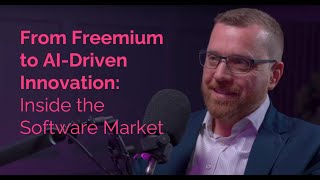
Tim Davies and David from Gemini Blue discuss how freemium models persist in software and how AI is shrinking product cycles. They walk through a real client case where GPT-4 turned interview transcripts into a requirements document, cutting vendor selection time dramatically.
I think this, the freemium business model is here to stay. It's such a good way to penetrate the market. If you've got something cool, get them addicted. I mean, sounds like drug dealers, doesn't it? They were the first.
It's funny.
Give you the free sample.
I still talk about ChatGPT being a starter drug because it gets people hooked on some of the capabilities of AI. And then we show them what we can really do. Other than AI giving you the ability personally to build an army of development bots that are going to build all of your product dreams. How do you see artificial intelligence changing the software market?
Well, hi, I'm Freya. Welcome to the Skynet Chronicles Business in the AI Age, the podcast that dives deep into the world where artificial intelligence meets business. Join us as we explore the latest trends, challenges and opportunities in this ever evolving landscape. From innovative startups to established enterprises, we'll uncover the secrets behind the successful integration of AI technologies. So grab a cup of coffee, sit back and get ready to unlock the mysteries of business in the AI age.
Good morning, David, and welcome to Skynet Chronicles. Thank you very much for joining us today.
Thanks for the coffee.
I didn't make it. Is it any good?
Not bad.
Excellent. Tell me a bit about Gemini Blue.
Gemini Blue is a software consultancy, software services firm that does two things. We help companies to select which software is the right fit for their stack. So outsource purchasing effectively and then once they've selected, then we help with implementation. So project managing, the implementation, the rollout, the training of the staff, the data configuration, all of that stuff. So selection and implementation, very, very simple. Been around a long time, tried and trusted, but the technology always changes. So it keeps us on our toes, really does.
We were just having a side conversation, which we're going to roll straight into here, talking about the changing in pricing models of software over time and that things used to be expensive upfront and then the advent of freemium, and now wherever it is, we're going with an ever increasing price and policy diversity. Tell me your thoughts about that.
I think the freemium business model is here to stay. It's such a good way to penetrate the market if you've got something cool. But you've got to have something cool. So we were talking about my memory of the PlayStation 2 back in the day, back in the day, going back a long, long time ago. And when technology first came out and iPhones, when the first iPhone came out, first smartphones, first BlackBerries used to buy them. So you'd often Buy a contract and you'd pay for the phone and you'd pay off the phone up front and stuff, or you'd pay for your PlayStation. And when the demand was at its highest, when the product was released and there was anticipation about the product release, and so they price it high. And then as demand falls, OS capacity increases in manufacturing, like you said, price falls and then everybody else gets on board. So the early adopters pay through the nose to be the early adopters. And that was always me. So I was there paying full whack, even though I've, you know, in the first half of my life I wasn't rich, so certainly not, you know, buying PlayStations left, right and center when they first came out, but wanting to be that early adopter always. I think I was the first guy I knew that had a 3G phone paid through the nose for that sucker. So it's been the premium pricing model, but what's happened now is the freemium business model. And it was stuff like, I mean, who are the first big impactors with freemium in tech? Let's think. So we had. Well, the big one that's really moved the needle, I think, is Fortnite, the video game. So that industry, the video Games industry for 30 years has been the same, effectively. So you, you pay 30 to 60 quid.
Some people paid 30 to 60 quid. Some People found ways of getting the software for free and playing it.
Yeah, the pirate market back, the 3.5-inch floppy disk, I mean, that was amazing, wasn't it? And, and copying DVDs and all of that stuff. But I mean, the legit business model was to sell Call of duty for 50 quid. You stick it in your machine and you playing. And the biggest titles, the biggest franchises, Halo, Call of Duty, all of that stuff, all built on that. The entire empire of the video game industry. And then along comes Fortnite, this free shooter.
It wasn't.
It was. No, it was. It was pubg, wasn't it? Battleground.
Yeah.
Never played it, but I heard of it. It went viral, didn't it? Because every kid in the world could play the thing for free. That was the forerunner. And then Fortnight nailed it. I don't know what they did. Cartoon ified it made it good for kids. And then these, you know, I take my kids shopping in the toy shop and we see all the Fortnight merch and this. It's a huge franchise. And it's. It's the in game purchase, isn't. It's the in app purchase. So everyone gets to play for free and you just pay if you want to upgrade. And all the kids do want to upgrade, don't they?
They want the shiny thing. They all want the 3G phone.
I think it started really with the smartphone and 3G networks when we had apps for the first time. And apps were free generally because they had no market for them. Everything was new. And there was no demand for the weather app or for this app or for whatever. And we expect to be able to tap on it and have it because we've already bought the phone. So most apps were free. And then if you wanted to upgrade to the premium version or you wanted to subscribe, you have to pay. And it started out being the free trial. You say you'd get it for a certain amount of time and then you'd have to pay the full price. But the free trials were good. But then the freemium business model is now have the entire thing for free. And also, here's some spicy treats.
The entire thing. Sometimes that thing is getting more and more limited, isn't it? Some of the free versions that you get, it's heavily restricted. But for a little bit more, you can get a little bit more capability. For a bit more than that, you can get the bells and whistles. And if you want everything, then it's xxx.
Well, the pricing model is transformative, based on the product life cycle. So in the early stages, yes, free. Everything's free. We're a very soft, cuddly company and we'll give away the farm. Everyone play Facebook right at the beginning, monetized with ads later on. But at first you could post a social post on Facebook about your business in Wigan. And if it was funny, thousands of people would buy your your product or your service. Now you've got to pay for ads. You can do nothing as a business on Facebook until you start paying for it. Because get them addicted. I mean, it sounds like drug dealers, doesn't it? They were the first.
It's funny.
Give you the free sample.
I still talk about ChatGPT being a starter drug, really, because it gets people hooked on some of the capabilities of AI and then we show them what we can really do. So I'm not saying that we're drug dealers, but there are some very, very good capabilities on the market, should you want to try them.
The stoners that created all of the technology in the world learned it from somewhere, didn't they? Probably, yeah. Get hooked for free and then we start introducing the pricing. But as I say, as the product Matures and goes into. It goes from a penetration pricing model and the freemium and all of this and just getting numbers. And this is when, you know, venture capital backed firms are getting money based on potential, grow the potential of the thing and then it's time to monetize, isn't it? Then it's time. We want the return now. So then everything starts getting paid for. And it's at this point where the purists that were on board at the beginning, the early adopters start sweating about it and get angry about it and.
Get annoyed seeking out open source equivalents.
Yeah, and alternate products. But you know, a good product creates an entire ecosystem, industry around it of supporting apps and alternates for that very reason. But if the, if you know, by that point the original has built up such a brand and a market share and a marketplace that it becomes the sun around which everything else spins, doesn't it? And there are landmark products in every sector of the, of the tech industry. But you know, they all have a life cycle. And those life cycles end just like the sun will in billions of years or whatever it is will come to an end. Product life cycles tend to end after, who knows, five years, 10 years, can you get 20 years?
I don't think many are getting anywhere near that now. And I think that life cycle is coming down and coming down rapidly. We see some product launches come out and you think that might even only have three months before it's eclipsed by something else.
Really?
Yeah.
Christ. Because if you look at the San Francisco tech bubble, if you like, the world of the big money in America's economy certainly is based on these publicly traded big corporations that are often based around a single product, really, a single platform, CRMs, ERP systems that are still market leaders today. But the code is, you know, some of the code in there is 25 years old. So if, if, I mean with, if AI is going to be able to outpace the development teams at those places and turn faster than them?
I think so. And I think yesterday evening Nvidia had their big conference announcement and their CEO was on stage and he was talking about a software development model where the entire development team were individual AIs. So no developer writing code, different pieces and effectively elements of artificial intelligence that were processing the different parts of the application build, all under the control of a chairman bot, if you want to call it that, that was coordinating and setting that initial structure. Software development doesn't have long left where it's human driven. And if you think then you're Moving to a product life cycle where you can go from idea to beta to product in weeks, rather than needing to source the engineers write out the spec. Just that whole rapid iteration. But rapid iteration where it's not requiring teams of people, that life cycle is only going to shorten.
I'm going to do that. I'm going to create some software products because there's stuff that I. Sometimes I see things like that I wish there was an app for that, or there's a hole in the market for that. If only I employed a team of developers and had a company for that. Obviously I don't. So my idea sits in my head. But if I could tell AI to make it for me.
Maybe we should talk because we did one of those just in the last couple of weeks. We had this idea, we were using it in a form internally. We're like, actually, we just need to productize this, put it out there, see what the feedback is, see if there is a market fit and based on that, then build out and build out the team to build it.
My God.
But I think we're going to get these, really. Some of them are going to be ridiculously short life cycles before the technology just eclipses it. But if in that time you can build something that changes the way a business operates or changes the way an industry works, then there's huge value there.
The product doesn't die just because the technology moves forward, though it's still got people using it and enjoying it. They're not going to switch instantly, maybe.
But there are instances when they have. So if you look at when GPT3 as a model first came out, first became available for a period of maybe 15 months, people were building out basic copy editing and copywriting tools and there were a fleet of these companies, some of them had got to unicorn status. ChatGPT was released within two months, gone.
Yeah, but you're talking about the bleeding edge of AI time though, isn't it? Oh, yeah, it is exciting, but commercially high risk, obviously. What I'm thinking is, is simple stuff. Take an existing platform with a massive user base, Shopify, WooCommerce, and we need an app for geolocation and email targeting based on Geolocation or something like that, something that isn't readily available as a feature in the existing app app marketplace. And you think of it and you think, yeah, we could, we could offer that and stores would pay, you know, would you pay 20 quid a month to have this on your site? Yes, but I can't make that app.
Why not?
But if I could make that up using an AI, then, you know, it would be easy to put it on that marketplace and start promoting it. And if somebody buys it and they're running it on their store, the technology might move on and it might become obsolete within a fortnight. But who cares? Because that store owner is using it to sell clogs in Wisconsin and it's working. They're not going to turn it off.
For wooden shoes in Wisconsin, I doubt it. It's probably the really easy fix. If they crack, you could just epoxy them back together.
I have no idea what's big in Wisconsin so famous for.
I'm not sure. I'm not. I don't think we should go there.
No. But I know this. If you want, if you want clogs, you go to Amsterdam. If you want tech, you got California, you got America. And those, you know, those guys have been the center of my world for most of my adult life. And it's going to be really interesting to see what happens to that major, the world's biggest economy when it's cash cow gets eaten by a robot.
Well, it's cash cow may have created the robot and they may still make profit from that. So which bits of software are exciting you at the moment in terms of the software that you offer your customers?
It's not so much new apps, it's. I like stuff. That's. Yeah, there are some. So I like Repsley, I do like Repsly a lot. I like HubSpot a lot and I like Shopify and anyone that emails me sees those logos in my footer. I like them because for different reasons, they're at different stages of their life cycles. But they all are the leaders in.
What they do best in class.
Best in class. And there's already massive demand out there for them and companies just need support learning about them and implementing them. And my firm can do that. So I like to piggyback on the best stuff. And I'm a nerd, so I like the coolest, best stuff. And I'll give you an example. I on a call this morning with a company, a client of mine down in Dover and they hand make stuff. They're a factory, they make stuff and they make stuff that gets sold in the gift shops of tourist attractions, like historical sites, like if you go to Sandringham, there's a gift shop there. If you go to Loch Ness, there's a gift shop that, if you go to museums, art exhibitions, wherever there's a gift shop with historical stuff in There this, these guys literally make it and then a lot of their stuff, most of their stuff is not imported. It's literally handmade, hand painted, beautifully packaged and sold in these gift shops. And it looks great. And they've got boxes in storage, they've got quite a lot of storage down there. But they're, they're not selling them direct to consumer, they're selling them beta. Beta be through these gift shops and stores and branded merch and stuff. And we're using just the basics on Shopify. You know, it's low cost. So I get so excited talking to these guys because I'm like for very little money, what used to cost, you know, not 10 years ago it would have been a budget. Web designers coming in teams of creative.
20 grand. Absolute minimum, minimum, minimum.
E commerce websites, God, Custom, custom coded stuff, checkout experience, all of that. Now we can literally just scoop all up all of your product listings, click a template, shove it in there, apply a gorgeous template. These templates, $99 terrible. I think of web designers that, that are friends of mine and I said God damn, you must hate that. Some kid in Vietnam's created a, a theme on, on theme forest for 99 a year. And it's bloody awesome. And these sites look incredible. And we've taken these products. I didn't even know what they sold. There's that much stuff and I can't, I couldn't navigate it or see it. Now I can see it. I've bought it. I'm like, I want that. I bought the travel chess set for my kids because to teach them chess, Mother's Day came up. They do jewelry, bang bang. But I was like, I was their first customer. When the site's in beta, this is going to work.
Are you just demonstrating there's a need there?
Yeah, but it's great. You take in a simple common application that we all take for granted. It's well established, it's low cost and you apply it to a firm that's got that, that had no idea how to do it. And you take something, they're doing something cool, but they don't know how to take it to market. Put it on that platform and it's going to go nuts. And when we push it with some social media ads, which used to be, you know, advertising the cost of advertising, how would they market? They do these little miniature replica crowns.
Right People on your head crown.
Yeah. As in the queen's crown. So if you want to a scale model replica made of gold and silk and encrusted with, with gems of the Queen's jubilee Crown or Henry VIII's crown or whichever. Amberlynn's crown or whatever it is, the Victoria crown, whatever. Or famous European, you know, the French, Edward, whatever it was. There's a miniature of it and you can buy it and it's beautifully packaged and it sells in these gift shops. But we're going to, we're thinking, how many of those, if people knew about these? There are people all over Britain. My nan would have that. I was asking her, what are we going to go, you know, when we start, turn on the marketing, what are we going to go with? And we're thinking, I'm going to reveal things. My client. Are they going to mind me saying this? No, they're going to be all right with me.
You're promoting them. I think it's, you can name drop them if you like.
What's going to sell? What's something that people are going to want regardless of timing or you know, an affordable, affordable price. But something collectible that a lot of people demand. Princess Diana's engagement ring. A replica of it. Christ, everyone's that's gonna sell, isn't it? I had no idea that this thing exists. But we put it on this store and it looks fun. It looks a million dollars. And as soon as we turn on marketing, I'm just, I get excited because my client's gonna be happy with me and I'm gonna be a little hero and it's gonna be great.
And all we're doing is looking at a business problem, looking at an existing business and going, okay, with the available technology that's around, how can we transform their processes? How can we help them increase their revenue and increase their profits?
Yeah, just applying a tried and tested app in the middle of its life cycle so it's not late in its life cycle. There's not younger stuff that's better yet. It's, it's at top of its game and it's affordable and small and medium sized businesses can have advantages, can have better customer experiences than some of the big firms that invested millions years ago and their stuff is now getting old. I enjoy that. I enjoy working for the, for the underdog and beating the big guys with, with newer, younger, more affordable tech. And another example of that I do like to find every now and again I come across something that's young in the early stages of its life cycle. Maybe it's venture capital backed, maybe it's going for growth. It's unknown in its market and if I come across it Early. I like to partner with that thing and I like to jump on. I like to roll the dice on it.
Yeah.
And I've done that with an app called Rep Sling and that's paying dividends now. That's. That's working out really well for its clients and for me as their European partner, for them. And it's an app where it's like brand ambassadors and field marketing. It's the field marketing industry. So it's a niche within marketing. They call it the last mile of marketing. So what happens in the store when the customer walks in? So Cadbury's have done all of the marketing, they've done all the TV ads, they've done the branding, they've produced the chocolate for 30 years. It has its position in the marketplace. But what happens when you walk into Morrison's? Where is it?
What's it next to?
What's it next to? Does its shelf position affect the volume of sales across Morrison stores? There's loads of factors. What happens actually in the point of sale, at the point of sale, the display, the customer experience of picking up the products and buying it. That industry is ruled by the agencies. It's an agency model in Europe. In America, it's owned by the brands. The brands themselves employ their own armies of people going out wearing the correctly branded polo shirts and the lanyards going into stores. And they used to have a clipboard to record all the information and now they've. Then they got an iPad and that might be an Excel sheet that they fill out or something like that. And they've all developed their own software to do this, their own tech. So most companies that operate the brands don't do that, so they outsource it to the agencies and the agencies give them a workforce of people, often flexible payroll people, and they give them an app to collect all the data and report it. And nowadays that's usually on a mobile app rather than on a tablet, because who wants to, you know, you have to find. Yep, more stuff to break. Whereas everybody comes to work. You know, I'm only doing four visits this week for my agency and I get paid per visit. I get paid a tenor per visit, but I just use my own phone, download the app, go to work, get paid. Brilliant. It's the gig economy, right? It's like the Uber of mystery shopping. Right. But all of these apps are limited because the companies, the agencies that have developed them, are not software companies primarily. They've. They're field marketing agencies. They've had to become software developers. They've had to hire developers and build this tech and then some of those have split that out and then they're reselling that tech to others in the industry as well. So they've created their own software industry. So what's happened now is in the last five and a bit years really is there's been a new generation of apps that are SaaS model so we can simply license them, put our data in there, upload our list of stores.
Create a form, upload the logo, done.
Go to work, collect the information and then meanwhile back on the, in the office, on the desktop experience or on the laptops, the reports look beautiful. Auto generated dashboards, shareable links to send to the clients that they can see everything in real time. And Cadbury's or you know, whoever the, the customer, my biggest customer is Budweiser Group, AB InBev. And for the, for the guys back in the office in London, it feels for them like they can be out shadowing with the, their reps going into bars and stuff because they can see what they can see. They're capturing all of the photos, scanning everything, collecting all the data and they see it in real time and they can make a change and see the impact instantly.
Instant A B testing.
Oh, it's fantastic. I mean instant roi. We can thank crazy Frog for that sucker. Remember the crazy frog? Funny thing, they could run an ad in between Coronation street, they'll run an ad at 8:15pm I don't know what time Cory's on, I'm guessing 8 soaps. They could run an ad at 8:15 on ITV and 8:16 they've generated X number of hundreds of thousands and the cost of the ad was 12 grand. So therefore run that again, run that again, run that again. Instant roi. So yeah, this reps the app that I've partnered with, it's in the early stages of its life cycle. It's venture capital backed, it's growing well, it's got a really solid development team out of Croatia and I really like the app and it's bringing me some great success and it's starting to displace now some of the agencies that are using older SaaS technologies or older least technologies. And I'm a, I've got a product that I can start to go into that market with. So I do like to put my bet on Red32 once in a while when I come across something very cool in the early stages and I've done that with Repsley. But for the most part I do really enjoy taking solid products that are in the middle at the peak of their life cycle and just applying it to small business. That's my, that's my motivation really.
So was it this time last year? Could have been that long ago. We were working together on a specific customer and they were looking at their suite of systems and they were potentially going, we might need everything new. Can you talk?
What's this?
Began with Jay. Yes.
Yeah, you can say their name. Juniper.
Okay. So we were working with Juniper and looking at all of the different systems that they had across their space and their processes and doing a series of interviews, Q and A's as we tried to establish what was the right mix of systems. Can you talk a bit about that process that we followed?
Yeah, yeah, yeah. And also, you know, let's talk about the client case as well because they're very close to that customer and I know that Suzanne and Andrew would be happy for me to talk about it. So they're in the branded promo industry and they produce diaries, sorry, notebooks, the A5 notebooks.
The A5 notebooks.
We've all got them, you know, I've got half a dozen probably. We all own these things and they're usually branded with the company that gave it to you has got their logo on there and they come in, you know, a hundred different colors and different types and covers and book blocks and ribbons and loops and all of that stuff. You. And you can bespoke anything you like. You can have an A5 notebook in any shape. It was something the same shape but any color, cover, texture to match your brand.
Thousands of escapes.
Oh yeah, yeah, thousands of SKUs. So their challenge was getting a system, a manufacturing. Well, they're a bespoke British manufacturer. So there are plenty of systems out there for manufacturing ERP systems and quite expensive, particularly the market leaders that are getting to the later stages of their life cycle. I mentioned no names, no brands, but it's still an expensive marketplace for software. But again, there's a new generation of ERPs that have come out really with E Commerce. Shopify and Woocommerce have pushed them. So we've got some great mid level brands for inventory control, order management systems, purchase order management, customer orders, and there's some great. They often include tech for configure price and quote. So the customer can select what they want, the quantity of it on the website and it configures the price for them and they can order it. But most of that industry is still, I mean, I reckon probably 90% of that industry is still distributors, emailing the supplier to get a price and almost.
Everything being run on spreadsheets.
Spreadsheets manual. Manual tasks for everything. And the reason for that is because there hasn't been a product off the shelf that just. That has that. That complex capability for bespoke manufacturing. So you had to make one or you had to modify something very expensive out of California from, From that tech bubble, and my God, it was unaffordable. And the amount of time and resource it takes to put that system into your business, great if you're boot the chemist, but if you're a British bespoke manufacturer in the West Midlands or in the East Midlands, you've got no chance. So it's spreadsheets late nights and sleepless nights and not going on holidays and things like that. And that's the situation they were living in. And then we came in, didn't we? And we've. Well, we'll see. The jury's still out because they're still in implementation. But so far, I think so good. Last time I talked to Suzanne was just before Christmas and it still looked like we were on track for a good result. And I'm expecting it to be revolutionary for their business. I mean, it will be, let's face it, it's going to be great. But there was so many products on the market now and so many of them were not right. There's a few that did fit, but how do you find them out of this massive myriad of systems that are claiming to be good for bespoke manufacturing.
Match it to their actual needs of the company? That was half of the challenge, wasn't it? How do we get to that point of. These are the specific needs that we need to measure the software that's available against. And that was. It was a huge challenge. It was just so much information around us.
Well, that was the requirements document, isn't it? So when we go shopping for tech, we do the discovery, then we do the vendor evaluation, selection, due diligence, and in that discovery is building a requirements document of what do we need? And what you don't want to do is go inventing stuff. You don't want to go dreaming up stuff that doesn't exist because then everything that you look at looks like it's not going to fit and you end up having to, you know, you're back in the old world of custom dev. So how do we know what features are out there in existing tech and what requirements are? And the requirements list was bloody huge. And this is where you guys. Well, you particularly Helped out a lot there. My God, we really shortcut that process, didn't we? Because you basically went around and used AI tools for this.
Yeah, we took something like it was between 15 and 20 hours of interviews and chunked it down into a list of critical customer requirements in it wasn't minutes, but it wasn't far off.
I think the bit that, where I realized, oh shit, this is. Things have changed in that one was where I'd got the template for the requirements document and you'd come out with something like. Was it thousands? It was many hundreds of wishlist requirements. Well, these are not features that are in software. What these are is what the people in this company have asked to have. But that's not what the software call. You know, an example might be we want it. So when we click on that, it shows us how much is available and when it gets low, we can create a purchase order to reorder more before it runs out.
They describe it like that you needed features and functions.
And the software company calls that automatic reorder function. Yeah, so I need, I need that to say that. So what did you, how did you, what did you do with that? You came, you had this list of hundreds of wish list items. What did you do with that? You ran it through.
So we used a combination. So we'd taken all of the audio transcripts of the interviews that we had. So we had that as data that could be mined. We had the list of critical customer requirements that had been extracted from those transcripts. And then I wrote a series of prompts which were fired against GPT4, which took.
Fired against GPT4 large language model Magic. Okay, okay, Tim.
That took the transcripts, the information that the customers had said and said, I need these things described in this way.
I think I told you. Um, the, the example I gave you was look at these software companies websites and their features lists. This is the language that they use to describe their features. I need that to, to look like this.
So we.
So you described that to ChatGPT.
Essentially I wrote a prompt which its job was to respond back in a certain way. So I told it how to describe the features and functions for software companies and said using this information, extract the functions that are required in the tone of voice and style of these software companies. And then I just fired in the individual transcripts and the information that we had and had it rationalize and output that in the language that we needed. So we just used this capability of a large language model with a very specific ask with information that was appropriate for that business to come up with an answer. So we were playing into how do you take input information and respond with word at a time, token at a time in the way that these language models do. We told it exactly how to act and it gave us the information we needed. So the information was already there. It just wasn't in the right language. And we effectively translated it using GPT4.
And it basically produced a requirements document for a complex requirements document for a manufacturing ERP requirement. I then edited that. It wasn't perfect. It took me about 10 minutes and.
Then I saved a bit of editing.
I saved it in my PDF and I was able to send that to all of these tech company vendors. So we made a long list. Then I made a short list of the ones that look most likely to be serious. They look the size and shape and feature function, price model life cycle of their software narrowed it down to about 10. I was able to send them this requirements document. Are you a fit for this? Qualify yourselves out. Basically they didn't. You must speak with our salesperson before you can qualify. I think, I think the sales model of SaaS software companies needs to sharpen.
Especially these traditional ones that have been around a while.
Yep. We won't tell you if it's a fit or not until you speak to sales. Well, no, because I'm in control now. The, the buyer is now in control of the learning and if you, if you don't tell me right now, I'm not going to wait for you to book an appointment with me. I'm going to go on YouTube and I'm going to go and Google it and I'm going to ask AI bots what they think and I'm just going to take that answer. So the control over that answer, the, the control over the journey of information to the customers doesn't come from their salesperson anymore. I'll speak to them when I'm ready to close. But anyway, yeah, so I produced that, that, that requirements document and we did whittle it down to a few. I think we whittled it down to our top three favorites. Interestingly actually that one, yeah because we invited them to then pitch. So did a load of due diligence. So the next stage along selection narrowed it down. Discovery, selection, due diligence. We try before we buy, don't buy on promise anymore. And it was remarkable to me how the mature products, the ones with all of the market share and the massive payroll and offices all over the world.
Were no good for the job.
They would not show us, they wouldn't demo, they wouldn't screen share, they wouldn't even show us the product unless we had really gone down to committing to big sums of money to buy it. So there's. Are there, are there chief operating officers of companies out there still buying based on brand?
Yeah. Nobody ever got sacked for buying IBM, did they?
Yes, they did.
Well, eventually maybe, but for a long, long time.
I know a guy who got sacked for buying Oracle PeopleSoft, a multimillion install. A large organization just as they were because it was at the end of its lifecycle, just as they were stopping supporting it with updates. We must have been the last customer they implemented and that guy lost his job. And I remember that because I had a company car at the time, my car was in for its mot, so HR gave me the keys to the spare car, which was his BMW 5 series. And as a young, because he was.
No longer with the company, there was a spare car.
And as a young lad I saw this M5 and I was like, oh shit, M5. It wasn't. It was the three litre diesel dressed in it, which I think is a con BMW. But anyway.
But it'll do 50 miles to the gallon.
In the center console was a printed pen, our company's printed pen. And on said over deliver, don't over promise. Sorry dude.
Bye. So, other than AI giving you the ability personally to build an army of development bots that are going to build all of your product dreams, how do you see artificial intelligence changing the software market?
Well, first of all, I probably won't do that. And even though the technology may exist, it doesn't mean that people like me in the software industry and all of the small players will instantly run out and build them because you've still got to sell them and promote them. Meanwhile, I'm currently making a living that I would have to put on hold to do that. The rate of feature releases now in SaaS products is so much faster than it used to be. Yeah. Oh my God. Like every quarter, every month.
Most of these companies are on Sprint Cycles and they're putting something out every week. Yeah, it's just whether it's bug fixes rather than new features and how that spread of fix versus new is within an individual company.
Yeah, yeah, so, yeah, development, absolutely. But go to market though, I think, I think going to market is slower because you've got to get adoption from the, from the marketplace and it's all right introducing a feature to a product that somebody's already using. That's great. We're adding value to the product means we can charge more for the products. Even better, everybody wins. But to bring something new out on the market, that's more of a challenge. So just because we can make something cool and something that solves a problem for a specific user, we've then got to find all of those specific users in the world and make them aware of it. And that comes down to ad spend.
Still, sometimes I think there will be more chatgpt moments where software springs out of nowhere with no ad spend whatsoever, becomes market leader. And that took two months to hit 100 million users. And I think, as you see, some of the capabilities, if they're completely game changing, will they have very fast adoption? I think they will. I was playing with a new piece of software yesterday. By the time this comes out, it won't be new anymore. But it was a music generation AI and you could prompt in the same way as you do chatgpt and it would produce the lyrics for the song and have them sung and produce all aspects across any type of music you can imagine. And it was good.
So why do I hate it instantly?
You hate it instantly because music is something that humanity has always had around us, which has been something that is generally takes time to create and is a live experience. And I'm a musician, so you hate it instantly. But for a toy, my goodness. I spent half an hour and I produced 10 different songs across 10 different types of music. And some of them were crap, but some of them really weren't. And that's with version three of this software. Version five is going to put certain artists out of work.
Yeah, well, join the queue. Copywriters, developers, Christ, creatives. Oh my God. Out of work. What is this? The whole. This is the whole AI conversation, isn't it, about what is work going to be, what's the meaning of it? Now all of that stuff, we're not there, but in 10 years. Oh my God.
So you've got two young lads. What do you think they're going to do for a job?
Well, I'm teaching them to play guitar and drums. At the minute, they're only six, but we're making a right racket and it's great fun. Are they going to get the same amount of fun and pleasure out of saying, hey, Google, make me this song? My phone is now listening to me. Sorry.
It'S still listening to you.
Yeah, I know, but I don't mind the ability to use it as a writing aid to create music, but until it can get on a stage and sweat and thrash it out and make me feel emotion when I'm drunk.
I think emotion when you're drunk is probably a lot easier than emotion when you're sober. But it's interesting and I think with all of these tools and technologies they're not creating something to 100% but in the same way as we created that spec sheet, in the same way as we use it for ideation on a project or we help craft a proposal. If you can get to 80, 90% of the development process, that idea generation, that synthesizing of concepts quickly, then the human element is what final finalizes it and still performs live for music. By having something that helps you come up with new wild ideas, those mix of different concepts, that's where it plays a very significant point.
Help me create the content, but I will perform it and deliver it. Yeah, I'll tell you what I am looking forward to in AI and I think in Martech. I mean martech is my favorite bit of tech marketing technology. I'm not a fintech guy, probably be rich if I was not a HR tech guy. I'm a martech guy, really work with anything. But I really like Martech. And what I'm finding at the moment is my inbox is filling up with spam. It's like it's nine, it's like it's 2007 again. GDPR never happened. My God, they're blasting me. They stopped blasting me for a long time because of GDPR and other things and Outlook was able to screen them out.
Spam filters worked really well but GPT is getting around them filters.
So people are using AI tools to get around the spam filters to irritate me and anybody else in commerce, in capitalism at the moment. I think that is short lived and I think it will soon be replaced by something better than that when people figure out how to properly use it. So let's take, let's go back to our new product that we've imagined up take that to market. Rather than spamming the universe, what we want to do is find a specific use case so there are users dotted around the planet with a specific problem to solve and this product helps them solve that. How do we find them and pass them this message and get them to see it and it's going to take five to seven to 10 touch points. They're going to need to see it a lot of times before their brain actually recognizes it, let alone purchase it to even start down that customer life cycle. But what I'd like to see is AI tools that can take big data like Zoom info and LinkedIn, sales navigator and all of that. Drill it right down based on that user's behavior and their social behavior on the social medias and all the rest of it, their online Persona. What is this person doing that indicates that the timing is right for them to have this problem. Therefore target them with paid ads.
Ideally buying signals displayed, activate.
I want that. And we're very good at doing that when there's an election coming or when there's an event or a moment in time and we can. You know, the Republican party in America could plow millions into electioneering using algorithms. God bless Cambridge Analytica and all those guys should be in prison, but they're not. They're in some beach somewhere. Probably say no more about those guys, but we are good at doing that enterprise scale. The SME market is still spamming, but using AI tools to do the wrong thing. I'd like to see. I'm looking forward to the inevitable stage where small businesses are able to specifically target the users based on their behavior online to solve specific problems for specific people. That is useful and I welcome that. So when I get something in my inbox that is time that I have a problem to solve today with this client and this company knows that and they contact me about it because I've.
Been searching Google because your phone's listening to you.
Because my phone's listening to me, because I've done a podcast that's welcome. And a bugbear of mine is when people are afraid of cookies and I'm like, you need the cookies because otherwise they can't target you appropriately and you can't show that. You can't show the world.
I thought you'd bought me some cookies.
You need the cookie. Without the cookie you're gonna get spam anyway. You know, if I go on Amazon, I want the cookie because I want to see the stuff that I'm interested in buying. I don't want to see irrelevant products. And I think that comes down to belief system. Human belief systems are quite intriguing as well and around technology. So I still to this day touch wood that we're going away this weekend. Hope the weather's nice. Looks like the weather's going to be good. Touch wood. Still do that, you know. An age old superstition, isn't it? And now we've got people delete your cookies or turn on the filter. Install a filter so you don't add blockers. Why? Because the Internet boogey monsters out there and he's getting my data. They're spying on me.
I use blockers.
But you be. You know, you're being spy. Do you want to have. Do you want to be targeted with useful products, useful information at a time when that's. That's right for you, or do you want to be. You know, I think, I think the ad blocker thing, I mean, Martech, I'm biased, you know, work with marketing and advertising agencies. I like ads. So to have ad blockers and deleting cookies so they follow me. Do you think you're James Bond? What do you think you've hidden from? You know, all it means is you're going to see women's bras instead of men's underpants. Well.
Or no adverts. So depending on the levels of extreme that you go to. So I still see product placement, but it's very rare. I'll see an advert. But that's.
You're missing out.
Maybe I'm missing out, but also I've got time and that time's precious. On the subject of time, we should probably draw to a close. David, it is chatting. I think we could spend all day here. Thank you very much for joining us today. Look forward to chatting again soon.
Thank you, Tim.
More from Tim

EP 60: Why Founders Become the Bottleneck — And How AI Changes Everything | Thea Brook









