
Ep13: The future of AI and digital marketing
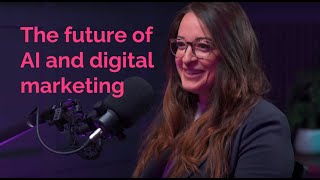
A June 2024 YouTube interview (Tim Davies with Charlotte of Bira Marketing/Bespoke Norfolk) exploring how AI—especially persona-driven chatbots and automation—affects marketing and small/medium businesses. They describe building team-member persona chatbots for Bespoke Norfolk, discuss efficiency gains (ideation, content, reporting, project-management automations), likely pricing/packaging shifts (AI-driven base packages vs human-enhanced tiers), and concerns about aftercare, fraud/deepfakes, and the limits of fully autonomous agencies. The conversation closes with ambitions to make more lifelike chatbot avatars and practical advice about embracing AI tools while retaining human oversight.
It could potentially feel a little bit scared of it, like, oh, that's going to take my job away or whatever. But I think it's more to be embraced because you can use. It's not there to completely replace what you do, it's there to enhance what you do.
Don't get me wrong, it is going to take jobs, but it's going to be the jobs of the people that aren't using these tools to perform more efficiently. We could probably clone the voice, but having the voices cloned and the lip sync, it just, it's more. Not quite fast enough yet. So we've just tried to cheat the process a little bit, give enough information to these chatbots that they're trained in understanding the roles that the team members have, understand some of the character traits, to come across sarcastic at the right time. Ultimately getting an email back to the team saying, we've had this conversation with this person, this is what they need.
It's almost like it does better work than a human can do.
So will we get to the point where Bespoke Norfolk's chatbots look like them, sound like them? I like a interactive video call with somebody. Yes, we will.
Hi, I'm Freya. Welcome to the Skynet Chronicles Business in the AI Age, the podcast that dives deep into the world where artificial intelligence meets business. Join us as we explore the latest trends, challenges and opportunities in this ever evolving landscape. From innovative startups to established enterprises, we'll uncover the secrets behind the successful integration of AI technologies. So grab a cup of coffee, sit back and get ready to unlock the mysteries of business in the AI age.
Welcome to the Skynet Chronicles. Today we're joined by Charlotte from Bira Marketing and Bespoke Norfolk Group, who's played a key role apparently in developing the innovative team member Persona chatbots that Bespoke Norfolk Group are using. But rather than talk about that, tell me about you, Charlotte.
Thanks. Yeah, so basically I have been in marketing for what feels like a super long time now at the ripe age of 37. I have been involved with Bespoke Norfolk for Bespoke Norfolk Group for quite a long time. I think about 12 years that we're working with Ebbs now. And yeah, we've come a long way from them, from those guys being just a couple of carpenters that have grown their business to this phenomenal company that it is today and expanding across Norfolk, Suffolk, Cambridgeshire, Hertfordshire, everything that they're doing and America.
Didn't you say Stuart's flying out to the States recently?
He did fly out to the States recently. He certainly did. Yeah. An absolute huge mansion that this guy wants to just tear down and rebuild out there.
Whereabouts in the U.S. was that?
Louisiana? Yeah.
Wow. So money.
Yeah, money. So, yeah, Stuart really wanted to have some chatbots on the website and he really wanted for them to be. So that you could actually feel like you were interacting with the members of the team. So it felt like their personalities. But of course, as we discussed, the technology doesn't quite exist for it to feel like a living, breathing, actually moving person.
Yet it's getting there. It's a bit slow at the moment, isn't it? That's a problem. We can do the whole. It sounds and acts like them in the way that they speak. We could probably clone the voice, but having the voices cloned and the lip sync, it just. It's not quite fast enough yet.
Yeah.
Watch this space on that one.
Yeah, it's coming. So, so far, it's just, of course, the actual chatbots with their personalities, which has been quite fun to test out.
We've had a lot of fun tuning them. They started off very dry.
Yeah.
And then you came back with more about their sort of personal traits and we've trained it in and fed on that.
Yeah.
And now it responds brilliantly when you say, I want a really big extension.
Yeah.
How much is it going to cost?
With some nice humor to boot. It's fantastic, really.
It is. I think it's been an interesting experiment in how we tune for those sort of different Personas and get the different styles of people across, where it actually comes out in a chat bot, rather than it just being this almost stochastic parrot response where you just go, I'm a lot. As a large language model, I. Blah, blah, blah. No, we don't want any of that. We need you to actually be Stuart.
Yeah. And to be honest, I don't think I really knew that that actually existed because obviously I came to you and said, at the moment it sounds a bit like this, that that's not really how they sound. Is it possible to make that happen? You're like, yeah, absolutely, it can.
And I think we've succeeded.
Yeah, it does. It certainly does sound more like him, for sure.
I love some of the responses where we've played with it. It's just like, oh, fantastic.
Yeah.
Because people are put in the most ridiculous questions, don't they?
Yeah.
It's wrong to say that people are stupid, but you do come across a lot of stupid people in these sort of interactions who just expect that you can read their mind and understand exactly what they want when they've put three or four words in a request.
Yeah.
How much is it going to cost? What do you want?
How much is an expensive.
How big is it? You want a swimming pool in the basement? How big is the swimming pool? Does it include a sauna?
Yeah, I guess that would be the same for us as well in our industry, wouldn't it? I want a website. How much is it going to be? How many pages? What's the functionality? What do you want it to do?
I want load more customers. How are you going to advertise it? Where do you want to advertise it? Who do you want to advertise it to? What's the target market? How much are you looking to spend? It doesn't matter which industry you look at. It's the same sort of challenges that people don't necessarily think through the steps that you need in order to make a purchase. So we've just tried to cheat the process a little bit, give enough information to these chatbots that they're trained in understanding the roles that the team members have, understand some of the character traits to come across sarcastic at the right time or straight laced, depending on the individual, and then bring that into the conversation. So we're still extracting the information that's needed as part of that chat flow, ultimately getting an email back to the team saying, we've had this conversation with this person, this is what they need. But that could be any sort of output. It's just getting them to a point of have we got all the information we need? Was the conversation successful for both Bespoke Norfolk and for the individual using the chatbot? Yeah. And how you marry that up. So how have you seen AI impacting the marketing space within bira?
It's definitely developed. So we are three years and three months into Byron now and we are definitely in a different space in terms of the way that we can, I guess, streamline our processes because of AI. I think initially when AI came onto the scene in a more larger way, I think that marketeers potentially and more specifically in I guess the exact skill sets, like for example, a copywriter and those kind of things could potentially feel a little bit scared of it, like, oh, that's going to take my job away or whatever. But I think it's more to be embraced because you can use. It's not there to completely replace what you do, it's there to enhance what you do and to streamline your process and to make things faster because the more you streamline and the faster you work, essentially the more clients that you can fulfill and the better that you can become. So I don't want to say that it does better work than a, than a human can do, but it's almost like it does better work than a human can do because it thinks about the ideas for you. And you know, when we're planning things out, you might put in a prompt to say, oh, just come up with these topics and ideas for me. And that just gets you flowing. Takes away the, the process of sitting down and wasting the hours on something that you, that you might have done before. I think that's kind of been the biggest thing that we've seen so heavy.
In the ideation space.
Definitely.
Then supporting people in their roles rather than replacing them.
Yeah.
So they can just do more.
Yeah, that's what, that's what we've found anyway.
I think it's the same everywhere. It's very easy to look at AI as it's going to take our jobs. Don't get me wrong, it is going to take jobs, but it's going to be the jobs of the people that aren't using these tools to perform, perform more efficiently.
Yeah.
Because if you can lean into a tool that gets you to 80, 90% of the way through something that you then just refine it and finish it off, you can do so much more in a day.
Definitely.
It's almost feels like cheating, doesn't it?
Well, it does a little bit, yeah. And I think that some people would potentially shy away from saying to customers that they, their clients, that they use AI to fulfill on their work. But I don't see why you shouldn't be open and honest about the fact that you, that you use it to help you to refine your process and to get to a particular point because you still have to put a lot of man hours into actually making, you know, a project or a campaign actually work. It's just that, that, you know, essentially you were being a bit like busy fools before because you had to spend even more time than you were actually essentially billing for by just having to sit and think of all of the ideas before. So, yeah, we don't, we don't shy away from saying that we use technology because sometimes a client will come to us and be like, you should be using this. And it's a bit. We are. That is what we do.
It's not new, but it doesn't matter that we are. It's part of the process that we're using. To deliver for you, we're delivering at the same level of excellence. It's just over time, we're adding tools into that process to make it more efficient. Yeah, humans use tools. This is just a new tool.
Yeah, exactly.
So do you think there's going to come a point where you and other marketers will experience a push on price, where people are saying, well, we think you're able to do this more cheaply than you were before, and therefore it potentially has an impact on the price that you charge out or the cost that the customers expect?
I would say potentially. And I think that you would just kind of categorize that into different levels then, because there definitely is. You could deliver, let's just say, for example, we take that into providing social media content or something like that. So I think you can provide like base level social media content that is largely driven in an AI way that essentially helps to put brand presence out there in a regulatory form. And you could do that at like one level. But then if you want to actually kind of really give it some brand personality. So like, for example, for ourselves, if we try to market ourselves like our marketing agency, there's a lot of our own personal videos and photos and all of that kind of thing that's on there. So if I shoved that into an AI tool and asked it to create me a calendar, I don't think it's going to pull out our own. I mean, I don't know that you might tell me differently. That technology does actually exist for our own photos and videos to pop up in there, but I don't think it's going to. So there'd be a different level of refinement there. I'm just saying that there's kind of like, there's two bases. I think we could offer a cheaper package that's like, you know, if you just want some brand presence out there. And sure, we can do it like that. If you, you want it to be more tailored and more feeling like it's. Yeah, well, tailored is the right word, I guess.
Yeah. So you end up with sort of a bronze package that is an AI production line where you take a few little bits of information and it just produces your content for you. But if you want something that's more personalized, that has a more of a human touch to it, then you have a silver, gold, platinum, whatever the experience is where they're paying additional for that extra work that's going in over and above the production line that is just AI delivered.
Yeah, that's what I would say, I.
Think that's going to be a very common approach. We're certainly hearing something similar from our corporate creative clients where they are building effectively AI production agencies for the low cost assets. Yeah, but where they want that human experience, you're not going to, you're not going to get rid of a creative director who can come in and say, well you should do this in this way and have that huge impact on an entire campaign. And the same applies for any size of company and any size of agency. That human touch, the reason why people pick up the phone and come to you versus another agency really isn't necessarily just the service you offer. People are still buying people.
Yes.
So having that within a package where, yeah, you can have whatever you like on an AI basis but if you want the human touch, then you've got to pay for our experience and time.
Yeah, 100%. I came across a company yesterday as it happens and essentially they, they are kind of white labeling if you like to become a partner of them and as an, a full AI agency. So they will kind of deliver everything in an AI style, an AI website, AI social media, AI everything. And so you, like us for example, could become a partner of that and sell their services and then you've got their full AI team to deliver on that.
I wonder how much of that's powered by upwork.
Actually, I don't know. I'm really.
There are some stories around that.
Yeah, I don't, I genuinely don't know. But the thing that I found, I suppose concerning about that and it was highlighted to me because of the reason that I came across it is that whilst AI can deliver on all of the things like you know, the physical actual development of the products and all the softwares and this, that the other, what it failed to deliver on is the aftercare and, and the human element of looking after a client beyond that point because it doesn't know what a client needs after that because it, you know, unless a client is coming back to it and saying, oh, I need you to sort out this and this now, then it's like it doesn't know because it isn't a human interacting with it. So what actually happened in this case is we discovered this, this client saying, well I had this website made and there's all these things that's wrong with it and I don't know how to kind of like get them fixed and sorted. They didn't know that they'd had an AI website built for them. And I discovered this yesterday and then found that it was made by this company and so on and so forth. So it's a bit like, you know, you could offer a service where you could get something like done cheaper, but then I think you would fall down on the aftercare and people really appreciate the aftercare.
Absolutely.
I mean, or just make sure that both happens well together.
Yeah, I don't think you're going to get right first time. I think these tools and technologies get you a large way very quickly, but you need to refine it. I mean you can knock up a website in minutes, you can create a logo in seconds, but are they going to be perfect how you then refine that and tweak it to make sure that it's actually what you want? You can go through a re prompting exercise depending on the tool you're using, but are you ever actually going to get to exactly what you want? Whereas somebody who's got years, decades of experience can just go, oh, that's what you need. Make a quick edit and it's done. So I think there's definitely a place for AI in the process, but I think a full autonomous agency at the moment is a. It's probably a lie and that it's. Either the majority of it is delivered by AI tools or they've got a load of people out in who knows where for pennies doing this very quickly, returning stuff same day. And it feels like it was developed by AI because it was so quick, but actually it's just an army of.
Explain why it's so difficult to get any edits sorted out because they don't really care about that part and they're just bashing out the other things quickly potentially.
I don't know, I don't know the example you're talking about, but there have definitely been instances where things have been sold as being fully autonomous and it was backed up by lots and lots of people. Amazon have just stopped their self checkout process where you didn't need to go to a checkout, it was all just monitored by AI and they had thousands of workers who were monitoring it live and doing all of the updates and they've now closed off the entire entity. All is not always as it seems. I think the technology is moving very quickly. We're seeing huge progress. But to say that something, an agency can work fully autonomously to a mediocre level at best. I would say at the moment, yeah.
It'S the first example I've seen of it so far.
We've heard of people trying, but it just, I think it would be a very trying experience. But I mean you can get great output for an individual thing. So if you want a logo and you know how to structure the prompt correctly, or you use a tool that enhances the prompt that you put in to make it into a more compelling one, then you can get great outputs very quickly. But can you rely that that's always going to be the case? I think it's because we've got the insight of what we want and you would have the same. You understand the client, you've got that feel as you've gone through onboarding that you know the sort of character traits that they've got the way they want to put themselves across and you can sort of include that in any AI tools that you're using, but then you refine it afterwards to make sure that it's actually on brand. Yeah, fascinating. So where do you see AI impacting marketing over the next year or so and how do you think that's going to impact bira?
That is a big question.
Well, we could ask about voxel markers instead if you like, but we'll keep that one off air.
Yeah, avoid that one. Let's go to a dark place. I would like for it to. There's a difference between the question of what I would like for it to do.
Well, go for like first then. I like if we go in two directions, two questions.
I really want for it to. I think it probably exists already. I just don't think I've actually personally explored it enough. I want for it to automate like a lot more of our, the processes that we do because, you know, we're kind of like rattling around going on about, you know, making sure that some of our processes in terms of how we're actually. I know I've just spoken about the personal element of, of client management and that will always still stay the face to face stuff. But I just mean, you know, kind of prompting and making sure that we've actually done certain elements that we're supposed to do and saying to key staff members, have you done this and that, have you sent off this report, etc.
Blah, blah, blah, the project management aspect.
Project management, that part obviously like still exists, but you know, for us like we need to automate and smooth out like all of these kind of like processes so that they just happen because we're just kind of still very quite like manually making sure that those things happen. I think that, yeah, just, I think that, that we need to have some kind of AI tool that does that helps us in each and every aspect of. Of the actual business itself. Because we're doing it like for, you know, pay advertising. You'll find that whichever tool it is that you're actually using to do it, they've got like an inbuilt one to an extent. And then you try that and you're like, okay, I think, you know, like a fully fledged one that's there on the side that you, that you use that is actually better than the inbuilt one. I think per discipline is what you. Is what you really need that like assists and support your roles in the exact same way that I was saying helps you with the ideation. Just goes through to it. That's what we really want.
And connects the dots between the other systems.
Yeah. Yes.
Yeah. It's sort of the project management and the optimized system for each of the cases. But how that is connected up is fun and changes from agency to agency. So you can definitely do building a full system that covers one of the disciplines well and works exactly as an individual agency wants it to. Making something that then works across all agencies where they have different requirements, different terms, different restrictions. We'll see tools that come out in the same way as there are now hundreds probably of different project marketing and project management tools, but one that actually works across everyone. They'll be forcing you into a certain workflow or you need something that's fully customized and it's a trade off.
Yeah.
So that's where you'd like it to go. Where do you think it's going to go?
Well, probably just take over all of our jobs and we'll just be redundant.
I don't think that can happen in a year.
Oh, okay. In a year. Well, I think just based on what we've kind of like seen working with you on the chatbots and things like that, I just think that like if we're just talking in the next year a refinement on the kind of the things that exist, the technologies that exist at the moment. So like you were saying about the development of the avatars and those chatbots, that technology is developing and advancing and you at the time you were like, that will change and develop in the next six months and probably again in the next six months after that.
Yeah.
So that's what I guess I would expect to see is that what with the. What things exist at the moment will refine and get better.
Yeah. I think all of the technology across every discipline, it's as bad as it's going to get. So when you look at video creation at the moment. Can you quickly create a convincing video that is either representative or of an individual or a deep fake? Yes. Will it be more convincing in six months to a year's time? Yes.
Yeah.
Can you create music now from a single prompt? Well, there was a tool that was released more publicly last week called Udio and with that you can create music, any type of music. You can put multiple ginas in and it comes out with something. We did one the other day there was some sort of breakbeat blues about cheese in a raster style. Mind blowing. Came out with two brilliant examples. Will that extend to full five six minute songs? Yes. Will the quality improve? Absolutely, yeah. Will we get to a point where you can have any image created of anything and it be right first time? Probably. But we've already got incredible image creation that's moved on very quickly. I think you look at all of the different capabilities that there are, they're just going to keep getting better. So people can use the free version of ChatGPT and go, oh, this is rubbish. Well, okay, but you're also using the worst version of that. If you use the best version of the large language models that are available, they don't seem that rubbish now. And there's a whole new wave of capability coming out in the next few weeks and months. So every aspect, every discipline is improving all of the time. We, we're about to see a major change in the way that they call it agency. So where you can set a top level requirement and it will then break it down into subtasks and allocate those subtasks out to other agents to deliver. So in the way that we talk about project management, we think of somebody creating a project plan. This is the way it's always been.
Yeah.
And then those tasks on the project plan are allocated out. Well, what if those tasks weren't allocated to people and what if the creation of that project plan wasn't created by a person? It's created based on the history of plans that have been produced and an understanding of what tasks are likely to be done and an understanding of which tasks can be automated by which agent. You get to a point where you can go from these things are done where you're just interacting. You can do a single task to potentially you can deliver a project or a campaign without human interaction, apart from the checking that everything's going right and it's on brand. So we're going to see shifts to agents capability over the next two, three months and that's going to move very quickly then. But all of this technology is as bad as it's going to get.
Wow. And I already think it's good.
It's already magic. I mean, some of the things we can do, just like, really? That's possible.
Yeah.
I was chatting with somebody the other day and they went, I need to produce these reports. I've got four quarterly reports and I need to produce an annual one. How long does that take you? Ages. Okay, well, can we just drag those four reports in here and put a. Create a summary annual report based on these four quarterly reports. That was all I put in for the prompt. Hit return with these four files and it just started spitting out the summary report. It would need a light tweak. And that was it. So what would have taken a couple of days of work for this person was then just half an hour editing, absolute max, and it was done.
Wow.
And you could do the same in producing those quarterly reports. But she already had the quarterly reports written, so it's just mind bending what you can do now. And you think, okay, we'll take that forward. If you'd think back 18 months, what could you do compared to what we're doing now? Everything that we're doing at the moment feels like magic.
That is unreal.
So will we get to the point where Bespoke Norfolk's chatbots look like them, sound like them, are like a interactive video call with somebody? Yes, we will. And it won't be that long.
Yeah, that will be unreal.
It's going to be very powerful.
Yeah, that would be so, so cool.
And then at what point does it matter that you're talking to an AI versus the person? If you're getting the same information you need from them, you're having a interaction that's getting you the outcome that you need. Do you really care that it's a bot rather than a person? Some people will.
Yeah. I think that if it feels as though you are genuine, I think the frustration that you get when you're chatting with chatbots is when you just get these really bog standard responses. Right.
And it's just as a large language model or icon answer that.
But when you feel like you're actually chatting with someone, you get like a genuine response and you're like, is this actually a person? Then for me personally, I would be like, I don't care that this is no technology on a site.
I mean, and when you call up a call center and you get one that's so obviously a bad robot versus you have an interaction you're like, was that a person?
Yeah.
Now it's going to create some horrific examples of fraud because my team constantly get communications from me that I haven't sent that are, oh, can you look at this? Can you talk to me on that? Can you process this? One of our customers, we were saying in all of your financial processes, you need two FA sign off on everything. So don't accept an email or a phone call. A phone call normally would be a safe.
Yeah.
Validated thing. But if it sounds like if I. If I call a member of my team and it sounds like me, swears like me has got the inclinations and inappropriate content that would be in a normal conversation. How do they know?
Yeah.
So you've got to have that secondary check for anything that's high risk. And I think that's going to be a big challenge for people, just seeing how quickly this technology moves. The amount of opportunity for disinformation and fraud.
I hadn't even considered that. Oh, my goodness.
So you've been working with bespoke Norfolk for 12 years, you say, which is. Yeah, it's a hell of a sting.
Yeah.
So how have. How has your role within that organization changed over time? And what impact has technology had over that period?
So initially, back in the day when they had just kind of like started out, it was just sort of mainly their advertising materials and that kind of thing on a sort of freelance basis. And then it was the year that Covid hit and just before that that I had been invited by Ben and Stuart to go over because they had really, like, flourished, like massively expanded the business. And we're like, right, we're ready to hire a marketing manager. They actually have got, at the time, three companies.
Yeah.
And they wanted a market manager to come over and manage all of the brands. And, you know, I'd just been kind of working for them freelance, like on the side kind of thing. So I went over there just before COVID hit, handed in my notes at my other job, went over to them, and then suddenly it was coronavirus. So that was fun. And then consequently, you deal with all the challenges that go along with that. Right. About businesses being shut down, not able to kind of like operate as they usually would. Construction sites, obviously, sh. Shut down, unable to operate as they usually would.
Were all three of the companies construction related?
Yeah. Really? Because another one is a development or an investment development company and the other one was in, like buying and selling houses. So all related, time to go for a sleep. And so, yeah, so that was, you Know like a really challenging time to sort of like take them through that. And then it was the year after that that I kind of said I, I want to set up my own marketing agency. I want to, I want to be able to help more businesses. It's not, I don't love working for you guys but I, I want to be able to do more than what I'm currently doing, which is how they then became a client of mine instead of me just working solely for them. But over that time with Bespoke and how technology has changed, I guess it's, it's, it's really been, I kind of, I think the way that you can kind of like develop websites and the way that you can, the way that digital marketing and advertising has changed because when they first started out and like I said, they had this kind of massive expansion and growth, they themselves put a lot of time and effort into organic social media and, and that did well for them. It's like so, so well because they had amazing pictures of their, you know, finished construction projects that they'd done. They do really gorgeous like high end finish, extensions, renovations etc and people just loved it and they were all over that. But social media has changed so much over the years has meta has become greedier and greedier and not wanted to essentially let businesses do well unless they pay to advertise with them. That as their organic social media reach, you know, begins to kind of dwindle, you then have to kind of like make advancements in other ways. So then you know, you're then trying to kind of like work more with Instagram and paying for your advertising and then looking into ppc making sure that your website is like really well optimized. And these were things that they didn't really have to consider before. And at the time they were really like well was do well on social media. And it's like, but that's not the case anymore. This has changed. Like yeah, we've got to like roll and like find new things and we're now in another kind of like trend whereby after Covert there was a, this excellent trend for all kind of construction industries once they came out the other side of it where everyone hadn't been able to do anything with their money for ages, right? They'd all kind of saved it up and they were like let's spend money on our homes. And so like builders and everybody in those kind of like trades were so busy. Like yes, like you couldn't hire one for love nor money and inquiries for like all, all People in the area were just like through the roof. But that's really begun to slow down as we've sort of like come through the other side like through you know, into a recession now. And so now it's, it's really becoming like picking, pick and choosey. It's the wrong word. Picky with what, what kind of projects they target I suppose and how we actually get to those people through marketing because what they're kind of like looking for is to have less volume of work. But you know, I suppose exactly the.
Higher end finishes in la.
Yeah, more mansions in la. But, but so then it's like but how do you kind of put out there, Hey, I don't want your tiny project. But no, because they do obviously lots.
Of videos of super high finishes then.
Ye, exactly that. And just thinking about how you get out there. So we've been working a lot over the past I suppose six odd months now with proper like video production team to actually have like high end like regular videography going out there and just trying to invest in like doing different things. That really shows like elevates the company to, to come across as high end as their finishes actually are and just keep the brand at a higher level so that people know and that has that strategy is working to keep you know a lower volume of work but of higher value. So that's how it's kind of. It's really been a roller coaster ride of different things. Yeah.
So buyer started with a single client who your sort of target market now. And how's that going?
Single client in a dream.
Single client in a dream is a good way to start. Far better than just a dream. I guarantee it is right.
Target markets. So I suppose, I mean really for us we really really do well with helping trades I suppose and that's purely comes from the background that I've had with working with these kind of like businesses because we just kind of like know a model that like works really well but at the same time there's not really anything that we can't market. I suppose the thing that we do struggle with actually if I'm being completely honest is to be able to help Soul Soul trade businesses. I suppose people that are like solopreneurs as such because it's harder to market those kind of people because they are so invested and involved with the business from their own perspective that they almost can't step outside of it to trust somebody else to help market it. And I completely understand that because obviously this is our business and I know that I. How I would feel about. Well, actually I do get other people of the team to just roll with it for our social media and whatever. But I do think I would feel like, you know, if it was the full marketing strategy, would I want somebody else to just be going with it or. I think I'd want to be involved in it. But I'm just saying they find it a little bit harder to kind of like let go of that. And that is really quite hard to work with because, you know, each individual and each business is an expert in what they do. Right. So a healing coach, for example, not a healing coach, a healing therapist doesn't necessarily know what is right to market their business, but they might think that they know what's right to market their business. So I feel that you, you know, we kind of like clash or potentially clash here and there and that's harder than just working for a business that just needs to generate leads. Once inquiry is coming into their website and is happy to go. There you go. We need a marketing department but we don't want to employ one in house. So can you just get on with it?
It would be lovely if we could help all of the one man bands and silent. But it is a challenging market to support, isn't it? I think once you've got a business that has five employees up, then they're relatively stable in some aspects. They know how to bring in revenue and then you can help them on the specific area. And we see the same thing if a company comes to us and says we really need AI in the business, well, okay, what problem are we trying to solve? And then we can use that as a starting point. But somebody who's just on their own, who might spend a few quid a month on a tool, then building something that's fully autonomous for them in the same way as building a complete marketing campaign, it's just not quite the right fit, is it? So it's finding how you support those early stage businesses in a way that is for us is recommending a tool. So we say, well, these are our daily drivers. Go and try that one, that one, that one and that one. Then once you've had some success, come back and we'll talk and we'll help you with the next stage of the journey. And I guess you have a certain ability for that within the agency, within byra.
Yep.
But also you've got to be careful how much time you spend on nursing and growing those solopreneurs versus servicing accounts which can actually afford and value the service that you can deliver.
Yeah, definitely. And I think that because of the kind of like people that we are and the reason for why we started out the business is because we care and we, it was, it was really born from the fact that we wanted to be able to help. You know, I had people coming to me, colleagues, friends, other people, other business contacts that you know, didn't understand why they didn't have like great advice, couldn't understand why their website wasn't ranking all these things. And I just felt like a sort of internal frustration of wanting to be able to help. So that was really where it was kind of born from. So I do feel this real like when a solopreneur or one man band, whatever comes to us that I want to be able to help them.
Yeah.
So what we've started to do now is, you know, I kind of completely honestly say to them that whilst I don't think that we've got a package that's going to suit you, I am you know, willing to, they can pay to have like a bit of mentorship instead. So that's what we'll kind of like work through and I'll show you some strategies and some tools that you can use and etc, you can help to put it in place in your business and let them go away and put that in and then invariably they'll end up coming back and saying okay, well how do I do this and that now? And actually I've got a bit of money for you to do, blah blah, blah. But even then I don't, I don't want to take it from them because I'm like, it's not quite enough to really achieve what you want to do.
So managing expectations.
Yeah, it's, it's really, really hard. But I do think the mentoring route does it. The people have really appreciated that to have to still feel like there is some kind of card on the table that they can play even though it's not, you know, someone just doing it for them.
Fantastic. So two more questions. One, what's next with the chat bots for Bespoke Norfolk Group?
Obviously we want to get them launched as they, as they are but they, exactly as we've been talking about, they are really gunning for wanting to be able to have the real deal. Singing, dancing.
Look, we're not doing dancing. Robots are a little, they probably want to have dancing.
Yeah, they really want to have the kind of the real human feel presence of somebody actually being on the site and, and chatting with them.
Yeah.
So that's kind of. That's where they're heading for technology wise on their site.
It's going to be a fun journey because it will be possible. It's just a matter of timing.
Yeah.
Awesome. And secondly, and finally, in what ways do you see AI revolutionizing the marketing industry and how a buyer poised to be successful in that aspect?
Well, I think that it just has to take over a lot of the things that we do and make it better. A lot of the processes that we do, like we were just talking about earlier on about like the project management having a solution that supports each and every discipline so that it's a faster, more streamlined process. And I think the way that you, that you make a success out of that is to completely and fully embrace it instead of trying to kind of go against it and think like, oh my God, that's scary and that's gonna like, stop my job or whatever. Because the more that you do embrace it, there's, you know, there's different members within my team and some of them have embraced AI technology and some of them have not really embraced it because they're kind of like, oh, this is what I've always done. This is how I'm going to do it. But those of us that kind of embrace it, I can tell, are just working so much faster. So I think, yeah, that's what it needs to do. It needs to revolutionize every single step of the process that a marketing agency does, from even through to client management to the point where all we actually have to do is just communicate the plans back and forth between our clients so that it's managing it.
Still need that human onboarding process.
Even the onboarding process, like, do you know what I mean? The onboarding process is a nightmare as well. So, like, but you. I love meeting clients, I love speaking to clients, I love seeing them, catching up with them, all of those things. But then the paperwork side and all of that part and making sure that you've ticked through all of the boxes and all of that, just the final deliverance of it can just be done.
That's a beautiful way to finish the podcast because we can absolutely help with that onboarding interview to paperwork exercise.
There you go.
Well, thank you very much for your time this morning. It's been great chatting.
Yeah, thanks, Tim.
More from Tim

EP 60: Why Founders Become the Bottleneck — And How AI Changes Everything | Thea Brook









