
Ep14: Embracing Change: How AI and Tech Shape Today's Businesses
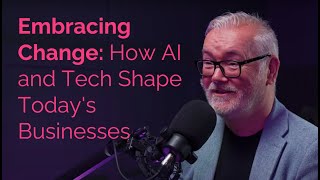
Tim Davies and Joseph Riley discuss how AI is reshaping business, from LinkedIn's 1 billion users to the Original Business Club's role in local networking since 1992. They cover AI accelerating tasks from months to hours, product development with human oversight, and how AI might cut the typical 150-day UK house sale timeline.
Questions this video answers
One billion
38 million
1992
$26.3 billion (2016)
Around 20% (1 in 5), up to 25% (1 in 4) in some cases
Yeah, I mean, in, in the business world, we've got LinkedIn, haven't we, with a billion worldwide users.
One billion.
One billion.
Which, do you have to say that with an Austin Powers voice?
Yeah, but there's 38 million UK users, which is virtually the entire professional population of the uk. Plus a few robots, no doubt.
I've gone from hating getting up home and talking in public generally to. It's something I actually enjoy and thinking of it more as educating people versus being on stage. And it doesn't really matter what size the audience is, you're just telling the story and helping people to learn.
We haven't seen even the tip of the iceberg, have we?
No. I mean, you're wearing a pair of glasses now. How long is it going to be until everybody's glasses are full interactive agents where you don't even need to say something for it to know that you're asking a question and it starts solving it for you? I think we're going to see huge, huge shifts in technology and the implementation of AI around us. And I can't wait.
Hi, I'm Freya. Welcome to the Skynet Business in the AI Age, the podcast that dives deep into the world where artificial intelligence meets business. Join us as we explore the latest trends, challenges and opportunities in this ever evolving landscape. From innovative startups to established enterprises, we'll uncover the secrets behind the successful integration of AI technologies. So grab a cup of coffee, sit back and get ready to unlock the mysteries of business in the AI Age.
Welcome Joseph Riley, international man of mystery and owner of multiple companies with lots of different interests in technology. So, Joe, let's start with the Original Business Club. Tell me a bit about that.
Ah, the Original Business Club. Well, originally founded in 1992, believe it or not.
When were you in 1992?
I was still quite old, I was younger. So Brian Soames founded the business club in 1992 and we took it over, I think 20, 21. Dan Russell, myself. Basically we got involved in it just because we like doing business and it looked like it might not continue because of COVID So we thought, you know, we love this, why don't we just, why don't we just keep it going? And Brian said, yeah, let's do it. So, yeah, and the rest sort of history. We love it. We. Yeah, it's a local business club. Lots of owners, you know, perhaps 50 or 60 owners now and again turn up every fortnight and we, we try and develop people from our key expert speakers like yourself. I know you've done. Actually, I think you're next up next month.
It was actually one of our first public speaking events about artificial intelligence. It really got us on the journey locally with helping businesses understand the possibilities. So it's fascinating for us because at the time we were talking around different levels of automation and technology and I'd been slowly persuaded by the mastermind group that I needed to start talking about AI and I'd run out of excuses. So coming along to the business club and having that opportunity to talk was great for us in terms of helping to get our story across, in terms of getting me early practice in becoming a better public speaker, which is a never ending journey. None of us like the way that we look on camera or in front of people. But I think you can get more comfortable with it over time. And I really like the format that you've got with the original business club where it is, as you say, 50, 60 members, but it can feel like quite a close knit group and more supportive than traditional networking, let's say.
Yeah, I think when someone gets up, we try and support whether it's a member speaker or whether it's a keynote speaker like yourself coming in. Especially when you don't know people, it can be quite challenging because you don't really know anybody in the room and therefore might be a little bit intimidated. But you know, our members that get up and speak, I mean they'll learn. It's a, it's one of the big fears, isn't it, in business, public speaking, speaking in front of people, I think it's rated number one biggest fear. So when they get up there and they, they do that and they speak about their business, guess what? They get business.
Yeah.
As well. People in the room go, oh, all right, you did that. I thought you were just this.
It's just demonstrating understanding, demonstrating expertise and actually getting your business out there a bit, isn't it?
One thing I found amazing was when you did the first one and you came back, it literally four or five months later just how much your industry had changed. You know, most industries just have moved fractionally, don't they? But yours had just taken a seismic change with all the new introductions and.
Upgrades and stuff and it's not slowing down.
It's like.
Yeah, it's a vertical wall of change.
Yeah. Well, you're doing a speaking event next month, aren't you? I think 23rd or something. Yeah, that'll be interesting to see where that journey has taken. Project Rising.
Yeah, it's going to be fun. I've Gone from hating getting up and talking in public generally to. It's something I actually enjoy and thinking of it more as educating people versus being on stage. And it doesn't really matter what size the audience is. You're just telling a story and helping people to learn.
Yeah, a bit of storytelling. Yeah. And where you've come from, what you're up to and how actually you've changed from being where you were, as you say, moved into this sort of AI world that can. People don't really know how significantly it can help them. I think there's a fear out there, obviously. I was just talking to someone this morning in the canteen and it was like, it's just fearing what AI. It's just propaganda and media, but actually it's looking at your business, isn't it, and thinking, what could we do differently? And of course, it's very challenging to understand that how can AI help a business if you don't have an understanding of AI?
I think technology has always evolved and it is just another step on that evolution, similar to the mills, similar to a plough, in that it completely changes the way the world was before it. But it is a fascinating journey. So tell me a bit about your journey and how technology's changed your businesses over the past. Choose a number of years.
Yeah. Wow. I mean, how far do you go back to think about change? I mean, I go back to, you know, computers just getting introduced into businesses. So when I first started as a young sort of bookkeeper administrator in a business and we wrote the ledgers by hand, everything was done by hand, cross cast, by hand, filled out, written, written again. You can imagine how many times you got to keep writing things because you actually can't. It's incredible. We used to have like a purchase ledger, which was a handwritten ledger of every single person you were paying the invoice, how much you paid, when you paid it, and then you'd actually then generate into general ledgers all by hand. So going into the computer world and the introduction of computers was around the similar time I started work. Of course, then businesses were getting involved in computers, software systems, real clunky systems. If you pressed, let's say you pressed a hashtag key, the whole lot went disappeared or something like that, and it was lost. So there was this sort of evolution of computers, but it was. It stayed very, very samey for a long, long period of time. You almost got used to one piece of software and it probably never changed, really. You know, in today's world, things are changing instantaneously you open up a new piece of software, existing piece of software, and have changed the layout. This did not happen in my time. My first foray into business, we had software, it stayed the same, we used it and it became the foundation of how you work. But not in the way today. Today is all about change, just ever changing. So polycomputers is the first real industrial revolution. We sort of came across when businesses were bringing in these powerful computers that then started to do the job.
We're not quite talking back with mainframes, are we?
We're not going back too far, but probably we're talking late 80s, 90s when I first started getting involved in computers and I've always enjoyed technology. So I think if a top 10 of a business, in a business owner's world, top 10 is staying up with technology as best you can. Not mainly you need to know how to do it, but understanding it a bit, you know, because if you fall out of the way of technology, then you're just going to get left behind so far that you're not going to be able to understand what your next step is.
So companies aren't using written ledgers anymore. Computers have pretty much solved that. And then obviously the Internet, Internet fundamentally changed things again. So what impact did that have on you?
Yeah, that's right. I mean it was a strange one because if you imagine you've got computers that are maybe networked locally but actually were not externally talking really to the outside world, you'd have all your systems would be desktop based or on a server locally. They weren't talking to anybody. So the thought that you could get hacked, it was just, no, we can't because we're not talking to anybody, we're not connected to anybody.
To turn up at the door, get into your server.
Yeah, exactly. They have to break in to your premises. But of course that changed, didn't it? When with, with the Internet and the high speeds that we have these days. And now everybody, not quite everybody, but most people are operating cloud systems, aren't they? All your systems are on the cloud, they're perhaps talking to each other and everything's out there and that's recognized as the most secure way now of running your business. It's the communication that it's given us, isn't it? The communication, the way we can communicate with anybody in any part of the world very, very easily now. So yeah, the Internet would do. It's obviously a revolution in itself and yeah, I embraced it. And we do a lot of stuff online.
Gives us a Lovely little segue into connecting with anybody, anywhere. So if we take this into Joseph Creative and how you help your customers to find potential employees, potential customers for themselves, you talk a bit about that process.
Yeah, I mean, in, in the business world, we've got LinkedIn, haven't we, with a billion worldwide users. One billion. One billion. Which.
Do you have to say that with an Austin Powers voice?
Yeah. But there's 38 million UK users, which is virtually the entire professional population of the uk, plus a few robots, no doubt. Yeah, there must be, there must be, there must be quite a lot of bots. But. But LinkedIn is something we're very powerful on in our business communication, because you businesses are on there, most people are on there. And why are the people on there? Because maybe they're looking for work. So, you know, you've got things like their CVs are up to date because they've just had a job and they've made sure they've updated it. And so there could be people looking for work, but there's also businesses looking to communicate with other businesses. It's a brilliant platform, if used correctly, to do that and get your social media out there, tell a story, I mean, educate and storytell as opposed to. This is what we do, this is how much it costs, you know, which we were all. We're all tired of being sold.
We've become immune to that sort of sales now, haven't we? It's much more about how that social content, how that social proof forms to show that you can be trusted and help to accelerate that sales cycle.
Absolutely. And I think that's. You've got it, you hit the nail on the head. Trust is really the essence of social media these days. It's verifying that you are who you say you are. And once you can see that someone's got activity out there, of course they're exposed, because if they're doing something they shouldn't be, then social media will soon find them out and they will soon pull them down. So it helps us trust that we're going to do something with someone. And I think sometimes people forget when they go, I haven't had any leads from this, or I haven't had any leads from that. I really realize it's the whole trust thing going on, which is sort of strengthening all your online presence. And really, if you had a standalone website with no social media, I don't think anyone would trust you. I don't think they'd believe you were real. And I think that's the Big thing I see with social media and trying to communicate with people. Really have a communication strategy for LinkedIn. Actually have a strategy. Don't think of it as playing around, think of it as a serious platform. If you use it properly, it will significantly impact on your business. And LinkedIn have some of these great tools that we don't really use. Maybe, maybe business doesn't use them as well. A lot of the analytics tools, the impressions that we get and how many views on our profile are we getting these types of things because it's understanding what we call the customer journey and the customers take a particular journey and they go a particular route and they always do this. So the more of it we can see, we'll end up with more customers just by educating our customers what it is we do.
Amazing, isn't it? And that acquisition of LinkedIn by Microsoft seemed like a hugely expensive purchase when they made it. Yeah, but they bought all of the information about all of the active professional employees in certainly every western company in the world overnight. Every time somebody changes jobs, they know about it. When people want to get news out to their customers, or when they meet people at a social networking or a business event, then they're connecting. And all of that wealth of information is now feeding into Microsoft's understanding of the world. Their knowledge graph of how people connect. And that's amazing training data for AI.
Yeah. I mean they paid $26.3 billion for it back in 2016. But have you seen Microsoft's. Sorry, LinkedIn's growth? You know, when everyone else is. Subscribers are dropping off, Microsoft's doubled. And in the graph is just exponential. I think they were turning over 2 billion back then. Turning over 2 billion.
It seemed like quite a price over earnings, didn't it?
Yeah, well, I think it was probably one of the first technology type sales of its kind. Microsoft obviously spotted the opportunity, paid an enormous amount of money for it. I think its revenues are now close to 50 billion a year from memory. So they're certainly getting a return now. And like you say, the information, the data, everyone thinks that way now. I'm sure the likes of Amazon were thinking that way about data back then as well, but perhaps wasn't so known how much data was really being captured and used for the future.
Or Facebook made a play for it. It didn't they with their Facebook workplace product, which I think they've now killed, which was their attempt to clone the Facebook model and put it into businesses. Whether it crashed and burned or not is an interesting choice of words, but it certainly was never a competitor to LinkedIn and never a risk to Microsoft's domination of the business software suite space. And then they made the acquisition of GitHub, which at the time seemed like an interesting one, where people were willingly posting their code for other people to see, access and improve on it. What did they buy? They bought the data from millions of developers submitting their code and then they trained an AI on it so Copilot can help you write code was one of the best sources of information available on the market and they, they bought it before it was even a thing. Amazing to have that level of insight within a business and that foresight. Really wish we all had it.
Yeah, I think because they've got, these companies have millions of customers, so they have millions of points of data already, so they sort of understand these different points in place. It's not always how much data it may be. The specific data points that you have are important. And now if you look at what you know, if you look at businesses now, software businesses, you know, are being really heavily sought after, aren't they? Yeah, because the ability to be able to, you know, take this data, understand this data and think about where it could go. I mean, much like your own business, you can walk into a business and have visions for that business that the business owners couldn't possibly have because they just don't have your knowledge on AI.
For me it's just looking at a business in terms of a series of processes and steps and going, okay, well you're doing that to that to that. It's almost. This is your AS is process map. Here's your to be process map straight out of Six Sigma and business transformation and how do we use technology to shortcut that and make it happen more quickly. So I don't think it's a unique set of skills that we've got, but I think we're quite privileged in that we've been through that very, very process driven history through different companies to now being able to go, okay, and we've got all of these capabilities of artificial intelligence and automation that can make things happen so much easier.
How do you keep on top of that when you think of the capability? So normally if I look at my business, we've got X amount of capabilities and it stays fairly stable. That capability of what you can actually do, of course in your world it must just be forever changing. You've got to try and keep up with it.
So I dedicate time each week to researching what the latest and greatest capabilities are. That's one time block in my calendar and then another. I have a day dedicated to prototyping every week. And so in that time I'm not working on a customer project. I'm working on ideas of how we could do things. And we encourage the developers to do the same thing. So they're experimenting. When we get a new capability released, we down tools and we work on just building something with that just to see what's possible. And that gives us the ability to then go into a customer and go, this new capability has been released and here's how it can make a difference for you. So, Joseph Creative help companies with the use of technology to solve marketing and sales problems. You tell me a bit about some of those challenges that you have with a business and how you're able to help.
Yeah, I think the most exciting is when you're working with customers that you have identified you can help. So that might be from a sales and marketing perspective that can go from conversion rates, which I love talking about conversion rates because people are always talking about leads, especially to marketing companies. Can you get me more leads? But when we actually sit down and say, okay, what are you doing with your current leads? It usually opens a can of worms. What are we doing with them? And you tend to find they're not getting the conversion that they should.
Well, what conversion should people be getting?
Well, typically industry standards around conversion are actually as low as 20%. So 1 in 5, and that's pretty much where it sits between 1 in 5, 1 in 4 in most industries. Now that would be industries that are doing sales and marketing or certainly marketing activities. Problem is you can come across people and go, I win everything. And they're not really sales and market. They're not marketing their business. So they're getting referred, which is great because they're obviously very good at what they're doing. They get referrals and they end up with these conversion rates at 80, 90% thinking they've cracked the code. But fundamentally they're just not going off inquiries. That usually goes hand in hand with I need more business. And so these are the things that we try and look at when we're looking at a business and really trying to create a dashboard of information that just tells you this stuff and just shows you it. This is what we love to do. Can we get a dashboard created of all the key fundamentals, what might be called KPIs, but they're a bit more of a suite of information than just a KPI. So there are a suite of information that shows you your sales activity, your conversion activity, how many leads you're generating, and then going down and finding out, where are these leads coming from? Where are my sales coming from? You know, it's real fundamental questions to be asking, but this is sometimes the things that I missed. When businesses are just running in their own business, they're not actually sort of taking the helicopter approach and looking down on the business. So that's what we love doing.
So you're coming into almost with a consultant view that lens initially on how's the business currently operating, what are the areas and how are they working, then going in with the facts and data, establishing the KPIs for them, then looking at those scores and going, here are some of your problems and here's the steps that we could take to improve them.
Yeah, but what you very much will do is try to focus on the key biggest areas of impact for that business. That's. That's what I like to think. Can we. Where are you going to get and where is your customer going to get the biggest impact, the biggest bang for their buck? Because it costs money for you to be there. I see it as an investment. So if they're investing in me, can I identify any quick wins that will bring money back to them while fundamentally looking at the most important area? So if you're walking, if you walk into a business and they've got a 10 million pound pipeline, then you want to be assessing that that's absolutely being worked properly because it's £10 million. Anything other than that is a secondary thing. It may still be very important, but let's get that thing under control first and then keep working on that area whilst looking at the periphery of how we improve other aspects of what's going on in the business. So definitely working on fundamental drivers in a business.
And what difference has AI made to that process and to the access of data and the understanding of data?
I think in varied ways. I mean, we are still early days into this process, but certainly we can see with some of the colleagues I work with who are now using AI to do work that would have taken them from a legwork perspective, maybe months. And AI can turn that around. I mean, we're talking hours now, maybe it's even minutes. Anyone that's used ChatGPT. But this is not a finished article. But AI is taking huge amounts of time, legwork, time out at no real cost of quality, if not the quality of some of the stuff we're getting out is so, so good. Yes, we have to Think about the prompts. I mean, there's now prompt managers in AI, isn't that. I mean, we talk about jobs that didn't exist 20 years ago. I mean, we're talking about jobs that didn't exist 20 months ago and jobs.
That probably won't exist in 20 months time because the technology is moving so quickly. That whole role of a prompt engineer didn't exist, exists now and is already being replaced. Anthropic's now released a tool which writes the perfect prompt for you. You give it the base bits that you need and it comes back with the great response.
Love it.
We built something similar about 18 months ago for getting photos out of midjourney. And just seeing the way that even something as simple as prompting is changing and how long that will be appropriate for is fascinating. I still like to think that even with the perfect prompt, you're not taking something to the finished article. You need humans in the loop. And so even if you've got a business where they're relying and leaning heavily into these capabilities, we're still saying, well, look at the output, check it, make sure it's on brand, make sure that you're happy with the content, don't rely on it as being the perfect finished article. And I think in that way it's still a combination of human and machine to get the best out of it.
Yeah, I think keeping it real and authentic to yourself, I think, is the challenge. Because, you know, I think you've got to still sketch out where you know what it is you want. I mean, effectively prompting, but you don't need to prompt the whole lot, but you need to understand where we're going with something, otherwise you'll get it thrown out, you know, points one to 10, which could be entirely great stuff, but it isn't authentically you. So it's trying to build something that this is how I would have gone about doing it. And then obviously AI is going to actually do it better, actually, so. But it's got the shape and feel of you.
Yeah.
Because you decided how the journey was going to be with it. And that's. I think that's the challenge that we don't want to be too lazy because it's easy to be lazy with the prompts and lazy with just ask for this, ask for that and just get a load of stuff out that the Internet's going to be full of AI crapping crap out. Yeah, exactly. I think that's the challenge for all of us to make sure that we're still taking the Time and that the creativity of our own minds and using that AI helping that as opposed to creating the creativity. Because it surely would come to an end if it's just learning from itself.
Depends on the quality of synthetic data, which is going to be a fascinating space. But let's not dwell too much on that at the moment. So you've helped a few of our customers bring their solutions to market. When we think of profitable marketing with their make your business visible with flagship partners with Allied. Can you explain a bit about how you're helping those businesses bring an AI product to market?
Yeah, I mean it's essentially the same as bringing any product to market. There's always going to be a larger education piece around an AI based thing because people just won't really understand it and they may think as they normally do. ChatGPT can do that when actual fact it's just not the case. I mean we need to rely in business, we need to rely on giving information to customers that is highly accurate. It's almost got to be flawless. And so that's where these products are immense from what you guys are doing there to make sure the guardrails are in place, that we get proper information.
Back to customers, trusted sources referenced appropriately.
Yeah, so yeah, we're doing stuff like building digital assets around and then we're identifying the target audience for these products and then we're communicating with these products. We're perhaps setting up waiting lists, you know, let's get into these products. These products are going to take time and effort and we want to deliver them properly. In actual fact, there's a waiting list. You can't just buy some of these products, you've got to wait for them. And that's going on. So there's all these techniques that we are using to build the product. But ultimately the product has got to be fundamentally brilliant, you know, and that's. And it's got to stand away from anything else out there at the moment. I think these products do, they're very, very good. And the early days on both the launches really that we're doing at the moment, but the signs look really, really good.
I think wait lists have been fascinating for us as a way of not just gauging market opinion but also getting early feedback as a source of beta testers. If somebody's put forward, I'm interested, then you've got a set list of people who you could test a product with. You can get their feedback. You can then use that feedback to refine, to make it perfect, to make it Fit for market and just able to use that and then test iteratively on more and more people is fantastic. Yeah, I don't think enough businesses use waitlists.
I agree, but I mean, if you think about it, people will invest upon a waiting list. If you've got a new product and thousands and thousands of people on a waiting list waiting for it, that's investable, people will back that because it's almost delivering proof of concept, which is very often a difficult thing to prove. And it's one of the key things where people design something when no one has a need for it or a.
Want for it, build it and they will come. Except they don't come.
You build it and they don't come. Yeah, exactly. Because you might have built something that no one needs, but you're fundamentally blind to that, that you think you've created something that's a big need for. And actually waiting is a really brilliant way of actually sort of validating whether you have got a product that people really need.
And you can then test sections of the capability or specific elements. So rather than releasing an entire product, you can just go, what do you think of this interface? What do you think of these answers? What sort of questions would you ask? So it really helps building true voice of the customer and then validating it quickly.
One of the things as well, I think is important is getting stuff done. You know, I've spoken to people, they're developing this, they're developing that and they've been doing it for years. Okay. It'll never ever get to market and nowadays if it's taking too long, it'll be out of date, probably get done by someone else and you've lost your opportunity. So being able to get, like you were saying, there maybe just a section of something done and get it out there. Now people won't normally do things like that because, oh yeah, I want to get the finished article. But we know that the finished article has to look like perfection and therefore we may never get the finished article to market. So actually getting it out there and like, I know really, really popular beta testing stuff. So you, you're very aware that there's going to be some issues, but you're letting people know, let's, let's improve this together. And I think get, get getting. I mean it's one of the biggest things I see in business. Just do stuff. Don't sit around thinking you're going to do it, just do it.
Be a person and a team of action versus just procrastinating and it's easy to try and build for perfection. Some of our developers have that mindset where they want something to be perfect, which is fantastic, it's admirable. But it also doesn't really fit the timeline of technology change that we've got around us. And getting something in front of customers so that they can use it, improve on it and make recommendations. And having that short development time is critical because in three months time an entirely new capability is going to be released. What impact is that going to have on the product? So we like to keep it simple, these sort of four week builds, because during that time we can demonstrate something sufficiently, we can move the industry forward. But it's not so long that there runs a risk of it becoming out of date. When you talk to companies and they've got an 18 month pipeline and they're building something and they set these plans before large language models became public domain, what are they doing? It's just completely outdated.
If you think about Apple, when they launched the iPhone, the iPhone had no camera. The technology was there, they could have launched it with a camera, but they didn't because it might have delayed the launch for XY months. Okay. And they thought, well, just be an upgrade, the iPhone 2. And so if we think about that in business, we're going to launch this, but we've got improvements that we can bring. Brilliant. And in AI, these improvements are developing hourly. So we need to be focused to deliver what we need to deliver and then review it with the updates and improvements. That way we get stuff done. Like you're saying, if you have this perfection model in your mind, you will never ever get done because there'll always be something new that gets launched that could make what you're developing better and you'll never get it done.
And it's easy to see. I mean, we've had customers that have been on that sort of slow release schedule and the concept of the product evolves over time and that's fine. But actually getting it in front of customers, using in anger gives you that feedback, that validation, and also more importantly, revenue. And that's obviously important for the customer, but it's important for us too if we're on a profit sharing model so that we're building something that is actually used, that's relevant and fun. Really, if we're building with the latest capabilities, that's where I get the most reward because I like playing with toys.
Well, I know that because Friday you're showing me some more capability that makes you giggle and it's Just hilarious. But these things are real world and they're going to make a tremendous difference, especially with the access to the mobile phone use. With AI now, just really what's going on there? We haven't seen even the tip of the iceberg, have we?
No. I mean, you're wearing a pair of glasses now. How long is it going to be until everybody's glasses are full interactive agents where you don't even need to say something for it to know that you're asking a question and it starts solving it for you. And maybe that'll be into your ear, maybe it'll be into the screen below. I think we're going to see huge, huge shifts in technology and the implementation of AI around us. And I can't wait.
I think I was thinking about this before coming on here today was are we as individuals giving ourselves enough time to think about our business in where it's going or even to think about other businesses? As an entrepreneur, we should always be open to new ideas. What can we do next? And when we're in this world, we seem really busy, don't we? Everyone is so busy. To actually create the head space to think about new ideas is really important.
I was chatting with somebody on a very similar topic just last week and saying you've got to have that free time within your schedule. And it's not really free time, it's dedicated time to solving a particular challenge. But it's almost blocking thinking time. And that thinking time needs to be when you know your mind's going to be in the right state. You only really get that by practicing, but by putting in specific blocks of time within your calendar gives you the opportunity to go, okay, I might just take the dog for a walk while I'm doing it, but I'm going to be thinking about the practicalities of how I can move the business forward or where can this technology be applied or which business should I be building or investing in. And without that time to think, it's so Easy to be 110 mile an hour flat out all of the time, sleep when you're dead, but actually get nothing done other than execution working too much in rather than on the business.
Yeah, and actually that can be giving you some really good results because you're just boom, hitting it. But essentially if you've not created some bandwidth for the future, then you're going to be running into a problem. And the issue today is that there are people out there that are spending all their time at the moment looking at what the future looks like, and they could be sitting around your business, they could be what might be considered a competitor, but sort of just off radar, they're the one that's dangerous to your business. And so you operate in a particular way. Now, you've not got your eyes on that radar and therefore, if we know you are, you've got a legacy company that's just full of legacy issues. How do you move it forward?
Software stacks that are 20 years out of date when somebody's working and building something absolutely brand new and dynamic. So what impact is AI having to the housing market and to the property sales process?
It was tricky. I think one of the biggest things that affected the housing market was obviously Covid, because it immediately moved a lot of businesses in the sector to using Zoom and finding different ways to liaise with a client. Obviously you had purple bricks that came to the market, which was another big thing, which is still in play to a degree.
Oh, I thought they crashed and burned.
Yeah, I think there's a buyout, but so the model essentially is still in play, which is not having property. And of course, I think everyone looks at that and thinks, well, you know, why can't everyone move to that? Why we will not sitting with online businesses. Of course, the fundamentals are it's very expensive to advertise. So if you have no presence, then you've got to have a presence. If it's online, then you've got to advertise and it's very, very expensive.
And people still buy people. I don't think that's going away.
Yeah, they do. People do buy people. And in a business like estate agency, people are so vital because you essentially don't have a product or albeit you might have a property that someone wants, but there could be more than one of you that has that property. So the people relationship with the customers is very heightened. You see how important people are. Whereas sometimes you might look at an office and there's 10 people in office and you don't really see the strength of that office. You do see it in a state agency environment because they really have to be very knowledgeable about the stock that we have available. So if you walk in and say you want a semi, you want a semi detached. Okay. You might want to say, but would you take an Antares? Yeah, so because then terrace could be fine for you, in fact. Oh, there could be a detached one just, you know, close to where you want. So people very often say, we want this, this and this, but actually they're quite prepared to compromise on different Things and not having good communication with someone may hinder you actually helping them, which is what you want to do. So I think AI is coming into that arena, but I'm not sure it's that heavily used. Obviously there's a lot of stuff going around on web. I mean, rightmove, for example, is still the most powerful generator of house sales in the same way as Autotrader is the most powerful generator of car sales. So in terms of platforms, those two still dominate and they charge an awful amount of money as well for you to list your properties there. So they're still the big drivers. So I'm not seeing a huge amount of AI directly that you can see in the estate agency world. And that might be because of this people thing that, I mean there'll be technologies that are helping, maybe in the background, algorithms in the background, listing creation, creation and this type of thing. People fundamentally are still buying from people, but they do do it differently. So in towns they might want to still walk in and see someone. In cities that just go onto the Internet and basically mainly rightmove and hopefully sometimes your own website. So there are, there are things happening that are changing and of course people get younger that are coming into the buying side.
How do I get younger?
Well, as the marketplace gets younger, should we say, well, we've got younger buyers. I mean, we know that the younger people are interacting less with human beings. I think Google came across that as one of the big things it saw was actually people calling to do things, you know, actually physically calling someone and saying, I'm going to book a restaurant appointment or I'm going to do. They don't like doing it.
I don't want to actually interact with real people, do we?
Yeah, exactly. Why? So you can see that the model is going to be changed. It has to, because people are going to absorb the way they buy houses in a different way to the way I do right now. I think all the blockchain type thing, the way the land registry works, the registries, the conveyancing, this can all be hyper speeded up with AI. Just this market's a bit behind, I think. But as soon as you can speed that up, you'll be able to buy a house in seven days. I mean, at the moment it takes, literally the average house sale in this country takes 150 days.
That's the average.
That's an average from, from Rightmove, 150 days. You can imagine how many of those steps in there when you do your process chart, how many of those processes AI could take care of.
Yeah.
And actually the industry, you know, the conveyancers, they just can't cope. It's just they're overwhelmed by the amount of work that they have. And that's in today's market, which is not the busiest market. It's a better market, but still overwhelmed. Imagine we can get that down to seven days, where you can buy a property in seven days with.
I think we might need to fix some of the council processes because I think quite a bit of that stickiness is in their searches, isn't it?
Yeah, yeah. There's a lot of stickiness around that wouldn't. Which is why it's not been fixed already. If it was easy, it would be already quicker than it is, but it's actually taking longer. I mean, pre covered, I think we were in 90 days, we're probably now 120, industry, 150. So, you know, and this is all. There's lots of factors, as you say, you've got councils, you've got planning permissions, you've got conveyances, lawyers, funding, you know, then the money release and this type of thing. So there's a lot. And big. And big values as well. So people are scared of getting things wrong.
Sounds like a process chart we should draw out, doesn't it?
Yeah. Yeah. Well, there's the next thing.
Maybe. Maybe the problem is there's so many next things, isn't there, in your world? Yeah.
Huge amounts. Yeah.
Every day. Every day there's an opportunity and it's just, how do we follow up on the right ones?
And I've been sitting thinking about what? Well, I'm thinking I want to do something different. And it just, like, it got me thinking what, you know, and you've got. But you've got to be thinking that way. You know, the old law of attraction, when you start to think about things, they start to present themselves because they were presenting themselves anyway, but you just weren't going to see it. So when you start to change our mindset, like, I want to do something different, what do I want to do? I think it looks a bit like this. You start to see it.
I think you've got to have industry expert experience and expertise, though. I think if you're looking for a solution in an area where you, you know, nothing, you're doomed. But if it's an area where you've got years of experience, you understand how things currently work, then that insight is absolutely fundamental to building out a solution that can be better. Yeah, Just going, oh, I've had A dream. Well, good luck with that. But if you can combine years of experience with execution to implement a new idea, then I think that's where you win.
Yeah. I was at a meeting with. This is a long time ago, but I thought this guy was into clothing and he would really be thinking about clothing and talk to me about clothing. But he was a box shifter. He just shifted boxes and it could have been boxes of anything. Yeah. So I really expected, as the leader of that, that business, that he would be hyper all over the detail of clothing. He wasn't. He was hyper about logistics and how you moved a box from A to B as efficiently as possible. And that got me thinking, what you're just saying, really, he was an expert. He's an expert in logistics, not an expert in clothing. The fact that he's selling clothing is just a thing. And if you think about. That's what Amazon. Amazon started with the books. I think Jeff Bezos was saying they got seven years without anybody competing with them. Now most businesses get about two years. So you get one great year, then you get another one and then all of a sudden everyone's on your tails.
Now it might be two months.
You wouldn't get long. No, it all depends on what things are in the marketplace. You know, if you need a lot of money to invest in a company, then you have less competitors. If you're, if there's less money required to set up the company, you'll have loads of competitors, you know, so recruitment companies, there's loads of them, you know, because it's just a people cost and so getting into finding the right niche for yourself. And I think you're right, having, having a talent for something, a passion, I think, I think they're the big things for me, being highly motivated and passionate about what it is because when things get tough, that's what's going to get you through it. If you're not passionate, trust me, you'll be competing against people that are. So when you start to wane, these people will still keep going and they'll never quit of the passionate about that.
60, 70 hour week energy that seems endless and gets tiring to compete against.
Yeah. Well, we both know someone just gets up at four in the morning, cracks on every day at four o'. Clock. Relentless.
Yeah.
And that's what you compete against. So if you are actually not passionate about it, and I know you're passionate about what you do, that's why you're really good at what you do. If you weren't that person and you just got up and what am I going to do today? Can you imagine the difference in the output?
Well, you just become another sheeple, don't you? Following the crowd. Yeah, well, fantastic. Joe, it was lovely having a chat with you today. Thank you very much for joining us.
You too, Tim. Thanks so much.
Speak soon.
More from Tim

EP 60: Why Founders Become the Bottleneck — And How AI Changes Everything | Thea Brook









