
Ep18: Bridging Creativity and AI: The Future of Innovation
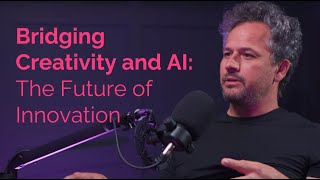
Tim Davies and Peter discuss how generative AI is reshaping creativity and business. Peter warns that deepfakes and misinformation are real risks, while agencies need to stop pushing tech from the top down and instead let teams build solutions from the ground up.
On the way here that effectively change is the only constant, but as a species, we suck at it.
Humans are hardwired and have been for millennia to avoid change because change equals discomfort, equals death. As a people, as much as we have gone through very painful change and there have been, you know, hard won battles on that journey, I think, you know, generally speaking, we are better off for the change that we have gone through than we were in the past.
You had a hot shower this morning, didn't you?
The, the reality is, and I talk about this with a lot of our customers, is whether or not you believe Genai is a good fit for your business today, but you have to accept that it's not going away. You have to accept that, you know, there will always be a world before November, you know, 2022, and after, you know, ChatGPT changed everything.
Gone are the times where you had to have millions of pounds behind a development program to develop something unique. We can go into a company of five people and build them something that is groundbreaking and better than anything else in the industry. And that capability is just fascinating.
Hi, I'm Freya. Welcome to the Skynet Chronicles. Business in the AI Age, the podcast that dives deep into the world where artificial intelligence meets business. Join us as we explore the latest trends, challenges and opportunities in this ever evolving landscape. From innovative startups to established enterprises, we'll uncover the secrets behind the successful integration of AI technologies. So grab a cup of coffee, sit back and get ready to unlock the mysteries of business in the AI age.
Good morning, Peter, and welcome to the Skynet Chronicles.
Thank you very much. Good to be here.
So let's start the beginning of your journey into creativity. Thank you.
The beginning of my journey into creativity. What a loaded question. We'll work backwards from that. My journey into creativity probably started as much in creativity as it did in logic. I'm either fortunate or unfortunate in that I feel equally left and right brained. So I'm as comfortable in Excel as I am in the creative industry. So I suppose that's kind of led me perfectly to a world where everything I do is about the work and doing great work, but also finding new ways to do the work, you know, and that, I think dovetails quite nicely into what we're talking about today, you know, and that's been my career for the last almost 30 years now. My first company started in the late 90s because technology at that stage allowed us to create ads in a very different way to the way we used to do them. And that's Kind of just been the, the boilerplate for how I've been doing things ever since.
So you've just been playing with technology and then telling other people how to do it. Yeah, it's kind of our game too, isn't it? And what about your journey from. Obviously your home is not originally the uk. You started your life in South Africa.
Yep, started in South Africa. And again, it's an interesting, it's interesting coming to the UK. I've been working in the UK on and off for about 15 years now. And the interesting thing about South Africa and any kind of immature market is the kind of talent that is grown in those markets tend to be more rounded. You tend to have fewer specialists because the market can't support specialists. UK is a, you know, a much more sophisticated market, a more advanced market. So what tends to happen is you have deep specialists that only do one job. In countries like South Africa, very few.
People only do one job.
And that's actually massively beneficial because I think, you know, the world needs. We talk about T shaped humans and I think it's a twee these days to talk about T shaped humans. You know, it's, it's getting. I'm hearing that the term T shaped in too many meetings now. You know, we maybe need slightly more square humans. But, you know, the idea that you can be specialist in one thing and one thing only is great, but it's becoming irrelevant, you know. So I think when I, when I think about that journey from, from South Africa and coming from a. More a market where you have to be more of a chameleon, you have to be more of a generalist, I think actually sets you up quite well for how I think the world is changing. You know, I think you look at, we talk about the democrat, the democratization effect of, of. Of Gen AI and that means that suddenly people are not creative, can become creative and sort of get into, well, what is creativity? You know, And I think being able to be comfortable with slightly blurry lines and boundaries of, of what your role is or should be is the skill set that we actually need, you know, in, in kind of what's happening next. So, yeah, I mean, I think my journey kind of sort of led me to a place where actually this feels quite natural now, which is quite exciting.
Yeah, absolutely. And we talked on the way here that effectively change is the only constant, but as a species we suck at it. And so those people that are able to be adaptable and can change, they'll succeed.
That's, you know, it's the, it's the mis. Paraphrased and misattributed quot from Darwin. You know, the, the most adept at change is the most successful species. And I think you're right. I mean, humans are hardwired and have been for millennia to avoid change because change equals discomfort, equals death. You know, and when we lived in caves, that obviously made sense. But for the last couple of hundred years, quite frankly, actually change has been the, generally, I want to say the, the harbinger of the, of the positive. You know, we, we've as, as a people, as much as we have gone through very painful change and, and there have been, you know, hard won battles on the, on that journey. I think, you know, generally speaking, we are better off for the change that we have gone through than we were, you know, in the past. And.
You had a hot shower this morning, didn't you? Did I?
Yeah, exactly. You know, but I think part of that change, I did a talk back in February. I think it was around the fact that, you know, we do, as humans, dislike change. And, and one of the things that I said was change comes with responsibility. So you have two choices. You're either part of the change or, or, or you're. Or you, or you or you're not. And if you're not, history, generally, we know what history happens, generally speaking, you know, historically when people don't embrace change, you know, but we have a responsibility to make sure that that change is positive because we can use this change or any change, you know, to, you know, to kind of drive sort of unbridled commercialism or, you know, kind of move towards a world where, you know, we're creating less effective content or more spam or more. We can use it to create deep fakes. You know, lots people are creating, you know, bad actors will act badly. So we've kind of got this responsibility through this change to also kind of ask ourselves what can we do to make things better to actually improve, you know, everything from the work we do to the outcomes of, of, you know, of, of the technology, which I think is really interesting.
I think so too. I think just look at some of the content that's being put out now. Saw some clips over the course of the Euro competition of Gareth Southgate effing and blinding and cursing and saying that he was the G and somebody had done a really, really poor job of deep faking it. There was no lip sync really. The audio was pretty close, but it was hilarious content. And so you can see that these tools can be used to create amusing, interesting content as easily as they can be used to create content which could breach security protocols or content which could persuade people to follow something that they wouldn't normally ordinarily follow. It's fascinating times.
It really is. And I think, you know, there's a lot of discussions around to what degree this is just a hype cycle. Yeah, if you saw Gartner updated the hype cycle a couple of weeks ago and they basically just like adjust the gen AI about one, you know, inch to the right of where it was before. It's still not, you know, on the trough of disillusionment. It's still at the peak of the hype cycle, you know, so there's undoubtedly a lot, a lot of hype around this. But I think, you know, the, the reality is, and I talk about this with a lot of our customers, is whether or not you believe Genai is, you know, a good fit for your business today, what. You have to accept that it's not going away. You have to accept that, you know, there will always be a world before November, you know, 2022 and after, you know, ChatGPT changed everything. When that went public, you know, it just, it moved what was a very niche and very immature technology into the public sector. I enter the public zeitgeist and has matured immeasurably just in that time, you know, and will continue to do that, obviously. So I think you have to accept that we're in a world where this will be a factor and that means a couple of things. Obviously, we need to look at it from our perspective and from a business perspective, but exactly to your, to your example, you also have to start getting a lot more critical about the content you consume and how you judge that content. A lot of the world, you know, because the biggest economies are in election years this year. So the amount of disinformation driven by AI is through the roof. You know, that's video, that's chatbots, that, that's all sorts of things that, you know, are essentially by bad actors designed to, you know, spread misinformation and propaganda and do it very, very convincingly and tirelessly because the AI doesn't get tired, it doesn't need a nap.
No. Data centers are pretty happy running 24 7, aren't they? And that's why they've held back SORA because of the risk over the election campaigns. And you can see the level of realism in those videos. This is a model that understands physics, it understands object positioning, and yet it hasn't been trained to, it's just been fed a load of video. And it's fascinating the way that these models have evolved to be able to produce convincing content and have these levels of understanding that were not programmed.
Well, I guess that's one of the fascinating things, right? You think about is it the 10 billion parameter sort of threshold, right where below that the models were fine, they were interesting. But as we sort of crossed, you know, started crossing that with, with GPT 3.5, you're right, sort of had the started seeing things we weren't expecting and capabilities we weren't expecting. And you talk about Sora and you talk about, you know, how suddenly when you teach something on everything, how it does, does actually derive logic and meaning and understanding from that and it is able to then recreate rational new content from it despite not being, you know, kind of taught out here. It's fascinating how, you know, how that that's happened. And you know, you look at, you look at Sora and you know, from a technical perspective, the video quality is phenomenal. From a performance perspective, you know, you see it in, in the facial expressions and you know, in the performances, there's. That's very wooden, it's very dead. It'll just be a matter of time before, before that that's dealt with. You know, you look at runways, Gen 3, that's, you know, I think even better than what we saw with Sora. You know, you know, for a lot of content, you know, we talk about today, Jed. AI, today is as bad as it will ever be, you know, and every.
Single example, as bad as it's going.
To get, literally, this sucks.
Yeah, try it again tomorrow.
Exactly. And tomorrow and tomorrow and tomorrow. And you know, so it comes back to that quote about, you know, we underestimated in the short, I mean, overestimate in the short term and underestimate in the long term. It's because we go, it's not ready, it's not ready, it's not ready. And then one day, you know, sort of, it's that idea of, of gradually and then suddenly one day you look behind you and just be like, hang on, Will Smith is eating spaghetti. And you know, suddenly. And I mean, I hope that might not be an obscure reference, but if it is just Google Will Smith eating spaghetti, AI, it's totally worth it. And it's a good way of testing the video generation capabilities of AI. You know, I think that's why it's so important to prepare for a world in which our businesses and our families and Everywhere Gen AI has a, a place at the table because it is not. There is no single kill switch. It's not going to go away. It's hugely important. Yeah.
And we're getting to the point where reasoning to significant levels is solved. So they don't know whether you've seen the new OpenAI internal roadmap where they've got these five stages where level two is PhD level reasoning and level five is an entire organization run entirely within an AI.
And you think it seems like a stretch.
It doesn't seem like a stretch and it doesn't seem like it's that far off. And when you look back at the rate of change over what even since GPT 3 to where we are now with 4. Oh, that's not even the best model that's out.
Yeah.
Just the rate of improvement over that period. Yeah, it's unbelievable.
It's like nothing, you know, it's again, it's twee, but it's like nothing we've seen, you know. And 4O is really interesting for me because I find it very, I want to say complete in its reasoning compared to, you know, even four. I find that, you know, it, it tends to be more robust in its reasoning. But you comp. Compare that to Claude, you know, and you're like, it's, it's. Claude is, is head and shoulders sonnet is outperforming for. Without question, you know, and it's going to be this. It's the sort of constant arms race. And I suppose to some degree that's where, you know, we talk a lot about to what degree. You have to be agnostic about the technology and actually I think you have to be fairly agnostic about the, the, the, the base layer of your technology stack. So your LLMs, your foundational models, because they are just developing so quickly and none of us are going to develop them. Nobody, you know, none of us are going to develop an LLM. You know, maybe we'll develop, you might.
Do fine tuning on top of a small model, but that's.
You might, maybe we even develop a small model, maybe we do some fine tuning. But you know, that base of the pyramid for me, those LLMs are incredibly powerful generalists, you know, and you need to be a little bit agnostic with those because some of them are better suited to some tasks and some of them will outperform others over time. And I suppose the real magic happens actually like you said, from fine tuning kind of upwards, as we say. Okay, well here's an amazing general model. What can I do to make this bespoke and interesting and proprietary. So a lot of the work we do for our clients is understanding how can we take what is something very generally trained, generally useful and make it really, really laser focused on their world and their context and make it, you know, really effective in that space. Because that's, that's kind of the magic and that's about obviously the work we do and you know, we work with you guys on and it's about the client's data and their context and their world and what's. Because that's ultimately hopefully something that then drives us to something that can only exist for them. And that's one of the powerful things here is it's become possible to create these very, very bespoke tools that can actually just be created for this customer to do this series of jobs. And it doesn't.
Gone are the times where you had to have millions of pounds behind a development program to develop something unique. We can go into a company of five people and build them something that is groundbreaking and better than anything else in the industry. And that capability is just fascinating. And I think the journey we've been on with you guys from the point of where were we nearly two years ago, AI is coming. Here's some things you need to worry about to seeing the level of iteration, the organization structures that you've put in place, the processes that you have there now. It's just absolutely brilliant to watch from the outside because I kind of feel like a little bit of a proud dad. It would have happened without me, but just watching it from the position I've got is correct.
The question is, are the training wheels still on? I wonder, you know, do the training wheels ever fully come off? But I think it's an interesting, you know, we've always been, you know, within kind of my units. We started messing with AI machine learning really kind of as far back as 2016, 2017, you know, we started generating back in 2018, 19 and honestly it was rubbish. We couldn't do anything with it. You know, we're like, this is cute and it's interesting, but we can't do anything with it, you know, and fast forward four years and obviously you can. But I think that Explorer's mindset is hugely important to, and I suppose cultivating and nurturing that explorer's mindset is incredibly important to help a business prepare. Now, you know, you can't wholesale transform, you know, a 5,000 person business overnight, but you do have to start somewhere, you know, so one of the Things we talk about is you can't learn to swim from the shore. Right. You have to find the small, somewhat low risk bets you can do because they help you every time you do it. You learn a bit more, you learn a bit more and slowly bring in.
A few more people.
That's exactly it. It's like groundswell. Yeah, that's exactly right. It's like a, you know, it's, it's, it's, it's like a groundswell. And that exactly, slowly allows you to, to do that. And one of the interesting things about Gen AI is we often talk about the fact that as much as, you know, technology transformation, digital transformation tends to be top down. It tends to be mandated, you know, from the, from the C suite. The instruction is we have now adopted this ERP in this program. Yep, go and adopt Cascade. You know, Gen is the inverse of that to a large degree. You know, it's a bottom up revolution. You know, everybody has this tool and these tools in their pockets. You know, that changes immediately the, the way that you, that you, that you navigate that change. It means that, you know, simply mandating and, you know, using command and control structures don't actually work anymore. You need to implement structures that allow you to, you know, let's let a thousand flowers bloom so that what you can do is you can have 5,000 people figure out 5,000 and more unique ways of using this and then let the good ideas percolate up to the top and then go, hang on, that's a really good idea. Let's scale that, let's cultivate that idea and let's scale it back down into the organization. I think that's very much the journey we're on at the moment. And you know, we haven't got it figured out at all. But I think being aware of the fact that this is bottom up, the real value is almost bottom up, not top down. Our job is to create an environment and, you know, create space to use safely and to operate within the kind of governance frameworks that our clients demand from us, but to also make sure that every single one of our people is in a space where they can contribute and they can add to this. Because I think the real power of this is the fact that it is so empowering for every single person in the organization.
I think Oliver have taken some great steps, especially around their recruitment program where they're effectively saying, you need to be able to demonstrate AI experience to join us in the first place. We are AI first. Yeah, and that sounds cliche. It Sounds well, obviously they're going to do that, but actually having that mindset to, we need to see people have that ability to change, that ability to test and play for them to be beneficial to the organization will help in the midterm no end.
And it's a really interesting example that you bring up there because it was slightly controversial or divisive when it was first discussed. And the reason for that is that you have to balance domain expertise with genai expertise. Because what we're finding is when we deploy Genai, the skills and the experience of the individuals using the tools is almost more important than the tool itself. So what we find is when you give a experienced food stylist access to an image generation module and ask them to generate imagery, the imagery they produce with zero training will be better than the imagery we give to a Genai expert who knows how to describe it. Correct. They know what good looks like, you know, so that understanding of what good looks like is incredibly important in being able to create, you know, really, really good work. So there's this tension between Gen AI expertise and domain expertise. But yeah, the Genai first hiring approach that we've now taken essentially is exactly what you described there. It's almost a filter gate that says even if you're not necessarily an expert yet, it means that you have, you've acknowledged and accepted, you have to be on that journey because that is the talent we do need. We do need people who understand and accept that Gen is a, A is a factor and is something that, you know, needs to be understood. What, what the toughest thing for any business is where you've got people who either deny or refuse the change, you know, and this is a way of saying that when we recruit, we want to make sure that we've got people who can help teach us and our clients, you know, how to advance it. Because there are people out there doing incredible things, you know, and a lot of them are doing it completely in their personal time and completely out of the context of their, of their professional lives. And, you know, that's part of what we're trying to find and part of what we have to cultivate.
Play. Everything comes from that play because these new capabilities, they're new tools. But fundamentally they allow us to do that childlike exploration.
Exactly. That that leads to, that's going to lead to new roles. And it comes back to my earlier point about specialization versus kind of generalists is, you know, today when we look at how Gen affects, you know, how a piece of work gets done, we tend to say, you know, we've got these five roles and each of these roles will be impacted in these ways by Gen AI in five and 10 years time. We may not need those five roles. It may only be two roles that have now, you know, kind of amalgamated all five roles into two. And part of what we need to do is figure out what that looks like because it's not as simple as a one to one replacement. That's not what this means.
No, it's not. And I think regardless of how good the tools, the capabilities, the models get, even if we do hit this level five that OpenAI are talking about, where you have whole organizations that are AI people by people and having that human interaction, that ability to pick up the phone to meet, have a conversation, to get to really understand what the customer wants, not what they said in an email, that's going to be a key skill. And so it's working with technology, but also understanding how to work with people and make the most of relationships. That's where I think it's going to be a fascinating space.
So interesting. You're exactly right. When we first started talking to our customers, you know, really, really actively about Gen AI, one of the things I'd walk in, in my presentation would start with a slide that said that Gen AI is not about technology. And everybody would kind of go, what do you mean? We're not talking about technology today. And I would say literally it was about people. And I still believe that. Yes, it is about technology obviously, but the technology is not a differentiator per se. The people in the process around the tech is the true differentiator. So yeah, I totally agree with you. I think it really, really, really is about, about, about the people that, you know, ultimately interact with it with, with our customers is people buy people. Now what's interesting is when you know how that's evolving, one of the interesting developments is, is agents, you know, and then suddenly you've got these, I call them semi autonomous and semi intelligent, you know, just to be really realistic about their capabilities because let's, you know, they're still babies. Yeah, we're not fully on Skynet just yet, you know, so when, when they, when they are intelligent and autonomous, you know, we may have a different problem. But when you watch agents work and when you've orchestrated, you know, a good, you know, process of agents interacting with each other, it's a bit like watching a magic show because suddenly the AI is doing what a room full of people are doing. You can watch, you can watch the the, you know, the logic handoffs. Yeah, it's mind and exactly the handoffs. We go, this AI just told that AI to do something. That AI is doing it and feeding it back and that one is busy making changes to it. I mean they are behaving, you know, a little bit like toddlers, I suppose, you know, like, like semi intelligent autonomous beings and. But I think the evolution of agents as creative and operational support systems to people so that you have an agent next to you who is starting to support you in your day to day, those kind of things start getting really, really interesting. Because AI then becomes a superpower as opposed to a risk.
You're effectively outsourcing to something that's better than anybody, you know.
Correct.
And when they can deliver consistently on that particular topic. And those topics will evolve over time.
Exactly.
But I mean just looking at holiday booking, yeah. You might use a travel agent now. How long is it going to be before you hand that responsibility over entirely to an agent? And it just does it all for you. It maps out your perfect holiday. It can already see all of your photos of where you've been previously. It knows the sort of things you like doing.
That's it, that's, it's a, it's a really good exact. It's a perfect example because you know, the technology to, to, to do that kind of largely exists. What's missing to some degree is the personal context and understanding how you like to do your holiday and how you like to. And as you know, you give the agent and the AI a better understanding of your context, your, you know, and, and your priorities. It gets better at servicing that need for you specifically, you know, a scale of one to one as opposed to a scale of a thousand to one. And it's really interesting. I think that's part of the reason that you know that embracing it is so, is, so is so important because that is those are the solves that you almost can't see at scale because there are a thousand small things that, you know, is where the magic happens, I suppose. Yeah.
It's interesting because Google from many angles don't look like they're leading in the current space, obviously DeepMind absolutely killing it. But Google as an organization have felt like they're not as being as innovative as Microsoft, even Mistral and the likes. But then when you look at what they've got in terms of their understanding of us as people using Google Photos, you've got your entire history. It's already identified all of the different members of your family, how they've grown from being a baby to being an adult and has them all in a folder for you. It knows all of the locations you've been, it's on every device. So when you're stuck in traffic, it knows your journeys, it knows where you're going, it tells you how long it's going to take when you get in the car without you telling it where you're going. You combine that knowledge and information with all the things that you're storing, all the things you're searching for. Feed that into something like a travel agent and you've got a killer app.
Yeah, exactly.
I mean, Google Flights is already the most efficient way of finding flights and we interact with that. But all you've got to do is put an agent layer that communicates with imagine.
You don't even have to bother interacting with it. It knows that you prefer this airport and those kind of flight times you've.
Been looking at Hawaii. Let me plan out all of the flights or work it all out. Here's some suggested itineraries. It looks like you might be going to that conference on these days. Have you looked at this hotel?
Click the buy button and off you go. It's all done for you with your preferences. And that's exactly right. And I think, you know, it sort of leads us into conversations about, about. About ethics and privacy. But I think it is a killer app. And I think, you know, there's a, there's a. I wonder if, you know, when we look at Gen AI and we look at the. The hype cycle, it's just sort of just kind of gone off the peak. Right. Is I suspect that in the coming year, two years, the immediate future, it may have a bit of a PR battle on its hands where things like personal data, things like disclosure, things like public sentiment about Genai will start kind of coalescing into positives, negatives and neutrals.
And you'll just watch Apple do the push into. Right. We've just been waiting. Here's our privacy solution. You can have everything on your device. I mean, I got one of the little rabbit AI'. Yeah, it's basically junk. It's desk art.
It reviews well though.
But when that functionality is implemented correctly on an iPhone and it's a walled garden and it's happening on device, then that's exactly right.
And I think that's always, you know, when I think about kind of privacy and I think about data, I think exactly that there's this tension for me between making something that is truly useful to me. I Appreciate that you need my data to do something that's truly useful to me. And you know, I have for whatever reason a, you know, a subjective opinion that Apple is more trustworthy with my personal information than Google is. That's not based on any, you know, kind of logic. It's just, you know, it's, it's.
But, but it's, it's institutional.
That's correct. It is institutional.
Everybody thinks that.
Yeah, exactly. You just assume that Apple can be trusted because processing on device and you're doing this and you're doing that and the truth is you're probably not doing it any better than anybody else is. But being Apple, you wait long enough that you can walk into the room and say all those missteps they did. Well, we're not going to do that. We're going to do it like this.
And we're not doing any ads. So we're obviously back at Google.
Exactly. But quietly in the background, you know, and, but I think if you want that level of, of service and personalization there will be to some degree a, you know, what's the word? A sharing of, of data required. And I think people will give up their data if the service is, you know, if, if for a killer app, you know, I think, yeah, we're already.
Seeing that a killer app where youngsters have given up everything to TikTok and all they do is go like this. Yeah. But the information is able to collect about them.
Mind blowing.
Yeah. And if you signed up, then it's not even what they see on that device, it's wherever any device they think it's you performing anywhere on the Internet.
And it's so interesting, you know, and again it comes to, I suppose maybe it's a generational thing. You know, youngsters are signing onto, onto TikTok, I want to say at, you know, 13, 14. But the truth is that, you know, 8, 9, 10 and yeah, and they don't even considering the implications of from a privacy perspective, they're going, I want access to this content. And I. There's no value placed on privacy at that stage. And it's interesting whether or not they will ever place value on that privacy or they live in a world where.
Actually yeah, it's just given away. And I don't think there's also any thought about diet. So it's easy to watch the food that you eat, the drinks that you drink. Maybe, you know, you drink too much on a weekend. I certainly do. But you don't really think about the information you consume. Yes, and controlling that diet of information, the things that you trust, that flow of outside in can completely change your view on the world. And yet they're just having it poured directly into their brain from a fire hose.
And it's completely algorithmic. There's, you know, there's this designed for instant gratification and there's a great saying, if it's free, it's because you're the product. You know, and I, I love that analogy. Like there is no consideration of how the content you consume not only shapes your view of the world, but also to some degree then informs the world what shapes you. You know, which is really interesting. And that then starts feeding what you're fed by the algorithm and it starts self perpetuating. And yeah, there's a really interesting kind of play out coming there. And I think, you know, we talk a lot about the benefit of AI being obviously we're expecting huge and we're seeing huge efficiency gains. But you know, a lot of the work we talk about is efficiency is sort of table stakes. Everybody's going to become more efficient. So if you're becoming 20, 30, 40% more efficient in the work that you do, so your competitors, so then the question is, what are you doing with that headroom it creates? What are you doing with that, that, that efficiency that allows you to do something nobody else can. And I think, you know, we, Personalization is one of the key areas we look at being able to attract and address markets that are maybe too small or too niche to viably go after right now. Gen should unlock those for you. You know, in fact we're seeing it, unlock it for a lot of our customers and being able to operate at scales of one to one or seemingly at scales of one to one. And, and, but the effectiveness of that communication again does rely on accurate view of your consumer and your customer so that you can actually meet them, you know, with, with content and with, with information that is relevant and useful and you know, solves a need for them. Otherwise it just becomes more noise. Yeah, yeah.
So it kind of brings us full circle back to ads.
Always.
It'S easy to say don't like adverts, but actually that's business, isn't it? So how are Oliver, helping companies position themselves in this time of ever increasing content and ever finer, closer and closer personalization?
Well, I think, you know, we talk a lot about, you could have called it that. We call it the sea of sameness. You know, there are other terms for it. The, the idea that the LLMs by their very design tend towards convergence. You know, if you ask, you know, a, a, an image model to create an image of a CEO, chances are it's going to give you a 50 year old white male. You know, that's because that's what it's been trained. You know, they, they, they are not inherently diverse in, in their outlook just.
Consumed the data they were fed.
They were just, exactly, they just, and you know it's an interesting point about they consume the data they were fed. The data they were fed, you know, is generally, you know, I'm going to make a bit of a sweeping statement here but you know, you know, English Western data, you know, it doesn't have a diverse world view of the world because that's not how the world's data currently the world's data is not what's the word represented equally, you know, the minority voices simply don't, you know, they don't make, you know, so you have to, you have to force the system to be more diverse. We've developed tools that allow, you know, us to systemize, you know, pushing you know, more diverse content. But you know, coming back to the question, I think the thing to look at really, really carefully is understanding what is how do you take, you know, your customers point of view and, and, and, and message and really find ways of making it super relevant to a much broader range of audience. And again we come back to personalization every, every time. I think it really is a, looking at the, the sort of Venn diagram of you know, what is the data and what is the equity around a brand that is unique to that brand. How can we combine that with the technology to create something that is unique and is proprietary, you know, is sustainable and is adaptable as well. Because that changes, you know, it evolves on the day and on the week and on the month. And it evolves, you know, by, across, across markets as well. So at the moment when we do global campaigns, we tend to create a single master that's then localized for other markets. And localization really means changing the product and changing potentially the, the, the supers, the titles, you know, the language, you know, localizing that Gen AI means we could change the entire ad in theory, you know, to make it real and to make it hyperlocal. And I think so A lot of the work we're doing is on understanding how to create work that cuts through the noise and is unique and relevant to our customers. Because the easiest thing we could do is just say hey chatgpt, make this ad 100 times for all these markets and, and we're just adding to the noise.
Yeah.
And you know, I think more and more and more as consumers get used to more targeted, more useful communication, the owners will be on advertisers to meet that and create more useful, more targeted community.
You know, so combining that closer and closer Persona. So instead of it being a top level of a demographic agenda at an age, that's it. You're getting in hyper personalized. You're combining in the brand voice.
Correct.
You're combining in the news and events that are topical at a time, that sort of fast marketing side and adding into that technologies like Bias Breaker. So that you're presenting something that is different to the bias within the data.
Exactly. And it comes back to that idea of, you know, we've got this responsibility with, with this change, you know, and we want to, we want to create a world that is better than the one, you know, that, that, that we found and pop Bias Breaker and you know, tools like Bias Breaker are a part of that. So yes, it is about creating relevance, but it's also like you said, about creating or trying to advance an agenda that is more diverse, that is more inclusive, that is more representative of, of the world that we would like to, to, to be in. You know, so yeah, all of those things are hugely important as we, as we do this. So it's never just about how can we drive efficiency for our clients because like I said, the efficiency, race to the bottom, isn't it? Yeah, it's just a race to the bottom. If all we do is drive efficiency, you know, ultimately there's no differentiation. We're just standing still. You know, that efficiency has to be counterbalanced with, you know, what we, we call, you know, efficiency. We talk about, you know, Jenna allows us to create work with impossible efficiency, but also to create the impossible every day. And it's that impossible everyday statement is really, really important because that's the true differentiation is, you know, more effective work, but also just affecting positive change and trying to do something that starts creating the kind of messaging and the kind of world that, you know, we would like to see. Yeah.
And when we think about sort of the customers within the market, they're hugely on a spectrum when it comes to adoption. You've got some who are absolutely gung ho. We want to try, we want to get in on this, we want to do a campaign that does everything yesterday right the way through to, I was going to say some of the traditional companies, batteries, some of those want to change quickly the sort of the companies that have, they've heard about it, they've expressed a mild interest but then they're going to take it away. They'll have decision by consensus. Maybe 60 people will sign off something next year.
Yeah.
How do you balance that difference within the customers?
I love that because some of the customers that have moved the fastest are your more conservative traditional sectors. Financial services.
Absolutely.
One of the customers that on day one was yeah, let's go high street banks, you know, let's, let's do this. You know, pharmaceutical clients, you know, clients that operate in very restricted restrictive areas have actually adopted or been interested in understanding the impact of gen AI faster than some of our clients that operate in, in you know, kind of in faster, more dynamic markets which has been really, really interesting. It's not what we expect at all.
I wonder whether it's because they had been playing with machine learning. They had decades of predictive analytics and understanding within their organization. So it's almost become a part of the culture.
Yeah.
And it's just sort of the marketing side of the business that's catching up with the rest.
It's so interesting you say that. I was at, I was speaking at a conference last week and somebody raised the question from a major insurer and they said exactly that marketing are only just catching up to technology, machine learning, AI, etc. They're, their analysts have been using it for years and decades, you know and they were saying well you know, how do they leverage all that work that's been done in the past into marketing? And you're exactly right. I think those companies ironically almost have more innovation from a technology and kind of data perspective than a lot of your more kind of, you know, apparel or fast moving consumer goods kind of companies that it is almost more, I want to say, you know, intrinsic in their DNA to look to innovation. So it's a really interesting, quite right. Kind of point of tension. So the first thing is I think it's a journey like no customer, you know, starts that journey quite at the same place. Some you go very slowly and we do lots and lots of, we call inspiration sessions and workshops and talks where we just meet lots of people from our customers worlds and just understand, you know, explain, you know, our point of view, understand their point of view and try and explore to find those little threads you can pull on to find. I'm quite a big fan of a sort of, you know, you know, experiment and kind of learn approach. So finding small bets that allow us to build a business case to build knowledge, to Kind of go to get an in. Yeah.
And grow it. I mean it's that same sort of groundswell. You're finding people and you're taking them on a journey.
That exactly, is a very big fan of, of that, of exactly that sort of bottom up approach rather than trying to just walk into the room and do an organizational organization wide transformation. Because I think this is so fast moving and so complex that it's almost impossible, I think, to just take an entire, you know, kind of global organization and just transform it overnight. You know, it just doesn't, doesn't work. But yeah, some of our best clients have been in very regulated industries and they've all had a very open mind around. And what's, what's happening now is as our approaches are all maturing a bit is that data and that knowledge, you know, that we've got from say, analysts and investment divisions suddenly saying actually hang on, can we not use that data in marketing? Like actually yes you can. So now we can say you've got an amazing, you know, investment division, you've got analysts and you've got great models pulling out huge amounts of data from the market. What if we could make that data relevant to customers at a scale of one and suddenly go, hang on, that's really, really interesting because currently you need humans to do that. Right. And you can only do that in private banking. You can only do that in family offices. You can that at a kind of consumer level. But with AI, we actually can, you could put insights that are relevant to, you know, this person in their pocket every morning. That's interesting. And it can be action insights and AI allows us to scale to that level. So, you know, I think that's where we're starting to find these green shoots of unlocking, I think what, what the real promise of this could be. And that promise really does always focus on the end customer, the end consumer, because that's really where the value sits.
And so do you think Oliver may end up ultimately pivoting from being a organization that helps companies effectively get content in front of people to being an organization that helps companies connect with their people? And instead of it being ad focused, potentially it's solutions and you almost, I mean, there are examples already where you're becoming a technology solution provider.
Yeah, I think that's an interesting question. I think we're seeing some of that pivot happening already. And I think, you know, a big part of our business is helping our customers, you know, meet their consumers with information, content, advertising that is relevant, useful, you know, Pertinent and appropriate. And I think you're right. I think that that will inevitably pivot and some of our customers, we are seeing that already where the relationship is moving away from the, the slightly traditional broadcast relations advertising to a much more niche, you know, kind of relationship with, with, with, with the end consumer. And I think part of that is there are tens of thousands, if not millions of in inverted commas AI tools out there. Now we all know they're just front ends built on top of chat, GPT and others, but you know, to the market they look like tens of thousands of, of individual tools. One of the big questions we always have with our customers is, you know, how do we know which tools to adopt? How do we know which, you know.
You don't need to.
Well, that's the point. So that's exactly it. You know, what we do is we take that complexity away for you. We figured out which ones to adopt in which use cases. Because the answer is never just this one. The answer is always a, you know, always, always sits on a scale. So a lot of what we do, I don't, you know, necessarily becoming a technology company is, I want to say is, you know, almost a bit de jour.
Solutions.
Solutions, maybe.
Solutions. You're not, you're not going to be big tech.
Yeah, you know, and I think that, I think solutions is a good word because it is focused on solving a customer's need and hopefully a consumer's, you know, ultimate need. And I think that is about helping them navigate what is a very complex space effectively and safely and, and quickly, you know, as quickly as is appropriate. And I think that's a lot of what we do is take that complexity and say, look, you know, we've got learnings across a range of clients, range of industries across the world. And what's amazing is we're able to aggregate those learnings to other customers and say, well actually we've seen this in financial services in North America. You know, is there a correlation to financial services in the uk for argument's sake, and that that becomes really useful to our customers is being able to help them navigate and learn from other markets and other sectors for that matter. So I think there is an evolution in the agency landscape away from pure advertiser creating ads, if you will, to becoming more solutions driven and solutions oriented. And I think that's, I think it's a valuable change. It's an important change.
Yeah, people value the solutions. A lot of people block ads.
What a solution is, you know, by definition, useful ads. Aren't always useful, you know, and I think we can even see it today if you're served an ad that is, you know, we spoke about, you know, the conference in Hawaii. If you've been searching, you know, you've signed up for a conference in Hawaii and you've been getting, you know, served ads to fly you off to Hawaii, and suddenly you get, I don't know, one to fly you to, you know, a completely, you know, perpendicular destination, you're just going to reject you, like, why are you wasting my time? And I think humans are going to become consumers are going to become a lot less tolerant of things that waste their time or things that are perceived to not be useful and not be relevant. So I think it's becoming urgent and more pertinent to make sure that what we create is, in fact, relevant and useful as opposed to just noise.
And I think that is the perfect place to end this podcast. Thank you very much for your time, Peter. It's been an absolute pleasure.
Absolutely. It was real fun. Thank you.
Awesome. See you later. Bye.
More from Tim

EP 60: Why Founders Become the Bottleneck — And How AI Changes Everything | Thea Brook









