
Ep2. AI: Change is inevitable.
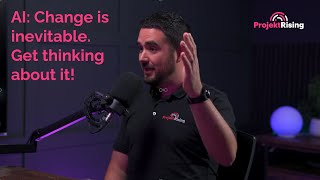
Chris and a co-host discuss how businesses actually adopt AI. They argue the real problem matters more than the tool, and that automation works best when it fits into workflows people already use. A car-buying story shows why process design comes first.
Knowledge of AI really isn't important. So I think when people are thinking about AI, a blocker is often I don't know anything about it, so I'll avoid it, which is quite a dangerous mindset. Change is a difficult thing to get your head around for a few reasons. Firstly, accepting that the way you're doing something may not be the best way is a big thing.
What we saw at Upwork and what we continue to see as we go on with all these different companies is actually people don't necessarily want to use a new system. No, they just want stuff to happen.
If you're expecting people to go outside their norm, you've got to put a physical mental barrier in that says stop what you're doing, that you normally do, go and do that thing and then come back. And that's a very difficult thing to get people to do.
Hi, I'm Freya. Welcome to the Skynet Chronicles Business in the AI Age, the podcast that dives deep into the world where artificial intelligence meets business. Join us as we explore the latest trends, challenges and opportunities in this ever evolving landscape. From innovative startups to established enterprises, we'll uncover the secrets behind the successful integration of AI technologies. So grab a cup of coffee, sit back and get ready to unlock the mysteries of business in the AI age.
Hi Chris.
Good morning.
So welcome to the Skynet Chronicles podcast.
Thank you.
So let's start right at the beginning with you.
How did you get here? How did I get here? I, as many others of my age went to uni because that's what I thought people should do. At the age of 18, I went to study forensic chemistry and I hated the course with a passion, forensic, foreign chemistry. Hated it, it was the wrong choice for me. But very much enjoyed the university lifestyle. So too much of the lifestyle, not enough of the course and dropped out because I realized that there's more to life than trying to get a degree in something you don't enjoy. So dropped out, went and got a few corporate jobs started. Actually no. Started behind a bar for a year and then started in the corporate world. Went through banking, financial services, the normal route.
Sorry, forensic chemistry.
Forensic chemistry. Banking is the normal financial services, the normal route for an 18 year old. 19, 20 year old. Then got the. Did a bit of sales work. So selling insurance for motorhomes and caravans, that was a highlight. Particularly enjoyed that recruitment which we won't talk about because I wasn't very good at it. And then yes, I working for a company called Hobart who sell dishwashers and and stuff like that. Got more into the operational side of that business and kind of found my niche being able to do a bit of everything, bit of finance, bit of operational stuff, bit of logistics and a lot of business process development, which is where I started realizing that I was good and enjoyed it from there. Went on to try and start my own company with a friend. We did quite well around GDPR and, and some software around that and we didn't lose any money. So that's a, that's a, that's a win. And then. Yeah, it is. And then you guys put an advert out for an operational dude and it talked about the Avengers and it struck a chord with my geeky nerdy side. And that was in 20. 21. 2022. I can't remember. A couple of years ago. 21.
Over two years.
21. So here I am. Yeah, two and a half years and very much enjoying the. The ride.
Okay, so tell me a different story. Tell me about buying a Kia.
I like this story. So nobody, and I really do mean nobody in their late 20s, early 30s gets excited about the thought of buying a Kia Sportage. Yet I am the owner of a Kia Sportage. So I went to buy a new car, not a brand new one, definitely couldn't afford that. Went to one of the generic dealerships and not one that sells a specific brand. I can't remember what it's called, but they sell everything secondhand. And I walked in and I'd seen what I liked the look of. I was wanting something that was kind of practical because I've got a family now. And also not that practical because I still had a fun side. So I was looking like a sporty Focus or an Astra. Sporty Astra, something along that sort of line was where I was aiming. And I walked in, saw what I wanted, saw what I like the look of, and sat down and 20, 25 minutes came, went by and no one, no one came to say hello. Then a salesperson came over eventually in a very shiny suit and said hello. And we talked a bit about what I wanted. And off we went to look around the showroom. And he pointed out a Mazda would have been a Mazda 3, I think from.
Exciting car.
Very exciting car, but again, the sportier version. There's a theme here. Yeah, so we saw that. And then he said, take a seat and I'll get my finance guy to come and see you. And 25 minutes goes by and no one arrives. Another 20 minutes. And then eventually out comes the finance person. Takes me into a little office and tells me that he's very excited to see if he can get me to where I need to be on the Maserati, the that I'd been discussing with the sales guy. To which I said, you know, that's not what I was talking about. And by this point, I was realizing that I'd been there a long time. No one was really listening to what I wanted. Clearly, they had some reason to get rid of this Maserati because he was pushing it, went through the finance. I told him what I could afford. He said, well, I can't quite do that, but here's something that you might be able to afford on the Maserati. So back to that plumbing car again. And, yeah, it was just a bad experience generally. So I went and sat back down in the waiting room as he got the salesperson back. Another 20 minutes went by. No one was there, so I just walked out. I walked out realizing I needed the loo. Should have gone, but refused to go back into that place to use it. And as I looked around, I could see the Kia showroom over the other side of the road. So I thought, I'll pop in, be cheeky, use their loo. They'll be fine with it.
Why not? They want people to buy cars.
Yeah, they want people in their showrooms. That's got to be a good thing. And it was just a completely. When. Soon as you walked in, it was a completely different environment. You know, they were very. They weren't pushy. They came over. I was really honest and said, I really just need the loot. And they were fine with it. They didn't say. No, they didn't. They just said, go on, off you go. If you see any cars you like on the way, let me know. That's a bit of a joke. And it just went from there. And they were so good at the people part, and their processes were so good because I didn't have to go and see a finance person as well as a salesperson. The salesperson had the tools in front of them to do everything. And we talked about a couple of cars. He showed me them. I found a sportage that was quite nice. Hadn't really thought about Kia before, but it was a nice car. And the. You know, because everything flowed so smoothly. Within 40 minutes, I was signing on the line for a car that I wouldn't have even thought about buying before I walked in. And it's a. It's an interesting story that I recall because it says a lot about how people Buy and how. How many opportunities businesses miss out on because their process is enough. And Kia won my business. Not very big business, but won my business because their processes were good, their people knew what they were doing and the other dealership lost it because they were just awful in every way possible. Yeah. So it's, it's a story about how processes can make a difference really, and help you win something that maybe you wouldn't have even had a shot with before.
And that sort of little and gentle change management. Yes. You can use Alu. Would you like a cup of coffee, sir?
Yeah.
Little light tweaks to guide you on a path so you fit their perfect process versus.
Absolutely. Yes.
Well, we really need to sell a Maserati this month. If you. It's been sat there and nobody wants it because they fall apart, allegedly.
We'll ask every customer that walks through the door if they want the Maserati.
Absolutely, yeah. And so that that gentle change management process combined with an efficient operation.
Yeah.
Sold them a car.
It also helped that the toilet was at the back of the showroom, past all the brand new sparkly cars. It certainly helped.
Superb. So changing gears a little bit.
Yep.
What do we look for in a customer?
Changing gears. An exceptional joke. Fantastic. Well done. What do we look for in a customer? We look for businesses who have got a problem to solve, but they don't know how to solve it or the way they're trying to solve it is expensive or involves a lot of people hours. So any customer who can say to, and that's generally how we start a conversation, is what's your biggest challenge right now? So when a customer sits down, they tell us, well, you know, my challenge is I'm a building surveyor and I'm spending too much of my time in the office writing a report rather than surveying buildings. That's the sort of customer we love. Because you make your money surveying buildings, you don't make your money writing reports. If you want to grow the business, if you want to earn more money for your business and for yourself, then do you do it by spending more time writing things in your office or do you do it by spending, see spending more of your time surveying more buildings? They're the sort of customers we like. Is the ones that have got a problem or have got a challenge and they need some help in solving it, because automation and AI can take a lot of the heavy lifting away and it lets people do what they're good at, what they enjoy, frees up time or just helps them to earn more.
And do you think that generally different size organizations have different willingness or ability to adopt that sort of corporational allergic reaction to change?
Yes, the bigger the corporation, the harder change is generally. That said, I've met plenty of small organizations and companies whose leadership haven't been willing to change or haven't wanted to change or haven't known how to change. So it's all gone wrong. And I've met a couple, not so many bigger enterprises who, because leadership, have driven change from the top and have been proactive about how they communicate with the people, the change has been a lot easier to handle than it would have been. So generally, yes, the bigger the company, the harder the change management process. But there are exceptions and it always comes down to how the people at the top drive that change from inside.
Fantastic. So that leads in quite nicely to what factors influence a successful AI implementation.
Knowledge of AI is not one of them. We, we have plenty of customers who don't know anything about AI. When we first sit down with them to talk about what they're after, some.
Of them don't even know anything about computing. No, no, that's not, doesn't matter, does it?
No, you know, we, I spoke to, I spoke to a farmer in a networking event and he joked and said, well, I thought when you started talking about AI, I thought you were talking about artificial insemination. So it was a bit of a shock for him to, to hear something about computers.
Thankfully, we don't need big gloves.
No, we don't need big gloves and I know nothing about that anyway, so that's good. But yeah, knowledge of AI really isn't important. So I think when people are thinking about AI, a blocker is often I don't know anything about it, so I'll avoid it. Which is quite a dangerous mindset. But when we're looking at successful implementations, it's the willingness to change, having people within the business who are willing to change and having a realization of what the problem is you're trying to solve and a view of what you want it to look like when you're finished. Because we talked to plenty of people, I know both of us have had this where they say, oh yeah, I want AI and you think, well okay, great. And then we'd sit down and actually their internal systems are still a early noughties access database and their website was built 15 years ago. And so there are steps you need to take to get that implementation in. But unless you've got an awareness of what the real problem is at the root of what you're trying to solve, then it's very difficult. I think that that's the most successful part of an implementation is just working out what that problem is and accepting that maybe AI is not the fix straight away. Maybe there's something else we can do that's a lot easier to make your life a lot easier, quicker.
And we see that quite often, don't we? So companies will come to us and want to talk about AI, so we'll talk about some of the potential possibilities, some of the capabilities that are out there and then it turns out that they're running on paper based system or they're using a database that's 20 years old. And so in order to get to a point where we can start to help them with the AI capabilities, we've actually just got to bring them forward a couple of decades.
Absolutely.
And that's fine. I mean it's part of the fun of playing with these capabilities and we're using them in order to get them on that journey anyway.
Yeah, and I enjoy that aspect. Like I said, process automation and business improvement is something I genuinely enjoy. And that first sit down with a new customer of what's your biggest problem? That's the most, most part exciting part of the journey for me to work out how we can help people move forward. And yeah, if it needs to be, the first thing we need to do is think about a CRM system because you actually don't have anything structured in terms of data. That's great, we'll help you with that because we know that's the step, the first step on a journey that's going to lead to something really cool at the end, which is AI. That's going to help you.
Sweet. I was having a conversation the other day with a company who have got a custom configurator for their product and they were saying, oh, it's really, it's a really complicated configurator. We probably need to just leave that alone and maybe carry on, do bits around the side.
I love that.
And I said, well, how complicated is it? Because in 2003 we built the options configurator at Perkins engines which handled 600 options and a number of variations that I can't even compute in my head. But it was something like 10 to the power of 180. Just a huge number of potential combinations. And so actually after that, no configurator seems that complicated.
No.
And could we replicate what it's currently doing quickly and easily and have that as part of a solution rather than trying to interface with something that's already broken and doesn't really work. Yeah, Possibilities are endless.
That's an. It's a really interesting sentence. The part at the beginning when you said they said something along the lines of, so we'll need to leave that alone. And that's what I'm talking. When I say that the most important part of success of an implementation is understanding the problem. I wouldn't. I'd like to. I'd be intrigued to know whether that was leave it alone because we're scared of approaching it, which is normally the case, or if it's leave it alone because we've tried a few times with different methods that haven't worked. But either way, breaking that mindset is. Is the key to that. That project.
Certainly it's an amazing.
And configurators aren't that difficult.
No, they're not. When somebody says, well, we've been quoted 100 grand to implement a new configurator and ERP system. First of all, don't change your ERP system because that's probably going to kill you.
One at a time, One at a time. Both of those things are huge things. Do not do both. I did a. I worked for a couple of years for a software company who did. They were quoting and configuration platform. And every company that we've ever spoken to in that role and every company I've ever spoken to in this one around that sort of thing thinks their thing is the most complicated in the world.
We've got so many variabilities, so many options. Have you.
Have you really. Are you sure? Or have you just got an oven that needs to be gas and electric and has a different door on it and has different colors?
We're not even going to vary the seal color.
Yeah, exactly. But, yeah, you know, um, I think that's a. It's a really interesting point that a lot of companies do see their thing as. As a very complicated beast. When a few pairs of outside eyes can. Can probably help make it a lot easier.
Okay, so a bit of a theoretical question. When change is the only constant, how do you get comfortable with it?
It's a bit of an oxymoron, isn't it? Because if it's the only constant in theory, we should be comfortable with it because we're comfortable with things that are constant.
Have you ever met anybody that is comfortable?
No. Change is a difficult thing to get your head around for a few reasons. Firstly, accepting that the way you're doing something may not be the best way is a big thing. There's an ego part of that. And human behavior is the most difficult part of any implementation. Yeah, any, any, any product manager, any IT person who does. Has to deal with customers will. Will agree with that, that human behavior is the hardest thing. You can change coding, you can change a piece of software, you can build a bit of software, and yes, it'll have bugs and it'll be fine, but eventually you've got to have to get people to use it. And that's the way that I think that's the most difficult part of change is when working out how to get people to change their mindset around what they do. Because you don't want to be told that the way you're doing something is not the best way. You know, you always think you're the expert in your field, and we all do that. So getting comfortable with changes, I think, is. It's quite a philosophical thing, to a point. You've got to get comfortable with accepting who you are as not the perfect person in whatever it is you do. And I think that's why I'm personally very comfortable with change, is because I know I'm an idiot most of the time. I've accepted that many years ago that I'm not. I'm not the best at what I do, I'm not the expert in everything I do. And there's always someone I can learn something from. So if you approach change with that mindset, you've got a much better chance of actually seeing that change through.
And I think something that we've seen with some of the customers that we work with is actually you don't necessarily need to change in order to benefit from AI capability. So some processes you sort of naturally lean towards, if you're implementing new technology, it's a new interface. You've got to log into this system, you've got to do this, that and the other. And what we saw at upwork and what we continue to see as we go on with all these different companies is actually people don't necessarily want to use a new system.
No.
They just want stuff to happen. So sometimes we're able to build a solution which there is no interface that the user works with. They just do what they always did and then the magic happens behind the scenes. Could you talk a bit about that?
Yeah. I mentioned earlier that when I left Hobart, I went to start a software company in the height of gdpr. So when. When data protection was a big, you know, buzzword and everyone was panicking and spending thousands of pounds all over the place. And one of the big learners I took away from that is a very good friend of mine, Phil, who we went into business with, who I went into business with. We focused on building a new system and a new tool. And at the time we didn't really give enough thought to people not wanting another set of logins to another thing and not wanting to go outside their comfort zone of process as it is to do something different to add on. And that was one of the biggest learners I took away from that, that project and that experience was if you're going to do something, AI is a great, great example. If you can, if you can build AI into your current process, stream your current software, if it's, you know, if it's new enough to be able to do that or if not, get, get a way of working into how you work today, the change management is a lot easier because you're not expecting people to then stop what they do. So they've got to have that. If you expecting people to go outside their norm, you've got to put a physical mental barrier in that says stop what you're doing, that you normally do go and do that thing and then come back. And that's a very difficult thing to get people to do. And that's why so many software companies see when, when someone signs up to the software, they see a spike while people go in users. When people go, oh, this is new, this is cool, this is fun. And then it tanks because people go, oh, I'm just going to carry on doing what I was doing. Yes, that's a new thing. And I remember playing with it, it was fun. But I'm just going to carry on doing the way I do it. And it's every software company I've ever worked with, you see that trend, People go, oh, exciting thing. And then logins go and hit the, hit the floor. And then retain, you know, you don't retain the customers. And it's a whole, it's a whole problem for, in that industry, has been for a long time. So if you can build these very cool new tools into what you're doing, then it's the best way to get people to adopt them.
So drop this file into this folder and have magic done to it.
Drop this file into this folder and have magic done to it. Yeah, this would be a strap line. Really?
Another one?
Absolutely. If you think back, we were talking about, I used the example earlier of a, you know, if you were a building surveyor and you wanted to write a report if you gave a building surveyor a login to a website and asked them to go and write their report in the website rather than in Word, and at the end of that report it did something, they might use it. If you said to a building surveyor, drop the audio from the transcription that you've just done while you're walking around the. Around the building into this folder and within however many minutes we'll email you the finished report for you to check which one's going to get the adoption. It's going to be the latter because you're. You're removing barriers and you're removing friction to people using it. So that's why whenever we certainly within Project Rising, that's how we approach things, is how can we get AI or automation if people aren't ready for AI, into the current business flows rather than adding steps that will cause friction.
Superb. So how can individuals and companies keep up with the capabilities in AI first and foremost?
Find yourself a cracking podcast. It's funny, when you speak to people or when you hear about experts in AI, there's a few different fields that these experts fall into. There's what I'm going to call, with all respect, the geeky nerds who've been doing AI coding and research for years and years and years and years. And they'll go very technical. So you could listen to them in terms of keeping up. But if you're not a geeky nerd, then you probably won't find it very interesting or you won't learn much. There are those who have sprung up as AI experts because they've worked out how to use ChatGPT, probably don't listen to them, although you might find some nuggets of information in what they're saying.
Even though what they're saying has been written by ChatGPT.
Ironically. Yeah, it's always good to get an AI tool to write about itself. It's always a bit of a scary thought, but yeah. Or there's the third. There's the third category, which are the ones that you should be sort of grabbing hold of and really listening, which are those that are proper geeks in that they enjoy software and enjoy tools business. There are business people at the same time who understand the challenges that businesses have. If you can go and listen to those people speak, then the time that you spend listening to them is, is going to be more useful than anything. There are a few newsletters and, and news updates that are now around specifically for AI. So learning finding those, subscribing to those is important. But generally, I think stepping back and looking at how you do things now and working out what problem you need to solve is the most important part of keeping up with AI. Because if you don't know what you're trying to solve, then you could listen to all the AI news in the world and you'll end up where we often end up, which is playing with things that are new and cool and exciting, which is great for us because it means we can talk about those things with customers and because that's what we do. But if you're in a specific business, doing a specific thing, or if you're an individual with a certain hobby, maybe that you know you want help with, then working out what the biggest problem is you want to solve, and then going and finding a tool that helps you do that is the best way of keeping up with AI.
It's funny, because we had a. We became aware of a brand who had a different approach to that. They said, well, this year we had 200 grand to spend on Metaverse, and we've only spent a bit of that on Metaverse, so can we spend the rest of that on AI? What would you like to achieve? We'd like to be able to say that we spent the money on AI.
It's crazy. It's the new green washing. Greenwashing. Yeah, greenwashing people. When sustainability became a hot topic, people wouldn't care what they were spending money on. They just wanted to tell people they were spending money on it. It could be planting trees at the other side of the world. It could be solar panels for the office. It doesn't. In their head, at the time, it didn't matter what you were spending money on as long as you could shout about the fact that you were spending money on it. And it's kind of the same now. People don't, in your example, they don't really care what they're spending money on. They just want to be able to say either our business is an AI business, so we, you know, we're front of the pack, or they want to just lever the words supported by AI into their marketing. Especially in the software industry, we're seeing a lot of that where people are saying their software is AI enhanced or supported by AI, even if they've just.
Got somebody in the office that's using ChatGPT.
Yeah, that's all it is. It's a blog writer in the office using ChatGPT to write really awful blogs, copy and paste onto the website. But that in the, you know, that's An AI enhanced enabled company, isn't it? So I think that's the thing. It's. Yeah, there's a lot of people that just want to spend money on it and I enjoy that. Part of, of what we do is where people say to us, we want to, we want, we want a chat bot and we want it to be able to do this thing on the website all the time. Okay, great. We could, we could definitely write you an AI chatbot. But why, but why? And when it does the thing you want it to do, what then? So, yes. All right, let's say you're a building surveyor, because I'm going to keep coming back to that. Let's say you're a building surveyor and you want a AI chatbot on your website and it can answer some questions in a authentically human way. Cool. It's not going to earn you any money.
And how could it earn you money?
Yeah, exactly. How will you then engage with that information to do something useful for either you or the customer or both? And that's, that's the fun part. And that's when you start hearing people and go, oh, yeah, well, we don't have a CRM system, so we can't sort of manage that automatically when we do have conversations and we, you know, we don't have a strategy for dealing with incoming web. And you think, well, great, yeah, you can spend thousands of pounds on a custom AI bot and we'll happily take your money.
But don't do that yet.
But don't, don't do it.
Here's some ways you can actually make money in your business. That makes sense.
Yeah.
And an AI chatbot on your website isn't that at the moment. Now there are examples where it absolutely is and it can be a business model. Yeah, but it has to be. What is the solution going to do that's going to either reduce costs or generate revenue for your business.
Which comes back to my. The point I'll make anytime anyone lets me talk, which is you have to know what problem you're trying to solve before you start spending money. You could spend tens of thousand pounds on, on a custom AI bot that looks like your MD with that, your MD's voice that will, you know, that will, that will do video inter.
I think we might come back to that one in a few minutes.
Not your face. That will do video interaction so it can look like you're talking to a real human. You could do that. We'll help you do that. Yeah, exactly. Yeah. Are you even here? Are we Any of us real. It's the matrix. You could do that and we could do it for you and, but we won't do it because we, we know that it's not the best way to spend that money. Spend a fraction of it doing something much more useful with a new CRM and a bit of automation so that your CRM talks to your ERP system. If that's not happening, do that first because that will make everyone's life a lot easier. And then think about the chatbot.
Awesome. So what happens if an individual or company chooses not to learn, not to play with AI?
There's a thought process out there and it's, it's quite widespread that if you don't adopt AI or if you don't think about AI, then you can just go on as you are, which is false because all you need is for someone else in your industry or someone else who does what you do to think about it and start doing things better than they've been doing it and the whole landscape of your industry will change. So this idea that I don't need AI, I've been doing what I'm doing for however many years I'll carry on as I am, is a falsity. And even if you get to the end of it, a process of, of thinking about change and decide not to change, at least you've thought about it. There are so many companies that are starting to win huge chunks of industry that they hadn't had before because they've. And I don't think it's necessarily about having the AI, but I think that process of going down to look at what you could be doing better and how AI can support bits of the business in doing it better, that process is, is so beneficial to, I would say, every single company that exists. So, yeah, there's no such thing as sitting still anymore.
And we talk, isn't there just the conversation? Well, we've always done it this way. Why do we need to change? It works for us.
Absolutely. And if you were doing things this way in the 70s and you had that mindset and you thought, I'm never going to adopt a computer or the Internet, then you won't. You're not here anymore. There are very few companies who could say that in the 70s or the 80s and are still doing things in that way today successfully. They're always going to be the odd example in the odd industry somewhere where paper is best, of course, but that shift of going from paper based operations to computer based, from phone selling to having an Internet storefront. Those transitions have happened to the extent now where no one would listen to you if you said, oh, yeah, I've been doing, I've been doing this the same way since the 80s and I've never changed. In fact, no, I changed that everyone would listen to you because they'd be so intrigued as to how you've made it happen because it's so different. And in the last, last episode you talked about the rate of change and how, how the rate of change around AI is so much greater than the rate of change of anything else we've seen. So in, in human history. I think you used. My memory is a bit fuzzy. Electrification as the example that that happened over however many decades and then computers happened over a less amount of decades and then the Internet happened over a number of years rather than decades. And, and, and, and, and, and the rate of change is so great with AI that if you don't start thinking about it, you won't be here in. I don't. I was about to say five, 10 years time. It might be sooner than that and I think it's going to vary by industry.
Yeah.
So, yeah, I think that the most dangerous thing is sitting there and thinking, it'll be fine, I'll just do what I'm doing.
Unless you're a blacksmith. I think blacksmiths and possibly traditional carpenters might be the exception.
I disagree.
Do you? I really quite fancy being a blacksmith.
Absolutely. But if you go back to the first thing I said, which was even if AI helps you do what you do better and quicker and more. Even blacksmiths and carpenters have a business to run, so even them have the, the boring, really boring. Invoicing cycle, chasing debt, company accounts at the end of the year. Well, that still has to happen.
I was just going to trade bits of metal for bread.
Yeah, let's get outside the money circle. Money cycle. Yeah. Okay.
Tell us about an AI example that you're really into at the moment.
I'm into two. So depending on how much time we've got, I'm going to talk about both.
We've got something.
We'll talk about both quickly. Synthesia, by the way, I think it's important to mention that we, we like to do this little bit on the podcast. We're not sponsored by anyone, so these are genuinely tools that we are. We quite like. Synthesia is quite a cool one. I like it. It's a video tool that helps to bring video avatars to life. In fact, the, the lady who introduces the podcast who's lovely.
Freya.
Freya. That's it. Freya is we use synthesia for her. And the reason that I'm interested and I find this one so exciting is again, it's a rate of change thing. We played around with this tool. Was it a year ago? It wasn't even a year ago, was it? And it was clunky and I remember we went, huh, this is. This could be something cool. But right now it's clunky and the lip sync wasn't quite right and the head was stationary but the lips were moving and the voice sounded very robotic. And here we are less than. Yeah, you're right. It must be nine months. Six. Nine months on to the point where we're going. Well, actually we can use that for the. The opener to the to the AI podcast. So the. Yeah, that tool is. Is one to watch because. And especially the technology around it. Because if you think how far it's come in six months, in another six months time, if we're still doing the podcast, maybe we'll refresh Freya and we'll do something a bit different. But I'm excited to see where that goes.
I think she needs pink hair.
She does need pink hair. She does. She writes or hair that changes color subtly throughout the video. So it starts with blue and ends with pink.
We need to send a product request.
Yeah, but no, Synthesia is a cool tool for anything where you need a video avatar to host something, to launch something, or just to talk about something.
So an avatar's a word that not all of the audience may have heard of. So can you explain bit about the process?
Yeah. So when we're creating. So an avatar is effectively a digital version of a person. Now that's what we mean when we talk about avatar in this sense. It's not necessarily a real person either. It could be a digital version of an AI created person. But the process around, certainly what we did is to. To choose an avatar through the Synthesia system, choose a voice that we quite liked, type some text in, and away it went. It's. It is that easy now to create a video that could host training videos or you know, marketing materials that you go on your website if. If you don't want to front them yourself, we haven't got the time to. Or you don't want to be in front of the camera or if you just want something, someone who's a different gender to maybe how gender you are or different ethnicity to the gender you are to the ethnicity you are.
Interesting Combo.
Yeah. Then it's easily done now and you can, you can. It sounds awful and I'm going to say this really crassly. You can front the business in whichever way you want and your. Your web presence or your digital presence can be anything you choose it to be. A very exciting thing.
You can almost see a scenario where if you've got a leader of a company who doesn't like to be on film, doesn't like to be in front of people, could set up a green screen, record a certain set of words, a certain sequence of sayings and gestures and then have themselves present all of the videos they wanted with their admin. Actually writing what's being said using ChatGPT potentially.
But again, you know, there's a lot of words that we use that could put people off. So you just said set up a green screen. Seven pound fifty from Amazon. You could buy a green curtain of the right color to put in your office at home. It's not like you have to have a full digital setup to be able.
To get one of those. But have you got one of those?
No. I don't know why now I'm thinking about it.
Yeah.
Maybe all need them, but that's all you need is to be. If. To get started on something like that and the technology is going to be to the point where. No, I don't know why you'd choose your face specifically, but choose your face to be. To be green screened and in a. In a product like that. That would be.
Age me a bit.
Yeah. Take some of the wrinkles away.
Thanks.
But why not? Why not? If you're conscious about something, why not change it in. In the. In the video front that you put on there. It's. It's a very exciting thing to think about. It's very scary things. Think about. And we've touched on. On what is real and what is truth in the last episode. So I'm not going to go into it again, but it is quite a. Quite a cool thing to think of. And if I've got time to talk about the other one very quickly, I.
Think we have got time.
The other one is. Is I'm going to take it back to basics. Mid Journey and Dali, two image generators. Again, they're exciting because of the. What? Just the speed that they've gone from being a bit fun and a bit dodgy. For example. We've all seen them faces and when they're generating faces.
My hand's got nine fingers, fingers and.
Three legs on an image. Those problems are Gone now. And the other one that was a common complaint from people was text in an image. So if you wanted to a Ford car, for example, not sponsored by Ford either, then it would generate a good looking vehicle based on the Fords that it knows of. But then when it tried to put the Ford word on the front, it would be some random assortment of characters that made no sense.
Yeah.
And that problem's gone. You know, I created a children's book at night last two weeks ago. No, not even that, just a fun one to entertain my family. It took me about 20 minutes, half an hour. And the images were so good that I managed to get my wife's name into the images that Midjourney and Dali created for me. And that wasn't possible six months ago.
That wasn't possible a month ago.
No, that's true. Yeah, it wasn't. So you can tell when we're filming this by that. But yeah, those products are coming so fast that the rate of improvement is so rapid that. Yeah, well worth checking out.
And with Mid Journey, you had to be super specific in terms of what you wanted to get. And you could go into camera type, shutter speed and all sorts of photography.
Yeah.
But with Dall E now you can have the conversation in chat.
Yeah.
And just say, I want it to do these things. Can you come up with the perfect prompt for it? And it will self write the prompts in order to produce the images.
And it's funny because we were doing that six months, nine months ago when we were presenting about AI when ChatGPT first hit the masses and we were saying how that was a hack, you know, get ChatGPT to write the prompt that you want for Mid Journey built.
An early tool that ran GPT4 quotes and produced amazing photos. Photos off the back of it.
And this goes back to that whole software acceleration and death thing in the life cycle, because we wrote that and it was amazing nine, 10 months ago and now it's defunct and you know, it's a, it's a, it's a real thing that other companies are doing and charging money for. But yeah, yeah, those two were worth. Those three are well worth checking out.
Three. We're supposed to do one using all the fodder for future episodes, but there'll be more.
There's plenty of tools.
Okay, so in what ways do you anticipate AI will revolutionize your industry? And how is Project Rising poised to leverage that?
I'm going to. It's a tough question for me because obviously my industry is Project Rising. And is AI But I'm going to take a slightly different lens on it because my day to day is more the operational side. So if I just think about. Let's just think about the finance aspect of my job. So sort of the finance director type industry, maybe accounting is in general. Accounting is a very legislative driven. There's a lot of rules around it. You have to do things in a certain way. You have to stick to legislation, regulation.
Or you get an accountant to do it for you.
Or you get an accountant and you still have to trust that the accountant knows what they're doing. And that's still a big thing. We've met dodgy accountants along the way.
Yep.
Who know the rules well enough to know how to bend them and can get you into serious trouble if you want to. We avoid them like the plague, but we know they're out there. So I think AI can help interpret legislation. I've certainly seen it with data protection being able to break down a hundred words, something like let's say GDPR or the Data Protection act. Break it down into a usable, readable, really ironically humanized and understandable document.
Yeah.
Is, is, is amazing. And it's something we couldn't have done a year ago without paying an expert a lot of money to do it. So I think being able to take parts of your job that are heavily regulated and interpret that regulation in a way that makes your job easier is probably where I see the most benefit for. For what I do in day to day.
Superb.
Yes.
So I think that's about it for this podcast.
Awesome.
Next time up, we've got a super secret special guest. It's probably secret still because we haven't actually confirmed that they're attending. So we're better find the right person and once we've got them and they're definitely super secret and special and we look forward to that conversation.
It's been a pleasure. Thank you very much.
Thank you, Chris.
Cheers.
It.
More from Tim

EP 60: Why Founders Become the Bottleneck — And How AI Changes Everything | Thea Brook









