
EP43: AI in Coaching: A New Era of Personal Development
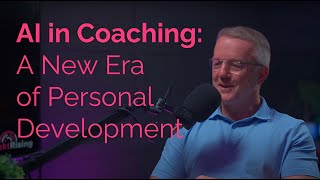
Podcast episode (EP43) featuring Tim Davies in conversation with Gary (and intro by Freya) about Tim's journey into coaching and how AI is intersecting with personal and executive coaching. Topics include client mindsets (disciplined, stuck, victim), coaching phases (awareness, responsibility, knowledge, interference, challenge, support), physical wellbeing's role, and practical limits and opportunities for AI in accountability, insight, and embodied interaction.
I had one of those awkward conversations with my wife where I came home and I said, you remember when I left the Air Force? And I said, that's the big change in our lives. There's another one. I'm leaving the corporate world.
Coming from a point of a fully remote team and an AI company.
Yeah.
Actually, in person. Is the most powerful thing you can do.
One of your grandchildren will marry an AI entity of some kind.
It's fascinating because I'm having a level of detail of conversation with AI that I probably wouldn't have with a coach or any member of my family.
Interesting.
Yeah.
Hi, I'm Freya. Welcome to the Skynet Chronicles Business in the AI Age, the podcast that dives deep into the world where artificial intelligence meets business. Join us as we explore the latest trends, challenges, and opportunities in this ever evolving landscape. From innovative startups to established enterprises, we'll uncover the secrets behind the success, successful integration of AI technologies. So grab a cup of coffee, sit back, and get ready to unlock the mysteries of business in the AI Age.
Welcome. Gary, you are literally the reason this podcast exists.
No, tell me.
Tell me about that, because I would never have come to this studio.
Yeah.
And I would never have taken the leap to do a podcast if you hadn't invited me on yours. Oh, thank you.
My pleasure. My pleasure. It's nice to be back. Sitting on the other side of the table.
Is it easier?
I don't know yet. Let's. Let's find out.
Sounds like a challenge. So let's start with your journey into coaching, because you've got a lovely, interesting past in terms of signals, which doesn't naturally fit with what people might think of business coaching.
Yeah. Yeah. Most of my adult life was in the military, of course, and I think that was a place where I learned leadership, which has been handy in the coaching since. But when I left and went into the corporate world, I had a coach. He lives not far from here, is the head coach of Peterborough Ryan Club. But at the time, he worked in the defense industry and he was really into coaching, so he was trying to introduce it into the company we were in. He was a big proponent of the different coaching frameworks. He'd like to take time with people to coach them to their full potential. And it got me interested. And so when he left the company and I was thinking, what next for me? I had one of those awkward conversations with my wife where I came home and I said, you remember when I left the Air Force? And I said, that's the big change in our Lives. There's another one. I'm leaving the corporate world. And she was like, wait, the salary, the pension, the car, the health care, the gym, that. This to that, like, no, I'm going to be a coach. So. So that's how it came about.
One of those moments that has to happen, but takes some managing at home.
Yeah, yeah. And she's always been very supportive of me. And it was a struggle for the first three years because I think it's one of those things where you're coming into the world with not very many connections. I didn't know very many people in Peterborough, where I decided to kind of drop the pin for my coaching business. And. And so that became the real effort in those first three years. Build a network, speak to people, establish a kind of framework and a reputation and just try and build from there.
It's funny, this is a conversation I have very often, but coming from a point of a fully remote team and an AI company actually in person is the most powerful thing you can do. And the journey I took into, okay, I'm going to have to start networking was an accident. David Malinder took me along to BNI and I thought, this is an interesting cult. It's quite clappy, which is exactly what I'd been told, but learned to love it. And actually, the benefit that you get from building and growing that network, you just can't imagine it when you start.
Yeah, but I bought a coaching franchise. But if you look at the mistakes that I made at the beginning, are people interested in the coaching framework, the coaching methodology, what coaching is, how many sessions we have, all this kind of stuff. Not at all. And so there's a point at which my own coach, who lives on the south island of New Zealand, he said to me, you've got to start talking about what they want and making it clear to them that you can help them get what they want because they're not interested in you at this point. And so as my mindset shifted and I started to do that, you're sat with somebody having a conversation, and at the end of that conversation, they've split into two. Half of them think you're a complete douchebag and this is the end. And the other half think, I think this guy can help me. And that's the half that obviously become clients.
So it's basically active listening and then solution selling to solve the problem that they've got, which is what any good business does.
Yeah. I mean, you've got to have a sense that you're taking them on some kind of journey. So coaching is interesting because sometimes it can turn towards the past if you're not careful. And there's been a few occasions when I've had to say to people, look, I do know somebody who could help you with that because it's clearly been a big influence on you. But that's not what coaching is. We are looking to the future. And so that's the bit that I do now in my prospecting conversations. It's like, so what are you looking to achieve? What does the business look like in the future? And why do you want that? Is it because of family? Is it because of you want a particular house or a particular car or something? What is it that's driving you forward? And as they start to unlock this, what I want them to be thinking is, if I want all of those things, Gary is part of that solution. And again, at the beginning when I had a different coach then, and she said to me, oh, I've had a look at all of your social media, Gary, and what it looks like to me is that your sole purpose in life is trying to prove to other people how clever you are. You just like an arrow to the heart, confidence, hit taken, you know, so it was one of those things where you start to do that and you talk about the future and you. And you make yourself part of the solution and don't, don't give the solution as part of your prospecting, because if they've got the solution, then they're done. Thanks very much. I'll give those ideas a try and come back to you if I need anything.
Yeah. And you've taken a turn towards executive coaching as well, haven't you?
I have.
Tell me about that.
It's a good split because the giant corporations buy coaching in a different way and they hand it out to their executives based on a number of different things. Normally it's if they're in a fast track or a kind of top talent program, sometimes it can be. If they're seen to have had an appraisal and there's something not quite right and they want a little bit of help with that, that's a little bit more difficult. But the executive coaching is very human. It's very much about, where am I right now, how can I get to the next step or beyond, how can I deal with the challenges I've got now around my boss or my team, or the sense that I just can't get things moving the way I want? So very different. Just as enjoyable as a business coaching, but Less focused on numbers and plans and strategies and things.
So more able to make a short term impact.
I think so. Because you're normally unlocking something by holding up the mirror to somebody and you're saying to them, so you've explained this situation and you've blamed your boss and you've blamed your team and you've blamed Brexit and climate change and everything else. What's been your role in this?
If everybody else is wrong, maybe it's not everybody else.
Yeah, exactly. And then when they start to do that, because many of them are, I think, a bit like I was in my military career, don't have a lot of self awareness. They're charging ahead on a path and then suddenly when they become more aware of themselves and their impact on others, their own emotions and how they bring that into the workplace, that's when the transformation happens because they start to feel differently about. Okay, I'm actually in charge of some of the outcomes here because it's my responses and my inputs that are causing some of these challenges. So yeah, more easy to have a fairly instant impact.
Fantastic. So you're staying away from the likes of timeline therapy, which was the only form of coaching I ever found funny. It didn't work with me at all. Funny, yeah, I just laughed. But it's interesting, isn't it? There's so many different approaches. Choosing the right fit for the person that you're working with or the team that you're working with is crucial.
Yeah, yeah. I did an NLP course a couple of years ago and TLT was part of that. And I struggle with that because this whole idea of where is time spatially for you, you know, I thought a bit like the Google Calendar, you know, the past is over here to the left and the future's out there to the right. But some of the NLP techniques I still use, asking people to reframe, being very specific, you know, what specifically is it? Which I remember from my practitioners course because that then gets people into the next level of self examination rather than just generalizing. So I do use a little bit of nlp, but only in the broader sense.
Fantastic. Have you used AI at all on a personal reflection basis?
As a tool for my own kind of self coaching.
Yeah.
Yeah. I've done dream analysis with AI, which is hilarious. So I've really enjoyed that because I've got a coach myself. That's what I use. That's the person that I go to when I'm thinking about that. What I use AI for mainly is Ideas, really. I want another perspective, which I guess you could say that is partly coaching. But I also want ideas from it that will help me to do more. Own business, will help my clients and things like that. So I've not gone into it and given it a human problem and asked it to reflect on my behalf.
I have. And that monthly reflection process is fascinating. It isn't actually monthly anymore because I forget to do it and the time that's scheduled in my calendar gets pulled into other things. But having a script that I've been running through that started as just an input prompt and now on a monthly basis is a review of how it went last month and the questions that were asked and how have I made progress on the things I said I'd commit to is fascinating because I'm having a level of detail of conversation with AI that I probably wouldn't have with a coach or any member of my family.
Interesting.
Yeah.
In terms of anonymity or being able to say things you just wouldn't say to another human.
I think I probably open up more than I would with a human. I do it while I'm on a walk with a dog, which I think also helps just because it's out in the countryside. It's fresh air. But having questions thrown at you when you're already in a relaxed state and just spitballing, it's very different to the considered response that you might give if you were with a person.
Yeah. And do you consider it as being therapeutic or actually action oriented in some way? I get back from the walk with the dog. I've made a little mental note. I can review the notes that it's captured.
Definitely action oriented, orientated. So effectively the output is this month I'm going to do X, I'm going to do Y on these things in order to improve the situation. It's just eye opening really as to both the capabilities, but how dependent people could become on this technology too. And you already see stories of people who are building relationships with bots and then having concerns when GPT4 is taken away. But it's not working the same anymore. So I think there will be societal challenges around reliance on AI technology, but it seems that there is elements where it can seep in and be beneficial.
I saw Gary Vaynerchuk live in April and he stood up in his. He was on stage for about an hour and a half and halfway through that he said, I want you to raise your hand here if you're in your 30s. So, you know, quarter of the audience probably put their hand up. And he said, one of your grandchildren will marry an AI entity of some kind. You know, and obviously he's trying to stir up a little bit of controversy and get people interested. But it was really interesting because he said, we are beginning to see that evidence that people find the emotional connection stronger with something that is basically reinforcing their own beliefs about themselves and telling them that they are good. I'm not saying all AI does that, and I'm sure you can tell it to be brutal. You. But his idea was simply that people would end up pushing away real human interaction and deciding to spend their lives with an AI entity.
And when those AI entities are embodied, you can see how much easier that would be. So that it's not just an emotional mental partner. It is potentially a physical presence too.
Sure.
And there is huge development in that space in terms of bipedal robotics that will be able to take on any task we can think of.
Yeah. But to go back to your point about your monthly review, I think it depends on what kind of person you are. And this is a little bit of a generalization, and I'm not being unkind to anybody that I've coached in the past, but let's say people fall into three categories. And the first category is hyper focused, hyper disciplined. And they tell the truth to themselves most of the time. And when they promise themselves something, they get on and do it. And I've met maybe 1 in 10. That's a highly subjective number. But a small group of people who are just like that. And whatever they promise themselves, they will do. And I can imagine them reacting to AI really positively in that mind frame. If this thing tells me that one of the opportunities that I could grasp is this, I'm just going to go and do that, and that'll be great. But I coach a lot of people who I would call stuck. And these are the people who know exactly what to do, but they can't make themselves do it for some reason. So they know how to grow their business. They know how to build a great team. But there's something that stops them from being able to do that. Now, I don't know how those people would react to this range of opportunities that might get thrown up by AI. Here's a problem that you can solve. Here's an opportunity you can go for. Here's a goal that you should be setting because they already kind of know that. But there's something stopping them from doing it.
And the regular. I'll politely refer to it as A kick from the team, from a coach might be sufficient, but equally has a history of not being successful for that individual.
It's hard to say with AI because not a lot of the people that I've met have used, who are stuck, have tried to use AI in that way. They look to AI for answers to specific problems, but AI is not trying to get them to unlock what it is that holds them steady. When they say, I know I should spend this money on marketing, but I just can't do it. And I know that I should go networking, but I just can't do it. And I know that I should employ that person, but I just can't do it. Something else has to unlock that. I'm not saying AI can't do that, but it's quite a human thing to dig down into the, to the levels below that are holding people back like that.
So that's the first two types. What's the third type?
Well, again, this sounds a little bit unkind, but the third type is the victim. Right. So victims are pretty sure that the world is just happening to them. They prefer not to shape their own environment. So if AI says you want to grow your business, so I want you to post on LinkedIn every day and I want you to go networking every Wednesday morning at 6:00 o', clock. And I want you to start an email marketing campaign targeting your dormant customers to reawaken them to get more business out of them, then they will try those things once and then blame somebody or something or make an excuse or just be in flat denial that that was good advice in the first place.
Yep.
And again, I'm not saying AI couldn't be shaped in some way to maybe address that victim mindset, but it would be a really interesting experiment.
Yeah, it would. And I think if you look at any large group of an audience at a networking event, at any event, really, if you sampled any business, you get that mix across.
And probably some other categories too.
Yeah. And generally, which of those three do you find are the easiest to coach?
Well, the disciplined people are very easy to coach because what they're looking for is a sounding board, typically. So coaching a guy who runs a very big IT company, and his view was we've been successful year on year for two decades. We've grown every year. We've been profitable every single month for the entire period that this business has been alive. And I want to step back. Okay, so something's got to be different now because actually you're the person who's holding the whole thing.
Together it's been founder led sales.
Yeah. So somebody that's that successful who knows that what they've done for the last two decades has been really good for the company and it's grown and it's scaled and its client base now wants something else. But the same mindset is there. So as soon as we start talking about stepping back, getting people to do more, it's just like, do it, do it, do it, do it, make it happen. And this kind of thing means that they take action readily and they're happy to make a mistake, clear up the mess and try again. So they're good people to coach because they're action takers. The victims are more difficult until you get them out of the excuse making thing. So sometimes I will sit with a client, I'll say, last week you told me that you were going to do a. Have you got on? Yeah, I haven't done that. And I would say to them, okay, I'll give you five minutes and you can give me all the excuses as to why that's not being done. It sounds a bit arrogant, but it's kind of a positioning and a framing of whatever you're going to say. Now be careful not to make it an excuse because if it starts with they did or didn't or that didn't happen and you're not talking about you, then we know that it's probably an excuse. Different.
Fantastic. So how do you personally choose the diet of information that you get? What are your sources of information and inspiration?
So a lot of my inspiration comes from my coaching community. So there are 200 action coaches in the UK. We meet regularly, we speak regularly. There's the whole spectrum there. There are coaches who are absolutely flying, there are coaches who are still in the early phases and maybe not flying. We talk a lot and that is very inspiring because you can see people at every stage. You can see people who were where you were, you can see people where you are now and you can see people that you would really like to follow into that kind of space. So that's a lot of inspiration when it comes to information. I'm very careful with news. I don't consume broadcast media news now at all. So I try to be very careful about what I choose to watch and listen to in that sense because I don't want to start my day with murder, you know, war, crisis, all this.
Kind of stuff, negativity in general.
Just. I often thought that the right thing to do would be to start the good news channel, but nobody would watch.
It, this is the problem. You think there's some sort of math split around it, but it's basically people like bad news, gravitate towards it. But one of the best things I stopped doing was watching BBC News every morning.
Same.
And I think coming off of socials was a revelation to me. And so now I just try and. Well, through the business we create content and I consume as little of it as possible in the wider spread. And I'm very selective about what I listen to and what I read. And even then sometimes there's this, there's the odd bit that slips through that I don't really want to know about. And I will read Google News occasionally.
Yeah, I'll pin stuff if I see something on LinkedIn that I like or if I see something on a news site that I like or things like Forbes and Harvard Business Review get kind of pushed into my feed and I'll spot something like that and just pin it for, for later. But I will definitely not watch broadcast or listen to broadcast media news because I just don't, I don't, I don't want that set of emotions in my life at the start or the end of the day. No. So.
And it saves so much time. You see just the scrolling. My daughter lives on TikTok and I just think, what are you doing? What are you doing? What are you putting in your brain?
Yeah, well, I guess, I guess the algorithm will be putting slightly more controversial things into the feed to keep her interested because she is a positive reinforcement loop, isn't it?
So it's whatever you've liked you see more of. And that will create challenges in society because those that were more into extreme content will see more and more extreme content. Whatever your belief system is, it's a reinforcement loop.
That's why I get a lot of stuff in my social media about slicing your irons or shanking your driver.
Because.
I watch those videos thinking there must be a solution in here somewhere.
You've just completely thrown me. And it's a long time since that's happened.
Yeah.
So what's the benefit of exercise in terms of personal input and the coaching that you're doing with individuals is very much on the mental and on what they could be doing within their business. But how much of a play do you think physical activity has in terms of emotional well being?
I think it's a really important, it's very important for me, for reasons that you and I have discussed before, in terms of getting over things that happen to you in life. If you read A book like what's a good example? High Performance Habits by Brendan Burchard. Right. So I think the first habit is seek clarity, you know, let's be certain about what we're going to do. But the second habit is raise energy without talking specifically about, you know, or calling it out as the title about physical energy. But it's basically this sense of do you understand what your energy is at any given point? Do you understand what gives you energy and drains energy? And of course, in this conversation about energy, physical activity comes into it. And it is an absolute truth that the people who are getting a decent range of physical activity in terms of keeping mobile on a regular basis are better performers. And the science in that book backs that. And I would say that when I look back at some of my coaching clients, there's been a lot of people who have been perpetually tired because they believe that just effort in the business is the right thing to do. Well, if I'm not working hard enough, then I just need to work harder. And so they're turning up well below their best. And so I don't coach specifically in that. And it may come up in our early conversations about how do you get your energy? Where does that come from? Who or what saps your energy away? And I'm very careful not to be preachy about physical activity, but I just say to them, what is it that you would need to do to turn up at your best mentally and physically? I've got one client who wouldn't think twice about being on TikTok at three in the morning and then turning up to work at 9 o' clock in the morning and wondering why they're not at their best. So these are important things, but I try not to be preachy about it.
I think for me, the, the easiest test in the world is if you're tired and you go and spend an hour working hard at the gym with a PT or not. You go home, you have something good to eat and you go to bed and you sleep well. You wake up the next morning, you've had eight hours sleep and you feel better. Yeah, you don't feel worse for having exercise for an hour. You might have muscle fatigue, but fundamentally your mental position has changed from a I'm worn out, I'm tired, to I'm energized and fresh. And it's just the easiest thing to do, really. Just go and work out. It doesn't matter what, you have to enjoy it in some way, shape or form, otherwise you won't routinely do It.
Yeah, I'm smiling inside because my pt, Carl and I have this kind of standing joke where I'll go into the gym at whatever it is, 8:30 in the morning yesterday, and he'll say how we're doing? And I'll say, I hate you and I hate everything you've done to me and I hate the pain I feel from the last session.
Let's go.
And I feel like I would rather be anywhere else in the world, apart from here with you right now. And he smiles and goes, I'll ask you again in 10 minutes. And then, of course, 10 minutes in all, the endorphins are starting to flow. Different conversation. We fist bump on the way out after an hour and he's like, see you in a couple of days.
Yeah, I mean, I occasionally go in and I'll be in a darker state of mind. And Kamel at the Epulse will say, what do you want to listen to today? And a couple of weeks back, it was rage against the machine. So it was obviously been a bad day, but a workout and 40 minutes of rage against the machine and I was back to normal.
Yeah. Yeah. And there are times, genuinely when I hate Carl for what he's done to me, but he's been with me through thick and thin in the last three or four years and, you know, I respect the fact that he is there waiting for me at the gym and I will never let him down. You know, I will turn up for every session that we've booked.
And that. That grit that you get from forcing that routine and from going through the regime with him.
Yeah.
Applies to so much in life because then when there is a challenge ahead of you, it's just got to keep on going until I've done this. And it's the same if you're on a big walk in the hills. It's the same if you're approaching a challenging situation at work. It's. You've got the mindset of it's going to hurt, but this is the steps I take to get through it. This is how I break it down into whatever manageable chunk size I need in order to make it work for me. So I think physical exercise is crucial in terms of mental health and well being.
But I am curious then about AI from an accountability perspective, just to flip it back towards that, because I don't know how people will respond if AI professionally nags them about why they haven't carried out the task. They said they would. And I guess there will be a group of people who will respond to that? Maybe those hyper disciplined, hyper focused people who will go, right, I'm not enjoying the fact that I'm being held to account here, so I'll do something about it. And then there will be a very large group of people, typical of humans in general, who find it really easy to let themselves down, who won't be forced into action by AI giving them that prompt. And so when it comes to accountability, I'm wondering how AI would deal with that and how people will respond to it.
I think people will respond differently as they do now. I mean, going to a gym on a regular basis and seeing a PT is not for all. Definitely doesn't work for some. Some have got no interest in it. And I think those people who are naturally consumers, who will sit back and let the world happen to them, will continue. But instead of watching Netflix every evening, they'll be in some sort of immersive world where whatever they want to happen will happen. And you can sort of look at the science fiction and Ready Player One, where everybody's going into their virtual worlds. We're really not that far from that being an option for people who want to, but there'll be others who absolutely don't want that. And it will be an equal split. So I'm not sure that you can persuade somebody who doesn't want to be persuaded. They will get their news from wherever they get their news. They'll believe what they want and the large majority of victims will stay victims.
Yeah. And so when I think about the way I coach and there's kind of six elements to it, I've looked at each one and tried to think about how AI is going to assist with this, because I do want it to assist. I don't want it to be something that as a coaching community, we just go, oh, no, we need real humans in this space. Always start with awareness. So how am I raising people's awareness about what needs to be fixed or what opportunity needs to be grasped, or what goal needs to be set? If I'm doing that, what's the role of AI? Does it help people to become more aware by showering them with options? Does it give them a prompt? If I ran a kitchen and bathroom showroom and I said, this is my situation, what kind of opportunity should I be looking to exploit? I'm sure AI would give me some answers to that. But does it raise awareness to the level where we get to the next step, which is now you're aware of what needs to be done. Are you happy to accept responsibility for that. And it's that moment when people say, okay, I accept ownership of that now and again, I haven't worked out yet as to where I will prompt that.
So I think at the moment the vast majority of people and businesses who are using AI are using it on a question and answer basis and so it is aware of the situation that they're currently in based on that prompt exchange. There's very few businesses that are pulling together sources of data that give an accurate representation of the business so that an AI can effectively be continuously in the loop looking at what is the performance of the business, what are the challenges that are being faced? Is cashflow a consistent challenge? Are the posts that are going out to social networks being viewed and having that holistic view of a business and then making recommendations to the md, CEO, owner, whatever the mix is, that says here's the steps you can choose to take that could take a material difference. Would you like me to help you with that? That's the situation we'll unquestionably get to so that a one man business can effectively have a full board that is a CEO and all of the rest of the supporting roles that you need that are sentient and aware of what's going sentient are aware of what's going on within the business and can make legitimate recommendations and can provide the output to then actionize. So we'll see one man businesses, and ultimately no man businesses where somebody's just given money to an AI and said go off and do these things. But the vast majority right now are just in this question and answer phase and really unaware of the full mental aptitude that some of these models have. And if you're giving the information in the right way, then the feedback that you can get back is amazing. Still relatively early days.
Yeah. And while you were explaining that, I was thinking about the kind of answer I might get from AI if I said, you know, tell me about my blind spots and whether or not it would be aware enough of what I've typed into it before and kept my history and things like that. Would it be perhaps looking at a model of typical blind spots for a person in my position? Because I explore that with my clients. What do you know about yourself that nobody else knows? What does everybody else know about you that you don't know? There's lots of good examples of that. What is it that would be considered a complete blind spot? You don't know what you don't know what's missing out of your mental framework here that's going to help you to grow the business. I don't know how I would help with that. But in that first stage of build awareness and get the client to accept responsibility, I'm very happy to employ AI in whatever way is best for them so that we get more richness in that moment. Because it's essential before we move on to the other phases.
Yeah. So I think it'll play a big role in that Gathering of data about current performance and cutting through the lens that a business owner might have. This is why we're in this situation. Well, actually, the numbers paint a slightly different story. Have you considered this? But in terms of that future state and how far you can get on blind spots, I think that currently and for the foreseeable future would be best worked through by a person who's got the experience and understanding, because it's not just about the information that's out there. So I could suggest you could do a scan of all content across the Internet, of all of the times that person spoke, all of the content that they've published, and based on that, extrapolate on their mental state at the point in time where they've done it and what they might be thinking, and therefore what you can see, where are the gaps? It's not going to be right. It would be interesting, and I don't think anybody would want to read what it would come back with. It could be quite personally challenging, but I don't think it's going to accurately represent the blind spots that that person has at this stage, or indeed the.
Beliefs that they hold that are driving them in a particular direction. You know, I've told this story many times about a guy that I worked with at the start of my coaching career who said, I want to grow my business, but only to this point. And then as we had this discussion, and he said, you know, my dad told me that all rich people are bad, so he's still alive, and I don't want to be rich while he's alive. Now, I don't know whether AI would uncover that, but at that point, when you suddenly realize the human belief and the motivation, I believe, said one of my clients, that the only number that's important in my business is the balance in my bank account. Now, that's what they believed. So do I accept that belief? Do I challenge that belief? Do I show them what it might be like if they knew about the other numbers and what that means? If we examine the kind of challenges that had popped up as a result of only looking at that one number, I get this bill every quarter from HMRC and they demand that I pay them all this money and I don't always have it in my bank account. Okay, well let's broaden your knowledge of how VAT works and everything else and we can try and put that in a different context so that you can believe that there's a good reason for you to know these other things. Well, again, I don't know if AI is going to dig into that. It's going to uncover that it would certainly tell a person if you want to set this up correctly and you're charging VAT that you're going to cream off the top whatever percent and put that into a separate account so that the bill is payable every time it arrives. It would tell them that it might not have uncovered that belief at the start.
So what role do you think that psychometric testing has in that space? Because if we can undertake a test that says what sort of profile are with that is starting to touc on some of the belief systems, isn't it?
Yeah, I do a behavioral styles test with all of my clients, the DISC tests and it's variable, best used I think in comparison with others. So a team DISC is a brilliant thing to do. But sometimes people will fill out the report, this happened to me just the other day and they'll fill out the report and the report goes to them and they go, this is exactly like me. And I quietly, I say to myself, well that's because you answered all the questions. But I never say that so they realize it's them. And when the DISC report says you're a bit headstrong and you're likely to charge ahead and leave people behind and you've got a very strong kind of ego and you like to bang the table and make things happen and get results and they wonder why everybody else isn't like them. It's a brilliant way to raise your self awareness. Ah, right. So he's like that because he likes detail and won't act until he's read every line of the insurance policy. Whereas I'm busy making a mess up ahead, just getting people to clear up behind me. And so it's helpful like that.
Yeah, so maybe there's a place for some sort of testing profile to help understand some of the challenges that an individual has. But ultimately if a person sat with somebody over a series of coaching sessions can elicit that understanding, I think there will come a point when an AI can too. But it won't be just Having a chat interface, it's going to require something that at least appears more human, I think.
Yeah. I mean, if we look at the obvious things at this point, as it exists today, in my understanding, AI is not going to be checking out body language. So when I'm sitting opposite somebody about that. Yeah, I'm sure it's coming.
I have to show you something. After this, we'll have to do it off air. Right. But it's something that we've been working on that actually is evaluating body language.
Yeah, yeah. So at that point where the visual cues currently tell me a lot about the state of emotion, the willingness to go deeper, the avoidance strategies that might be there, I can see body language changing. I can read something into that which might change the way the coaching session goes or the next session goes. So I think that's something that, whilst I don't doubt that AI's got some kind of capability that that intensely kind of human sense that the hairs on the back of my neck are standing.
Up for some reason, the spidey sense.
Is triggered and I'm not quite sure why that is. That gives you a little bit more intuition in those situations.
Fascinating. You've got some interesting scribbles there in front of you.
Well, yeah, it was my mind map because I was thinking about the way I coach and the six different phases of that and thinking about how AI might apply to each one. Because the third phase is knowledge. So come on in, AI. Because if I say to somebody, so you've set yourself this goal, you're happy to take responsibility for it. Do you have enough knowledge skills to achieve it? And they say, partly. And we go, okay, let's identify the gap. And they don't know about certain aspects of business. Then why not go and get that prompt and answer knowledge from AI in a way that would be very beneficial to them. The fourth one is interference, of course, which is then, well, what's standing in the way? And I was driving up here thinking to myself, what kind of questions would I put into AI to try and uncover why a person's distractions or a person's circumstances or a person's beliefs or values that they hold are obstacles in them achieving what they want to achieve? Because I'd have to try and frame that in a way that AI could give a sensible output.
I'd work back to help. Yeah, I'd ask the AI to ask. To tell me what sort of things to ask in order to elicit that understanding.
Yeah. So I know the kind of questions that I would ask, and it's whether or not a person operating on their own could prompt the AI or ask the AI to give them the prompts to get that insight. So I've set myself this goal. I think I'm ready for it. I accept responsibility for it. I've got all the knowledge. What do you think is going to stand in the way? And various variations of that kind of question. Be fascinating to see the output.
It would. Do you think most people have enough understanding and enough willingness to lean into these tools to make the most of them?
Well, it's about trust, isn't it? So are you happy at this stage to trust something that doesn't know how many Bs there are in the word blueberry? Are you happy to trust something that might have given you wrong answers in the past or might have been hallucinating about what the right thing is? So if you're the kind of person, a technology adapter leading from the front, happy to try this stuff, give it a go. But if your experience then starts to make you doubt the efficacy of some of the output, that's the point where you've got to work out your next step.
And the challenge there is that those people that have had a poor outcome are probably using the free version of these capabilities, which isn't necessarily the one that can solve how many bees are in blueberry or a standardized maths problem, or will regularly come out with unreferenced content. And so there is the potential that people who try and go cheap get a bad experience, write it off, and don't try and try again. Whereas what we've seen is if something isn't working well now, well, retest that in a month's time, in two months time, in six months time, and just look at the quality improvement that you're getting. So even if we can't solve something right now, well, let's bank that as currently unsolvable and revisit it on a regular basis.
Yeah.
And so I have a. I have had a prompt that I used to try and test the differences between models. It now only differentiates between companies rather than models because one certain type of models just continually cleans the test. But it's that distance and location understanding which, interestingly, the OpenAI models have absolutely dialed. More recently, the Gemini models have covered anthropics. Models which are absolutely fantastic at coding, have no location awareness. And so this question that effectively states a number of situations and then at the end asks, where were these locations? And where did the person live? And I know the answers because it was me.
Yeah.
But some of the models have no idea whatsoever and others get it exactly dialed and the first time I ran it and OpenAI said, you lived in sort tree. I don't know how to test these things anymore. So we are looking for actually those examples where it's beyond the current capabilities so that we can revisit it and understand how can that be applied to solve a business problem. Yes, but they're getting fewer and further between image, video generation. Still got some work to do, but music, audio, reasoning, they're to an incredibly high level now.
I mean I've got a couple of examples because I asked it to create a script for a video which when spoken would last for 30 minutes.
Yeah.
Was not able to do that. Calculated how many words needed to be in the script and over 10 different examples with 10 slightly different prompts continued to churn out scripts that were far too short. And you told me that it needs 30,000 words to last for this long. How many words are in this script? It's 15,000. So that's only going to last half as long. Why did you give me that rather than giving me the 30,000? Oh, I don't know. I'll try again. My personal trainer and I like to do football trivia. So I said to chap GPT, give me the names of five Tottenham Hotspur players who've represented England the most since 2000.
Okay.
Harry Kane, etc. Etc. Now my personal trainer is a Tottenham Hotspur fan, so he just went bang, bang, bang, bang, bang. There's the five names completely different to the list that ChatGPT gave me of when challenged. ChatGPT said, oh yes, I forgot about those other ones. Okay, so trust has got to be.
Improved, it's got to be earned.
It's got to be earned, it's got to be improved. And I think if people are putting highly personal data or expecting highly personal guidance, we don't want things that are hallucinating or throwing up false.
And in fact, even this week we've had one where we asked for content for a two page sales brochure.
Yeah.
And the content that came back, we were using the latest high end thinking model was brilliant content, perfectly on topic, fantastic representation of that brand. And I went through with the business owner and we tweaked some of the words, very light editing, changed a couple of terms but it was clear that this was a four page brochure, not a two page brochure. But actually that was the right level of detail and so my initial request was for a two page. It didn't give me that. But actually the level of detail in the response was what we went for. And it was passed off to a graphic team and they produced the asset. So sometimes the question that we ask is not actually what we need.
We've all got to become expert prompters, right?
For now, yeah. I think it very quickly just becomes that there's a sub level prompt and we saw this within image creation that we can take two or three words, put it through a prompt enhancer and get a beautiful photograph. Because we've put it through something that understands the lens, the aperture, the light, the scene, the setting, and effectively adding in all of those details which weren't originally thought of by the person that's putting in the prompt. And I think you'll see something very similar happening behind the scenes in the models. And really that's what the reasoning models are doing anyway. They're breaking down either a plan of action if you look at anthropics models, or a step by step way of working towards the outcome, which is much more how OpenAI and Gemini handle it currently. But you can give it something relatively lightweight. And if you look at the reasoning stream, that's not actually what the model's thinking, but it's a representation. It seems like the person wants this, but they've only given me this. I'm going to assume that I'll do such and such. And so they're effectively working through, filling out and expanding on that initial prompt. And so I think the necessity to be a great prompt engineer will very quickly fade. But specificity is key. And so you don't need to structure something into a perfect three paragraph long. But if you do need to put the right level of detail in.
Yeah. So how are we going to use AI for challenge then? Because the final two steps for me are challenge and support. And I see it like a bit of a seesaw. Sometimes the challenge is high and the support is necessarily low. Sometimes it goes the other way. You know, client comes onto the coaching session and I always start with, what do you feel like expressing? You know, just to get a sense of what's top of their mind at that moment. And he says, well, you know, my wife told me this morning that she wants a divorce. So all of a sudden you're in a completely different space there. And so this seesaw changes in a coaching session and between coaching sessions depending on challenge and support. So if you're going to ask AI to do those two functions and Decide which one is appropriate at the time. Again, I'm not saying that that's not something that it could do. I'm sure the model could be built, but right now that feels a very human thing to look at somebody, to see the body language, to hear the voice, to get that intuitive sense of where they are and then choose how to balance that challenge or support.
So, yeah, I wouldn't trust the current level of technology to do that. Could a coach be built that is monitoring for body language, for visual signs, for hand gestures, for filler words, and taking a series of actions on top of that? It could, but I think you have to be incredibly careful how that technology is deployed, because really with, I mean, AI is just another tool, but we want to use it in such a way that it is bringing benefit, not adding risk. And so in some business situations, AI is not the answer. Actually, probabilistic logic makes far more sense. Or rules based logic where you're very specific about these are the things you do. When you're getting into the individual realms of coaching a business owner, there is a lot of maybe not insurable risk, but there is a risk that you as an individual could make a recommendation that could be detrimental to them as an individual. And the last thing we want is people taking guidance from an AI that is an uninsurable risk where we could be damaging people's lives. So there are very, very legitimate use cases for AI in coaching solutions. But I don't think it's the level of a human coach. I think it's improving public speaking. I think you could look at it. I had a conversation with my dad, he's a choral conductor, and I showed him an example of where from a video feed we could track hand movements and sequence and say, well, what's being done? Is it being done well? And he was blown away. And I think if you're very, very specific in what you're trying to solve with that model, then that's fair and appropriate. But when you're getting onto something as broad spectrum as somebody's mental position and how that relates to their personal and professional growth, it's sketchy at best. And I think that right now is best left for people.
What do you think my most powerful tool in coaching is? And then I'm going to ask you whether or not AI can handle it.
I'd guess active listening.
Yeah, that's part of it, certainly.
But I don't know, what is it?
Silence. So that moment when you are having a conversation and my coach said to me, Way back, way back. Now he said to me, do you know what your clients look like when they're thinking? And of course, as you develop active listening skills, that becomes a thing. And I became really hyper focused on that now. So if I ask a question and I can see that the person is thinking, I have learned not to interrupt that. When I can see that they've thought and responded, then the most powerful thing at that point is to choose whether or not silence is correct. Because actually they're still thinking and given another 15 to 20 seconds, they're going to come up with something else that might be very insightful for them. And so again, if you're using an AI tool and you're having your conversation and you're walking the dog and you have revealed something or explained something or talked to AI about something that's important, is it going to think to itself? The right thing for me to do now is not to say anything, or is it going to jump in with the next question?
Yeah, it definitely is not and it's going to jump in with the next question because the underlying conversation mode that it's running on isn't to look for those moments of understanding and insight and allow them to happen. Now, you've been on a teams call with me many, many times. I'm sure you'll know when I'm looking off to the right, I'm trying to work out the answer to something and it's not looking for that.
No.
But could a solution be structured so that it was? Yes. But again it's that those indicators vary greatly from person to person and you get familiar with them because you're looking at a broad spectrum of different individuals. So there are some things which you can read on how to read and there are others that you will pick up from conversation over time.
Yeah.
And we are not there with AI yet. And actually, when you look at the way the most capable model of video analysis works, we've discovered in the past matter of days, while it is multimodal, it's still breaking down and we are charged based on audio separate to video. So it's actually breaking down and splitting into two different streams rather than processing it all inside the same model. So there's still great room for improvement in terms of the capability of the models and that will open up more opportunities. But you would have to be very, very specific in how it's being applied to a problem to give it that ability to active listen and to have silences. You could structure something now that would do it. But it's not a native ability.
Yeah, yeah. And so, you know, I look at the structure of my coaching in particular, and I think to myself, you know, I'm not protective of the coaching space when it comes to AI, but I look at those six categories that I use and I think, where does AI have the right impact, provide the right impetus, the right catalyst for a person to think differently? And where do we still need to be in a position where trust and empathy and intuition maybe are important enough for that to stay a human space for now. And maybe that human space stays fairly fixed. Maybe it shrinks over time as technology improves. But fundamentally, I don't want to keep AI out of the coaching space. I think it belongs in a few places, but just not everywhere. A can't tell war stories, you can't tell war stories.
But the other place I think it has great value is in making sure that the businesses that you're coaching are making the most of the capabilities that are out there.
Sure.
Because while it may not have that much relevance in the direct coaching session, the individual could benefit from the tools that are out there, and if they're applied consistently within their business, then that could make a material difference to the performance.
Yeah. And I've got lots of people who are experimenting, lots of people who want more knowledge, lots of people who are trying to teach themselves to use it more effectively for analysis, trend analysis, sales performance, and that's all good. I actively encourage all of that because when they come to the session and say, we've noticed that number four in our sales team seems to be on a downward trend while everybody else is up, then we can have a conversation around, what's the next step for that? How are we going to tackle that? So it gives us more helpful information to deal with than less.
So what do you think is the future of AI and coaching?
I think it is the systematic embracing by coaches of the technology at whatever level it's at. So if you have a particular coaching model and it fits in a lot of places in my model, in the knowledge part, it fits really well. So I will use that, embrace the technology. At that point, if the technology changes, re examine the model and see if it applies in a more specific way. But don't forget to hang on to the uniquely human things that are actually the point where the person has an insight. That's the thing. And if I sit quietly with somebody and they have an insight as to how things are going to be better for them, to me, that's the transformational power of coaching, so let's not get rid of that. Let's use the other tools alongside it.
And roll on to more coaching on the hills. Well, yes, Gary, it's been fantastic chatting again and it's so pleasant having gone. It feels like I should be on the other side still. It's. I love to have a conversation, so thank you very much.
My pleasure.
More from Tim

EP 60: Why Founders Become the Bottleneck — And How AI Changes Everything | Thea Brook









