
EP46: Safe, Smart and Human: AI’s Future in Law and Education
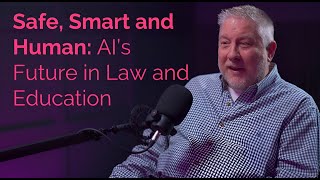
Tim Davies and Tony Gardner discuss AI's near-term effects on law, education, and culture. An AI song hit number two on the Billboard chart, raising questions about originality. In law, AI handles routine work well but can hallucinate case citations, forcing firms to split between automated services and human-led advice. Schools should teach critical thinking and AI literacy while protecting interpersonal skills.
Chapters
Number two in the us Billboard, apparently right now is a AI generated creation. An AI music artist has created a song that's almost topped the American music chart.
Gotta remember in the 60s there were some years where the Beatles weren't the biggest selling artists. You know, one year it was Ken Dodd. Okay, now, you know, am I more upset about an AI song being second in the Billboard chart or Ken Dodd being the biggest selling art artist in one year in the 60s? I do have a real passion about making sure that schools are not just about the university pathway. There's a real desire there for them to actually, you know, want to achieve and want to do better. All they want are the options to allow them to go down different pathways. And I think that that's really important that schools are looking to explore that.
Hi, I'm Freya. Welcome to the Skynet Business in the AI Age. The podcast that dives deep into the world where artificial intelligence meets business. Join us as we explore the latest trends, challenges and opportunities in this ever evolving landscape. From innovative startups to established enterprises, we'll uncover the secrets behind the successful integration of AI technologies. So grab a cup of coffee, sit back and get ready to unlock the mysteries of business in the AI age.
Tony Gardner, welcome.
Good morning.
Business development specialist at Hegarty Law and all round local networking hero. But all of that's nonsense. Let's talk about Disney and the fact that you've been to Disney more times than I've been in mountains. Did you ever think when you were growing up that there would be robots as capable as C3PO?
I always, because actually your reference point is Star wars, but mine of course would be things like Thunderbirds and Captain Scarlet. So these are where it was built into me that what was possible in the world, what could happen. And I think that despite having a slightly old head technophobe approach to things, the, the willingness to want there to be these discoveries and the importance of scientific knowledge or now obviously AI knowledge coming on stream was, you know, absolutely fundamental. It had to be there, it had to happen. And yeah, robots, I mean, I'm very disappointed we're not all flying around on jet packs.
I was hoping for Jetson's car, I've got to be honest.
Yeah, but absolutely.
But the robots are looking like they might actually be here in our lifetime, which is just madness to me.
It's looking very exciting. Although like everything in today's age, every time you see positive news about aspects, say of AI or robotics, you then someone has to show you the negative where you know, the robot can't quite manage to fill the dishwasher properly and is sliding all over the floor, which, I mean, what's the problem with that? Because, I mean, that's entertainment right there.
It's not just entertainment. It's also as bad as it's ever going to get. If you go back six months and look at the video capability to produce new videos, go back 18 months and look at music creation, it was rubbish. And then suddenly it's as good as we can do.
Yeah, absolutely.
And that learning happens so quickly. So a robot slipping up is entertainment now? Don't kick them, though.
No, no. Well, have they been programmed to fight back yet? Have we not?
Surely you're talking about programming. At what point, when do they decide they don't need programming anymore?
Well, hey, look, I mean, this is the. This is another debate, you know, Joshua Bengio is doing his old law zero thing about, oh, my God, you know, has Pandora's box been open too far? Can we get everything back in? How can we control these things? And there had. Do have. I mean, there has to be limitations, I think, in some areas of it. But at the same time, you need the advancement, you need progress, but it does have to be measured. There are some. There are some corners of the universe that I should not be allowed to explore.
What are those corners?
Well, I think around children's safety. And, you know, I think that, you know, again, there's a lot of argument around should we restrict the red lines perhaps to be drawn. I know that there's the Safe AI for Children alliance that's drawn sort of three lines, really, around fake sexualized images of children and not having children become dependent upon sort of AI support or obviously creating harm towards themselves. And I think that they are key areas where we ought to say, yes, that is definitely going to happen. And so I think that element of programming does need to take place. But at the same time, you've got, you know, this morning I saw headline on my ceefax because I like to be old school as well, whereby it was talking about, you know, supercomputers versus superbugs and, you know, the utilization to further our understanding and knowledge around viruses and dealing with them, which obviously can have huge impact. And I think that some of that medical, scientific area are corners that we really do need to reach into.
You have to push in hard. I was reading just this week about a kid's soft toy which had a large language model capability and they didn't have the guardrails in place right and it was giving advice on how to light a match and other things that are just. The kids didn't need to know.
Yeah.
So how you make sure those guardrails and protection measures are in place while still giving the ability for a kid to have a toy that can talk back and hold a conversation. Yeah, there are some great examples of that. There's also some terrible examples in films. But as you look at the medical side, the advances are rapid and will only change the world for good, hopefully.
I mean, again, let's go back to the normal arguments around these things. Intelligence means power, and power can be used for good and evil. We know that historically, it's there. You know, nuclear weapons saw. Okay, we need a safety valve. So let's put a red phone in the White House and a red phone in the Kremlin so at least we can talk to each other. And if anyone, you know, isn't familiar with those types of things, watch Dr. Strangelove, which is the greatest film of all time. And you understand the hilarity, really. You know, we're so busy creating weapons of mass destruction, but we've got a telephone we can call each other on just to say, oh, we've got a problem. We're not putting any of those safeguards in around some of the developments on AI and what's happening to it. And I think that, again, we have to. We do have to be a measure. So, you know, Bengio is probably right in saying, yeah, we need some sort of safeguarding here. And so the developments have to be right. But at the same time, it can't be. It can't be stopped in. In other areas of development, creation. And, you know, now you're watching, you know, videos being made where you are changing the nature of that video while you're inside that actual video live.
Yeah, that's just.
That is just phenomenal.
Well, you know, there are early examples of computer games that are being effectively built at runtime by an AI model. As you're playing it, it's expanding around you. And the possibilities then are amazing. I mean, it literally is ready player one without the suitable technology and the dependency.
I don't know what that reference means because it's a film where people are.
Living in a game, essentially. Okay. But it is moving very quickly.
No, it is my only concern there is obviously making sure that people do get out their bedrooms once in a while and enjoy nature, fresh air, and, you know, the incredibly bad weather happened at the moment. But. But that is obviously is. Is, you know, will continue At a pace and. Right. You know, in all areas. All areas of creation. You know, we spoke about music earlier on and there's a lot. There's a lot of musicians that are, you know, moaning about the fact that AI generative music is occupying a huge volume of space, for example, on Spotify. And Spotify will promote those types of songs because it has to pay less money out for them. But in reality, technology has always been involved in music.
It has.
Where we've got today is because of, you know, technology in music.
I was watching a video this morning and it was a device called Sway, which has a infrared array that it fires up and you can control the MIDI or effects just by moving your hands. Right.
And that's a theremin.
Well, it is, but on steroids because it had so much more.
Wow.
Things that it could do at once and in parallel.
Yeah.
And so they were able to use it to control elements of live DJ music or they were able to use it with a. A computer to control the creation of tunes. And it was just fascinating. But coming back to, no, no, let's stick on music. So number two in the US Billboard, apparently right now is a AI generated creation. An AI music artist has created a song that's almost topped the American music chart. And you could look at that and go, that's terrible. But it's kind of like the shift from everything being recorded with traditional instruments to computer generated sounds. And now artists being able to make a song in minutes using a variety of different controllers and effects. And you watch people like Fred again can produce music incredibly quickly of high quality, and it's just sort of an evolving set of tools. So as long as there is still the environment for people to enjoy live music, then I'm happy. Because obviously that's where I get my thrills.
Absolutely.
But there's still a place for classical, for folk, for any type of music you can possibly think of. And there'll always be an audience for it.
And that's the key element if there's an audience for it. Because maybe the people that are downloading that. That song, and I've not. Not heard it, but the people that are downloading that, maybe they weren't buying any other type of music beforehand. Maybe they had no interest. Maybe what was in the chart was of no interest to them. And then that comes along in the same way that the charts before. That's All Right Mama with Elvis Presley was completely different.
Yeah.
You know, that then changed things. And then obviously, you know, the Beatles, you got to remember in the 60s, there were some years where the Beatles weren't the biggest selling artists. You know, one year it was Ken Dodd. Okay, now, you know, am I more upset about an AI song being second in the Billboard chart or Ken Dodd being the biggest selling singles artist in one year in the 60s?
I know which one I'm offended by.
Yeah, see, there you go. Okay, so it's. If it's, if it works, if it creates something and obviously it's not stealing, that's very important. I mean, you know, I remember the very early days of, of hip hop and sampling and, you know, and it was absolutely fantastic. It was so exciting. And we listened to all these records of these samples on, and then they were quickly not available anymore because, you know, record companies started going, hold on a second. You're using other artists, you know, music for the purpose of creating something. Well, that's fine if you seek permission, license and all of those things. If you're just going to steal it, then, you know, that's, you know, that's not, that's, that's no better than AI generated. So you do, you do have to be careful how it works. But if you're creating something original and people like it, then, you know, great. What's the problem?
And there's always going to be views on what is original. But if you look at the history of music or writing or science or technology, it's always building on the shoulders of giants. Yeah, there's an element of. That bit was great from that. That bit was great from that. If we combine it and add this new sound, then we get something entirely new.
But it's, it's no different than someone picking up, you know, an electric guitar to write a song and then, you know, going to another instrument, adding, you know, bass and drums and the old traditional way of, you know, putting a song together. That tool that was used to create that piece of music, it didn't invent itself. It didn't put itself into, you know, a packaging and inside a box and then, or inside a software. And then, you know, somehow managed to escape from that and in its own mind create something. There was human involvement in that process. Yeah, there will always be, you know, human involvement, you know, augmentation between, you know, both parties. So therefore that's creation of something. And it doesn't, it doesn't matter what that is, what the instrument is. You know, I was listening to a piece of music at the weekend that was created by using all natural products or different sounds. There was no known musical instrument used on it whatsoever. And. And it was absolutely fascinating. So what difference does it make if it's being created by computer software? That's all it is. Someone's still got to drive it.
Yeah. And I think as long as the. As we said, as long as there's an audience, if people enjoy it, then it doesn't matter.
Well, that's exactly it. If no one buys it or no one listens to it, it goes away. It's as simple as that.
We're creatures looking for experience, and if it gives us a good experience, then that's fantastic.
That's exactly it. I mean, there will always be pockets of people that will seek out that sort of stuff. Maybe, you know, there's, you know, that's what's the great thing about. That's why I love music so much, and that's why I love music as a measure of people, because of, you know, what they listen to and what's in their collection and what drives them or motivates them, you know, I think is a really great reflection of what that person is like now. Okay, there's some, you know, subjectivity there on my part, but it's not usually about, you know, I. I don't go through not liking someone because of their choices of music. You know, that doesn't enter the head at all. It's. I'm always fascinated by what people listen to and what got them to. To that point, what was the experience that made that happen? And that's why music's so important, I think, because it, you know, it can bring back those memories and. And it can also sort of look forward to different aspects. And that's why I think listening to AI generated, if it's good, it'll be worth listening to. If it doesn't meet that threshold, I move on to something else.
Well, it'll go away quickly, won't it? It'll just be more noise in the ether.
Yeah, absolutely.
So you said about teletext. Well, you actually said cfax.
Yeah, yeah.
Which is interesting because you're using that because it's giving you a simple user experience to get the newsfeed that you want. And when we think about system design and how software can work, giving that optimal user experience is obviously challenging. And one person's ideal is another's horror. Some kids want all of their news to come through TikTok feed and to just be going like this. Others want to be able to selective and navigate via see facts. So what is it about that form that still works for you?
It's really easy. The problem about most methods today, Monetization, everyone. So if you want to access news on your phone, you know, while you're standing at the bus stop or whatever, okay, yeah, you can do so. But you're then to get three lines of text about a story and then an advert and then you scroll down and then an advert and then you scroll. I just find that so frustrating. See? Facts. I can get UK news, world news, politics, sport, the football results. Football gossip, the cricket score. Bald. Okay. Entertainment news in about five minutes with no. No adverts. And check the weather before I leave the house, you know, in five minutes in the morning while I'm drinking my cup of coffee and it's, you know, I'm set up for the day. No scrolling through phones and trying to find things. And what is it that I want? It's all there. It's very simple. So I love the simplicity of that user experience. And I don't want someone trying to sell me anything either. Anything?
Yeah.
You know, there are no adverts. Fantastic. You know, I can just move on and that's it. And then later on, if there's something that I want to, you know, to look up online. Okay. Then I have to live with someone trying to sell me something.
You can block it.
Well, probably, but I wouldn't know how to. I'll get you to look at my phone later.
Oh, promises, promises. It's interesting when you. You go to some people's houses or work environments and they'll have Spotify playing and then the adverts come in and I'm just like, why, why are you doing this? You're poisoning yourself with other people's nonsense.
No.
And you actually wanted to listen to music.
Yeah, No, I don't. Again, although I am analog, I love, you know, vinyl. It's huge passion. But yeah, you know, again, for ease of use, is great to be able to have, you know, Spotify, Apple Music, whatever with your little Bluetooth speaker walking around the house doing stuff. But the thought of having adverts, which, you know, I mean, I just paid for premium straight away, you know, in fact, I think I'm paying for all my family at the moment. So even though they live on, you know, different parts of the. Of the. Of the world. Oh, I shouldn't have said that, should I? Do you have to be in the same house with Spotify?
I'm not an expert in Spotify's legal policy. Yeah, they're currently on travel.
Yes, some of them are. So, yeah, I don't understand that. You know, again, just. Just get rid of. Get rid of the adverts.
So if you could only have one LP for the rest of your life and it was the only thing you could play, or.
No, you can't ask me that question.
I've just asked you now.
You can't ask me that question. Absolutely. Absolutely impossible to answer.
Really?
Yeah. The last time. The last time someone did ask me that question, I think I reeled off about sort of 25 albums in 30 seconds that you would have to have.
But I can do one.
Can you?
Yeah.
What would that be?
Leveling the Land by the Levelers.
Okay. Yeah.
I had it all my youth growing up.
Yeah.
And I can still put it on at any time and it fills me with joy.
See, that doesn't come into your EDM category, which is great. That's what I love. You see that broad scope, that certain memory, you know, I mean, if I was working to that aspect, I'd pick Sound Effects by the Jam, because that was right at my sweet spot of getting into music, and it was just absolutely amazing. But then when I think about, you know, music in the Hole and the Round, and you start thinking of, you know, songs in the Key of Life by Stevie Wonder or Pieces of a Man, Gil Scott Heron, Brian Jackson. Obviously, the Beatles have got to be in there, so. And that's it. So it just starts and then, you know, it just. It just doesn't.
It's an endless list, definitely. But I think I could probably survive on just one. But I don't actually have a record player anymore. We've just got CDs.
That's just shocking.
I can't believe it. And those CDs last a lifetime. I don't think they will. I think they're already dissolving.
Yeah, they do. They deteriorate.
Yeah.
And, you know, again, I been, you know, getting some old CDs out, poking them into the. The Mac and to load them up on Apple Music, and it's not. They're not working. You know, you just get rough, rough noises. So something's wrong there. Don't.
You know.
I mean, you still have those sort of issues with vinyl, but if you clean them and look after them, put them to bed at night, then they're usually all right.
Kelly had a pile of this old records and they were. They were warped. I don't know quite how they'd got to be the shape, but there was no way they were going to play again.
Yeah.
It would have just been like this.
There's a cure for that, though, is there? Yeah. You need two panes of glass.
Right.
Okay. So you put the record in between the paint of glass and then you sort of leave it in the sun, and then it will slowly reshape itself.
And it doesn't impact any of the ridges.
No, no.
Well, unfortunately, that fix can't be applied to these records because they are no longer in our possession.
Yeah, that's what happens. Which is shame.
It is. So, I mean, we both have a love for Disney, your family, slightly more than possibly both of us. And I was amazed in the summer just seeing the level of immersion in the Star wars world.
Yeah.
And thinking about how quickly robotics is advancing and how Disney's always been on that leading edge of robotics. At any rate, I wonder what that experience is going to be like in 10, 15 years time when they can have C3PO anywhere.
Oh, yeah, it's.
It won't be able to speak 6 million languages, I don't think, but every language that man speaks, well, they've already.
Got trash cans that move and talk to you. So that's C3PO, just in A. You know, just R2D, so you can.
Lift the lid and put something in it.
Yeah, yeah, yeah. R2D2. Sorry, I have to say, earlier on, I made a quick point of referencing, you know, puppets from the 60s rather than anything from Star wars, because I don't know whether you know this about me, but I haven't actually seen any Star wars movie ever.
Wow. Well, I'm sorry, we've got to end it right now.
I wouldn't blame you. I mean, it's sort of like a claim to fame now and to the despair, particularly one of my daughters who is. Dad, you've got to watch this. You've got to watch this. And I'm like, you know, Mandalorian, whatever. But I think that's allowed me to be very subjective around that experience in Disney and what they're doing there, and just go, this is amazing. Because I don't know the reference points.
Yeah.
But I know the user experience and the visuals and what they do. You know, we, we. First time we did Rise of Resistance, you know, what an experience. And you come through a door and you. You've got about 100 stormtroopers, like, ready to sort of attack you that are sort of there with you. And you think, my God. Well, this is absolutely, absolutely incredible what they've done. So you've got to admire that investment. And I haven't done epic, but I know that you did in the summer. My, my wife and daughter are doing it this week and it's again, it just sounds like it's going to be an incredible experience and I know that's universal, but it's that, it's just that, that overall development in sort of that theme parks and again, how you can immerse yourself in those characters or those themes or films or whatever it wants to be, the user experience is just, it's just incredible now.
Yeah, you're absolutely right. I mean that level of immersion was just fantastic and that's only going to continue to improve. But walking into the Harry Potter scene within Epic, you're like, well, I'm in Paris and there's a tent and how am I getting inside that tent and then walking back through a never ending series of paths that are still within a tent. It doesn't make any sense because you could see the physics outside. They do a fantastic job.
Oh yeah.
And I think we're going to see much more of a focus over time on human experience. Because if we get to the point where a job can be done largely autonomously and people are getting more time back, what do they want to spend that time on?
Absolutely.
Some people will want to be in computer games, some people want to be on mountains, some people want to be at Disney. I would quite like to do all of the above, but it's just, it's going to be a fascinating time.
Yeah. And again, where's the limit? The limit is just the imagination. It's the, it's the creativity. But also it'll come down to what experiences, you know, people do want, you know, as well. And I think that some will hit the mark and others, you know, may well fail. But again, the other, the other thing I do, you know, do love about Disney is the element of history alongside the cutting edge. So there are some really terrible animatronics. But I love that.
Yeah.
You know, I love the things, you know, I love the eyes looking a bit dodgy or the head not quite moving or, you know, alongside an amazing experience with you say rise to the resistance. And that is, that's humanity, isn't it, right there, that it's just the mix of the old and the new, the.
And the lining and triggering those old memories from just seeing those interactions.
Yeah, absolutely. You know, and, and again, the, the. What's the, what's the classic thing that everyone wants, everyone wants to meet, you know, Mickey Mouse or. That's always going to be somebody dressed up in a costume.
What if it wasn't.
But I don't think it'd be the same if it was. You know, some.
They wouldn't get hot and sweaty. They wouldn't have to have breaks. They wouldn't, Wouldn't have off days.
Yeah, I know, but you want to. You want to meet the man, don't you? You don't want to meet the image or the creation or whatever. You want to, you know, you want to meet the man. So.
But it is. Is it the man or the mouse? So we met Darth Vader, and I think my wife and daughter met Chewbacca and. Brilliant, brilliant experience. A lot of fun, but he didn't hold me up by my throat. It wasn't quite the experience that I was expecting from the films. He was. I. I would like to see some of the brutality of the Empire. And that wasn't really present.
You're not gonna get that at Disney.
No, I know. They bought the rights, so they never have to show it.
Yeah, it's always gonna be, you know, for children level. And you're not gonna, you're not gonna get that experience.
And that was the interesting sort of the switch with Universal because they've pushed quite heavily into the. The monsters area.
Right.
And that was pretty dark. You wouldn't want to take kids through it.
Okay, Right.
The kids will still be taken through it. No doubt. But it was not something that I would have wanted to take youngsters through.
Well, how old were you when you watched your first horror movie?
I don't know. The first horror movie that scared me, I guess, would have been Aliens when I was 13.
Right.
Okay, so they're not going to do anything like that.
No, but it's the same thing, isn't it? You're introducing, look, the world is.
But you see people taking tots around this sort of stuff.
Yeah.
And it, that's just not right.
No, I mean, you. It's like some of the rides and, you know, there's. There's bars there for, you know, for the height the child needs to be. And the parents go, instead of being a responsible parent and saying, oh, I'm sorry, Charlie, you're not tall enough to do it. They go, oh, stand on your tippy toes, say, yeah, look, he's hot. Yeah, he's tall enough. He's tall enough. He can do it. Okay. And of course, then the child is like crying his eyes out at the end because of.
It's been a horrendous experience for them, physically or mentally. It was there for a reason, wasn't.
It, you know, and the parents going oh, grow up. You know, no, you know, that's these rules are in place for a reason, you know, do the proper thing. But you know, again we. My point being that, you know, we all experience these things sooner than perhaps we should because of natural curiosity. And I suppose that starts to give you a grounding between the light and dark of the world as well. And getting way too philosophical now we.
Are going deep, which is very unusual for me. So we've talked around the impact that AI is having in the legal space. If you look forward 18 months, two years, how different do you think it will be in some firms to how it is now?
I just think that it's already available. It's going to be about adoption will be the key trigger. I always can make a joke that in the legal industry the biggest expense is parchment and quill because that seems to be how those businesses tend to operate. They're very slow to new ideas and changes. But I think that it's got to come because the early, it's like everything else, the early adopters will gain advantage. So there will be the utilization of various AI tools which will be assisting businesses in effect a reducing fees to the client which will make that more attractive and will mean that those businesses will win, you know, a larger percentage of the client base and some of the inbuilt knowledge and expertise that people go to and will pay the additional money for for certain legal firms could possibly become irrelevant because of the fact that there are other checks and devices that you can start to use to sort of cross reference some of the information. And it's going to be important to make sure that yes there's an adoption, but it's never going to be without human intervention. You know, Google have said just this morning, you know, don't believe everything you read on AI and we know for a fact that there have already been legal cases that have been thrown out in court because of people use quoting.
Case law that didn't exist.
Yeah, you know, it's, it's. I don't know, it's come out of a fiction and been utilized as fact and has been reported in court and of course it doesn't exist. It gets thrown out. So you're always, you're always going to need. This should be no fear about people losing work because if you're still going to need again that that human angle to it, the check and the balances and making sure that all aspects for the benefit of the outcome and of the client, you know are adhered to. I don't necessarily think that that can do it, but the tools will make it quicker and they will make it, you know, a better experience.
Well, I think there'll ultimately be a split. There'll be almost a race to the bottom on commodity based pricing for some things where it's incredibly highly automated and there will be a value based on human interaction. People will still buy people. Somebody who's used the Same lawyer for 20 years is unlikely to switch to start using an AI.
Absolutely.
But over time those relationships will retire and we will see more and more of that content that is at least got to draft level fully autonomously. But if you can have that back office that's running incredibly highly efficiently and then that human interaction as well, then you're maintaining that experience that we know and love. People are still buying people.
Absolutely.
But the company as a whole will be that much more efficient. And I think where businesses get that right, they'll be highly successful. Businesses that choose to stay entirely human operated are gonna struggle because they won't be able to compete on price.
No, they won't be able to. Although interestingly, one of the fastest growing areas for legal work is contentious probate. And of course a lot of that derives from the fact that people stop going to solicitors to get a proper will written.
Got a 9.99 will. Okay.
And then things happen in their life. It never ever gets changed. Families, you know, it comes to that point. Oh, is that really what they put back in, you know, 1973 or whatever it was? Oh my gosh, you know, we need to take this to call, we need to challenge this. And that's, you know, it's a hugely expanded area now because of mistakes being made and cheap wills being written and the right legal advice not taken at the time. So now that becomes a growth area. And I think that this is where it's gotta be measured all the time. You know, you've got to make sure that you are using it more. So I think in a lot of it will be back office or research discovery, analyzing contracts, documents, but you will still need people looking at that type.
Of data as well and want that proof that a human expert has been part of that process.
Absolutely.
I was chatting with somebody this week and they were referring to a friend's divorce settlement and they haven't yet got to settlement, but one of the parties has already spent 400,000 in legal fee. You just think that's madness, isn't it? Utter madness.
Yeah.
And that sort of situation why did it ever get to that point? But also the mere fact that that much in fees can be acceptable for divorce settlement baffles me.
Yeah. Then they're probably just arguing over who gets the dog. But, you know, it's usually something. It is incredible and unnecessary. Yeah. In most cases, as you say. But again, that's human behavior. If you've got the money there and you're willing to spend it to fight for that, then people will do that regardless of the situation. It doesn't make sense. It doesn't make sense to ordinary people.
No, because, I mean, that's a nice house. That's a lot of very capable cars. That's one ridiculously expensive car.
Yeah.
Connor, Ben got a Rolls Royce out of Chris Eubank, failing to meet weight on their first boxing match.
Right.
And the fine effectively bought a Rolls Royce. But that's a similar level of spend. It's just absolute madness.
Yeah, but that's not going to change. That's human behavior. That's got nothing to do with artificial intelligence.
No.
That's just a severe lack of any intelligence.
Raw emotion.
Yeah, absolutely.
And spite, I think, at some level.
Yeah. I mean, the thing is though, what begs the question, will we actually, instead of the human interaction, will you actually start using movies, machinery to make all these emotional decisions? So, for example, you was. You will think to yourself in, in that situation, okay, I want to, you know, I want to divorce. Enter that into your AI and it will give you a whole list of responses. And that's what you're going to do, is you're just going to follow that and not have the human emotion. And will we make that with every decision? So when we walk into a shop, there's this thing at the moment, isn't there? You know, you walk into a shop, okay, the customer looks at their phone and it tells them what to say. And then the person behind the counter looks at their phone to respond back to what the customer's saying who now needs to look at their phone, you know, and you think, are we going to get to that or are we. Will we just carry on talking to each other as before?
I think some people are already there and they've become completely dependent and they are effectively cyborgs. But I think we will get to a point of AI mediation, because if it can take that emotion out and just go, you're being ridiculous right now. And that person can't have the human interaction with the person that's telling them they're being ridiculous. And it just comes down to Facts and data and sensibility. I think that there's definitely going to be a place for AI mediation.
Yeah, but mediation exists already in different areas of, of the law, you know, for, for divorce or, you know, business disputes. You know, okay, it's people that are doing the mediating, but, you know, a person can quite easily just go, you are being ridiculous. You know, let's, let's, let's do this, you know, with, with less emotion. So I, I don't know whether there's an advantage.
I think it'll be a lower cost.
Yeah, I think it would be. But isn't that going to be. If you're at that point emotionally where you want to mediate something or have a need to work out a solution, do you want a human there or do you want C3PO?
Don't know. C3PO might know all the case law.
This could be true. This could be true.
There's a meme that I quite like putting up in presentations which just shows somebody generating a really, really detailed report using an AI and then handing that off to their manager who goes, this is far too detailed and complicated. Summarize it for me. And that use of AI in that process was completely unnecessary. And we definitely will see that where people are just leaning into technology and thinking, it is the absolute gospel and it's the way to do things. So understanding the, the right place and the right time to apply this tool and it is just a new tool.
Exactly.
Is critical. And I'm not sure that that's, that's happening correctly right now. I think it's a mixed bag.
But I think that goes back to. I told you, my analogy about people, you know, AI to me at the moment is, is a bit like people going shopping and they walk into a supermarket which has got absolutely every ingredient under the sun. You know, all the fresh fruit, all cans, bags, everything you can imagine is all laid out before you. Okay. And there's so many choices that you end up picking up a tin of beans and a loaf of bread and going home and making beans on toast. Because what you don't know are the recipes. What you don't know, you don't have is the, the understanding of combining different elements. And I see this, you know, with AI, this is why we need to start. This needs to be on the curriculum. This needs to be, you know, with children now, we, we don't, I don't think we need children studying facts and figures. We need them doing critical thinking. They can obtain all that information elsewhere.
Yeah.
And then they're doing critical thinking and they're asking then questions back into the AI tools which will help their further understanding of situations and put it in perhaps into different context.
I agree, but I think if there isn't a huge focus on human interaction, peopling, networking, that's a loss and that isn't part of the curriculum currently.
No.
We obviously both do quite a lot of in person networking and it builds relationships in a way that you cannot make by talking to a computer.
Absolutely.
You definitely don't have conversations about first LPs or Disney without human networking. And yet we're not teaching it, we're not showing kids how to have a conversation, how to start a conversation. And it's becoming a lost skill, I think, and that scares me.
Oh, again, the stories around people not knowing how to, you know, they're on the phone, the kids are on the phone all the time, it's glued to their hand, but they don't know how to make a phone call on it, they don't know how to speak to somebody. So then put that into the environment of business where you need to start interacting with people, you know, within the office environment and then clients and then potential clients, prospects you want to try and bring in. We're losing all of those skills and we really have got to make sure that we maintain relationship building all the time. And again, I think successful startups really come from being driven by the organization and getting out and meeting and developing those relationships. Everything will always come down, I think, to relationships.
I think so too.
There's always going to be transactional elements that go on. People will need a service, they're going to go online and they're just going to buy. You know, look at the success of Amazon, you know, is that partly through convenience because of, in 30 seconds I've had the idea that I need something, I found it online, the price is acceptable, it's going to be delivered to me next day. Absolutely. Great.
And you've bought another five things that you didn't actually need.
Yeah, yeah. Or is it the fact that somebody just, oh, I don't want to have to have this discussion with someone in a shop, you know, I mean, I, I, I started in retailing 40 years ago. I know, I know, I only look 27. But it's one of those, one of those areas where when retailing back then was all about interaction with the customer, it was all about conversations, it was all about asking questions about, you know, what you, you know, what are you looking for, what do you need it for, you know, how you're going to accessorize it. What? You know, because you're always looking at, how can I, you know, sell up? You know, what are the options here? You know, you're buying a suit or you better get a decent pair of shoes and get the tie that matches, tie that goes with that, you know, and we used to do all of that and it was absolutely fantast. Now you walk into a shop, no one comes near you.
No.
You know, or if the staff, they're.
In there mostly are scared of you anyway.
Yeah, exactly.
Don't actually have to talk to them, do I?
Yeah, you know, they don't want. They don't want any. Any interaction, you know, and. And you've got websites now, which is. Yeah, you can go online. You've been able to go online and buy clothes, obviously for ages. You know, next were doing that, you know, in the 80s, Freeman's or whatever it was in the 70s. It's been going on forever. Yeah. But now the online experience is. Let's see what it looks like on yourself, you know, so, you know, let's see whether that suits you.
Let's see whether it fits. Oh, wait, that still didn't.
My usual problem. So that experience is, you know, is. Is changing. But I think that's. That, that's, you know, to the detriment really. I think that people need to get out to interact and you need it for business. And as you say with networking, you know, it's vit. I think that the success of what we've done through our network in Rutland, Business Network is about trying to create a community and it brings together like minded souls and there are. I'm sometimes amazed. We do get young people that come in and obviously that's anyone younger than me that do come in that are startup businesses and they've really enjoyed the experience because of. Actually what they see is. Is a room full of people that welcome them, that will talk to them, that will want to help them and.
That have had experiences that they haven't had yet and are happy to share them.
Yeah.
And if you can absorb that, then you become more successful.
Yeah, absolutely.
So you're currently involved in the trustee of a. As a trustee of a school.
Yes.
And how do we ensure that some of those aspects get included in the curriculum?
Yeah, I think that's really important and it'll be interesting. There's a curriculum change or review that's going to come through with various changes. I do have a real passion about making sure that Schools are not just about the university pathway. I think at an early age we want to make sure that we're identifying those that have got, particularly those that have got an entrepreneurial spirit. And you know, we've seen that We've, you know, within the schools, we've run, you know, sort of apprentice style competitions and the students have been absolutely amazing with the way that, you know, the ideas that they've invented and the, the ways they've looked to try and create an opportunity to sort of turn their hundred pounds into, you know, into more money. And I think that, you know, you don't necessarily want to stop that. Some people obviously will need to go and study further to help create the opportunities that they want further down the line. But for some, I think it's really important for businesses to start getting involved with young people passing on experience, helping them with, you know, we've done training with the students where we're mock interviews, getting them to understand, you know, different people, what the types of, you know, question, what they're going to be asked, what they do they need to know, what research they need to, to do. And you know, I'm always surprised by, you know, the, the skill set and the knowledge. You know, students, I think, get a tough time regularly but there's a real desire there for them to actually want to achieve and want to do better and they want that. All they want are the options to allow them to go down different pathways. And I think that that's really important that schools are looking to explore that. It's always great, you know, for a school like ours or a trust like ours. We've got two secondary schools and three primary schools. So it's important that, yes, we applaud the success of our students. We're a very inclusive sort of comprehensive setting, all different types of abilities. Students with send and we celebrate all their achievements and their results. It's not just about what university someone got into or, you know, how many Oxford places that, you know, we achieved. It's about just creating good outcomes for those, those students that can help them sort of later in life as well. And I think that's, that's really important. And again, I go back to utilize the, the tools and AI, certainly one of those key tools that those students can use to further understand and use for critical thinking which will be such an advantage to them later in life.
I agree and I think that's a fantastic place to finish. We almost run out of time, which is crazy when you're having too much talking too much we were having fun. Brilliant. Thanks. Thank you, Sam.
More from Tim

EP 60: Why Founders Become the Bottleneck — And How AI Changes Everything | Thea Brook









