
Ep5: AI in Motion: Transforming Transport and Fleet Management
Pete, founder of Flagship Partners, discusses his AI platform Allied, launching in 2024 to help fleet operators navigate licensing and employment law. The platform uses curated sources to answer questions, and early beta testing revealed common competence gaps. Pete also covers AI safety cameras rolling out for large vehicles in London from October 2024 and the future of autonomous vehicles in transport.
Questions this video answers
2018
March 2019
2024
10 new members per month (120 members in 12 months)
Over 3.5 tonnes
The phone call went something along the lines of, pete, when are you going to grow up and get a proper job? What I've realised is that I'm probably unemployable now, having spent the last several years growing and building the business. And I think the beauty of being an entrepreneur is that you get to do the stuff you enjoy doing, right? So you sort of build it and your role will evolve as you grow the business and you build it and you do different stuff. I suppose the right term is spirited. I like some freedom and autonomy to be able to make my own decisions, do my own thing. So I struggle to toe the line a little. And as we launch Allied, we're going to find that there's going to be loads of benefits that we've potentially not even thought of, which I think is really exciting, particularly as you start to implement AI into your business. One of the businesses that have been beta testing has said to me, do you know what's the most powerful thing or most valuable thing here is? It is the advice. Actually, what I'm going to be able to build with my team of people is a competence tool. I'm going to be able to understand what competence challenges I've got in my business. Hi, I'm Freya. Welcome to the Skynet Business in the AI Age, the podcast that dives deep into the world where artificial intelligence meets business. Join us as we explore the latest trends, challenges and opportunities in this ever evolving landscape. From innovative startups to established enterprises, we'll uncover the secrets behind the successful integration of AI technologies. So grab a cup of coffee, sit back and get ready to unlock the mysteries of business in the AI Age.
Well, good morning, Pete. We're thrilled to have you with us today. Describe your current role at Flagship Partners.
Oh, awesome. Yeah, so I'm like, I founded the business in 2018. I was going to go with something funny then and I thought maybe I won't. But, yeah, I founded the business in 2018 and my current role is entrepreneur, leader, managing director. Some people go for the CEO thing. I've not gone for that yet. Maybe one day. Maybe one day, yeah.
And how long have you been running Flagship?
Yeah, sure. So I started the business, like I said, in 2018, but I didn't work fully. I sort of building it up while still working in a corporate job and I managed to get the confidence up to.
To.
To leave that role in March 2019, so nearly a year later.
Wow. So you did it right through the roller coaster of COVID then?
Yeah, absolutely. So it Was. It was really strange. The first year was kind of just. We were cracking on. It was like normal. I was like, this is okay, it's going pretty well. And it was just, just me at the time. Maggie, my wife, she joined me later and she started doing some first aid training and that kind of stuff. So we didn't have any employees as the world went mental over Covid. But it was, yeah, it was a real challenge once that happened and we just were told to stay at home. And I was like, my God, what's going to happen, really? But it did, it did give us an opportunity to evolve the business into something which was more sustainable. So it's had its blessings. Whilst they were very disguised at the time when the whole world fell apart and I felt quite scared. In fact, I actually remember, I actually remember my dad ringing me. I've got four children, right. So there's a lot of responsibility for Mags and I as well with making sure that the business worked. And having left the corporate job, dad was like, he's not the most entrepreneurial, being an ex policeman. Right. So the phone call went something along the lines of, pete, when are you going to grow up and get a proper job? So there we go. That was kind of how Covid went.
So when are you going to grow up and get a proper job?
Yeah, Right. What I've realized is that I'm probably unemployable now, having spent, spent the last sort of several years growing and building the business and kind of. I think the beauty of being an entrepreneur is that you get to do the stuff you enjoy doing. Right. So you sort of build it and your role will evolve as you grow the business and you build it and you do different stuff and you kind of work out what you enjoy and what you don't enjoy. And then the stuff you don't enjoy, you bring people in who are better at it than you to do it and you get to carry on doing the stuff you really enjoy and you learn loads of good stuff about yourself as you develop and grow.
Awesome. So you mentioned your history in corporate. Tell us a bit about your. Your roles in different transport strangers historically.
Yeah, sure. So, yeah, I once upon a time I had a blue suit and brown pointy shoes and sort of fit that corporate model. And you know, don't get me wrong, I think I feel very blessed because I wouldn't be where I am now without my work history and all of the, all of the contributing factors that that's led to where I am now. I was I had some great experiences. I had some fantastic training and development that enabled me to be able to be the business person I am now, I suppose is the, is the right way of thinking about it. But I always struggled. I'm, I'm sort of quite, I suppose the right term is spirited. So I like to, I like some freedom and autonomy to be able to make my own decisions, do my own thing. So I struggled to toe the line a little bit. But yeah, I, I certainly worked in my younger years in a sort of small to medium sized enterprise which was privately owned and I had the experience of working under an amazing entrepreneur and leader who sort of ran that business. Slightly different style to how I run my business, but nonetheless it was a really good learning experience. And then from leaving that role to working for a large blue chip global truck manufacturer, which is obviously a household name for most people. And having worked for them, I got some great development. There was a lot of politics involved. It was very interesting and you know, I got to meet some, some really great professional people and I was very fortunate to be able to understand the value of a brand. Right. So that's one of the real key learnings I think, in building the business was understanding the value of really having a brand and having a reputation. Because, you know, being frank, I, I grew up facing out the back of an old Volvo estate, right. And I was like looking out the back of it in the, the seats used to be in the boot, you know, and, and just understanding that my dad bought that car because it was the safest. And then working for the company and understanding safety, quality, environment, all the things that were really important and also being sort of quite proud of the safety elements of the things they did. So Volvo, actually one of their, one of their employees created the three point seat belt and didn't patent it because they felt that it was the right thing to do so that all globally manufacturers would be able to use that design. So there's a pride of working in that role as well, but also realizing what my values are and what's important to me, particularly safety, which has sort of led on to the business that I do now.
Awesome. So tell us a bit about what Flagship does now.
Yeah, sure. So it's. So Flagship is a consultancy and training business. We focus largely on fleet and transport operators. One of the things I realized when I worked in my previous role was that there was a real opportunity for a business to be able to be the experts that helped support those medium sized enterprises that was able to really understand the Legislation, understand the compliance piece, but also help support them to perform really well. So helping with obligations around safety and compliance, but also developing the teams to be able to, to perform better as well. So yeah, flagship partners. Essentially we support a range of businesses, but largely and predominantly our customers operate fleets of various sizes, usually vans, goods, vehicles, that kind of stuff, employ a team of drivers and often our main clients, they may not actually be like traditional haulage firms, but there'll be firms who have trucks as a byproduct of what they do. So they're builders, merchants, they're skip companies, they're removals companies, that kind of stuff. And I love working with them. They're, they're fantastic businesses. They're often family owned. You've still got the business owner working within the business who's a key decision maker, which I like because I like to be able to not have to deal. One of the things I learned was that I like to be able to deal with decision makers and just make things happen and help support that business from a developmental point of view without having to, I don't know, I think my theory was always like, do something and ask for forgiveness after. When I worked in politics a lot in, in sort of bigger organizations, as.
Opposed to the standard corporate consensus based decision making where 60 people need to sign off on anything.
Yeah, yeah, exactly. And I find that a bit tedious.
Yeah, just a bit.
Yeah.
So what are some of the biggest challenges that fleet operators have?
Wow. So yeah, that's a great question. There are some real challenges. Okay, so the, essentially when, when people run HGVs, for example, so many people listening to this might have sort of come across as well before, but people who, or companies that run goods vehicles, they have to have this thing called an operator's license. So any vehicles that are over three and a half ton, which is sort of a standard van size, they have to have this operator's license, which it had in itself very similarly to health and safety law that affects all employers in the uk. The, the, the vehicle operator licensing involves the transport operators and there's loads of obligations that they have. They're regulated by the office of the Traffic Commissioner. And that's under, you know, that's seen by the dvsa, who are essentially like, like a form of traffic police, I suppose, who help ensure that standards are maintained within that industry. So they can stop vehicles roadside, they look after MOT testing. So when you go and get your car MOT'd, it'll be tested at a DVSA approved center but usually it'll be an employee of that garage that will test it. Whereas with, with commercial vehicles, larger commercial vehicles, they're actually tested by DVSA examiners, so you can't do that privately. That's something that's, that's then done by the dvsa. So they manage all of that testing regime. So essentially there's a whole, whole heap of compliance that operators have to do around, firstly, the maintenance of vehicles, making sure they're well maintained and that they're roadworthy. And then the other one is around drivers hours and managing. Managing the, what we call the traffic side of their business, which is making sure that drivers are doing the things they should be doing and that they're working within the hours. There's a sort of EU directive that came over and then was accepted into UK law when we left during Brexit. And it's quite complex, which I guess kind of leads on to where we're going.
So are you comfortable talking about the membership package that you're developing at Flagship?
Yeah, sure. So one of the things. One of the things when I launched Flagship was that I realized that ultimately, as a consultancy and training business, we. We trade time for money, so to speak, in that we, we. I have experts that I employ that will help businesses with a range of stuff, whatever they need, policies, procedures, other consulting work, auditing, risk assessments, whatever it may be. But ultimately, with the membership service, I. I recognize that as a small business, I faced a challenge in that our larger competitors had a national geography. They were able to support operators on a national basis, which was something that I'd struggled to do as an organically growing business. So I started to think about how I could launch a membership platform. And one of the things that I realized was that the competitors that have got a membership platform, they have call centers and those kinds of things which are quite expensive to run. Which I guess led us to having a conversation around how we could enable advice and give good quality advice, but utilizing AI.
So we're mentioning Allied by name now, then?
Yeah, let's go with it. Right, awesome.
So tell us a bit about the Allied application.
Sure. So essentially, Allied is our application that underpins the membership service that we're launching in 2024. And Allied is a very exciting, very exciting advice service which is available to our members, where operators will be able to go on, they'll be able to log in and they'll be able to ask a question related to operator licensing, health and safety and employment law, and they'll be able to Get a great quality answer back. But you already know this stuff because you build it, Tim.
Well, I did, but. So how does that differ from just somebody going on and using ChatGPT?
Yeah, that's a good question. So what was really important to me when we started to sort of build Ally and we're having that allied and we're having those conversations. I think the most important thing is that it's really important. So reputation in my industry is everything and if we, if we start giving poor advice or irrelevant advice that will naturally really impact our brand and our business and reduce the trust. And over the last few years we've really worked hard to build the trust and build the reputation that we've got. So what Ally does, which is slightly different to Chat GPT is that we've set essentially guardrails around the advice that it gives so that I know it is only using reputable resources to be able to provide the advice, which I think is vitally important with any type of advice service to make sure that we can really stand on the advice it offers.
Yeah, I agree completely. I think we've seen quite a lot of developments where people are using ChatGPT or other basic chatbots connected to some sort of retrieval augmented generation where they're able to use knowledge bases but they're still using these chatbots that are prone to hallucination. You ask them a question, you get something incredibly elaborate back that isn't necessarily reflective of the sources and how you control that and make sure you're getting something that is bang on, backed up by the sources is critical. So I know we've had quite a lot of fun building out what are those reputable sources, how do we get the information from them, how do we store it in bite sized chunks so that we can make sure they're fed back in and how we guarantee the sources are shown back to the user when they ask a question. So no matter what question they ask, it either says that's outside what I'm permitted to share or list the sources it's got the information from. So they can click through and get further information from a reputable source.
Yeah, and I think, I think like you say that that's absolutely vital because with, with, with any sort of advice line, for example, one of the challenges, so I have a bit of a challenge around that being manned by a person because ultimately, as we all know the psychology of people can be quite challenging. Now we, I'm not knocking the experience and the learning that someone on the end of the phone may have. When they offer that advice, one of the things is, is they have all these filters and belief mechanisms and this sort of stuff about right and wrong and whether they agree or disagree. But also I fundamentally believe that people only have a capacity to remember a certain amount of stuff and then there's also this ego thing around what are they willing to go and look up to be able to help support. So there's lots of complex stuff going on when people answer a question that they're asked. Whereas with, with AI, we're able to ensure that we've, we've trained the, we've trained Allied to be able to ensure that there's no, you know, there's no like human element where it's interfering with the information. We, we guaranteeing, you know, this is the information you need and here's the reputable resources. You can go and do some further reading. But essentially this is your answer and we're really confident that that's the right answer for what you need at this stage. Now obviously there's a way you're able to reword the question and have a bit of a play and ask stuff and explore and expand and you'll start to get a different response. But essentially we're able to now offer this really exciting ability to be able to answer pretty much any question that you may have around the compliance element of running, running your business, which is really, really powerful and also very quick as well. So that's the other thing is that you literally can just log in and ask the question. There's no delays whilst you're waiting for somebody to answer the phone. There's no I'll ring you back. There's no, you know, like having to ring and I'm just gonna, you know.
You can hear the gears crunching while.
They'Re looking up the answer to tell you. Yeah, so ultimately someone's going to be needing some support. They might need to go through an authorization process with their team leader, particularly if they're training those kinds of things. Whereas here we've just got this immediacy of information that's sort of straight away available to users. And one of the really unique things that as and as we launch Allied, we're going to find that there's going to be loads of benefits that we've potentially not even thought of, which I think is really exciting, particularly as you start to implement AI into your business. Because one of the valuable things that we've learned through the beta testing process is that one of the, one of the businesses that have been beta testing. It has said to me, do you know what, what's the most powerful thing or most valuable thing here is? It is the advice. But actually what I'm going to be able to build with my team of people is a competence tool. I'm going to be able to understand what competence challenges I've got in my business because people are going to be asking questions and you're going to have a record of the questions they've been ask, which then enables us to be able to tailor our advice and service and offering and training off the back of that to ensure that their business starts to develop their people so they need it less. And that's, that's a really powerful tool because as allied evolves and as, as things evolve, we'll be able to help support the people to become. It's almost like a, it's going to develop as a learning tool to be able to help bridge those gaps. And the beauty of it is, is that we're actually protecting the people as well. Because it is, because it is. What's the right term? When it's, there's not a name, there's not someone's name attached to it. When it's anonymous, that's the word I'm looking for. So when it's anonymous, the beauty is, is that people are confident that they're not going to be challenged on the questions they're asking. They're not going to, you know, they're not going to have any negative impact downstream from asking a question. They can be rest assured that actually they're safe and, and able to ask a question with, without any fear of judgment either, which I think is another benefit, you know, just, just moving on to that. If you ring somebody up, you've got to tell them who you are, where you're from, that sort of stuff, and they're going to turn around and go, you should know this and that that makes people reluctant to ask the question.
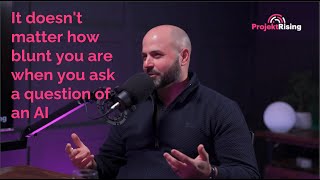
Right. You also can't be quite as blunt in your questioning with a human, with as you can with an AI. So I think that that natural bias that people have when you ask a question, the way you ask the question definitely influences the type of response you're getting, whereas it doesn't matter how blunt you are when you ask a question of an AI, it's all it's doing is comparing it against the sources and going, okay, which closely aligns and can I give a sensible response to that question? So that for me is brilliant because I can be quite blunt, quite Forthright and that's why I'm probably better talking to a computer than a person most of the time. But when we're looking at tools like Allied, it gives such a benefit in uplift that it doesn't matter what you ask, how you ask it, you're still going to get a genuine, valid response back. And yeah, it's anonymous and yet at a company level we can still see the activity and help direct their training patterns off the back of that data set.
Yeah, absolutely. And that intelligence is going to be really, really valuable because what we're going to be able to see is the shortfall, the shortfall in knowledge retention from training received. You know, there's going to be so much data we're going to be able to gather off the back of that in a, in a way that you couldn't by old, old means at all. And like you say, this objectivity of ensuring that the advice is the right advice timely and that we can provide the links to the right resources to ensure that there's further learning available, there's further development to be able to go, yep, this is, I'm happy that this is what I need to know and if I need to know anything further, then this is the resource I'm going to, going to use moving forward. So really, really excited to be able to launch the membership program which is, which is essentially powered by Allied, which is really, really exciting.
Absolutely it is. I think as we've gone through the beta testing we've discovered almost a new need that we didn't know when we speccing out how we were going to develop it, which is how we track questions that are asked that we don't have answers for and how we then ensure that we're getting the right reliable sources to meet those questions. Because our initial data set was incredibly limited. So it was brilliant at asking employment related questions, but was rubbish at transport. And as we've extended the sources over time we've done that in a way where it's quite manual. But what we're moving towards now is an automated understanding of a. Okay, where are the gaps? Can sources be automatically identified that might be a good reliable fit, reviewed by human and then added in so that we can continuously increment the knowledge base to fill the gaps. I think that's something that we hadn't considered and we certainly hadn't talked about when we were talking about what's possible.
And I think again there stands something that's really, really valuable because we can also differently to a call center or Differently to chat, GPT or to Google. We can, we can review the quality of the answers that have been provided and we can do further education on, on allied if we need to. But also we can, like you say, we can start to really ensure that there's the. As, as it evolves, as the changes happen, as best practice evolves because naturally it does all the time. We can ensure that the most relevant, most up to date information is readily available, which sometimes can be challenging because you know, when you have people, sometimes it's hard to turn people from analog people to digital people. And you don't know whether you're talking to an analog person or a digital person when you're asking them questions and advice. Right, what, what version of that, what version of that advice are they working on? Right. Do they understand?
Still working off 1989?
Potentially. Yeah, yeah, potentially. Right. You know, and that's the issue, isn't it? There's this sort of fallibility around knowledge and I think, I think it's really exciting because one of the things is the landscape evolves very quickly. Best practice evolves very quickly and we're going to be able to ensure that everything that's provided is as up to date as absolutely possible. And, and also there's that element of you've still got a human there who's reviewing everything to ensure that actually it's the right, right information that's being, being sort of fed. So yeah, very exciting.
Feeds nicely into ethics. So ethical considerations of deploying AI to answer questions where currently it's people's jobs.
Yeah.
What are your thoughts?
Oh, that's very interesting. So I think, I think there's a, the way I see it is that we, we should liberate people to be able to fulfill their potential and sometimes that might not be in the existing role that they have. And as, as people we need to evolve to, and, and we need to evolve the way we work and, and essentially the, you know, when we look back 100 years, 200 years to industrial Revolution, you know that, that old model of having a business owner who employs a load of warehouse or factory workers and you know, he, he sweats his people and they do that work and I know that was very sexist in the way I said him, but ultimately it would have been largely at the time, but that Industrial Revolution, that's gone now. Right. We're on this, like we on this revolution again where the future of work is confusing. I don't know what it's going to look like, but I also know that if I start to embrace that in my business and my team of people embrace that, as we evolve the way we work, they too will develop. They will evolve and we will be able to create a business which gives fundamentally fantastic employment to people. Because ultimately, that's my vision as a business for Flagship. We support companies to be safer, to be greener, to be greater, to be greater employers, and enabling them to perform better will improve the quality of the roles they then offer to people. And I think, ethically, yes, I understand that there is a bit of a challenge, but there's no stopping this. So we need to find a way to work well with it and we need to. People need to embrace it and to. And to evolve with it and work well with it. So it's tricky, but that's essentially how that is. That is evolution. That's how life goes.
Wise words. So what kind of feedback have you had so far from fleet operators, when you've been talking about the introduction of AI tools?
So it's been overwhelmingly positive, which is really exciting. And we've had a range of fleet operators who have been accessing it with all the way from sort of very small operators to some. Some national. Some national fleets who have been helping us test the service. And as I say, the. As I said before, there's been some. There's been some unintended positive consequences that we didn't realize we were going to get, which often happens when you start to push the boundaries of what can be achieved. And that's exciting too. But, yeah, overwhelmingly, the. The feedback's been really positive. These are. These are, you know, the. That. These are stakeholders who already use advice centers elsewhere, so they're being able to directly compare it with other options that are on the market. And, yeah, the feedback's been really positive thus far, so that's very exciting.
Fantastic. So 24 is going to be a great year for Flagship.
Yeah, absolutely. So I've set a target that we're going to sign up 10, 10 new members per month over. Over the coming 12 months in 2024. So aiming to have 120 members by this time next year, which is very exciting.
I think we'll double that.
Well, it will be. It'll be amazing if we do. For now, maybe, maybe I'm being a little bit conservative, but we'll see how it evolves over the year. But it's very exciting.
Fantastic. So how do you foresee AI transforming the field of transport training?
Wow. It absolutely is going to transform the world of training. So, and, And I think, I think flagship partners, our relationship with AI isn't going to stop with Allied. I think it's going to develop over time and as we recognize new opportunities for, for learning we'll implement that. But ultimately, yeah, so yeah, it's, it's, I think, I think the thing with training is that we, the beauty of AI is that it can evolve the questions that it asks based on the responses which in a way classroom training can be quite challenging because you lump 20 people into a room for example and I'm not saying this is the wrong thing to do because it's something that we do on a regular basis, but we lump people into a room together and ultimately some of that learning will come from the instructor at the front of the room and some of it, some of it will be from the lived experiences of other people in the room. Now one of the challenges I won't be able to replicate is that group learning element. So I think there's still going to be a place for that but I think it can be supported by AI which will be able to offer a more tailored approach to the individual. And you know, based on my, my personal learning and development where I've studied NLP and as an NLP master practitioner I fully understand people learn in various ways, they process information in various ways and what happens often is trainers and instructors whilst flagship endeavor never to employ instructors in this way but some can be a bit one dimensional in the way they deliver training. I believe that AI will be able to recognize someone's learning style, it'll be able to ask them questions and it will be able to tailor the learning content to the individual which will be really, really powerful and I think that will benefit, benefit people longer term once they start to implement AI From a training point of view. I don't know what that looks like yet but I'm looking forward to, I'm looking forward to thinking it up over there.
I don't think anybody knows what it looks like. I think it's moving so quickly. Right, you dropped a little bomb in there of nlp. So tell me about your NLP experiences so far.
Right, okay. Yeah.
So for some people we spell out the acronym.
Yeah, sure. So yeah, NLP is short for Neuro Linguistic Programming. And one of the things it really, one of, one of the things that I've learned over my, my time with, with NLP is that I've, I've gone through this process where I experienced breakthrough coaching and then, and then went on and carried on doing the training myself to Then enable me to go and do breakthrough coaching with other people. Now, essentially, it's changed my life. What happens is over time we create essentially our map of the world as people based on the experiences we have. A range of stuff affects that it will be the experiences we have as young people, parenting friends, all of the stuff that goes on around us, our education and then our capacity to learn as well. And what happens is we start to make decisions around the world around us. We make decisions, we see the world a certain way based on this programming that we get. Almost like a computer, we become programmed. And you know, certainly I'm not ashamed to say that in my evolution, you know, I used to think things like you had to work hard to make money. And I'm not saying that you don't have to work hard necessarily, but some people work very smart and make a lot of money. Okay, so that's like an evolution of a potential limiting belief. But one of the things was that I had this fundamental belief that I almost had to break myself to work so hard and suffering burnout, which a lot of entrepreneurs will probably resonate with. And actually that doesn't have to be that way. You know, you don't, you know, the wearing your burnout as a badge of honor is not a thing that you have to do.
So don't have to work 70 hour week.
No, no, absolutely right. So that was something that I sort of was able to sort of break and remould and sort of work on around as well. And then, you know, various things around beliefs around money. And you know, ultimately if you, if you grow up with a lack of something like, like resource, like money, you can, you know, my, my parents had sayings like money doesn't grow on trees and it's hard to make money and all of those sorts of things, which can be quite challenging for an entrepreneur because you, you need to not believe those things. You need to believe that actually there's opportunity everywhere and it's abundant and that you're able to just, to just go and solve solutions for enough people that's valuable enough and the money will come with it as a byproduct. So yeah, there's lots of stuff that NLP has helped support me with. Certainly there were things that I found very confusing. My key, the key takeaway for me from my NLP journey was that I used to feel some really unhelpful emotions around guilt. So for example, I often felt this sort of conflict between working really hard for the business and not spending enough time with My family. And then when I spent time with my family, I felt guilty because I wasn't working in the business. So there's this constant conflict where I just. I didn't know how to be happy. Right. And I was able to, I was able to sort of work my way around that, for example, so. And everyone will have their own things. Those things may have resonated, but everyone has their own sort of things, their own internal conflict and their own internal challenges and beliefs. And NLP is a lovely journey to go on, to be able to help come to terms with those.
And I think because you've been through that journey and you're now a master practitioner, you're helping other people on their journey too, aren't you?
Yeah, absolutely. So one of the things that's been really, that I've loved this year is to be able to, you know how I said earlier about you evolve the role you do in your business to do the stuff you really enjoy doing. So, you know, I used to spend a lot of time doing compliance focused stuff, but I've got, you know, got a team of people who are amazing at doing that and potentially better than I am. So doing NLP and being able to coach people myself has meant that I've been able to help people who are at the beginning of their journey starting their own businesses and they want to go on this journey of development, they want to grow their businesses. And I think when you're coaching, it's good, it's useful to have been able to demonstrate that you've walked the walk yourself. So I've been through that process and I'm now helping people sort of follow that process themselves of building their business and developing their skill set and developing the knowledge and understanding of themselves to enable them to achieve greatness. So it's exciting.
It really is brilliant. So 23 has been a big year for artificial intelligence. Given what you've seen so far, what do you think the impact is going to be in 2024 to the transport industry? Wow.
I think, I think it's going to be huge. So I'm aware of a range of projects that are happening at the moment utilizing AI. So and, and, and ultimately is going to have an impact on jobs, but it means the evolution of jobs. So ultimately a good example already is DVS which is if you run a 12 ton vehicle and over in London now you have to have, from October 2024, you have to have an AI camera which is fitted to the front of the vehicle which is able to tell the difference between street furniture and people. Okay, so straight away it's massive, massive impact this year from AI alone. So every fleet operator, every vehicle that is over 12 ton going into London is going to have to have this equipment. Now what's going to happen is that's going to save lives, right? And then what's going to happen is that other cities are going to then start to have to implement this standard because it's going to demonstrate that vulnerable road users, pedestrians, motorcyclists, normal, you know, push bike cyclists, they, their lives are going to be, you know, we're going to stop losing lives because of that and that's going to have a massive impact. So, so AI driven cameras, that's, that's the thing, right? From a routing and operating, from a routing and scheduling point of view where people decide at the moment, they use software to help them decide what the right route is to take. And that can be fallible because sometimes there's diversions and those kinds of challenges and you know, those that are familiar with the industry will not be surprised to hear that. I think the statistic is something like five, five bridge strikes a week by a hgv. So, and that's a routine and scheduling issue, right? So AI is going to stop, start to help do that process. It's no longer going to be done by people and it's no longer be left up to the decision of a driver as to what route they're going to take. AI will be able to ensure that the vehicle follows the routes with the right weight restrictions, that they've got the right height enablement, you know, all of those sorts of things. So that's, that's well on its way. Obviously, from an advice and compliance point of view, we're going to be launching Allied, which is very exciting. So I think the opportunities are endless. And that's just for 2023, emerging into 2024. I think there's going to be a whole more, a whole wide range of different applications that are going to be found to, that are going to be AI driven in the industry. It's going to be huge. It's exciting times, really exciting and ultimately, you know, as we start to realize that. So there is another application actually, which I forgot to mention, so AI cameras additionally are now being implemented. There's only one or two currently in the uk, but AI cameras are picking up distracted driving as well. So they're going to be able to, they're going to be able to spot people using their mobile phones behind a.
Wheel, which is great. It's escalating towards Big Brother though, isn't it?
Yes, very good question.
Are we moving into a police state where everything, everywhere is monitored all the time?
So it's really difficult and I'll, I'll throw a statistic back and that is that two people every two people every day in the UK lose their lives on the UK roads. So if that might be a distracted driver, it might be someone messing with their phone, it might be someone who's fatigued, all of those things. Ultimately, if AI can help eliminate that, I think it's worth it in my opinion. I think there'll be people with other opinions about, you know, Big Brother and that kind of stuff and what have you. But you know, ultimately Flagship has been created and built to help help improve employers to be better and help increase safety. So ultimately these applications very much align with, with my values and the business values as well.
So final question for you.
Yeah.
What about full self driving fleets?
A very exciting opportunity and I think that's coming, I think that is coming. I think we're further ahead than people realize. There's certainly the manufacturers already working on this stuff already. I think there's going to be, there's going to be a place in the short term for drivers which will look very similar to potentially a pilot of a plane and ultimately goods vehicles, for example, they do need people at either end because part of, part of the process is you're transporting stuff from A to B, Right. And you're going to need someone to make sure that stuff's on, that is secure, that it's all there. Obviously to a certain extent, sometimes robots and that sort of stuff might be able to help that as well and that will evolve over time, but for the time being I think we're going to still see that and I'm sure that we operate in the UK a very complex road network. So in all instances, I think you, you won't necessarily see AI or self driving vehicles straight away, but I think there's going to be certain applications where it's going to fit and then the, the technology is going to evolve and in the sort of short to medium term that, that is going to be a thing. Absolutely, yeah.
We'll see motorways before we see country roads.
Yeah, absolutely, yeah, absolutely. And I think it will just evolve, it'll evolve from there. So. But yeah, ultimately it's a thing, it's going to happen. So people, people just need to embrace it. Ultimately. Our driving population in the UK, professional drivers, the average age is 55 and it's not an industry that young people are wanting to get into either. So, you know, we're gonna, at some point there's going to be a labor challenge or there is already a bit of a labor challenge. So, you know, from a ethical point of view, I don't really have too much of an issue with it because I think, I think the industry is just going to have to evolve and people will evolve with it.
And as you talk about the incident rates, it will reduce.
Yeah.
And that's ultimately the measure of success, isn't it? If we increase the efficiency and reduce the amount of injuries and accidents, then it's a win.
Yeah, absolutely.
Awesome. Well, thank you very much for your time today, Pete. It's been a pleasure.
Thanks for having me on. I've really enjoyed it. So thank you very much. It.
More from Tim

EP 60: Why Founders Become the Bottleneck — And How AI Changes Everything | Thea Brook









