
Ep7: Transforming Logistics: AI and Eco-Innovation Journey
This is a transcript of Ep7: Transforming Logistics: AI and Eco-Innovation Journey, a YouTube podcast interview (hosted by Freya/Skynet Chronicles) with John, a long-standing operator in UK cold-chain logistics. John recounts his career from early work in food distribution through building Chiltern Cold Storage (and later JS Davison) — winning prestige contracts (McDonald's, Baskin Robbins), moving sites to solve capacity limits, and undertaking an MBO-style split called the “Perfect Divorce” in Nov 2018. He describes major shocks (Brexit stock surges, COVID-19 collapse of aviation business) and financial restructuring with advisors (Steve, Nick) that led to granular cost models and tougher commercial pricing. Facing energy cost spikes in 2022–23, the company pursued a sustainability programme (biomass-fired boilers + absorption chiller, then solar) to target ~70% off-grid energy and a carbon-neutral Peterborough site by end of 2024; technical commissioning issues (heat-exchanger overspec/ failure) delayed full operation. John is beginning to trial AI (commercial proposal generation, internal analytics) and sees further potential once the company’s data and reporting are expanded.
Restricting ourselves. Our transport business was growing fantastically at that time. We had small sprinters and running about doing sample work and courier work and we'd gone from three to 14 working for local businesses and doing speciality stuff all over UK and Europe. So that was growing well, but the storage was being strangled and he goes, john, I need to have a chat with you. And I was like, okay, what's the matter? He says, deals off. I said, why? He said, I could work for that managing director, John. He says, I've phoned them this morning at 8 o' clock to have a chat and he basically turned around and told me, don't phone me before 10 o' clock and definitely don't phone me on a Friday because I don't work Fridays.
Hi, I'm Freya. Welcome to the Skynet Chronicles Business in the AI Age, the podcast that dives deep into the world where artificial intelligence meets business. Join us as we explore the latest trends, challenges and opportunities in this ever evolving landscape. From innovative startups to established enterprises, we'll uncover the secrets behind the successful integration of AI technologies. So grab a cup of coffee, sit back and get ready to unlock the mysteries of business in the AI Age.
Well, good morning John. Welcome to the Skynet Chronicles. It's great to have you here with us today. I'd like you to tell us a bit about your journey through. Well, start before Chiltern Cold Storage. Start at the beginning.
So before. So born in Scotland, in Perth, moved to Glasgow and was brought up in Glasgow until I was 18 years of age. Decided then I'd come down to England on a drunken weekend to see the football and ended up staying here.
That was quite a drunken weekend.
Certainly was, yes. Went back home, told my mother that I was moving down to England. I had a better opportunity and career prospects down there. What I would here and moved to Corby, which was at that time little Scotland in England.
Yeah, the steelworks.
Yeah. So came down here, got a job in the electronics industry working for a company there. I didn't really settle into that because my background was fish industry in Scotland. So I was used to fish process and warehousing and things in that industry up there. We thought I would have a change of career when I came down, but I didn't settle in it, so I decided to move back into the warehouse in the logistics world and I joined a company called Eisman International who were a German based company for home delivery of food products. They had just built a new distribution centre in Corby so I joined Them as a picking operative quickly worked my way through the ranks there and I was running their picking operation as a chef managers and I'd done that successfully for about four years before being introduced to Paul Jackson, who is the founder of Chilton Cold Storage. At the time he was leasing space from Eisman because they had additional space in the warehouse and he was leasing that for him. We got to know him through that basis and one day, you know, passing comment was, well, why don't you come and work for me and sort things out for us? And two weeks later I decided to move to Chilton. At the time it was a bit of a challenge. It was a small team, there was only four people there. You know, there was a couple of drivers. Paul, Paul Starks, who was a finance director and one warehouse op basically started that journey and he had a customer at that time called Kitchen Range Foods who made the apple pies and donuts for McDonald's. And that was a bit of a problematic job for him because they weren't doing it very well. So I decided, and I'm a great believer in learning what your customers do and getting a bit more knowledge of it. So I phoned up the supply chain manager there, Sue, Sue Mer, it was her name, going back 28 years now, and asked if I could just come and see what they do and what the factory did. And basically I went over to Peterborough, Orton, Southgate where they were based, and spent about two weeks there learning their operation, the intricacies of it, what they needed, their standards, because working for McDonald's that time, that was the prestige standard to work for. Came back, implemented those processes and worked from there basically. And over the next six months built the contract up dealing with our UK operation, predominantly gaining more and more business. And we ended up being awarded the whole of the UK and European business within a six month period. And we looked after that quite well, done it properly for at least two years. But what that gave us was a great foundation on standards, what you had to adhere to, what the criteria for a prestige company was, which Chilton, when I met them, didn't have anything in place. So we managed to build those foundations on quality, standard manuals and things like.
That, as well as the work for McDonald's badge.
Exactly, yeah, yeah, it was great. In those days it was golden west, who were family owned business, who supplied into their supply chain. So it was a fantastic training ground really to build on and we could go to customers with confidence and say to them, this is what we do, these are our procedures. And these are our standards, which was pretty unique in those days. It didn't really happen much. So that helped us grow the business quite substantially. Paul at that time and myself, we took on more business, more space for Misemann as their warehouse was quite substantial.
Still based over Corby Way at that time.
Still the Corby? Yep, yep. On Eisman Way. It was a purpose built warehouse for, for the German. And at that time, you know, they weren't very successful in the uk. It was a high quality, very costly product. So their business wasn't expanding. So they're quite happy to let Chilton take more space within their warehouse and lease it out to them. And in the end it got to a point where we were that big in the warehouse and doing that good a job, they asked us to take on their operation. So Paul negotiated that deal and we ended up running the whole of the operation for Eisman International in the uk, along with building the Chiltern operation. Successfully managed that for quite a few years. And then the landlord decided that he was moving the Eisman operation back to where they started down in Tonbridge. We had a warehouse down there because the business had shrunk that much and that's what he done and he asked us to run that business for him and we did for a while. But that was challenging. You know, commuting between Corby and Tunbridge wasn't easy. Changing the staff and getting that settled in and we've done that for 12 months and it was very, very challenging. You know, it was long days. If you had a problem, you had to drive down and then commute back to have your own shift the next day. So that was fun and games. And we decided within a 12 month period that it wasn't for us. When we did that, we gave the landlord notice that we were coming out of that contract, which he wasn't very happy with and life just got a bit more difficult there. He was putting us under a lot of pressure as his tenant and Paul, the two Pauls who were the directors of the business, decided enough was enough and we had to look at something else. If we could get something, you know, that could essential substantiate what we're trying to do. Yeah, but that wasn't possible, you know, coach. Those were very few and far between in capacities, you know, was. There was no one really about. But Paul being Paul, he had some contacts. You know, he's a lot. He's a small person, but larger than life character when you ever get to meet him. And he Knew a turkey farmer over at Keystone, which is a small village just over by the A14. And he had an old turkey shed over there which was a cold store and it held about 700 pallets. He decided that we were going to move over there. And I'm sitting thinking, well, how can you go from 6,000 pallets down to 700? What we going to do? You know, at that point I was very naive in business, but Paul, you know, he was very confident that we could do this and he put everything in place, spoke to our customers, explained the situation. They weren't happy but they understood where we were and we needed to do it for our own benefit, for the business. And we decided we were moving and he took and got the store operational, got it ready for us to move and we took kitchen range foods with us, but we only took the UK operation.
So you just cherry picked which of.
The accounts you could continue working with. We could only take one or two customers, so we took the kitchen range side on the uk, which worked really well. Another customer was called Kibbin Foods, which was the first customer Paul ever had on board. And they were supplying London restaurants with authentic Chinese Japanese cuisine products as it all got imported into the uk. And at the time it was a company called Drucker's Patisserie who had done cakes and things like that. So we put them into there. Didn't have any space, you know, is 100% full all the time. But it was good fun, you know, in the middle of nowhere in these fields. Idyllic village, great. You know, we couldn't fault it. Lifestyle was great.
Did the villagers enjoy the lorries coming and going?
Yeah. When you see this village, it is idyllic and having 44 ton trucks running in at a place with fridges running was not their idea of fun and they made that very clear. Sorry that we weren't even welcoming in local pub. It was that bad. Yeah, but you know, Paul was always one that was up for a challenge. He's one of those characters. So when it came to Christmas, we hired the village hall. We had a Christmas party, invited customers and friends, great nights, you know, he's renowned for these sort of things. Again, upset in the village because these outsiders were in their village hall. But we'd done it and we had a great time and a couple of years went by and we were constantly getting calls for the customers. Can you do something? We need to help, you know, we can't get a service you were given us and things like that because you'd.
Built that reputation we had.
Yeah.
And then you just didn't have the capacity in that current venue.
That was it. Yeah. No, we were restricting ourselves. Our transport business was growing fantastically at that time. We had small sprinters and running about doing sample work and courier work, and we'd gone from three to 14 working for local businesses and doing speciality stuff all over UK and Europe. So that was growing well, but the storage was being strangled, so we had to look at something. Paul, he started looking about, seeing what was available. Could we have a new build? Could we do something in one of the local industrial estates or new development areas that were then up and coming, but we couldn't find anything in that vicinity. And then he decided, well, go a bit further afield. And he looked at pictures and found it was a company there, tdg, which were a cold store company, quite big in the UK at that time. And he got in contact with our business development manager, Graham Rouse, and he said, yeah, we've got available space in Peterborough. Come and have a look. Which he did. And we ended up moving to Peterborough at Shrewsbury Avenue, which is next door to where we are. We took on originally a 2,500 pallet chamber, but the agreement was we could expand as needed because they had three chambers sitting empty. It was a bit awkward because TDG were in the same business, but I suppose they were quite happy to have space getting taken off them and rent coming in.
Yeah, it's incoming the end of the day, isn't it?
Yeah, that's the way they looked at that. Things went well for about 18 months once we had moved and we were getting bigger and bigger and customers we could then take back on and be getting all the old customers back, which was really nice and building the business nicely. And Paul then decided to go for a contract with Baskin Robbins Ice Cream, which is quite a big move. And we won the contract based on what we had done, but we needed more space to accommodate it. And at that point, TDG's directors must have thought about, what's going on here? This company's about to take over the whole site in Peterborough. Why are we not doing this? And then all of a sudden, the cooperation of moving space, taking more ended and it was that we were getting quoted rates which were just not viable and the economics just didn't work. Again, unknown to me, Paul was always looking at different things. And at that time, Christian Salverson were the owners of the site next door, which used to supply the Pedigree Pet Food site, which was Based in Shrewsbury Avenue. And previous to that it was a processing plant for their vegetable processing areas when the pea harvest and things like that would start, start off. So he had spoke to them and without saying anything to his other directors, had sort of done a deal behind the scenes that we would take a chamber off of them which was approximately about 6,000 pallet spaces. And that would just accommodate what we had. A little bit spare. Probably gave us about 10% extra capacity, but it gave us a few options, you know, and he decided that's what we're doing. Came in once he'd sorted everything out and announced it to the directors and explained the reasons why. And we went, okay, we'll do that. But what we're going to do with tdg, we're in a contract, we've got agreements. And he says, well, basically they're in breach of what their contract is because they won't allow us to expand. That's right. So we were like, okay, let's, let's go for them. So we did that and we, we shifted from one site to another. We call it jumping defense because that is literally what it was. And we shifted the goods, I say, over a 72 hour period from both one site to the next one. He had a friend, Richard Payne, who had a haulage business. Richard just brought up his trucks. So we had a team, one end just loading out and the team the other end tipping. And that's how we got on with it.
Over 72 hours.
Over 72 hours, yeah. There was 4,000 pilots moved into this chamber. So it was great. You know, we just didn't stop. You know, we walked constantly. But it was great fun. It was a great team, small unit, we all got on and two of those employees are still with the business now. So it's a great testament to what we'd built. And it was enjoyable because we are a very close knit team. And everybody got involved, which was a good thing. Unknown to us, what he hadn't announced, there was a customer at TDG at this point called Portions, who are supply chain into the airline business. And we used to look at it and say, Jesus, we never want to touch that. It's always problems because the guys at TDG were always saying to you what the problems were. It was so disorganized, an absolute disaster. And then he announced on the completion of us moving our stock, oh, by the way, I've done a deal with Portions, they're going to be a new customer of ours.
So he was inspirational, was creating the future for the company, but was doing it slightly off the rails by the sense of.
Yeah, yeah, that was Paul. You know, his philosophy was, I'll go and get the business and you'll sort it out. And that's how it always worked. And it worked for years. You know, we. We were together for 25, 26 years. So it did work and we built a good business behind it. So we. We brought the Portions business on board.
And was it as bad as TJ TDG had been?
Not when you learned it. Everything's bad when you first start, but when you actually understood the concept of the business. It was like everything else that you did. It's basically taking pallets and checking them properly, put it in the racks and pick it properly. If you keep storage simple, that is the basic fundamentals and that's basically what it was. There was a few complexities on security and things with being airline products that we had to learn the protocols. But the great thing was with Portions, their team and their MD came up and supported us. So we had Martin Deveney, who was the MD at the time, Louise Tolland, she was the operations director. Peter Sluver, he was a training manager. So they guys and people all came up. There was about six or seven of them and helped us understand the process, helped us do everything, helped us pick for about two, three weeks. So we understood it and then that was us. We were up and running, standing on our own two feet, and we were doing a good job, Done such a good job that they are still a customer of mine now 25 years on. And we were the first customer that Portions ever renewed a contract with because nobody could get their head run. The aviation side of things, for some reason, it was alien, it was complex because of the vet and the staff and things like that.
But it came Back to that McDonald's principle, where you just learned the processes and practices to make something work systemically that was performing at the right level for the customer.
And once you'd got that in place, that's exactly it. It's helping that foundation and processes and standards in place and documented so that you could say to somebody, this is how you do this. Here's the document for if you get stuck, give me a shout. But if not, read the document. It'll tell you what you're doing, you know, and that was a great thing that we did and we built that up. And because of the service we give to our customers, they've grown with us. You know, any new customer came on board and we've still Got quite a few that were there from the original foundation of the business who have grown through the service they've got from us. They could rely on us to do things. A lot of customers always say that it's great because you could pick a phone up and speak to the top, whether that was Paul, Paul Starks or myself. You could get a decision made. Paul was very open that way. You don't need to come to me to make a decision, make a decision as long as it's right for the customer. And that ethos has been all the way through from Chilton to J.S. davidson's now. You know, I don't need. Even at the minute, I won't turn around and stop a member of the management team making the decision. If it's wrong, we'll have a chat afterwards. But they need to learn they have to stand on their own two feet to make decisions.
A decision made is better than ambiguity, isn't it?
I think so, yeah. Some of their nervous are doing that because they've come from big companies and have to go through a process of getting a decision made. But, you know, the Chilton JS Davidson way is be proactive, put a customer first and provide a great service.
I think it creates engagement with employees too, because the last thing you need is to decision by consensus, where in order to get anything signed off, it has to go through a board of 60 people and then somebody at the top can still go. I'll actually. No, I don't think we're going to do that. If you'd have made the decision six months previously, the business would be further ahead.
Yeah, definitely. And you never know what that decision is going to do. And I always look at it, little acorns grow. And we've been very fortunate in that way by the hard work we've put in that the little acorns have grown, you know, and sometimes they've been sold, so you lose that bit of business. But a lot of time because of the service we're providing, we actually maintain the business when they've been bought out and that company stays with us as well. So we've done really well about it.
Superb. So tell me about the transition from Chiltern cold storage to J.S. davis Unlimited.
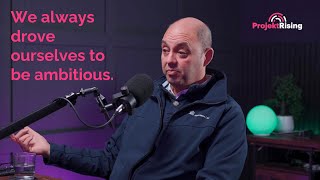
Well, as we. We built a business, you know, that was Paul's ambition to build it, and we ended up with five depots in the UK, running around about 80 vehicles, 31 million turnover. We got the business to working for the likes of McDonald's. Could we set up two supply chain depots for them that would be spoke to them. And he got to the point, he says look John, I'm ready for an exit strategy. I was like okay, that's fine, what are we going to do? And he says well we've got Paul Jeffcott who was an FD that we brought in. Fantastic gentleman, taught us so much in the business, you know, things I never thought I'd ever learn. He was the man that taught us and the team, you know, he's a very people oriented person but his expertise was preparing business to be sold and he'd done that. And our financial account and everything was just top level, which was really nice to be in. And we marketed business for a professional company and we had quite a few interested parties. Paul obviously we had to meet these parties by themselves and a board of managers and go through everything. We've done all the interview stages. And then it was Danny Paul really to select being a major shareholder who he wished the business would be. And he'd done that. Now they've got down to the last three and he decided who it was going to be, which was great. We were a bit skeptical. Different visions, they weren't very ambitious compared to what we were led. We always drove ourselves to be. And when we got on a one to one meetings, you were speaking to their directors and you know, we were asking for five year business plans, different things like that and basically told to calm down and wind up next then because they don't run at that pace. They're quite a steady growth business. And you know, we were a bit sort of taken aback with some of the things that we're coming out with. But you know, it was Paul's decision, you know, as a major shareholder he could do that. And one day he came in, it was about six months into the deal, due diligence had gone smoothly. It was basically just fining off the final transactions really. And he goes, John, I need to have a chat with you. And I was like okay, what's the matter? He says deals off. I said why? He said I couldn't work for that managing director, John. He says I've phoned him this morning at 8 o' clock to have a chat. And he basically turned around and told me, don't phone me before 10 o' clock and definitely don't phone me on a Friday because I don't want Fridays now. Paul's 120 miles an hour, 24 7. You know, that says ethos and he was like, can't do this, I'm Pulling the plug. Well, that, that gave me an opportunity because at that point I was the operations director at a business for small shareholding to put a counteroffer in as long as I could match what that company had put in. And all through the process, we'd kept our bank informed. They were very supportive. They knew about my aspirations and maybe doing a deal. And they did support me. And Barclays bank were fantastic. You know, they supported me, held my hand all the way through it. When the opportunity came, they stood by my shoulder and said, right, let's negotiate with Paul. We'll get this across the line. And that's how the transaction had started building up from that point. But at that point, I was looking at buying the whole business because transport and warehouse was so integral. You know, we loaded 30, 40 trucks a night onto the transport fleet. All the stuff coming out of our warehouse, you know, it was just. You couldn't see it separating in the way that it has. So progress was getting made. Three or four months into that progress, Paul had been visiting one of her customers made of foods. And it came back and she's like, want to speak to you about something. So I thought it was more business with Meadow Foods. And he says, no, I've got this vision of changing things. And I said, well, it's not really your vision, it's going to be mine because I'm buying the business. He said, well, what about we split the business? And I'm like, you've lost the plot. And he's like, no, no, listen to me. He said, I've just been up and I've sat with the directors at Meadow Foods. They've got multiple business, but they run them as silos. And each business has got its own P and L, because you do milk. You do. But on different. He explained the strategy of what they're doing and they were very successful. And he says, what about I take transport and you keep storage? And I'm like, blown away. I was like, I just can't see how we can do this, Paul. And he says, think about it. He says, it'll work logically. He says, I've got it in my head, it'll work. So I went away and phoned some friends and colleagues up who are in business and said to them, they're like, well, that makes sense to us because you're not a transport person, John.
Focus on what?
That's what they said. Focus on what? You know. He says, you're really good at, so just focus on that. So we came back and we Said Paul, right, okay, let's see how we can do this. And the bank was like, this is going to get really complex. So we had to go on. Paul Jeff got advised is like, no, we need to get specialists involved for tax purposes. How we destructure the company and then reform the businesses and everything else. And we got introduced to Alastair Hunt at Safra Champnes, who had moved to Peterborough not that long before we'd been introduced. And he came across like a breath of fresh air. And he brought his tax expert in, Fenella. And she went through all the different things and listened to what Paul had to say and why I had to say. And she's like, all right, okay, we can do this. We're like, okay, right. She's. I've got away, I'll draft everything up because you have to present it the HMRC to get approval and all that. So she'd done all that and we're like, right, and she got the approval and we called it the. The Perfect Divorce whenever we were talking about it. And so he says, right, what date we're going to put in for the Perfect Divorce? And we decided it'd be the 1st of November, 2018 would be the target date. And we, we got everything in place. All Jude Dillings had done signed off because it was simple with what Paul had put. And Paul Jeff got it put in place and it was very simple and we done the deal on that day. I remember coming in, there was myself and it was Tom Lewis who joined me as a director. He was previous a manager. We came in, I was sitting in my chair the next morning and I had my head in my hands and Tom crunches, you okay? Anyway, I went, no, I've just realized what I've done. You know, I just sort of sunk.
In now I've actually got to make it work.
Yeah, yeah. You don't realize until you're in that position what responsibility Paul had as the ship major shareholder business, what he dealt with, dealing with the banks, dealing with all these sort of problems that he always had from you. As such, he would divulge them eventually, but he always just got on with them and then dealt with them. So you're there as the decision maker, the number one person that everybody's going to come to. And I was used to that as an operational side, but this was a.
Different level because you've got responsibility for everything.
Yeah, yeah. And that bothered me quite heavily for a while until I got used to it. So we put some business plans in place on that sort of period. 2018. Looking forward to the future. Brexit was a big topic at that time, and obviously being involved in the airline industry. A lot of our customers were importing stuff from Thailand and other global parts of the world. Um, and we've seen a massive increase in. In storage requirements. And we took everything we could, you know, to the point, did you take.
Down the fence that you jumped over?
It was getting very close. Yeah, it was getting that close. And. And we just kept, you know, taking a. We. We just couldn't say no. Even to the point where I had a Sky TV interview and the gentleman come in. We'd done an interview in the warehouse to show how full it was because it was a great topic at that time. And I was like, looking back at it when I seen it on tv and I said, oh, my God, what have we done here? You know, it was just. Stock was everywhere. But what I call Brexit one didn't happen. You know, it was all delayed, put on the back burner again. And that created a problem because we'd gone from 120% storage, stock moving. Everybody saw a very active record profits. So you were like, on the crest of a wave, really, to then Brexit too. And you're like, right, okay, we have a problem here because we made mistakes from Brexit 1. You know, it causes its problems. Its inefficiency has been so full. We're not going to do the same mistake again. But what we haven't realized is that all this stock was sitting in the warehouse, not really moving because the borders were still flowing before. So you had stock that was getting redundant, say, lack of movement. Customers were then stopping and bring anything in because they had to get rid of the stock that was in the store. So if you ain't moving stock, you ain't earn money. And we started making a loss over a few months, period. And you know, what we had made as a good profit, we started eating into, and it was becoming a bit of a concern, but we got through it. You know, we knuckled down and we obviously battened down the hatches and we'll get there. And we did that. You know, we got through it. And I say Brexit, too, became the forefront again. Right, Right. Okay. We will not make the same mistakes. We'll look after our key customers. We won't take extra business on. And we've done that. And we got through that quite successfully and transitioned through the problems that it brought and looked at what we could do to support our customers on that basis. And we had a reasonable year of trading after that and then setting again, making business plans. 20, 20 portions at that time were our major customer. They were like 37% of my business.
And the world's about to shut down.
Well, we never realized that. But yeah, we had a successful trip to Cheltenham, came back, we had a meeting planned with the directors of Portions to talk about the future and how they've seen their growth because they basically service most airlines in the aviation industry at that point and EasyJet being one of their biggest ones with our buy on board model, which was huge, a big change to the industry. And I remember sitting in Heathrow down at their offices and it was announced that the country was shutting down because of the global pandemic that was coming about. COVID we were sitting there with me and I was sitting looking at Mark, he's looking at me thinking, what are we going to do? You know, we just shut the aviation industry down within five minutes.
So for an unknown period of time, whatever.
Yeah, the information flow from the government is, you know, as we know, was shocking. You know, they didn't know what they were doing and nobody did in the global side of things. It was an unprecedented thing that nobody had ever come across. Only if they had did the manuals and looked at them, they might have saved themselves of it.
Oh yeah, it had happened, just not in recent times.
That's it. Yeah, exactly. So we, I came away from that meeting thinking, God, what are we going to do? You know. So I'm driving back up the the M1, heading back to Peterborough and phone goes and Mark, the MD at the time of Portions is like, John, we just had an announcement that Ronald Donald Trump is still keeping American flag carriers flying. So that means Heathrow will be open. So we still have some business. Well, that's good news, you know, because that was quite a big. That's probably about 15 of their business at that point. And we were like, oh, that's great news, really good, you know, but I've still got a lot of business and people affected on this. You know, that time we had 200 employees. So got back to Peterborough, got the management team together. They were all a bit dumbfounded by the news that they just held on. The media taught them the situation with Portions and what we'd have to do and things and they were like, okay, well that's little shining light there with that. Thirty minutes later, Marks phoned me up and the British government had refused to allow anybody into the uk. So basically Overnight you've lost the biggest customer within your business and then every customer thereafter. You then get in the calls every day. You'd say, John, look, we don't know what we're going to do. Food services now closed. Everything was closing down, as we know in the economy. But yeah, we got the team together and we says, look guys, there's not a lot we can do. We just have to set tight, see what happens. There will be still some stock coming in because we're a food company. We just don't know the effects of what the government's doing because as they say, they just caused everything, not thinking of the knock on effects. So within the week now, as we know, things started changing. So food companies could still move, retailers could still open on a certain fashion and things. So that created a little bit of activity, but nowhere near enough, you know, so we, we, we had to look at it and I think the first month went by and we were sort of standing people down, taking holidays to see how we get through things and looking at the finances to see where we are. Obviously EBDI was in a financial situation then, you know, your customers weren't generating revenue so how can they pay the bills? So it was putting things in a very, very tight position. So out of EB and sorry, he's a sort of classmate as a friend now. He run a finance business and always supported us where finance assets and things when we needed finance to be done. And he phoned me up and he says, look, now I'm at a loose end, John, obviously my business is stopped, nothing's moving. Do you mind if I come and see? And we have a chat. And I said no, not a problem. His name was Steve. And Steve came down and he says, look, you know, I'll come and help you mate, you know, we'll just go through things, we'll look at things, see what I can do on the back end with the finance things because he understood how the contracts worked in different bits, which is something that was really new to me. So Steve done that. But what was great for me was being able to have that person that you could go to because he's through outside the business looking in. And he had a different aspect of what we did.
And it's a lonely job running a company because you can't share all of the detail all of the time. So having that external voice that you could talk to helped you get through that dark patch and also helped with some of the fundamentals in forming the business in a way that it would continue and thrive.
Yeah, definitely. You don't realize how lonely a place it can be sitting at the top. Because as you say, you have to take responsibility for what's going on, basically and say with Steve on board, we started making changes. Thankfully the government came up with a follow scheme. So we followed 75% of the staff, kept a very small team at the warehouse and actually that was probably the greatest time in the past five years. You know, it was 20 people roughly. But we all came together. You know, the priority was Monday, Friday, do the job, get everything done at the door. Good. Zen kept that side moving. And then on Saturday and Sunday, come in, get everything cleaned up, ready for the Monday. And the whole team were fantastic. You know, my accounts department became audit administrators. Abdi just rolled the sleeves up to mark 10 and that sort of got us moving again. You know, we went through the period and say Steve was there giving his advice, what to do, you know, what holiday payments to take, your finance agreements, what we could ask for. But we were always very conscious. We didn't want to take any government loan support and put any more debt burden into the business. You know, with a transaction we'd done with the mbo, we just didn't want to do it. Even though we've got the act, the equity in the buildings and things, it was never an option for us really. And then as things were progressing along, we decided that no matter what the industry had changed, you know, especially the aviation business, it would never recover in the way that we had before. And we had massive operation there. We didn't just do the warehousing, the distribution side, we actually done a lot of co packing for them, eight production lines making snack boxes and different bits. So we decided that that division would never open again. We would mothball that totally. So we had to then look at redundancies. And that unfortunately was a sad time in the business. It was very hard because we don't have. I know the people personally, you know, we've. We've worked for a long time and we had to make those decisions and we did that, you know, and it was a horrible time. Yeah, and we got through and I got through that and it was nice. Some of the comments we got for people was really nice. Now they understood, you know, what, why the reasons, don't be wrong. Some people like why me? But you have to go through the criteria. And thankfully that criteria was there from hr. We'd have probably been lost in what we were doing. And we got through that and decided to restructure what we were going to do in the business going forward. Then at the Blue, my solicitor, Alistair Gunn, gave me a call and he says, just checking in on me, seeing how things were going, as he always did, and he says, look, I want to introduce you to a friend of mine. He says, he's just been made redundant, decided to become a consultant in the finance world. I think you got on really great with him. So, yeah, nothing ventured, nothing gained, you know, that's my outlook on things. And we had a call where we. Nick. Nick Stern, and I thought, yeah, he seems very vibrant young man, you know, definitely knows what he's talking about. We'll get a man to meet the. The finance team and see what they say. So he came in and he met my head of finance, Joe, and had a chat and we were like, very nice. You know, he's very intelligent person, come from PwC, trained there, then gone out into independent businesses, learnt his skills. And I said, he got made redundant, decided to jump into the console, the consultation industry and set up stand management, which was a brave step for him at the time. We became his first customer. We negotiated, come in every Thursday. So that was back in 21, I think it was. And he's still there now, every Thursday. Comes in. He's more like a friend now, but what an intelligent man when it comes to finance and the things he's done for the business. There was a bit of conflict to start with because his ideas and visions were different to what Steve was looking at. And I hadn't negotiate, I hadn't sort of told Steve what I was doing. I just done it off my own back and then introduced the two. Two of them. So it was a bit of a debate. Some of the meetings that we had.
Healthy debate.
It was very healthy. Yeah, it was because they had two different aspects. You got Steve, who's from up north, you got Nick, who's south. So there was that different aspect. The. The cultural differences were quite funny, sort of. Well, but we got on, you know, that was the thing. And it was. We used to have some really great debates on a Thursday about what was the best strategy. And Steve, you know, things. Business opened back up, economy got back to normal. Steed of opportunities coming back on his desk and he says, look, John, it's time for me to. To move back and what I do best and look after the trailer businesses and that, that he was involved in and things. And we said, yeah, that's great. You know, we still keep in contact now. He's. He's a Great guy and he'll always be there to give me advice. But we move forward with Nick, you know, he's now non exec and his wealth of knowledge and advice has been great. And what we learned with Nick is the finer granular detailer accountancy. Basically, you know, he put systems in place that mean down to the pallet space what it was costing us to run. He created cost models. So when I'm speaking to a customer, they gave me a detail of what the storage is they are stocked on and everything else. I put this into the system and it says, well, to generate your required profitability, this is where you need to be on your charges. And it's on a sliding scale and you can play about with the parameters to make a commercial decision, which was something we never done. We always thought we knew this is the way of doing it.
Yeah, this is storage. Even if sometimes it, it was a little bit.
Yeah, that's it. You know. And he analyzed the business from one end to the other and we realized that some of the business we were doing, we just couldn't make money. One of our biggest stories, customers, well, their stock wasn't moving. Obviously that wasn't their fault, but it was actually costing me money to store it. And we could go to the customers and we did with that one and say, look, you know, this is the position. There's the black and white evidence we can't afford to run that store. We, your business in it. And they're like, what we're going to do? And I said, well, this is where we need to be. And they're like, okay, we'll go to our directors. You know, we, we can't because there's nowhere else to go at that point, you know, storage place and we're full. And we weren't being blase about it. It was just the position. And we gave them, as you said, we gave them the facts and data and they went away. They looked at it, came back and said, yep, okay, we agree with you and, and say they're still a customer now. You know, that's the reality of the world. It was a bit of a sense check moment. And I say next door is now we have great times, debates and things on the financial side. And I was always, I never thought a business would be run by figures. And I preached to my managers, figures run a business. You know, you need the figures to be correct to be able to maintain the business. And that was what he's taught me through time. It's great having a P and L and a nice turnover. But you need the profitability coming in to reinvest in the business and everything else, and that's what we've been doing for the past couple of years.
So on the numbers 20, 23, electricity prices go through the roof. How does that impact the operations at JS Davison and what actions did you take?
Yeah, that was a challenge. You know, our prices went from a spend of roughly half a million pound a year to 1.8 million. And we were in a relatively good place when it came to our cost per kilowatt. And even the cost per kilowatt we went up to is still good compared to what you were hearing being put in the marketplace. And our brokers, they were fantastic. You know, I couldn't wreck him and they were just brilliant. I just couldn't say anything bad about the guy. He was great and he guided me through that period. When it happened, we had to write to the customers and speak to them as well and say to them, look, you know, it's out of our control. We cannot afford to run at a loss like that. We don't make that much profit. So we couldn't put a rate increase in or a surcharge in place. The business would be bust overnight. And every customer, thankfully, was in agreement with what we did and we put an energy surcharge in place. Unknown to us, it was a common practice within the industry and other industries. People were already doing it. We were a bit behind the curve, but, you know, we believe in being honest with our customers and what we're doing. And, you know, we've gone through that period. We still have a surcharge in place now because energy prices are still high. We're about 1.4 million, roughly.
So not that far off the peak then, really?
No, no, no. The energy prices and the wholesale markets are coming back to normal, but they're not being passed on a business or consumer, you know, they're making a killing on that. But that's the nature of the world, isn't it? They've got the price up there, they're only going to give you a little bit back. So it's how you diversify then to try and get that rate or do what you can to reduce your consumption, which is a target for every business at the end of the day. But more so for the cold store industry, because as part of the Cold Chain Federation, we're part of the Climate Levy Agreement, which sets us targets every period to reduce your energy consumption. If you don't hit those targets you have to pay for your carbon credits to offset, so you've always got to do something. So me and Nick started looking at these different options. What was available, what we could do. And we looked at solar, could only present probably 33% of energy consumption. And this is just at Peterborough, that didn't work. We looked at wind turbine, didn't have the space. We got introduced to a gentleman who was doing gas CHP linked through to generation, thought that was a good option. We were looking at that and then through a contact in mind, he was, they were bringing in absorption chillers into the UK from an Italian company and that was their next vision in a very efficient systems, the way they were explaining things. So when we told them what we were looking at with either gas chp, he said, well, that's a perfect combination that can create the heat, which is what the absorption chiller does. Takes the heat and then through a chemical reaction into your ammonia and then creates the cooling. So that's great. You know, we've ticked the box here and we've gone along that channel and. But Nick, he was. But against the gas, you know, fossil fuel, not really 100% carbon neutral. Is there other options available? And he started exploring other options. One of them was biomass and I wasn't that keen on it because I thought gas CHP was easier to do. And we went on for a few months having that debate. He was looking at a biomass LinkedIn absorption chiller. I was looking at gas CHP LinkedIn absorption chiller and we'd have the debates on it. His model was more sustainable, but a more expensive model. We put in place mines. Obviously it was partially sustainable and not as expensive to put in place. But then we were sitting one day and it was announced by Boris Johnson that he was going to start then phasing out gas consumption to the consumer and me. And that was just sitting looking at each other on that Thursday saying, well, we know what's coming next, then business taxes for gas consumption is going to go up. It'll just come within the next four or five years, if that's the policy of the government. So he just sort of smiled and says, biomass it is then. And I said, well, we need to look at this seriously. So we went out, we'd done our due diligence, we selected a contractor who had a lot of experience in biomass and we introduced them to our partners that we would like to partner on the refrigeration for the absorb chinchilla and we thought, right, okay, we'll go for this. But the person we'd put in place for the principal contractor on the biomass side had other ideas on absorption chilling and he went to a German manufacturer and came back with a different presentation. So we went down that route and it was going really well. Buildings were going up, everything was getting put in place. You know, plan applications were done, funds were in place because we decided we could earn what we call a power purchase agreement with a funder. All working well. The equipment was arriving on site, all that and we don't, we don't know much about boilers and biomass. So when that equipment was turning up it's like, oh that's really good. Big bit of kit, shiny.
I'm not sure how it works but it's big and impressive.
Yeah, yeah, yeah, no, it's a huge bit of kit and you know, say we didn't know much about it other than what was on the spec sheet. So we, we couldn't say anything about that. But then the refrigeration stuff started arriving. We're like, well this is quite considerable size. You know, two big blocks arrive, I think about 70 odd ton of equipment on these two big blocks of refrigeration stuff which was the absorption chiller. Cooling towers arrived which were the size big enough probably cool. Peterborough, we're like this don't look right. So we got our refrigeration guys who looks after roam maintenance and she's been other little nosy and just tell me what you think. I said now something's not right yet.
They just over speculated.
They just don't work out. The calculations for these cooling tiles don't work out right. And so we, we had a meeting with them and I said no, no, this, this is specification. And there was one, 1374 kilowatts of cooling duty was on the specification. And Ben was there and said no, no, she's, you know, we, we don't use that. The compressor that we use now is only 684 kilowatts. Of course, cooling duty, you'll never use the maximum because it's an average and the average is about 240 kilowatts a cooling duty. And he's like what has gone wrong? So they started looking at the schematics and everything else and the person who's coming down the site survey had gone around the site and we made him aware that this, the drawings we had were still the original drawings when that site was a PEA processing plant blast. Freezing cold stores, plate freezing, you know, everything. Yeah, you know we used to have 12 compressors on site. You know, we only used two to do the cold stores and they'd use that schematic, even though he'd visited the site to make his design. So we had a system that was just massive compared to what we needed. So arguments obviously started and debates started and we got more involved with the actual infrastructure of what was going on. And there was a few bits there that we. We weren't happy when you could really see that they, they knew the biomass but they didn't know anything about refrigeration. And the advice there was just terrible. And we got into dispute over it back in September 21st. Unfortunately for us, you know, that dragged on and dragged on. Went legal. The company, the constructor went bust in the end and they fund them, brought in another company. It was November 2022, they brought in another company to look at the system and this company come in, breath of fresh air. They obviously had a lack of work because it was that period of Christmas and that, you know, you start winding down. And then they took on the project and the challenge was to have it up and running by 31st of March, 2023. And these guys were on site day and night getting on with things and basically we didn't want to make the same mistake. So this time we befriended the, the contractors, the welders and things like that and get them free coffee and things. So you open them up and we'd be talking to them and they would be telling you the, the problems they were finding and the standard of welding the right place and that was it. And what they were doing to correct them and you felt a lot more comfortable by doing that. And the guys were great and say they were a great company and they hit the target. You know, it got to the 31st they had commissioned, got a boiler running, got heat coming out of it, which was the key thing, and then it was onto the absorption chiller then. So we've, we've set, got the biomass sorted, proven everything works on the absorption chiller, got that, commissioned all the pipe work, installed everything else. We de rated the whole system from 3 megawatts down to 1 megawatt to cope, because if you'd run it, we'd just be kicking heat out constantly. So we, we got it done at 1 megawatt so we could use as much of the heat and energy as it was coming off. It can provide cold store now, minus 37 to the cold store and plus 2 to the chill store. So we got that working. Unknown to us, the Germans, because of how wonderful they are with engineering. When we turned the system on after a few tests and that there is what they call a heat exchanger. And the first heat exchanger in the system where the heat passes through was only rated to 80 degrees. And we are pushing 160 into this thing, which is part of the specification. And that heat exchanger obviously blew up. So at this moment we have a new heat exchanger installed. We have a commissioning team arriving with on March to recommission the system. Hopefully by the end of March that will be up and running and what that will do for the business and our customers. CSR credentials. It will take 70% of our energy reliance off grid. Wow. And it will come through that, it will provide a small saving. But we're buying sustainable wood fuel, which is more expensive and obviously now we have to use a fair bit of it to, to keep the cooling going. But, you know, a small saving is better than nothing, you know, so that will reduce our surcharge, hopefully. But we're looking more about the sustainability side and while we've been on that journey and looking at what we're doing, we thought, well, coming up, 100% sustainable at Peterborough headquarters. And we can be, you know, we've looked into and what we decided to do is we're looking at solar. As I was saying earlier, you know, solar is only about 30% of our consumption. Now we're at that point, we've got 70 provided by a biomass system on the solar. So we're having a system designed at the moment. We're just going through some legals on that and hopefully we can get that signed off within the next couple of months. And our ambition is by the end of 2024, the Peterborough HQ site will be carbon neutral. So, yeah, we're a big, big thing.
So carbon neutral ticked. What impact is artificial intelligence gonna have to JS Davison?
Well, that comes over you really working yourself, you know, still don't know a lot about artificial intelligence. You know, I know everybody goes on a bit chat GT GPT. I've never even tried it.
We'll have to fix that one day.
Yeah, people in the office use it. You know, Nick uses use it. You know, they're great fans of it. I. I understand what they're doing, but say never, never ventured into it. Is it in the old school still? But no, we. We started off yourself on a commercial proposal and that's working well. Nice. Now, as we know, we had teething problems and still get the odd one because as we found some people's websites are a bit tricky and they've got back pages and stuff. But the first one, when we got it through and we're reading it, you know, we critique the customer better, but sort of it's like it's. We're not telling them, telling the customer about themselves, we're sort of trying to tell our staff who will read the proposal about the customers. We just change a little bit of that. But it's when it came on it, a bit about ourselves and we read through it and we're like sitting there going, is that really us? Do we do that? Because you never look at yourselves though, as a business. You're just getting on with things and looking after your customers and looking after your staff. And we sat there, there's four of us around the table and think, that really sounds good. You know, you've got a chance about yourself, haven't you, to explain to your customer or a potential customer, this is what we're doing, this is where we are and what we're doing. And yeah, no, it's great, you know, yeah, we still fine tune things, we still have the little bits we have to change, but that's the nature of it. But it has made a big difference. We do want to explore further as we've spoke yourself, but I say that will come and I think now we need to learn what benefits we're going to get from it, start measuring the business in a different way. And I've got young Anthony on who's the IT side. He's looking at some bits that we could potentially use it for, to analyze our warehouse and efficiencies of different areas and bits and bobs.
You've said before that your business runs on figures and the fact that you've got that complete grounding in the data within your business feeds beautifully into artificial intelligence to help with some of those decision making.
Yeah.
Challenges and potentially to identify new opportunities. So I think it's a very exciting time and very exciting business to be working with.
Yeah, I'm glad you say that now because we do feel exciting. We want to be at the forefront of things. You know, we, as I say, historically, we've always been traditional. You know, we've never really challenged ourselves.
But how many businesses around Peterborough are going to be able to say they're completely carbon neutral?
Hopefully none, because we may have a big party. We'll invite you along. You know, it's been a long time. Tough, hard. Johnny and I really do know we're really pushing for the 2024 target and fingers crossed, you know, we get it. If not, it'll be just soon after, but I'm very confident we'll get there and, you know, then we'll understand the benefits of the, the CSR credentials and all the reporting and things. And let's say that's when AI, I think, will come into its best parts, really be able to establish and report properly for us, which is something we just don't look at now. We've got great financial reports, we've got great KPI reports, but actually detailer, that side of things is missing, which will be great.
Well, what makes some magic.
I'm hoping we are. I'm looking forward to it.
Well, it was great having you on today, John. Thank you very much for your time. I think we'll leave it at that.
Okay.
Have a great day.
Thank you. Cheers.
More from Tim

EP 60: Why Founders Become the Bottleneck — And How AI Changes Everything | Thea Brook









