
Ep8: How AI is Dominating The Legal Sector: Wills & Probate
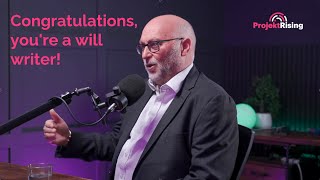
Nick Ash, who runs WMP Legal and the AI-powered care app Clearlines, discusses how he's using AI to streamline wills and probate work. He's already deployed call transcription, a custom GPT for private client work, and automated document generation. His main concern: fraud and undue influence in fully electronic wills and lasting powers of attorney.
All I knew is I needed to make two grand the next month to pay the bills and feed the kids. We see all of our clients, we fill in a fact, find and say, have you got a will? Invariably they say, no, there must be something in it. At the end of it, a guy shook me by the hand and said, congratulations, you're a will writer. I went, oh, really? Two days. Wow.
Hi, I'm Freya. Welcome to the Skynet Chronicles Business in the AI Age, the podcast that dives deep into the world where artificial intelligence meets business. Join us as we explore the latest trends, challenges and opportunities in this ever evolving landscape. From innovative startups to established enterprises, we'll uncover the secrets behind the successful integration of AI technologies. So grab a cup of coffee, sit back and get ready to unlock the mysteries of business in the AI Age.
Foreign.
And welcome to the Skynet Chronicles, Nick. So, Nick Ash, wills and probate mastermind. Tell us a bit about your journey.
Yeah, they call me the most respected estate planner in the uk, which is, that's a tagline, which is quite cool and I'm quite, quite proud to own that one, to be honest with you. I guess it all started back in 2005 when I was made redundant by a large insurance company. I was working on a rolling contract and every October they used to renew my contract. So I remember phoning them in around about July 2005 and saying, contract's up for renewal. And they went, yeah, about that.
And was this a large insurer in Peterborough?
This was, yeah, it was one of the larger insurers in Petersburg. I won't embarrass them by naming names, but yeah, it was. So I was 42 years old, wife, two young kids to support. Because it was contract work, I didn't get any redundancy pay and I knew I didn't want to work for anybody else ever again.
So.
Yeah, it wasn't the greatest of positions to be in. All I knew was I needed to make two grand the next month to pay the bills and feed the kids. And my brother, who was a financial advisor at the time, said, I've heard about this thing called will writing. We see all of our clients, we fill in a fact, find and say, have you got a will? Invariably they say, no, there must be something in it. I looked online, I found the Society of Will Writers, which seemed to be like the, the main membership body.
That was the badge.
That was the badge. They did a, they did a two day induction course. So I traveled down to Ross on Y, having parted with £995 that I couldn't afford to do their two day induction course. And at the end of it, a guy shook me by the hand and said, congratulations, you're a will writer. I went, oh, really? Two days, wow.
And.
I said, I said to him, how many people will actually ever write a will? There's 15 people on the course. I said, how many people on this course will ever write a will for, for like, profit? And he went, honestly, one or two. And I said, well, I'm your one because I've got an appointment on the way home tonight. He said, you've got what? I've got an appointment on the way home tonight. And he went, well, good luck. He said, don't forget you can phone the technical helpline in the morning. So I went to see my first clients and I walked in and they said, our situation's complex. And I was like, they told me on the course, everybody says their situation's complex.
And.
They said, we're married. And that was tick, we haven't got any children. Oh, we're off script. Anyway, long story short, it turns out they had £5 million worth of assets, most of which were held in offshore share options. They wanted to set up a charitable trust to benefit a bunch of animal charities.
So a little bit more than a basic will.
It was more than the two day course had covered, to be honest.
Just a little.
And so they went, they went off. Sorry, I, I went off to do some research and come back to them with, you know, some recommendations at a price, as you would. Didn't say I couldn't do it. Didn't say I could do it at that point. And I phoned the technical helpline and their response was, oh, you poor sod, that's your first appointment. And I was like, yeah. They were, oh, you'll never get one as complicated as that again. I was like, okay, so what do I do? And they said, find a large firm of local solicitors and see if somebody will give you a referral fee. I said, but I can't. I'm their will writer. I've been introduced to them as their will writer. I need to give them an answer and I need to provide them with a service. And they said, we're sorry, we can't help you. I phoned the Charities Commission because they wanted to set up a charitable trust. Charities Commission were amazingly helpful. Had a 20 minute phone call with them, downloaded some stuff off the Internet, which in 2005 was quite a choreography. Hung up the phone, dialed up the Internet downloaded the form, phoned them back and said, I've downloaded it after like 40 minutes. And they said, all right, well we'll tell you how to fill the form in. And they did. And that was Great. Fast forward 18 years. I'm now a member of the Professional Standards Board for the Society of Will Writers. I'm a consultant to their technical helpline. We never say, find a solicitor and see if you can get a referral fee. I have responsibility for the oversight and governance of over 2,000 members. So I think we've come a long way. Yeah.
Moved a little bit beyond that badge.
Just a little bit, yeah.
Superb. So wills and Probate was a starting point. You've diversified the business into a variety of different angles around that offer, haven't you?
Yeah. So we rebranded the company last year to WMP Legal because Will and Probate Services didn't represent what we did anymore. We are firmly in the elder care disabled care market. We don't sort of stray from that very much at all. It's all around planning for later life, making sure that you and your family are secure, making sure that if you need care or are looking for care, then we can help you with the right planning and make sure you've got the right legal documentation in place. And last year that led to the launch of a new company, Clearlines, which is the UK's first care onboarding solution for care providers, which we're very proud of, is something we're, we're developing as an app with, with AI, with yourselves and, and looking very promising. It's been really well received. However, the. We haven't got to the 64,000piece yet because nobody's paid for it as yet.
I think if you've got enough interest. Interest converts into money in the long term, doesn't it?
Well, you know, we offer.
Is there. It is a great product. Yeah, it meets a need.
So we launched at the Care show and over the course of two days we got 110 different people who expressed an interest in it. So, you know, there's a need, there's definitely a need. Monetizing that need is taking a little bit longer than we hoped, but we'll get there and it'll work really, really well for us.
And I think that the benefits are twofold, aren't they? So they help the care system, but they also help to generate opportunities for your business in terms of supporting work that's needed by those clients.
Yes. I mean, we've dubbed it the world's most complicated Lead generation tool. Because for our business, what it does, it creates clients for the legal services business with lasting powers of attorney, will writing and court of protection deputy ship work. But for the, for the broader care industry, it's huge. There's three aspects really. The first is for care providers to consistently accurately onboard their clients and show that they're doing the same thing all of the time. Being consistent, not sort of, not discriminating against anybody. You know, it, it's the unconscious bias is, is driven away by using a, by using an app that asks the same questions all of the time for local authorities trying to get people out of hospitals. And as a knock on for the nhs, it's got a huge problem prospect. We can, I'm not going to say we're going to solve the bed problem.
I was going to ask you about that.
I think there is potential, I think it goes a long way, I think it goes a long way to making sure that local authority, you may not know this. Most local authorities have social workers embedded in hospitals because they know that they are going to get people referred to them directly by the hospital to move them out into some form of care, be that domiciliary or residential care. So those social workers who are embedded in hospitals, having access to the app, having access to clearlines, will make their jobs far, far easier. Once we've got a good database of care providers on there, we will be able to sort of say, these are the people who've got availability, who meet the needs of the client, therefore you can move and hopefully it'll speed the whole system up.
And that matching aspect, obviously, as a data geek, really appeals to me. The fact that we're going to have an understanding of the care needs of individuals and how that appropriately fits to local care offers and local care facilities and ultimately then becoming a lead engine for those care providers. Saying this person matches your usual profile. Do you have any capacity now? And when we've got that dynamic understanding that it really does unlock the potential for solving the bed blocking crisis.
Absolutely. And dream, if there is a dream for it is real time availability, you know, having, having care providers reporting their availability or, or giving access to their systems that show availability in real time. So that not only can they say this care provider could provide you with care, it'll be this care provider could, and they've got capacity. Do you want to go and speak to them or do you want them to speak to you? Sort of.
And if there's any legal aspects that need to be solved, then all of this is understood in advance.
We do that. Yeah.
Fantastic. So it's really exciting times then.
Yeah.
An app in beta that could change the world of care onboarding.
Hey, it's, it's, it's getting me towards my knighthood, eh?
Does the knight only come when you've solved the bed blocking crisis?
I, I think if, I think anybody who does solve the bed blocking crisis gets the nighthood, to be fair, probably won't be me.
But that would be quite a badge to add on to the one that you got for that two day course. Of course, Kelsey would.
Yeah, yeah, absolutely.
Fantastic. So when you think about artificial intelligence in the wells and probate space, what do you think the opportunities are?
I have to say, the legal industry is typically and traditionally very, very slow to adapt. A lot of people these days think online case management systems are the cutting edge, but of course they're not. We use AI a reasonable amount. I've created my own GPT which is called Private Client GPT, which is, Is.
It on the GPT store?
Not as yet.
Put it on.
I'm playing with it at the moment, I'm trying to make it speak with my voice, I'm trying to teach it to be me. So it's in a learning phase at the moment, but certainly that Private Client GPT will be, will be our sort of chatbot. On our website, pretty, pretty quickly, we're using AI. We're using Fireflies at the moment for recording meetings and summarizing our meetings, picking out action points. That's working quite well. And ultimately, you know, I, I can see a day where client interviews can be done by AI. So you will get a virtual me or a virtual Mariam, our Islamic wills consultant, or a virtual Kim who specializes, who, who does our specialty in families with disabled and vulnerable children. You'll get a virtual version of them interviewing you over, over a video call. And it all gets transcripted, the instructions are taken and the, the wills and the legal documents are automatically generated from the, from the output from the meeting. It's not too big a leap to get.
I don't think it is. I think it's a bigger leap for an AI to be an executor on a will.
Oh, absolutely.
But that might make some processes easier too.
I think, with everything, you know, if you, if you got processes that you repeat time and time again, then AI can do it for you. You know, people say, will this replace my job? No, but it'll make it better, it'll make it easier, it'll make it more efficient.
When you can do more.
Absolutely. One of the things we're looking at at the moment, we're just, we're just testing is, is a, is an AI app that sort of attaches to our call recording system. We record all of our telephone calls, but it attaches to our call recording system and it records the call, it transcribes the call, it picks out action points and then it uploads it directly to the case management system so that you've got a full transcript of this call with all your action points without having to physically make the notes yourself, which you think of that in terms of time saved. It's huge. It's huge. It makes us so much more efficient.
And that full transcripts there, if you need to refer back to bullet points are all there. You've got all the information you need. But you didn't have to be diligently scribbling things down.
Correct.
I think the implementation of OpenAI's whisper has changed the world with transcription, because now it's so easy to go from audio to accurate text and it's been embedded in so many applications.
I have to say I've been amazed at how accurate the text is. Even when you've got people with quite strong accents, you know, and dialects and things like that, it just, it just seems to understand.
And you can even throw in different language words, different language sentences, and it will still make sense of it. It's amazing.
Yeah.
So have you faced any regulatory issues or ethical issues related to the use of AI and do you see an application for them in creating legally binding documents at this point in time?
I don't think there are any ethical issues. I think, you know, used properly, it can, it can be a real force for good. There are areas where it could be used fraudulently and I can see, you know, you've got a push at the moment for fully electronic wills is being considered fully electronic. Lasting powers of attorney are being introduced this year.
And are they more efficient than the 2999 WH Smith's wills?
Watch this space. I mean, the 2999 WH Smith wills are excellent, quite honestly, because they give us the opportunity to charge people to fix the mess that they've caused. Anybody who makes a world without advice is, is just storing up problems for, for the future and the future when they're not there to answer the questions. So that's, that's just folly. But it's, it's quite profitable folly for us because we, we unravel the, unravel the issues. No I think the problem is fraud or undue influence is, is if you've got an, you know, and I, I don't want to tar all older people with the, with the same brush because, you know, my, my 84 year old mother is an absolute whiz with anything online. But most elderly people are a little bit reticent if you've got somebody coming in and saying, and we get it all the time, I want to make a lasting power of attorney for my mother. Well, you can't. Your mother has to make the lasting power of attorney and grant you the permission to be her attorney. With the advent of fully electronic will, sorry, lasting powers of attorney, you are going to be able to just go online and make that document for mum and then get her to e sign. It.
Feels tenuous. There's a gray area as to how much that decision was truly by that elderly relative.
Yeah. And, and the law says, you know, that it has to be grant a power of attorney has to be granted by the donor to the attorney, not the other way around. And it's, it's really difficult to see how that can be placed if the system is fully electronic. Yeah. So, so there are, there are sort of flags, flags in the system that say possible fraud is gonna, is gonna rise. There's no doubt that since the pandemic there's been a significant rise in claims against wills and there's been a significant rise in complaints about powers of attorney to, to the courts. So this will, I, this will make the problem bigger.
Do you think the courts are equipped to handle that increase in traffic?
No, no, the courts, the courts went home in March 2020. They opened again six months later.
I was going to say. Have they actually come back yet?
No, they're, they're, they're still experiencing delays. It depends which part of the court or the government system, I guess. So if you, if you've got a Crown Court case, then the average waiting time for an initial hearing is around 72 weeks. If you've got an application going into the office of the public guardian for a power of attorney, they are averaging 28 weeks against a target of 12. And if you're applying for a grant of probate, they're averaging 26 weeks against a target of eight.
So once we've solved the bed blocking crisis, we need to go and help the court system with their initial hearing processes.
That would be an interesting thing. Definitely. I think you've got to appoint the thousand judges that there are vacancies for and reopen many of the Courts that have been closed or build an AI.
That's going to build an AI.
Yeah, I mean one of my other hats is, is mediation and I'm a qualified civil and commercial mediator. And actually the, the backlog in the courts is, is quite a boom for that industry because it means that one of the things the government has, has made mandatory over the last couple of years is that before you go to court you have to attempt mediation. So that's 85, 000 cases a year that goes to the civil courts that now have to attempt, at least attempt to mediate. And that's their, that's their way of kind of fixing the backlog is to get everything mediated out before it gets to court.
Put a buffer in. That might solve some of it, but definitely slows it down enough that people want to just get a resolution in.
Absolutely, absolutely.
So people often raise concerns about privacy and data protection with AI. What's your views on it in the legal space that you're involved in?
I think privacy is always a fear the data might get out and somehow be misused or abused. But it's down to us to make the right provisions, the right sort of cyber security measures, use the right systems that are fully encrypted, lock away the data sort of deep into however many bit encryption you get these days so that it can only be accessed by, by people who are entitled to access it. We use, again, we use secure lockers to hold information. So we won't send you your will normally by email. We will, we will put it up into a legal locker which will then send you an invite to create a password. You can get in from your end, we can get in from our end. Never the twain shall meet. You can upload. We can upload. The documents can be read but they can't be accessed by anybody else. I know you, you're not a massive fan of passwords.
And no, I think passwords have their place. But I think the problem with passwords is people are lazy and generally passwords follow either guessable formatting or people reuse the same password across multiple sites. So as a layer in protection has its place, do I think it's outdated and will be replaced? Absolutely. But yeah, passwords, they're not my favorite.
No, I know, I know. But you know, it's what we've got at the moment and it kind of works. Yeah, it kind of works. And you know, people complain about having to, I mean things people complain about to us is having to identify themselves through computer based identification models. Which it's a legal requirement. We have to do it. We have to comply with the anti money laundering regulations. I know it's very hard to launder money through a will because you have to die.
This is an extreme method.
It is an extreme method, but, yeah, it's not beyond, it's not beyond the wit of man to launder money through somebody else's will who's just about to die. And that has happened. So we do have to be careful. We have to be careful to ensure that when we're, you know, dealing with anything where somebody's making a legal document, we're actually dealing with the real person.
Yeah.
And it's not, you know, their sister pretending to be them. I'll tell you a story one day. But off camera. Off camera. But, you know, it happens and you know, people can be despicable and, and, you know, so ID and clients is where we get a lot of complaints. We get a lot of complaints where we lock things away securely and people are like, why can't you just send me on email? Well, we can if you insist, but it's really not safe. No, because it can be intercepted, it.
Can be read, it's on servers all over the place.
Absolutely, absolutely.
So could you share an instance where AI has already significantly improved efficiency in the wells and probate process or specifically at Clearlines?
Certainly, yeah. I'll go, I'll go back to the, the call recording and note taking. That's just huge. It's you. We were, we were allowing our staff 15 to 20 minutes after a long call to, to sit down and make their notes. Well, they don't have to do it.
It's fascinating to me anybody that thinks that documenting and writing minutes of meetings is. Still has value add. Yeah. It just utterly bewilders me because the AIs do a better job.
Yeah, it's been it. And we haven't rolled it out fully yet, but we will be doing. But it's where we've trialed it. It's been the biggest efficiency measure that we've ever had in the business.
Well, that's a huge win then, isn't it? And how have you found people's reaction to that change?
People are resistant to change. What if it gets it wrong? What if it doesn't record something? What if it says something that it doesn't mean? So we test it. We test it and we make sure it doesn't do those things. You know, we still have the call recording and we can compare the recording against the transcript and they are Just so accurate. They really are, you know, then 99 accurate.
Yeah. I think you do occasionally get slips on names of people where it interprets it as something else. And sometimes the punctuation isn't perfect, but it's game changing.
Absolutely.
Because that time back that you get when people would have been scribbling down or even being distracted in a meeting and actually being able to fully focus on everything that's going on and not worry about, oh, I need to make a note of that or make sure I capture that action. It just seems antiquated to me. But it's, it is a difficult change process. Any change is difficult to implement.
I think, I think the biggest resistance we get, and I've, I've tried it a couple of times and not really been successful, is trying to record face to face meetings because people don't like to be recorded when they're having a face to face conversation. It's somehow, especially not with an array of cameras. Well, the array of cameras, we wouldn't do that.
Just be a phone on.
Just a phone on a desk. But, but people don't seem to like that. They seem to find that more of an intrusion. Whereas if they're doing it over zoom or teams or, you know, a video call or a telephone call, they don't even think about it.
Well, they don't know it's there. It's sort of that it's almost out of sight, out of mind. And I think the other challenge with in person is it cannot accurately chord who says what.
Yeah.
So It'll be Speaker 1, Speaker 2, as opposed to the name of the individual tagged to their team's account, for example.
Yeah.
So there's still a way to go in that technology and you can get around it a little bit by saying your name at the beginning of the transcript and it goes some way, but in person is still quite challenging. And a lot of business is people to people.
Absolutely. You know, and, and a lot of what we do, you know, we're still probably two thirds of our appointments are held face to face.
Yeah.
So, you know, we're not going to solve it overnight. But once, once we get there, once we get an acceptable way of doing it that people don't feel intrudes too much. Then again, you know, it just makes us more efficient and changes the game again, you know, ultimately our jobs is about people and it's about talking to people. And the more time we can spend doing that and talking and advising and reassuring people, giving them the peace of mind that they need, the better we'll be, the more respected we'll be and the more customers we'll get.
A conversation I had with CBH on one of our earlier podcasts. They have a guided interview process where they're asking a series of questions. And that process is really to get at the juicy bits to get that understanding that might not normally come out in a conversation. And if you're not having to make notes and you're able to fully focus on what's going on in the moment, provided the participant can get over the fact that they're being recorded. And sometimes that does change the start of a meeting, getting permission, and it changes their reaction and they're a bit more nervous, I guess. But once you've got past that, you can just fully focus on diving into. Okay, so you said that. Tell me more about that. And that's as applicable in any business. Getting to understand your customer and finding out the, the detail of their challenges so that you can solve it. It's priceless.
Absolutely, absolutely. And you know, time spent making notes is time wasted in my mind. And you know, time getting to know the person, getting to understand what, what, what's behind their initial questions is, is just so important.
So we're moving rapidly into 2024. What do you see? As if you could look forward six months. Where will Clear Lines be and what impact will AI have continued to make within your business?
So clearlines will be revenue generating. That's important. We have a target date of April 1st for it to become revenue generating. We are fortunate in that we've got a good relationship with the biggest domiciliary care provider in the country. And they've got 250 franchises. So it will be rolled out across their 250 franchises. So it'll be being used regularly. As I say, you know, we've got 110 people who are hot to trot and ready to go. So we'll have them on boarded and then we'll be sort of touting our wares within, within the care industry, making sure that, you know, it becomes ubiquitous. It becomes the Go to onboarding app for everybody.
So the Care show this year won't be the launch of a beta of a product.
No.
We're shouting about the success it's already having in the market.
Absolutely, absolutely. So, you know, Clear Lines is big for us on the legal side of things at the moment. We're going through our audit process and we're trying to automate our audit process. We're doing it on our own cases at the moment. But the goal for that is for quarter three and quarter four of this year to roll out W and P compliance as a service to other legal firms, making sure that, you know, anybody who's in the, in the private client space, which is the legal term for the wills and probate space is called private client. So anybody who's in the private client space can sign up for our audit process. We make sure that they're complying with the rules, make sure they're doing the right thing, and hopefully it'll all be done by machines. You know, the, there won't be a huge amount of intervention from, from people unless stuff is flagged up as being.
Non compliant, human in the loop as opposed to human driven.
Absolutely, yeah. You know, and, and they will deal with the exceptions, you know, and where things are put forward as being an exception. Then, you know, a real life person with real life experience and qualifications will look at it and say, right, why did you do that? How did, how did you reach this, this point? And ultimately, you know, if, if it's done for good reasons and it's compliant, pass it off. Or if it's not, you know, make the rectifications that need to be made. But that is a big income generator that will be a sort of recurring income model. So people will sign up for a package of 5 files audited per month, 10 files audited per month. And, and they'll pass a monthly recurring fee, which is the holy grail of illegal business, to be honest, because, excuse me, it's the holy grail of the legal business. Because the one thing about private client work, especially probate and estate administration, is.
People don't tend to need, they don't tend to die twice.
We don't get repeat custom. No, it's, you know, we might get mom and then dad, but we've never come across anybody who's needed probate twice.
I'm not sure how to follow that. So we're seeing an advent of agency in artificial intelligence, where instead of just asking a question and getting words back, we're able to have tasks or series of tasks solved. And as we move towards the introduction of artificial general intelligence, where we have this capability of agency that's greater than the capability of the average person. How do you see that changing the legal market? Do you think that we're going to have more instances of fully autonomous lawyers?
There's certainly some models out there that are trying to be fully autonomous, that are trying to offer a sort of direct to consumer. You put in your problem and we'll create everything that needs to be created and solve it for you. And there are markets where that could work. Yeah, you know, you know, small claims court, things like that.
Disputing speeding fines.
Disputing speeding fines. Those sort of things can be done. Yeah, yeah. Ultimately, are you going to be able to do the full probate process? Yes, probably until there's a dispute. And so you get to a point where actually the humans get to deal with the interesting stuff and, and all of the, all of the mundane, boring, day to day stuff could be done. Yeah, could be done, will be done, I'm guessing. But things like mediation, that's never going to be, that's never going to be AI, that's looking people in the wise of the eyes and saying, come on, you really want this to go away, don't you? How far are you prepared to go to walk away today and put this.
Behind you so you don't see that ever being a robot, which people's eyes?
Not really. It's, you know, the goal of mediation is to make everybody unhappy, but prepared to walk away because. Because ultimately, you know, if everybody was going to just shake hands and be happy, they didn't need mediation. They didn't need mediation in the first place. So, you know, we always say at the start of a mediation meeting, you know, you're going to walk away from this uncomfortable, you're going to walk away from this ultimately a little bit grumpy, but in a few days time you'll look back at it and go, thank God.
And that person stopped you from physically coming to blows over the.
Absolutely, yeah, absolutely. And we normally keep them in separate rooms.
You don't want them over a table.
Just in case we're in separate buildings in some cases.
It's an interesting one. Awesome. Well, thank you very much for your time today, Nick. It's been an absolute pleasure talking about Clearlines and the, the impact that artificial intelligence is already having in the private client market. We look forward to 2024.
Indeed. Yeah. Thanks for having me. I've enjoyed it.
Awesome. Thank you.
No worries.
More from Tim

EP 60: Why Founders Become the Bottleneck — And How AI Changes Everything | Thea Brook









