Tim Shi: From Early OpenAI to Cresta Co-Founder's Enterprise AI Success
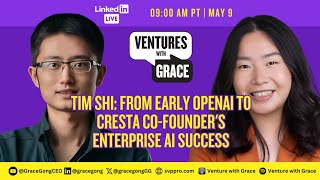
Tim Shi, co-founder and CTO of Cresta, discusses building an enterprise AI platform for contact centers after early roles at OpenAI and Dropbox. He explains how Cresta evolved from ranking systems to multi-agent LLM architectures, targets the $500B contact-center market, and predicts multimodal AI as the next wave.
Chapters
Oh, we're live. Hi Tim, welcome to Venture with Grace.
Hi, can you hear me? Sorry.
Oh yeah, we're live.
Cool. Yeah. Hi Grace. I'm glad to be here.
Amazing. Okay, so I want to start with your early career. So since I literally feel like I've known you for so long that I feel like I've seen you transition yourself from a top AI researcher to a top AI founder, maybe we could start off as your early on career lessons. You went to Tsinghua, which is like the top university in China, and like you graduated from this like really well-known professor's class. And why don't we talk about like, you know, what are some like early career lessons that you've learned throughout like, you know, your PhD journey and maybe before that, that kind of shaped you into who you are today?
Yeah, yeah, totally. So I feel like, yeah, I know you for a long time. When I first came to like America, like to start Stanford PhD. That's how we met. And I think back then I was just starting afresh, like, you know, graduate life. And I think one of the early lessons I learned was that surrounding yourself with very sharp, driven people in your career really accelerates your growth. So my career in Silicon Valley started I think before Stanford PhD was the summer at Dropbox. Even though it's not like AI related, I think Dropbox had an intense focus on hiring the best talent. And I had one of the highest talent bars I've seen. That was around 2015, was like the peak of mobile and cloud storage sharing, a cloud movement. So as an anecdote, for example, they invest heavily in interviews and hiring. I was in still studying in Tsinghua, like one of the universities in China, and they flew me to San Francisco for a weekend just to interview. So I had to like, you know, pack my bags, go to like San Francisco, took a 12-hour flight, um, and a little bit jet lagged, but had like a day interview on site to, you know, meet some of the colleagues. And I just like to show like how much they're willing to invest in like acquiring talent. And I think some of the former colleagues of that class, like 2015 class, actually went on to start very remarkable things. So for example, Steve Howe was in class and he started, co-founded Cognition, which is like the AI lab that released Devin. And also David Ding was like, started a company called Udio. It's one of the leading music generation model companies. And my intern mentor, Peter Wellinger, and he also was the lead for the Dropbox machine learning team. And he later joined on OpenAI to lead the robotics, but then eventually become the VP of product and lead the product there. So very high talent density environment, which influenced my hiring philosophy and also our strategy at Cresta, which is we want to create a very high talent density environment and find really creative people and be able to not only be able to very strong technically on their skill set, but also very high agency. So many of the early Crest employees went on to start their own companies. So in the last 3 or 4 years, we have about 10 companies started, many of them on the very successful trajectory. Companies like AXA is like API for search and Cogna, a coding agent, and a company like Dashwork that was just acquired by HubSpot. So I was fortunate and lucky enough to work with the people that were able to join the early Cresta journey and I learned a lot from them. So I think that's one important lesson I learned from early days, which is always find an environment and place to work with the best people, um, and, and learn as much as you can.
Totally. I wonder, so like, since I feel like in our cohort of like people, uh, just like migrating into Silicon Valley, I feel like I only met— I also met you very early on in my career in Silicon Valley. So like, I, I feel like in the cohort there's a lot of like successful people, but I feel like I consider you as like one of the ultra successful people. Like, how do you— I guess like, what do you think like separate you from like, you know, a lot of peers maybe went to the same school or like, you know, Uh, just like in like other— I guess like how do you separate yourself from— not separate yourself, but like I guess like what do you think you did right that consider like, you know, other people who also win the Tsinghua or like Stanford or something like that? Um, you know, obviously you're very successful, so I wonder how— what are like some maybe core things that you feel like you've done right versus like, like a lot of other people who share the same background?
Yeah, that's a good question. I feel like I didn't really intentionally try to be different. I mean, it sounds more like at that time maybe I just had a different risk profile because when I think that between 2015 to 2017, '18 wasn't actually the best time to start an AI company because I think AI was early and there was not many use cases that AI can soft, like at that level of like technology. But I think I was just blindly like, you know, work with the best people. So I found my co-founder and also like be able to like brainstorm some of the entrepreneur ideas and took a risk of like take a leave of absence and start the company. I actually just like enjoy working with people and working on this journey versus say like intentionally say how to be more successful in a sense.
Yeah. I— how do you meet your co-founder? Actually, yesterday I was at an AWS thing and then I met, I think, Daniel and like the new, I guess, like CTO or like, like also like other people on your team. And then I was brainstorming question with them as well. So they asked, like, asked me to ask you about like from the early concept to Series D, the genesis of Krista. Maybe we'll start with the founder journey of how you met your co-founder and then we can go from there.
Yeah, I think I was also, I was in 2017 working on my own project actually, as was part of the Sequoia incubation program. But my journey to join with my co-founder is actually a little bit A little bit random because I think that we were all very entrepreneurial people and Stanford is an environment where there's a lot of PhD students who want to start companies. So we had this club called Entrepreneur Club that I think Fei-Fei Li actually started. And the idea is to bring in different lens from the outside world to your AI research. So every once in a while, every week, we'll meet with company founders and entrepreneurs, investors who have been in the journey and just learn about what's outside of this AI research and see how are people building companies, how people are building software. And that sort of created the environment of also going back to talent density, figuring out people who also have similar mindset but looking to start something but with different kind of skillset. So yeah, so that's why I got to meet my co-founder. I think he was already on this journey of trying to automate Sebastian Thrun's email and he built some version of prototype. And I think that aligns with what I was trying to do and we hit it off immediately and we had dinner at a Thai food restaurant, and that was designed to work together.
What is like the early day kind of look like? So I think like for entrepreneur journey, it's like the weirdest part is like what exactly are you like? I mean, oh, I actually own the exact cup in white. But anyway, so I wonder, so how do you think about, I guess like what does the first week kind of look like? So I think one thing I'm curious about is like building a technical product. So that's a business person come with the idea and then like chat with a technical person and then like actually, like, you know, I guess, like, how does a plan kind of look like? Because I feel like I've been only in execution mode myself, like, as a founder, as a non-technical founder. So, like, I feel like doing things myself, I can actually understand, like, oh, this thing takes, like, I don't know, 2 days, this thing takes, like, 5 days. But working with the technical talent is, like, very different. So maybe building something like a foundational model or, like, some— any technical subject, like, I feel like it takes a lot longer than a few hours on a specific subject. Category of things. So how do you like separate your work into like different milestones to like kind of demonstrate to the audience? And people always talk about like building MVP, but like, does that— is that actually important or should it be like, you know, landing the big customer? I know that you guys landed like a really big customer right away, but what do you have to show them? It's not just like your credential or like it's more of like, oh, here's like our MVP, try it out. But like, it's like a big company. Like you have to build a bunch of tailored stuff to them. How do you think about the building from zero to one phase back then?
Yeah, totally. I think it's especially true for AI back in 2017. There wasn't foundation model yet, so there's no off-the-shelf AI that can plug into the product. And I think at Cresta, we constantly have to fight that there's this tension between, do we invest more in fundamental AI model development, like research, versus like, say, building the product that, you know, that customers need immediately. So there's like always a trade-off between, uh, product development in terms of, um, the features that you need versus like the long-term vision you're building towards. Um, so our first customer is actually Intuit, uh, which we got lucky because of, you know, connections, um, uh, to the Intuit founder. Um, but I think they were lucky to be in an innovator in a sense, because the founder Scott Cook always had a vision of what this company would be like in 100 years. Right. So they are willing to take a bet of like, I want to build something with a young startup to fundamentally transform the business. And I think starting with a vision, compelling vision that like-minded customers will buy into really matters. So initially we had this vision of the future of knowledge workforces will be kind of like self-driving cars where you have one car makes a mistake, the other cars can learn, right? If the whole future knowledge force will be AI native, if one person makes a mistake, the knowledge will be shared immediately across the team. So that was the original vision for Cresta, and then we were able to get into it, align on the same vision, and sort of was almost like jointly invest in this roadmap of building towards that vision.
Totally. Okay, so I have a question. So basically you guys don't really have to do a lot of convincing because the founder convinced themselves, and then like seeking for information, seeking for like innovation. And I guess like another question I have for you is like Um, as a— back in time, you were like a PhD student, and then like yesterday I was chatting with your team people. Obviously everybody speak very highly of you, and then they said like you kind of like transition from like an IC position. Like, how do you— basically their question was like, how do you transition from like IC position to like, like a successful CTO, like leading teams as well like that? So like, I personally think, think that's like very admirable as well, just because I feel like you kind of like commercialize yourself as a, um, technical research, top research talent, and obviously early OpenAI and everything. But how do you transition from an IC who is amazing at machine learning or AI, really things that to an actual CTO running a 300-people company?
Yeah, I think there was a lot of learning on the way. I think my actually Because role model of CTO is actually Greg Brockman at OpenAI, which I, and I think when he really inspired me because I think what I learned from him was like, you can always allocate your energy to what's most important. Right. And early on at Cresta, we were very customer obsessed. So we remember we were spending weeks in customer call centers. We'll fly to Arizona or places where the human agents will live. We basically observe their workflow, understand what they are doing, and figure out how AI could transform their workflow. That was really energizing times because I loved just working and hacking with teammates in Airbnb near the call center locations, and even just debugging on site, working with agents, sitting next to them to help understand how our product can be better. That kind of early on experience was actually the most memorable part of it. And in terms of like, as the company grow, of course, like the role of a CTO change, right? You have to figure out more in terms of communication and inspiring other teammates, empowering others. But I think the ability to always figure out what brings you energy, what makes you excited about working on this journey and how do you allocate time towards things that excites you and also high leverage in terms of building the company.
Totally. I wonder, so what would you say is the top one skill for CTO? Would it be actual coding or would it be a soft skill like sales or hiring talent?
Yeah, I think it really depends on the type of company or environment you are and you can really craft your role because I think that The title really doesn't matter that much because a lot of companies have very different definition of CTOs. So one type of CTO is the career ladder where you have VP of engineering and then you have CTOs who oversee a lot of teams. There are other types of what Greg Markman is doing, which is focused entirely on coding and just figuring out what is the biggest problem to solve and be very technically strong. And then there's also product-oriented CTOs where you talk to customers and figure out how do you build a technical product that could change the way that the company works. So there are many different types, and I think that title doesn't really imply the role you're playing, and you should figure out what you're most excited about, what energizes you, and what How do you fit into the biggest driving force for the company? And because at a startup there's just so many things that you can work on and there's things that are really high leverage and that you can build to make the company grow much faster.
For sure. I want to switch gear a little bit because I feel like we chat about, Krista, maybe we could start with Krista's product. What was it designed for? Obviously it's AI for customer service, but how do you guys come up with a product, and then maybe we could talk about like two companies that's also like being mentioned the most, like Sierra and Dacagon. I don't know how to pronounce it, but anyway, so like, yeah, maybe we could talk about like, first of all, what the product is, and then second, how do you differentiate yourself with like other, you know, leading industry players, though they're like younger as a company, but like, I feel like you guys are very already in the leading position in the space. Just how do you think about like the landscape in general in the AI customer service space?
Yeah, I do think that the AI customer service space is going to be one of the most exciting application areas for AI agent or agentic AI. And this space is actually very, very large. So the global spend on customer service contact center is like $500 billion. That's like human labor. And I think the majority of it will likely to shift towards automation in the next few years. And I think that there's basically, it's like the transformation is not going to happen overnight. It's not going to be like iPhone, like you release and there's a bunch of people switch to iPhone. It's going to be more like a slow transformation, kind of like cloud migration. There are still a very large, decent amount of enterprise running on-premise, right? But I think cloud is the majority, but it took a decade for us to get there. I think AI is going to be similar, not because, like, I mean, as the technology is getting better and better, the model, foundation model, is like getting, uh, very good at reasoning and good at like, you know, agentic tasks. Um, but the just the progress of human, like, in the transformation to large enterprise, like moving, uh, different, um, like, you know, working with legacy systems and moving the human process along, it would take time. And, but we've seen there's a lot of drive and demand for just AI and AI agent. And a lot of companies and especially C-level are thinking about AI and customer service, making your customer happy. And also using it as a strategic leverage to drive revenue is one of the top of mind for large enterprise companies that we work with, like United and Airbnb and Hilton. So these are actually, these are actually like very high-level strategic initiatives. Yeah. And in terms of competition, I think that the market is huge. There will be like many players going after it. I have huge respect for like Brad Taylor and from like CTO of like Facebook and an OpenAI board member. Right. So I think that what Cresta is playing well today is that we are We are early. We have a lot of data from the human side accumulating through our Copilot product. There will be a lot of companies who today don't want just full automation because they believe that it's going to be a journey. You want to start with humans, have humans as a guardrail to validate the product before you go full automation and go use case by use case, figure out which one you want to automate first. So that's where I think Cresta is playing its strength, is that we have a very robust product on the human side, and we have a newer product called a Cresta AI agent that we are pushing very aggressively into the market through upselling our existing customer base and also acquiring new customers. So I think the combination of human plus automation, like augmentation to automation in one package, is what customers want to buy today. And will be what customers want to buy in the next few years. And our sort of strategic playing field is voice AI and also companies that are in the more traditional segment. So companies like airlines and United and hotel chains, cruise lines and banks and all these companies rely heavily on voice phone calls that I think we have a really strong foundation to go after.
Um, I guess like, how do you moderate the results? Because I think since I feel like you have— you guys are like one of the biggest company, or like the most— one of the most successful company in the space. And how do you think about, um, like, you know, I feel like you, you are the one that probably have to educate the market. And at the beginning, a lot of people would just like purchase it or like buy it just for the fear of— because like they don't want to be replaced by like a like, you know, like a completely different new business and stuff like that. But I guess like, how do you think about the, um, go-to-market strategy? And that actually, like, from the strategy-wise, like, what are something that you feel like you've done right to like actually, um, get the market started? Like, oh well, I guess like creating the market in a sense. And then the other part is like, how do you think about the longevity of the market? Because right now I think like for the call centers is like still not really fully automated by AI. Like, you know, everybody want to kind of speak with a human because when you go on a call, if it's AI, it just sounds like, oh my God, I have to press like 5 buttons to get to a human. So people will still like the destination is like still like I have to chat with a human. But yesterday I saw the demo of like the newest like Kris.ai's like agents. So like this is fully automated. It's like, but the latency become a problem and I feel like it's very— anyway, so there's always a tiny delay from everyone, but I guess from strategy-wise, how are you thinking about building Krista? And after you land the first customer which is into it, how do you quickly repeat that process to other big organizations? Do you have to have a separate technical team for each? Subcategory, or like, for example, Intuit, I don't know, like, so I don't know, I don't think that's a good example because that's a tech company on its own, but like, there's also like the traditional stuff like airline you mentioned, or bank, or like, you know, all these like other subcategories. How do you decide on like which one to go after first?
Yeah, that's a really good question. I think, um, early on we, um, we, uh, Cresta started with enterprise, right, which actually was, um, not like a strategic decision, but we were just figuring out what can we get the company started. And I think going back, we could be more strategic in terms of picking up the industry we want to work with, right? Kind of like the book Crossing the Chasm. You want to pick a beachhead market to start with. And I think the goal is we want to find a product-market fit in the beachhead market and be able to create repeatability in the sales motion. And I think enterprise is a harder place to start because every company has a slightly different requirement and you would need to build a lot of muscle around customization and deployment to be able to actually deliver the value they wanted. But if you have a product that is scalable in a sense, you can serve many customers within that niche market, the cost of whole product, the core product you have plus additional features and set functionality that each market needs, that will help you accelerate your sales because you can have the same playbook to go to companies, say, in the same industry, the same needs, and then they can become referenceable customers. So Intuit was a very strong advocate for after we show results as a first customer. But if you can get customers in the same industry or segment that you can use as referenceable customers, that accelerates your Sales motion, you can sell to similar customers much more quickly. It lowers your customer activation cost and be able to get you penetrate the market much faster. It also creates a better brand for that because for the same customers, they'll view you as the market leader within that niche hat and allows you to create a better position to go after other markets.
I wanna, so by the way, hi Vignesh. So I wanted to shout out to the audience, whoever comments. So we'll address your question at the end. Basically, I really like what you said about the beach hat market. I think it was— it meant just like the sub-segment market, right? So I also read the book, but it was a long, long time ago. So it was like a sub-segment market, and basically you kind of dominate in a small niche, and then you go off on a bigger thing. So I guess, how do you figure out what is a small niche? And then in the current AI market, is there even small niche exists just because we have every, as you know, you are speaking at our conference, you guys are on the most popular panel, which is the AI agent panel. Literally everyone is building something in every subsegment domain, like legal or fintech, all that kind of stuff. So how would you identify the beachhead market right now in the AI space?
Yeah, that's a really good question. I think right now, because there's just so much happening, there are always For every market need, pockets of market need, there are probably already companies going after it. If I were to pick a market niche right now, I'll probably look at markets that are relatively small today. Maybe it's served with human labor and effort, but if you can automate it with human agent, with, sorry, with AI agent, then you can actually create a massive, bigger market. And because a lot of these are sort of like supply constraint. I think call center is essentially like that. It's kind of supply constraint. The number of humans that can serve the customer need is actually limited. That's why we actually see that even with automation, the number of human agents actually increasing over time because with better, better customer experience, people actually call the business and brands more and there's just more demand on your surface area. And then you can, even if you automate, say, 99%, then you can create new lanes for customer engagement. You can say, oh, can I have SMS messaging with the customer on a daily basis and figure out what they are and what they need and then create a more high-touch customer experience? So there's new ways that you can actually leverage the conversation AI in a way that currently that people haven't thought about, think about today.
Totally. How do you think about, like, so this year I feel like it's the year of the agent, and then previously we had, I guess, like various different sub AI trends as well. Like, I guess, like, what do you predict as like the, let's say, call it the end of the year, is AI agent still going to be a thing? Or like, what would you say would be next year's trend? Because I think I think last year or the year before it was like RAG, and then last year it was, oh my God, what was last year? It was like, there's always like the mega trends of this year, obviously agents. How do you think about the next year? Is there going to be another AI trend that's leading the conversation?
Yeah, I would say it's always hard to predict trend because if you're wrong, then it's— but I think from my perspective, I think there's a lot of breakthrough in multimodal. I think that video models are getting really good. If you look at the generating videos from movies, also generating video for the Hagen type of marketing videos, it's going to be a very breakthrough need for a lot of communication because it's just a new modality. I think also that translates to agents, right? Because I think a lot of the agents today operate on text. Agents actually getting really better and better, by the way, because of reasoning models and with O4 type of capability, then you can have reasoning with actions, right? So it can actually take actions on your computer. So agents will start working. It's already working in many areas like customer service. And you can actually get it working for very long horizon types, like deep research and be able to go into the frontier research areas. So I think that AI will be able to operate on computer screens. It will have ability to not only ingest text information, but also video streams of, in a conference call, or watching what you're doing on your computer. And be able to automate tasks just through pixels. This is actually one of the visions that we originally had at OpenAI. It's called OpenAI Universe and GEM, that we try to build huge simulation using computer screens, which didn't quite work at the time because we don't have the base layer foundation model we have today. But the vision is pixel is actually a very universal API. Because you have so many legacy systems that don't have APIs or APIs poorly documented. That's why people are trying to build these MCP stacks to create better interfaces. But I think if you have like Pixel as the universal API, you can have an AI that could just operate wherever environment humans operate today. That's a universal way of automation. So yeah, I think multimodal will be huge. It will go into the computer knowledge workspace, it will go into the physical space and we'll see more of that. Yeah, but that's just my personal prediction.
Love that. Since you are— oh, by the way, saying hi to Crispin. Love Crispin. We'll chat about the latency voice issues at the end. So I wonder, since you have invested in— speaking of multimodal, you have invested in some of the most iconic, I guess, AI companies of our AI universe, from Anthropic, Mistral to Pika. How do you think about angel investing? Because I'm sure nowadays with your level of success, there's a lot of people would just come to you to be like, hey, can you angel invest in my company? How you quickly filter out what are some BS and then what are something that you are actually thinking have an Half a Leg to succeed?
Yeah, I think a lot of it just comes through my network and friends and friends of friends, people I've worked with. I look for people who are really deeply technical, people have vision for the future. I don't actively look for investment in a sense, I don't source or build a pipeline to evaluate deals. I only come when people need help or advice. Yeah, so it's more like opportunistic angel investing. Companies like Pika, like Anthropic, who know the founders for many years. So that's how the investment happened. Yeah.
I wonder, so I guess, do you have a diligence or evaluation process? Or since you just mentioned that it's basically people from your network that are deeply technical, I'm pretty sure we have like underinvested in one of the companies together. But I wonder how do you— because you can't really invest in everything, right? And then I'm sure people who sit around you are like other Stanford or other top schools like PhDs. And I think they're all equally technical or maybe they are all pretty technical, I would say. But how do you filter out what are some stuff that you want to support? Support versus not? I guess that's more like a deeper question then, or I guess there's like, you just support everyone, but some of them turn out to be end up big.
Yeah, I would say the best quality I look for are, I think things like agency, be able to, because I think a lot of the work that building a startup needs is actually much easier compared to a decade ago when we first started. A lot of the technical barriers, like, you know, we have like all the foundation models, right? And then the cost of building software is actually cheaper. You can now like, you know, go to v0 or lovable and build like, you know, prototypes much quickly. And you can like get iterations with customer feedback much more quickly. So the cycle of entrepreneurship is actually much faster. But I think you still need a way to figure out like how, like what to do, right? So it's like a from solving problem, the problem become defining the problem. And I think how high agency people can always figure out a way to find, define, restrict the open problem space and figure out how to break down the problem and figure out how to solve problem when there's limitations and constraints.
How do you think of your personal board of advisors? I know that this is such a huge jump from existing, but I was just thinking about the things that you have invested are obviously you are advising them sometimes. And how do you think about building your own personal board of advisors as a successful founder?
Yeah, I feel a mix of formal and informal advisors and people like my co-founder are formal mentors from OpenAI and Stanford and a professor and a few founder friends I trust very deeply. I think the best advice come from people who actually know you well in a sense, know your blind spots and not afraid to give very harsh feedback and push you in a direction that could be brutally honest and push in a direction that's actually good for you that naturally you wouldn't think about.
What would be one piece of advice that you felt like made an influential thing to your life?
Yeah, I think there are many advices that I picked up on the way. I think that early on was, as mentioned, figuring out where the best talent is, always be very aggressive on hiring the best talent. I think recently one advice I really appreciate is from the founder of Glean and Arvind, who's like, you should never have a limit on the budget for your R&D. If you have a high growth AI company, always invest in R&D too, because that will give you strategic leverage. And if you have a good high quality R&D talent, just hire them. Don't think about budget. That's one advice I really appreciate.
I think that's very useful for, I guess, a venture-backed company, but I guess for us, for Hiring the best talent, I want to learn more about like what's your thought process on like what makes a great talent great? Is that just like their technical ability to think about things? And like, how do you really vet them? Because I'm sure you are surrounding yourself with like, I mean, people who apply to your company right now, especially maybe I guess even the, in the earlier stage, there's a lot of like, you know, top Stanford talent that you could just bring. But what kind of quality are you looking for? You, you mentioned about like for investing, maybe it's like agency since like right now everybody's like having the equipment to build a top AI company, but what are some, I guess, top 3 qualities that you're looking for when you're hiring the top talents?
Yeah, we look for people who are very obsessed with customers. I think early on in the startup, you wear multiple hats, right? So there's no clear defined role of the kind of problem you're solving. And when we, we made some mistakes like hiring like people who are very experienced from like bigger companies, uh, like, you know, um, but they just don't like fit into the like startup like culture because they are not like flexible in terms of like solving the kind of problem you need and not like, you know, like always like looking to the fitting to the particular like role they are expected to do. Because in a bigger company you have like particular role, right, that you people will have certain expectations, and that, that, like, that requires a little bit of adaptation. So we look for people who are, like, very, like, able to be flexible and, like, you know, have high agency and go on after, like, solve different problems. Um, we also look for people who are really fast learners. Um, I think some of the early, like, hires we had, they originally were, like, just coming out of college, very junior, but, like, they quickly learned, became one of the top performers, and they were able to not only understand the company very deeply, but also pick up the technical architecture and coding and problem-solving skills they need. So fast learner is a really important skill set to be in an early-stage company. And also beyond that, I just like the team mindset, right? Just be collaborative and know your strength and weakness, have this kind of ego, but in a sense, you are knowing what your strengths are, weaknesses are, and work with people who can be your good partner in your problem solving and mission.
Totally. I wonder, so since one of the other questions that yesterday your team people had for you is hard ML technical problem at Krista, what is a hard technical problem that you are desperately trying to solve or solved?
Yeah, I would say we have come a long way in terms of applying generative AI to enterprise setting. I think when initially when we were first started that the technology is just not quite there yet. We were using sequence models that are very limited, but we built a product mostly based on basically ranking and retrieval. I think what breakthrough came in 2019 when there was a first wave of pre-trained language models. I don't know if you remember, there was Google had this model called BERT and OpenAI just released GPT-2. That's created this foundation that allows your product to work much better. So we immediately were able to like sort of re-architect and build a product AI on top of like these pre-trained models and fine-tune our customer data. So we saw that there's a significant progress made with these language models, and it can perform way better in terms of like driving the ROI for our customers. And then the second wave came with the large language model, right? So like be able to leverage, um, LLMs in a way that, um, it's, it's actually easy to create a demo with LLMs but really hard to get into like production quality. So our team figure out like how to serve these, how to figure out like a large language model but break it down into like smaller modules, like with, without like one model like solve all. So we have like multi-agent kind of architecture, and we also have like small language models that serve specific use cases that achieve better latency and accuracy trade-off. Working towards based on the customer requirements, but also not afraid to always re-architect and just go figure out what is the latest technology is and bring that into your product.
Totally. How do you think about, I guess the other question is since we chat about the multimodal, sub— a subsector. Like, what are something that you see are interesting innovations in the AI space right now? Uh, besides the— I guess multimodal is like a big area, but like, is there any particular companies or like, um, use case that you feel like are actually innovative and have like a really big consumer market? Or not consumer, but like, I guess like commercializability, because I think not every AI product has commercialized ability.
Yeah, I think deep research is one type of product that I wish to see more in both consumer enterprise. So OpenAI built this feature called deep research, which allows the AI to do multi-step reasoning and do multi-steps to search on the internet and summarize a 20-page report for you. That was actually really powerful because as a user to do research on, say, companies and ideas. That saves a lot of time. And I'm a very high, frequent user of Deep Research. So at Cresta, our team built a similar product called AI Analyst, not for internet, but for customer conversations. So the AI agent will go in historical customer interactions, conversations, and read each transcript, normally what a human analyst would do and basically create a summary of a report of questions you care about. For example, for airline customers, some people care about why does the CSAT, the customer satisfaction score, dropped last week by, say, 2 or 3%. You can ask that question, AI will figure out how to break it down into a multi-step problem solving and go retrieve transcripts or interactions that really reflect that. Maybe it's like, you know, you had a, you know, LA fire and then the airline didn't handle like, you know, the refund really well. So that kind of summary was really powerful for like leadership level, C-level executives to think about like their customer experience. So I will pay attention to a lot of the development in like foundation model labs that are cutting edge, that we're doing research, that try to put into consumer experience, and then see what kind of product features that will benefit the enterprise.
How do you do customer research? You mentioned at the beginning you guys would fly to Arizona or somewhere else to actually chat with the customer. But as a CTO, what would be the question that you ask? Or is this more of a CEO's job? Sit in like the same room and then like the CEO just asked me, he's like, hey, how do you use our products? And then I observe, or, um, I guess like, what are the takeaway that you're trying to take? Because I think I just started doing some customer research for our next product, but I feel like the hardest part is like, okay, depends on who you're chatting to. Like, it's really hard to identify a customer. Like you mentioned about beach hat, I feel like it's really hard to actually have a beach hat in my— in mind. Maybe like, let's say you want to, um, Montez from like a subsector, but in the sub— in every subsector there's like 400 things that you could do. So for example, um, let's think about like Harvey, right? Like, so, um, the other guest that like— I'm just gonna use his word— King, like Sequoia, Kingmate, Harvey. So like basically in the legal space there is like the ChatGPT for lawyer, or there is like the, um, you know, small business stuff, like, you know, accounting, or like accounting for lawyer, but like it's more of like call center for lawyers. So like basically you, they take the first call instead of the paralegal and stuff like that. So like there's so many subset of problems that you could solve. And then when you talk to a different lawyer, like as a customer, like they would tell you different things. So how do you decide on like what to build? Because you could like set up for one thing or like another thing, but like, I guess like how do you identify like what is a, or like how do you listen to figure out like what is a core problem that you could have solved? And how do you filter out the noise as well? And then also, in every space, I feel like everything is— there's a lot of competition in every single space in AI right now. How do you think about the competition? Just because I feel like sometimes it's really easy to be distracted by, oh, you're seeing a really sexy startup building something really sexy, like, I don't know, like a cursor off the words or something. You could totally dominate like using all your resources to like build that? Or you could like, I mean, I don't think Curse is an example for Krista, but like I'm saying like in general, how do you think about the sexy startup that are building something like a one feature that's really sexy or, uh, like, you know, one or two things that like they've done right that like they have a really superior outcome in a very niche thing in your category? Do you like, you know, immediately build that thing or like rethink about your strengths? Like how do you really stay grounded when you are seeing these sexy feature pop up in your niche?
Yeah, totally. Let me address the competition piece. I think people think like AI right now, there's a lot of company going after the same market, but I think the truth is the adoption of AI is still relatively low in most of the enterprise and most of the customers. And there's a lot of new ideas, new startups, but in terms of real customer adoption, you don't actually see that much head-to-head competition. For example, at Cresta, even though people think that we compete against Decagon, Sierra, all these AI startups, but we actually don't see them very often in large deals. And I think the reason is probably because we're right now exploring different segments of the markets. And also the market is just huge, massive, and the adoption of AI agents is actually relatively low. And I think the same thing is true for, say, marketing. People think, oh, there are so many AI marketing companies. But if you talk to, say, top CMOs and ask them, what AI tools have you adopted in the last year? A lot of them will just say it's ChatGPT. There's not many marketing-focused AI companies, even though there's billion-dollar companies already, like VCs putting money in. But the tool adoption within the large market space of like the space of like marketing is actually very low. Um, and I think that when we think about like, you know, building a new company, then I think I would start with like ICP, figure out like what your specific segment of customers, the ideal customer profile you would, uh, start with, and then just like look for, recruit, like interview customers within that ICP. Um, and maybe the ICP could be wrong, right? If you think that the beachhead you're picking is actually not really having a much strong pain point, maybe you can change your ICP. But once you finalize the initial ICP and there's a real pain there, then building a product or solving that pain is relatively straightforward because people will love to— people, first of all, love AI products and try new AI products these days, and they will love to partner with you as a design partner. This is very different from many years ago where when we first started, people were skeptical of AI because AI wasn't actually pervasive. Like today you can try ChatGPT and know AI is real. Back in the days, you have to prove our eye first. You have to show them that, do an A/B test and show that AI, people using AI is better than people not using AI. But today I think that people are more open-minded towards AI tools.
Totally. How about, I guess, since I think at the beginning— oh, sorry, my bad, because I should never ask two questions in a row. I'm furiously taking notes. My nose is like completely cracked. But anyway, I want to maybe, since we only have 4 minutes left, maybe we do one real question and then one mid-fire round. One real question is, since you guys have successfully raised from all the top-tier investors, I believe Ben Horowitz invested in your company back in a long time ago, and then like, you know, A16Z, Sequoia, Greylock, like literally all the top funds invest in you guys. Like, what are like one piece of advice for like founders who are trying to raise from these like top tier VCs? And what's one piece of feedback that you gave like the VCs that like, you know, who are trying to find into your deals? Or like, you know, the, I guess like, is brand like everything? Or like, how do you think about like picking the best investors, um, as a founder?
I would say figure out what additional value the investor can bring in besides capital early on. I think that Ben has a lot of experience in enterprise and he built one of the iconic companies before he started introducing hardware. LoudCloud was the cloud software company before cloud was a thing. So he has a lot of experience in terms of how to approach large enterprise deals and customers. And just like building company in general. Yeah, so I think like for example, if you're building healthcare, then maybe you'll want to find customers, investors that already have a distribution network with hospitals and, you know, practices. So figure out like what you need in addition to capital and in addition to the operating experience with the investor. That's actually really helpful. And I would say like look for investors who have like who has been an operator before because they'll have more empathy with, uh, you as a founder. And also, like, in terms of real life problems, you will get more hands-on experience.
How do you attract those investors in the first place? Because a lot of people, like, graduate from Stanford or, like, work at OpenAI or something, but, like, um, but you successfully landed, you know, all these, like, tier one. Um, what's one piece of feedback for you to, like, attract tier 1 investor to come to you?
Um, I should give that credit to my co-founder, that, um, he was, um, I would say we have actually had a very different strengths. And then Ben, Ben Howard said like, um, a lot of great companies were started by like, you know, entrepreneur and innovators. Uh, like entrepreneur is the one who can run through walls and they'll get like you into like different customers without like least friction. And innovators like would come with ideas and figure out new product and new surface area to build. I would say my co-founder was really good at sales and he was able to not only just convince the largest customers to sign because getting into it as a first customer as a 5-person startup is a really hard thing to do. And there's funny, there's also an intern story where Basically, in order to get Intuit as a customer, he signed up as an intern for Intuit, just almost like a—
Oh my God.
You go in, you pretend as an intern, and then you go to work with the contact center employees and to figure out what needs to be built. But that way, essentially, it's a hack around the enterprise environment that you don't need to go through security, legal. You just figure out what needs to be built first to show the value. And then eventually turn that into an enterprise contract. So that story, yeah, I was lucky to work with my co-founder and I think our strength in combination was really helpful to building the company.
Wow, love that. Okay, so one second fire round then. Okay, what's your favorite book?
Hmm, I would say I have many different I love reading. I have very many different books. Um, I would say my favorite book is, um, probably Diamond Age because it actually was written many years ago about the vision of having like an AI that could be so good at like education that you can like teach people, uh, like any knowledge anytime. Uh, so in the book it talks about this like young lady who have access to this like book called Primer that allows you to like gain knowledge instantly. Sort of a little bit similar to Cresta's initial vision of we want to enable humans to be experts on day one. But today I think on the consumer level we have, say, ChatGPT. It reminds me of, especially ChatGPT voice mode, that it reminds me of this book that you can actually have knowledge, any kind of knowledge you want instantly. So yeah, that was science fiction predict the future, right? Who are living in the future right now.
Who would you invite to your dinner party?
I'm sorry, what'd you say?
Who would you invite to your dinner party?
Oh, that's a good question. I would be curious to see what the historic— like, if I have a dinner that I can invite people through time, I would invite people from centuries ago to see their perspective, especially how they think about when they learn about the future is so different but so good compared to what they could have imagined. But maybe an AI will create something like that, or maybe a metaverse of simulation where people can recreate clones of historical figures and you can talk to them. So yeah, looking forward to that.
Who made the biggest impact in your career?
I would say it's like my— there are many different people at different points of time. In the OpenAI days, I would say like the colleagues I work with closely, like Andrej Karpathy and Greg Redmond, to really teach me how to learn technical, strong technical skills and learn to work with teams. I think early on in my career, I would say my mom has a really big impact on me. I think she was the first person to realize I was playing computer games, and she was like, you should learn computer programming instead because don't waste time playing games. That's how I feel like I got into learning about computer science and getting interested in this area early on.
Love that. Where can we find you outside work?
You will find me outdoors, like going hiking or in the ocean.
Love the Bay Area basics. Well, Tim, thank you so much for coming on the show today, though. I'm sorry, Vagnesh. Vagnesh was trying to ask 500 questions. Love that. Love that energy. But I think Tim has to go right now. But thank you so much again for coming on the show. It was such a fun conversation. I feel like I learned so much about you, even after we know each other for lowkey 10 years. But it's crazy.
Yeah, awesome. Yeah, thanks. Um, it's good to learn you over the years, and thanks for having me on podcast.
Okay, amazing. Okay, ending stream.
More from Tim
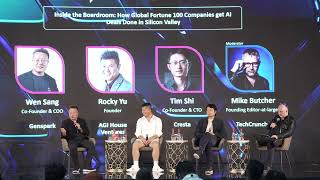
Unicorns and VCs from Silicon Valley - Genspark, AGI House and Cresta - at Expand North Star 2025