Video demo (by Tane Jillings) of Signal’s free export valuation tool for dealers using SICKL export. It explains the Signal Market Guide — an aggregation of ~6 million annual NAA-member auction transactions across the U.S. — and how dealers use wholesale transactions, retail day supply, and retail values to assess marketability. The walkthrough shows the Export Calculator converting a chosen US wholesale value into a projected future sale price (depreciation over 30–45 days), factoring in repair costs, profit targets, and exchange rates to produce a Canadian buy price and a recommended maximum bid; it also shows an estimated loan amount and describes Signal’s export finance offering.
Questions this video answers
About 6 million auctions annually.
$43,000 US.
$41,300 US.
$48,400 (currency implied USD for the pay output).
$38,700 US.
Chapters
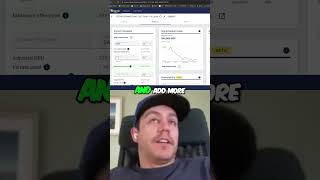
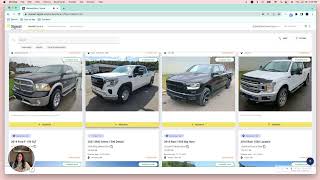
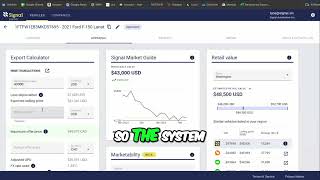
This is something that's like available to our all of our dealers that use SICKL export today, which is a free tool to show you export calculator real quick. If I'm a dealer looking at a vehicle, first thing I need to understand is what the value is. So after I add that vehicle to the system we want to appraise it and there's a few pieces that roll up to export calculator. That's one of the Signal Market guide. What Signal Market Guide is, is an aggregation of all the NAA member transactions across all in the US ends up being about 6 million auctions annually across Mannheim, Odessa, all the major independent auctions across the country. This gives you an understanding of what the wholesale value of this vehicle is right now. That value has done over time versus just giving you one one simple snapshot. So you can see that it's actually held relatively steady over the past couple months. To start the year as we're going into a spring market we have marketability. So if I open this up I can actually see the number of wholesale transactions for this year make model across the country or if I want to dig into specific regions and then retail day supply and then lastly we have our retail values. If we were to look for this vehicle in particular market, I'm looking in Washington, but you can look at any state. How does that vehicle stack up against other similar vehicles in the area? What do we anticipate the estimated retail value would be? So you take all of those things, you can kind of triangulate at what the market's doing. Right. I can see if if values flat transactions are going up and retail day supply are going down. That tells me that demand is starting to pick up for this particular vehicle. And so I'm comfortable at that $43,000 number. If we saw that wholesale value was dropping like a rock, wholesale transactions are going down and retail days supply is going up then the flip side is I wouldn't have confidence in this number. I'm not expected to go down further. So let's say we, I think that that 43000 is in fact the true value for this particular vehicle. We go over to export calculator and this is our basically our one stop shop for you to price a vehicle on the US side and then, and then spit out a Canadian buy price. And so if I spit out or if I put in 43000 as my US wholesale value. One of the keys about exporting vehicles is you're not buying a vehicle today to sell it tomorrow. You are buying a vehicle today to sell it in 30 to 45 days. And so our system takes into consideration depreciation across that vehicle. You should assume that a vehicle in 45 days is worth less than a vehicle today, unless we're in a super, super funky market like we were in 21 and 22. So the system is saying that this vehicle should expect a future sales price of 41,300 US. I could go and add more cost, let's say I have a broken windshield. And the system will actually spit out based on what you've input your as your profit, target your costs on that particular vehicle. You set those up at an account level and then what the current exchange rate is. And our system will say, hey, the most that you should pay for this particular vehicle today is 48,400. And so dealers, oftentimes they're plugging a bunch of numbers into their calculator on their phone, they save it and then that math gets forgotten forever. Our system saves it all in one place. So you have a record of what that, what that particular bid was. You can log into your Carfax account so you can see the vehicle history reports. You can check for recalls directly from the OEM website which also gets saved at a vehicle level. So everything you kind of need in one spot there. And the last thing that I would point out is the estimated loan amount. And so Signal has our export finance program to help dealers get funding for vehicles cross border obviously with next year pulling out of the Canadian market. AFC isn't huge into huge into export and your traditional banks don't finance this category. So Signals uniquely positioned to help finance your business. And so in this case we're saying would be willing to finance up to 38,700 US on that particular vehicle. All of our loans are in USD which means you're hedging your foreign exchange. But if I take that estimated loan amount number and times it by the exchange rate comes out to 52,000 Canadian. And so we'd be willing to finance the full Canadian purchase price of that particular vehicle should you need financing. So everything you need right there in one place to make an educated buying decision.