AI Fake Movies, Smart Glasses Surveillance & The $10M Super Bowl Cereal Rebrand
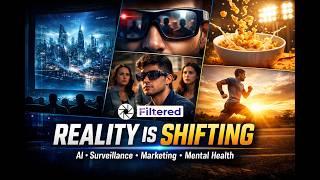
In this extended episode, TJ Walker, recording while on vacation, curates a "best‑of" show that weaves together several timely topics. He begins by discussing a 15‑second AI‑generated video that pits Tom Cruise against Brad Pitt, highlighting industry alarm over deep‑fake technology, potential job displacement, and legal battles over likeness rights. He examines the broader implications for Hollywood, unions, and the economics of low‑cost AI‑driven filmmaking. Walker then shifts to Meta’s Ray‑Ban smart glasses, outlining student and faculty concerns about constant surveillance, facial‑recognition, privacy, and the chilling effect on classroom participation, while also noting potential benefits for personal use and politics. The conversation moves to Kellogg’s $10 million Super Bowl ad for Raisin Bran starring William Shatner, critiquing the sugary nature of the cereal, the marketing tactics that leverage nostalgia, and the broader lesson about consumer manipulation. Walker reflects on Shatner’s long, adaptable career as a model for lifelong productivity. He then presents recent Gallup data showing a historic low in U.S. optimism, explores reasons behind the decline, and argues that personal optimism and daily habits are crucial for thriving. Finally, he advocates for aerobic exercise as a low‑cost, evidence‑based antidote to mild depression, contrasting it with therapy and medication, and offers practical advice for integrating exercise into daily life. Throughout, Walker balances a conversational, centrist tone with critical, sometimes skeptical, but often hopeful sentiment, aiming to inform listeners while encouraging proactive personal development.
Chapters
Ultimize Hi, I'm TJ Walker and I'm on vacation right now, but I wanted to not leave you high and dry. So my team and I have put together sort of some best of elements. You'll see some of the top performing, most interesting, most viewed videos throughout my career. We're going to go back into the vault and show you some classics. So I hope you enjoy and I hope to be back with you live soon. Soon. AI Cruise PIT FIGHT Spooks Hollywood According to The Times, a 15 second AI generated video showing Tom Cruise battling Brad Pit on a rooftop triggered alarm across Hollywood. The clip, created using Sedance 2.0 from ByteDance, looked cinematic. It was polished and disturbingly real. Industry leaders fear tools like this could bypass actors, writers and studios altogether. Now I'd like to show you this video, but I can't. I don't want to get a cease and desist letter. Disney has sent cease and desist letters and the Motion Picture association called the activity infringing on a massive scale. The concern isn't just about likeness rights, it's about jobs. If a two sentence prompt can generate blockbuster quality action, studios may be tempted to cut labor costs. Scratch that, they're not tempted. They're going to reduce labor cost any way they can. Supporters call it innovation, critics call it existential. Now I would urge you see if you can find this clip again. I can't show it on this program. Those of you listening on the podcast know you can't see the video anyway. But it is amazingly realistic when you see Tom Cruise and Brad Pitt essentially fighting. I mean, the staging is nice, the lighting is great, the music, everything seems fantastic. And the reaction from a lot of those in Hollywood are like, oh my God, we're dead, we're over. This is it. Let's look at some more facts. So ByteDance is sort of the parent company where this was placed. They're valued at half a trillion dollars. They've got a lot of clout behind them. The union, sag, aftra, representing actors, obviously are not too happy about this. They want informed consent in advance. Now Disney's trying to get in on all things artificial intelligence. They struck a $1 billion open AI deal last year and they are allowing people to use OpenAI and mixing it with characters. So they're kind of conflicted about this. On the one hand they say, no, no, no, no, we don't want to violate and put out a business. Actors, directors, producers, set designers. On the other hand, they're saying, well, maybe we do let's be a part of this new cutting edge technology. Here's what one screenwriter told the Times. This is Reet Reese. Rhett Reese. For all of us who work in the industry and devoted our careers and lives to it, I just think it's nothing short of terrifying, actual terrifying if you're a screenwriter. The creation process is more natural and efficient and allows users to control their creations like a true director. This is from a ByteDance news release. Rhys also says if I could wave my magic wand and make AI go away, at least in the creative field, I would absolutely wave the wand. Well, that's what people said about the, you know, the loom and the cotton gin and a lot of other technologies seem to work. That magic wand never came about. That's what the people who sold horse buggies and horseshoes said about the car. It didn't really work that way. Let's look at some bigger picture issues. You know, there was a time when Hollywood was afraid and terrified of computer generated graphics. Now the big fear is AI technology historically displaces creative labor first. Now there are those who say, oh, everything AI does is slop and it's never going to be as good as creative as a human being. I don't know about that. Look, I'm in a creative field, I make money, I have an income career based on being creative. I've created hundreds and hundreds of online courses, I've created and published books. So I have a stake in this. I gotta tell you, I'm not so sure that AI isn't already better than a lot of human creativity in a lot of areas. Certainly when you look at Hollywood blockbuster, the standard ROM com really all the same, maybe one of them has Jennifer Aniston, maybe one of them has Jennifer Lopez. But really, can we just admit they're formulaic. And if it's one thing AI is good at. Yeah, is discerning formulas and following formulas and they're just good at it. I like James Bond movies. I've been watching them my entire adult and adolescent life. But are you really trying to tell me that an AI can't create a James Bond movie? Certainly as good as, you know, a mid tier James Bond movie. I don't buy it. As I've said before, I'll say it again, I don't think we're more than a couple of years away from the number one movie at the box office worldwide being something a 17 year old did entirely on their computer with zero budget. Or maybe other than their their monthly wi fi budget I don't think we're that far away from that happening. AI is lowering the barrier to entry for filmmakers everywhere. Now, you could obviously make a case, okay, copyright law, intellectual infringement would prevent someone making a movie starring Tom Cruise and Brad Pitt without their permission. Okay, but what if you had two characters and they looked like a combination of those two guys? Or you took Brad Pitt, Tom Cruise, George Clooney, and whoever your favorite punk heartthrob is, and you told AI greet someone who looks different enough in that no one can claim artificial intelligence stole their image, their likeness that I see happening. This is easy to say, tisk, Tisk, you shouldn't have used these famous actors without their permission. But does anyone really care about the actors if they're 20 years old? I mean, to a 20 year old, these guys are really old guy. These are grandpas. These guys are my age. So if you're 20 years old and looking to take a date out to a movie night, what do you care about what grandpa's doing? If you can have some AI generated, hunky looking person, some beautiful woman, is there a chance it might not be more popular? So these are terrifying times, I think, for anyone in the Hollywood industry. But really any creative industry is now facing the reality that AI is good every day and it is improving at a much, much faster rate. And I'll be honest with you, I don't know what these unions are going to do. If you represent actors, if you represent producers, if you represent writers, it's nice to be entrenched and say, we want our rights, we want payment, we want to be treated fairly. I'm on board for all of that. The problem is, what if the Hollywood studios aren't a part of the puzzle anymore? What if the owners of movie theaters realize, why am I dealing with these people? Here's a really smart 16 year old who's created a great movie. It's already had 3 billion downloads for a part of it on YouTube in the first 24 hours. Why don't I put that movie in my theater and charge the same amount and maybe I keep more for myself. And this 16 year old is going to become instantly worth $100 million. What do we even need Hollywood for? That's a tough question. I wish I had an easy answer. I wish I knew an answer that would make everybody happy, that would not result in mass unemployment for people who devoted their lives to their craft of acting, screenwriting, directing, producing, all important skills. But the one prediction I will make is the moviegoers, the people who really keep the movie industry going are frankly, are not people like me. They're generally not people with gray hair or with little hair. It's teenagers going to the multiplex Friday and Saturday night and creating that first big weekend. And that's what often propels the long term lifetime value of a movie. Whether it ever makes a profit, whether the director gets to do another movie, whether the actors get big bonuses for their next movie. It's all about quite often that first weekend and that first week. I'm not rushing out to watch the movies then in the theater. I've got a nice home theater. I'm going to wait for it to be released on some streaming platform. So I'm essentially irrelevant. If you're not going out to movies when they first launch to the public, you don't really have a vote. The people who have votes, quite often teenagers, people in their early 20s. And I'm not convinced they care about whether a Hollywood screenwriter can afford to have his mansion in Beverly Hills. I'm not sure they are concerned about whether Brad Pittsburgh can have a whole bunch more wives and have and adopt a bunch more kids. I'm not sure they care about Tom Cruise anymore and whether he can donate more money to Scientology or any other culture. I don't think young people care about that. What they care about is, is this entertaining for me right now just on what I'm seeing. So we got to get ready, folks. And who knows you're watching me? I'm a real person today. Maybe an AI clone or some AI generated program will do a better news analysis show with the personal development fair than I will now. I do have my own clone, so I'm trying to be on both ends of that equation. What's your plan? It's very easy to sit back and say, well, you know, they came for the Hollywood stars and that didn't affect me, so I didn't complain. What if it does come to you? We're seeing it creep in on every single industry. And I say this not because I think AI needs to be stopped. I'm not a Luddite, I'm not anti technology, but I am a realist. And I do see it creepy. I mean, just the other day I had a potential legal situation where normally I might have needed to engage a lawyer to write a very sternly written letter to someone I've done business with, with intentions to pursue things in a litigation rap. And, and a very inexpensive lawyer would have had to have charged me 1500 $2000. It would have taken at least three hours work, I was able to have ChatGPT do it in about 60 seconds. And the letter had the exact intended results that I wanted. I saved $2,000. That benefited me. But some lawyer didn't get business. So this is affecting every single industry. This is a marquee one where the stakes are so high. I mean, if you spend $100 million on a movie and it bombs, that can completely destroy an entire movie studio. It can put you out of business. It can ruin entire careers. On the other hand, if you can make a movie for, let's say, nothing, or tens of thousands of dollars or even a million dollars, forget making $100 million. If you can make $40 million on a million dollars or less of an investment, well, you now have a cash cow the likes of which the world has never seen. You're going to be. Everyone's going to want to do business with you. So the stakes are extraordinarily high. I'll be following this. I don't have all the answers together. You and I are trying to piece together what's going on in the world so we can figure out a strategy so we all survive. Meta's Ray Ban AI smart glasses are creating anxiety across college campuses and high schools. Students report feeling constantly recorded without consent. While professors say classroom participation is changing because students fear being filmed. One student said, I feel like I'm being recorded every day, all the time. The glasses can take photos and record video, and future versions are expected to add even more features. One update that came in just as preparing for this show is in some versions, it's going to start identifying who people are. Facial recognition schools are banning wearables and tightening tech rules in response. The concern isn't just cheating. It's the chilling effect of constant surveillance in spaces that depend on vulnerability and open discussion. Okay, I have some real mixed feelings about these meta Ray Ban, and I'll share them with you. I'm here as a sane, sensible centrist trying to understand how we can all make progress, how we can all improve, how we can all make the pie bigger. So I don't reflexively say all technology is good and all technologists are great. No. I've been a harsh critic of Facebook in the past, but I'm certainly not a Luddite. I love technology, and as some of you know who've heard me talk on this show before, I have done some expert I don't have these Ray Ban meta glasses yet, but I've been thinking about getting them. And for members of My family and I have spent a fair amount of time talking to the Salespeople at the LensCrafters at local malls here in Florida because they. They are some of the places that sell these. And I have to tell you, it. The response has been uniformly positive. Now you can say, well, T.J. of course a salesperson is going to say that. No, I asked them, really, what do people think of these? Are they returning them? Do they seem disgruntled? And without a doubt, every single time a sales rep representative at LensCrafters has answered my question, they've said, everybody seems to really like them. Nobody's returned them. We have a long wait list to get these meta glasses. Now, I thought about getting them because when my family travels together, my wife loves to take pictures. And there's always that awkward moment. We're having an enjoyable moment. She's like, hang on, let me pull out my phone and let me do this, and let me frame it with the glasses. All you have to do is touch it. And there's probably a way of just saying, take photo as well. Now, these are. These are regular glasses that I'm wearing, those of you on the podcast. I do wear glasses, and these are reading glasses and for distance, but these are not meta glasses, so I'm not spying on anyone. So I see the value of it. I can also imagine that, let's say you are a politician. Let's say you're a member of Congress, you're going to a fundraiser. You. Wouldn't it be nice to have the facial recognition where you see somebody five feet in front of you? It tells you the person's name, it tells you how much they contributed. It tells you their spouse's name, their children's name. And you can go up to someone you've maybe only met once and say, hi, Jim, how are you? How's. How's your wife Mary? And what's new with your kids, Billy and Sandy? And the person had just given you $20,000, for example, or let's say the legal limit for the US Congress, which I believe is more in the $3,500 range. It would really be helpful to politicians. I can't imagine a lot of them not wanting that. So those are the positives of this. Also, if you're driving, seeing your directions right there in a way that doesn't distract you, one of the things that they're not doing it yet is you could use it as your own teleprompter. Right now, I'm using a traditional teleprompter it is mounted on a tripod. It's in front of a camera. It has clear piece of glass that reflects. And in my case, I'm using an iPad underneath it for the text. But if everything could be right here on my glasses and I see it and you don't, that would be really easy. Because right now, when politicians are giving speeches with a teleprompter, you've got to get there early. You have to have them standing in one spot. You have to have the two different large panels about 10, 12ft away on each side of the person. They can't move around that much. If you had a teleprompter right on your glasses, everyone could be Oprah or Anthony Robbins roaming the stage, and they would know exactly what they want to say. So there are numerous, numerous possible advantages to having glasses like this. So I'm trying to be fair here. I'm going to give the other side in just a moment. Let's look at a few more facts. So right now the glasses take photos and they do video capture. I believe it's short, like 10 to 15 seconds of video capture. You can't just go to the movies, hit, click, and then have the entire movie in a file that you can watch later. It doesn't work like that. The wait lists are surging. Reality labs layoffs. They are laying people off, which seems odd considering there's so much demand for this. Some schools are already banning these. They're so concerned about privacy rights and these possibly being used for cheating. So there, there is a lot of controversy right now. It is structured so that if someone takes a picture, you hear the sound of like an old timey camera. So you can't necessarily secretly take someone's picture. Although if you were in a loud disco, something I haven't been in years, you would be able to take the picture. They wouldn't be able to hear it. It also has a little light turned on when you are recording a video. So Facebook is at least making an effort to try to make it harder to violate people's privacy or at least to give them notice you're taking their picture. But some students apparently are fearing humiliation. Oh, if I ask a dumb question, this is going to be on TikTok and 10 million people are going to watch it and I'm going to have to live this down the rest of my life or I'm going to be mocked on a Fox News channel or some political news channel because I said something and offended somebody. So students apparently are using this as an Excuse to not participate in class. According to a student named Josiah, who is a Florida State student, he revealed to the New York Times he says, quote, I feel like I'm being recorded every day, all the time. A SUNY professor, Jamie Cohen, said Gen Z are far more quiet and reserved and implying this may be why. And some students just feel like they're now living in this media bubble kind of divorced from reality. So what else is going on here? What are the public policy concerns? If you feel like you're being recorded at all times, it could chill your sense of freedom of expression. Yeah, I could say whatever I want. But if, you know, 2% of the population in 10 states away from me are offended by it, they could get angry and dox me. They could try to destroy me on social media. It's not worth it. It used to be in many places that there was a. It wasn't necessarily illegal, Illegal issue, but there was a perspective, a sense that you needed to ask permission, you need to get legal permission to record someone. Some television shows still do. I remember once I was on the old Montel Williams show and I had to sign, like, contract after contract, consent form after consent form saying, okay, I'm here on your show. I'm a guest on your show. I'm giving you the right to use my image on your show. That may have been too far. But now the idea that every single time you're anywhere in public, even if it's a restaurant, a cozy little back room of a restaurant, the idea that every single thing you do can become content for someone else's social media drama is disquieting to some. It's annoying. It seems weird to a lot of people. Now, according to this survey, women feel disproportionately targeted. Immigrant students fear surveillance, misuse. They feel like, okay, I may be a citizen, but maybe I have a family member who isn't, and I see people with cameras around, what if they start following me home? So it's having a chilling, chilling effect. Now, technology profits from all of this because every second a Facebook set of glasses is on, it's capturing more data. Every image, every. Every video clip can be digitized, mined. The data can be sold, chopped, sliced, diced, repackaged, and sold. More money for Facebook. But how does that benefit everyone else? Now, there are those who are in the laissez faire school of thought for society that basically say, hey, you're in the public. You're consenting to be recorded. That's. That's part of the deal. If you go to the Macy's Day Thanksgiving Day Parade and you're out in public and TV cameras come by and show pictures of the crowd, you can't complain because you're in public. Now, few people would say it's wrong or bad or awful for NBC to show a crowd shot during a parade. You're in a public place. There's an expectation that, okay, not only am I in a public place, but there's going to be cameras around. Similarly, if you are to attend, if you were to attend one, the super bowl or the World cup, you're in an arena and you know, okay, that cam could come on you at any point. Preferably if you're not like the kiss cam couple from the recent Coldplay concert. But it can happen to anyone at any time. Is this a good thing? Do we want to live in a world where anything you do can be made public? Now, be the first to concede, Just because I like something and I'm comfortable with something doesn't mean it's normal or that you should like it. I'm one of these people, I guess you could say weird. I've actively sought out media attention for most of my life. I did my first on camera video news presentation more than half a century ago. When I say that, it makes me sound old. But in 1975, I did my junior high school newscast and I had a blast with it. I'd continue with it. That doesn't mean it's right for you and for everyone. It just means I, maybe I'm aberrational and maybe I'm weird. A lot of people, arguably most people, want to live anonymous lives and don't want Mark Zuckerberg necessarily being able to capture them in a moment when they're, they're eating a dessert and chocolate sauce is dribbling down their face and it's mocked and ridiculed on social media to the point of 3 million views. I can understand that society's gonna have to grapple with that. There are clear cut pros and cons for both sides of this issue. I don't purport to tell you at this point exactly how our society should handle that. If I do get these glasses, I will report to you. I will try to be respectful of other people not wishing to be secretly or even openly video recorded. I would want to use it for my own family and things I'm doing, perhaps in nature, but we'll see. Kellogg is running its first ever super bowl ad for Raisin Bran starring William Shatner. As the cereal industry struggles to stay relevant, the ad pitches Raisin Bran as a cure for gut regret after indulgent eating. Tapping into a sudden cultural shift away from protein obsession and toward fiber. The super bowl is the most watched television event in the United States with ads costing up to $10 million for 30 seconds. Kellogg isn't just selling cereal, it's buying cultural permission to rebrand an old product as a modern wellness. Now, the irony is hard to miss though. A serving of Raisin bran contains about 17 to 18 grams of sugar, nearly four teaspoons and a single bowl. But the ad leans on nostalgia, humor and a 94 year old pop culture icon to frame fiber as virtue and to make cereal feel like self care instead of dessert. I'm going to play the ad for you here it is a clever ad. And then we're going to dissect this from a couple of aspects from your own personal health habits and also for your career habits. Because William Shatner, wow, he's put it all together. He's 94 years old. So let's take a look at this ad right now. It is in some ways quite clever. Let's take a look. Will Shad here. Bringing fiber to the masses with Kellogg's Raisin Bran. Duty calls. Will shad every darn day. Whoa. Will Shad in the house. It's fiber time. Is that docus? Shih Tzu. Perfect. We were sat on the car a little too old for this. Kellogg's Raisin Bread. High fiber, happy gut. Okay, so this is clever at, at many levels it does play on nostalgia. A lot of people my age, older and younger, certainly have very fond feelings for William Shatner. But here are the concerns I have. Anytime you see someone spending $10 million on an ad for food and hiring a famous celebrity, the only way they can do that is by mixing in all sorts of processing and sugar, typically processed carbohydrates, all sorts of other things in their food and putting it in a pretty package. Usually that means it's horrible for your health. Now, I've eaten Raisin Bran before. I'm not saying it's the worst thing you could eat, but as I pointed out in the top of the newsread, it has 17 to 18 grams of sugar. That's roughly four to four and a half teaspoons of sugar. And that is more than a third of what you need for the entire day. So if you're starting off your day eating Raisin Bran, thinking, well, that was really healthy, now I can splurge at Lunch now. I can have a big dessert at dinner. No, you've already had your dessert. So that's my real message to you, is you've got to be on the lookout for people trying to manipulate you. You're the only one who really cares about your health. I care about your health. I'm not giving you ads for a Raisin Bran, but most people are. Or they're giving you ads for Coke and Pepsi and Sprite and Mellow Yellow and all sorts of garbage food, whether it's a liquid format or a salad format. I'm not saying Raisin Bran Bran is good for you, but not when you eat it with all the sugar added. Raisins are good for you, and raisins are by naturally sweet. But when we live in a world when there's so much sugar in everything, it's virtually impossible to buy food without sugar. I mean, just try going to a normal grocery store in America and trying to find bread that isn't crammed full of sugar. It's extraordinarily difficult. So now we live in a world and this isn't new. I think this has always been the case with Raisin Bran where. Where naturally sweet grapes dried up and turned into raisins aren't sweet enough. They've got to be dipped in all sorts of sugar. So this is a problem. This is why, in fact, we have a widespread epidemic of obesity and diabetes in America and increasingly around the world, it is because of products like this. Now, again, there are worse offenders who. Sugar smacks, Sugar Pops, Sugar, Frosted Flakes. When the name sugar is right in it, it's generally even worse. But I want you to be careful about this. Now, let's look at the ad itself. It is quite clever. His name is William Shatner. They're shortening it to be cute. Will shat with a double entendre of things you're likely to do when eating more fiber. They do it throughout. They're instantly positioning him in something that doesn't look exactly like the Starship Enterprise which made him famous from television and movies, but something kind of like a big command center. So it's evoking all of those images. It's fast pace, it's funny, there's multiple word play, and hey, here we are talking about it. And it's gotten a lot of news coverage, which is, in fact why major brands spend money advertising on the super bowl, because they know that people like me and other pundits and commentators will dissect the ads for cleverness, for humor and this does a good job. I mean, if I were the account brand manager at Raisin Bran, I would be happy with the ad agency that did this. It's cute. It's clever. Will they get more people to eat Raisin Bran? I don't know. That can be measured in due course. But it's certainly getting a lot of impressions and a lot of extra impressions because I just aired the ad right here and nobody was paying me to do that. So my real message to you is anytime you see an ad for any kind of food or drink product, you instantly need to tell yourself, red flag, red flag danger here. Because the broccoli industry is not spending $10 million on the super bowl for you to eat more broccoli. The kale industry is not spending $10 million a year or a commercial for 30 seconds on the super bowl, nor are they hiring George Clooney or any other famous movie star to hawk kale. That's because it doesn't have tons of sugar. It's not a proprietary mix. It's not that special secret recipe for Coke or special secret recipe for Kentucky Fried Chicken. That's what people can brand and therefore monetize, but they can't do it generally without adding tons and tons of heavily processed gunk into the food to make it melt in your mouth. And, yeah, it tastes better. I get it. Coca Cola, a McDonald's hamburger, Raisin Bran with sugary raisins tastes better to most people than raw spinach or raw. I get it. I'm not saying you can never have food like this, but be very, very careful. The sheer fact that you're seeing ads promoting a particular brand of food or drink, generally, not 100%, but generally means beware, you're about to be poisoned or you're at least about to let me not get myself into a lawsuit. I'm not saying poisoned in the sense that it's going to kill you. As far as I know, nobody's died from eating Raisin Bran. But by poison, I do mean you're introducing things that simply are not healthy to your body. More processed sugar is not healthy for your body. And if you go and eat healthy food, I mean, one cereal, and I'm not a paid spokesman for it, but I buy Shredded Wheat with zero added sugar. If I'm going to eat cereal, typically I'll eat oatmeal, where I put in fresh raspberries, and there is zero added sugar. Now, let's switch gears and talk about some other issues. This gentleman right here, William Shatner, he's had an extraordinary career. He's 94 years old. He has been around in Hollywood since the, I believe the 1950s. I certainly remember him doing guest appearances on the Twilight Zone as early as about 1962, which I didn't see the original show. I was born that year. But he's been around a long, long time and he's outlasted most of his critics. He's outlasted his colleagues, people who thought he was a bad actor, a hammy actor. And it's true. He's never won an Academy Award, he's never won an Oscar, but he's had an amazing career. Now what many people don't realize is that Star Trek, when it originally played, was not a big hit. It only ran for three series, it was canceled. And he was in for some very, very lean times. At one point after the show was canceled in the late 1960s, he was living in a truck. He was having to go around and do dinner theater, living in a truck. At one point he, according to his own revelations, was almost bankrupt, had essentially no money, had to take any gig that came way. He was shunned by Hollywood, Hollywood directors, producers and agents because he was just seen as this hammy, campy actor from a canceled TV show. So he had a number of lean years until he started getting hired again in the mid-70s. He had to take any job he could work in really bad, low rated TV shows, movies, and it was hand to mouth long time. But he stuck with it. He persisted and he has since flourished. The other thing I admire about him is he's not afraid to try new things. He's always experimenting. He's come up with a number of albums where he kind of sings, kind of talks and people make fun of it. And you know what his attitude is? I don't care. I'm going to create songs, I'm going to go on reality shows, I'm going to create music, I'm going to write books, I'm going to reprise my role as Captain Kirk in a gazillion Star Trek movies. So he continues to experiment. He continues to do commercials, he continues to do reality shows. Now at this point he's quite wealthy. At 94, he could just be sitting on his ranch somewhere in Montana and have a thousand acres all to himself. He could be sitting on an island somewhere, but he's still working. And I have to think that's part of why he's still alive and seemingly very active. I mean, if you didn't know he's 94. And you saw this guy, I think no one would be. If you never heard of him before and you didn't know he's wearing a wig, you would think, okay, this guy looks like he's about 60 years old, but he's 94. He doesn't sound 94. He doesn't sound all enfeebled and grandpa. He sounds pretty much the same as he always did. And yet he's. Even in this commercial we just saw, he wasn't afraid to make fun of himself. At the end it says, I'm too old for this, and he's jumping off a car. So that part is funny and shows self awareness or at least projects him in an ad as someone who has self awareness. Again, I don't know him. Chances are you don't either. But it's being projected quite nicely. So that, I think is the real lesson for all of us. Now, you might not aspire to be a movie star or a TV star. I know I don't. But who wouldn't want a long career where you are active, influential, in demand, and seen and known and respected by millions. To that extent, I think he is an excellent role model. Now, he also had this peculiar trait when he was an actor where he would pause in the middle of a sentence for dramatic effect and then continue the sentence, go into the next sentence and pause. It became sort of a. A trademark. It was often mocked, often ridiculed, but hey, it worked for him. So I congratulate him on that. The other thing that I think is relevant here for you and me, because we want to be as productive as possible, we want to live as long as possible, is he's a guy who was never seen as someone incredibly physically fit. Even in the Star Trek days, he seemed a little bit pudgy. I mean, he was of average height, about 5 9, a little bit pudgy, bald with a toupee. And hey, I'm not knocking that. It's not like he's known for someone out running marathons and being extra, extra healthy. And yet here he is at 94. And I think in part because he never retired, he's out about, he's traveling, he's meeting new people, he's working with new producers, he's working with new directors, he's working with new actors constantly. He's getting attention, he's getting praise. There's a lot of research out there, there that shows one predictor of longevity is simply receiving esteem and prestige. A very famous study showed that Academy Award winners outlived Academy Award nominees by three or four years. Now, he's never won an Academy Award, but he is someone who is greeted with applause and praise everywhere he goes. He is universally recognized, certainly in America, but in a lot of parts all over the world because of specifically Star Trek. But all the other reality shows, TV shows, guest appearances, commercials, he's done. So I give him a lot of credit. Now he is someone with a mixed reputation in Hollywood. Certainly most of his Star Trek co workers and colleagues hated him, couldn't stand him. It's not like he is known for having the absolute best social skills. But he keeps on showing up, he keeps on getting out there and he's not afraid of making fun of himself, trying new things. And I think a role, I mean, I would love to be in his situation at 94, that gives me another 30 plus years. So whatever you do realize, you know, A, you don't have to retire. B, just because other people say you're washed up, has been, and maybe you don't even make any money for half a dozen years, does it mean you're out of the game? You can reinvent yourself at almost any age. American optimism slumps. This is a new poll and it's not good. American optimism about the future has hit the lowest point Gallup has recorded in nearly two decades. Just 59.2% of U.S. adults say they expect to be living a high quality life five years from now. That's down 9.1 percentage points since 2020. That translates to roughly 24.5 million fewer Americans feeling optimistic about their future. The steepest decline happened between 2021 and 2023 as inflation surged to 7% and squeezed household budgets. In 2025 alone, Democrats future optimism dropped another 7.6 points, while Republicans stayed largely unchanged. Overall, only 48% of Americans now qualify as thriving, down more than 11 points from the 2021 post vaccine high. Gallup's data suggests economic strain, affordability challenges and political transitions are shaping how Americans see their future. And confidence is clearly eroding. Okay, let's dive little deeper here. A couple more facts. As I mentioned to you, 24.5 million fewer optimistic adults, that's pretty huge. One thing America is known for around the world is we're the optimistic people. We're the people who would travel from the east coast to the west coast and die and have our bones picked apart on wagon trains. We're so optimistic about how things would go. We're the people who, who would get on boats, risk scurvy sharks, starvation to go from another country to the United States. So Americans are sort of pre selected for being more optimistic than people on average around the world. So this is saying something. According to Dan Winters with Gallup, the percentage of U.S. adults who anticipate high quality lives in five years declined to 59%. 2025, the lowest since measurement began nearly two decades ago. So lowest in 20 years. That's pretty significant. As of Q4, the fourth quarter of 2025, the percentage of American adults who rate both their current and future lives high enough to classify as thriving dropped to 48%. So that is frankly sad. According to the poll, black households hit the hardest 2021 to 2024. Hispanic adults saw the sharpest drop in 2025. Political transitions affect partisan outlook. Democrats being much less optimistic about the future. Health care cost, rising inequality and housing cost are a big issue affecting this. So what are we to make of this? I hope that you thrive. Let me say that right? I hope everyone thrives. But if you're taking the time to watch this show, to me that tells me you actually care about controlling your own destiny. Because yes, there are societal forces, there are public policies, there are things like living under tyranny and oppression and international weather crises that no one can really withstand. We're all susceptible to our larger environment. But in many cultures, United States, Canada, most of Europe these days, many parts of Asia, if you are middle class or above, you do have tremendous control over your future, your destiny. And the research bears this out. Having optimism in and of itself is a huge predictor of whether you will thrive, whether you will improve, whether you will grow, whether you will be happy. So optimism is essential. Let's dissect a couple of things affecting this. Part of it is, I do think that while the long arc of history is progress, there are clearly ups and downs. In the early part to the middle of the 20th century, there were some real downs. Not one, but two world wars, lots of massive death, destruction, nuclear weapons going off. So the arc of history is not always better. Have we returned to the point where life is no better than, you know, 1918 or 1941? I think that's a bit of a stretch to say we've gone back to that era. Things are still dramatically better by many metrics. The world has never been better in terms of the percentage of human beings living in poverty, the percentage of people who are literate, the percentage of people who have access to clean water. Things have, frankly, never been better. But we're talking here about the United States. Clearly there are some declines and lots of political turmoil. What is different about our current situation is we have certain political forces explicitly telling half or arguably 40% of Americans, this country's not for you, this government is not looking out for you. We hate you and we want you to fail. That's unprecedented. Now, I'm not here to be a partisan talking head. You can get that on Fox News, occasionally, cnn, MSNBC and other places. You don't need that here. I'm here as a sane, sensible centrist trying to filter the news through the lens of not conservatism, libertarianism or anything else, but through the lens of personal development. How you can improve your own life, your family's life, and ideally, enough of us do this. We help society, we help everyone get better. I do think it's essential for you to focus each and every day on something you're optimistic about. Literally on my phone and my to do list every day, I have a question that I answer every day, tj what are you most optimistic about? And it forces me to think, think and reflect. Because if all I did was look at the news, it's very, very easy to be pessimistic. Because news by its very nature focuses on the extreme and often the negative extreme. As we'll be talking about later in the show today. Huge, huge headlines about nine people murdered by a killer, a lone gun killer in Canada of all places. It's news. It's getting talked about that's going to get news. Nine kids learning how to read today won't get news. Nine people starting businesses won't get news. More planes than ever landing without crashing, it won't generate news. So it's very easy to be shaped by this modern hyper media environment we all live in. We call it social media. It's not really social media anymore. It's simply the world we live in. We're all enveloped in this cocoon of non stop news and most of it is negative. That doesn't mean the news business is doing it wrong. It doesn't mean they're biased in ideological ways. But it can be very easy to get depressed about the future and to convince yourself the world is going to hell in a handbasket. Things have never been worse. Well, no, my friends, it is simply inaccurate. I mean, when I was born, we lived in a world where about 90% of humanity lived in extreme poverty. Now we live in a world where fewer than 10% live in extreme poverty. And again, this poll was talking about United States optimism. And the United states didn't have 90% extreme poverty in 1962 when I was born, but it did have a lot more poverty than today. I want to put my cap on as your personal development coach right now and tell you if you're feeling pessimistic about your own future, about the future for your family, your loved ones, then it's going to be up to you. Certainly you can vote to change politicians and policies that you think will make things better. And I encourage political activism. But this is not primarily a political activism show. I do want you to focus on what you can personally control every single day. Think about what is one thing you're optimistic about in the future. Another thing I write down every single day. What's one thing you're grateful for? Literally write it down. What's one thing you are actively trying to improve that will improve your own life? Help other people, ideally help your bottom line. Help your own personal economy. I know for me, I'm about to launch dozens and dozens of new personal development shows. Now, you may have no interest in doing something like that, but we live in an era where it has never ever in the history of the world been easier to start a business, to do something where you can help other people and potentially make money. Am I saying it's easy? No. Am I saying go post a video on TikTok today and you'll be rich and famous by lunchtime? No. I'm not, I'm not spreading you spreading nonsense and delusions and false hopes. But anything is better than sort of sitting back and thinking, wow, the world is getting worse and worse and worse and I feel pessimistic about the future. Are there things where I think if, if we don't change, there can be serious problems? Well, absolutely. There are things I think that are headed in the wrong trend line, but there are solutions. Focus on what you can do. Let's take a question comment from our audience. A good friend of the show, Patrick Galvin has written in, says, I love your take on optimism. To keep my spirits up when I see negative news about people doing despicable things. I remember the wisdom of the late great Mr. Rogers who said focus on the helpers. Well, Pat, thanks for pointing that out. I actually don't remember Mr. Rogers saying that, but it certainly sounds like something he would say. And Pat, I don't know if you've heard me say this before, but Mr. Rogers was my initial media role model. I grew up or I was born in Pittsburgh, Pennsylvania, which is the home of, of Mr. Rogers back in the 60s. The very first TV studio I ever went to was Mr. Rogers Studio at Public TV in Pittsburgh. Sadly, they were doing another show and I didn't get to actually see his set. The highlight of my kindergarten years was Mr. Rogers came to my own elementary school and spoke. And I was in such awe, I couldn't even look up at him. I had to look down at the ground. My, my parents told me. And the interesting thing is my father bore a striking resemblance to Mr. Rogers. And after the speech, kids came around and asked my dad for autographs. They thought he was Mr. Rogers. So always happy to hear someone quoting the late, great Mr. Rogers. A sweeping review of nearly 80,000 people suggest aerobic exercise can reduce depression symptoms as effectively as, and in some cases more effectively than antidepressants or psychotherapy. This is a new study published in the British Journal of Sports Medicine. The analysis of over a thousand studies. This is another one of these meta studies that you hear me talking about. I tend to place a lot more faith in that because anyone study, especially if it's a small statistical sample, could be skewing things aberrational and not reflective of the rest of the world. But when you look at these studies of studies, they tend to have a lot more weight. So it was analysis of over a thousand studies and found exercise produced a depression effect size of 0.61, compared with 0.36 for antidepressants and 0.34 for therapy in prior research. That means it was better than those. That's a fancy way of saying it. Young adults age 18 to 30 and new mothers saw the strongest benefits. Aerobic activities like running, cycling and brisk walking worked best, especially in supervised or group settings. Depression improved most with programs lasting longer than 24 weeks at moderate intensity, while anxiety responded better to shorter, lower intensity routines. Researchers say exercise should be prescribed more intentionally, not as vague advice, but as a structured evidence based mental health intervention. So that's really the problem. No one makes money by telling you, get off the couch, put your phone down, stop texting for two minutes and go for a 20 minute walk. There's no one out there making money. If I'm your therapist, and I'm not a therapist, and I'm not saying therapy is bad or you should do it, but if I'm a therapist, I have a business model. You come to see me once a week at a set time for an hour and I bill you or your insurance company 200 or 300 or 600, whatever my rate is, that's a business model. Me simply telling you, you've got to do more. Show me your step counter on your watch or your phone. Oh, you only walked on average 6,000 steps every day the last two months. You need to go for a half hour, jog a day, play volleyball, play pickleball, at least walk strenuously for 45 minutes a day. If I'm your therapist, I don't make any money from that. And that's the real problem we have. So again, I'm not knocking therapy. I'm not saying if you're in therapy and you feel it's helping you with depression, by all means, don't stop because of what I'm saying. If you're on a Prozac or one of those many drugs that helps people be less depressed and you feel it's genuinely helping you. I'm not telling you to suggest. I'm not suggesting you stop it. If you've gone to some clinic to get ketamine and you feel that's opening you up and solving your. I'm not suggesting you stop that. What I am suggesting for those of you who are not suffering severe depression is the first thing you should try is active exercise, because the evidence is pretty good. This isn't the first time I've shared results like this with you. It does. You know, there's new studies all the time and they're usually relegated to the bottom of a web page in small print because it's not sexy. It's not, hey, here's this new little magic pill where you can eat 25 chocolate donuts a day and lose 10 pounds a day. That's what gets the headlines telling you you're going to feel better and be less depressed by exercising. Doesn't get a lot of news coverage because on the one hand, a lot of people say, well, you know, a, no kidding, I already knew that. B, yuck. Who wants to exercise? That doesn't sound like fun. Going to a clinic and getting ketamine or getting the latest acupuncture, taking a new pill or getting a prescription for smoking marijuana, that sounds like a lot more fun. And, folks, I'm not against fun. The key, I think, is to combine the do. Combine exercise with fun. I love playing pickleball. I hated the fact that I lost yesterday in two out of, well, three out of five games I lost. I didn't love that. But I felt fantastic when I was done exercising, soaking wet with sweat, the agony of losing points, the thrill of winning points, you couldn't. I mean, I was unhappy with the fact that I Lost, but I wasn't depressed by it. I felt great. That is what I think should be your first line of defense. So that's really what I'm arguing here. If, look, if you've got severe clinical depression, you haven't been able to get out of bed for five months, am I saying throw away your pills, cancel your meeting with your therapist and go run a marathon tomorrow? No, that's not what I'm saying. What I am saying is if you feel fine now and you want to make sure you don't get depressed, maybe you get depressed in the winter and it's fall and you're feeling great, start doing more active aerobic exercise today. Don't wait until you get sad or down depressed. If you're feeling mild depression. What I am suggesting to you. And again, I am not your doctor, but it also means I don't have a conflict of interest. I'm not trying to sell you expensive pills like a pharmacist. I'm not trying to sell you therapy sessions for $500 an hour. So in a sense, everyone has conflicts. Those are two areas where I don't have conflicts. I would like you to start some form of active exercise, preferably aerobic exercise. Because don't take my word for it. This is yet another study showing that active exercise dramatically decreases your chances of depression. And the other reason I think it should be your first thing. It's much cheaper than paying a therapist. It's much cheaper than than buying drugs unless you get injured on the pickleball court. There's not many side effects of just going for a walk or moderate exercise. There are side effects of these drugs that people take. There's side effects to your wallet if you're paying out of pocket for therapists. So all things being. And you don't have to travel anywhere. If you have to drive somewhere to go to a therapy session or to go to some clinic, that's time, money, effort. So why not try and make the first line of defense active exercise. Go for a walk. You'll feel better.
More from TJ





The Breakout Cases - What Actually Caused Famous Speaking Career Breakthroughs | Ultamize

The Red Circle Sessions Finale - Build the Speaking Career You Came Here For | Ultamize

Two Stages, One Logo, Two Completely Different Realities - Main Stage vs Independent Events | Ult...

Pre-Reset - Why Repetition Builds Better Speaking Decisions | The Red Circle Sessions | Ultamize

Your Decision, Your Framework, and What Happens After - Build Your Speaking Career First | Ultamize

The Red Circle Sessions Trailer - The Speaking Career Truth Nobody on That Stage Will Tell You | ...

The Two-Minute Ultamize Reset - Your Platform, Your Audience, Your Voice | The Red Circle Sessions